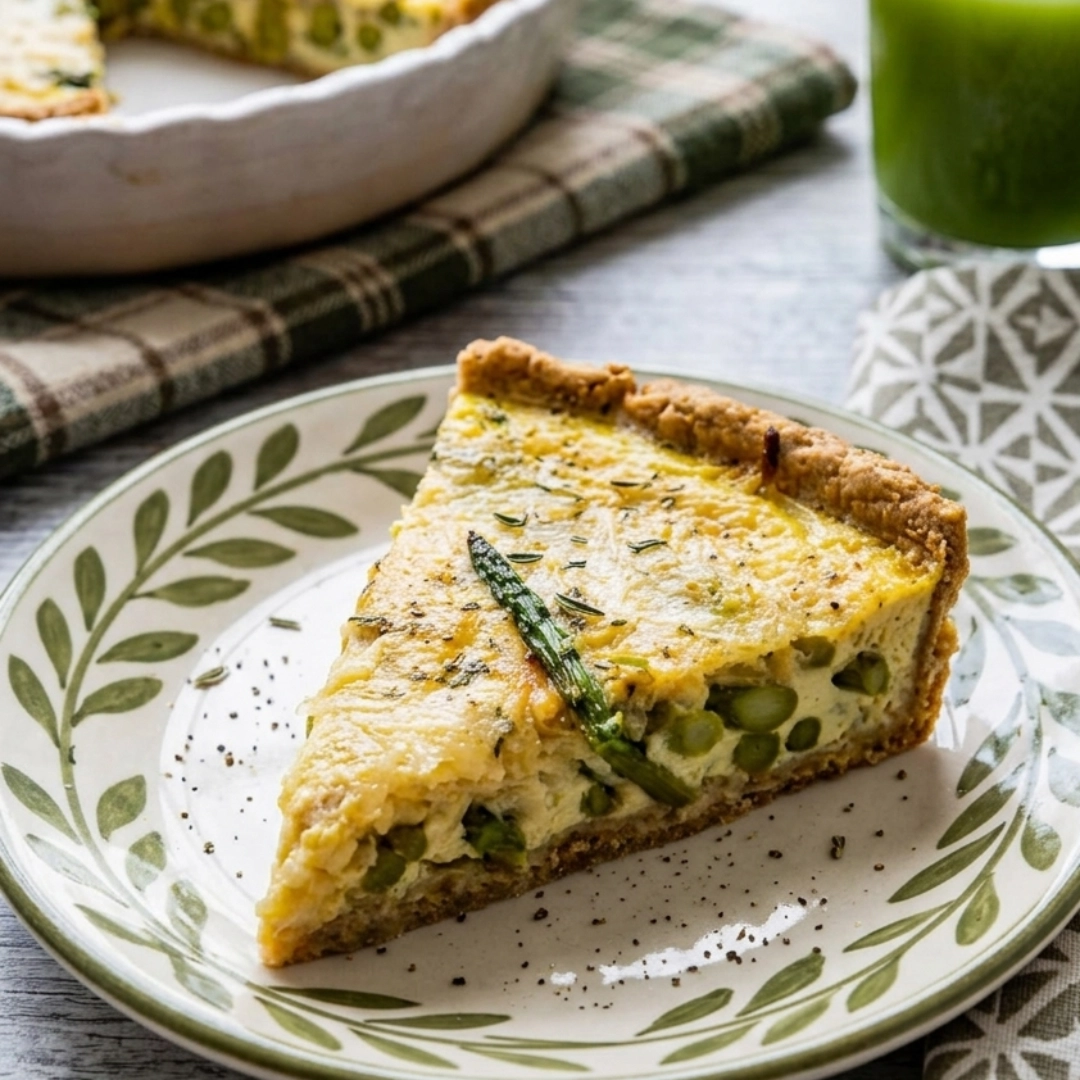
The arrival of the first slender green stalks in the market marks a true culinary shift. This Spring Asparagus Quiche is more than just a meal; it is a celebration of the season’s most vibrant produce. By combining the earthy, nutty profile of whole grain flour with the snap of fresh asparagus and the sharp bite of Asiago cheese, we create a dish that is as sophisticated as it is comforting. Whether you are hosting a festive Sunday brunch or looking for a light yet satisfying weekday dinner, this recipe delivers a perfect balance of textures—from the flaky, olive oil-infused crust to the silky, mustard-spiked custard.
Table of Contents
Ingredients
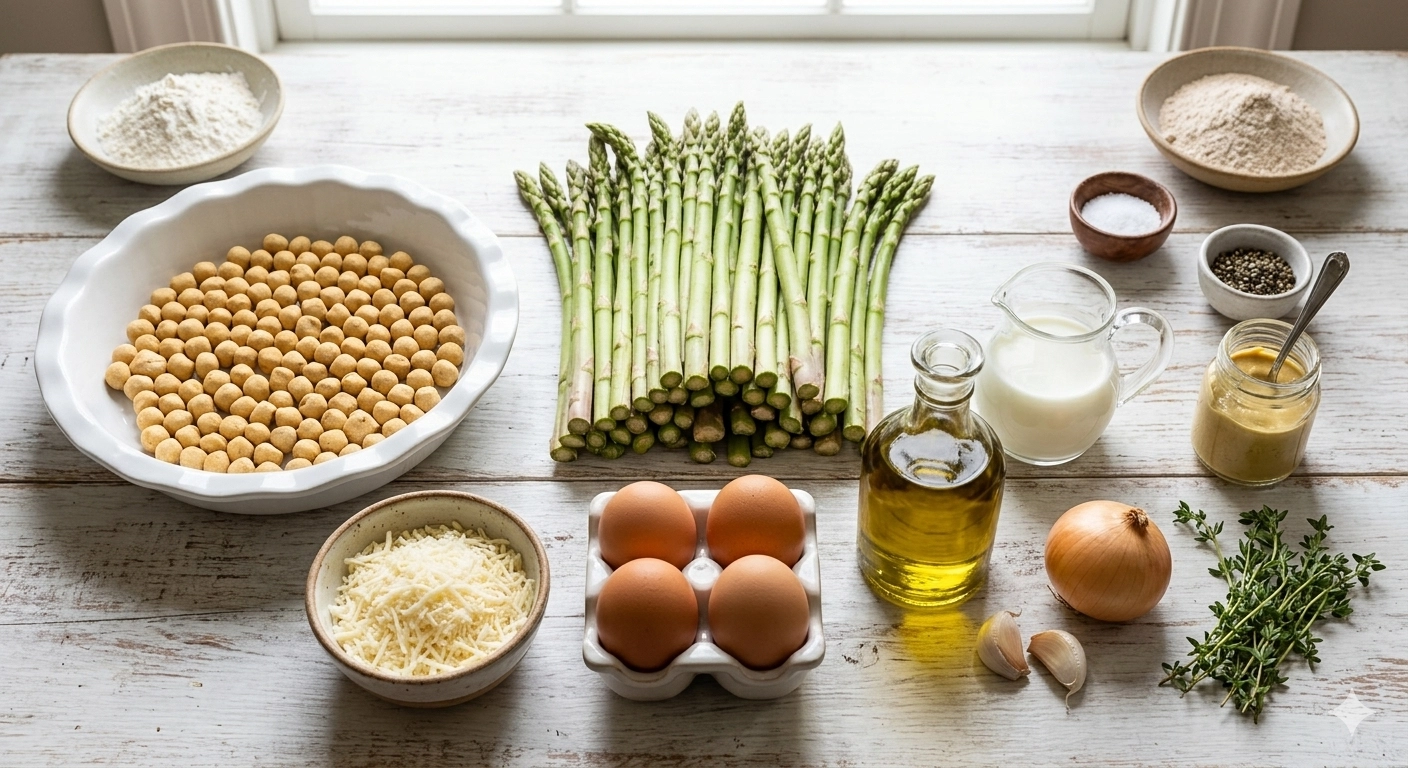
For the Homemade Olive Oil Crust:
- Three quarters cup all-purpose flour (plus extra for dusting your workspace)
- Three quarters cup whole wheat flour
- One half teaspoon kosher salt
- One quarter cup extra virgin olive oil
- One quarter cup water
For the Savory Filling:
- One tablespoon extra virgin olive oil
- One medium yellow or white onion, finely sliced
- Twelve ounces fresh asparagus, woody ends trimmed and stalks sliced into one inch pieces
- Two cloves garlic, minced
- One cup grated Asiago cheese
- Four large eggs
- One cup reduced-fat milk (two percent)
- One teaspoon Dijon mustard
- One tablespoon fresh thyme leaves or tarragon, chopped
- One half teaspoon kosher salt
- One quarter teaspoon freshly ground black pepper
Instructions
- Prepare the Dough: In the bowl of a food processor, combine the all-purpose flour, whole wheat flour, and salt. Pulse a few times to blend. Pour in the olive oil and pulse until the oil is evenly distributed. Add the water and pulse again until the mixture begins to clump together.
- Knead and Rest: Turn the dough onto a lightly floured surface. Knead gently by hand just until it forms a smooth ball. Flatten into a disk about one inch thick, wrap in plastic, and let rest at room temperature for sixty minutes.
- Shape the Crust: Preheat your oven to three hundred seventy-five degrees Fahrenheit. On a floured surface, roll the dough into a circle large enough to fit a nine inch pie dish. Transfer the dough to the dish, press firmly against the bottom and sides, and fold or crimp the edges.
- Blind Bake: Line the crust with parchment paper and fill with pie weights or dried beans. Bake for twenty minutes. Remove the weights and paper.
- Sauté the Vegetables: While the crust bakes, heat one tablespoon of olive oil in a large skillet over medium heat. Sauté the sliced onions for five minutes until translucent. Add the asparagus and cook for another five minutes until tender-crisp. Stir in the garlic for sixty seconds, then remove from heat.
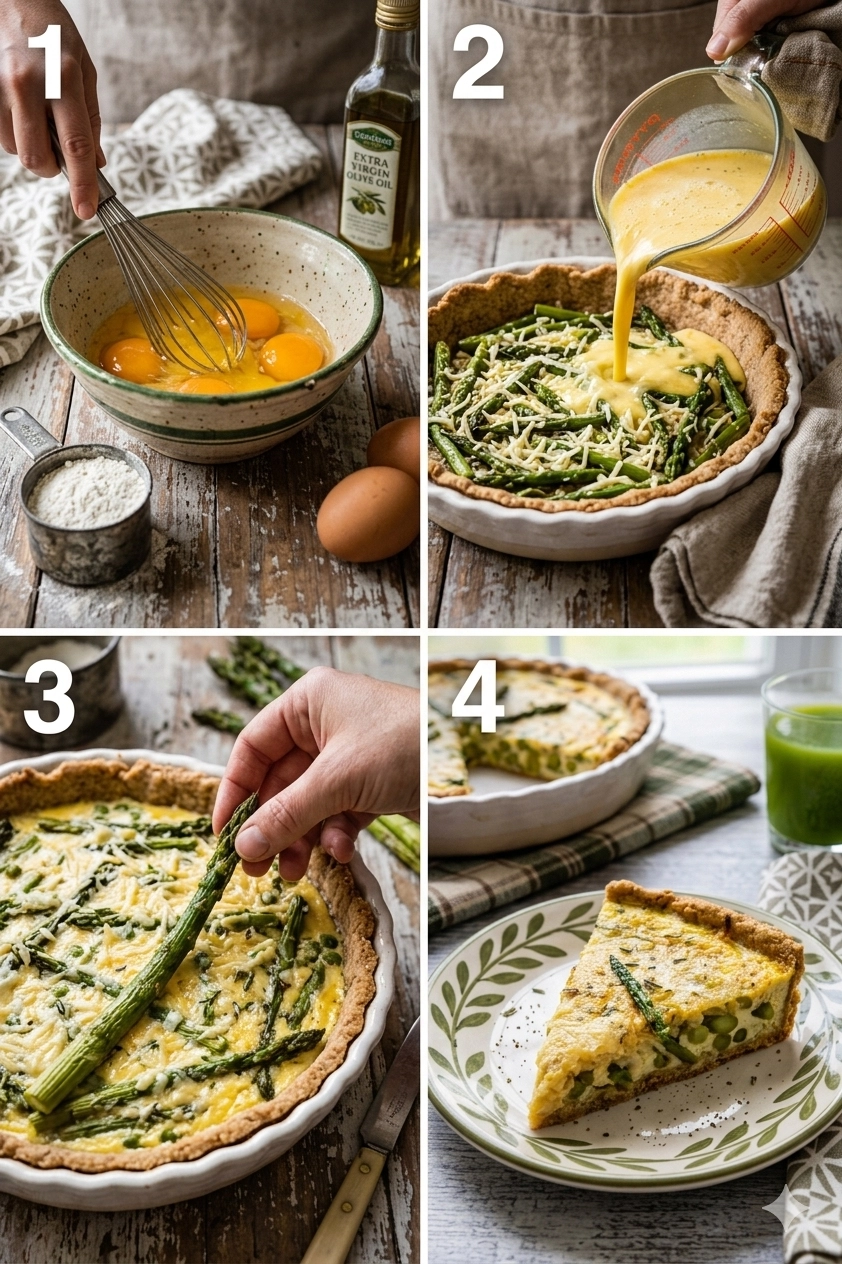
- Assemble the Quiche: Spread the cooked vegetables into the bottom of the par-baked crust. Sprinkle the grated Asiago cheese evenly over the vegetables.
- Whisk the Custard: In a mixing bowl, whisk together the eggs, milk, Dijon mustard, fresh herbs, salt, and black pepper until fully combined.
- Final Bake: Pour the egg mixture over the vegetables and cheese. Bake at three hundred seventy-five degrees Fahrenheit for thirty-five to forty minutes, or until the center is set and the top is golden. Let rest for ten minutes before slicing.
Masterful Step-by-Step Details for Success
Creating a quiche of this caliber requires attention to the physics of the pastry and the chemistry of the custard. The process begins with the unique olive oil crust. Unlike traditional butter-based crusts that rely on cold fat to create steam pockets, this whole wheat and olive oil version focuses on a crumbly, short texture that mimics a Mediterranean savory tart. When you pulse the oil into the flour, you are coating the proteins to prevent excessive gluten development, ensuring the final result remains tender rather than tough.
The sixty-minute resting period is non-negotiable. This allows the moisture from the water and oil to hydrate the bran in the whole wheat flour, making the dough much easier to roll without tearing. When you move to the skillet, the goal is to “par-cook” the vegetables. Asparagus contains a high amount of water; by sautéing it first with the onions, you evaporate that excess moisture. If you were to put raw asparagus directly into the custard, the water released during baking would dilute the eggs, leading to a soggy bottom and a “weeping” quiche.
The final assembly is where the magic happens. By layering the cheese directly onto the hot sautéed vegetables before pouring the liquid, you create a slight barrier that helps protect the crust from the moisture of the custard. The baking time is a window; you are looking for the “quiver.” The edges should be firm and slightly puffed, while the center should have a very slight jiggle when the pan is nudged. This ensures a creamy, melt-in-your-mouth texture rather than a rubbery, overcooked egg density.
Deep-Dive Questions and Answers
Why do you use both whole wheat and all-purpose flour for the crust?
The combination of these two flours is a deliberate choice to balance flavor and structural integrity. Whole wheat flour provides a robust, nutty profile and additional fiber, which complements the earthy notes of the asparagus. However, using one hundred percent whole wheat can make a crust too brittle and dense. All-purpose flour provides the necessary gluten structure to ensure the crust is flaky and can be rolled out thinly without falling apart.
Can I use a different type of cheese if I cannot find Asiago?
While Asiago is preferred for its sharp, salty, and slightly nutty finish, you can certainly substitute it. The best alternatives would be a sharp white cheddar, a nutty Gruyere, or even a salty Pecorino Romano. The key is to choose a cheese that has enough personality to stand up to the sulfurous notes of the asparagus and the brightness of the Dijon mustard. Avoid overly mild cheeses like mozzarella, which may provide texture but will lack the flavor depth required for this dish.
How do I prevent the edges of my crust from burning?
Because this quiche bakes for nearly forty minutes after the initial blind baking, the edges can sometimes become too dark. If you notice the rim of the crust reaching a deep brown color before the custard has set, simply “shield” it. You can do this by loosely covering the edges with thin strips of aluminum foil or using a specialized silicone pie shield. This allows the center of the quiche to continue cooking while protecting the delicate pastry from the direct heat of the oven.
Achieving the Perfect Custard Consistency
The secret to a quiche that feels like silk on the tongue lies in the ratio of dairy to eggs. In this Mediterranean-inspired version, we use four large eggs to one cup of two percent milk. This creates a custard that is light yet stable. The addition of Dijon mustard is a classic culinary trick; the acidity and mustard seed act as an emulsifier, helping the fats in the milk and eggs bond more tightly. This results in a more uniform texture that doesn’t separate.
Furthermore, the temperature of your ingredients matters. Whisking room-temperature eggs into the milk allows for a more thorough incorporation without over-beating. You want to avoid creating too many air bubbles, which can cause the quiche to puff up like a souffle and then collapse into a wrinkled mess once it hits the cool air. A slow, steady whisking motion is all you need to achieve the ideal homogeneity.
Accompaniments and Serving Suggestions
To turn this quiche into a full Mediterranean spread, consider the balance of acidity and crunch. A simple arugula salad dressed with a lemon-shallot vinaigrette is the perfect partner, as the peppery greens cut through the richness of the Asiago cheese. For a more substantial brunch, serve the quiche alongside roasted fingerling potatoes seasoned with rosemary and sea salt.
In terms of beverages, the grassy notes of the asparagus pair beautifully with a crisp Sauvignon Blanc or a dry sparkling cider. If you are serving this for breakfast, a strong French press coffee or a bright Earl Grey tea provides a lovely contrast to the savory herbs. Always remember to let the quiche sit for at least ten minutes; this allows the internal temperature to stabilize and the custard to fully “set,” ensuring clean, beautiful slices.
Strategic Modifications and Substitutions
This recipe is highly adaptable to the seasons. If asparagus is not in peak form, you can substitute it with blanched broccoli florets or sautéed zucchini rounds. For those who prefer a bit of meat, adding a half cup of crispy pancetta or smoked ham into the vegetable mixture provides a salty depth that works wonderfully with the whole wheat crust.
If you require a dairy-free option, you can substitute the milk with a plain, unsweetened almond or soy milk, though the custard will be slightly less rich. For the cheese, a high-quality vegan Parmesan or even a handful of nutritional yeast can mimic the savory “umami” profile of the Asiago. The olive oil crust is already naturally dairy-free, making it an excellent base for various dietary needs.
Unique Culinary Insights for the Home Chef
One often overlooked aspect of quiche-making is the “garlic window.” When sautéing your vegetables, garlic should always be the final addition. Because it is minced finely, it has a high surface-area-to-volume ratio and can burn in seconds, turning bitter and ruining the entire pan of vegetables. Adding it only for the final sixty seconds of sautéing ensures it releases its essential oils and fragrance without losing its sweetness.
Another tip involves the “herb infusion.” If you have the time, whisk your chopped thyme or tarragon into the milk and egg mixture about thirty minutes before you plan to bake. This cold-infusion allows the volatile oils in the herbs to permeate the liquid, ensuring that every single bite of the custard is infused with herbal notes, rather than having the flavor concentrated only where a leaf happens to land.
Final Thoughts on This Seasonal Classic
There is something truly satisfying about pulling a perfectly golden quiche from the oven, the scent of toasted wheat and melting cheese filling the kitchen. This Spring Asparagus Quiche honors the simplicity of Mediterranean cooking—quality ingredients, thoughtful preparation, and a focus on seasonal vibrance. By mastering the olive oil crust and the vegetable sauté, you create a foundation that can be used for endless variations. It is a testament to the fact that healthy, whole-grain ingredients can result in a dish that feels incredibly indulgent and special.
Nutrition Information
| Nutrient | Amount Per Serving |
| Calories | Three hundred ten |
| Total Fat | Eighteen grams |
| Saturated Fat | Six grams |
| Cholesterol | One hundred thirty-five milligrams |
| Sodium | Four hundred eighty milligrams |
| Total Carbohydrates | Twenty-four grams |
| Dietary Fiber | Three grams |
| Sugars | Two grams |
| Protein | Twelve grams |
Disclaimer
The nutritional values provided are estimates based on standard ingredient measurements and may vary depending on the specific brands or types of ingredients used in your kitchen. Always consult with a certified health professional for specific dietary or medical advice.
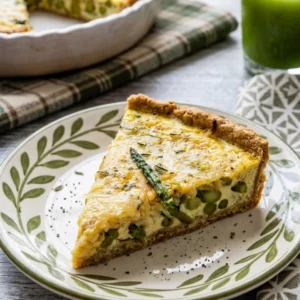
Spring Asparagus Quiche
Ingredients
- 0.75 cup all-purpose flour
- 0.75 cup whole wheat flour
- 0.5 tsp kosher salt
- 0.25 cup extra virgin olive oil
- 0.25 cup water
- 1 tbsp extra virgin olive oil (for sautéing)
- 1 medium yellow onion, finely sliced
- 12 ounces fresh asparagus, trimmed and cut into 1-inch pieces
- 2 cloves garlic, minced
- 1 cup Asiago cheese, grated
- 4 large eggs
- 1 cup reduced-fat milk (two percent)
- 1 tsp Dijon mustard
- 1 tbsp fresh thyme leaves or tarragon, chopped
- 0.5 tsp kosher salt
- 0.25 tsp freshly ground black pepper
Instructions
- In a food processor, pulse all-purpose flour, whole wheat flour, and salt. Add olive oil and pulse, then add water until the dough clumps.
- Knead the dough briefly on a floured surface until smooth. Wrap in plastic and let rest for sixty minutes at room temperature.
- Preheat oven to three hundred seventy-five degrees Fahrenheit. Roll dough to fit a nine inch pie dish. Blind bake with weights for twenty minutes.
- Sauté onion in olive oil for five minutes. Add asparagus for five more minutes, then stir in garlic for sixty seconds.
- Spread the sautéed vegetables into the par-baked crust and top evenly with grated Asiago cheese.
- In a bowl, whisk eggs, milk, Dijon mustard, herbs, salt, and pepper until well combined.
- Pour the egg mixture over the filling. Bake at three hundred seventy-five degrees Fahrenheit for thirty-five to forty minutes until set.
- Let the quiche rest for ten minutes before slicing and serving.
Notes
Equipment
- food processor
- 9-inch pie dish
- large skillet
- Mixing bowl and whisk
- pie weights or dried beans