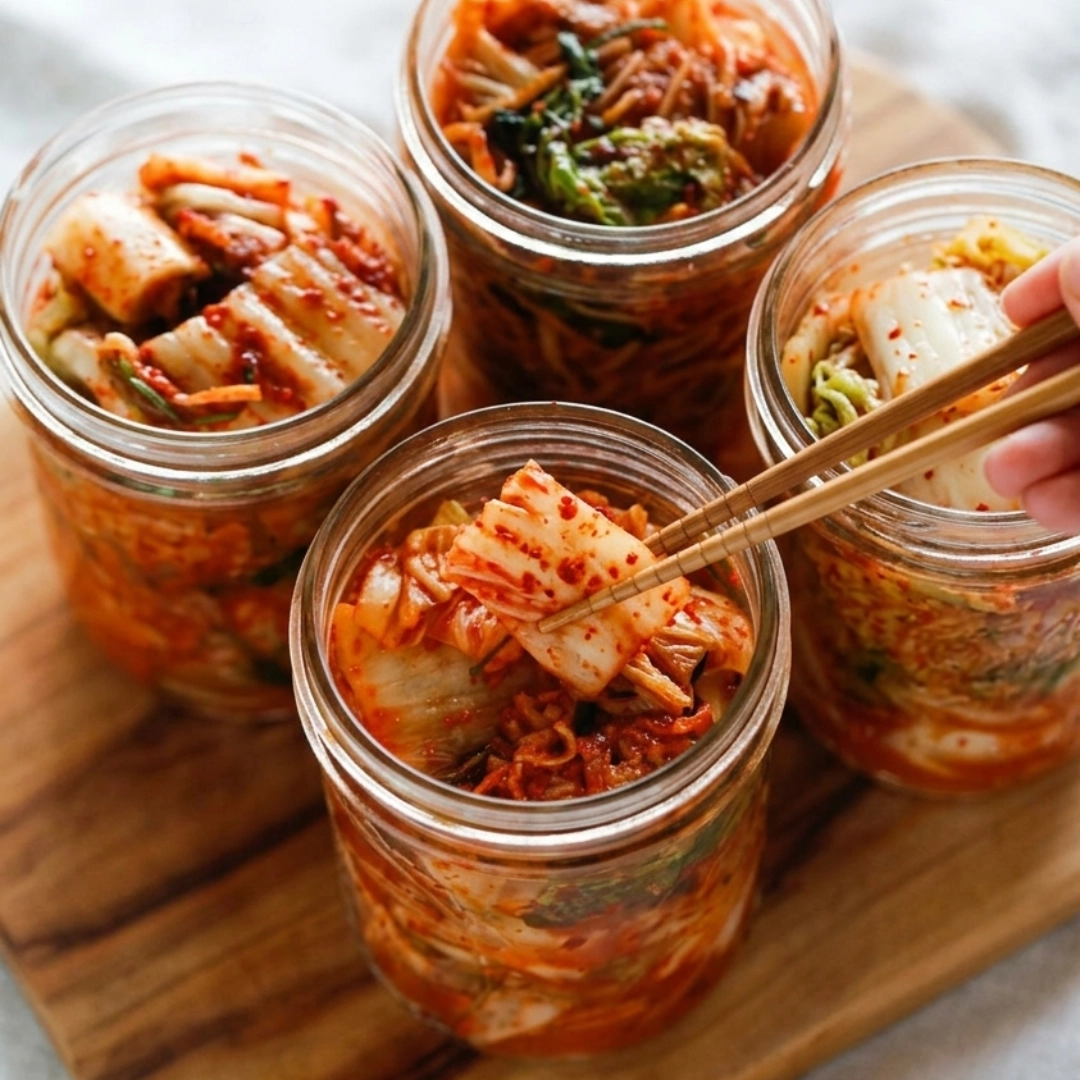
The art of Korean fermentation is a culinary journey that transforms humble vegetables into a powerhouse of flavor and probiotics. This traditional napa cabbage kimchi is the cornerstone of Korean cuisine, offering a perfect balance of spicy, tangy, and savory notes that develop more complexity every day it sits in your refrigerator. By following this meticulous process, you can recreate the iconic taste of authentic “pogi kimchi” (whole cabbage kimchi) right in your own kitchen. Whether you are a fermentation enthusiast or a newcomer to Korean flavors, this guide provides the depth and detail needed to master this ancient craft.
Table of Contents
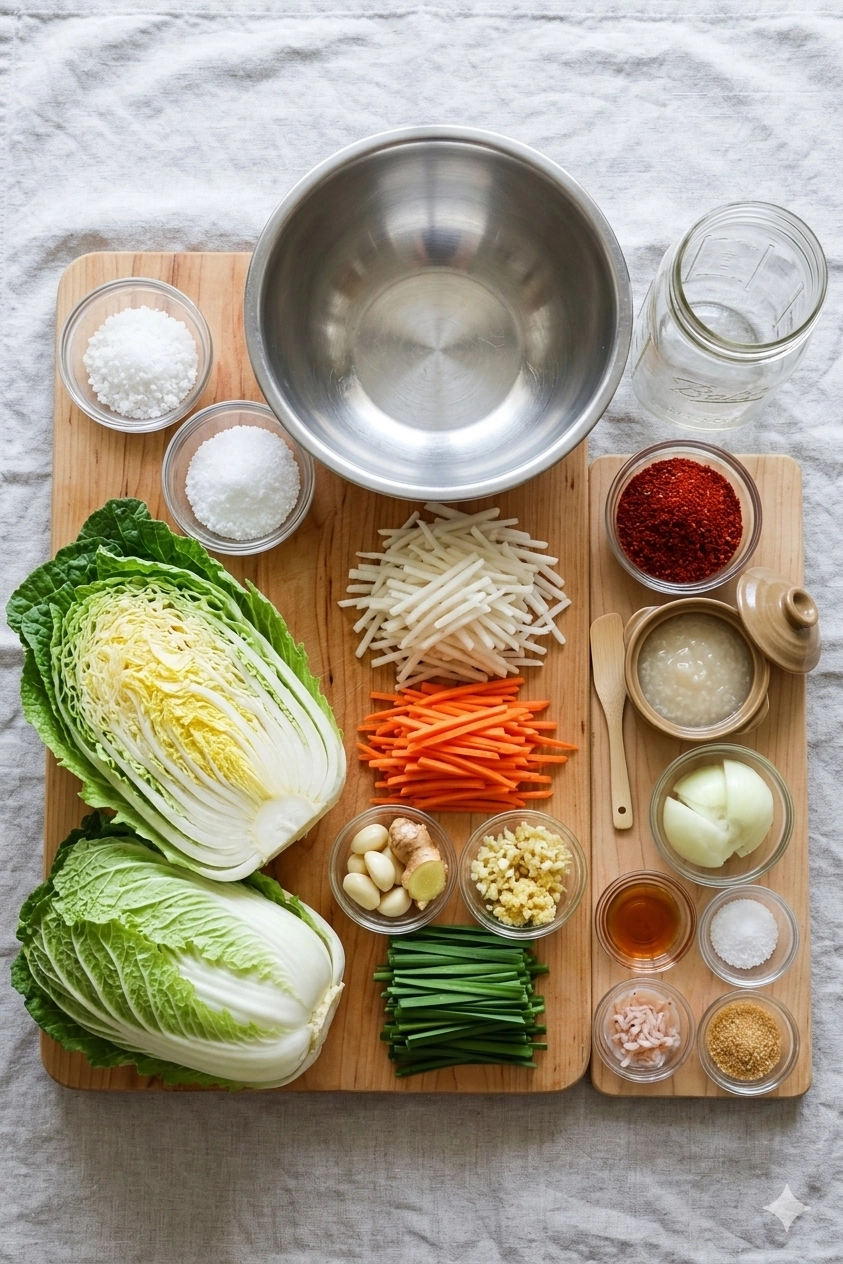
Essential Kimchi Ingredients
To achieve the deep, pungent profile of true Korean kimchi, you must gather specific ingredients that facilitate the fermentation process.
Main Cabbage Components
- 4 kilograms napa cabbage (approximately 8.8 pounds), with thick outer green leaves removed
- 16 cups water (3840 milliliters)
- 1.5 cups Korean coarse sea salt or natural rock salt (specifically for the salt water brine)
- 0.5 cup cooking salt with medium sized crystals (for sprinkling directly between leaves)
The Kimchi Porridge (Base Paste)
- 2 tablespoons glutinous rice flour (often labeled as sweet rice flour)
- 1.5 cups water (360 milliliters)
Seasoning and Aromatics
- 1.5 cups gochugaru (Korean chili flakes)
- 540 grams Korean radish or daikon radish, julienned into thin matchsticks
- 1 tablespoon fine sea salt
- 3.5 tablespoons Korean fish sauce
- 2 tablespoons salted fermented shrimp (known as saeujeot), finely minced
- 90 grams Korean chives, sliced into 5 centimeter lengths (about 2 inches)
- 140 grams carrots, julienned into thin matchsticks
- 0.25 cup minced garlic
- 0.5 tablespoon minced ginger
- 2 tablespoons raw sugar
- 75 grams onion, blended until smooth or very finely grated
Authentic Kimchi Instructions
Following the sequence of preparation is vital for ensuring the cabbage maintains its crunch while absorbing the spicy seasoning.
- Cabbage Preparation: Begin by cutting the napa cabbage into quarters. Rinse each quarter thoroughly under cold running water to remove any debris.
- Creating the Brine: In a large basin or bowl, dissolve the 1.5 cups of coarse sea salt into the 16 cups of water.
- The Brining Process: Place the cabbage quarters into a large food grade plastic bag or a very large bucket. Ensure the wedge side of the cabbage is facing upward. Pour the prepared salt water over the cabbage.
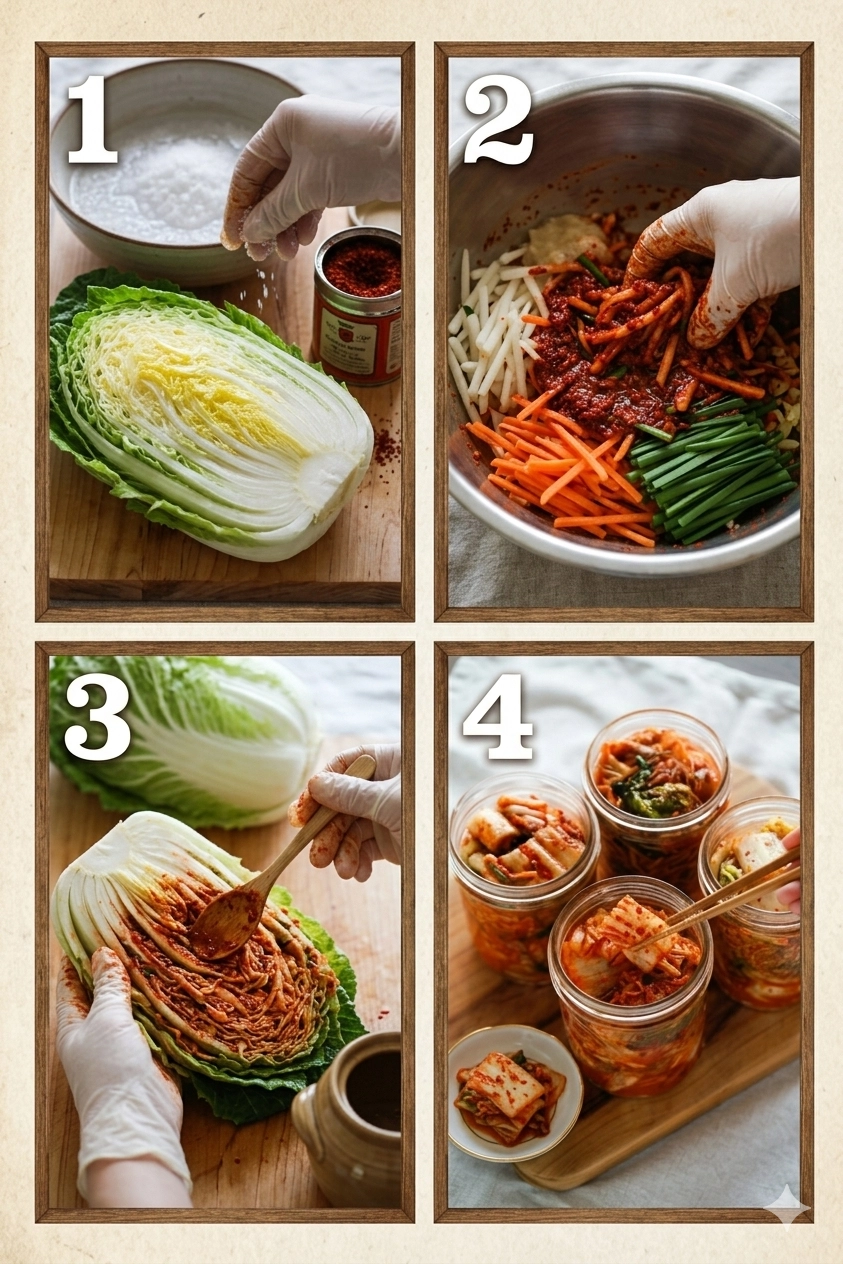
- Dry Salting: Take the additional 0.5 cup of cooking salt and sprinkle it generously between the thick white parts of the cabbage leaves. This ensures the densest parts of the vegetable soften properly. Let the cabbage soak for 6 hours, rotating the pieces every 2 hours to ensure even brining.
- Rinsing: After 6 hours, rinse the cabbage quarters under cold water three times to remove excess salt. Place them in a colander and let them drain for at least 30 minutes.
- Making the Porridge: While the cabbage drains, mix the glutinous rice flour with 1.5 cups of water in a small saucepan. Bring to a simmer over medium heat, stirring constantly until it thickens into a translucent paste. Remove from heat and let it cool completely.
- Mixing the Paste: Once the porridge is cool, stir in the gochugaru, minced garlic, ginger, blended onion, fish sauce, minced salted shrimp, sugar, and fine sea salt. Mix until a thick, vibrant red paste forms.
- Adding Vegetables: Fold the julienned radish, carrots, and Korean chives into the spicy paste.
- Stuffing the Cabbage: Take one cabbage quarter and spread the seasoning paste onto every single leaf, starting from the outermost layer and working toward the core. Use roughly one quarter of the paste for each cabbage quarter.
- Packing and Fermentation: Fold the cabbage quarters in half and pack them tightly into a clean glass jar or fermentation container. Leave about 20 to 30 percent of the space at the top empty to allow for gas expansion. Press down firmly to remove air pockets.
- Initial Ripening: Leave the jar at room temperature for one to two days depending on the warmth of your kitchen. Once you see small bubbles forming and smell a pleasant sour aroma, transfer the jar to the refrigerator.
Modifications and Substitutions
While the traditional recipe relies on specific seafood products, you can adjust the profile to meet dietary needs or ingredient availability.
To create a vegan version of this kimchi, you can replace the Korean fish sauce and salted fermented shrimp with an equal volume of high quality soy sauce, tamari, or a dedicated vegan fish sauce made from seaweed. This will maintain the “umami” or savory depth without using animal products.
If you cannot find Korean chives (buchu), you can substitute them with standard green onions or scallions cut into similar lengths. For those who prefer a less spicy kick, the amount of gochugaru can be reduced, though this will result in a paler kimchi with less body. If Korean radish is unavailable, daikon radish is the closest possible substitute, providing the same crisp texture and refreshing moisture.
Detailed Step-by-Step Breakdown
The secret to world class kimchi lies in the details of the brining and the consistency of the “porridge” base.
The Importance of the Six Hour Brine
The brining stage is not merely about saltiness; it is a chemical transformation. By soaking the cabbage for exactly six hours, you are utilizing osmosis to draw out excess moisture. This prevents the finished kimchi from becoming watery and ensures that the leaves have a “bendy” texture rather than a brittle one. If you under-brine, the cabbage will release too much water later, diluting your sauce. If you over-brine, the cabbage becomes rubbery and overly salty. Rotating the cabbage every two hours is a critical step to ensure that the pieces at the bottom do not become more salted than those on top.
Crafting the Perfect Seasoning Base
The glutinous rice flour paste acts as the “glue” for the recipe. Without this thickened porridge, the gochugaru and aromatics would simply slide off the slick cabbage leaves and pool at the bottom of the jar. By simmering the flour and water until it reaches a glue-like consistency, you create a medium that holds the spices against the vegetable. It also provides a small amount of sugar that feeds the beneficial bacteria during the early stages of fermentation.
Accompaniments and Serving Suggestions
Kimchi is rarely eaten in isolation; it is a versatile component that enhances a wide variety of meals.
In a traditional Korean setting, kimchi is served as “banchan” (a side dish) alongside a bowl of steamed short-grain white rice and a hot soup or stew. The acidity of the fermented cabbage cuts through the richness of grilled meats, making it the perfect partner for Korean BBQ, such as bulgogi or galbi.
As the kimchi ages and becomes more sour, it becomes an even better ingredient for cooking. Very ripe kimchi is the primary flavor profile for Kimchi Jjigae (kimchi stew) or Kimchi Bokkeumbap (kimchi fried rice). You can also chop it finely and fold it into savory pancake batter to make Kimchi-jeon. For a modern twist, try topping a burger or a hot dog with chilled, crunchy kimchi for a spicy, probiotic crunch.
Deep-Dive Kimchi FAQ
How do I know when my kimchi is finished fermenting?
Fermentation is a subjective process that depends on your personal taste preferences and the ambient temperature of your home. Generally, after twenty-four to forty-eight hours at room temperature, you will notice a slight tang and a few bubbles appearing in the liquid. This indicates the “active” phase is complete, and it is ready to move to the fridge to develop a more refined, deep flavor over the next two weeks.
Why did my kimchi turn out too salty after the brining stage?
Excessive saltiness usually occurs if the cabbage was not rinsed thoroughly enough or if the brining time exceeded the recommended six hours. It is essential to rinse the cabbage quarters at least three times in fresh water to wash away the surface salt. If it still tastes too salty before you add the paste, you can soak the cabbage in plain cold water for thirty minutes to “leach” out some of the salt.
Can I use regular chili flakes instead of gochugaru?
It is highly recommended that you do not substitute standard red pepper flakes for gochugaru. Standard flakes are often much hotter and contain seeds, which will make the kimchi unpleasantly spicy and gritty. Gochugaru is deseeded and has a unique smoky, sweet, and mild heat profile that is essential for the color and flavor of authentic kimchi.
Is it normal for the kimchi liquid to overflow from the jar?
Yes, this is a very common occurrence during the first few days of fermentation. As the bacteria produce carbon dioxide, the pressure builds up and pushes the liquid upward. This is why you must leave at least twenty to thirty percent of “headspace” at the top of your jar. If you see liquid seeping out, simply “burp” the jar by opening it briefly to release the gas and press the vegetables back down under the brine.
Unique Culinary Insights for Better Fermentation
Achieving a professional-grade ferment requires attention to the environment and the tools you use.
One of the most important tips is to ensure your fermentation vessel is meticulously clean. While you do not need to “sterilize” it like you would for canning, washing it with hot soapy water and drying it thoroughly prevents the growth of unwanted mold.
Another insight involves the packing technique. When you place the stuffed cabbage into the jar, use your fist or a wooden tamper to press down with significant force. The goal is to eliminate all oxygen pockets. The beneficial Lactobacillus bacteria are anaerobic, meaning they thrive in environments without oxygen. Keeping the cabbage submerged under its own juices protects it from spoilage and ensures a clean, crisp fermentation.
Finally, consider the temperature of your kitchen. In the summer, kimchi can ferment in as little as twelve hours, whereas in the winter, it may need three full days on the counter. Always use your nose and taste buds as your ultimate guide. If it smells “fizzy” and bright, it is time for the cold storage phase.
The Future of Your Fermentation Journey
Starting your own batch of kimchi is a rewarding endeavor that connects you to a thousand-year-old culinary tradition. As you watch the vibrant red Napa cabbage transform into a tangy, complex delicacy, you are participating in a living process. This recipe provides the foundational structure needed for success, ensuring that every bite is packed with the authentic flavors of a Korean kitchen. Enjoy the process of tasting the kimchi at various stages of its life, and discover whether you prefer the fresh “geotjeori” style or the deep, funkier notes of well-aged “mueun-ji.”
Nutrition Table
| Nutrient | Amount Per Serving (100 grams) |
| Calories | 35 calories |
| Total Fat | 0.5 grams |
| Sodium | 650 milligrams |
| Total Carbohydrates | 7 grams |
| Dietary Fiber | 3 grams |
| Sugars | 2 grams |
| Protein | 2 grams |
| Vitamin C | 25 percent |
| Vitamin A | 15 percent |
Nutritional Disclaimer
The nutritional information provided is an estimate based on standard ingredient profiles. Actual values may vary depending on the specific brands of fish sauce or salted shrimp used, as well as the length of the fermentation process, which can alter sugar and probiotic levels.

Authentic Homemade Kimchi
Ingredients
- 4 kilograms napa cabbage (approx. 8.8 lbs), outer leaves removed
- 16 cups water (for brine)
- 1.5 cups Korean coarse sea salt (for brine)
- 0.5 cup cooking salt (for sprinkling)
- 2 tbsp glutinous rice flour
- 1.5 cups water (for rice porridge)
- 1.5 cups gochugaru (Korean chili flakes)
- 540 grams Korean radish, julienned into matchsticks
- 1 tbsp fine sea salt
- 3.5 tbsp Korean fish sauce
- 2 tbsp salted fermented shrimp (saeujeot), minced
- 90 grams Korean chives, cut into 5cm pieces
- 140 grams carrots, julienned into matchsticks
- 0.25 cup garlic, minced
- 0.5 tbsp ginger, minced
- 2 tbsp raw sugar
- 75 grams onion, blended or finely grated
Instructions
- Quarter the napa cabbage and rinse thoroughly under cold water. Dissolve 1.5 cups coarse salt in 16 cups water to create a brine.
- Place cabbage in brine and sprinkle 0.5 cup cooking salt between the thick white parts of the leaves. Let soak for 6 hours, rotating every 2 hours.
- Rinse the cabbage 3 times in cold water to remove excess salt. Drain in a colander for at least 30 minutes.
- Simmer glutinous rice flour and 1.5 cups water until it becomes a thick, translucent paste. Let it cool completely.
- Mix the cooled porridge with gochugaru, garlic, ginger, blended onion, fish sauce, salted shrimp, sugar, and fine sea salt.
- Fold in the julienned radish, carrots, and chives until the vegetables are evenly coated in the spicy paste.
- Spread the paste onto every leaf of the cabbage quarters. Pack tightly into a clean jar, leaving 20 percent headspace.
- Leave at room temperature for 1–2 days until bubbles form, then transfer to the refrigerator to finish fermenting.
Notes
Equipment
- Large basin or food-grade bucket
- Large glass fermentation jars (or Kimchi container)
- small saucepan
- colander
- Food scale
- Disposable kitchen gloves To protect hands from chili burn