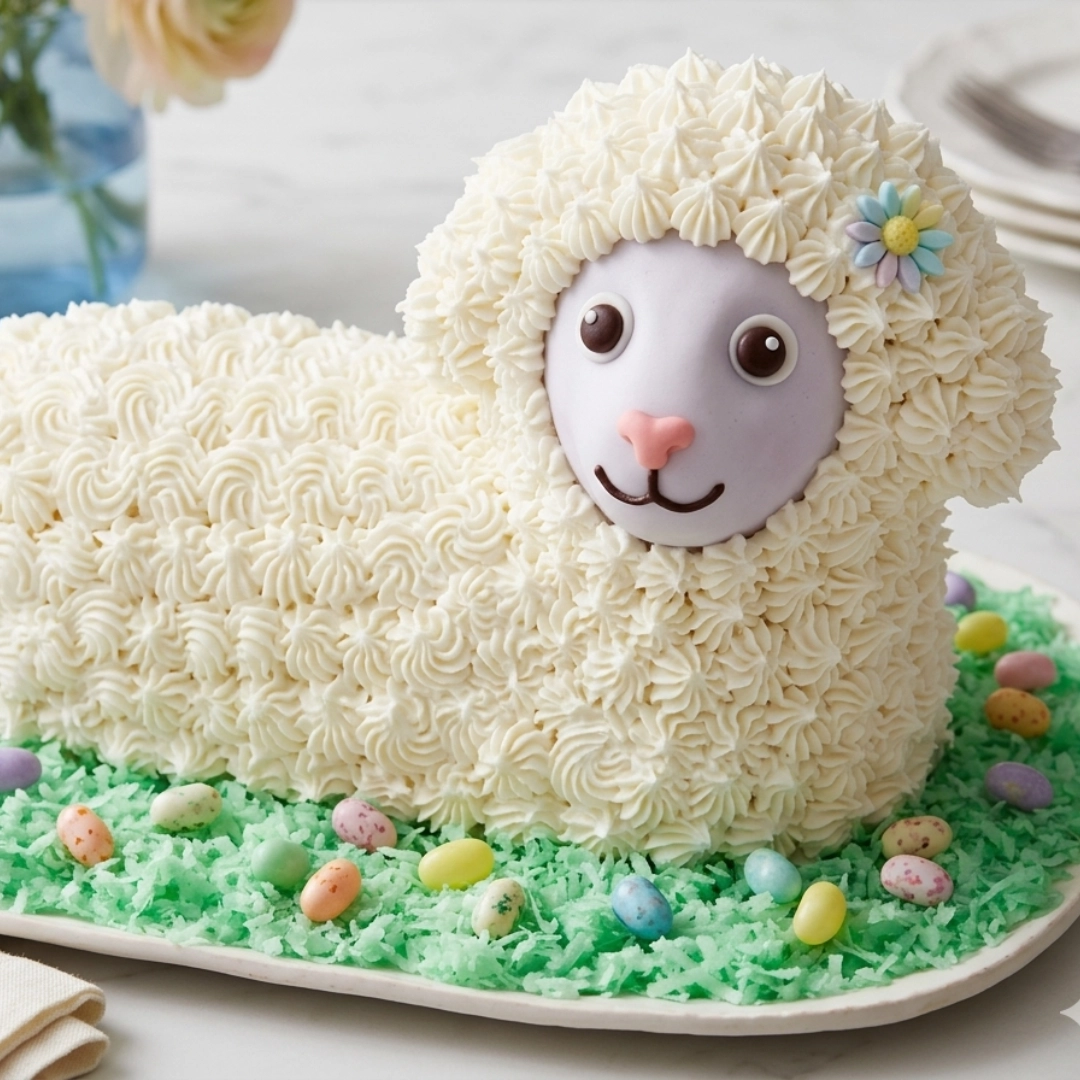
The Easter lamb cake is more than just a dessert; it is a profound symbol of spring, renewal, and cherished family heritage. For generations, this whimsical, three-dimensional treat has graced holiday tables, serving as a centerpiece that bridges the gap between culinary artistry and nostalgic tradition. Whether you are reviving a beloved family recipe or introducing this charming custom to your own household for the first time, there is something undeniably magical about transforming simple, wholesome ingredients into a festive icon. This guide will walk you through the essential process of creating a moist, flavorful lamb cake that is as structurally sound as it is delicious.
Table of Contents
Ingredients for Your Easter Lamb Cake
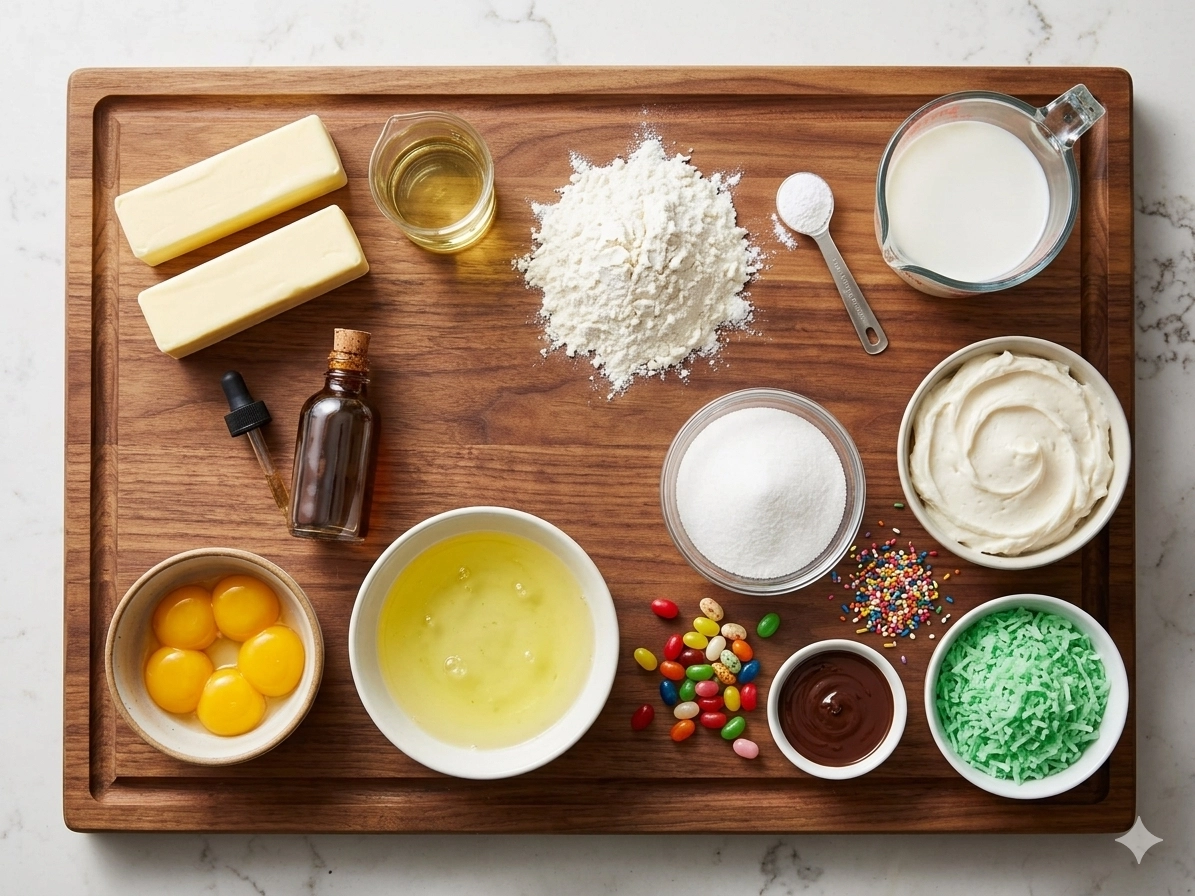
To achieve that classic, tender crumb and the perfect structural integrity required for a shaped cake, please ensure your ingredients are at the correct temperature before you begin.
- 2 sticks (8 ounces) unsalted butter, softened to room temperature
- 2 tablespoons vegetable oil (for pan preparation)
- 1 1/2 cups plus 1 tablespoon all-purpose flour, divided
- 2 teaspoons baking powder
- 6 tablespoons whole milk
- 1 teaspoon pure vanilla extract
- 6 large eggs, separated
- 1 1/2 cups granulated sugar
- 1 batch of your favorite buttercream frosting (approximately 2 1/2 cups)
- Garnish: Jelly beans, colorful sprinkles, melted chocolate, or shredded coconut flakes
Essential Baking Instructions
Follow these steps precisely to ensure your lamb cake bakes evenly and releases cleanly from the mold.
- Begin by placing your 2 sticks of unsalted butter in the bowl of a stand mixer and allowing them to sit at room temperature until fully softened.
- Arrange a rack in the bottom third of your oven and preheat the oven to 350 degrees Fahrenheit.
- Prepare the lamb cake pan by brushing the interior of each half with 1 tablespoon of vegetable oil. Dust these oiled surfaces with 1 tablespoon of all-purpose flour, ensuring every crevice is coated to prevent sticking.
- In a medium bowl, whisk together 1 1/2 cups of all-purpose flour and 2 teaspoons of baking powder until well combined.
- In a separate small glass or liquid measuring cup, stir together the 6 tablespoons of milk and 1 teaspoon of vanilla extract.
- Carefully separate the 6 large eggs, placing the yolks in a small bowl and the whites in a clean, dry mixing bowl.
- Add 1 1/2 cups of granulated sugar to the softened butter in the mixer bowl. Beat on medium speed for approximately 5 minutes until the mixture is light, pale, and remarkably fluffy.
- Add the egg yolks to the creamed butter mixture and beat on medium speed until fully combined.
- Reduce the mixer to low speed. Add 1/3 of the flour mixture, followed by 1/3 of the milk mixture. Continue to beat until just combined. Repeat this process two more times until all ingredients are incorporated.
- If using a stand mixer, transfer the batter to a large bowl, then clean and thoroughly dry the mixer bowl for the next step.
- Beat the egg whites in your clean mixer bowl using the whisk attachment on high speed until stiff peaks form, which should take about 5 minutes.
- Gently fold the beaten egg whites into the main cake batter in three additions, using a rubber spatula until the mixture is uniform and no streaks of white remain.
- Transfer the finished batter into the half of the lamb pan that features the face. Fill it to the very brim. Securely lock the other section of the pan on top. If your pan design benefits from extra stability, you may tie the halves together with kitchen twine.
- Bake for approximately 1 hour. Because the mold hides the cake, use a skewer inserted through the vent hole of the pan to check for doneness; it should come out clean.
- Allow the cake to cool in the pan on a wire rack for 15 minutes before carefully removing the top half. Flip the cake onto a wire rack and allow it to cool completely before applying any decorations.
Step-by-Step Details of the Culinary Process
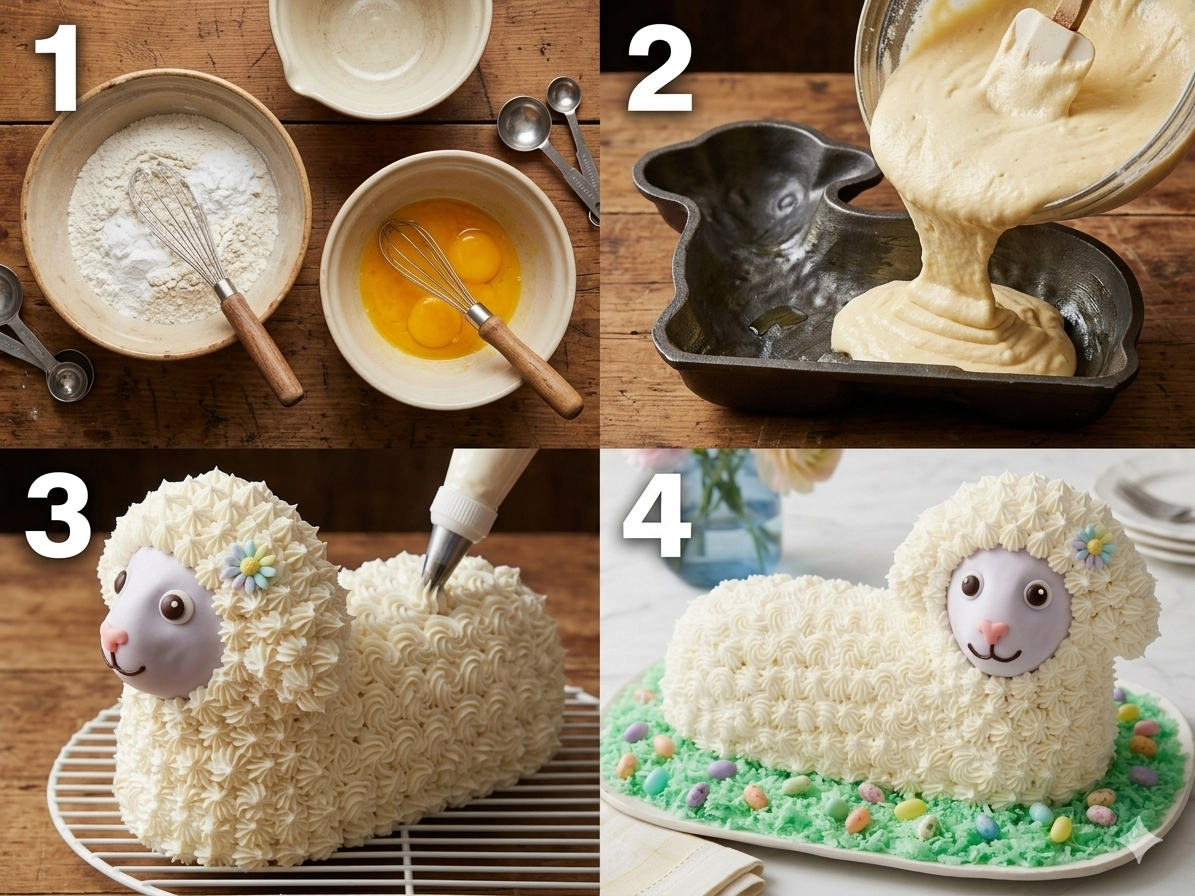
The secret to a successful lamb cake lies in the mechanical aeration of the batter. By separating the egg whites and whipping them to stiff peaks, you are essentially building a skeletal structure for the cake that allows it to rise vertically within the confining walls of a heavy aluminum mold. When you begin the creaming process, do not rush. The 5-minute beat time for the butter and sugar is not merely a suggestion; it is the physical act of creating microscopic air pockets that will expand when the cake enters the heat of the oven.
When greasing your mold, think of it as painting a masterpiece. Missed spots on the ears or the delicate nose area are where sticking most frequently occurs. Use a pastry brush to get into the deepest recesses of the facial features. When it comes time to fill the mold, the goal is a level surface. The rising action will naturally force the batter into the top half of the lamb, ensuring that the finished product has a complete, defined shape. The cooling process is equally vital. A lamb cake is structurally vulnerable when it is hot. If you attempt to unmold it while it is still steaming, the moisture content—which keeps the cake delicious—will act as a glue against the sides of the pan. Give it those 15 minutes to firm up so that the protein structure can set.
Deep-Dive FAQ
Why is it necessary to fill only the face-side half of the pan with batter?
The lamb cake mold is designed with a specific volume-to-space ratio. By filling the face side to the brim, you provide enough mass for the batter to expand upward into the second half of the pan during the baking process. If you were to fill both sides, the cake would likely overflow, causing a mess in your oven and potentially preventing the two halves of the mold from locking together properly. The steam generated inside the closed mold helps the cake rise evenly into the head and ear cavities, resulting in the iconic shape.
How can I ensure the cake doesn’t stick?
Sticking is the most common challenge with vintage-style molds. Beyond the thorough application of oil and flour, ensure that your butter is completely at room temperature before you start. If you are using an older cast aluminum pan, consider a light spray of baking-specific release spray in addition to your flour dusting. If the lamb’s ears do break off during unmolding, do not despair. A small amount of “edible glue”—such as a thick buttercream—can seamlessly reattach them once the cake is fully cooled.
Can I bake this ahead of time?
Absolutely. In fact, a day-old lamb cake is often easier to decorate because the crumb is firmer and less prone to crumbling. Once the cake has cooled completely to room temperature, you can wrap it loosely in plastic wrap or store it under a cake dome. It stays moist for several days due to the high fat content of the pound-style cake base. Decorating it the morning of your Easter celebration ensures the frosting stays fresh and vibrant.
Unique Culinary Insights
The lamb cake is a masterclass in the intersection of tradition and structural baking. Because the mold acts as an enclosed chamber, the cake retains a significant amount of moisture, resulting in a dense, rich texture that holds up well to being handled. One of the most beautiful traditions associated with this cake is the creation of a “pasture.” By taking shredded coconut and dyeing it a vibrant spring green, you can build a lush, edible bed for your lamb to rest upon. This not only covers any imperfections at the base of the cake but also transforms the dessert from a simple item into a complete, thematic scene. Using melted chocolate for the eyes creates a more realistic and classic appearance compared to candies, though jelly beans remain the preferred choice for a whimsical, child-friendly nose.
Accompaniments and Serving Suggestions
This cake is traditionally served as an afternoon tea treat, but it functions beautifully as an after-dinner dessert. Pair your lamb cake with a pot of light, floral Earl Grey tea or a fresh cup of medium-roast coffee. If you wish to make the serving more indulgent, consider a side of fresh seasonal berries, such as strawberries or raspberries, which cut through the sweetness of the buttercream frosting. The stark white of a coconut-coated lamb contrasts beautifully with the bright reds and blues of fresh fruit arranged around the platter, making for a professional-looking display that will delight your guests.
Modifications and Substitutions
For those looking to adjust the recipe, simplicity is key. If you are not a fan of coconut, you can pipe “wool” using a star-tipped nozzle and a thick vanilla buttercream. Simply pipe small, overlapping rosettes over the entire body of the lamb, leaving the face smooth. If you need to make this cake for a guest with dietary restrictions, ensure you are using a high-quality gluten-free all-purpose flour blend that includes xanthan gum to mimic the structure of traditional wheat flour. For a citrus-infused variation, add a tablespoon of freshly grated lemon zest to the batter during the creaming stage. This adds a bright, springtime note that pairs exceptionally well with the rich butter flavor of the cake.
Conclusion
Creating an Easter lamb cake is a beautiful way to engage with the history of holiday baking. While the process requires a bit of patience—from the careful greasing of the mold to the delicate folding of the egg whites—the result is a stunning, edible centerpiece that carries the warmth of the season. As you decorate your lamb, remember that perfection is not the goal; the charm lies in the handcrafted nature of the finished piece. Whether you choose to keep it simple with a dusting of sugar or go all out with intricate piped rosettes and a coconut pasture, your lamb cake will undoubtedly become the highlight of your Easter gathering.
Nutrition Table
| Nutrient | Amount per Serving |
| Calories | 584 kcal |
| Total Fat | 29.4 grams |
| Saturated Fat | 12.4 grams |
| Carbohydrates | 75.5 grams |
| Dietary Fiber | 0.4 grams |
| Sugars | 60.2 grams |
| Protein | 5.2 grams |
| Sodium | 203 milligrams |
Disclaimer
Nutritional values are approximate and based on standard ingredients. Actual values may vary depending on the specific brands used and the amount of frosting or decorations applied to the final cake.
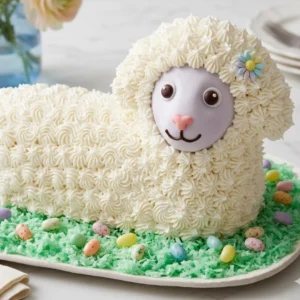
Easter Lamb Cake
Ingredients
- 2 sticks unsalted butter, softened to room temperature
- 2 tbsp vegetable oil, for pan preparation
- 1.5 cups plus 1 tbsp all-purpose flour, divided
- 2 tsp baking powder
- 6 tbsp whole milk
- 1 tsp pure vanilla extract
- 6 large eggs, separated
- 1.5 cups granulated sugar
- 2.5 cups buttercream frosting
- to taste jelly beans, sprinkles, or shredded coconut for garnish
Instructions
- Preheat your oven to 350 degrees Fahrenheit. Prepare the lamb cake mold by thoroughly brushing the interior with vegetable oil and dusting with flour, ensuring every crevice is coated.
- In a medium bowl, whisk together 1.5 cups of flour and baking powder. In a separate small container, stir together the milk and vanilla extract.
- In a large mixer bowl, beat the softened butter and sugar on medium speed for 5 minutes until light and fluffy. Add the egg yolks and beat until incorporated.
- Add the flour mixture and milk mixture to the butter, alternating in three additions, beating on low speed until just combined.
- In a clean bowl, beat the egg whites until stiff peaks form. Gently fold the whites into the cake batter in three additions.
- Fill the face-side half of the greased mold to the brim with batter. Secure the top half of the pan, using twine if necessary to keep the mold closed.
- Bake for 1 hour. Test for doneness by inserting a skewer through the vent hole; it should come out clean.
- Cool the cake in the pan for 15 minutes, then remove the top and unmold. Once fully cooled, frost and decorate as desired.
Notes
Equipment
- Lamb cake mold
- Stand Mixer
- wire cooling rack
- rubber spatula
- pastry brush