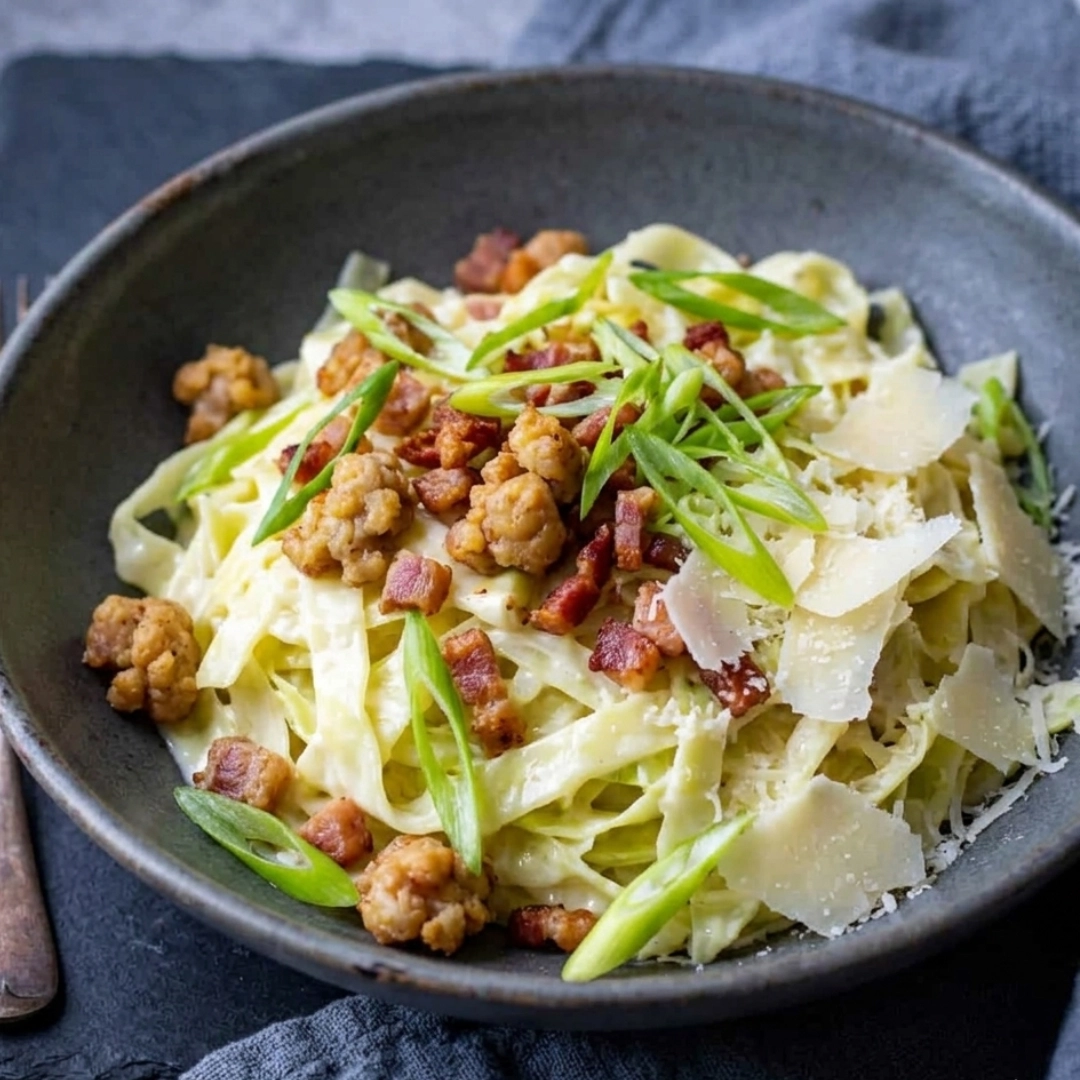
If you are looking for a way to transform a humble head of garden-variety vegetables into a decadent, restaurant-quality meal, this cabbage Alfredo is the answer. Often, we think of Alfredo as a heavy, carb-laden pasta dish that leaves us feeling weighed down. By swapping out the traditional fettuccine for thinly sliced ribbons of white cabbage, you create a base that is just as satisfying and tender but brings a natural sweetness and lightness to the plate. This recipe is a masterclass in texture, combining the silkiness of a rich cream sauce with the salty, addictive crunch of golden pancetta. It is comfort food at its most refined, perfect for a cozy weeknight dinner or as an impressive side dish for your next gathering.
Table of Contents
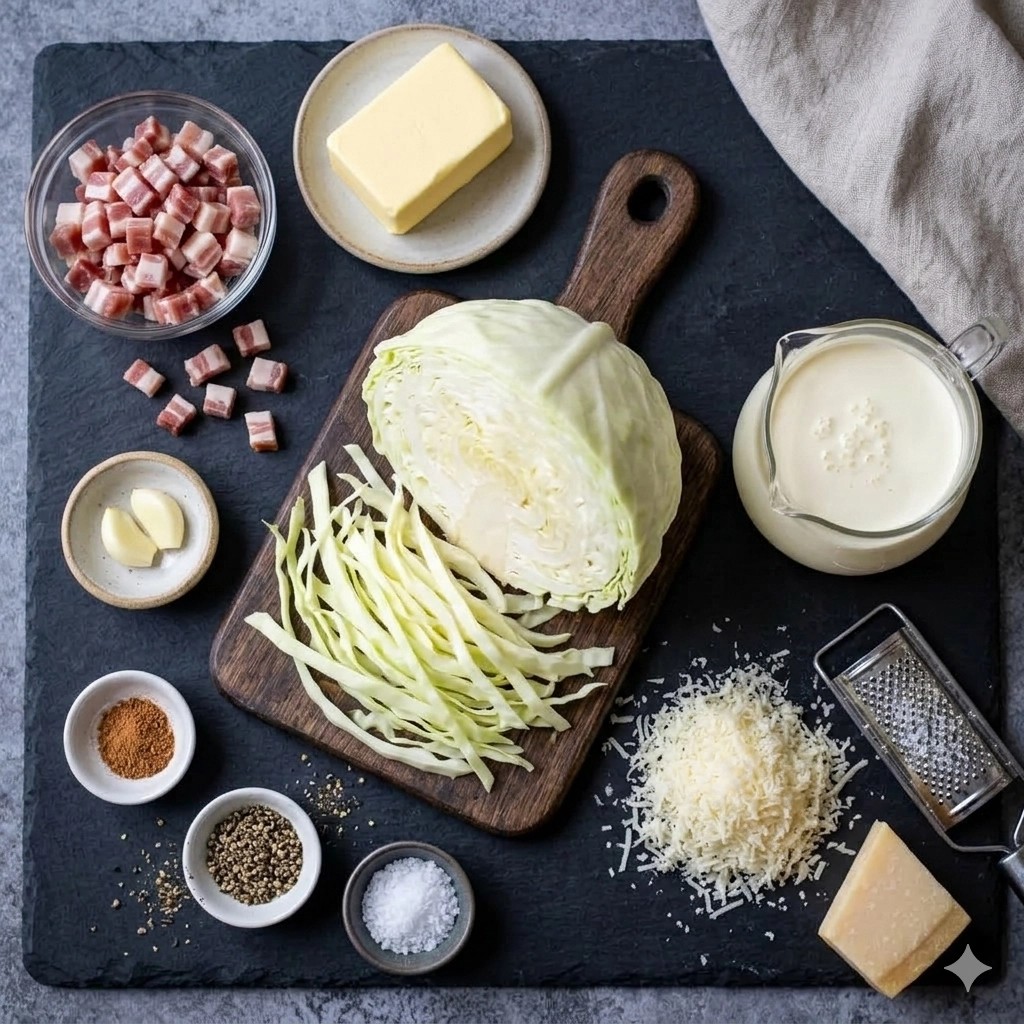
Essential Ingredients for Cabbage Alfredo
To achieve the best results, start with high-quality components. Each ingredient plays a specific role in balancing the richness of the dairy with the savory depth of the meat.
- 600 grams white cabbage (this should be approximately one small, firm head)
- 100 grams pancetta, diced into small cubes
- 40 grams unsalted butter (roughly 3 tablespoons)
- 2 cloves garlic, finely sliced into translucent slivers
- 250 milliliters double cream (also known as heavy cream)
- 50 grams Parmesan cheese, finely grated (plus extra for a final garnish)
- A pinch of ground nutmeg
- Black pepper, freshly cracked to taste
- Sea salt, used sparingly to taste
Primary Cooking Instructions
Follow these steps carefully to ensure the cabbage reaches the perfect “noodle-like” consistency without becoming mushy.
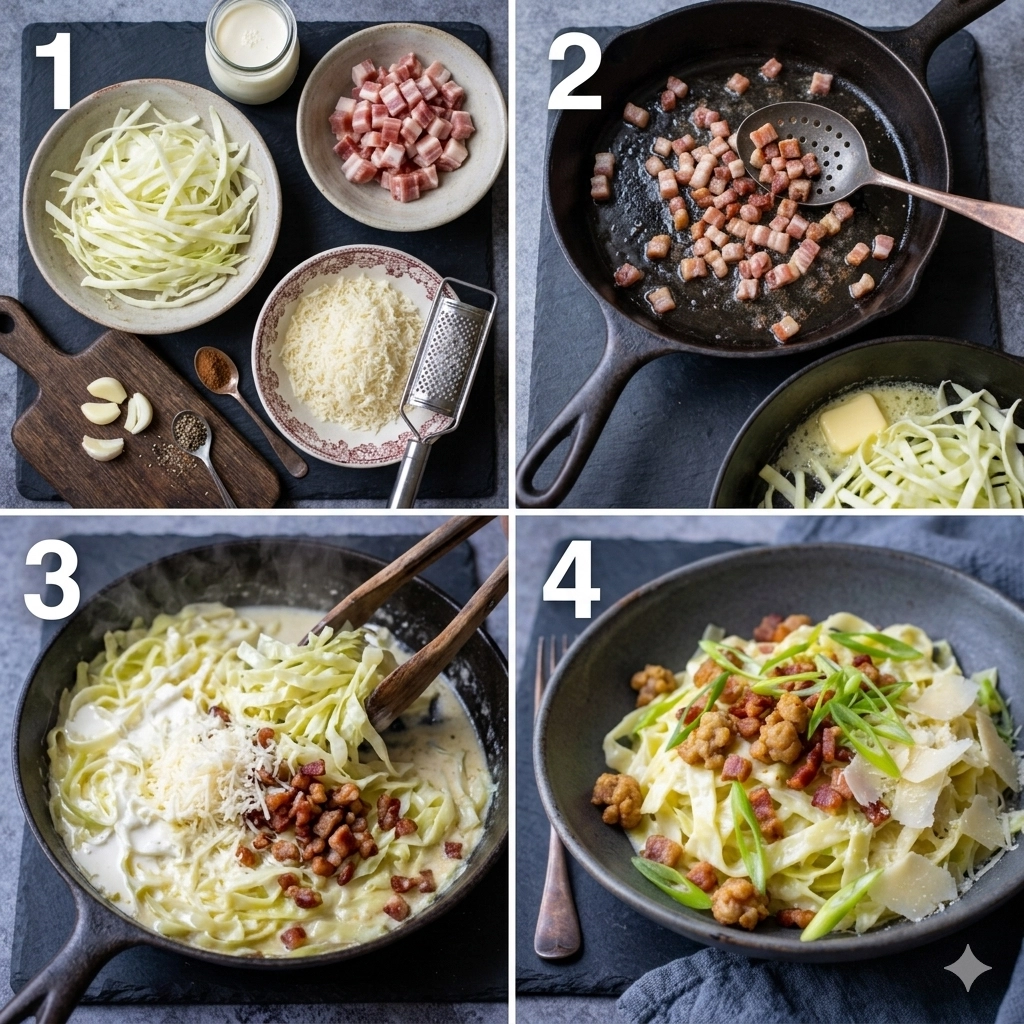
- Begin by preparing the vegetable. Remove and discard any bruised or tough outer leaves from the cabbage head. Slice the head in half, remove the dense inner core, and then finely shred the remaining cabbage into long, thin ribbons.
- Set a large, wide skillet or frying pan over medium heat. Add the diced pancetta to the dry pan.
- Sauté the pancetta, stirring occasionally, until the fat has fully rendered out and the meat is golden brown and crispy.
- Using a slotted spoon, remove the crispy pancetta from the pan and set it aside on a plate, leaving the rendered fat behind.
- Add the unsalted butter to the pan with the pancetta fat. Once melted, add the shredded cabbage along with a small pinch of salt.
- Sauté the cabbage gently over medium heat for 12 to 15 minutes. Stir regularly to ensure even cooking. The goal is for the cabbage to become very soft, glossy, and reduced in volume by more than half.
- Add the finely sliced garlic to the pan and cook for 30 to 60 seconds until its aroma is released, being careful not to let it brown.
- Season the mixture with a generous pinch of ground nutmeg and plenty of freshly cracked black pepper.
- Pour the double cream into the skillet and bring the mixture to a very gentle simmer.
- Allow the sauce to cook for 3 to 5 minutes. As the cream bubbles softly, it will begin to thicken and coat the cabbage ribbons.
- Gradually stir in half of the grated Parmesan cheese, allowing it to melt into the sauce until the texture is completely smooth.
- Return the crispy pancetta to the pan and toss everything together to combine.
- Taste the dish before adding any additional salt, as the pancetta and Parmesan are naturally salty. Serve immediately with an extra sprinkle of cheese if desired.
Achieving the Perfect Cabbage Texture
The secret to a successful cabbage Alfredo lies in the “noodle” simulation. Unlike many cabbage recipes that aim for a quick sear or a crunch, this method requires patience. When you sauté the cabbage in a mixture of butter and pancetta fat, you are essentially “melting” the vegetable. The 12 to 15-minute cook time is non-negotiable; this is when the cabbage loses its sulfurous bite and takes on a mild, buttery sweetness.
If you slice the cabbage too thick, it will feel like a side of coleslaw; slice it too thin, and it may disappear into the sauce. Aim for ribbons about a quarter-inch wide. This width provides enough structural integrity to hold the heavy cream while still feeling delicate on the fork. Using a wide pan is also crucial. A wide surface area allows moisture to evaporate efficiently, which prevents the cabbage from stewing in its own juices and becoming watery.
Strategic Modifications and Substitutions
While the classic recipe is divine, there are several ways to adapt it based on what you have in your pantry or your dietary preferences.
The Protein Swap: If you cannot find pancetta, thick-cut bacon is an excellent alternative. It provides a similar smoky depth and salty crunch. For a heartier version, you could even use browned Italian sausage or sliced kielbasa. If you prefer a lighter touch, seared shrimp can be folded in at the very last second.
Vegetarian Adjustments: To make this dish vegetarian, simply omit the pancetta. Increase the amount of butter slightly and consider adding a drop of liquid smoke or a smoked sea salt to mimic that savory depth. You can also add sautéed mushrooms—cremini or shiitake—to provide an earthy umami flavor that replaces the meat.
Dairy Variations: In the United States, double cream is often labeled as heavy whipping cream. Ensure you are using a product with a high fat content (at least 36 percent fat) to prevent the sauce from breaking. If you want a sharper flavor profile, you can mix a little Pecorino Romano with the Parmesan.
Elevating Your Dish with Unique Culinary Insights
To take this from a home-cooked meal to a professional-tier dish, pay attention to the garlic and the nutmeg. Many people make the mistake of mincing garlic into tiny bits that burn easily. By slicing the garlic into thin “petals,” you allow it to soften and sweeten alongside the cream without the risk of acrid, burnt notes.
The nutmeg is the “secret” ingredient of any great Alfredo. It doesn’t make the dish taste like dessert; rather, it bridges the gap between the sweetness of the cooked cabbage and the richness of the dairy. Always use a microplane to grate fresh nutmeg if possible, as the pre-ground version loses its volatile oils quickly and can taste dusty.
Another professional tip is to “mount” the sauce with cheese off the heat. If you boil the cream after adding the Parmesan, the proteins in the cheese can clump, resulting in a grainy texture. By stirring the cheese in at the very end over low heat, you ensure a glossy, emulsified finish that looks as good as it tastes.
Optimal Accompaniments and Serving Ideas
This cabbage Alfredo is incredibly versatile. Served in a large bowl, it functions as a satisfying low-carb main course. If you are serving it this way, a side of crusty sourdough bread is essential for mopping up every last drop of the creamy sauce.
If you prefer to use it as a side dish, it pairs beautifully with roasted proteins. The richness of the Alfredo cuts through the charred exterior of a grilled ribeye steak or a pan-seared salmon fillet. It also makes a fantastic bed for roasted chicken thighs. To add a bit of brightness to the meal, serve it alongside a crisp green salad dressed with a sharp lemon vinaigrette. The acidity of the salad provides a necessary counterpoint to the velvet-heavy textures of the cabbage and cream.
Understanding the Science of Creamy Sauces
When you simmer double cream with cabbage, a few interesting scientific reactions occur. The cabbage releases natural sugars as it breaks down, which deglaze the pan and incorporate the “fond” (the brown bits left behind by the pancetta) into the sauce. This is why the sauce often takes on a slightly golden hue rather than staying stark white.
Furthermore, the fat in the cream acts as an emulsifier. When you add the Parmesan, the fats from the cheese and the fats from the cream bind together. If the sauce looks like it is separating, a teaspoon of warm water or a small splash of extra cream can often “pull” the emulsion back together. This is a common technique used in professional kitchens to maintain that signature Alfredo silkiness.
Deep-Dive Culinary FAQ
Can I use red cabbage instead of white cabbage for this recipe?
While you certainly can use red cabbage, it will significantly change the aesthetic and slightly alter the flavor. Red cabbage has a more robust, peppery taste and a much firmer texture that takes longer to soften. Additionally, the pigments in red cabbage will bleed into the cream, turning your beautiful Alfredo sauce into a bright purple or muddy grey color, which might not be the look you are going for.
How do I prevent my Alfredo sauce from becoming too thin or watery?
The primary culprit for a watery sauce is cabbage that hasn’t been cooked down enough. Cabbage has a high water content. If you add the cream before the cabbage has reduced by half, that internal moisture will leak out into your sauce as it simmers. Ensure the cabbage looks “glossy” and significantly shrunken before you ever reach for the cream carton.
Is it possible to make this dish ahead of time and reheat it?
Alfredo sauces are notoriously finicky when it comes to reheating because the emulsion can break, leaving you with a pool of oil. If you must make it ahead, store it in the refrigerator for no more than two days. Reheat it very gently in a pan over low heat, adding a tablespoon of milk or cream to help the sauce come back together. Avoid using the microwave, as the intense, uneven heat will almost certainly cause the sauce to separate.
What is the best way to shred the cabbage for a pasta-like feel?
To get those long, elegant ribbons, it is best to use a very sharp chef’s knife. After coring the cabbage, lay the flat side down on the cutting board and slice with a fluid rocking motion. If you have a mandoline, you can use it for extreme precision, but be very careful with your fingers. Avoid using a food processor with a grating attachment, as this will produce small shreds rather than the long ribbons needed for the “Alfredo” experience.
Why is unsalted butter recommended over salted butter?
Control is the most important factor in high-end cooking. Both pancetta and Parmesan cheese are incredibly high in sodium. If you use salted butter, you run a very high risk of over-salting the dish before you even have a chance to taste it. By using unsalted butter, you can build the flavor profile manually and only add salt at the very end if it is truly necessary.
The Final Word on Cabbage Alfredo
This dish represents the beauty of simple ingredients handled with care. It proves that you don’t need exotic imports or complex techniques to create something truly memorable. By taking the time to slowly render the pancetta and patiently sauté the cabbage, you create a depth of flavor that rivals any traditional pasta dish. Whether you are looking to reduce your carb intake or simply want to try a new way to enjoy a classic vegetable, this creamy cabbage Alfredo with pancetta is sure to become a staple in your culinary repertoire. It is warm, inviting, and undeniably delicious.
Nutritional Information
| Nutrient | Amount Per Serving |
| Calories | 485 calories |
| Total Fat | 42 grams |
| Saturated Fat | 26 grams |
| Cholesterol | 135 milligrams |
| Sodium | 890 milligrams |
| Total Carbohydrates | 12 grams |
| Dietary Fiber | 4 grams |
| Sugars | 6 grams |
| Protein | 15 grams |
Disclaimer
The nutritional values provided are estimates based on standard ingredient measurements and may vary depending on the specific brands or varieties of ingredients used. For those with specific dietary requirements or medical conditions, please consult with a professional nutritionist or healthcare provider.
Creamy Cabbage Alfredo with Crispy Pancetta
Ingredients
- 600 grams white cabbage, shredded into thin ribbons
- 100 grams pancetta, diced into small cubes
- 40 grams unsalted butter
- 2 cloves garlic, finely sliced
- 250 milliliters double cream (heavy cream)
- 50 grams Parmesan cheese, finely grated
- 1 pinch ground nutmeg
- 1 pinch freshly ground black pepper
- 1 pinch sea salt, to taste
Instructions
- Remove the core from the cabbage and slice the leaves into very thin, long ribbons similar to fettuccine pasta.
- Place a large skillet over medium heat. Add the diced pancetta and cook until the fat has rendered and the meat is golden and crispy.
- Remove the crispy pancetta with a slotted spoon and set aside, leaving the rendered fat in the pan.
- Add the butter to the skillet. Once melted, add the shredded cabbage and a small pinch of salt. Sauté for 12 to 15 minutes until very soft and reduced in volume.
- Add the sliced garlic and cook for about 1 minute until fragrant. Season with nutmeg and black pepper.
- Pour in the double cream and bring to a gentle simmer. Cook for 3 to 5 minutes until the sauce begins to thicken and coat the cabbage.
- Stir in the grated Parmesan cheese until melted and smooth. Return the crispy pancetta to the pan and toss to combine.
- Taste for seasoning and serve immediately, garnished with extra Parmesan if desired.
Notes
Equipment
- Large wide skillet or frying pan
- slotted spoon
- chef’s knife
- Cheese grater
- measuring cups and spoons