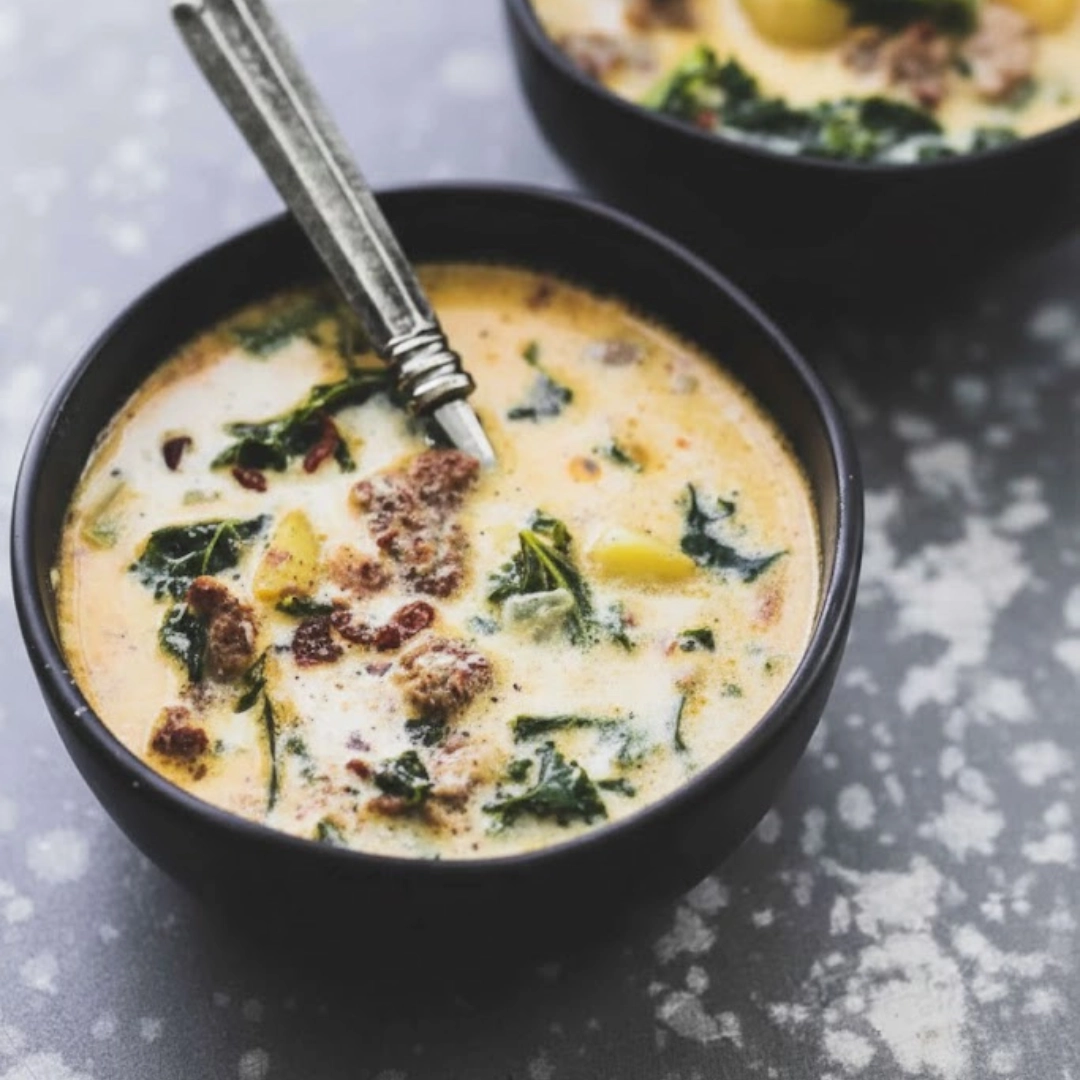
There are few dishes that evoke the kind of warmth and pure, satisfying comfort quite like a robust, broth-based soup built on simple, excellent components. The celebrated Zuppa Toscana Copycat is a perfect example: a deeply savory Tuscan-style soup that manages to feel both rustic and utterly refined. This iconic preparation, traditionally built upon Italian sausage, kale, and potatoes in a luscious cream base, is the quintessential cold-weather meal. It’s hearty enough to be the main event, yet quick enough to pull together on a chilly evening. Its balanced flavor profile—a little spice, a pleasant sweetness, and a lovely herbaceousness—makes it a universal crowd-pleaser that is well worth recreating in your own kitchen.
Table of Contents
The Components: Essential Ingredients
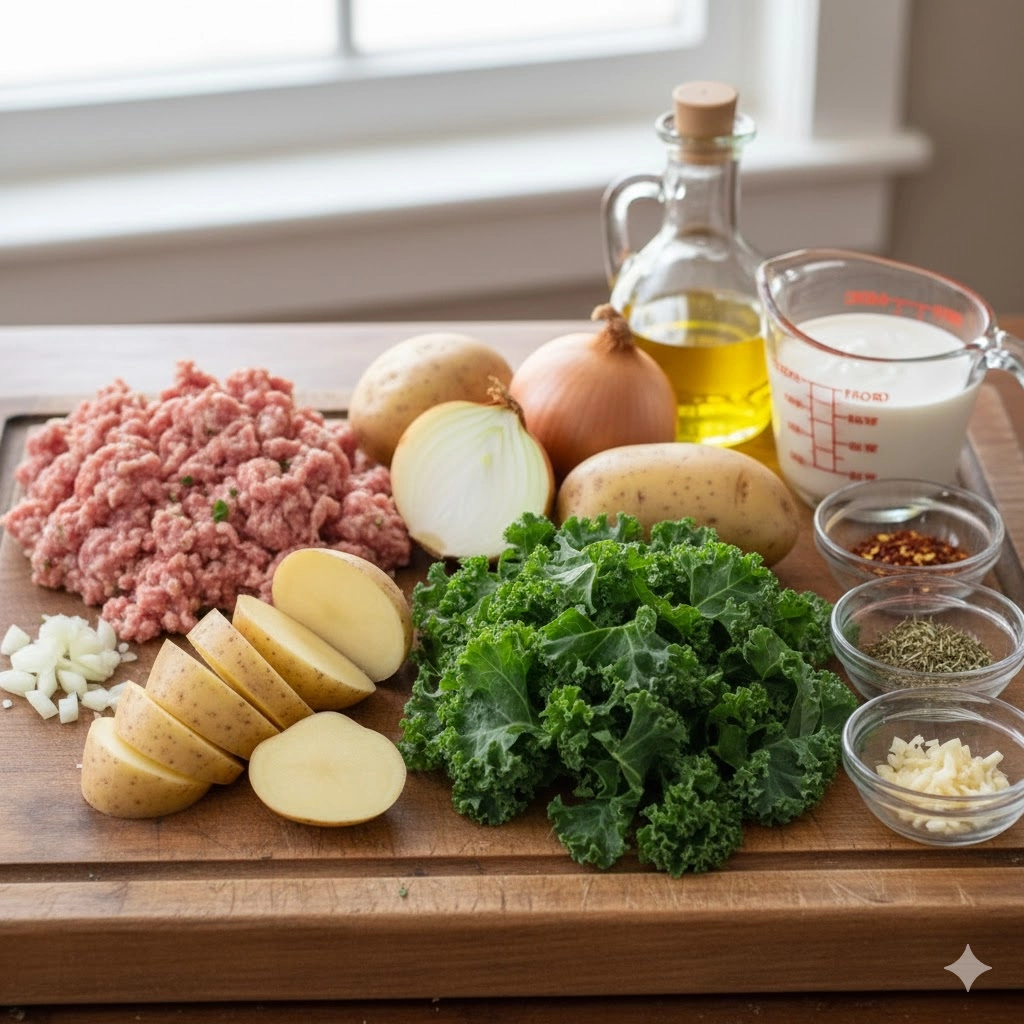
Creating a soup this dynamic starts with selecting the best core ingredients. Pay attention to the quality of your sausage and the freshness of your greens; they are the true anchors of this recipe.
For the Broth Base
- 1 pound Italian sausage (mild or hot, casing removed)
- 1 large yellow onion, diced (about one and one half cups)
- 4 cloves garlic, minced
- 6 cups chicken broth (low-sodium preferred)
- 2 cups water
- 1 teaspoon dried oregano
- 1 teaspoon dried thyme
- one half teaspoon red pepper flakes (adjust to taste)
- 2 teaspoons kosher salt
- one half teaspoon freshly ground black pepper
For the Texture and Cream
- 1 and one half pounds Russet or Yukon Gold potatoes, scrubbed and sliced into one quarter-inch thick half-moons
- one half cup heavy cream (or half-and-half)
- 4 cups fresh kale, tough stems removed and roughly chopped (about one bunch)
- 1 tablespoon olive oil
The Method: A Simple Path to Deep Flavor
Follow these steps to build the soup’s flavor layers, ensuring each element is added at the right moment.
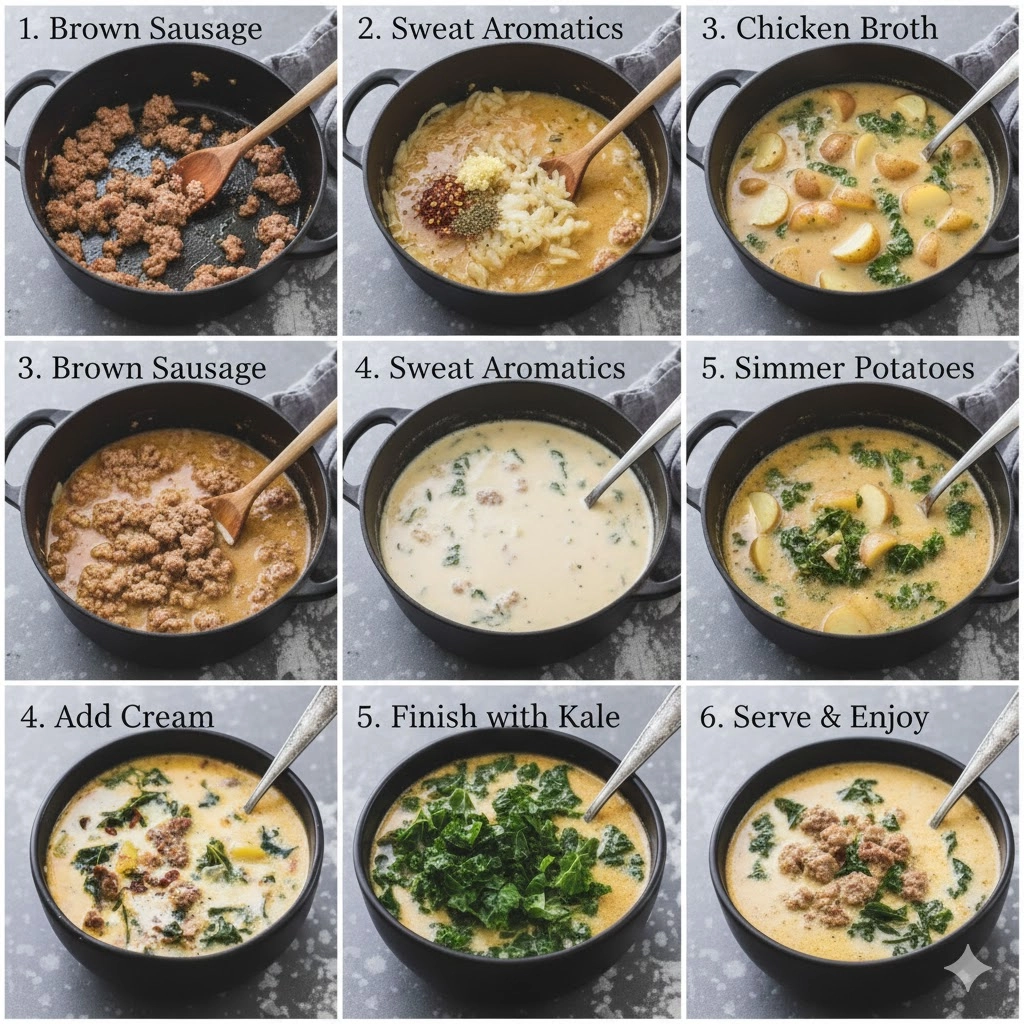
- Brown the Sausage and Sweat the Aromatics: In a large pot or Dutch oven, heat the olive oil over medium-high heat. Add the Italian sausage and break it up with a wooden spoon. Cook until it is thoroughly browned, about six to eight minutes. Drain off all but one tablespoon of the rendered fat. Add the diced onion and cook until softened and translucent, about four minutes. Stir in the minced garlic, oregano, thyme, and red pepper flakes, cooking for one minute until fragrant.
- Build the Liquid Foundation: Pour in the chicken broth and water. Scrape up any browned bits from the bottom of the pot—this is where the deepest flavor resides.
- Simmer the Potatoes: Add the sliced potatoes, salt, and pepper to the pot. Bring the mixture to a rolling boil, then reduce the heat to medium-low, cover, and simmer for fifteen to twenty minutes, or until the potatoes are easily pierced with a fork.
- Add the Cream: Once the potatoes are tender, stir in the heavy cream. Allow the soup to return to a gentle simmer (do not boil once the cream is added).
- Finish with Kale: Stir in the chopped kale. Cook for just three to five minutes, or until the kale has wilted and turned a vibrant, deep green.
- Rest and Serve: Remove the soup from the heat and let it rest for five minutes before serving to allow the flavors to fully meld. Taste and adjust the seasoning one final time, adding more salt or red pepper flakes as desired.
The Art of Assembly: Expanding the Steps
A truly great soup is an experience of textures and aromas. Here is how to execute each stage of the recipe with precision, focusing on the sensory indicators that let you know you are on the right track.
Rendering the Sausage
The crucial first step is rendering the sausage correctly. When you introduce the sausage to the hot oil, you should hear an immediate, vigorous sizzle. Use a stiff wooden spoon or spatula to aggressively break the meat down into small, uniform crumbles. The goal is to maximize the surface area for browning, which develops the Maillard reaction and creates those deeply savory, umami notes. The cooked sausage should be a rich mahogany color, not simply grey. When draining the fat, leave that small amount behind; it holds incredible flavor that will carry through the base of the soup, lending richness to the initial sweat of the onions.
The Aromatic Bloom
After adding the diced onion, you are looking for the point of translucency—the moment the sharp, raw smell of the onion gives way to a pleasant sweetness, and the pieces become somewhat clear. This is the cue to introduce the garlic and dried herbs. Crucially, you must only cook this mixture for about sixty seconds. The heat releases the aromatic oils in the herbs and spices (the “bloom”), but cooking them for too long will turn the garlic bitter and burn the spices. The kitchen should fill with a warm, earthy fragrance as the mixture cooks.
Achieving Potato Perfection
The potatoes must be cooked thoroughly but not so much that they disintegrate. When added to the simmering liquid, the starches release, acting as a natural, subtle thickener for the broth. To check for doneness, pull a single slice out and pierce it with a fork. It should offer minimal resistance—soft, but not mushy. If you cut the potato slices too thick (over one quarter-inch), they will take significantly longer to soften, and you risk over-reducing the broth. Cutting them uniformly is key to even cooking.
The Cream Finish
Stirring in the heavy cream right after the potatoes are tender is essential. The cream softens the spicy edges of the sausage and red pepper flakes and adds a silky mouthfeel. It also transforms the color of the broth from a translucent golden-brown to a creamy, pale ivory. Never bring the soup to a hard boil once the cream is incorporated. High heat can cause the fat in the cream to separate, resulting in a curdled or slightly grainy texture. Maintain a gentle, barely-there simmer.
Integrating the Kale
The final textural component is the kale. Chop it roughly, but don’t over-chop it; it will shrink considerably. Stir it into the hot soup and watch for the color change. As the kale wilts, it transforms from a matte, often blue-green to a glossy, brilliant emerald. Cooking it for only three to five minutes preserves its slight bite and vibrant color, ensuring it doesn’t become overly soft or bitter. The steam from the soup is enough to perfectly tenderize the leaves.
Culinary Insight: Pro Tips for an Elite Soup
Making the best Zuppa Toscana Copycat involves attention to a few simple, professional techniques that elevate the finished product.
- Soak the Potatoes: Before adding your sliced potatoes to the broth, soak them in cold water for ten to fifteen minutes. This rinses away excess surface starch, which prevents the final soup from becoming overly cloudy or gummy.
- Use High-Quality Broth: Since this is a broth-forward soup, the quality of your chicken broth makes a substantial difference. Use a low-sodium, good-quality boxed broth, or better yet, a homemade stock, to control the ultimate sodium level and deepen the background flavor.
- Layer the Salt: Do not add all the salt at once. Add the initial amount with the potatoes, then reserve the final taste-test for the very end, after the heavy cream is in. The cream slightly mellows the perception of salt, so the final seasoning adjustment is critical for a perfectly balanced flavor.
- The Power of Lemon Zest: For a very bright, non-traditional lift, stir in the zest of one half of a lemon right along with the cream. The essential oils add a vibrant, fresh note that cuts beautifully through the richness of the sausage and cream.
- Cook the Onion Low and Slow: While the recipe suggests medium heat, dropping the heat slightly and cooking the onion a bit longer (six to eight minutes) allows it to caramelize a little—a gentle, slow rendering that contributes profound sweetness to the final broth.
- Fresh Herbs for Garnish: While dried herbs are used in the cook, finishing each bowl with a sprinkle of fresh, chopped Italian parsley or a chiffonade of fresh basil adds color, aroma, and a burst of fresh flavor.

Adaptations and Alternatives: Personalizing the Dish
This recipe is flexible, allowing for easy substitutions based on dietary needs or pantry availability.
- Sausage Swap: For a milder or leaner soup, substitute the Italian sausage with ground chicken or turkey. Be sure to add an extra one half teaspoon of fennel seeds and a pinch more red pepper flakes to mimic the characteristic Italian sausage flavor profile.
- Dairy-Free Creaminess: To make this recipe completely dairy-free, substitute the heavy cream with full-fat coconut milk (the canned variety). The coconut flavor is surprisingly subtle and disappears into the savory notes of the sausage and broth, leaving only the richness behind.
- Heartier Greens: If kale is unavailable, use Swiss chard or spinach. If using spinach, add it in the final minute of cooking, as it wilts much faster than kale. If using chard, cook it for five to seven minutes, as it is slightly tougher.
- Root Vegetable Swap: For a lower-carb option, replace the potatoes with chopped cauliflower florets. Add the florets to the broth at the same time you would the potatoes, but monitor them closely; they will cook slightly faster.
- Smoky Flavor: Add a quarter cup of crumbled, cooked bacon or pancetta to the pot along with the sausage for an even deeper, smoky base flavor.
Presentation: Pairing and Serving the Soup
Because this soup is so substantial, it requires only light pairings to complete the meal. The classic complement is something simple that helps soak up the broth.
- Rustic Bread: Serve with thick slices of crusty, artisanal bread—a sourdough baguette or a rustic Italian loaf is perfect. A little olive oil and a dash of salt for dipping the bread makes the perfect accompaniment.
- Simple Side Salad: A light, peppery Arugula Salad dressed simply with a bright lemon vinaigrette provides a nice acidic counterpoint to the soup’s richness. The peppery bite of the arugula is particularly complementary.
- Grated Parmesan: Offer a small bowl of freshly grated Parmigiano-Reggiano at the table. A spoonful stirred into the hot soup just before eating adds a final, savory complexity and helps further thicken the broth.
Kitchen Questions: Common Zuppa Toscana Copycat FAQs
Is it better to use hot or mild Italian sausage?
This is purely a matter of preference. If you enjoy a gentle, lingering heat, use hot Italian sausage. If you prefer the flavor to be more balanced and family-friendly, use the mild variety. If you only have mild, you can boost the heat with a pinch more red pepper flakes.
Can I make this soup ahead of time?
Absolutely, and it is highly recommended. The flavors of the Zuppa Toscana Copycat deepen and meld overnight. When reheating, you may need to add a splash more broth or water, as the potatoes will absorb some of the liquid while it rests. If you are preparing it a day ahead, consider adding the kale only right before serving to keep it vibrant and green.
Why did my heavy cream curdle when I added it?
Curdling often occurs if the soup is boiling rapidly when the cream is added, or if you use a very low-fat dairy product (like skim milk or even light cream). To prevent this, always ensure the soup is at a gentle simmer, or even slightly off the heat, before stirring in the heavy cream, and use a product with at least twenty percent fat.
How long will the leftovers last?
Properly stored in an airtight container in the refrigerator, the leftovers will keep for three to four days. They make for an excellent, satisfying lunch the next day. Note that the potatoes will soften further, and the kale may lose some of its bright color.
Can I freeze this soup?
While possible, freezing is not recommended. Potatoes tend to become crumbly and grainy after being frozen and thawed in a soup. The cream may also separate upon reheating. If you must freeze it, do so before adding the potatoes and cream, and stir those ingredients in fresh once you thaw the broth and sausage base.
Nutritional Breakdown
The following is an estimate for one generous serving of this rich, flavor-forward soup.
| Nutrient | Amount per Serving |
| Calories | 420 kcal |
| Protein | 24 g |
| Carbs | 28 g |
| Fat | 25 g |
| Fiber | 4 g |
| Sugar | 5 g |
| Sodium | 850 mg |
Estimated Nutrition Disclaimer
Nutrition information is an estimate and may vary based on preparation and ingredients used.

Zuppa Toscana Copycat
Ingredients
- 1 pound Italian sausage (mild or hot, casing removed)
- 1 large yellow onion, diced
- 4 cloves garlic, minced
- 6 cups low-sodium chicken broth
- 2 cups water
- 1 teaspoon dried oregano
- 1 teaspoon dried thyme
- 0.5 teaspoon red pepper flakes (adjust to taste)
- 2 teaspoons kosher salt
- 0.5 teaspoon freshly ground black pepper
- 1.5 pounds Russet or Yukon Gold potatoes, sliced into 1/4-inch half-moons
- 0.5 cup heavy cream or half-and-half
- 4 cups fresh kale, stems removed and roughly chopped
- 1 tablespoon olive oil
Instructions
- In a large pot or Dutch oven, heat the olive oil over medium-high heat. Add the Italian sausage and break it up with a wooden spoon. Cook until browned, about 6–8 minutes. Drain all but 1 tablespoon of fat.
- Add diced onion to the pot and cook until translucent, about 4 minutes. Stir in garlic, oregano, thyme, and red pepper flakes. Cook for 1 minute until fragrant.
- Pour in chicken broth and water. Scrape up any browned bits from the bottom of the pot.
- Add sliced potatoes, salt, and pepper. Bring to a boil, reduce to medium-low, cover, and simmer for 15–20 minutes until potatoes are fork-tender.
- Stir in heavy cream and bring soup back to a gentle simmer. Do not boil.
- Add kale and cook for 3–5 minutes until wilted and bright green.
- Remove from heat and let soup rest for 5 minutes. Adjust seasoning if needed before serving.
Notes
Equipment
- large pot or Dutch oven
- wooden spoon
- knife and cutting board
- ladle