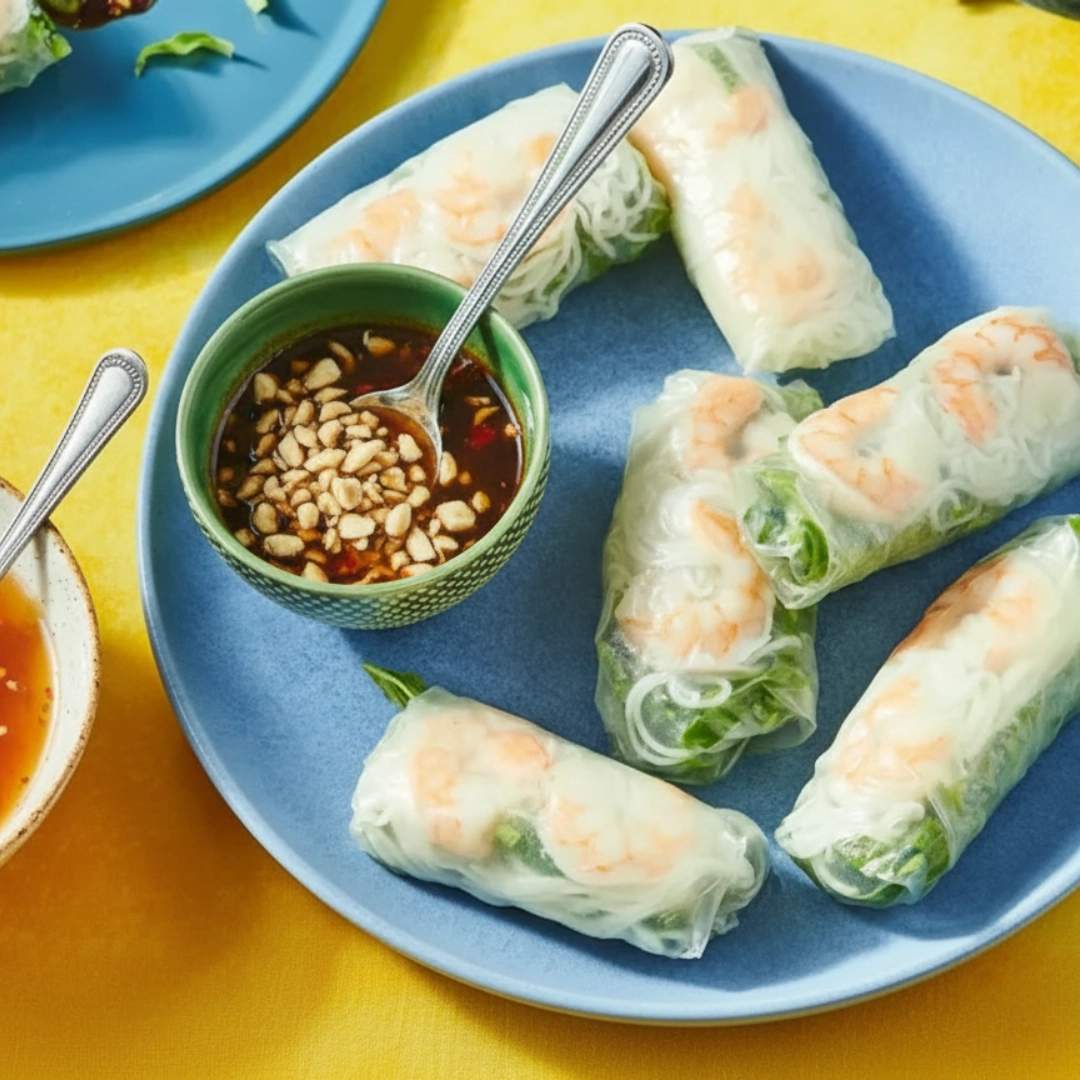
There is a certain magic in the simplicity of Vietnamese cuisine, and few dishes capture that elegance quite like Vietnamese Fresh Spring Rolls. Often referred to as gỏi cuốn, these rolls are the antithesis of the heavy, deep-fried appetizers often found in takeout boxes. They are cool, translucent, and bursting with the fragrance of fresh herbs. Whether you are looking for a light lunch, a vibrant party appetizer, or a fun, interactive dinner experience where guests can roll their own, this recipe delivers a restaurant-quality result right in your own kitchen.
Table of Contents
The Essential Ingredients for Fresh Spring Rolls
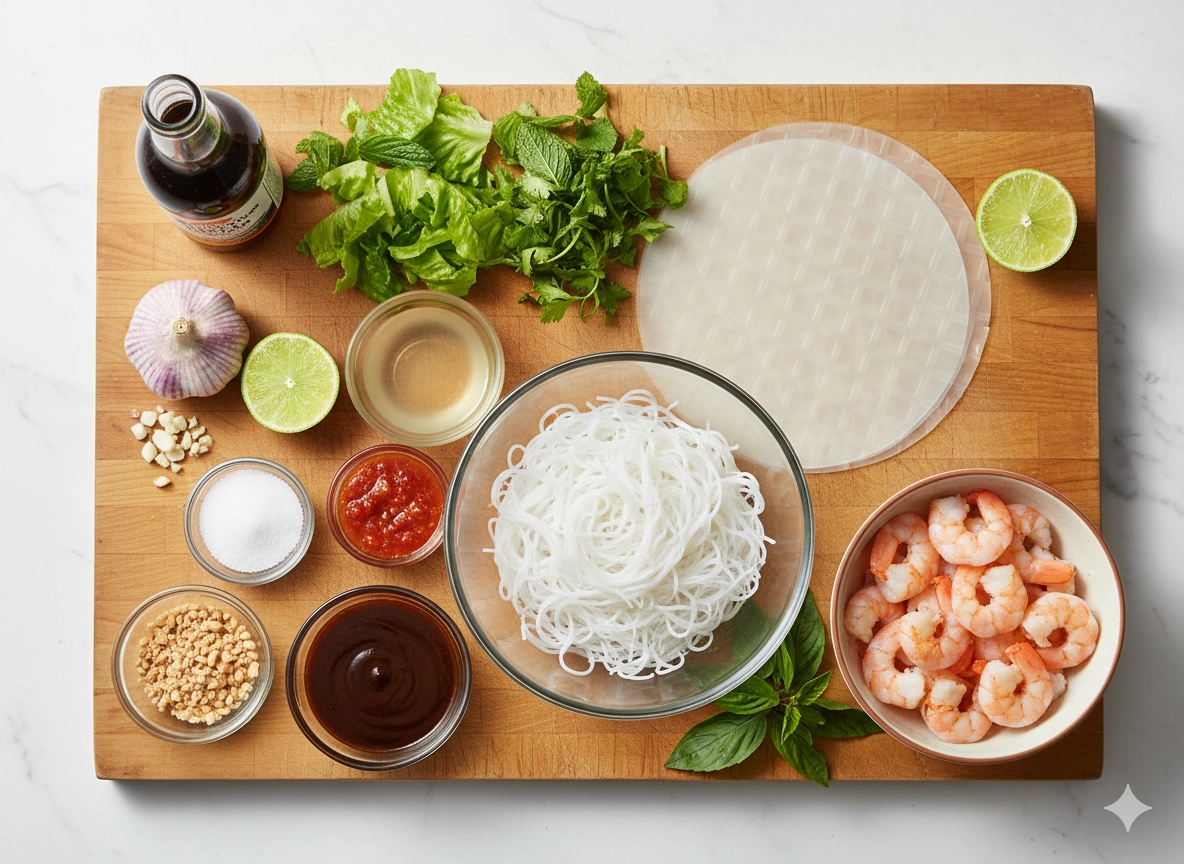
To create the perfect roll, you need high-quality components that balance texture and flavor. This list focuses on the traditional elements that provide that signature crunch and herbal brightness.
- 2 ounces rice vermicelli noodles
- 8 rice wrappers (8.5 inch diameter)
- 8 large cooked shrimp – peeled, deveined and cut in half lengthwise
- 2 leaves lettuce, chopped
- 3 tablespoons chopped fresh mint leaves
- 3 tablespoons chopped fresh cilantro
- 1 1/3 tablespoons chopped fresh Thai basil
For the Tangy Chili Dipping Sauce
- 1/4 cup water
- 2 tablespoons fresh lime juice
- 2 tablespoons white sugar
- 4 teaspoons fish sauce
- 1 clove garlic, minced
- 1/2 teaspoon garlic chili sauce
For the Savory Hoisin Dipping Sauce
- 3 tablespoons hoisin sauce
- 1 teaspoon finely chopped peanuts
Clear Directions for Assembly
Follow these steps carefully to ensure your rolls are tight, beautiful, and delicious.
- Prepare your workstation by gathering all ingredients.
- Bring a large pot of lightly salted water to a rolling boil. Add the rice vermicelli noodles and return to a boil. Cook uncovered, stirring occasionally, until the noodles are tender but still firm to the bite, which usually takes 3 to 5 minutes. Drain the noodles and set them aside to cool completely.
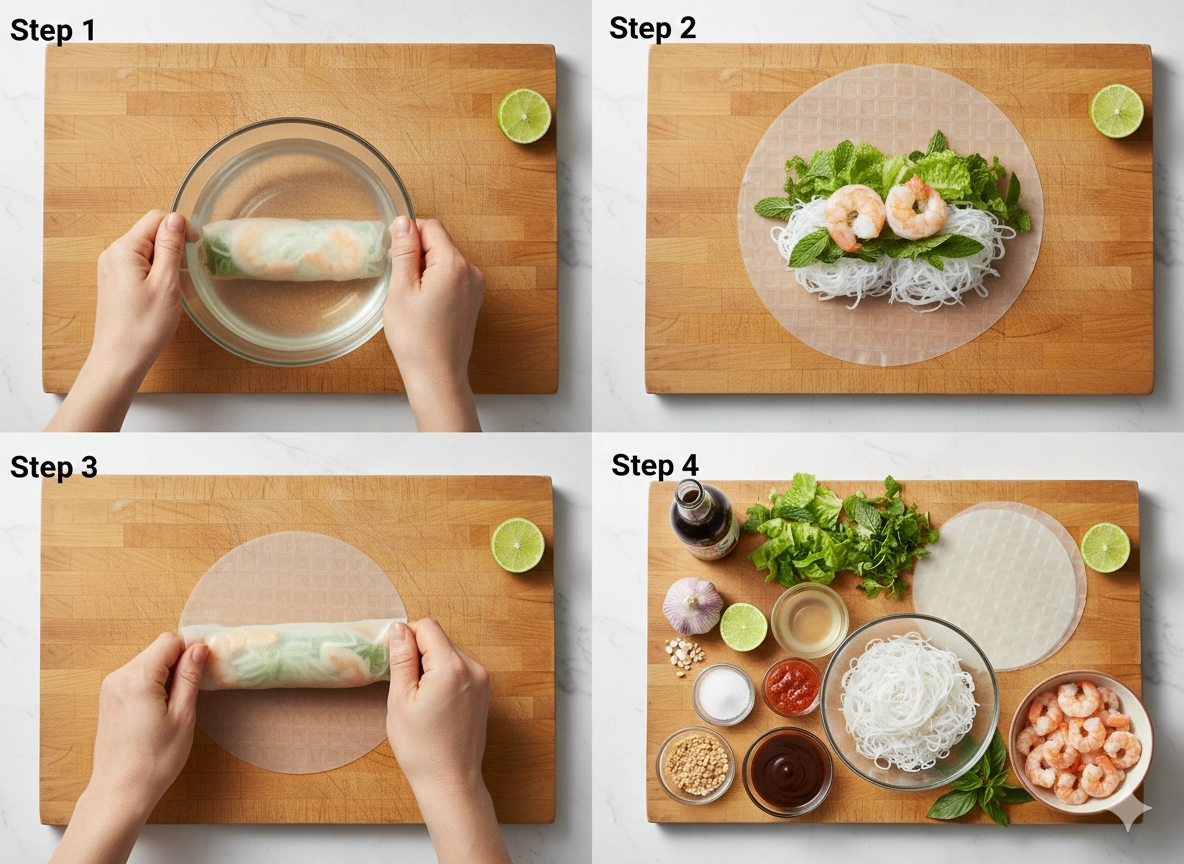
- Fill a large, shallow bowl with warm water. Take one rice wrapper and dip it into the water for about 1 second to soften. Do not over-soak, or it will become too sticky to handle.
- Lay the softened wrapper flat on a clean surface. Place two shrimp halves (pink side down for aesthetics) in a row across the center. Add a small portion of the cooled noodles, chopped lettuce, mint, cilantro, and Thai basil. Leave about 2 inches of space uncovered on each side of the wrapper.
- Fold the uncovered sides inward toward the center, then tightly roll the wrapper starting from the end with the lettuce. Repeat this process with the remaining wrappers and filling.
- Prepare the chili dipping sauce by mixing the water, lime juice, sugar, fish sauce, minced garlic, and garlic chili sauce in a small bowl until the sugar is fully dissolved.
- Prepare the hoisin sauce by mixing the hoisin and chopped peanuts in a separate small bowl.
- Serve the fresh spring rolls immediately alongside both dipping sauces.
Achieving the Ultimate Creamy and Crunchy Consistency
The secret to a world-class spring roll lies in the preparation of the rice vermicelli and the handling of the rice paper. When you boil your noodles, the goal is “al dente” in a rice context. If they are overcooked, they become a gummy mass inside the roll, which ruins the mouthfeel. Once drained, rinsing them in cold water stops the cooking process and removes excess starch, ensuring each strand remains distinct.
When it comes to the rice paper, less is more. Many beginners make the mistake of soaking the wrapper until it is completely limp. However, the rice paper continues to absorb moisture from the wet herbs and noodles once it is laid out. If you dip it for just a second, it will feel slightly stiff at first, but by the time you have layered your shrimp and herbs, it will be perfectly pliable and tacky enough to seal itself.
The crunch comes from the lettuce and the snap of the shrimp. Using “large” shrimp is vital because they provide a meaty contrast to the soft noodles. By slicing them in half lengthwise, you ensure that the shrimp sits flat against the wrapper, making the rolling process much easier and creating that iconic look where the pink curves of the shrimp peek through the translucent rice paper.
Detailed Step-by-Step Culinary Expansion
Creating these rolls is an exercise in patience and technique. Let’s dive deeper into the nuances of each stage to ensure your first batch looks like it came from a professional kitchen.
Perfecting the Noodle Base
Rice vermicelli is incredibly delicate. When you add them to the salted boiling water, use a fork or chopsticks to gently pull the bundle apart so they don’t clump. Because they are so thin, the window between “perfect” and “mushy” is small. Start testing the texture at the 3-minute mark. Once they have that slight bite, drain them and spread them out on a tray. This prevents them from nesting together into a solid block, making it much easier to grab a small pinch for each roll later.
The Art of the Rice Paper Dip
The temperature of your water bowl matters. If the water is boiling hot, the wrapper will disintegrate instantly. Aim for warm bathwater temperature. When you dip the 8.5-inch disc, do a quick circular motion to ensure the entire surface area is moistened. Lay it on a plastic or wooden cutting board. Avoid paper towels, as the rice paper will stick to the fibers and tear.
Layering for Visual Appeal
In Vietnamese cuisine, we eat with our eyes first. To get that beautiful presentation, the order of operations is key. Always place the shrimp halves first, with the vibrant pink outer side facing down against the wrapper. This ensures that when the roll is finished, the colorful shrimp is what people see through the clear skin. Next, layer your aromatics—the mint, cilantro, and Thai basil. This traps the herbs between the shrimp and the noodles, preventing them from poking through the delicate wrapper.
The Rolling Technique
Think of this like rolling a very tight burrito. Once the sides are folded in, use your fingers to pull the bottom edge over the fillings and “tuck” it under the pile of noodles and lettuce. Apply gentle tension as you roll upward. If the roll is too loose, the ingredients will fall out when you take a bite. If it is too tight, the wrapper might burst. Finding that middle ground comes with practice, usually by the third or fourth roll.
Sophisticated Flavor Profiles and Dipping Science
This recipe provides two distinct sauce experiences: a bright, acidic fish sauce base and a deep, earthy hoisin base.
The chili sauce, often referred to as a variation of nước chấm, relies on the balance of the four pillars of flavor: salty (fish sauce), sweet (sugar), sour (lime), and spicy (chili). The fish sauce provides a deep umami backbone that enhances the natural sweetness of the shrimp. Using fresh lime juice is non-negotiable here; bottled juice lacks the volatile oils that give the sauce its refreshing zing.
The hoisin sauce offers a thicker, sweeter alternative. Hoisin is a fermented soybean paste that carries hints of garlic and five-spice. By adding finely chopped peanuts, you introduce a fatty, nutty element that grounds the high notes of the fresh mint and basil. If you want a creamier version, some chefs whisk in a tiny bit of peanut butter, but the classic chopped peanut topping provides a wonderful textural contrast.
Modifications and Creative Substitutions
While the classic shrimp and herb combination is a staple, these rolls are incredibly versatile. If you are looking to change things up while staying true to the spirit of the dish, consider these adjustments:
- Protein Swaps: If you aren’t a fan of shrimp, you can use thinly sliced boiled pork loin or even strips of firm tofu for a vegetarian option.
- Herb Variations: If Thai basil is hard to find, you can substitute with holy basil or even a bit of extra mint. Avoid using standard sweet Italian basil, as the flavor profile is quite different.
- Added Crunch: Many people enjoy adding julienned cucumbers or matchstick carrots. These add a refreshing water content and extra “snap” to every bite.
- Wrapper Sizes: If you find the 8.5-inch wrappers difficult to handle, you can look for larger 12-inch versions, which allow for more filling and more “overlap” during the rolling process, making them less likely to tear.
Accompaniments and Optimal Serving Suggestions
Vietnamese Fresh Spring Rolls are best served as soon as they are assembled. The rice paper is at its peak texture when it is slightly tacky and soft. If left out too long, the wrappers will dry out and become rubbery or even crack.
If you are serving these at a party, place them on a platter with a small space between each roll. If they touch, they will stick together and the wrappers might tear when your guests try to pick them up. You can prevent this by placing a small piece of green leaf lettuce between each roll as a natural divider.
To make it a full meal, pair these rolls with a steaming bowl of Pho or a crisp Vietnamese salad. They also pair beautifully with light, crisp beverages like jasmine iced tea, a cold lager, or a lime-infused sparkling water.
Expert Guidance: Deep-Dive FAQ
How can I prevent the rice paper from tearing while I am rolling?
The most common cause of tearing is over-soaking the paper or using too much filling. Ensure you only dip the paper for one second; it should still feel a bit firm when you lay it down. Also, be careful with “poky” ingredients like stems of cilantro or basil. It is better to chop the herbs or remove the tough stems so they don’t pierce the wrapper during the tightening phase of the roll.
Can I make these spring rolls a day in advance for a party?
Fresh spring rolls are notorious for drying out, but you can prep them a few hours ahead if necessary. The best method is to wrap each individual roll tightly in plastic wrap or cover the entire platter with a very damp (but not dripping) paper towel, then seal the whole thing with plastic wrap. Store them at room temperature if eating within two hours; otherwise, refrigerate them, but be aware the noodles may stiffen slightly in the cold.
What is the difference between these and “Egg Rolls”?
The primary difference is the wrapper and the cooking method. Egg rolls use a thick, wheat-based dough that includes eggs and are always deep-fried, resulting in a crunchy, bubbly, golden-brown exterior. Vietnamese Fresh Spring Rolls (gỏi cuốn) use a translucent rice paper made from rice flour and water. They are served raw and cold, emphasizing the fresh, vibrant flavors of the herbs rather than the richness of frying oil.
Is there a way to make the dipping sauces less spicy?
Absolutely. The heat in the chili sauce comes primarily from the garlic chili sauce (such as Sriracha or Sambal Oelek). You can start with just a drop or omit it entirely. The sauce will still be delicious thanks to the lime and fish sauce. For the hoisin sauce, the peanuts add no heat, so that is naturally a very mild, kid-friendly option.
Nutritional Overview and Values
These rolls are naturally low in fat and high in fresh nutrients, making them an excellent choice for health-conscious diners.
| Nutrient | Amount Per Serving |
| Calories | 82 |
| Total Fat | 1 gram |
| Cholesterol | 15 milligrams |
| Sodium | 340 milligrams |
| Total Carbohydrates | 16 grams |
| Dietary Fiber | 1 gram |
| Sugars | 4 grams |
| Protein | 3 grams |
Dietary and Safety Disclaimer
The nutritional information provided is an estimate based on the specific ingredients listed in this recipe. Actual values may vary depending on the brand of fish sauce or hoisin sauce used. If you have a shellfish allergy, please substitute the shrimp with tofu or pork. Additionally, if you have a peanut allergy, ensure you omit the peanuts from the hoisin sauce and check that the hoisin sauce was processed in a nut-free facility.
Bringing the Flavors of Vietnam to Your Table
Mastering the Vietnamese fresh spring roll is a rewarding culinary skill that brings a burst of freshness to any meal. While the rolling technique might take a few tries to perfect, the combination of succulent shrimp, aromatic herbs, and those two iconic dipping sauces is well worth the effort. These rolls represent a beautiful balance of nutrition and flavor, proving that healthy eating can be incredibly satisfying. Once you taste the difference between a homemade roll and a store-bought one, this recipe is sure to become a permanent fixture in your cooking repertoire.
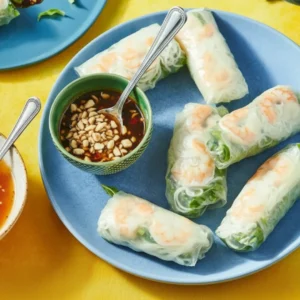
Vietnamese Fresh Spring Rolls
Ingredients
- 2 ounces rice vermicelli noodles
- 8 rice wrappers (8.5 inch diameter)
- 8 large cooked shrimp – peeled, deveined and cut in half
- 2 leaves lettuce, chopped
- 3 tbsp chopped fresh mint leaves
- 3 tbsp chopped fresh cilantro
- 1.33 tbsp chopped fresh Thai basil
- 0.25 cup water (for sauce)
- 2 tbsp fresh lime juice
- 2 tbsp white sugar
- 4 tsp fish sauce
- 1 clove garlic, minced
- 0.5 tsp garlic chili sauce
- 3 tbsp hoisin sauce
- 1 tsp finely chopped peanuts
Instructions
- Bring a large pot of lightly salted water to a rolling boil. Cook rice vermicelli for 3 to 5 minutes until tender yet firm. Drain and set aside to cool.
- Fill a large bowl with warm water. Briefly dip one rice wrapper into the water for 1 second to soften, then lay it flat on a clean surface.
- Place 2 shrimp halves pink-side down across the center. Layer a small amount of noodles, lettuce, mint, cilantro, and Thai basil over the shrimp, leaving 2 inches on each side.
- Fold the uncovered sides of the wrapper inward, then roll the wrapper tightly starting from the bottom end.
- For the chili sauce: Whisk together water, lime juice, sugar, fish sauce, minced garlic, and chili sauce in a small bowl until sugar dissolves.
- For the hoisin sauce: Combine hoisin sauce and chopped peanuts in a separate small bowl.
- Serve the finished spring rolls immediately with both dipping sauces on the side.
Notes
Equipment
- large pot For boiling noodles
- colander
- Large shallow bowl For dipping rice paper
- Clean cutting board Work surface for rolling
- Small mixing bowls For sauces