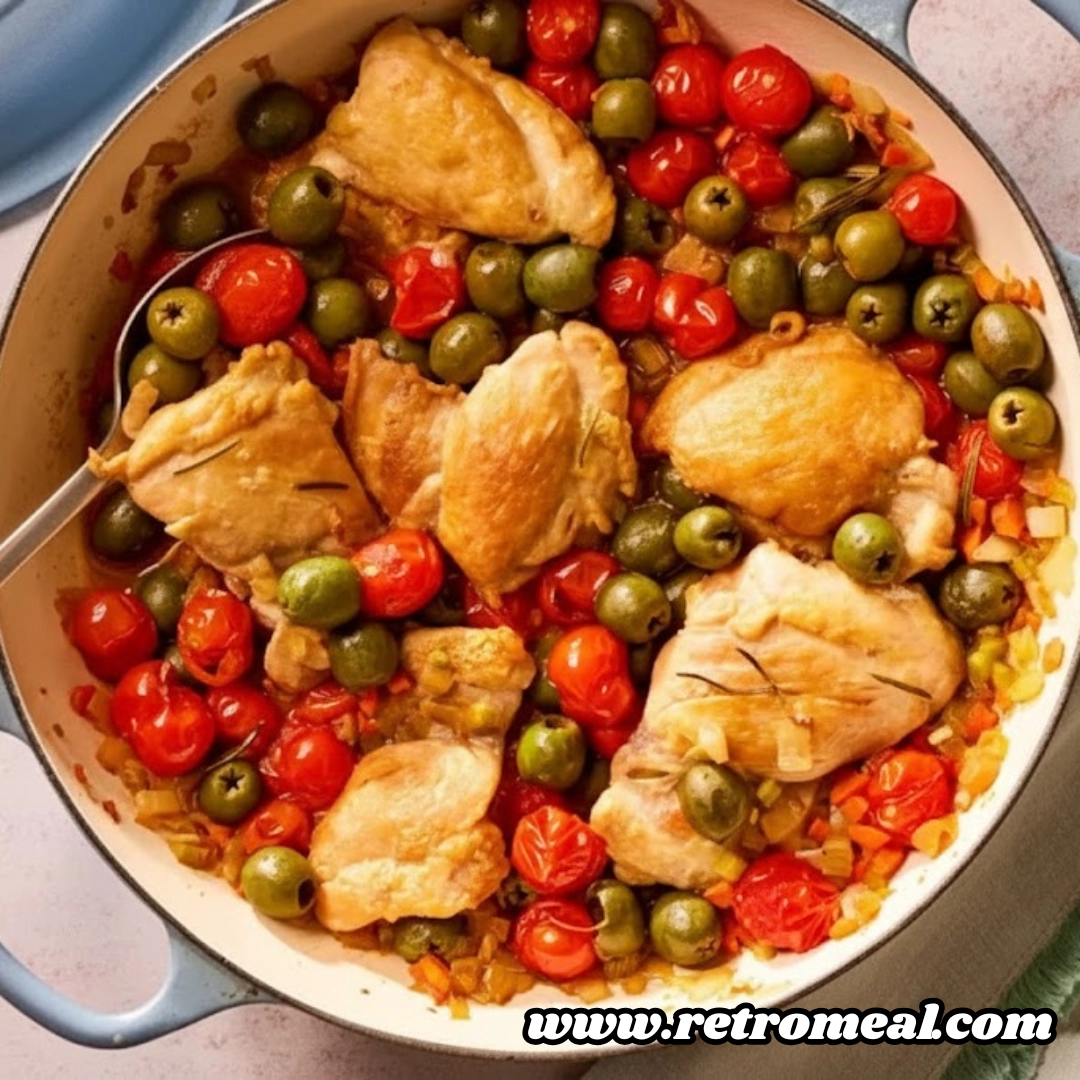
The eternal question of what to prepare for dinner is a challenge that unites everyone from home cooks to culinary legends. Even when you are passionate about food, the daily grind can make the kitchen feel more like a chore than a creative outlet. This is exactly why recipes like these Tuscan-Style Chicken Thighs are so vital to a well-balanced home menu. By focusing on a small handful of high-impact ingredients, you can produce a meal that tastes like it simmered for hours in a rustic Italian kitchen, yet requires almost no prep work. This dish is designed for those busy weeknights when you want something nourishing, sophisticated, and deeply flavorful without the exhaustion of a complex recipe.
Table of Contents
Ingredients for Tuscan-Style Chicken Thighs
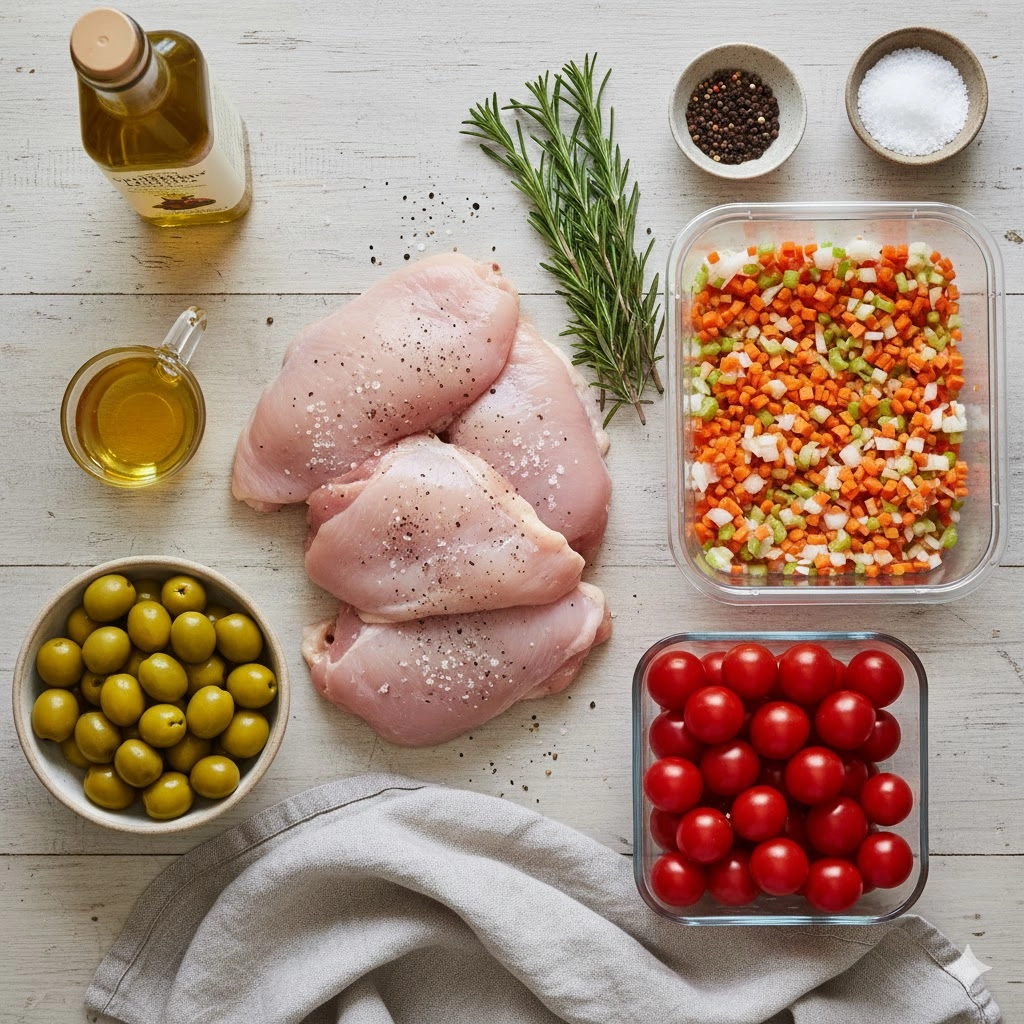
To create this Mediterranean-inspired masterpiece, you will need the following items. Please ensure your ingredients are fresh to maximize the natural flavors of the produce and poultry.
- 1 and 1 half to 2 pounds boneless skinless chicken thighs
- 1 teaspoon kosher salt plus more to taste
- 1 half teaspoon freshly ground black pepper plus more to taste
- 2 tablespoons extra-virgin olive oil
- 1 10-ounce container mirepoix (a pre-chopped blend of onions, carrots, and celery)
- 2 teaspoons fresh rosemary leaves (optional)
- 1 half cup Castelvetrano olives
- 1 quarter cup olive brine
- 1 pint cherry tomatoes
Instructions for Perfect Preparation
Follow these steps carefully to ensure the chicken is perfectly seared and the vegetables create a rich, savory sauce.
- Heat the Oven: Begin by preheating your oven to 425 degrees Fahrenheit.
- Season the Poultry: Use paper towels to pat the chicken thighs thoroughly dry. Season them on all sides with the kosher salt and freshly ground black pepper.
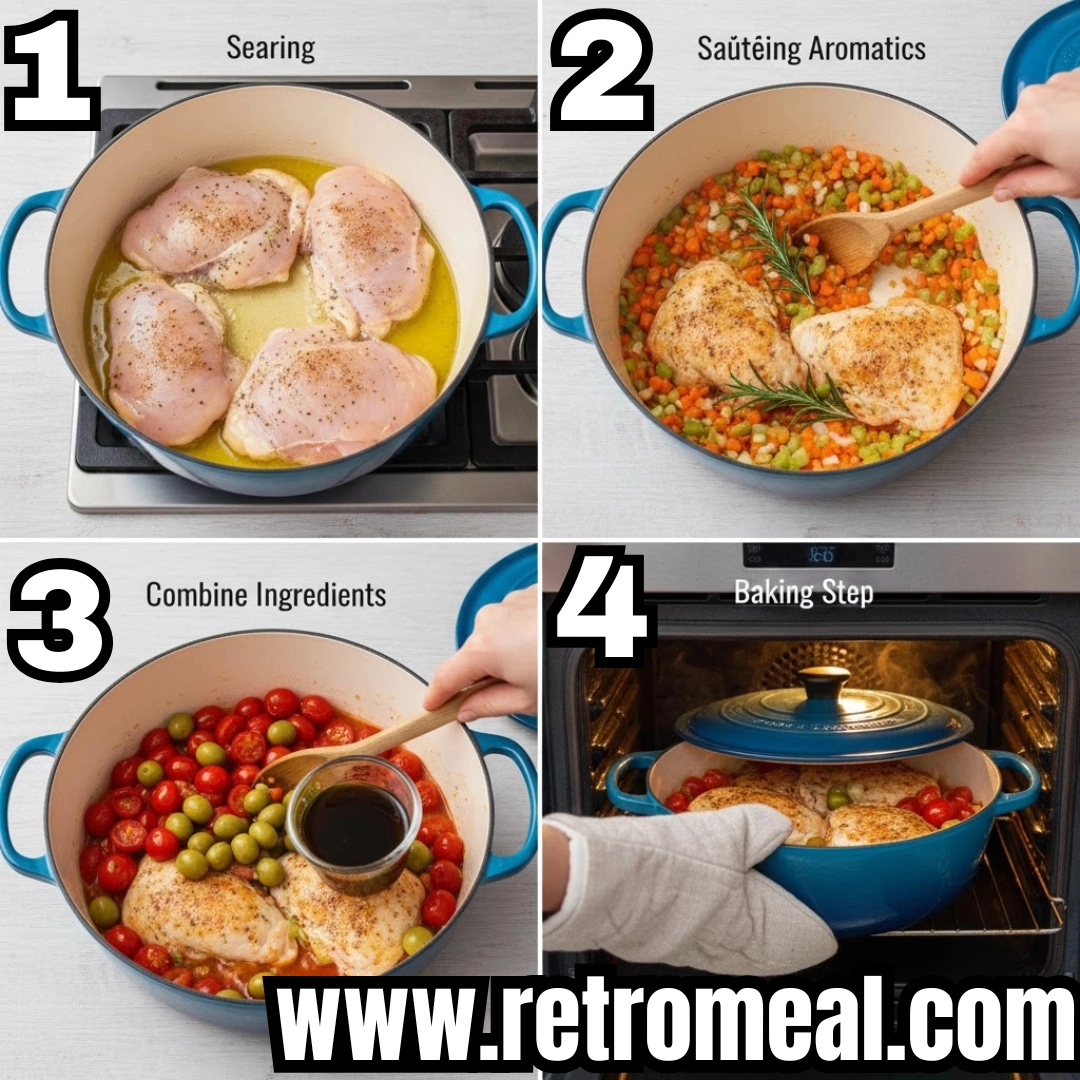
- Sear the Chicken: Pour the extra-virgin olive oil into a Dutch oven or a large oven-proof pot. Set the heat to medium-high. Once the oil is shimmering, add the chicken thighs in a single layer. You may need to work in batches to avoid crowding. Cook on the first side for 4 to 6 minutes until a golden-brown crust forms. Flip the thighs and cook for an additional 1 to 2 minutes. Remove the chicken from the pot and set it aside on a plate; note that the meat will still be raw in the center.
- Sauté the Aromatics: Keep the pot over medium-high heat. Add the mirepoix blend and a small pinch of salt. Sauté the vegetables, stirring occasionally, for 3 to 5 minutes until they become tender and start to brown. If you are using rosemary, stir it in now and cook for about 30 seconds until its fragrance is released.
- Deglaze and Combine: Pour the olive brine into the pot. Use a wooden spoon to scrape up the browned bits (the fond) from the bottom of the pan. Continue cooking for about 1 minute until the liquid has mostly evaporated. Stir in the whole cherry tomatoes and the Castelvetrano olives. Add a final pinch of salt and pepper.
- Bake to Perfection: Remove the pot from the heat. Place the chicken thighs back into the pot, seared side up, along with any juices that collected on the plate. Cover the pot with a tight-fitting lid and slide it into the oven. Bake for approximately 15 minutes. The chicken is done when an instant-read thermometer registers between 170 and 175 degrees Fahrenheit.
- Serve: Plate the chicken thighs and generous spoonfuls of the tomato and olive mixture, ensuring you drizzle the flavorful pan juices over the top.
Achieving the Ultimate Savory Depth through Searing
The foundation of this dish lies in the initial sear of the chicken thighs. When you place the seasoned meat into the hot extra-virgin olive oil, a chemical reaction known as the Maillard reaction occurs. This isn’t just about changing the color of the meat; it is about creating complex flavor compounds that cannot be achieved through boiling or steaming. To get this right, your pan must be truly hot. If the oil isn’t shimmering, the chicken will stick and tear rather than developing that beautiful mahogany crust.
Once the chicken is in the pan, resist the urge to move it. Patience is a culinary virtue here. If you try to flip the chicken and it feels stuck, it is telling you it isn’t ready. As the crust forms, the meat will naturally release from the surface of the Dutch oven. By searing the chicken first and then finishing it in the oven, you ensure the exterior is flavorful while the interior remains incredibly juicy. Boneless skinless thighs are particularly forgiving in this regard, as they have enough fat content to stay moist even at the high heat of 425 degrees Fahrenheit.
The Science of the Mirepoix Foundation
While many people view the combination of onions, carrots, and celery as a simple base, it is actually a powerhouse of flavor science. In French cooking, this is called a mirepoix. The sugars in the onions and carrots caramelize during the sautéing process, providing a background sweetness that balances the acidity of the tomatoes and the saltiness of the olives. By using a pre-chopped version, you save significant time, but you don’t sacrifice any of that essential structural flavor.
As the mirepoix cooks in the residual chicken fat and olive oil, it softens and releases its moisture. This moisture helps to pick up the browned bits left behind by the chicken. When you add the olive brine, you are deglazing the pan. This step is critical because those browned bits are concentrated bursts of savory goodness. The brine adds a layer of fermented, salty complexity that plain water or even chicken broth can’t quite match. It ties the vegetable base to the Mediterranean theme of the olives and tomatoes.
Mastering the Oven Finish for Juicy Results
Finishing this dish in the oven under a lid creates a localized steaming environment within the dry heat of the oven. This “braise-lite” method allows the cherry tomatoes to soften until they almost burst, releasing their juices to mingle with the olive brine and mirepoix. Because the chicken is placed on top of the vegetables, it continues to cook gently.
Using an instant-read thermometer is the most reliable way to ensure your poultry is safe and delicious. While 165 degrees Fahrenheit is the standard safety mark, chicken thighs actually benefit from being cooked slightly higher, to around 170 or 175 degrees Fahrenheit. At this temperature, the connective tissues in the dark meat break down more completely, resulting in a more tender, “fall-apart” texture that pairs beautifully with the softened vegetables.
Enhancing the Meal with Perfect Accompaniments
Because this recipe produces a wonderful amount of natural pan sauce—a combination of chicken juices, tomato liquid, and olive brine—you want to serve it with something that acts as a sponge.
- Starchy Bases: A pile of creamy mashed potatoes is a classic choice, providing a neutral, velvety contrast to the acidic tomatoes. Alternatively, buttered egg noodles offer a comforting, slippery texture that catches the bits of mirepoix perfectly. For a more Mediterranean feel, serve the chicken over a bed of fluffy rice pilaf or even some toasted couscous.
- Crusty Breads: Never underestimate the power of a warm baguette or a loaf of sourdough. Tearing off a piece of bread to “sop up” the liquid at the bottom of the plate is often the best part of the meal.
- Fresh Greenery: To cut through the richness of the chicken and the saltiness of the olives, a bright, crisp green salad is highly recommended. A simple vinaigrette made with lemon juice and olive oil will complement the Tuscan flavors without competing with them.
Adapting the Recipe to Your Pantry
Flexibility is the hallmark of a great home cook. While the recipe calls for Castelvetrano olives—known for their buttery, mild flavor and firm texture—you can easily swap these out. If you prefer a punchier, more fermented taste, Kalamata olives are an excellent substitute. Just ensure whatever variety you choose is pitted to keep the meal “knife-free” as intended.
If rosemary feels too medicinal for your palate, you can lean into other woody herbs. Thyme is a wonderful alternative that provides a more subtle, earthy note. If you have fresh sage or oregano in your garden, those work beautifully as well. For those who enjoy a bit of heat, adding a pinch of crushed red pepper flakes during the mirepoix sauté can transform the dish into something with a bit more “zing.” If you don’t have olive brine on hand, a splash of dry white wine or even a bit of chicken stock with a teaspoon of lemon juice will provide the necessary liquid for deglazing.
Thoughtful Storage and Reheating Practices
One of the best features of one-pot chicken dishes is that they often taste even better the next day. As the dish sits in the refrigerator, the flavors of the rosemary, olives, and tomatoes continue to infuse into the meat.
- Refrigeration: Store any leftovers in an airtight glass or plastic container. They will remain fresh and delicious for up to 4 days.
- Reheating: To maintain the texture of the chicken, it is best to reheat it gently. You can place the chicken and sauce in a skillet over medium-low heat, covering it with a lid until warmed through. If using a microwave, use a medium power setting and cover the dish to prevent the chicken from becoming rubbery.
- Freezing: While you can freeze this dish, the tomatoes may lose some of their structure upon thawing, becoming more of a sauce than whole fruit. If you do freeze it, consume within 2 months for the best quality.
Frequently Asked Questions
Can I use chicken breasts instead of thighs for this recipe?
While you can use chicken breasts, you must be very careful with the timing. Breasts are much leaner than thighs and can dry out quickly at 425 degrees Fahrenheit. If you choose to use them, start checking the internal temperature after about 10 minutes in the oven. You should aim for 165 degrees Fahrenheit for breasts, as they do not require the higher temperature that thighs do to become tender.
What if I cannot find pre-chopped mirepoix at my grocery store?
You can easily make your own by following a simple ratio of two parts onion to one part carrot and one part celery. For this recipe, aim for about 1 cup of diced onion and a half cup each of diced carrots and celery. Cut them into a small, uniform dice so they cook evenly. This adds about 5 to 10 minutes of prep time but results in the exact same flavor profile.
Are Castelvetrano olives necessary, or can I use canned black olives?
Castelvetrano olives are preferred because of their unique buttery flavor and “meaty” texture, which stands up well to the high heat of the oven. Canned black olives are much softer and have a more metallic, salty taste. While they will work in a pinch, the dish will lose some of its gourmet, Mediterranean character. If you can’t find Castelvetranos, look for any high-quality jarred green olive.
How can I make this dish if I don’t own a Dutch oven?
Any large, oven-safe skillet or pot will work. A deep cast-iron skillet is a fantastic alternative as it holds heat very well for searing. If your pan doesn’t have a lid, you can tightly cover it with a double layer of heavy-duty aluminum foil before placing it in the oven. The goal is to trap the moisture so the tomatoes can break down and the chicken stays succulent.
A Satisfying Conclusion to Your Culinary Journey
Embracing simplicity in the kitchen does not mean you have to sacrifice elegance or flavor. This Tuscan-inspired chicken dish proves that with just a few smart ingredients—like the briny pop of olives and the sweetness of roasted tomatoes—you can create a restaurant-quality meal with minimal effort. It is a testament to the idea that good food is often about the quality of the components and the techniques used to combine them, rather than a long list of instructions. Whether you are cooking for a partner or feeding a busy family, this one-pot wonder is sure to become a recurring favorite in your household.
Nutritional Overview
The following information provides an estimate of the nutritional content per serving. These figures are based on the primary ingredients listed and may vary depending on specific brands used.
| Nutrient | Amount Per Serving |
| Calories | 302 |
| Total Fat | 18 grams |
| Saturated Fat | 4 grams |
| Cholesterol | 105 milligrams |
| Sodium | 840 milligrams |
| Total Carbohydrates | 4 grams |
| Dietary Fiber | 1 gram |
| Sugars | 2 grams |
| Protein | 34 grams |
Nutritional Disclaimer
The nutritional values provided are calculated using an ingredient database and should be considered an estimate. Factors such as specific brands, the exact size of the chicken thighs, and natural variations in produce will affect the final count. For those with specific dietary requirements, please consult a professional nutritionist or use a certified nutritional calculator with your specific ingredients.
Tuscan-Style Chicken Thighs
Ingredients
- 1.5 pounds boneless, skinless chicken thighs (up to 2 pounds)
- 1 tsp kosher salt, plus more to taste
- 0.5 tsp freshly ground black pepper, plus more to taste
- 2 tbsp extra-virgin olive oil
- 10 ounces mirepoix (pre-chopped onion, carrot, and celery blend)
- 2 tsp fresh rosemary leaves (optional)
- 0.5 cup Castelvetrano olives
- 0.25 cup olive brine
- 1 pint cherry tomatoes
Instructions
- Preheat your oven to 425 degrees Fahrenheit. Pat the chicken thighs dry with paper towels and season both sides thoroughly with salt and pepper.
- Heat olive oil in a Dutch oven or large oven-proof pot over medium-high heat. Add chicken in a single layer and sear until browned, about 4 to 6 minutes per side. Transfer chicken to a plate.
- In the same pot, add the mirepoix and a pinch of salt. Sauté for 3 to 5 minutes until tender and lightly browned. Stir in rosemary (if using) for 30 seconds until fragrant.
- Pour in the olive brine, scraping the bottom of the pan to release the browned bits. Cook for 1 minute until liquid evaporates, then stir in the cherry tomatoes and olives.
- Return the chicken and any accumulated juices to the pot, placing them seared-side up on top of the vegetables. Cover with a lid.
- Bake in the oven for 15 minutes or until the internal temperature of the chicken reaches 170 to 175 degrees Fahrenheit. Serve topped with the tomato-olive mixture and pan juices.
Notes
Equipment
- Dutch oven or oven-proof pot
- Instant-read thermometer
- tongs
- wooden spoon