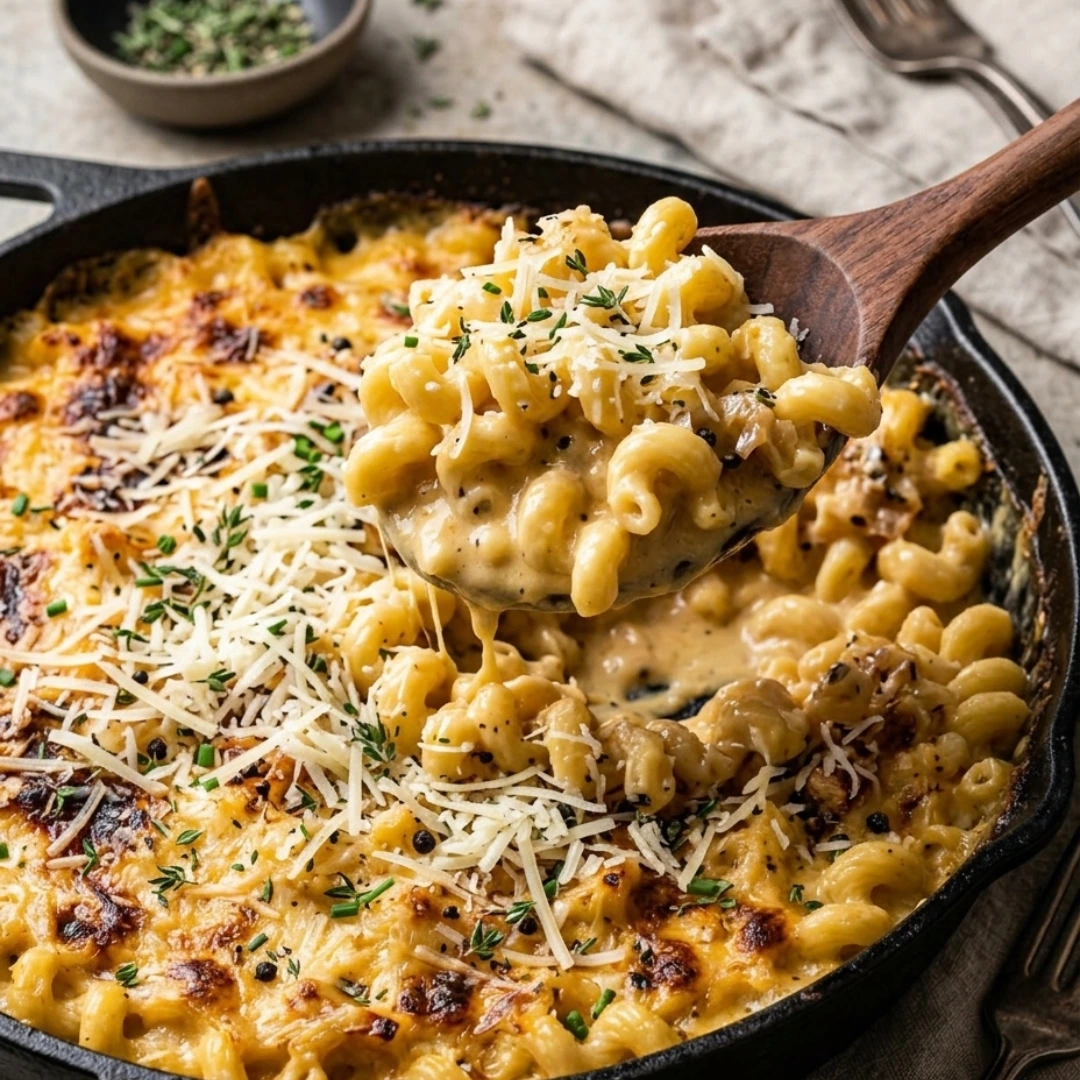
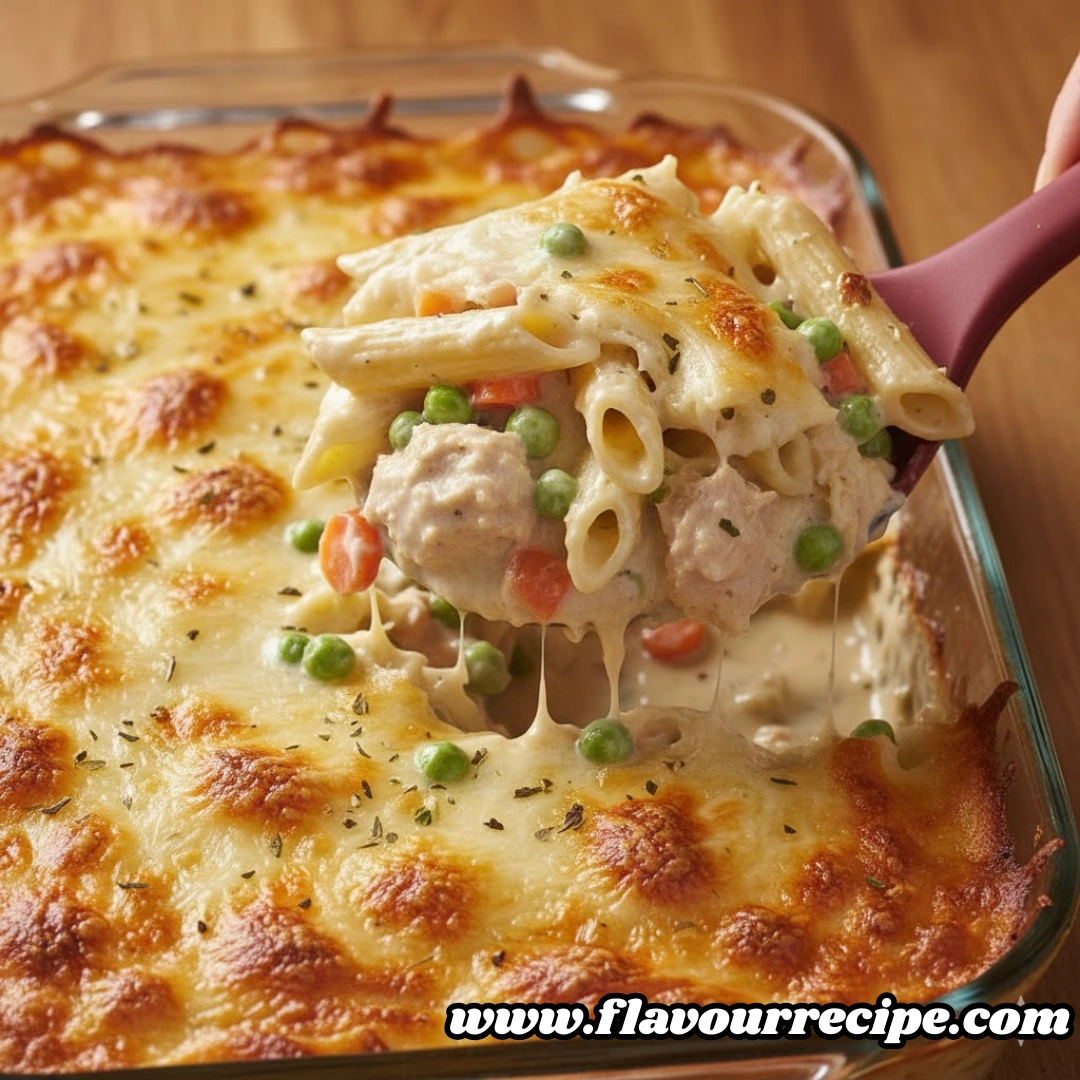
Traditional pasta bakes often require multiple pots and a significant amount of active prep time, but this approach simplifies the process by cooking everything in a single vessel. The Tuna Alfredo Casserole utilizes a high-protein base and a rich, savory liquid to hydrate the pasta directly in the oven, resulting in a cohesive texture that mimics a slow-simmered sauce. This dish serves as an excellent option for those seeking a substantial, protein-dense meal that balances the nostalgia of a classic tuna bake with the refined flavors of a garlic-forward Alfredo. It is particularly effective for busy evenings when efficiency and minimal cleanup are the primary goals.
Table of Contents
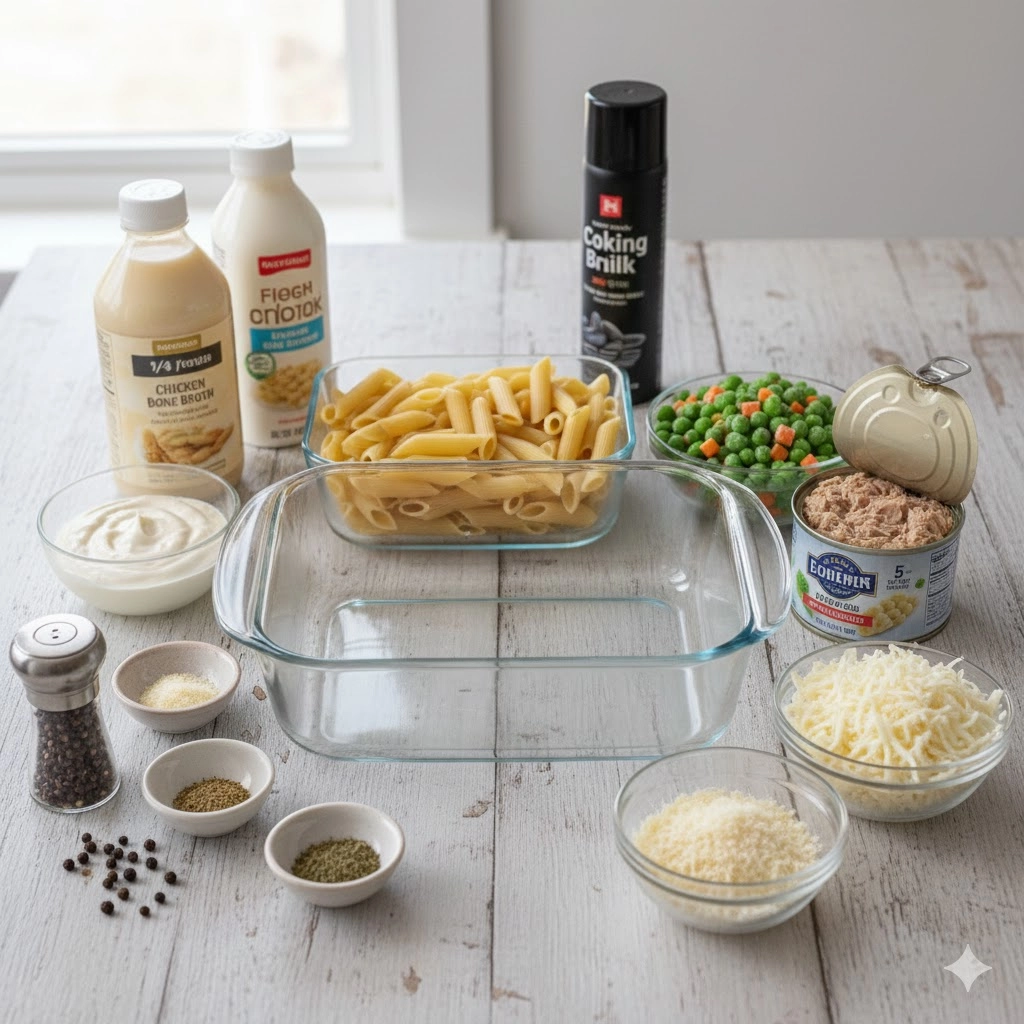
The Necessary Components
For the Liquid Base
- Three quarters cup refrigerated Alfredo sauce
- One and one quarter cups chicken bone broth
- Three quarters cup high-protein two percent milk
- One half teaspoon garlic powder
- One half teaspoon dried Italian seasoning
- Freshly ground black pepper to taste
For the Substantial Filling
- Eight ounces high-protein dry pasta (such as rotini or penne)
- Five ounces canned tuna, drained and flaked
- One half cup frozen peas and carrots blend
- Cooking spray for the baking dish
For the Cheese Topping
- One quarter cup grated Parmesan cheese
- One half cup shredded white Cheddar cheese
Assembly and Baking Sequence
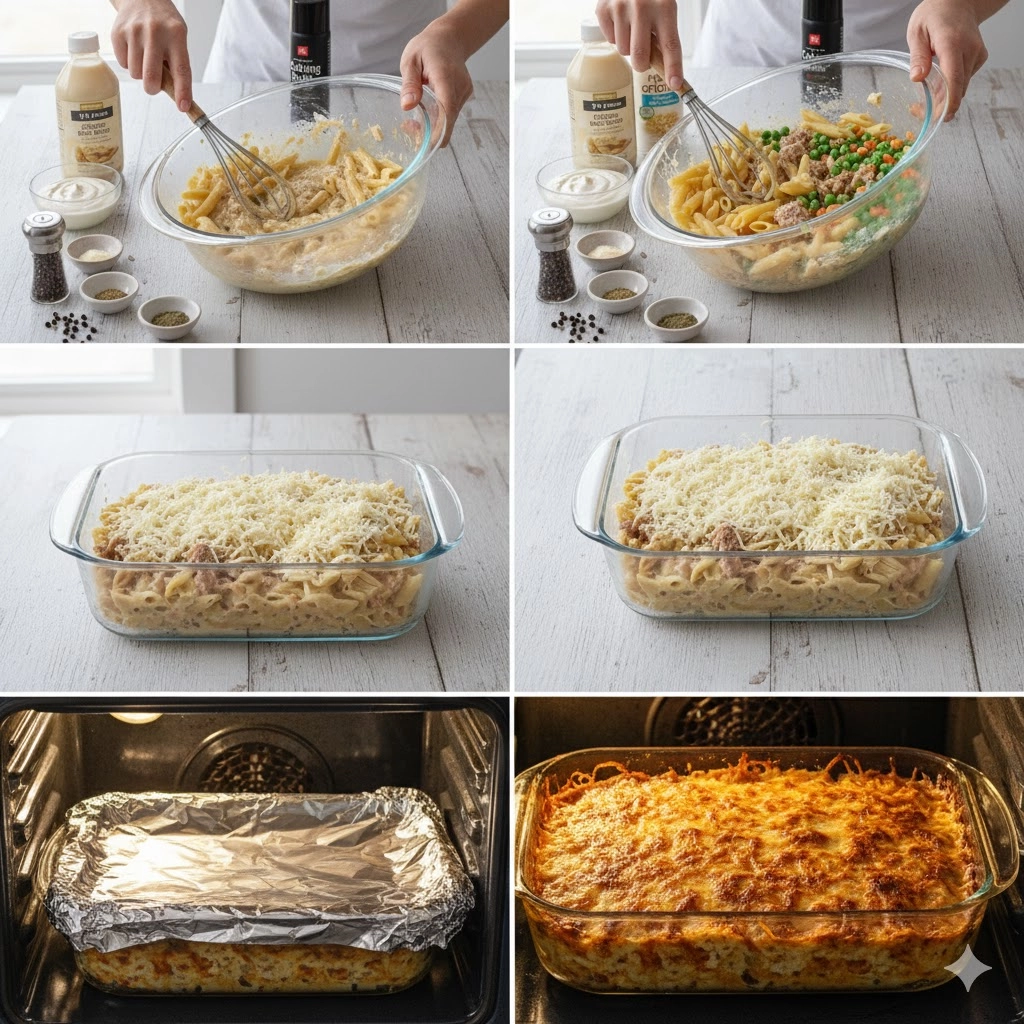
- Heat your oven to three hundred seventy five Fahrenheit and prepare an eight by eight inch glass or ceramic baking dish with a light coating of cooking spray.
- In a deep mixing bowl, combine the Alfredo sauce, chicken bone broth, milk, garlic powder, Italian seasoning, and black pepper, whisking until the mixture is uniform.
- Add the dry pasta, flaked tuna, and frozen vegetables into the liquid, folding them in until every piece of pasta is thoroughly coated.
- Pour the contents into the prepared baking dish, using a spoon to press the pasta down so it is mostly submerged in the liquid.
- Distribute the Parmesan and white Cheddar evenly over the top of the mixture.
- Seal the dish tightly with a sheet of aluminum foil to trap the steam.
- Transfer to the center rack and bake for forty minutes.
- Remove the foil and continue baking for another ten to fifteen minutes until the cheese is bubbling and has developed a light golden hue.
Technical Details for a Successful Bake
The success of a no-boil Tuna Alfredo Casserole relies heavily on the ratio of liquid to starch. Because the pasta absorbs moisture as it softens in the oven, the sauce will initially appear very thin. This is intentional. As the heat penetrates the center of the dish, the starches from the protein-rich pasta release into the bone broth and milk, thickening the sauce naturally without the need for a flour-based roux.
When checking for doneness after the initial forty minutes, the pasta should be “al dente” or slightly firm to the bite. The final ten to fifteen minutes of uncovered baking are crucial for evaporation. During this time, the surface moisture reduces, and the proteins in the Cheddar and Parmesan undergo the Maillard reaction, creating that characteristic savory crust. If the liquid seems too thin when you first remove the foil, do not worry; the sauce will continue to set and thicken significantly during the five-minute resting period after it leaves the oven.
Aroma is a key indicator here. You should smell the toasted garlic and the sharpness of the white Cheddar as it browns. If the edges of the cheese begin to pull away from the sides of the dish and the center is bubbling vigorously, the casserole is ready to be removed from the heat.
Professional Kitchen Strategies
- Submerge the Pasta: Ensure that no dry pasta edges are poking out above the liquid line before you cover the dish with foil. Exposed pasta will remain crunchy and undercooked.
- Seal it Tight: The aluminum foil must be crimped tightly around the edges of the pan. If steam escapes, the pasta will not hydrate properly, leading to an uneven texture.
- Tuna Texture: Rather than finely mashing the tuna, leave it in slightly larger flakes. This provides a better “bite” and prevents the fish from disappearing into the sauce.
- Broth Choice: Using bone broth instead of standard chicken stock adds a deeper umami profile and extra silkiness to the sauce due to the natural gelatin content.
- Resting Time: Resist the urge to serve immediately. Allowing the dish to sit for five minutes allows the internal temperature to stabilize and the sauce to fully cling to the pasta noodles.
- Cheese Quality: If possible, grate your own white Cheddar. Pre-shredded cheeses are often coated in potato starch to prevent clumping, which can occasionally lead to a grainier sauce texture.
Refined Variations
- Lemon and Herb: Incorporate one teaspoon of fresh lemon zest and a tablespoon of chopped fresh parsley after baking to brighten the richness of the Alfredo.
- Spicy Infusion: Add one quarter teaspoon of red pepper flakes to the liquid base for a subtle heat that cuts through the creamy dairy.
- Crunchy Element: For the final ten minutes of baking, top the cheese with a mixture of crushed buttery crackers and melted butter.
- Vegetable Swap: Replace the peas and carrots with chopped frozen spinach (thawed and squeezed dry) or very small broccoli florets.
Accompaniments and Presentation
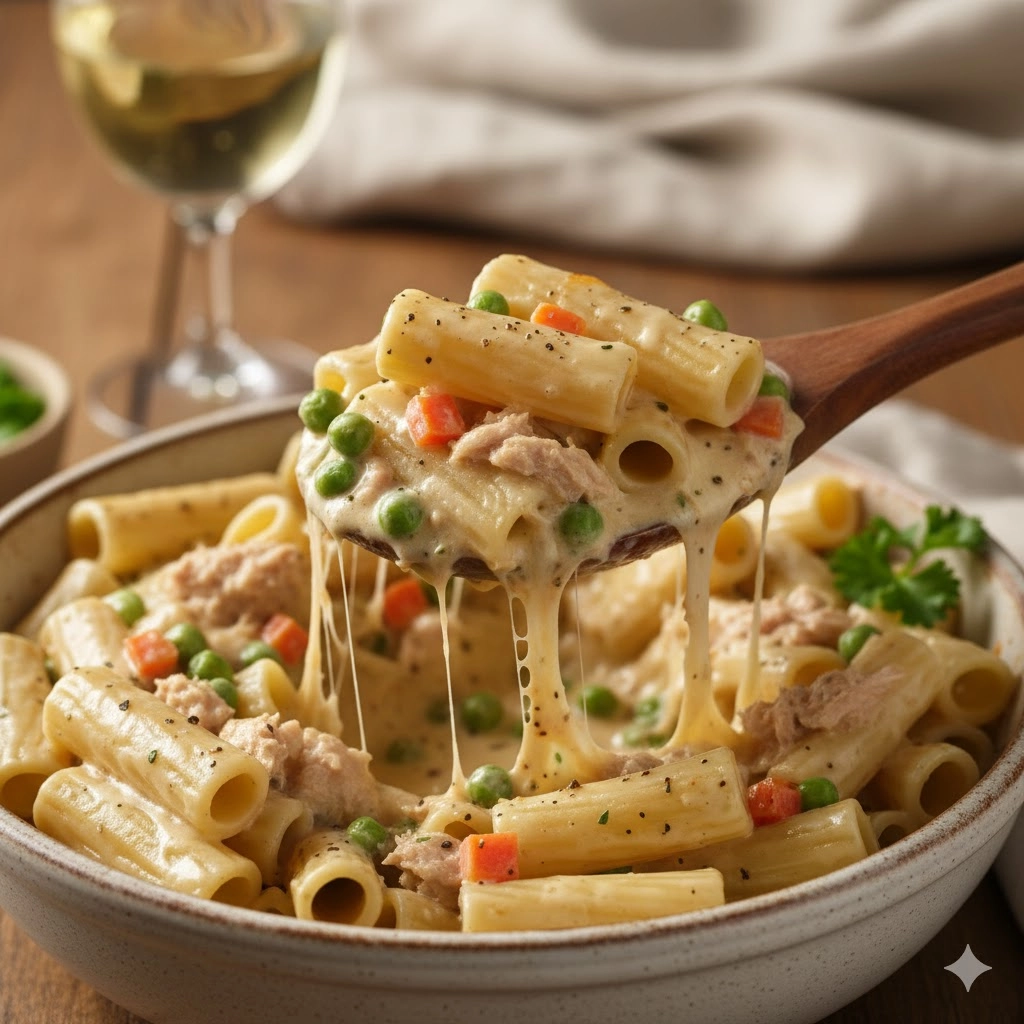
To balance the density of the cream sauce, serve this dish alongside a crisp green salad tossed in a sharp vinaigrette. A side of roasted asparagus or steamed green beans with a squeeze of lemon also provides a refreshing contrast. For a more indulgent presentation, serve with toasted garlic ciabatta to soak up any remaining Alfredo sauce on the plate.
Common Inquiries
Can I use regular pasta instead of protein pasta?
Yes, standard semolina pasta works well. However, you may find the sauce is slightly thinner, as protein-fortified pastas often absorb liquid differently. Ensure the cooking time remains the same to allow the noodles to fully soften.
Is it possible to make this ahead of time?
While you can mix the liquid ingredients in advance, it is best to wait until you are ready to bake before adding the dry pasta. If the pasta sits in the liquid for too long before entering the oven, it can become overly soft and lose its structure.
How should leftovers be handled?
Store any remaining portions in an airtight container in the refrigerator for up to three days. When reheating, add a splash of milk or broth to the bowl to loosen the sauce, as the pasta will continue to absorb moisture as it sits.
Can I use canned salmon instead of tuna?
Canned salmon is an excellent substitute and provides a similar texture. Ensure you remove any skin or large bones before folding it into the Alfredo mixture.
Nutrition Information
| Nutrient | Amount per Serving |
| Calories | 520 kcal |
| Protein | 56 g |
| Carbs | 22 g |
| Fat | 22 g |
| Fiber | 1 g |
| Sugar | 4 g |
| Sodium | 1156 mg |
Nutrition Information Disclaimer
Nutrition information is an estimate and may vary based on preparation and ingredients used.
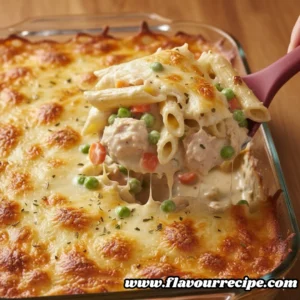
Creamy One Pan Tuna Alfredo Casserole
Ingredients
- 0.75 cup refrigerated Alfredo sauce
- 1.25 cups chicken bone broth
- 0.75 cup high-protein 2 percent milk
- 0.5 tsp garlic powder
- 0.5 tsp dried Italian seasoning
- freshly ground black pepper, to taste
- 8 ounces high-protein dry pasta (rotini or penne)
- 5 ounces canned tuna, drained and flaked
- 0.5 cup frozen peas and carrots
- 0.25 cup grated Parmesan cheese
- 0.5 cup shredded white Cheddar cheese
- cooking spray
Instructions
- Preheat your oven to 375 Fahrenheit. Lightly grease an 8×8-inch baking dish with nonstick cooking spray.
- In a large mixing bowl, whisk together the Alfredo sauce, chicken bone broth, milk, garlic powder, Italian seasoning, and black pepper until smooth.
- Add the dry pasta, drained tuna flakes, and the frozen peas and carrots to the bowl. Stir until the pasta is completely coated.
- Pour the mixture into the prepared baking dish. Use a spoon to spread it evenly and press down any pasta pieces to ensure they are submerged.
- Sprinkle the grated Parmesan and shredded white Cheddar evenly across the top of the casserole.
- Cover the dish tightly with aluminum foil, ensuring the edges are sealed well to prevent steam from escaping.
- Bake in the preheated oven for 40 minutes. The steam trapped inside will cook the pasta to a perfect al dente texture.
- Remove the foil and bake for an additional 10 to 15 minutes. The sauce will thicken and the cheese will become bubbling and golden.
Notes
Equipment
- 8×8-inch baking dish
- large mixing bowl
- whisk
- aluminum foil