
There is a particular kind of quiet satisfaction that comes from assembling a meal the night before, knowing that tomorrow morning’s indulgence requires only the simple task of sliding a pan into the oven. This dish, the quintessential Tater Tot and Bacon Breakfast Casserole, is precisely that kind of culinary gift. It transforms humble ingredients—crispy tater tots, savory bacon, sharp cheese, and rich eggs—into a magnificent, golden-crusted centerpiece perfect for a lazy weekend brunch, a holiday gathering, or fueling a crowd before a big event. It’s a hearty, balanced bake where every bite delivers creamy, crunchy, and salty notes in harmony.
Table of Contents
The Essential Components: Gathering Your Ingredients
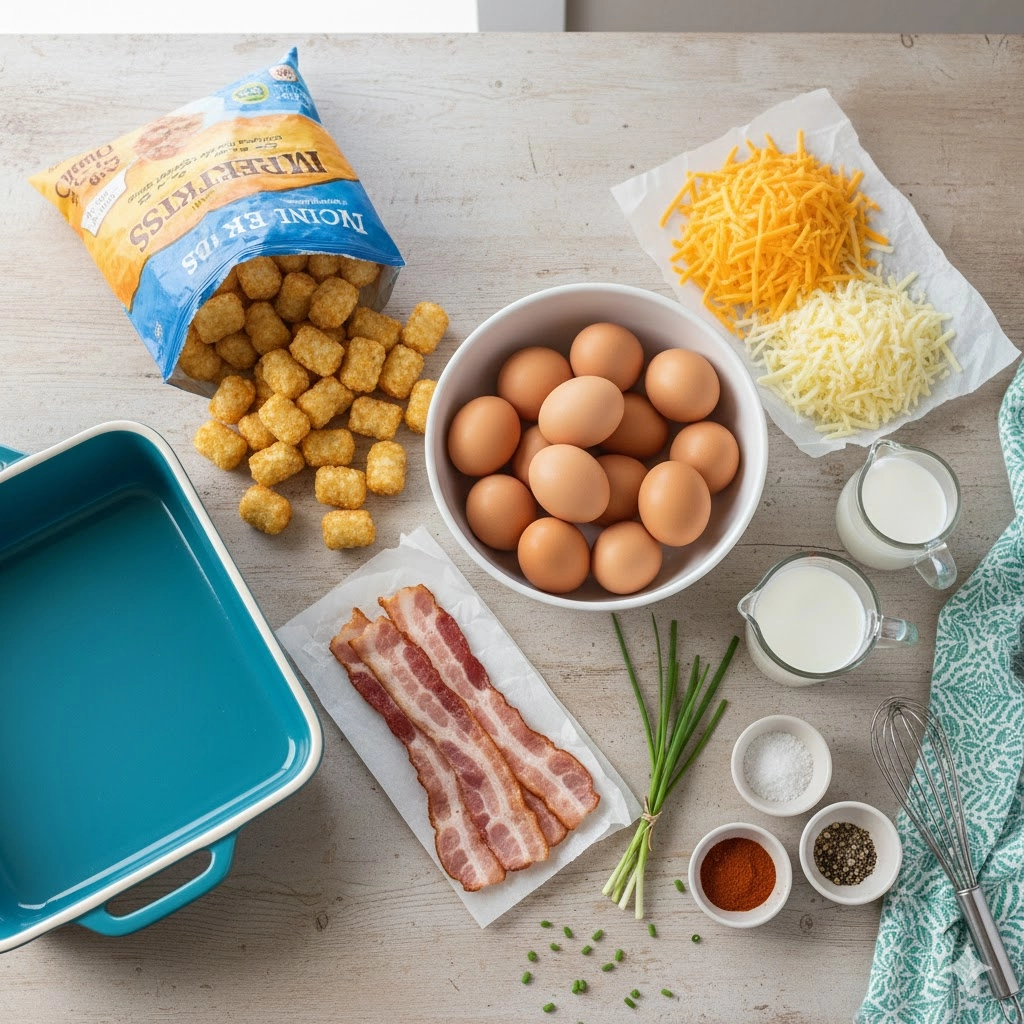
Success begins with having every component prepped and ready. For a standard 9×13 inch baking dish, these amounts provide the perfect ratio of starch, protein, and creamy binder.
The Foundation and Filling:
- 1 (32 ounce) bag frozen tater tots
- 1 pound thick-cut bacon, cooked and crumbled (reserve 1 tablespoon of the rendered fat)
- 2 cups (eight ounces) shredded sharp cheddar cheese
- 1 cup shredded Monterey Jack cheese
The Custard:
- 10 large eggs
- 1 cup whole milk
- 1/2 cup heavy cream
- 1 teaspoon kosher salt
- 1/2 teaspoon freshly ground black pepper
- 1/4 teaspoon smoked paprika
For Finishing:
- 2 tablespoons fresh chives, finely snipped
Assembly and Baking: A Quick Reference Guide
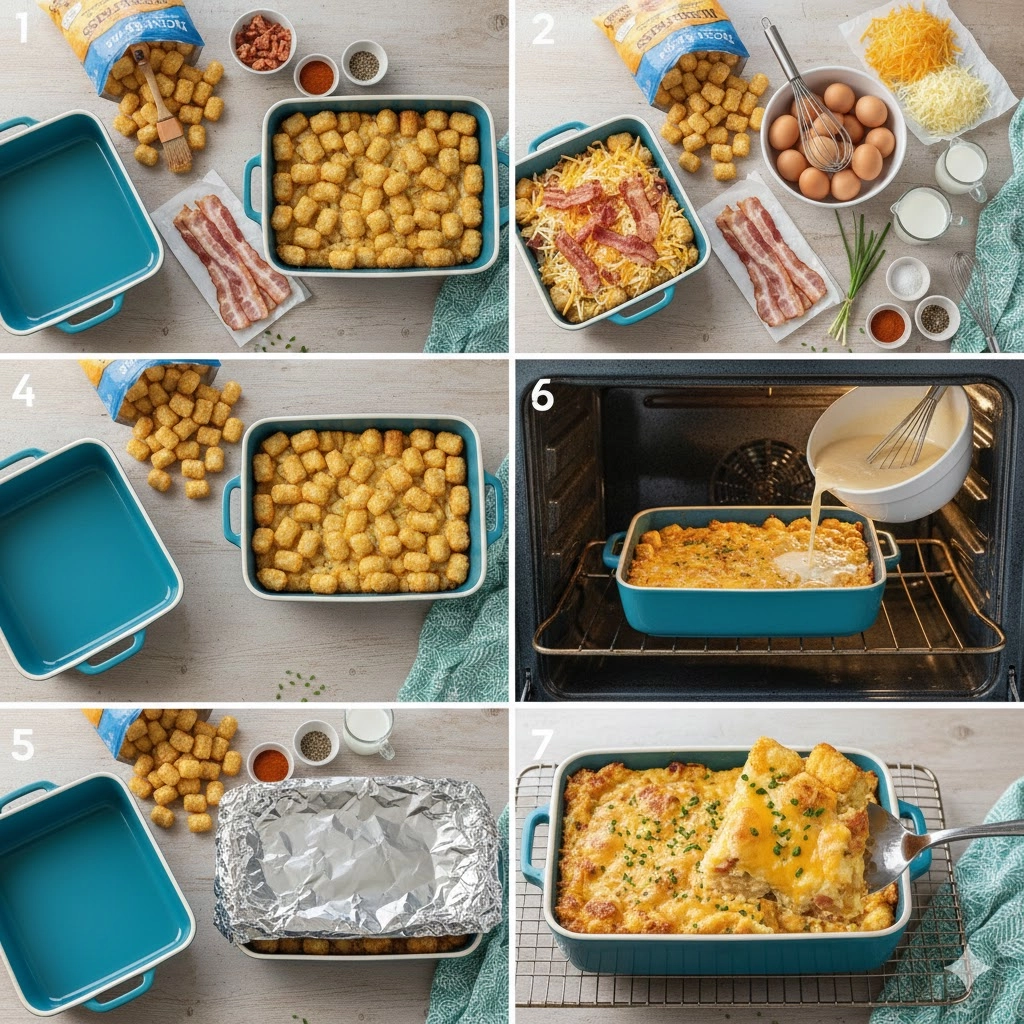
This streamlined set of steps provides the fastest path from raw ingredients to a golden-brown casserole. Refer to the next section for detailed preparation cues.
- Prep the Pan and Bacon: Preheat your oven to three hundred fifty Fahrenheit. Grease a 9×13 inch baking dish with the reserved bacon fat or butter. Cook and crumble the bacon.
- Layer the Foundation: Spread the frozen tater tots evenly across the bottom of the prepared dish.
- Distribute the Fillings: Sprinkle the crumbled bacon evenly over the layer of tots, followed by a light blanket of the mixed cheddar and Monterey Jack cheeses.
- Whip the Custard: In a large bowl, whisk together the eggs, milk, heavy cream, salt, pepper, and smoked paprika until uniform and frothy.
- Pour and Soak: Pour the egg mixture slowly and evenly over the layered tater tots, bacon, and cheese, ensuring all layers are saturated.
- Initial Bake (Covered): Cover the dish tightly with foil and bake for thirty-five minutes.
- Final Bake (Uncovered): Remove the foil, increase the heat to three hundred seventy-five Fahrenheit, and bake for an additional twenty to twenty-five minutes, or until the casserole is golden brown and set in the center.
- Rest and Serve: Allow the casserole to rest for ten minutes before garnishing with chives and slicing.
Mastering the Layers: Detailed Casserole Construction
Achieving the perfect texture in a breakfast casserole is all about thoughtful layering and attention to moisture. This section delves into the ‘why’ behind each action, ensuring you avoid a soggy result and maximize flavor.
Preparing the Primary Components
We begin by treating the foundation properly. While some recipes call for thawing the tater tots, using them straight from the freezer is a crucial step for achieving the desired textural contrast. When the frozen tots hit the oven, their cold exterior slows down the absorption of the egg custard, allowing them to crisp slightly on the edges while the center becomes soft and creamy. Spread the frozen tots in a single, even layer across the bottom of the greased pan, creating a true crust.
Next, focus on the bacon. The best bacon for this Tater Tot and Bacon Breakfast Casserole is thick-cut, cooked until firm but not brittle. You want it to retain some chew to stand up to the soft eggs and taters. As you cook it, be sure to reserve just a touch of the rendered fat—about a tablespoon—to use for greasing the baking dish. This infuses the crust with a beautiful, deep smokiness from the very start. Once crumbled, the bacon should be evenly distributed. Avoid dumping it all in one spot; this ensures every slice of the finished casserole gets a rewarding punch of flavor.
Crafting the Creamy Custard
The egg custard is the binder, and a proper blend prevents a rubbery texture. Start with large eggs and whisk them vigorously. You are not simply mixing; you are incorporating air to create a lighter, fluffier result. The combination of whole milk and heavy cream provides essential fat content. The whole milk offers the necessary liquid, while the heavy cream, with its higher fat ratio, contributes to a rich, silky texture that won’t separate or become watery during the baking process.
Seasoning the custard is non-negotiable. Salt is essential for flavor and also helps the egg proteins set properly. The addition of smoked paprika is a subtle but powerful technique. It enhances the inherent smokiness of the bacon and adds a warmth that balances the dairy without being overwhelming. Whisk until you see a faint layer of foam on top; this indicates a well-aerated mix.
When pouring the custard over the layers, pour slowly and systematically. Start along the edges and work your way in. Give the liquid a moment to seep down through the cheese and bacon and into the crevices around the tater tots. This process, often called ‘soaking,’ is what guarantees a fully cohesive casserole rather than separate layers of egg and potato. You should see the liquid rise to just barely cover the top layer of cheese—it should not drown it.
The Two-Phase Baking Method
The initial baking at three hundred fifty Fahrenheit while covered with foil is your setting phase. The foil acts like a sauna, trapping the steam and ensuring the center of the casserole cooks gently and evenly without browning too quickly. This takes roughly thirty-five minutes. You can check for doneness by gently shaking the dish—the center should no longer appear liquid, though it will still be soft.
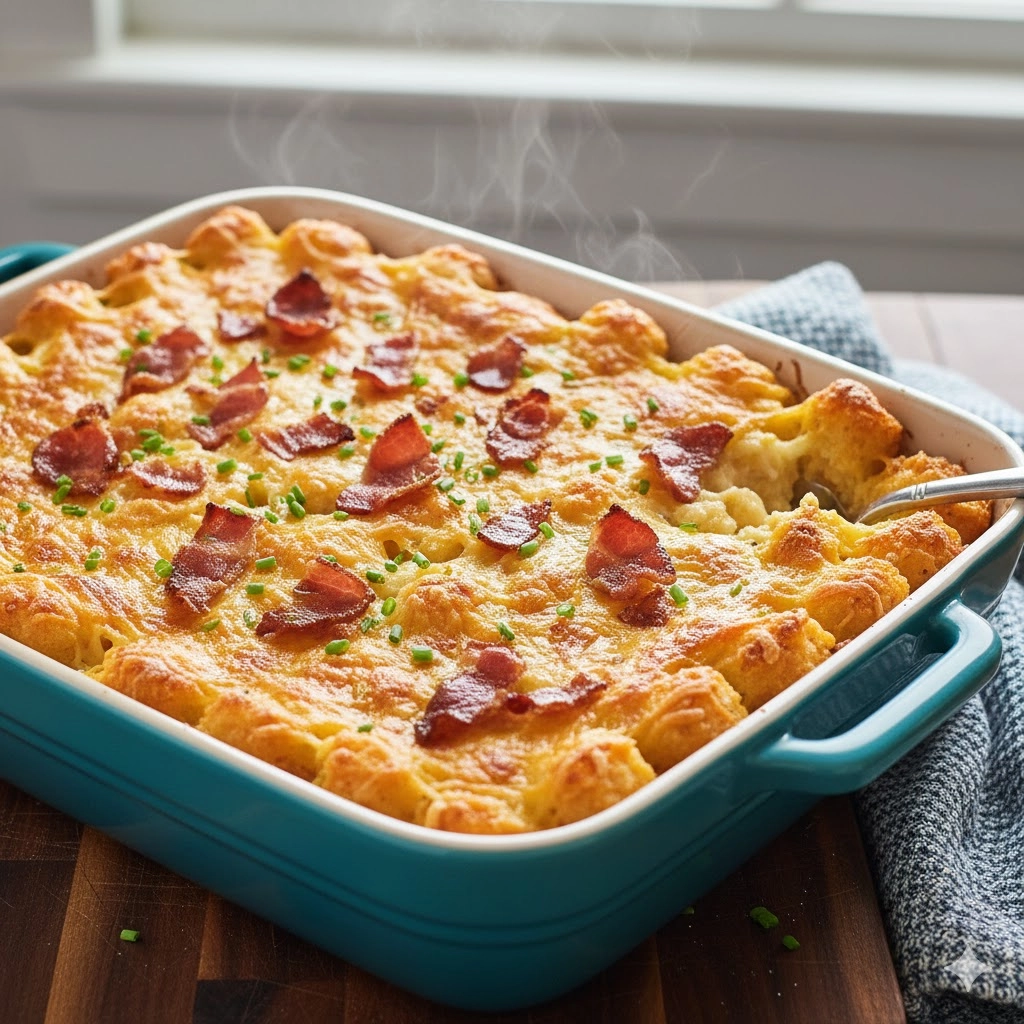
For the final, uncovered phase, you increase the heat to three hundred seventy-five Fahrenheit. This is where the magic happens. The higher temperature crisps the exposed tater tots on the top and melts the cheese into a bubbly, golden layer. The exposed surface bakes into that classic, slightly firm, deep-golden crust that is the hallmark of a good baked egg dish. You are looking for a beautiful gold color and a center that springs back slightly when pressed.
Letting the casserole rest for ten minutes after removing it from the oven is non-negotiable. This resting period allows the egg proteins to fully set and solidify. If you skip this step, the slices will be loose and fall apart on the plate.
Expert Advice for a Perfect Morning Bake
These tailored insights help ensure your efforts result in a casserole that is uniformly cooked, perfectly seasoned, and structurally sound.
The Overnight Assembly Advantage
This recipe is ideally suited for overnight preparation. Assemble the entire casserole, through step five, cover it tightly with plastic wrap, and refrigerate it for up to twelve hours. The resting period allows the tater tots to slightly absorb the egg mixture, which contributes to a more integrated, less dry texture in the final product. Simply remove it from the refrigerator thirty minutes before baking to take the chill off, then proceed with the covered bake.
Cheese Selection Strategy
While sharp cheddar is traditional for its distinct flavor, the addition of Monterey Jack (or a similar melting cheese like Colby or fontina) is strategic. Cheddar provides the necessary tang and color, but Monterey Jack melts into a silkier, creamier texture. Using an eight parts to four parts ratio of cheddar to the softer cheese ensures both maximum flavor and superior texture. Always shred your own cheese; pre-shredded cheeses contain anti-caking agents that hinder their ability to melt smoothly.
Avoiding a Watery Base
A watery or spongy base is often caused by either using too much milk in the custard, or failing to cook the bacon properly. Ensure your bacon is drained very well on paper towels to remove all excess fat and moisture. Secondly, the heavy cream in the recipe is vital; it balances the liquid content and prevents the custard from separating into a watery layer at the bottom.
The Foil Tent Technique
If your casserole is fully set but the top is not as golden as you’d like, you can switch the oven to the broiler for the final two minutes. However, if the edges begin to brown too quickly during the covered bake, you can create a small “tent” by forming the foil over the dish in an arch, rather than pressing it down tightly. This prevents direct heat exposure to the edges while still trapping steam for the center.
Adjusting for Elevation
For cooks at high altitudes, the liquid in the casserole may evaporate faster, leading to a drier result. Consider adding two tablespoons of extra cream to the custard mixture. Additionally, you may need to reduce the baking temperature to three hundred twenty-five Fahrenheit and slightly increase the total covered baking time to ensure the egg sets gently without drying out.
Customizing Your Casserole: Flavor Swaps and Alternatives
The structure of the casserole is flexible, allowing for creative substitutions that suit dietary needs or simply personal preference.
Spice It Up: Incorporate one small can (about four ounces) of diced green chiles, drained very well, into the bacon and cheese layer. For a serious kick, mix one half teaspoon of cayenne pepper into the egg custard, or finish the casserole with a drizzle of hot sauce before serving.
Go Meatless: Easily transform this into a vegetarian dish. Substitute the bacon with a blend of sautéed vegetables. Excellent choices include finely diced and softened bell peppers (red and green), mushrooms, and yellow onion. Cook these until all moisture has evaporated before adding them to the casserole. Alternatively, use a package of plant-based breakfast sausage crumbles.
Potato Swap: If tater tots are unavailable, you can substitute four cups of shredded frozen hash brown potatoes. If using hash browns, you must thaw them and squeeze out all excess water using a clean kitchen towel. This prevents a soggy potato layer. Layering thinly sliced, pre-cooked potato rounds also works, though it will require a slightly longer overall baking time.
Different Dairy Profile: For a tangier flavor, replace up to one-half cup of the whole milk with plain Greek yogurt or sour cream. Whisk the yogurt or sour cream into the eggs first until smooth before adding the remaining milk and cream. This adds density and a desirable sour note that complements the salty bacon.
What to Serve Alongside This Hearty Dish
While the casserole is a complete meal in its own right, a well-chosen accompaniment elevates the dining experience by introducing color, acid, and contrasting textures.
A Bright, Acidic Salad
A simple mixed-greens salad provides the perfect contrast to the rich, creamy texture of the casserole. Use a light, homemade vinaigrette made with white wine vinegar, olive oil, and a touch of Dijon mustard. Incorporate a few slices of fresh orange or grapefruit to introduce a citrusy brightness that cleanses the palate after the savory bite of the bacon.
Fresh Fruit Compote
Instead of serving jam, prepare a warm berry compote. Simply simmer a mixture of frozen blueberries, raspberries, and a squeeze of lemon juice until the fruit breaks down into a thick sauce. Serve this warm on the side. The natural sweetness and tartness are a wonderful foil for the salty and savory casserole.
Sweet Breakfast Breads
A lighter, yeasted side like a simple, plain scone or a thin slice of brioche toast offers a nice balance. If the event is a formal brunch, a selection of toasted breads and a small dish of compound butter, perhaps one infused with maple syrup, offers a sweet counterpoint without overwhelming the main dish.
Troubleshooting Common Casserole Questions
Can I use turkey bacon instead of regular bacon?
Yes, you can certainly substitute turkey bacon. For the best flavor and texture, choose a thick-cut, high-quality variety. Turkey bacon tends to be less greasy, but you still need to cook it until it is quite crispy before crumbling. You will need to use butter or a neutral oil to grease the baking dish since turkey bacon will not render enough fat.
What is the best way to store and reheat leftovers?
Leftovers should be cooled completely, then covered tightly and stored in the refrigerator for up to four days. To reheat, you can use a microwave, but for superior results, cut individual portions and place them on a foil-lined baking sheet. Cover the slices loosely with foil and reheat in a three hundred twenty-five Fahrenheit oven for about ten to fifteen minutes, until heated through. The foil prevents the edges from drying out.
Can I prepare this casserole ahead and freeze it?
Freezing fully assembled casseroles is possible, but it may affect the texture of the tater tots, which can become mushy upon thawing and baking. A better approach for long-term storage is to freeze the cooked casserole. Cool it completely, slice it into individual portions, wrap each slice tightly in plastic wrap, and then store the portions in a freezer-safe bag for up to one month. Reheat directly from frozen in the oven.
I don’t have heavy cream. What else can I use?
If you don’t have heavy cream, you can use an additional one-half cup of whole milk, but the resulting texture of the egg custard will be slightly less rich and may have a higher chance of becoming watery. A more effective substitute is to use a tablespoon of melted butter mixed into the one-half cup of extra milk to replicate some of the needed fat content.
Estimated Nutritional Breakdown
| Nutrient | Amount per Serving |
| Calories | 480 kcal |
| Protein | 28 g |
| Carbs | 35 g |
| Fat | 26 g |
| Fiber | 3 g |
| Sugar | 4 g |
| Sodium | 680 mg |
Disclaimer
Nutrition information is an estimate and may vary based on preparation and ingredients used.

The Ultimate Tater Tot and Bacon Breakfast Casserole
Ingredients
- 1 bag frozen tater tots (32 ounce)
- 1 pound thick-cut bacon, cooked and crumbled
- 2 cups shredded sharp cheddar cheese (8 ounces)
- 1 cup shredded Monterey Jack cheese
- 10 large eggs
- 1 cup whole milk
- 0.5 cup heavy cream
- 1 tsp kosher salt
- 0.5 tsp freshly ground black pepper
- 0.25 tsp smoked paprika
- 2 tbsp fresh chives, finely snipped (for garnish)
Instructions
- Preheat oven to three hundred fifty Fahrenheit. Grease a 9×13 inch baking dish with the reserved bacon fat or butter. Cook and crumble the bacon.
- Spread the frozen tater tots evenly across the bottom of the prepared dish in a single layer.
- Sprinkle the crumbled bacon evenly over the tots, followed by a light blanket of the mixed cheddar and Monterey Jack cheeses.
- In a large bowl, whisk together the eggs, milk, heavy cream, salt, pepper, and smoked paprika until uniform and frothy.
- Pour the egg mixture slowly and evenly over the layered tater tots, bacon, and cheese, ensuring all layers are saturated.
- Cover the dish tightly with foil and bake for thirty-five minutes at three hundred fifty Fahrenheit.
- Remove the foil, increase the heat to three hundred seventy-five Fahrenheit, and bake for an additional twenty to twenty-five minutes, or until golden brown and set in the center.
- Allow the casserole to rest for ten minutes before garnishing with chives and slicing.
Notes
Equipment
- 9×13-inch baking dish
- Large whisk and mixing bowl
- aluminum foil