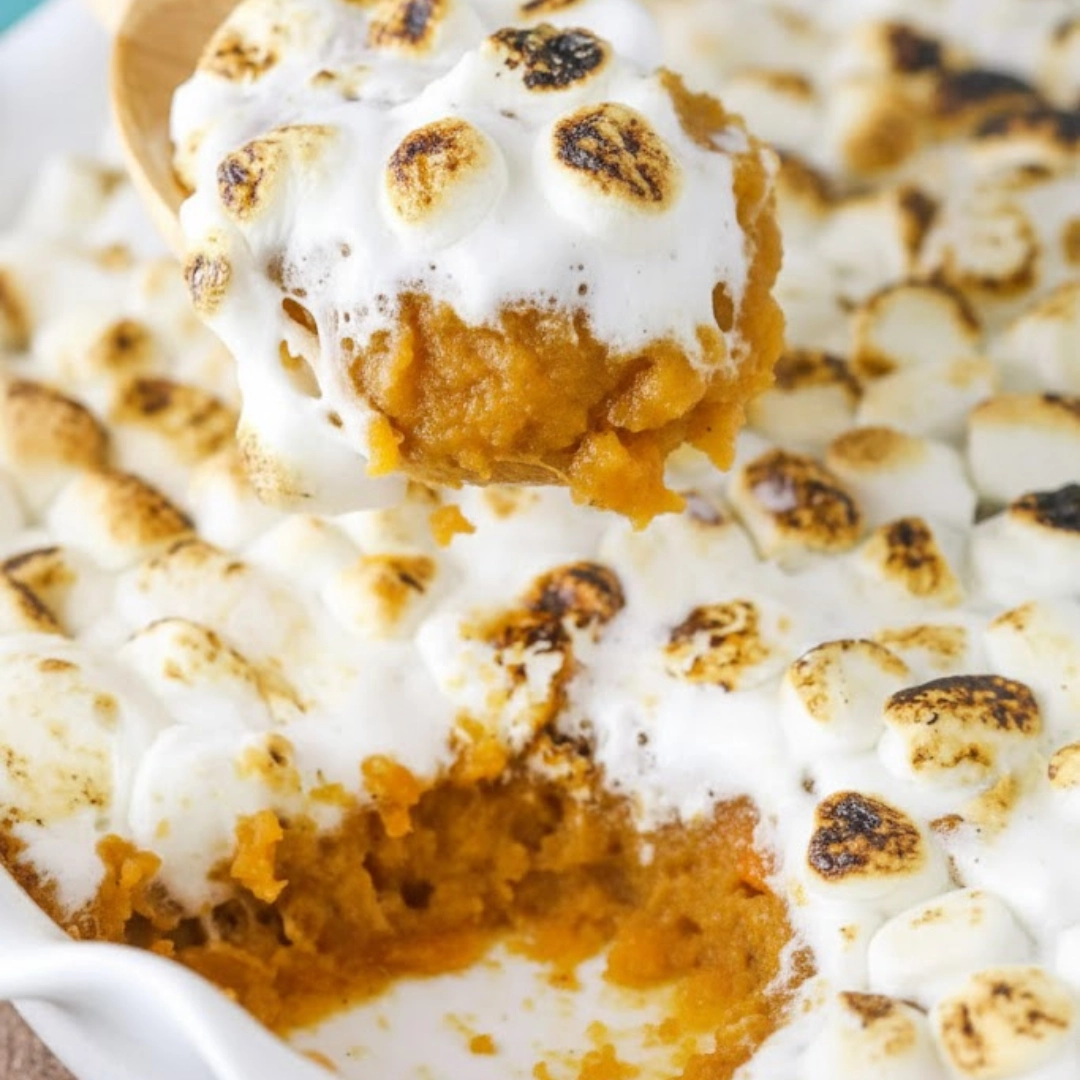
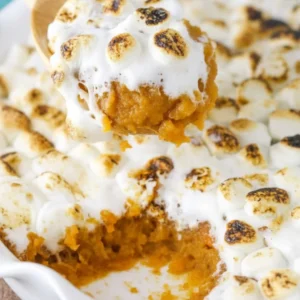
The appearance of this dish signals the true start of the holiday season in America. It is a unifying element on the Thanksgiving or Christmas table, bridging the gap between savory side dishes and pure, unadulterated dessert. What makes a flawless sweet potato casserole with marshmallows so compelling is the contrast: the creamy, spiced, deeply savory-sweet base giving way to that cloud-like, caramelized topping. While its origin lies somewhere between a side dish and a dessert, its appeal is undeniable. A perfect rendition should offer a velvety texture, an aromatic foundation of autumnal spices, and a topping that toasts into a golden, gooey crust that crackles slightly under the fork. This recipe delivers a luxurious version of the classic, suitable for your most cherished family gatherings.
Table of Contents
Crafting the Silky Sweet Potato Base
The secret to a truly unforgettable casserole begins with the base—a mash that is rich, smooth, and perfectly balanced in flavor. This is where the core texture is established, setting the stage for the spices and the binding agents.
Essential Components Checklist
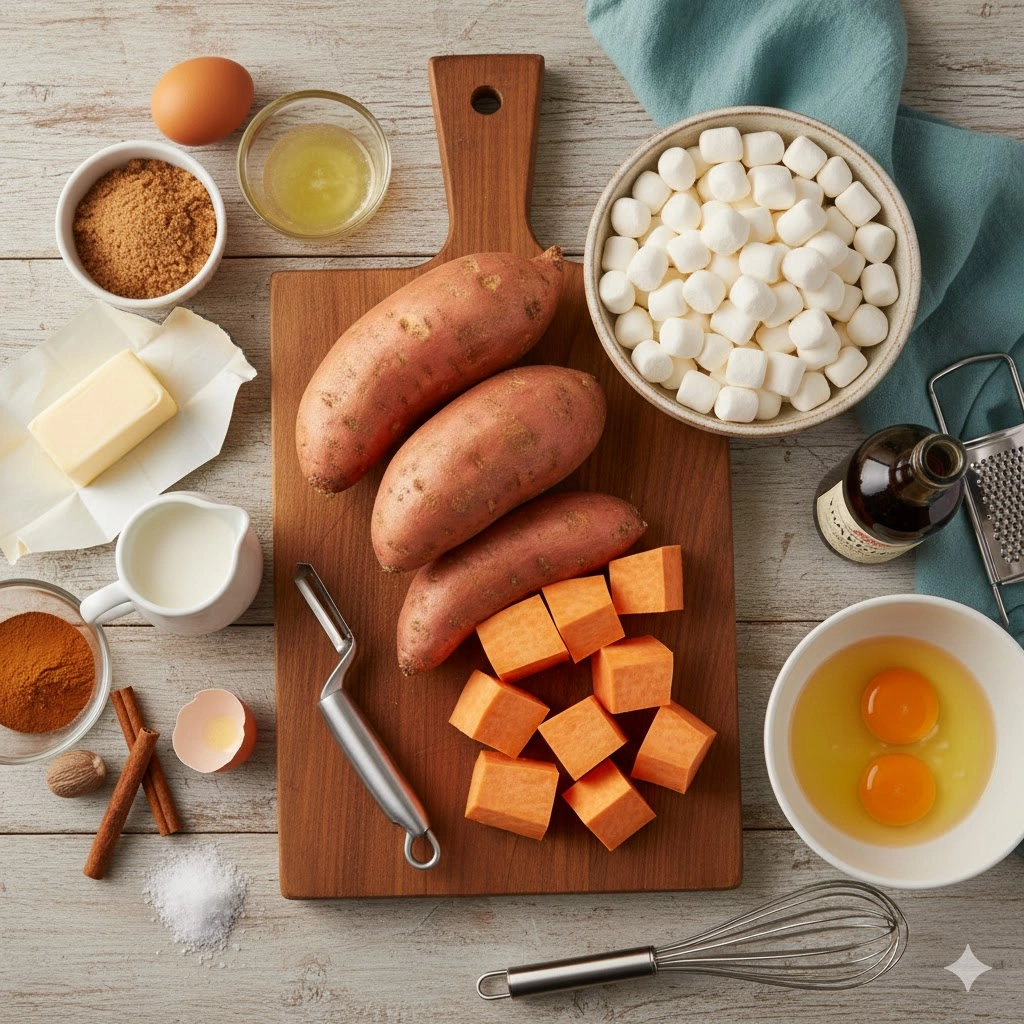
This recipe assumes the use of fresh sweet potatoes, which yield a superior flavor and texture compared to canned varieties.
For the Sweet Potato Base:
- Four cups (approximately three pounds) sweet potatoes, peeled and cut into one-inch chunks
- One half cup (one stick) unsalted butter, melted, plus extra for greasing
- One half cup packed light brown sugar
- One quarter cup heavy cream or whole milk
- Two large eggs, lightly beaten
- One teaspoon ground cinnamon
- One half teaspoon ground nutmeg
- One teaspoon pure vanilla extract
- One half teaspoon fine sea salt
For the Marshmallow Topping:
- Ten ounces mini marshmallows (about five cups)
The Puree Protocol: Achieving Maximum Smoothness
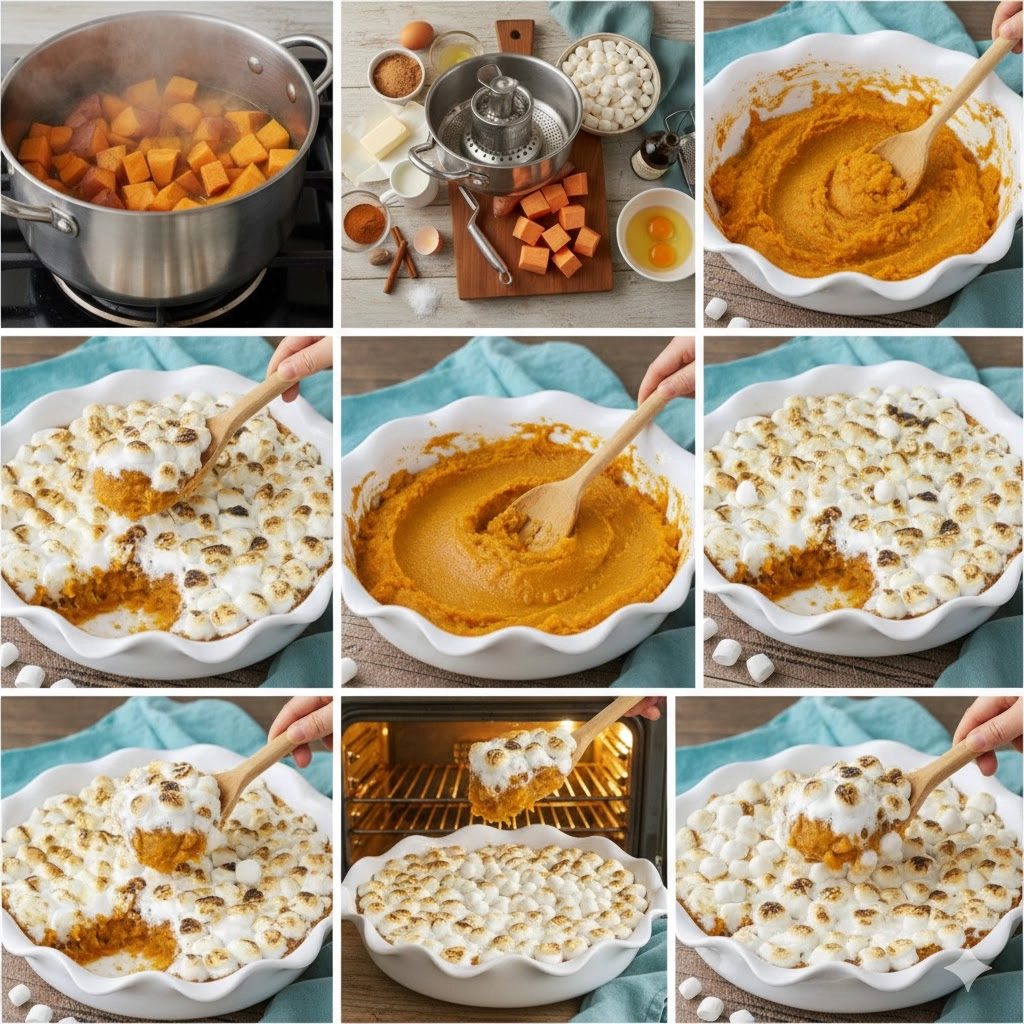
The first stage is preparing the sweet potatoes. Place the peeled and cubed potatoes into a large pot and cover them with cold water by at least two inches. Add a generous pinch of salt to the water. Bring the water to a rolling boil, then reduce the heat slightly and cook until the potatoes are fork-tender, usually fifteen to twenty minutes. They should offer absolutely no resistance when pierced.
Once cooked, drain the potatoes immediately and thoroughly. Allow them to steam-dry in the colander for a minute or two; this step is critical for preventing a watery mash. Transfer the hot potatoes to a large mixing bowl. Using a potato masher, mash them until no large chunks remain. For a truly professional, silky-smooth result, press the hot mash through a ricer or use a hand mixer on low speed, taking care not to over-process and make them gluey. The final texture should be light, airy, and velvety, holding a beautiful, pale orange hue.
The Art of Seasoning and Binding
Once the sweet potato puree is ready, the next step is building the aromatic foundation and securing the structure of the casserole using high-quality spices, fats, and binders.
Balancing Sweetness and Spice
To the mashed sweet potatoes, add the brown sugar, melted butter, heavy cream, cinnamon, nutmeg, vanilla extract, and salt. The melted butter should be incorporated while still warm (but not sizzling hot) as this helps dissolve the sugar and saturate the starches effectively.
Mix the ingredients thoroughly using a large wooden spoon or spatula. Your goal is integration, not aeration. The mixture should become uniformly spiced, fragrant with cinnamon and nutmeg, and visually consistent. Take a moment to check the aroma—it should smell deeply autumnal and rich. The mixture will be thick but easily spreadable.
The Role of the Binding Agent
The inclusion of two lightly beaten eggs serves as the primary binding agent. They also lend a subtle richness and contribute to the slight lift and custard-like texture once baked. Incorporate the eggs last, mixing just until they are fully integrated into the sweet potato mixture. Overmixing the eggs can lead to a tougher final product, so gentle, yet thorough, folding is key here. The final mixture will be glossy, firm, and ready to transfer to its baking vessel.
Mist or lightly butter a nine-inch by thirteen-inch casserole dish (or an equivalent three-quart dish). Spread the sweet potato mixture evenly into the prepared dish. Use an offset spatula to smooth the surface, ensuring the mixture is level so it bakes consistently. At this point, the unbaked casserole has a beautifully uniform appearance and a potent, warm aroma from the spices.
Baking the Casserole to Perfection
The baking process transforms the rich mash into a creamy, stable side dish, ready for its crowning glory—the marshmallow layer. Temperature control and careful observation are essential during this phase.
Prepping the Vessel and Preheat Timing
Preheat your oven to three hundred fifty Fahrenheit. This moderate temperature ensures that the interior of the casserole heats through and the eggs set without the edges drying out or burning.
Place the prepared dish in the center of the preheated oven. Bake the casserole for twenty-five to thirty-five minutes. During this time, the edges will begin to pull away slightly from the sides of the dish, and the center will firm up. The surface will deepen in color, turning a slightly more golden orange.
Doneness Check: The most accurate test is the “jiggle test.” When you gently shake the dish, the center should appear mostly set, with maybe a very slight, almost imperceptible jiggle. A knife or toothpick inserted into the center may come out slightly moist but not coated in raw batter.
The Marshmallow Maneuver: Timing the Topping
Once the sweet potato base is cooked and set, remove the dish from the oven. This is the moment for the marshmallows.
Quickly and evenly scatter the mini marshmallows across the entire surface of the casserole. You want a single, dense layer that covers the potatoes completely to ensure a continuous, gooey crust.
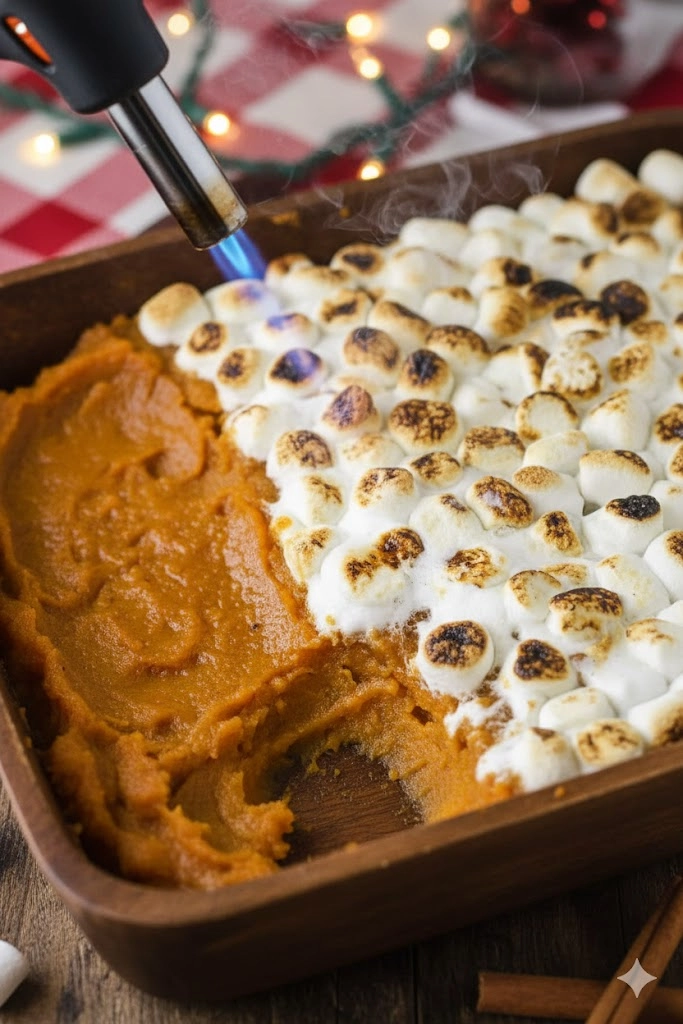
Return the dish to the oven or, for a faster, more controlled browning, place it under a broiler set to medium heat. Crucial Warning: If using the broiler, do not walk away. Marshmallows can go from perfectly golden to charred black in mere seconds. Watch them constantly. This process typically takes only one to three minutes in the oven, or thirty to ninety seconds under the broiler. The marshmallows should puff up significantly and turn a lovely shade of toasted, golden brown, with a few deeper caramel-colored spots for visual interest and flavor.
Remove the completed sweet potato casserole with marshmallows from the oven immediately and let it rest for ten to fifteen minutes before serving. This brief cooling period allows the interior structure to fully stabilize and the marshmallow topping to set slightly, making serving much cleaner.
Expert Culinary Advice for Holiday Success
Elevating this classic dish from good to exceptional often comes down to mastering these small details and technical adjustments.
- Roast, Don’t Boil, Your Potatoes: While boiling is quicker, roasting the sweet potatoes whole (at four hundred Fahrenheit until tender) concentrates their natural sugars and yields a deeper, more profound flavor. Once cooled, scoop out the flesh and proceed with mashing. This is the single best way to improve the casserole’s taste.
- Clarify Your Butter: Instead of using plain melted butter, consider clarifying half of the required butter quantity. This removes the milk solids, preventing excess moisture in the mash and imparting a slightly cleaner, nuttier flavor profile reminiscent of brown butter without the need for additional cooking steps.
- Use Freshly Grated Spices: The difference between pre-ground nutmeg and freshly grated nutmeg is vast. Grate a whole nutmeg seed directly over the mixture for an intense, pungent, and highly aromatic spice hit that truly elevates the base. Do the same with cinnamon if possible, or ensure your ground cinnamon is very fresh.
- The Cream Cheese Addition: For an ultra-rich, slightly tangy casserole base that cuts the sweetness, fold in four ounces of softened cream cheese (full fat) along with the butter and sugar. This results in an incredibly decadent, cheesecake-like texture.
- Achieve Crisp Edges: To promote a slightly caramelized and crisp edge, lightly dust the buttered baking dish with a tablespoon of brown sugar before adding the sweet potato mixture. The sugar melts against the heat, creating a lovely, chewy crust.
- Pre-Portion the Topping: If you plan on serving a very large crowd or want a more elegant look, skip the mini marshmallows. Instead, use large marshmallows, slicing them in half horizontally with clean kitchen shears. Place the flat, cut side down onto the casserole. They will puff and brown beautifully, giving a more dramatic presentation.
- Hold the Salt: While salt is essential for balance, be mindful of salted butter. If you use salted butter, omit the one-half teaspoon of sea salt from the recipe and taste the mixture before baking. Adjust the seasoning as necessary.
Customizing Your Classic Dish
The beauty of a foundational recipe like this is its adaptability. You can introduce new textures and deeper flavor layers through simple substitutions and additions.
- Pecan Crunch Topping: Replace the marshmallows entirely with a crunchy streusel layer. Combine one half cup flour, one third cup packed brown sugar, one third cup melted butter, and one cup chopped pecans. Sprinkle this mixture over the sweet potato base before baking. Bake for ten minutes longer than specified, until the streusel is deeply golden.
- Bourbon Infusion: Introduce a layer of complexity to the base by adding two tablespoons of quality Kentucky bourbon or dark rum to the sweet potato mixture along with the vanilla extract. The alcohol cooks off, leaving behind a subtle, warm, woodsy note that complements the spices perfectly.
- Citrus Brightness: Incorporate the finely grated zest of one large orange into the sweet potato mash. The bright, acidic oil from the zest lifts the dish, providing a beautiful counterpoint to the richness of the butter and sugar.
- Vegan Adjustments: To make this recipe completely plant-based, substitute the butter with a high-quality vegan butter substitute, replace the dairy cream with full-fat coconut milk (canned), and use a flax egg replacer for the two large eggs. Ensure your marshmallows are gelatin-free, or simply use the streusel topping variation instead.
Thoughtful Presentation and Pairing
The casserole is a rich, sweet side dish, meaning its best companions are those that offer savory contrast and textural variation.
Serving Pairings:
- The Classic Roast: Serve alongside a savory main protein, such as a herb-crusted roast turkey, a spiral-sliced honey ham, or a slow-cooked prime rib. The savory juices and rich, meaty flavors provide the perfect counterpoint to the sweetness of the sweet potato base.
- Green Contrast: Pair with a bright, slightly bitter green vegetable preparation. Consider roasted Brussels sprouts with balsamic glaze, or a simple, vibrant green salad dressed with a sharp vinaigrette. The acidity of the dressing and the bitterness of the greens cut through the richness of the casserole beautifully.
- A Rustic Stuffing: The deep, herby, often bread-based flavor of a traditional Thanksgiving stuffing creates a wonderful textural and flavor pairing. The density of the stuffing stands up well to the gooey, light topping of the casserole.
- Beyond the Holiday: This casserole is excellent served for Sunday dinner alongside simple roasted chicken and green beans. It transforms a standard meal into something special and comforting, leaning into its dessert-like nature.
Common Questions from the Thanksgiving Table
How far in advance can I prepare the casserole?
You can prepare the sweet potato base completely up to two days ahead of time. Mix all the ingredients, spread it into the prepared casserole dish, cover it tightly with plastic wrap, and refrigerate. When ready to bake, remove it from the refrigerator about thirty minutes prior to baking to allow it to come slightly closer to room temperature, and then bake as directed. Do not add the marshmallows until the base is already hot and set.
Can I freeze the leftovers?
Yes, sweet potato casserole freezes quite well, provided you have not added the marshmallows yet. If you have leftover baked casserole that has the marshmallow topping, scrape the topping off as best you can before freezing, as the marshmallows will degrade and become watery upon thawing. Cover the remaining casserole tightly and freeze for up to three months. Thaw it overnight in the refrigerator and reheat gently in a three hundred Fahrenheit oven until warmed through.
Why did my sweet potato base turn out runny?
The most common cause of a runny casserole is excess moisture. This typically occurs because the sweet potatoes were not properly drained after boiling, or the use of too much milk or cream was accidentally introduced. Ensure the potatoes steam-dry for a few minutes after draining, and stick closely to the liquid measurements. If your batch looks too loose before baking, you can try mixing in one to two tablespoons of all-purpose flour or cornstarch to absorb excess liquid.
Can I use full-sized marshmallows instead of mini ones?
You absolutely can, but you must slice them. Full-sized marshmallows placed whole on the casserole will melt unevenly, creating large empty air pockets and a thick, potentially chewy layer. Slicing them in half horizontally creates a larger surface area to cover the potatoes evenly, resulting in a cleaner, better-looking, and better-textured topping.
What is the purpose of the egg?
The egg serves two primary purposes: binding and structure. As the casserole heats, the protein in the eggs coagulates, which sets the sweet potato base and prevents it from crumbling when served. This coagulation provides that soft, custard-like quality to the finished dish.
Nutritional Snapshot
| Nutrient | Amount per Serving |
| Calories | 385 kcal |
| Protein | 4 g |
| Carbs | 68 g |
| Fat | 12 g |
| Fiber | 6 g |
| Sugar | 45 g |
| Sodium | 185 mg |
Important Nutritional Note
Nutrition information is an estimate and may vary based on preparation and ingredients used.
The Ultimate Sweet Potato Casserole with Marshmallows
Ingredients
- 4 cups sweet potatoes, peeled and cubed (approx. 3 lbs)
- 1/2 cup unsalted butter, melted (plus more for greasing)
- 1/2 cup packed light brown sugar
- 1/4 cup heavy cream or whole milk
- 2 large eggs, lightly beaten
- 1 tsp ground cinnamon
- 1/2 tsp ground nutmeg
- 1 tsp pure vanilla extract
- 1/2 tsp fine sea salt
- 10 oz mini marshmallows (about 5 cups)
Instructions
- Peel and cube sweet potatoes. Place in a large pot with salted cold water. Bring to boil and cook until fork-tender (15–20 minutes). Drain and steam-dry.
- Mash sweet potatoes until smooth. For ultra-smooth texture, use a ricer or hand mixer on low speed.
- Add brown sugar, warm melted butter, cream, cinnamon, nutmeg, vanilla, and salt. Mix thoroughly until uniform.
- Fold in beaten eggs gently, mixing just until incorporated.
- Grease a 9×13-inch casserole dish. Spread mixture evenly and smooth the top.
- Bake at 350°F for 25–35 minutes, until center is set and edges slightly pull away. Perform jiggle test for doneness.
- Remove from oven. Scatter marshmallows evenly across top. Return to oven or broil until golden (1–3 min). Watch closely.
- Let casserole rest 10–15 minutes before serving to set the topping and structure.
Notes
Equipment
- large pot
- colander
- Potato masher or ricer
- mixing bowl
- spatula or wooden spoon
- 9×13 inch casserole dish
- oven
- Broiler (optional)