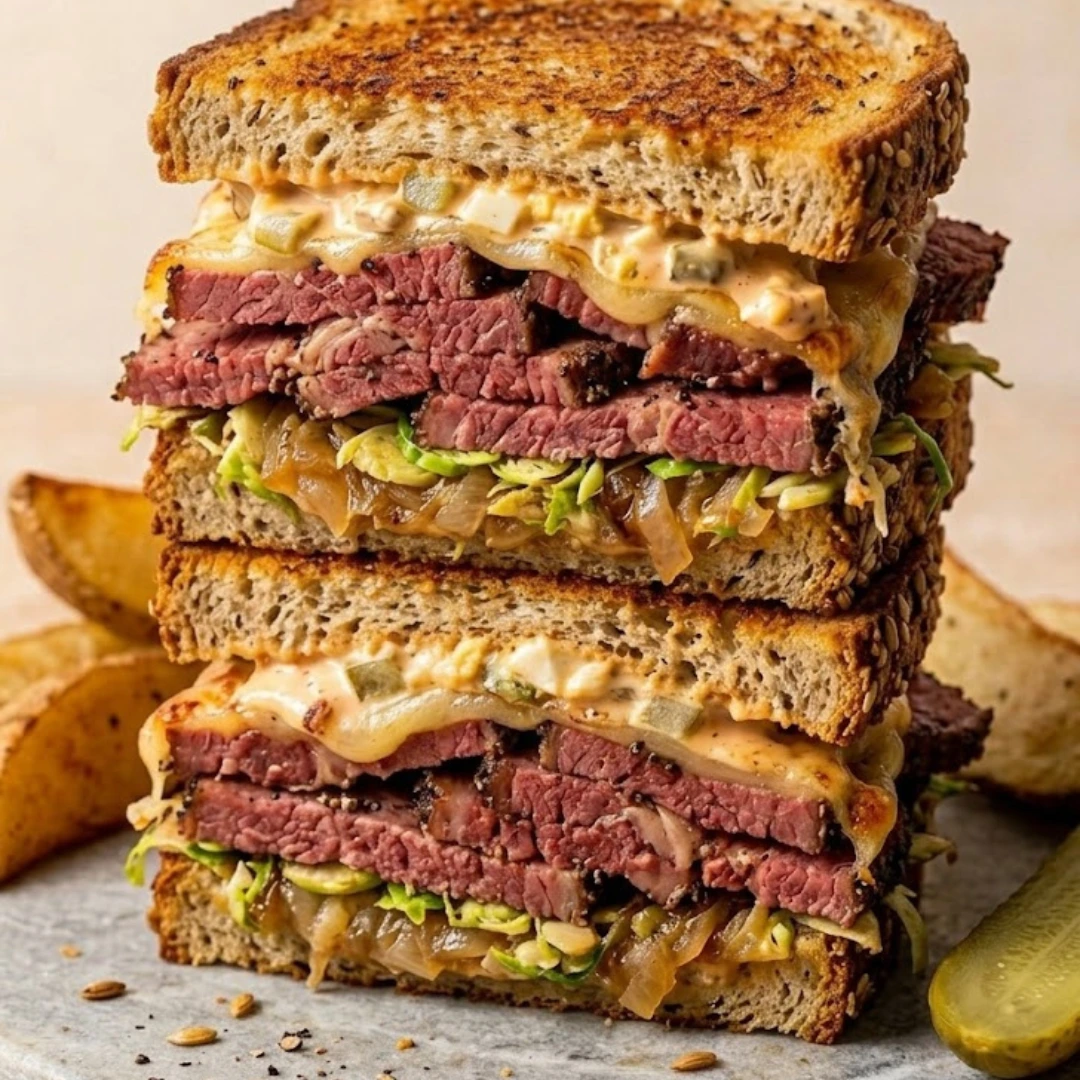
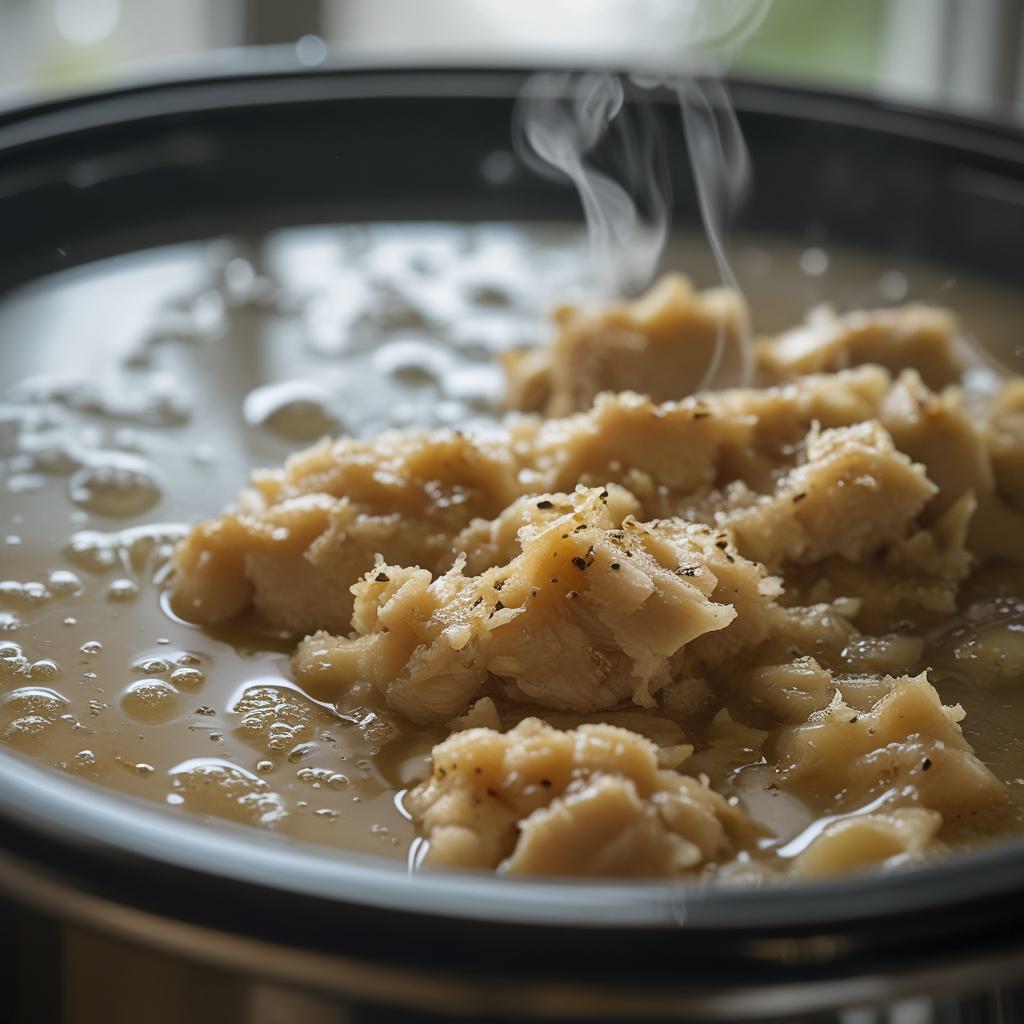
There’s something almost magical about watching humble ingredients transform in the slow, steady embrace of a crockpot – particularly when tropical flavors swim lazily through the pot like liquid sunshine. Sweet Hawaiian Crockpot Chicken emerges from this alchemy as a dish that whispers of palm trees and ocean breezes, its aroma building like a slow crescendo: first the caramel kiss of brown sugar, then the bright tang of pineapple, finally the savory depth of soy sauce weaving through it all. After hours of gentle simmering, the chicken surrenders to such tenderness it cascades off the bone at the slightest nudge, each shred coated in a glossy, golden sauce that manages to be both lush and vibrant. This isn’t just sustenance; it’s edible escapism, a bowl of comfort anchored by umami richness yet buoyed by sweet acidity. The genius lies in how the slow cooker coaxes complexity from simple components – the pineapple’s enzymes tenderizing the meat as the low heat coaxes out sugars, the soy sauce caramelizing into something deeper than its salty beginnings. Serve it over rice to catch every drop of that ambrosial sauce, and suddenly a Tuesday dinner feels like a barefoot feast on Waikiki’s shores.
Table of Contents
Ingredient Deep Dive
| Ingredient | Quantity | Purpose |
|---|---|---|
| Boneless chicken thighs | 2 lbs | Higher fat content prevents drying during slow cooking; collagen melts into gelatin for silkiness |
| Canned pineapple chunks (in juice) | 20 oz can | Enzyme bromelain tenderizes meat; natural sugars caramelize |
| Low-sodium soy sauce | 1/2 cup | Provides umami depth without overwhelming saltiness |
| Dark brown sugar | 1/3 cup | Molasses content balances acidity; creates glaze |
| Rice vinegar | 3 tbsp | Brightens sweetness; lowers pH to prevent cloyingness |
| Fresh ginger (grated) | 1 tbsp | Zingy counterpoint; aids digestion |
| Garlic cloves (minced) | 4 | Savory backbone; allicin develops sweetness when slow-cooked |
| Cornstarch slurry | 2 tbsp + water | Creates viscosity without flour’s starchy taste |
The biochemistry of this dish relies on precise balancing acts. Pineapple’s bromelain – a protease enzyme – acts like microscopic scissors snipping chicken proteins into more tender strands, while the acetic acid in rice vinegar lowers the pH just enough to prevent the sauce from becoming cloyingly sweet. Using dark brown sugar rather than white brings molasses compounds (mainly sucrose and invert sugars) that caramelize at lower temperatures, creating complex flavor compounds like furanones that give the sauce its rich, almost rum-like depth.
Soy sauce provides glutamates and nucleotides – natural umami boosters – that synergize with the chicken’s inosinate. This umami layering makes the dish taste “meatier” than it actually is. Crucially, using low-sodium soy allows controlled seasoning; regular soy would make the dish overwhelmingly salty when reduced. The cornstarch slurry added at the end leverages starch gelatinization – when heated, the starch granules swell at 140-158°F (60-70°C), thickening the sauce without altering its sunny translucence.
Substitutions & Swaps
For gluten-sensitive diners, swap soy sauce with tamari or coconut aminos – both impart similar umami though coconut aminos will add subtle nuttiness. Vegetarians can use king oyster mushrooms or pressed extra-firm tofu; the mushroom’s chitin converts to sweetness under heat, mimicking chicken’s texture. If pineapple isn’t available, canned mandarin oranges (in juice) provide comparable acidity but lack bromelain’s tenderizing effect – add 1 tbsp apple cider vinegar to compensate.
Brown sugar can be replaced with equal parts maple syrup plus 1 teaspoon molasses, though the sauce will be thinner. When using fresh pineapple, note its active bromelain might make the chicken mushy if left too long – reduce cooking time by 1 hour. For keto adaptations, replace sugar with allulose (doesn’t caramelize as well) and thicken with xanthan gum instead of cornstarch (use 1/4 tsp).
Equipment Guide
A 6-quart oval crockpot is ideal – its shape accommodates chicken pieces in a single layer for even cooking. Ceramic inserts distribute heat gently, preventing hotspots that could toughen edges. While not mandatory, a non-stick skillet proves useful for quick pre-searing of chicken, creating Maillard reaction flavors. Avoid aluminum tools which can react with acidic ingredients; silicone spatulas and wooden spoons are safest. For perfect sauce consistency, have a tempered glass measuring cup for the cornstarch slurry – seeing through the glass helps spot undissolved starch lumps. If finishing under a broiler for caramelization, use a heavy ceramic broiler-safe dish (like stoneware) that retains heat without warping.
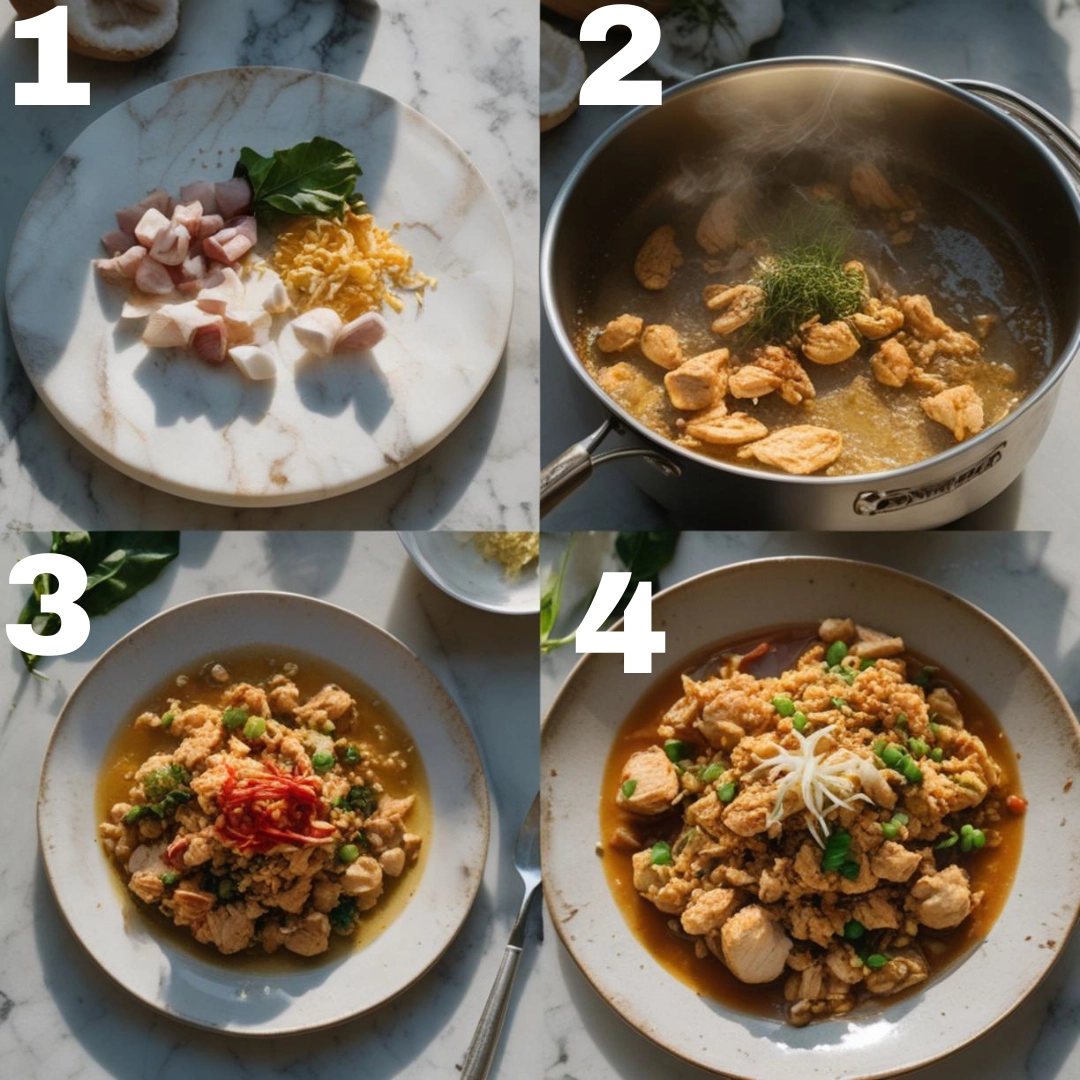
Step-by-Step Walkthrough
- Pat chicken thighs dry with paper towels – moisture hinders browning even in slow cookers.
- Layer chicken in crockpot, fat-side up for self-basting during cooking.
- Combine pineapple (with juice), soy sauce, brown sugar, vinegar, ginger, and garlic in a bowl – whisk until sugar dissolves (15-20 stirs).
- Pour liquid over chicken without stirring – ingredients will mingle naturally as heat rises.
- Cover and cook on LOW for 5 hours (HIGH for 2.5 hours) – proteins denature gradually at 170°F (77°C).
- Remove chicken gently with slotted spatula, tent with foil.
- Strain cooking liquid into saucepan, pressing solids to extract flavor – discard pulp.
- Simmer sauce until reduced by 1/3 (~8 minutes), skimming fat if desired.
- Whisk cornstarch slurry into simmering sauce – cook 90 seconds until glossy.
- Shred chicken, return to crockpot, pour thickened sauce over, stir gently.
First Key Insight: Resist stirring during cooking. Gentle heat convection circulates flavors without breaking down chicken prematurely. That initial layering creates micro-environments where soy sauce sinks while pineapple enzymes work upward through the meat.
Second Key Insight: Straining solids after cooking isn’t mere fussiness. Pineapple pulp continues releasing enzymes even off-heat, which can turn shredded chicken mushy within hours. Removal after cooking stops this process while still utilizing flavor compounds extracted during braising.
Third Key Insight: Always mix cornstarch with room-temperature water before adding to hot liquid. Adding powder directly causes clumping as exterior starch gelatinizes too fast, trapping dry centers (a phenomenon called “fish eyes”). The slurry method ensures smooth incorporation.
Expert Tips & Troubleshooting
Pro Secrets: After shredding, place chicken on a rack over a sheet pan and broil 3 minutes – caramelized edges add textural contrast. For restaurant-style shine, whisk 1 tsp cold butter into finished sauce (monte au beurre technique) – butter’s phospholipids emulsify any residual oils. If using breasts, brine them first (1 tbsp salt per cup water, 30 minutes) – the sodium ions help muscles retain moisture during prolonged cooking. Fresh pineapple skeptics: their bromelain gets deactivated after 20 minutes at 158°F (70°C), so early cooking stages still experience tenderizing effects.
Rescue Guide: Sauce too thin? Create a second slurry with 1 tsp arrowroot powder (less chalky than cornstarch when overused). Too salty? Stir in 1 tsp honey and 1 tsp apple cider vinegar – the sweetness and acidity counteract sodium perception. If chicken tastes bland despite sauce flavor, you likely overcrowded the pot – proteins need space for sauce contact. For mushy texture from over-tenderizing, repurpose it as Hawaiian chicken tacos with crunchy slaw to offset softness.
Flavor Variations
Spicy ‘Hula Fire’ Version: Add 1 tbsp gochujang to sauce mixture and 2 thinly sliced Thai chilies under chicken layers. The fermented chili paste provides depth while chilies offer fresh heat – remove seeds if heat-sensitive. Top finished dish with crispy chili oil for aroma.
Kid-Friendly ‘Aloha Lite’: Reduce soy sauce to 1/4 cup, replace with 1/4 cup orange juice. The vitamin C still aids iron absorption from chicken. Swap brown sugar for crushed pineapple tidbits in juice – natural sugars feel less overtly sweet to young palates. Serve over macaroni instead of rice for familiarity.
Storage & Reheating
Cool completely before transferring to airtight glass containers – plastic absorbs pineapple odors. Refrigerate up to 4 days. For freezing, pack chicken with sauce in 1-cup portions using heavy freezer bags (squeeze out air); lasts 3 months. Reheat gently: microwave at 50% power covered with damp paper towel, or stovetop with 1 tbsp water over medium-low, stirring frequently. Avoid boiling, which re-toughens proteins. Add fresh pineapple chunks upon reheating to refresh flavors.
FAQ Section
Q: Can I use fresh pineapple instead of canned?
A: Yes, but reduce cooking time by 1 hour (bromelain is more active). Reserve some fresh chunks for garnish after cooking.
Q: Why is my chicken dry even in sauce?
A: Likely overcooked breasts instead of thighs. Dark meat withstands long cooking better. Check internal temp at 160°F (71°C).
Q: Can I freeze leftovers?
A: Yes – freeze sauce-coated chicken in flat layers for faster thawing. Reheat slowly with 1 tbsp water.
Q: Can I make this in an Instant Pot?
A: For pressure cooking: 15 minutes high pressure + 10 min natural release. Broil afterwards for texture.
The Recipe Card
Sweet Hawaiian Crockpot Chicken
Prep: 15 min | Cook: 5 hrs low | Serves: 6
Layer 2 lbs chicken thighs in crockpot. Whisk 1 can pineapple (juice included), 1/2 cup soy sauce, 1/3 cup brown sugar, 3 tbsp rice vinegar, 1 tbsp ginger, 4 garlic cloves. Pour over chicken. Cook 5 hrs low. Shred chicken, mix with thickened sauce (simmer liquid with 2 tbsp cornstarch slurry). Serve over rice.
Nutrition Information
| Nutrient | Per Serving (1/6 recipe) |
|---|---|
| Calories | 410 |
| Protein | 35g |
| Carbohydrates | 32g |
| Sugars | 23g |
| Fiber | 1g |
| Fat | 14g |
| Sodium | 970mg |
Disclaimer: Nutritional estimates based on ingredients entered and may vary with substitutions or cooking alterations. For precise dietary needs, calculate using your specific product brands.