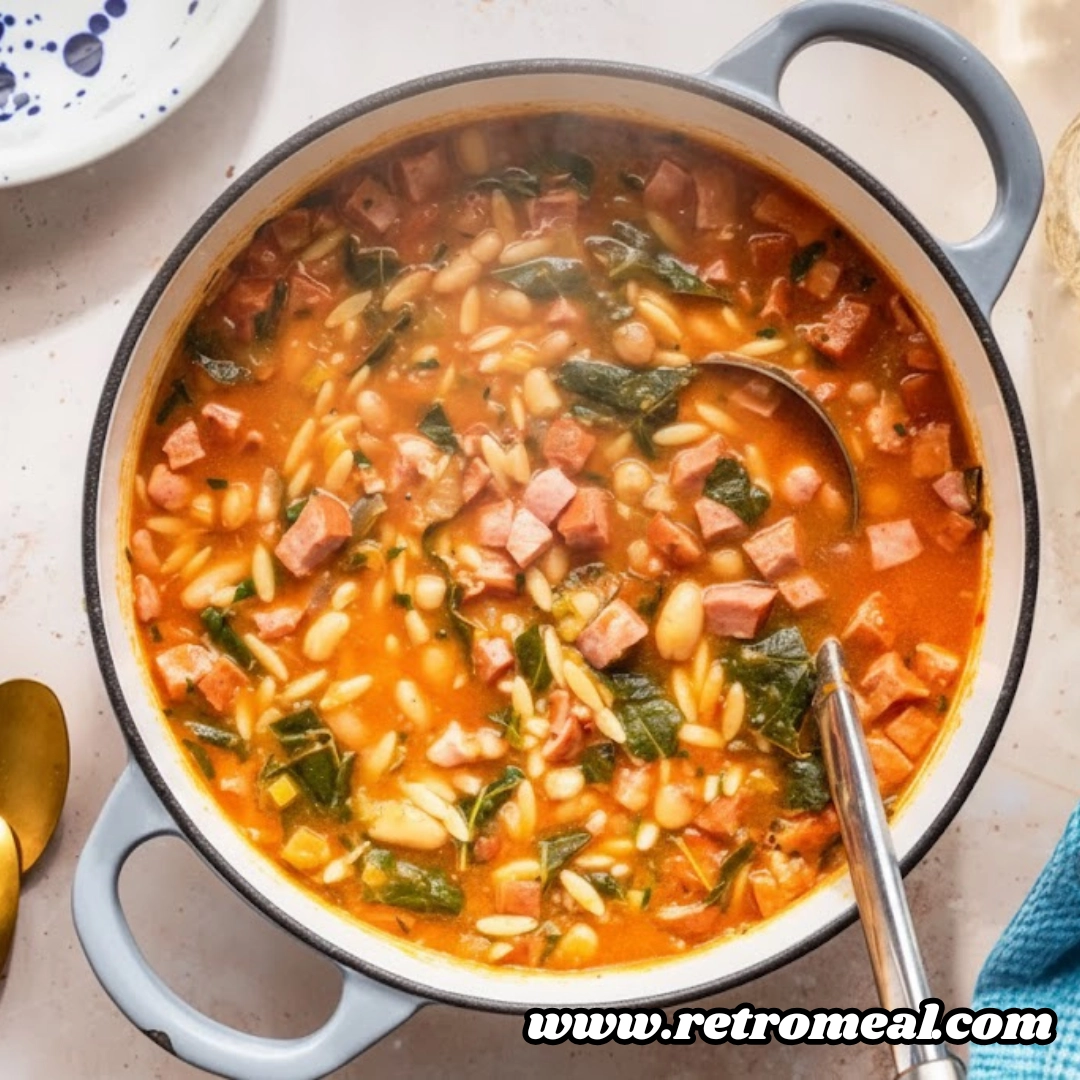
While the name might conjure images of murky bayous and tangled mangroves, Swamp Soup is actually one of the most comforting, vibrant, and soul-warming dishes in the Southern culinary repertoire. This hearty meal is a nutritional powerhouse, combining protein-rich beans, savory smoked sausage, tender pasta, and an abundance of dark, leafy greens that give the broth its signature “swampy” hue. It is the kind of meal that fills the kitchen with a smoky, garlicky aroma and promises to keep the winter chill at bay. Whether you are a fan of traditional Italian pasta e fagioli or you simply crave a robust one-pot meal that hits every food group, this recipe is designed to become a recurring favorite in your household.
Table of Contents
The Essential Ingredients for a Rich Swamp Soup
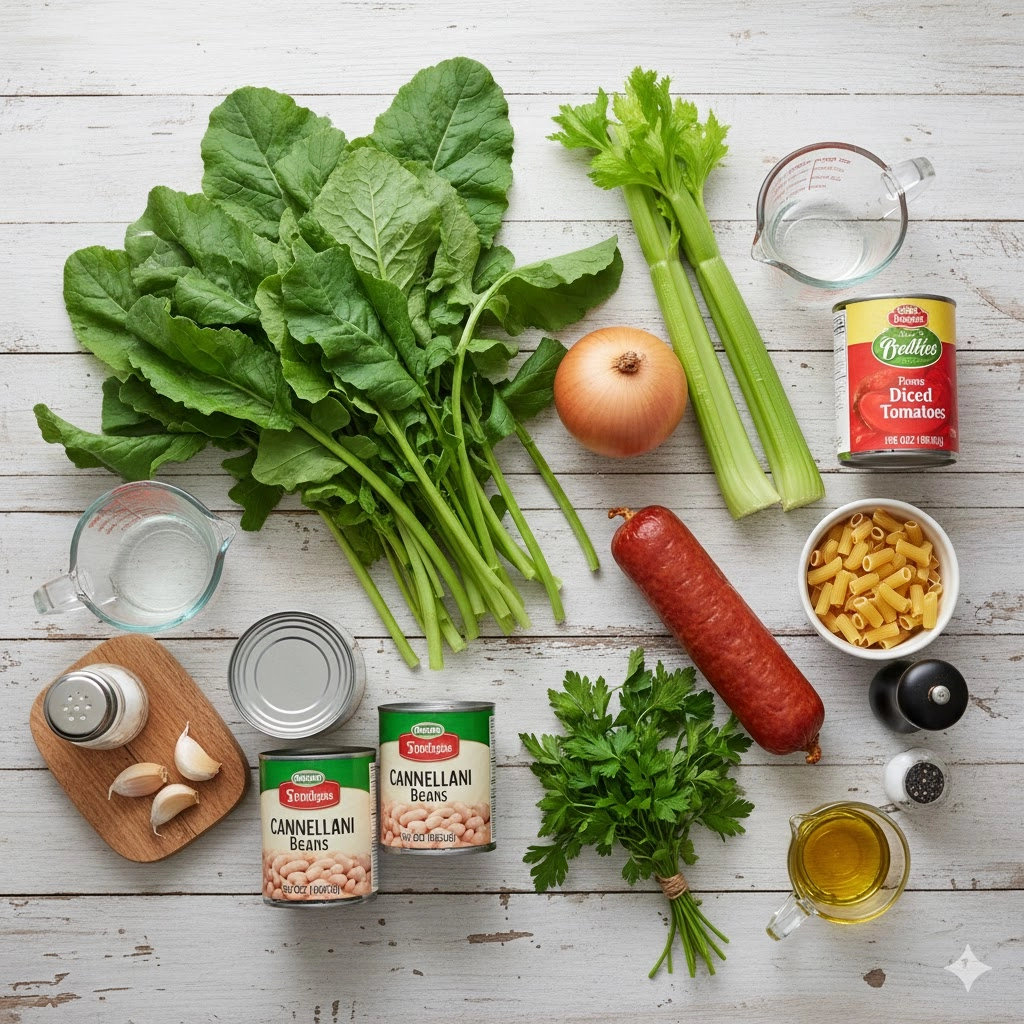
To create the perfect pot of Swamp Soup, you will need a balance of earthy vegetables, salty meats, and starchy elements that thicken the broth naturally as it simmers. Gather the following items before you begin:
- 2 bunches turnip greens (You may substitute with other dark greens like kale or collard greens)
- 1 tablespoon olive oil
- 1 small yellow onion, diced
- 3 ribs celery, diced
- Salt and freshly ground black pepper, to taste
- 2 garlic cloves, minced
- 3/4 pound kielbasa or other smoked sausage, diced
- 2 (15 ounce) cans white beans, drained and rinsed
- 1 (15 ounce) can crushed or diced tomatoes
- 6 cups chicken broth
- 1 cup water
- 1 cup small pasta, such as ditalini or orzo
- 1/4 cup chopped fresh parsley leaves (This is optional but highly recommended for brightness)
Kitchen Instructions for a Flawless Pot
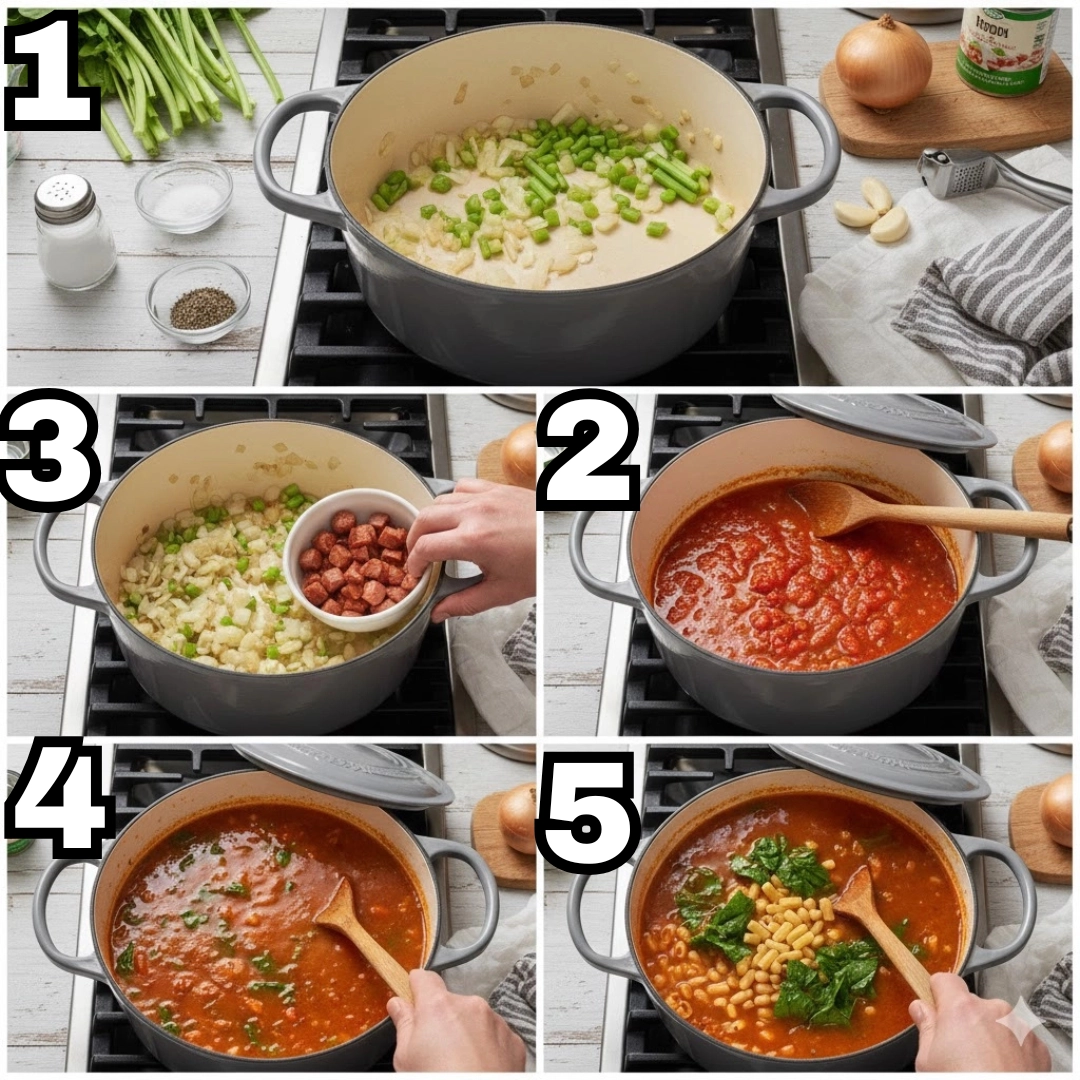
- Prepare the Greens: Begin by thoroughly washing the turnip greens to remove any grit. Trim the woody stems away from the leaves and separate them into two distinct piles. Take the stems, trim off any dry ends, and dice them finely to be sautéed. Take the large leaves and chop them into bite-sized ribbons, then set them aside for later.
- Sauté the Aromatics: Place a large heavy-bottomed pot or Dutch oven over medium heat and add the olive oil. Once the oil is shimmering, toss in the diced turnip stems, the yellow onion, and the celery. Sauté these together until the onions have turned translucent and the vegetables have softened, which usually takes about 4 minutes. Season this base lightly with salt and pepper.
- Brown the Meat and Garlic: Add the minced garlic and the diced kielbasa to the pot. Continue to sauté for another 3 minutes, allowing the sausage to release its smoky oils and the garlic to become fragrant without browning too deeply.
- Incorporate the Base Liquids and Beans: Pour in the drained white beans, the undrained canned tomatoes, the chicken broth, and the water. Stir everything together and increase the heat to high. Place a lid on the pot to bring the liquid to a rolling simmer. Once simmering, reduce the heat to low and allow the flavors to meld for about 10 minutes.
- Cook the Pasta and Greens: Into the simmering broth, stir in the small pasta and the chopped turnip leaves. Refer to your pasta package for the specific timing required to reach an al dente texture. Cook the soup uncovered or partially covered, stirring occasionally to ensure the pasta does not stick to the bottom of the pot.
- Final Seasoning: Once the pasta is tender and the greens have wilted into the broth, turn off the heat. Stir in the fresh parsley if you are using it. Perform a final taste test and adjust the salt and pepper levels to your preference. Serve hot in deep bowls.
Achieving the Ultimate Creamy Consistency
The magic of a great Swamp Soup lies in the texture of the broth. While the recipe calls for chicken broth and water, the starch from the white beans and the pasta creates a silkiness that feels much more indulgent than a standard clear soup. If you prefer an even thicker “stew-like” consistency, you can take a potato masher or a fork and crush a small portion of the white beans against the side of the pot before adding the pasta. This releases the creamy interior of the beans into the liquid, acting as a natural thickening agent.
Another factor in the consistency is the timing of the pasta. Small shapes like ditalini or orzo act like little sponges. If you plan on having leftovers, be aware that the pasta will continue to absorb liquid as it sits in the refrigerator. To keep the soup from becoming a pasta dish the next day, you might consider adding an extra cup of broth when reheating, or even cooking the pasta separately and adding it to individual bowls.
Deep Dive into the Culinary Science of Greens
Using turnip greens is traditional for Swamp Soup because they offer a slightly peppery bite that cuts through the richness of the smoked kielbasa. However, the science of cooking these greens is all about the timing. Hearty greens like collards or turnip greens have a fibrous structure that requires a bit of heat to soften, but they also contain high amounts of chlorophyll and vitamin C which can be degraded by excessive boiling.
By sautéing the stems early on, you ensure that the toughest part of the plant is fully tenderized. Adding the leaves during the final ten minutes of cooking allows them to wilt and soften while retaining their vibrant dark green color. This is what gives the soup its namesake “swampy” appearance—a deep, dark, forest-green look that signals a nutrient-dense meal.
Creative Modifications and Ingredient Substitutions
One of the best attributes of this recipe is its “riffability.” It is a forgiving dish that welcomes whatever you might have in your pantry or crisper drawer.
- The Bean Varieties: While cannellini or Great Northern beans are the standard for their creamy texture and thin skins, navy beans are an excellent alternative. If you want a more colorful soup, you could even use pinto beans, though the “swamp” aesthetic is most traditionally achieved with white beans.
- The Protein Swap: If kielbasa isn’t your favorite, any smoked sausage will do. Andouille adds a spicy Cajun flair that works beautifully with the turnip greens. For a lighter version, smoked turkey sausage or even a plant-based smoked sausage alternative can be used without sacrificing that essential smoky undertone.
- Alternative Greens: If turnip greens are unavailable, Lacinato kale (also known as dinosaur kale) provides a wonderful texture. Swiss chard is another great option, though it wilts much faster, so you should add it in the final 3 minutes of cooking rather than the full 10.
- Vegetable Add-ons: Feel free to boost the nutritional profile by adding finely diced carrots or red bell peppers during the initial sauté phase. This adds a hint of sweetness that balances the saltiness of the sausage.
Perfect Accompaniments and Serving Suggestions
While Swamp Soup is a complete meal on its own, the right side dish can elevate the experience. Because the soup is so savory and rich, it pairs exceptionally well with something that has a bit of crunch or acidity.
A thick slice of crusty sourdough bread or a piece of classic Southern cornbread is almost mandatory for soaking up the flavorful broth. If you want to keep things lighter, a simple green salad with a sharp lemon vinaigrette provides a refreshing contrast to the warm, smoky flavors of the soup. For an extra touch of indulgence, some home cooks like to sprinkle a bit of freshly grated Parmesan or Pecorino Romano cheese over the top of each bowl just before serving. The saltiness of the cheese complements the greens and the tomatoes perfectly.
Essential Questions About Swamp Soup
Can I make this soup in a slow cooker or Crockpot?
Yes, this recipe adapts well to slow cooking. You should sauté the onions, celery, garlic, and sausage in a pan first to develop flavor, then transfer everything except the pasta and the green leaves into the slow cooker. Cook on low for 6 to 8 hours. Add the pasta and the chopped green leaves during the last 30 to 45 minutes of cooking to ensure they don’t become overly mushy.
How long will Swamp Soup stay fresh in the refrigerator?
This soup stores beautifully and often tastes even better the next day as the flavors have more time to marry. It will stay fresh in an airtight container for 3 to 4 days. As mentioned previously, the pasta will absorb much of the liquid, so you may need to add a splash of water or broth when you reheat it on the stovetop.
Is it possible to freeze Swamp Soup for later use?
You can freeze this soup, but with one caveat: pasta does not always maintain its texture well after being frozen and thawed in a liquid. If you are making this specifically for meal prep to freeze, it is best to follow the recipe through the simmering stage but omit the pasta. Freeze the soup base, and then add fresh pasta when you thaw and reheat the soup for serving.
A Hearty Conclusion to Your Cooking Journey
This Swamp Soup is more than just a quick weeknight dinner; it is a celebration of simple, wholesome ingredients coming together to create something far greater than the sum of its parts. By taking the time to sauté your aromatics and selecting a high-quality smoked sausage, you create a depth of flavor that usually requires hours of simmering, all within a forty-five-minute window. It is a rustic, honest dish that proves you don’t need fancy techniques to put a world-class meal on the table. Gather your ingredients, put on a pot, and enjoy the warmth that only a Southern-inspired soup can provide.
Nutritional Profile
| Nutrient | Amount Per Serving |
| Calories | 567 |
| Total Fat | 26 grams |
| Saturated Fat | 9 grams |
| Cholesterol | 45 milligrams |
| Sodium | 1450 milligrams |
| Total Carbohydrates | 56 grams |
| Dietary Fiber | 12 grams |
| Sugars | 5 grams |
| Protein | 29 grams |
Important Recipe Note
The nutritional information provided above is calculated using an ingredient database and should be viewed as an estimate. Variations in brands of smoked sausage or the specific type of beans used can alter these numbers. For those monitoring sodium intake, consider using low-sodium chicken broth and rinsing the canned beans thoroughly.
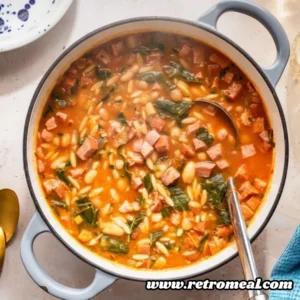
Hearty Southern Swamp Soup
Ingredients
- 2 bunches turnip greens (or other dark greens like kale or collard greens)
- 1 tbsp olive oil
- 1 small yellow onion, diced
- 3 ribs celery, diced
- Salt and freshly ground black pepper, to taste
- 2 cloves garlic, minced
- 0.75 pound kielbasa or other smoked sausage, diced
- 2 cans (15-ounce) white beans, drained and rinsed
- 1 can (15-ounce) crushed or diced tomatoes
- 6 cups chicken broth
- 1 cup water
- 1 cup small pasta, like ditalini or orzo
- 0.25 cup chopped fresh parsley leaves (optional)
Instructions
- Trim the stems from the greens and separate into two piles. Trim any dry ends from the stems and finely dice. Chop the leaves into ribbons and set aside.
- Heat olive oil in a large pot over medium heat. Add diced turnip stems, onion, and celery. Sauté until onion is translucent (about 4 minutes). Season with salt and pepper.
- Add minced garlic and diced kielbasa to the pot. Sauté for 3 more minutes until the sausage is fragrant and slightly browned.
- Stir in drained beans, tomatoes (with juice), chicken broth, and water. Increase heat to high, cover with a lid, and bring to a simmer.
- Reduce heat to low and cook for 10 minutes. Then, stir in the pasta and chopped turnip leaves. Cook according to pasta package directions for al dente.
- Once pasta is tender, turn off heat. Stir in fresh parsley. Taste and adjust seasoning with salt and pepper before serving.
Notes
Equipment
- Large heavy-bottomed pot or Dutch oven
- Chef’s knife and cutting board
- wooden spoon or spatula
- colander For rinsing beans