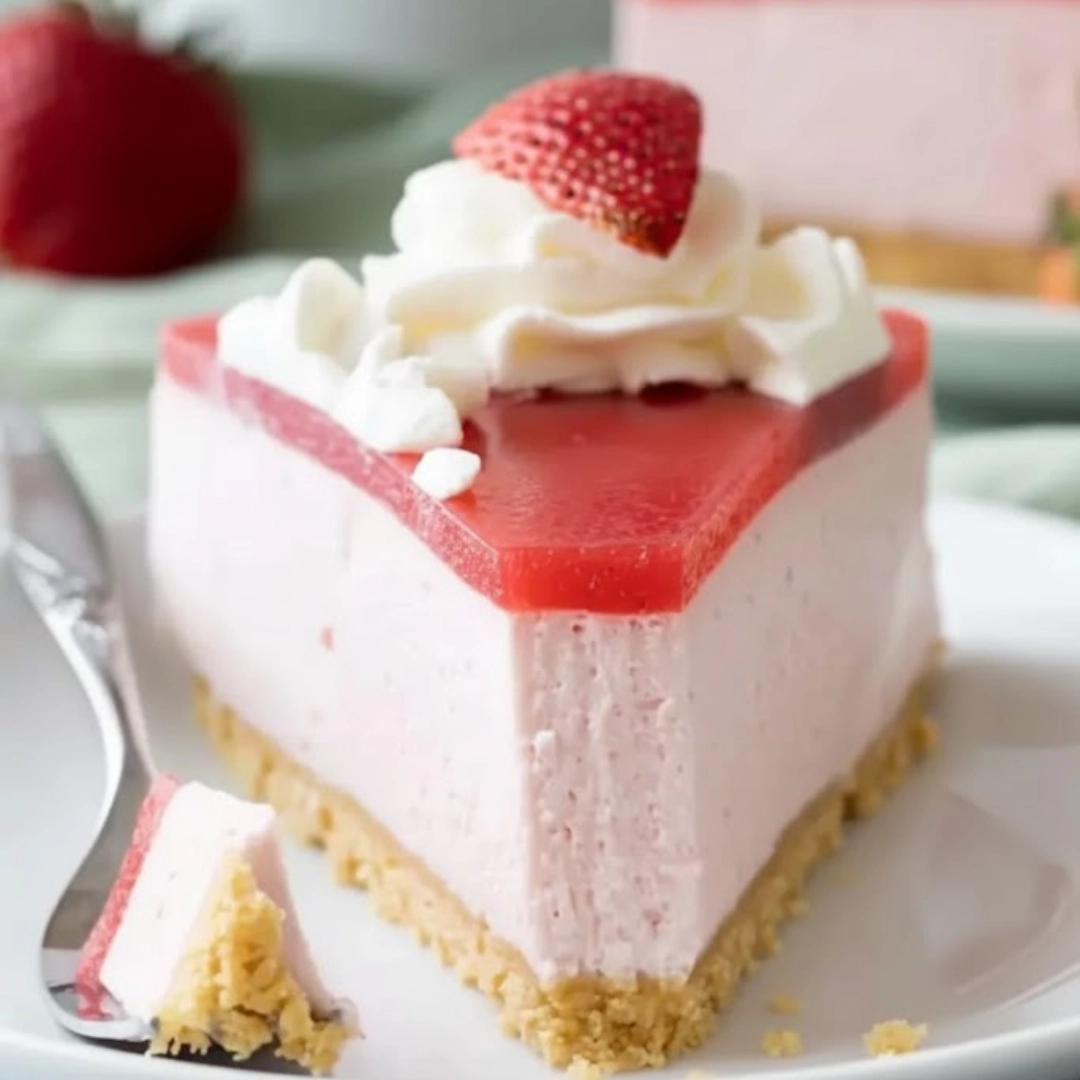
This is the dessert of celebration, an ethereal creation that balances the richness of a light sponge cake with the cloud-like texture of a fresh fruit mousse. Unlike denser, heavy layer cakes, a well-made Strawberry Mousse Cake offers a delightful contrast in every bite: the delicate chew of the biscuit base, the cool, airy burst of strawberry, and perhaps a shimmering, jewel-toned glaze. It is the perfect centerpiece for a spring or summer gathering, sophisticated enough for a formal event yet universally adored for its vibrant, natural flavor and elegant presentation.
Table of Contents
THE COMPONENT PLAYBOOK: WHAT YOU’LL NEED
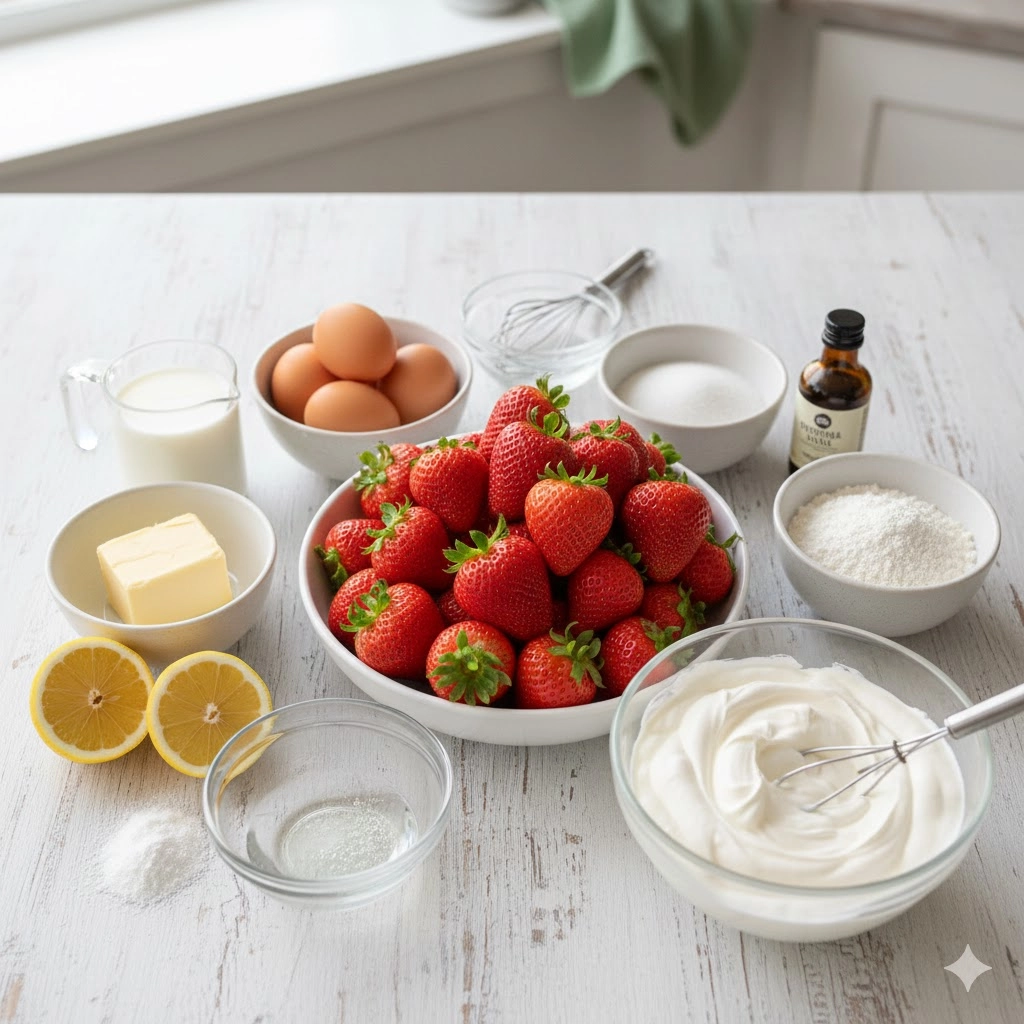
To construct this multi-layered dessert, we will break the ingredients down into three main sections: the sponge base, the strawberry mousse filling, and the optional mirror glaze.
For the Light Sponge Base (Genoise Style)
- One-half cup (120 milliliters) whole milk
- Two tablespoons unsalted butter
- Four large eggs, at room temperature
- Two-thirds cup (130 grams) granulated sugar
- One teaspoon pure vanilla extract
- One cup (125 grams) all-purpose flour
- One-half teaspoon baking powder
- Pinch of fine sea salt
For the Strawberry Mousse Filling
- One pound (450 grams) fresh or frozen strawberries, hulled
- One-third cup (65 grams) granulated sugar
- One-quarter cup (60 milliliters) fresh lemon juice
- Two tablespoons (20 grams) gelatin powder (unflavored)
- One-half cup (120 milliliters) cold water
- One and one-half cups (360 milliliters) heavy whipping cream, chilled
- Two tablespoons (30 grams) confectioners’ sugar
For the Simple Strawberry Glaze (Optional)
- One cup (240 grams) strawberry purée (strained)
- One-half cup (100 grams) granulated sugar
- Two tablespoons (ten grams) gelatin powder (unflavored)
- One-quarter cup (60 milliliters) cold water
ARCHITECTING THE DESSERT: STEP-BY-STEP OVERVIEW
The creation of this cake is a precise exercise best handled in logical stages, ensuring each component is prepared and chilled before the final assembly.
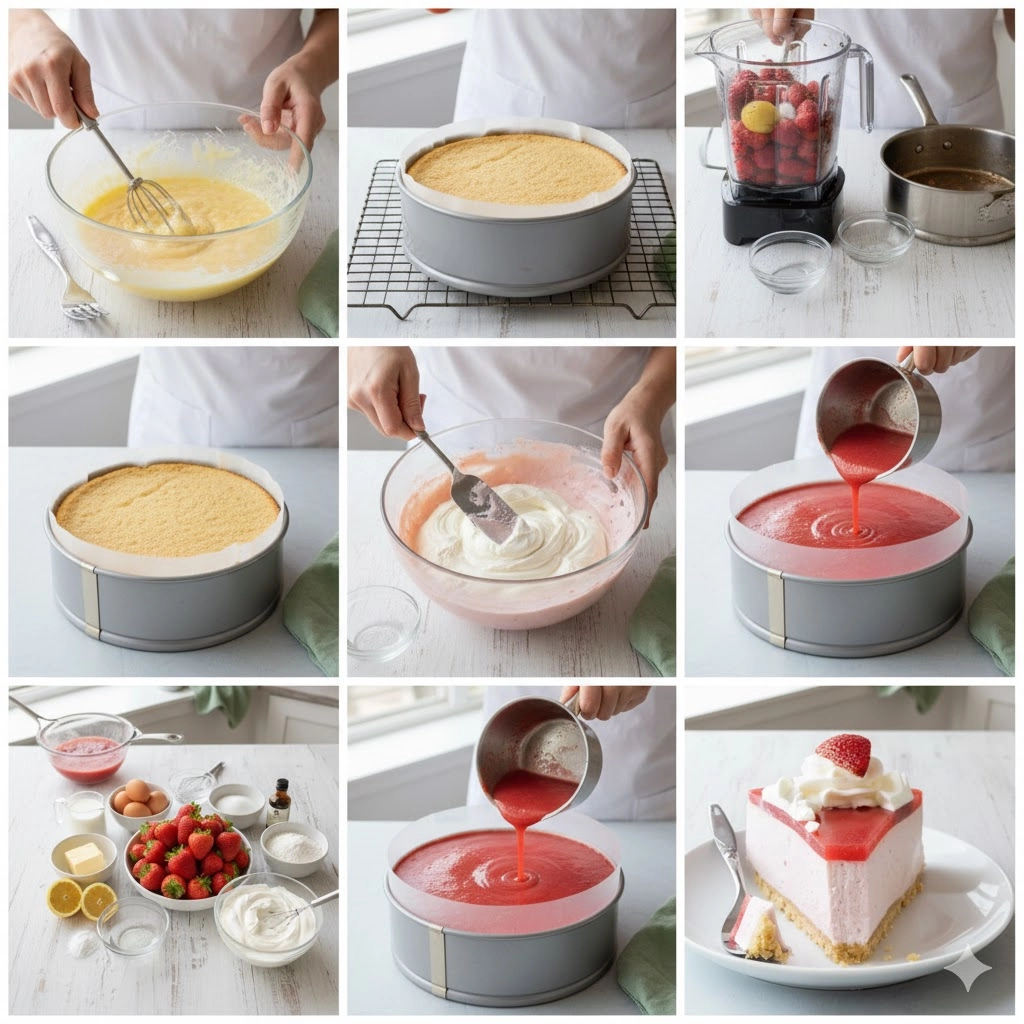
- Prepare the Sponge Base: Combine the wet and dry ingredients separately, then fold together carefully to maintain airiness. Bake the batter in a prepared nine-inch springform pan until lightly golden and set. Cool completely.
- Make the Strawberry Purée: Purée the strawberries and sugar until very smooth. Heat a portion of this mixture to activate the gelatin, then whisk it all together to create the base for the mousse. Allow this mixture to cool to room temperature.
- Whip the Cream: In a separate, chilled bowl, whip the cold heavy cream with the confectioners’ sugar until soft peaks form.
- Fold the Mousse: Gently fold the whipped cream into the cooled strawberry base. The goal is a uniform, pale pink, airy texture.
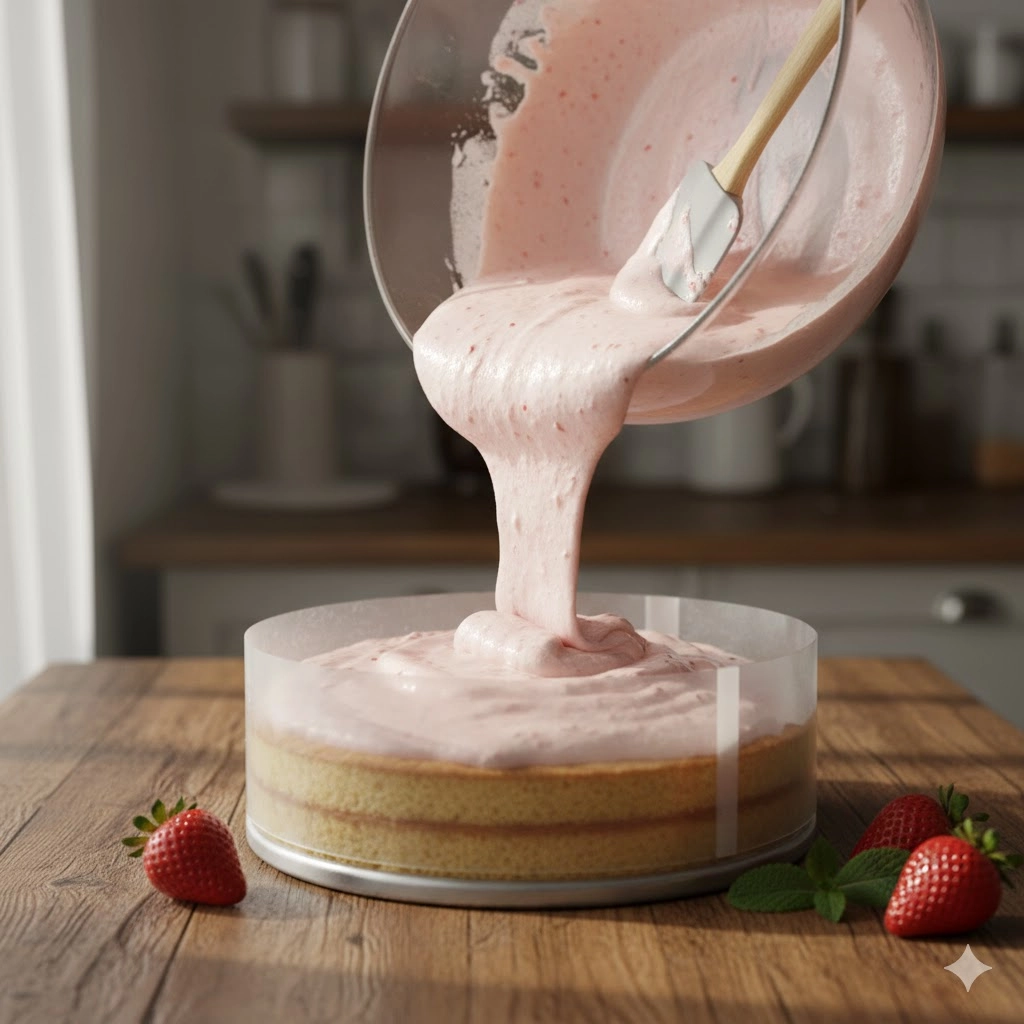
- Assemble the Cake: Place the cooled sponge base back into the clean springform pan (or a cake ring). Pour the strawberry mousse over the sponge. Chill the entire assembly for at least six hours, or preferably overnight, until firm.
- Construct the Glaze: Soften the glaze gelatin in cold water, then combine it with the strained strawberry purée and sugar. Heat the mixture gently until all components are dissolved and homogenous.
- Finish and Chill: Allow the glaze to cool slightly, then pour it over the chilled mousse cake. Return the cake to the refrigerator for a final two hours to set the mirror glaze to a high sheen.
DEEP DIVE INTO TEXTURE AND TECHNIQUE
Success in a layered cake like this lies in respecting the physics of baking and the delicacy of the mousse.
The Foundation: Baking the Sponge Base
The sponge base needs to be sturdy enough to hold the mousse but light enough not to feel heavy. We are aiming for a Genoise, which relies on whipping the whole eggs and sugar for volume.
First, combine your melted butter and milk and keep it warm—it is crucial for maintaining the airiness of the batter later. Sift the flour, baking powder, and salt together to ensure there are no lumps and to introduce air. The most critical step is the egg-whipping process: whisk the eggs and sugar until they are pale yellow, greatly increased in volume (at least triple), and fall off the whisk in a thick ribbon that holds its shape for a few seconds. This is known as the “ribbon stage.” When folding in the dry ingredients, use a large spatula and a light hand, cutting through the center and sweeping up the sides of the bowl. Stop folding the second the flour disappears; overmixing will deflate the hard-earned air. Bake at three hundred fifty Fahrenheit for approximately twenty-five to thirty minutes. The cake is done when a toothpick inserted into the center comes out clean and the edges pull away from the pan slightly.
The Heart: Crafting the Strawberry Mousse Filling
A good mousse should be light, vibrant, and stable. Begin by blooming the gelatin: sprinkle the powder over the one-half cup of cold water in a small bowl and let it sit for five minutes until spongy. In a saucepan, heat about one-third of the strawberry purée (made from the hulled berries, sugar, and lemon juice) until steaming, then stir in the bloomed gelatin until completely dissolved. Do not boil, as this can weaken the gelatin’s setting power. Pour this warm mixture back into the remaining cold purée.
The texture depends on temperature. The strawberry base must be fully cooled to room temperature, or even slightly cooler, before folding in the whipped cream. If the base is warm, it will melt the fat in the cream, collapsing the air bubbles and resulting in a dense, heavy filling. The whipped cream should be at soft peak stage—firm enough to hold its shape when lifted, but the tip should curl over slightly. Add the cream in three stages, folding gently with a sweeping motion, rotating the bowl frequently. The final mousse should look uniform, airy, and pale pink, smelling intensely of fresh summer strawberries.
The Crown: Setting the Mirror Glaze
While optional, the mirror glaze elevates the finished product from a simple dessert to a showstopper. The key to a clear, flawless glaze is straining the purée to remove any remaining strawberry seeds or fibers.
Bloom the gelatin for the glaze exactly as you did for the mousse. Combine the strained purée, sugar, and the water containing the gelatin. Heat this gently, stirring until the sugar and gelatin are fully dissolved. This mixture needs to be cooled to the exact right temperature before pouring. If it’s too hot, it will melt the mousse beneath; if it’s too cool, it will set too quickly and create streaks or lumps. The ideal temperature is between ninety-five and one hundred five Fahrenheit. Pour quickly and evenly over the Strawberry Mousse Cake once it is completely set and frozen or deeply chilled. A single, smooth pour is best, as going back to touch up spots will disturb the setting glaze.
MASTERING THE MOUSSE: INSIDER SECRETS
Achieving the perfect texture and flavor profile requires attention to a few specific techniques that separate a good cake from a truly great one.
- Tackling the Temperature Differential: Always ensure the cake base is cold and the strawberry purée mixture is at room temperature before folding in the cold whipped cream. This temperature consistency is the secret to a high, stable mousse that won’t weep or collapse.
- The Power of Lemon Juice: A small amount of acid, like fresh lemon juice, not only brightens the natural flavor of the strawberries but also helps the pectin in the fruit set more firmly with the added sugar and gelatin. Do not skip this ingredient.
- Preventing the Soggy Bottom: Before pouring the mousse onto the sponge, you can lightly brush the cake base with a thin layer of melted white chocolate or a clear glaze. This creates a moisture barrier, ensuring the sponge remains delicate and springy, not saturated by the wet mousse filling.
- Springform vs. Cake Ring: For the cleanest, most professional edge, use an adjustable cake ring or springform pan that is lined with an acetate collar. Acetate is a clear plastic strip that lines the inside edge of the mold, creating a perfectly smooth, non-stick vertical surface for the mousse to set against.
- Gelatin Hydration: When blooming gelatin powder, always sprinkle the powder evenly over the surface of the cold liquid—never dump it in a pile. This ensures every granule is properly hydrated, leading to a smooth, fully stabilized setting agent.
- Taste Testing the Purée: Strawberries vary wildly in sweetness. Taste your purée before adding it to the remaining ingredients. If your berries are naturally very tart, you might need to add an extra tablespoon of sugar to balance the flavor before moving on to the gelatin stage.
ADAPTING THE FRUIT FLAVOR PROFILE
While strawberry is the classic choice, the structure of this recipe is flexible, allowing you to swap in other seasonal fruits with minor adjustments.
- Raspberry Dream: Substitute fresh raspberries for strawberries in the purée. Raspberries tend to have more seeds, so thorough straining of the purée is non-negotiable for a silky-smooth mousse. You may also need a touch more sugar to offset the inherent tartness of raspberries.
- Tropical Mango: Use ripe mango purée instead of strawberry. Mangoes have a higher water content, so you might need to increase the gelatin slightly—by about ten percent of the original amount—to ensure the mousse sets with the proper stability. A splash of lime juice pairs beautifully with the mango’s tropical sweetness.
- Mixed Berry Delight: Combine equal parts blueberries and blackberries for a deeper, earthier flavor. Berries like these are often less sweet than strawberries, so adjust the sugar in the purée accordingly. A touch of Kirsch (cherry brandy) or a berry liqueur can add a layer of complexity to the fruit base.
- Citrus Zest Infusion: Regardless of the fruit, incorporating the finely grated zest of an orange or a lemon into the sugar before whipping it into the heavy cream will release citrus oils that lift and brighten the overall flavor of the final dessert.
PRESENTATION AND PLATING: HOW TO SERVE
The visual appeal of the cake is nearly as important as its taste, and presentation can be simplified or elevated depending on the occasion.
- The Classic Garnish: Before serving, decorate the top edge of the cake with a ring of freshly sliced strawberries or whole berries, allowing the vibrant red color to contrast with the pale pink of the mousse and the white sponge. A light dusting of confectioners’ sugar just before guests arrive adds a subtle final touch.
- Accompanied by Whipped Cream: Serve slices of the cake alongside a small dollop of lightly sweetened, freshly whipped cream—not entirely necessary, but a luxurious addition. For an extra element, fold a teaspoon of high-quality balsamic vinegar into the whipped cream; the unexpected tang complements the sweetness of the strawberries beautifully.
- Individual Portions: For a formal setting, instead of making one large cake, assemble the dessert in individual glass cups or small ramekins. Layer the sponge (cut into small rounds), the mousse, and the glaze inside the glass. This offers a stunning, layered presentation that makes serving effortless.
- Textural Contrast: Offer a side of finely diced candied pecans or crumbled, crisp shortbread cookies. The crunch provides a much-needed textural break from the entirely soft nature of the mousse and sponge.
YOUR STRAWBERRY MOUSSE CAKE QUESTIONS ANSWERED
Can I make the sponge cake ahead of time?
Absolutely. The sponge base can be baked up to three days in advance. Once fully cooled, wrap it tightly in plastic wrap and store it at room temperature, or freeze it for up to a month. If frozen, allow it to thaw completely before assembling the mousse cake.
What is the best way to slice the cake cleanly?
Because the mousse is so delicate and soft, the best way to achieve clean slices is to use a very sharp, thin-bladed knife that has been run under hot water and thoroughly dried just before each cut. Wipe the knife clean between every slice to prevent the mousse from sticking and tearing the layers.
My mousse is not setting—what went wrong?
The failure to set is almost always related to the gelatin. Either the gelatin was not properly bloomed in the cold water, or the mixture containing the gelatin was overheated (boiled), which degrades its setting power. Ensure the gelatin is fully dissolved but never allow the fruit base mixture to come to a hard boil. Insufficient chilling time is another common cause; it must chill for at least six hours.
Can I use frozen strawberries?
Yes, frozen strawberries work perfectly well for the purée component of the mousse. Thaw them completely first, drain off any excess liquid, and then proceed with the recipe as written. The intense flavor of fresh, seasonal berries is always preferable, but frozen are a reliable alternative year-round.
UNDERSTANDING THE NUTRITIONAL LANDSCAPE
This cake is an indulgent dessert intended for special occasions. The values below are estimated for a single slice (one-twelfth of a nine-inch cake).
| Nutrient | Amount per Serving |
| Calories | 455 kcal |
| Protein | 6 g |
| Carbs | 58 g |
| Fat | 23 g |
| Fiber | 2 g |
| Sugar | 43 g |
| Sodium | 210 mg |
Disclaimer
Nutrition information is an estimate and may vary based on preparation and ingredients used.
The Ultimate Strawberry Mousse Cake: A Guide to Layered Perfection
Ingredients
- 0.5 cup whole milk (120 milliliters)
- 2 tbsp unsalted butter
- 4 large eggs, at room temperature
- 0.66 cup granulated sugar (130 grams)
- 1 tsp pure vanilla extract
- 1 cup all-purpose flour (125 grams)
- 0.5 tsp baking powder
- 1 pinch fine sea salt
- 1 pound fresh or frozen strawberries, hulled (450 grams)
- 0.33 cup granulated sugar (for mousse, 65 grams)
- 0.25 cup fresh lemon juice
- 2 tbsp unflavored gelatin powder (for mousse, 20 grams)
- 0.5 cup cold water (for mousse gelatin, 120 milliliters)
- 1.5 cups heavy whipping cream, chilled (360 milliliters)
- 2 tbsp confectioners’ sugar (30 grams)
- 1 cup strawberry purée, strained (for glaze, 240 grams)
- 0.5 cup granulated sugar (for glaze, 100 grams)
- 2 tbsp unflavored gelatin powder (for glaze, 10 grams)
- 0.25 cup cold water (for glaze gelatin, 60 milliliters)
Instructions
- Combine wet and dry sponge ingredients separately. Whip eggs and sugar until ‘ribbon stage’ is reached, then gently fold in dry ingredients. Bake at 350F for 25–30 minutes until set. Cool completely.
- Purée strawberries, sugar, and lemon juice. Bloom gelatin in cold water. Heat one-third of the purée, dissolve the bloomed gelatin into it, then whisk back into the remaining cold purée. Cool to room temperature.
- Whip the heavy cream and confectioners’ sugar to soft peaks. Gently fold the whipped cream into the room-temperature strawberry base until uniform and airy. Do not overmix.
- Place the cooled sponge base back into a clean springform pan (or cake ring lined with acetate). Pour the strawberry mousse over the sponge layer. Smooth the top.
- Chill the entire cake assembly for a minimum of six hours, or preferably overnight, until the mousse is completely firm and stable.
- Prepare the glaze mixture, dissolve the gelatin, and cool the mixture to 95–105F. Pour quickly and evenly over the fully chilled mousse layer. Avoid touching up streaks.
- Chill the cake for a final two hours to set the glaze. Release from the mold, garnish, and slice with a hot, clean knife.
Notes
Equipment
- 9-inch Springform Pan or Cake Ring
- rubber spatula For gentle folding
- hand or stand mixer For whipping eggs and cream
- saucepan For melting butter/milk and dissolving gelatin
- fine mesh sieve For straining purée for glaze
- Acetate Collar (Optional) For smooth edges