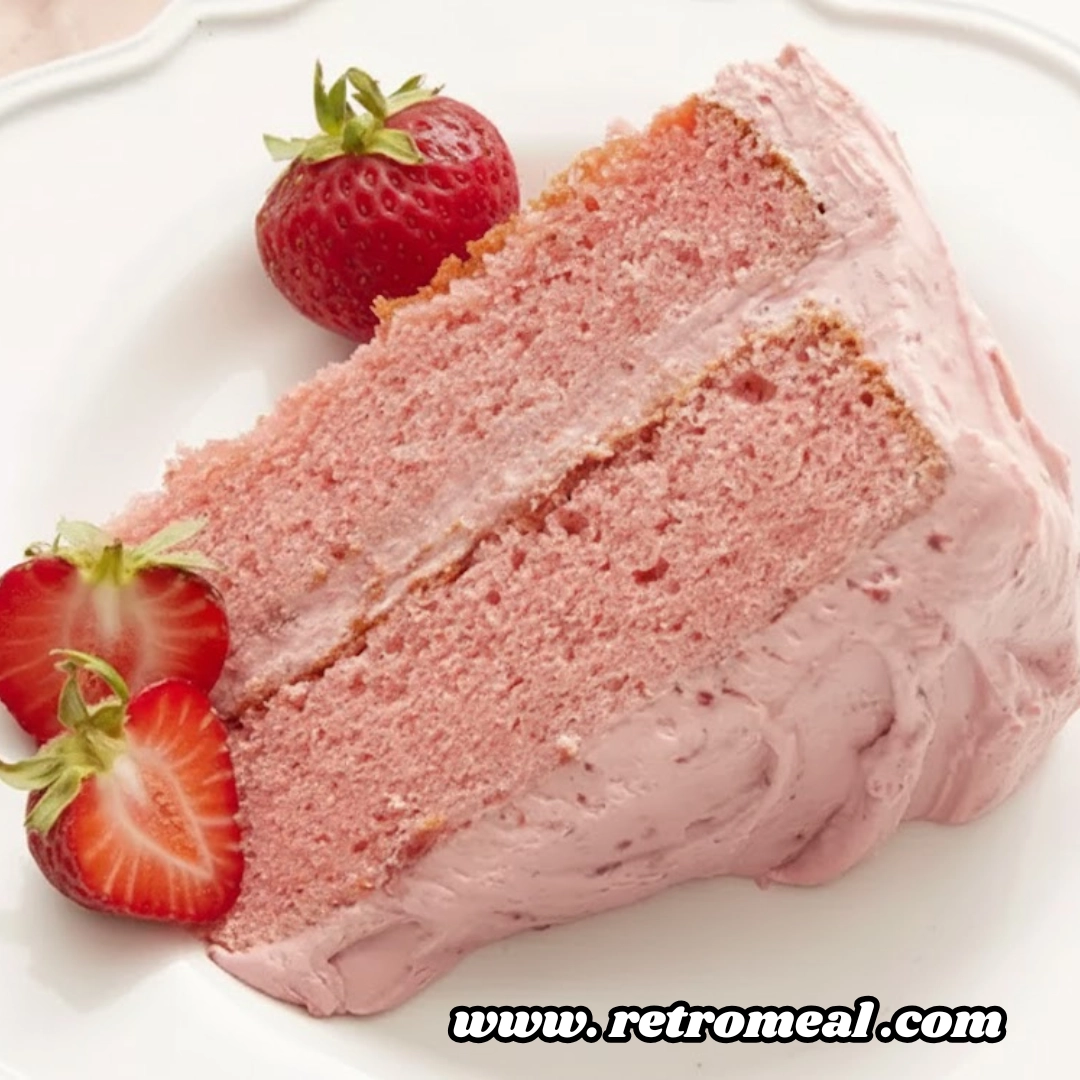
There is something undeniably nostalgic and comforting about a vibrant, pink strawberry cake. Whether it is for a milestone birthday, a summer garden party, or a simple Sunday family dinner, this particular recipe has earned its reputation as a “gold standard” in the culinary world. Unlike many store-bought versions that rely heavily on artificial flavors, this scratch-made masterpiece utilizes a thoughtful combination of strawberry puree and strawberry gelatin to achieve a deep, authentic fruit flavor and a moist, tender crumb. It is the kind of cake that looks like it stepped out of a high-end bakery window but remains approachable enough for any home baker to master in their own kitchen.
Table of Contents
The Essential Ingredients for Success
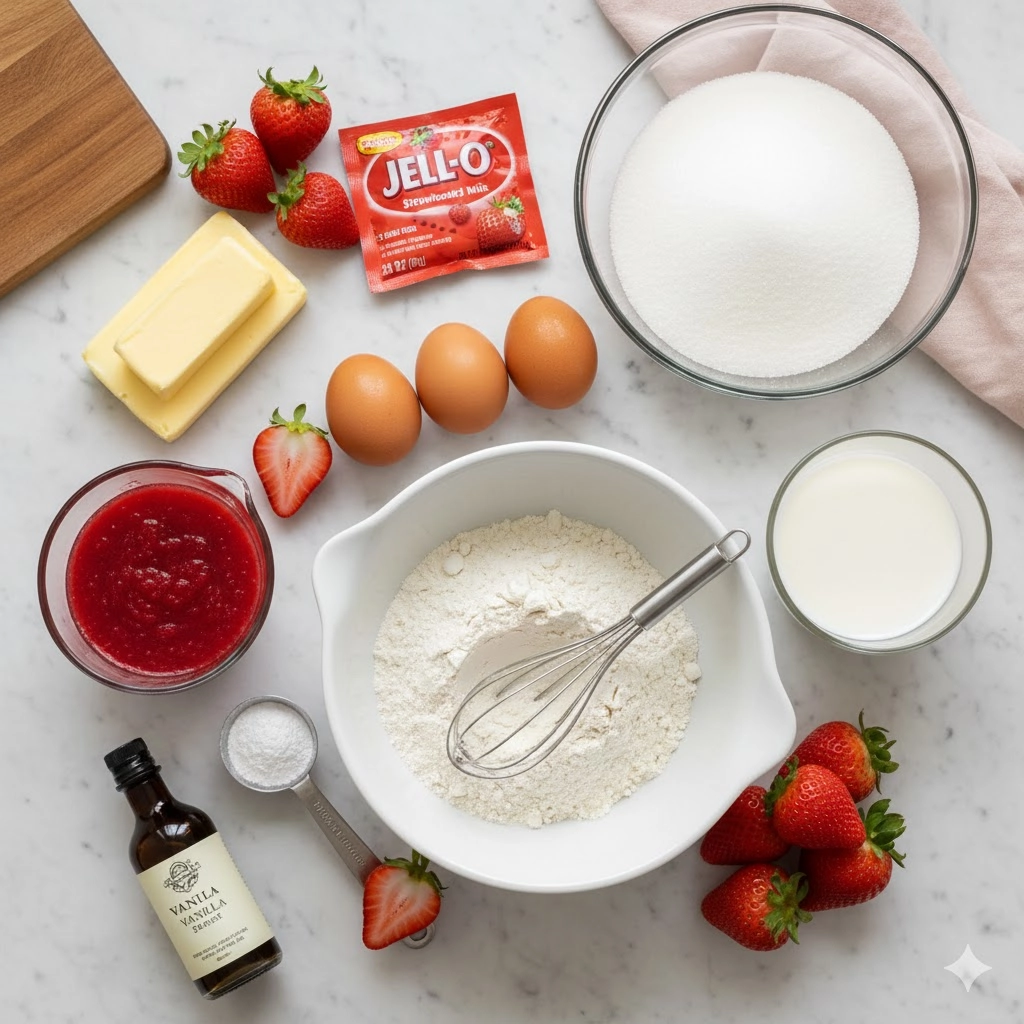
To ensure your cake has the perfect structural integrity and flavor profile, gather these specific items. Using the correct measurements is vital for the chemistry of the bake.
- 2 cups white sugar
- 1 cup butter, softened to room temperature
- 1 (3 ounce) package strawberry flavored gelatin
- 4 large eggs, kept at room temperature
- 2 ¾ cups sifted cake flour
- 2 ½ teaspoons baking powder
- 1 cup whole milk, room temperature
- ½ cup strawberry puree
- 1 tablespoon vanilla extract
Standard Preparation Instructions
- Begin by preheating your oven to 350 degrees Fahrenheit. Prepare two 9-inch round cake pans by greasing them thoroughly and dusting them with flour to prevent sticking.
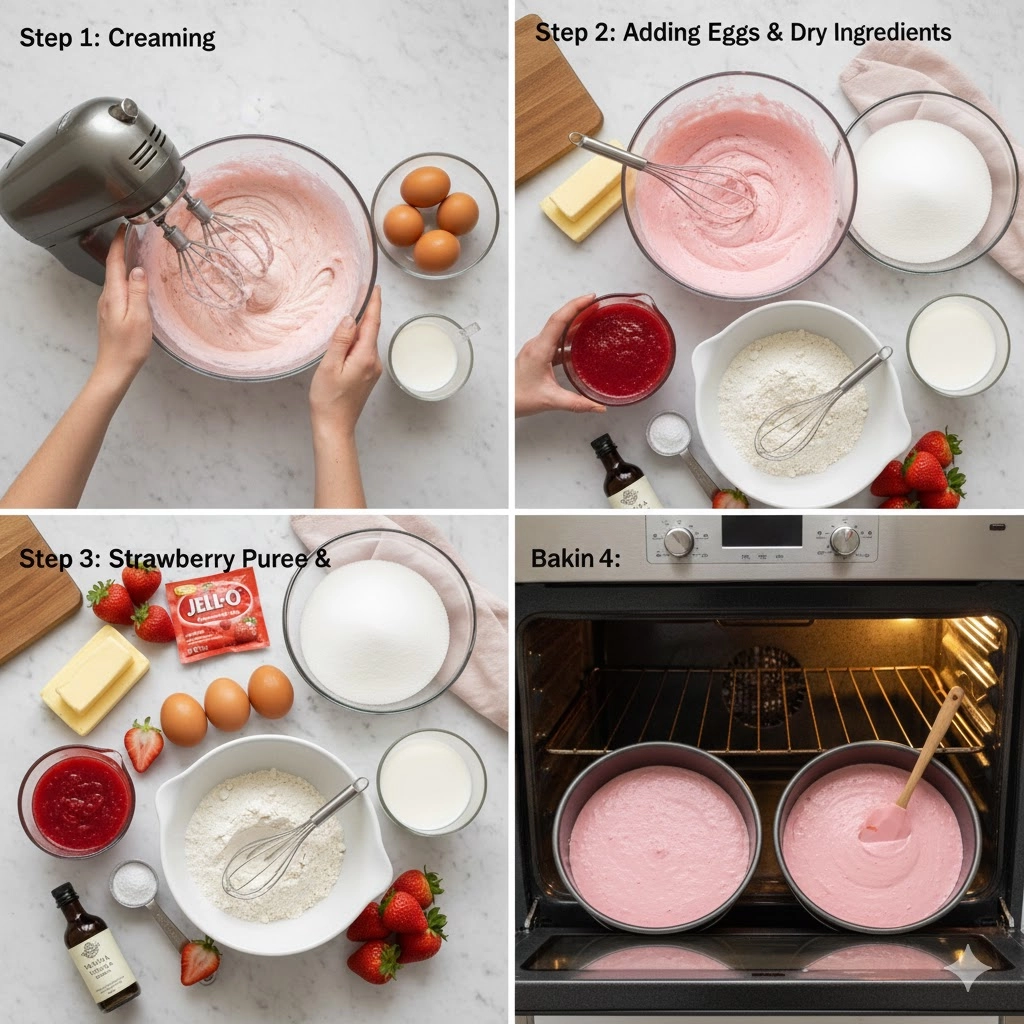
- In a large mixing bowl, use an electric mixer to cream together the white sugar, softened butter, and the dry strawberry gelatin. Continue beating until the mixture is light and fluffy. Add the eggs one at a time, ensuring you beat the mixture well after each addition.
- In a separate bowl, whisk together the sifted cake flour and baking powder. Gradually incorporate this dry mixture into the butter mixture, alternating with the whole milk until combined.
- Gently blend in the strawberry puree and the vanilla extract until the color and flavor are evenly distributed.
- Divide the pink batter evenly between your two prepared cake pans.
- Bake in the center of the preheated oven for 25 to 30 minutes, or until a toothpick inserted into the center comes out clean. Allow the cakes to cool on a wire rack for 10 minutes. Run a table knife around the edges to loosen the sponge, then invert them onto a serving plate or cooling rack to finish cooling completely.
Comprehensive Step-By-Step Breakdown
Creating a cake of this caliber requires more than just following a list; it requires an understanding of the textures and stages of the batter. When you begin the creaming process with the butter, sugar, and gelatin, you are not just mixing ingredients; you are aerating the fat. The sugar crystals and the granules of the strawberry gelatin dig tiny air pockets into the butter. This is why it is essential to beat them until “light and fluffy.” This stage provides the initial lift that helps the baking powder later on.
The introduction of eggs is a critical emulsification step. By adding them one at a time and ensuring they are at room temperature, you prevent the batter from breaking or curdling. A broken batter often leads to a heavy, oily cake. When you move to the dry ingredients, the use of cake flour is non-negotiable for those seeking a fine, velvety texture. Cake flour has a lower protein content than all-purpose flour, which means less gluten is formed during the mixing process.
Alternating the flour and the milk is a classic technique used to maintain the emulsion of the batter. If you added all the liquid at once, the batter would separate; if you added all the flour at once, it would become too thick and difficult to mix without overworking the gluten. Finally, the strawberry puree—which can be made by simply processing frozen strawberries until smooth—provides the moisture and acidity needed to react with the baking powder, ensuring a beautiful rise and a tender mouthfeel.
Achieving the Ultimate Creamy Consistency and Texture
One of the most frequent discussions surrounding this recipe involves the density of the crumb. To ensure your cake is light rather than “cornbread-like,” focus heavily on the measurement of the flour. You must sift the cake flour first, and then measure out the 2 ¾ cups. If you measure the flour and then sift it, you will likely end up with too much flour, leading to a heavy result.
Temperature is your best friend in the kitchen. If your milk or eggs are cold, they will cause the butter in the creamed mixture to seize up, resulting in a lumpy batter. By keeping everything at room temperature, the ingredients bond more effectively, creating a smooth, uniform liquid that traps air perfectly. Additionally, when folding in the strawberry puree at the end, do so with a gentle hand. You want to incorporate the fruit without deflating all the air you worked so hard to beat into the butter and sugar.
Choosing the Perfect Accompaniments and Serving Styles
While the cake itself is the star, the choice of frosting can transform the entire experience. A classic cream cheese frosting is a favorite for many because its slight tanginess cuts through the sweetness of the strawberry gelatin. If you prefer something richer, a dark chocolate ganache creates a “chocolate-covered strawberry” effect that is sophisticated and indulgent.
For a lighter summer presentation, consider a simple dollop of freshly whipped cream and a handful of sliced, macerated strawberries on top. Serving this cake slightly chilled can also enhance the fruit flavors, making it incredibly refreshing on a warm afternoon. If you are serving this for a formal event, a light dusting of powdered sugar and a sprig of mint can add a touch of elegance without requiring hours of decorating.
Smart Modifications and Substitutions
While the original recipe is perfected for a 9-inch round duo, it is highly adaptable. If you do not have cake flour on hand, you can create a substitute by removing two tablespoons of all-purpose flour from every cup and replacing them with two tablespoons of cornstarch. This helps mimic the lower protein levels of true cake flour.
For those who prefer a more natural approach, you can experiment with reducing the gelatin slightly and increasing the puree, though keep in mind that the gelatin provides much of the structural “bounce” and the iconic pink hue. If you find yourself without frozen strawberries for the puree, fresh berries work just as well—simply hull them and pulse them in a food processor until they reach a liquid state. You do not need to cook the puree beforehand; the raw fruit provides a bright, fresh acidity that balances the sugar.
Deep-Dive Culinary Questions
How do I prevent my strawberry cake from becoming too dense or heavy?
The key to a light crumb lies in the sifting and the creaming process. Ensure you sift your cake flour before measuring it, as this prevents packing too much flour into the cup. Furthermore, do not rush the initial step of beating the butter and sugar; you want a pale, voluminous mixture that provides a foundation of air for the cake to rise.
Can I use fresh strawberries instead of frozen for the puree?
Yes, fresh strawberries are an excellent substitute. Frozen strawberries are often recommended because they are picked at peak ripeness and release their juices easily when thawed, but fresh berries offer a beautiful, bright flavor. Simply blend them until smooth and measure out the half-cup required by the recipe.
Why does this recipe use strawberry gelatin instead of just fruit?
The strawberry gelatin serves three purposes: it provides a concentrated burst of flavor that doesn’t add too much excess liquid, it gives the cake its signature rosy color, and the gelatin itself acts as a stabilizer. This results in a cake that is moist yet sturdy enough for stacking and frosting without crumbling.
How should I store the cake to keep it moist for several days?
Because of the fruit puree and dairy content, this cake stays moist for a long time. It is best stored in the refrigerator, tightly covered, for up to five days. If you plan to freeze it, it is best to freeze the layers individually, wrapped in plastic wrap and foil, before they are frosted. This preserves the texture and prevents the frosting from becoming weepy.
The Final Result: A Bakery-Quality Masterpiece
Baking a strawberry cake from scratch is a rewarding endeavor that far surpasses anything you can find in a box. This recipe strikes the perfect balance between the nostalgic sweetness of a childhood treat and the refined texture of a professional dessert. By paying close attention to the temperature of your ingredients and the aeration of your batter, you will produce a cake that is celebrated for its moistness, flavor, and stunning color. It is a reliable, time-tested recipe that is sure to become a staple in your dessert rotation.
Nutritional Overview
The following values are estimated per serving based on the recipe being divided into 14 equal portions.
| Nutrient | Amount Per Serving |
| Calories | 393 calories |
| Total Fat | 15 grams |
| Saturated Fat | 9 grams |
| Cholesterol | 88 milligrams |
| Sodium | 240 milligrams |
| Total Carbohydrates | 59 grams |
| Dietary Fiber | 1 gram |
| Sugars | 42 grams |
| Protein | 5 grams |
Nutritional Disclaimer
The nutritional information provided is an estimate and can vary based on the specific brands of ingredients used and the accuracy of measurements. For those with specific dietary restrictions or medical needs, please calculate values using your chosen ingredients.
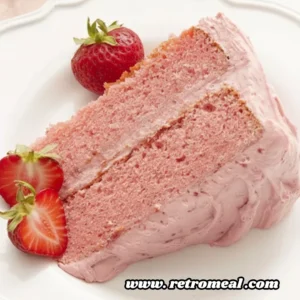
Best Strawberry Cake from Scratch
Ingredients
- 2 cups white sugar
- 1 cup butter, softened
- 3 ounces strawberry flavored gelatin (Jell-O)
- 4 large eggs, room temperature
- 2.75 cups sifted cake flour
- 2.5 tsp baking powder
- 1 cup whole milk, room temperature
- 0.5 cup strawberry puree (from frozen or fresh berries)
- 1 tbsp vanilla extract
Instructions
- Preheat your oven to 350 degrees Fahrenheit (175 degrees Celsius). Thoroughly grease and flour two 9-inch round cake pans to ensure easy removal.
- In a large mixing bowl, beat the softened butter, white sugar, and dry strawberry gelatin together with an electric mixer until the mixture is light, fluffy, and well-aerated.
- Add the eggs one at a time to the creamed mixture, beating thoroughly after each addition to maintain a smooth emulsion.
- In a separate medium bowl, whisk together the sifted cake flour and baking powder.
- Gradually stir the flour mixture into the butter mixture, alternating with the whole milk. Begin and end with the flour to prevent the batter from breaking.
- Gently blend in the strawberry puree and the vanilla extract until the color is uniform throughout the batter.
- Divide the batter evenly between the two prepared pans. Bake for 25 to 30 minutes, or until a toothpick inserted into the center comes out clean.
- Cool the cakes in the pans for 10 minutes before inverting them onto a wire rack to cool completely before frosting.
Notes
Equipment
- Two 9-inch round cake pans
- Electric hand mixer or stand mixer
- Sifter Crucial for cake flour texture
- large mixing bowl
- wire cooling rack
- rubber spatula