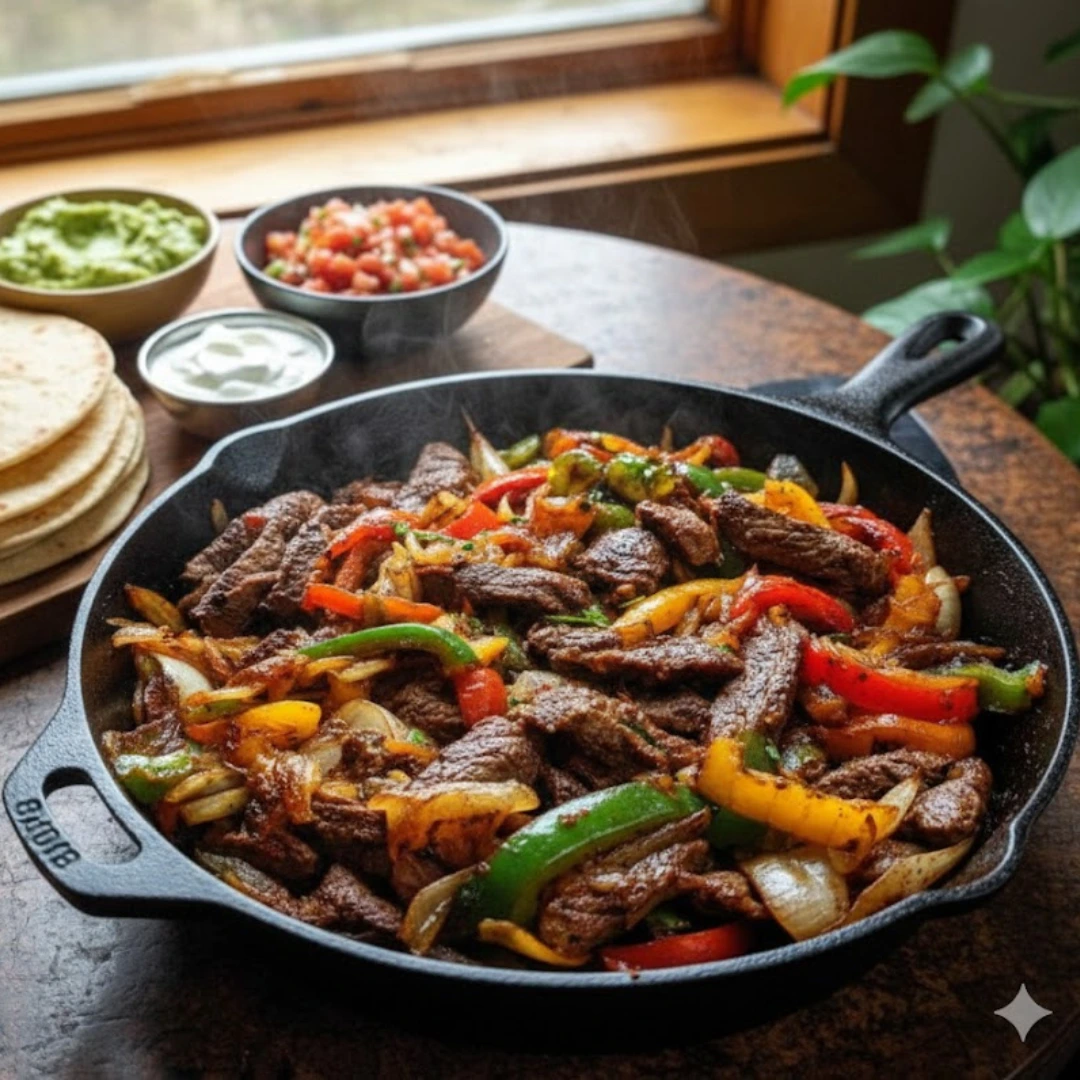
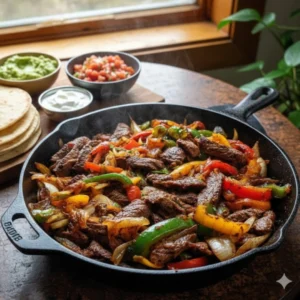
There is a specific kind of magic that happens when a cast-iron skillet hit with marinated beef arrives at a dinner table, trailing a cloud of savory steam and that unmistakable “hiss” that turns heads in any restaurant. I used to think that the secret to the perfect Steak Fajitas was some industrial-strength burner or a hidden ingredient only professional chefs could access. I was wrong. The truth is that you can recreate that exact Tex-Mex experience in your own kitchen in just thirty minutes. By focusing on a high-quality marinade and a very specific searing technique, you can transform humble cuts of beef into a gourmet meal that rivals any steakhouse in the country.
Table of Contents
Ingredients for the Ultimate Steak Fajitas
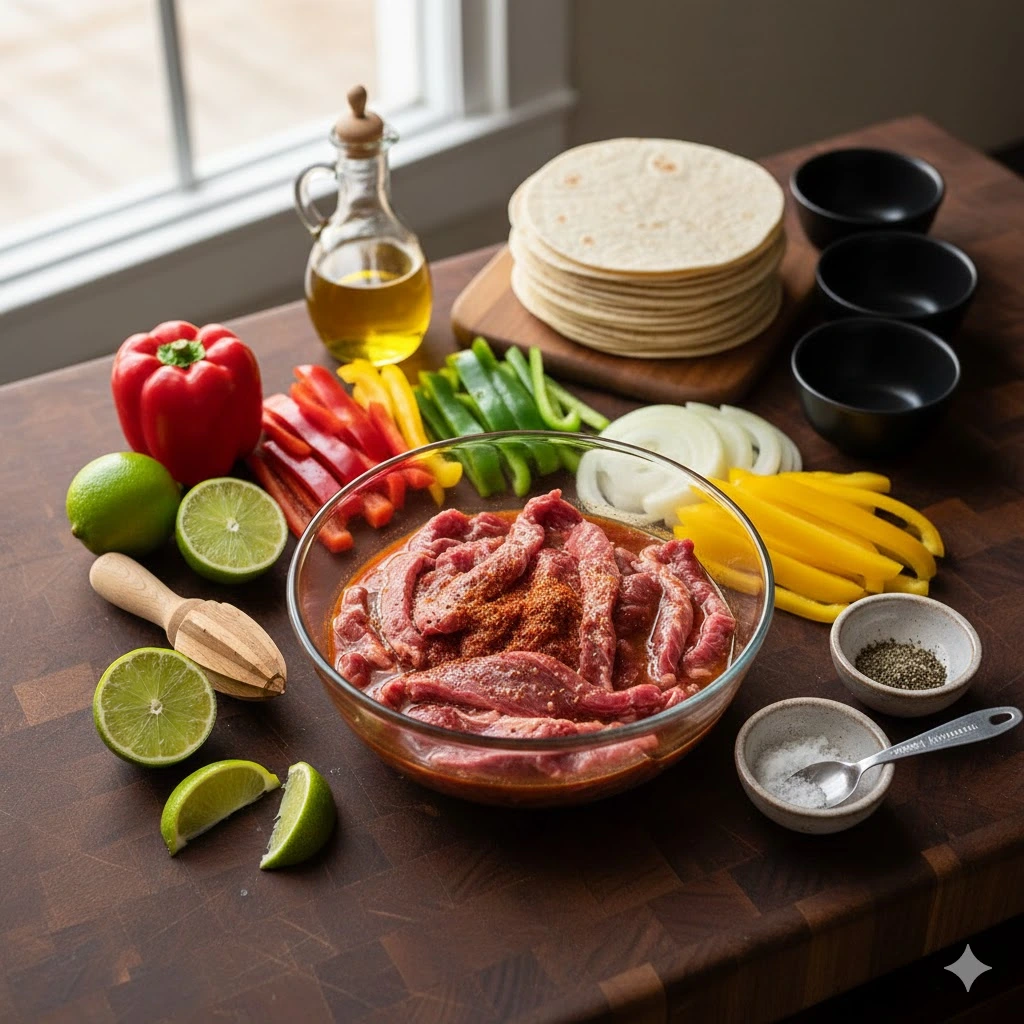
To get that authentic flavor profile, we need a balance of bright acidity, earthy spices, and fresh produce. Gathering your mise en place before you start is essential because once the pan is hot, the process moves very quickly. Here is exactly what you will need for this recipe:
- 1.5 pounds flank steak or skirt steak, sliced against the grain into thin strips
- 1 large red bell pepper, sliced
- 1 large green bell pepper, sliced
- 1 large yellow onion, sliced
- 2 tablespoons olive oil, divided
- 1 teaspoon salt
- 1/2 teaspoon black pepper
For the Signature Marinade:
- 1/4 cup lime juice (approximately 2 fresh limes)
- 2 tablespoons olive oil
- 1 tablespoon chili powder
- 1 teaspoon ground cumin
- 1 teaspoon smoked paprika
- 1/2 teaspoon garlic powder
- 1/4 teaspoon cayenne pepper (this is optional for those who enjoy a bit of heat)
For Serving:
- 12 small flour tortillas
- Optional toppings: sour cream, salsa, guacamole, and shredded cheese
Step-by-Step Instructions for Skillet Success
Follow these precise steps to ensure your meat remains tender and your vegetables retain their vibrant color and snap.
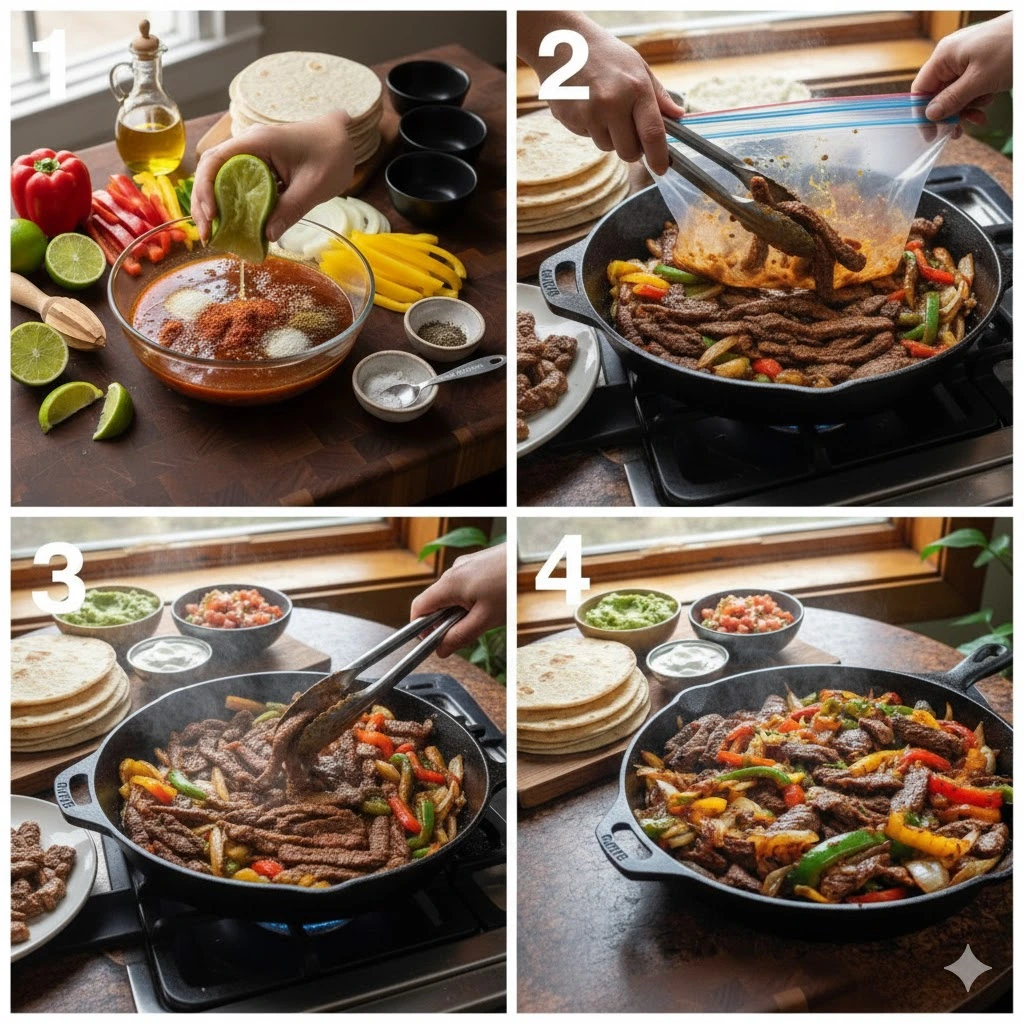
- Prepare the Marinade: In a medium bowl or a heavy-duty zip-top bag, whisk together the lime juice, 2 tablespoons of olive oil, chili powder, cumin, smoked paprika, garlic powder, and cayenne pepper. Add your sliced steak strips to the mixture, ensuring every piece is thoroughly coated. Seal the bag or cover the bowl and place it in the refrigerator. Let the meat marinate for a minimum of 30 minutes, though 4 hours is the sweet spot for maximum flavor penetration.
- Prep the Meat for the Pan: Once the marinating time is complete, remove the steak strips from the liquid. Use a paper towel to lightly pat the strips dry. This might seem counterintuitive, but removing surface moisture is the only way to get a true sear rather than steaming the meat. Discard the leftover marinade and season the strips with your salt and pepper.
- The Initial Sear: Place a large cast-iron skillet or heavy frying pan over medium-high heat. Add 1 tablespoon of olive oil and wait until it is shimmering and just starting to show a faint wisp of smoke. Add half of the steak strips in a single layer. Do not crowd the pan. Cook for 2 to 3 minutes per side until deeply browned and cooked through. Remove the steak and set it aside on a clean plate or bowl.
- Sauté the Aromatics: Add the remaining 1 tablespoon of olive oil to the same hot skillet. Toss in your sliced bell peppers and onions. Sauté these for about 5 to 7 minutes. You are looking for “tender-crisp” results—the edges should be slightly charred, but the vegetables should still hold their shape.
- The Final Sizzle: Return the cooked steak and any accumulated juices back into the skillet with the peppers and onions. Toss everything together for 60 seconds. This brief window allows the flavors to meld and ensures the steak is piping hot for serving.
- Warm the Tortillas: Heat your flour tortillas in a separate dry skillet for about 15 seconds per side until they are soft and pliable.
- Serve Immediately: Bring the skillet directly to the table (on a heat-safe trivet) to maintain that classic sizzling presentation. Serve with your favorite toppings and warm tortillas.
Deep Dive into the Searing Process
To understand why this recipe works, we have to look at the science of the sear. When you place a piece of marinated beef into a skillet that isn’t hot enough, the meat begins to release its internal juices immediately. Instead of browning, the steak ends up boiling in its own liquid, resulting in a gray, rubbery texture. This is the primary reason why home-cooked fajitas often fall short of restaurant expectations.
By using a cast-iron skillet, you are utilizing a tool with high thermal mass. This means that when the cold meat hits the surface, the pan doesn’t lose its heat. The “Maillard reaction”—the chemical reaction between amino acids and reducing sugars that gives browned food its distinctive flavor—happens almost instantly. This creates a crust on the outside of the steak strips while the inside remains juicy and tender.
The decision to cook in batches is equally vital. If you dump all 1.5 pounds of meat into the pan at once, you effectively “smother” the heat. By cooking only half at a time, you ensure that the moisture evaporating from the meat has plenty of room to escape as steam, allowing the oil to continue frying the surface of the beef. This attention to detail is what creates the “wow” factor in a 30-minute meal.
Mastering the Citrus-Based Marinade
The marinade in this recipe serves a dual purpose: flavor infusion and structural modification. The 1/4 cup of fresh lime juice is the star of the show. Lime juice contains citric acid, which acts as a natural tenderizer. It works by breaking down the long protein chains and connective tissues found in leaner cuts like flank or skirt steak. However, there is a fine balance to maintain. If you leave the meat in the lime juice for more than 4 or 5 hours, the acid can actually begin to “cook” the meat (similar to ceviche), which can eventually lead to a mushy texture.
The inclusion of smoked paprika and cumin provides that deep, “outdoor grill” essence even when you are cooking on a standard stovetop. Chili powder adds a complex layer of mild heat and earthiness, while the garlic powder provides a savory backbone that lingers on the palate. When these spices meet the hot oil in the skillet, they “bloom,” releasing their essential oils and coating the peppers and onions in a flavorful mahogany-colored glaze.
Sensational Sides and Accompaniments
While the steak and peppers are the heart of the dish, the supporting cast is what makes it a feast. To elevate your dinner, consider the textures of your toppings. A cool, creamy dollop of sour cream or Greek yogurt provides a beautiful contrast to the spicy, hot beef.
If you want to add more bulk to the meal, a side of cilantro lime rice is the traditional choice. Simply fluff long-grain white rice with fresh lime zest, a squeeze of juice, and a handful of chopped cilantro. For a hit of sweetness to balance the smoky paprika, a fresh mango or pineapple salsa can be a game-changer. The sugars in the fruit play incredibly well against the salt and char of the steak. If you are looking for a lower-carb option, these fajitas are excellent served over a bed of shredded Romaine lettuce as a “fajita bowl,” topped with extra guacamole and a drizzle of lime.
Selecting the Right Cut of Beef
For this recipe, I strictly recommend flank steak or skirt steak. These are the traditional cuts for a reason. Skirt steak, which comes from the plate of the cow, has a high fat content and an incredibly loose grain, which makes it excellent at soaking up marinades. Flank steak is leaner and slightly thicker, offering a more “beefy” bite.
Regardless of which you choose, the most important rule of the kitchen applies here: you must slice the meat against the grain. If you look closely at a piece of flank steak, you will see the muscle fibers running in one direction. If you slice parallel to those fibers, the meat will be stringy and difficult to chew. By slicing perpendicular to those fibers, you are shortening the muscle strands, which means your teeth have to do very little work. This single tip is the difference between a tough dinner and a melt-in-your-mouth experience.
Tailoring the Recipe to Your Taste
One of the best things about home cooking is the ability to adjust the profile to suit your family’s preferences. If you find that the 1/4 teaspoon of cayenne pepper provides too much of a kick, simply omit it. The smoked paprika and chili powder provide plenty of flavor without the burn.
For those who want to experiment with the vegetables, you can add sliced poblano peppers for a deeper, more “green” pepper flavor that isn’t as sweet as the bell peppers. Some people also enjoy adding sliced mushrooms to the mix; they soak up the marinade juices beautifully and add a lovely umami element to the skillet. If you prefer a more caramelized onion, you can start the onions 3 minutes before the peppers to give them a head start on browning.
Frequently Asked Questions
What is the best way to clean my cast-iron skillet after making fajitas?
Because of the high heat and the sugars in the marinade, you might find some charred bits stuck to the bottom of the pan. The best method is to rinse the pan with hot water while it is still slightly warm and use a stiff brush. Avoid using harsh soaps which can strip the seasoning. If food is really stuck, you can use a coarse salt scrub. Always dry the pan completely and apply a very thin layer of oil before storing to prevent rust.
Can I substitute chicken for the steak in this recipe?
Yes, you certainly can. If you choose to use chicken breast or thighs, ensure you slice them into similar thin strips. Chicken typically requires a slightly longer cook time than the steak to reach a safe internal temperature, so keep an eye on the browning. The marinade ingredients work perfectly with poultry as well.
How do I prevent my tortillas from tearing?
The secret to a pliable tortilla is moisture and heat. If you find your flour tortillas are dry and snapping when you fold them, try placing them in a microwave-safe container with a damp paper towel for 30 seconds, or use the skillet method mentioned in the instructions. The steam softens the gluten and makes them much easier to work with.
Is it possible to make this recipe ahead of time for meal prep?
Absolutely. You can slice the steak and the vegetables up to two days in advance. Keep the steak in its marinade and the peppers and onions in a separate airtight container. When you are ready to eat, the actual cooking process only takes about 15 minutes. This makes it a premier choice for high-protein meal prepping.
Storing and Reviving Your Leftovers
If you happen to have leftovers, they make for an incredible lunch the following day. Store the steak and vegetable mixture in an airtight glass container in the refrigerator for up to three days. I recommend keeping the tortillas in their original packaging or a separate bag to prevent them from becoming soggy.
When it comes time to reheat, I strongly advise against using the microwave, as it tends to turn steak into a rubbery consistency. Instead, heat a small skillet over medium heat with a tiny drop of oil. Toss the leftover steak and veggies in the pan for 2 to 3 minutes until warmed through. This method preserves the texture of the peppers and keeps the steak much more palatable.
Nutritional Profile for Steak Fajitas
This data is an estimate based on the primary ingredients listed in the recipe. Note that the addition of tortillas and various toppings will alter these totals.
| Metric | Amount Per Serving |
| Calories | 450 |
| Total Fat | 18 grams |
| Saturated Fat | 4 grams |
| Unsaturated Fat | 14 grams |
| Trans Fat | 0 grams |
| Cholesterol | 95 milligrams |
| Sodium | 650 milligrams |
| Total Carbohydrates | 35 grams |
| Dietary Fiber | 4 grams |
| Sugars | 5 grams |
| Protein | 38 grams |
Nutritional Disclaimer
The values provided above are calculated based on standard ingredient databases and should be considered an approximation. Individual results may vary based on the specific brands of ingredients used and the exact portion sizes. For those with specific dietary requirements or medical conditions, it is always best to consult with a professional nutritionist.
Bringing the Tex-Mex Experience Home
There is no reason to wait for a special occasion or a trip to a restaurant to enjoy high-quality fajitas. By mastering the art of the marinade and respecting the high heat of the skillet, you can produce a meal that is healthy, fast, and incredibly satisfying. The combination of tender, lime-infused beef and charred, sweet peppers wrapped in a warm tortilla is a timeless classic for a reason. I hope this recipe becomes a staple in your household, bringing a bit of that “sizzling” excitement to your Tuesday nights.
Amazing 30-Minute Steak Fajitas
Ingredients
- 1.5 lbs flank steak or skirt steak, sliced against the grain into thin strips
- 1 large red bell pepper, sliced
- 1 large green bell pepper, sliced
- 1 large yellow onion, sliced
- 2 tbsp olive oil, divided
- 1 tsp salt
- 0.5 tsp black pepper
- 0.25 cup fresh lime juice
- 1 tbsp chili powder
- 1 tsp ground cumin
- 1 tsp smoked paprika
- 0.5 tsp garlic powder
- 0.25 tsp cayenne pepper (optional)
- 12 small flour tortillas
- Optional toppings: sour cream, salsa, guacamole, shredded cheese
Instructions
- Combine all marinade ingredients (lime juice, 2 tbsp olive oil, chili powder, cumin, paprika, garlic powder, cayenne) in a bowl or bag. Add steak, coat, and marinate for 30 minutes to 4 hours.
- Remove steak from marinade and pat dry slightly with paper towels. Discard remaining marinade and season strips with salt and pepper.
- Heat 1 tbsp olive oil in a large skillet over medium-high heat until shimmering. Sear half the steak strips in a single layer for 2-3 minutes per side until browned. Remove and set aside.
- Add remaining 1 tbsp olive oil to the hot skillet. Add onions and bell peppers. Cook for 5-7 minutes, stirring occasionally, until tender-crisp.
- Return the cooked steak to the skillet with the vegetables. Toss for 1 minute to reheat and combine flavors.
- Warm flour tortillas in a dry skillet. Serve the sizzling steak and vegetables immediately with your favorite toppings.
Notes
Equipment
- Cast-iron skillet or large heavy frying pan
- Mixing bowl or zip-top bag
- tongs
- Chef’s knife and cutting board