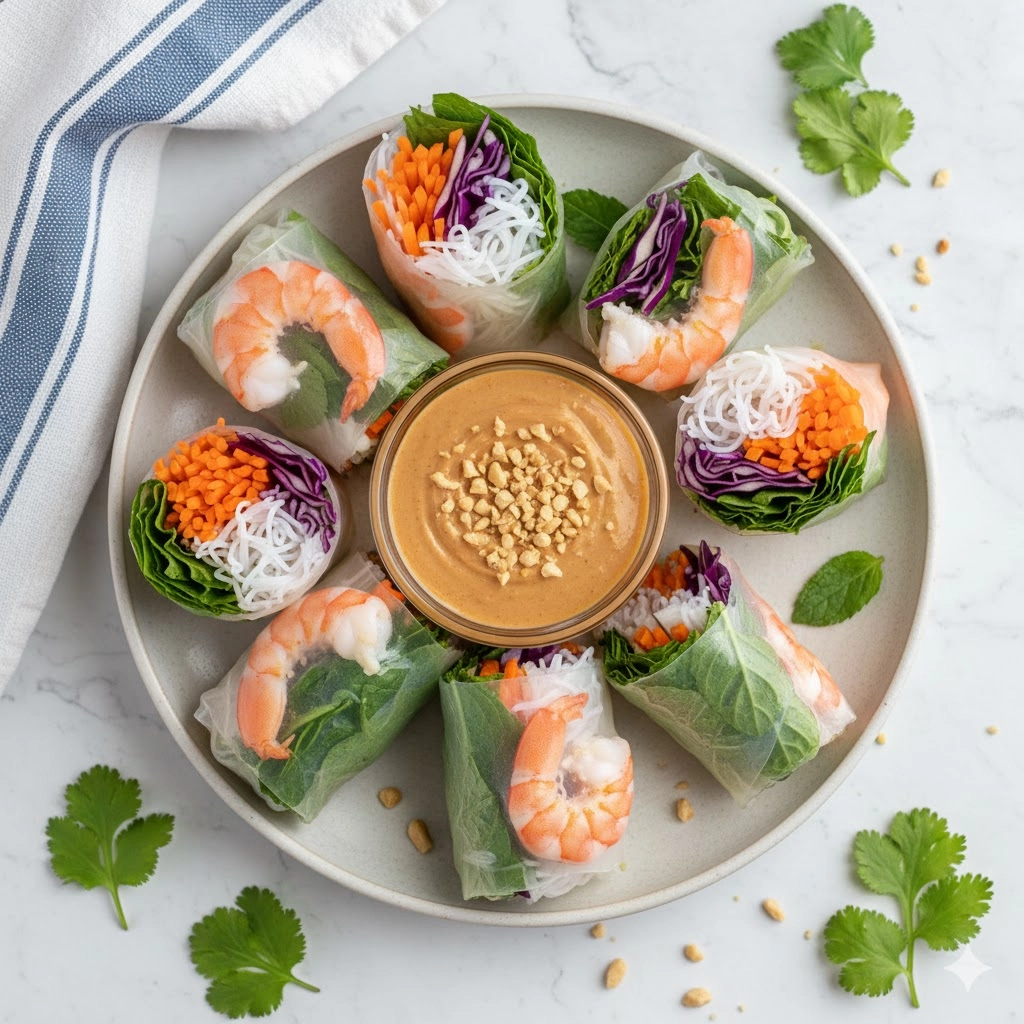
Fresh spring rolls represent the pinnacle of clean eating without sacrificing an ounce of flavor. Often referred to as summer rolls or gỏi cuốn, these translucent bundles of joy are a staple of Vietnamese cuisine that have captured the hearts of food lovers across the globe. Unlike their deep-fried counterparts, these rolls are served cold, offering a refreshing crunch that makes them the perfect antidote to a warm day.
The beauty of this dish lies in the contrast of textures: the chewy rice paper, the soft vermicelli noodles, the crisp snap of fresh carrots and cucumbers, and the buttery sweetness of ripe mango. When dipped into a rich, savory peanut sauce, every bite becomes a balanced explosion of sweet, salty, and spicy notes. This guide will walk you through the art of rolling these delicate appetizers, ensuring you achieve restaurant-quality results in your own kitchen.
Table of Contents
Essential Ingredients for Fresh Spring Rolls
To create the perfect roll, you need high-quality components that offer a variety of colors and textures. Ensure your produce is as fresh as possible for the best experience.
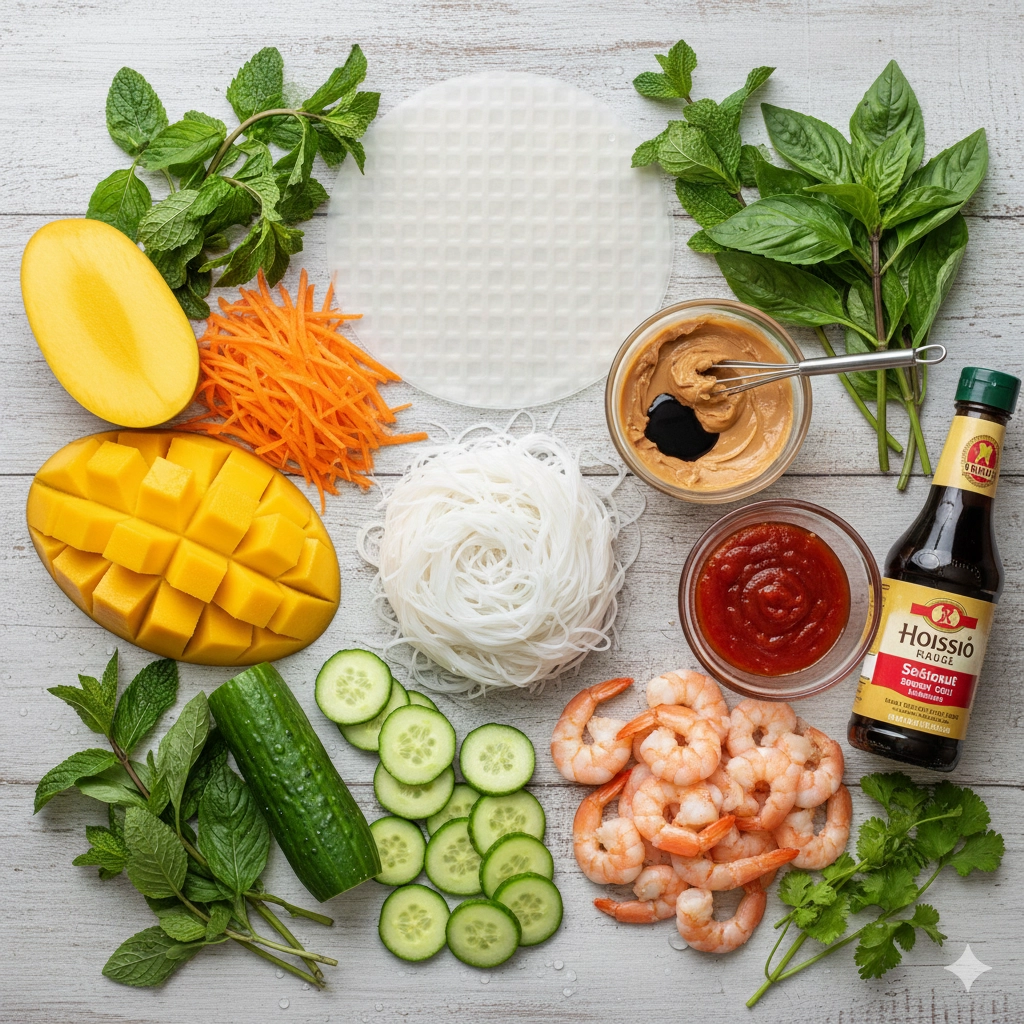
- 1 package spring roll rice wrappers (found in the Asian foods section)
- 1 package vermicelli rice noodles (found in the Asian foods section)
- 2 mangos, peeled and sliced into thin strips
- 1 large carrot, peeled and shredded or sliced into thin strips
- 1 large English cucumber, peeled and thinly sliced
- 1 pound small, cooked shrimp, deveined, tails removed (or substitute chicken)
- 1 bunch fresh mint leaves
- 1 bunch fresh basil leaves
- 1 bunch fresh cilantro
Ingredients for the Spicy Peanut Dipping Sauce
This sauce is the soul of the dish, providing a creamy, umami-rich anchor for the fresh vegetables.
- 3/4 cup sweet chili sauce
- 1/3 cup peanut butter (smooth or crunchy)
- 1/2 teaspoon low-sodium soy sauce
- 1/2 teaspoon hoisin sauce
Master the Art of Rolling: Step-by-Step Instructions
Follow these steps carefully to ensure your rolls are tight, beautiful, and don’t fall apart.
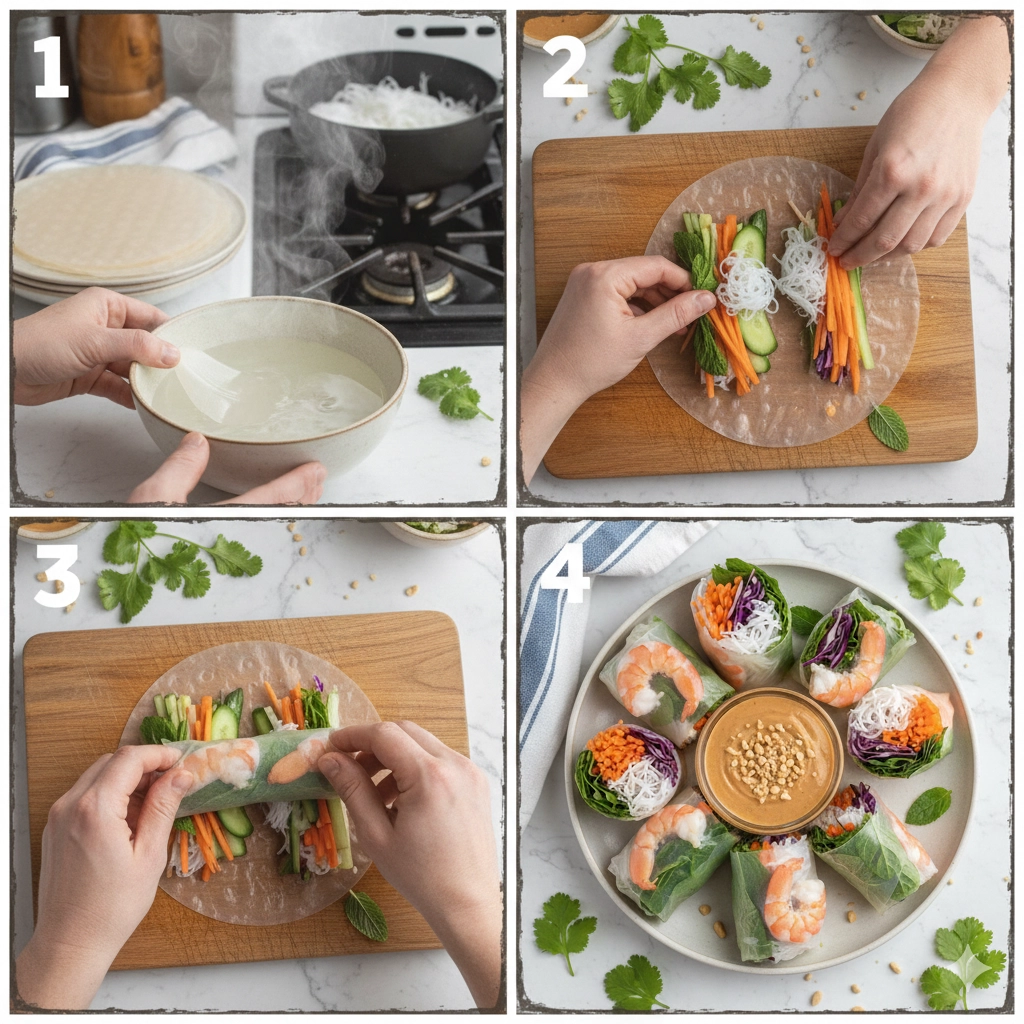
- Prepare the Noodles: Cook the vermicelli rice noodles in boiling water for just a few minutes, following the specific package instructions. Once tender, drain them immediately and rinse thoroughly with cold water to stop the cooking process and remove excess starch.
- Organize Your Station: Gather all your topping ingredients together. Have your chopped mango, shredded carrots, sliced cucumber, fresh herbs, and cooked shrimp within easy reach.
- Hydrate the Wrapper: Fill a large, deep dish or a pie pan with about 1 inch of room-temperature water. Submerge one rice wrapper into the water for exactly 10 to 15 seconds. It should still feel somewhat firm as you lift it out; it will continue to soften as it rests on your work surface.
- Layer the Fillings: Lay the damp wrapper flat on a clean countertop or cutting board. On the lower third of the circle (the part closest to you), layer 1 to 2 slices of each vegetable and fruit, a few shrimp, a generous pinch of each herb, and a small bundle of noodles.
- The Burrito Fold: Fold the left and right sides of the wrapper inward toward the center, covering the ends of the fillings. Then, take the bottom edge (closest to you) and pull it up and over the ingredients. Keep the tension tight as you roll the bundle away from you, sealing it into a neat, compact cylinder.
- Blend the Sauce: Combine the sweet chili sauce, peanut butter, soy sauce, and hoisin sauce in a food processor or blender. Pulse the mixture until it is completely smooth and creamy.
Comprehensive Step-by-Step Details and Techniques
While the basic steps seem straightforward, the nuance of a perfect spring roll lies in the “feel” of the materials. The rice paper wrapper is perhaps the most temperamental ingredient in your pantry. These thin discs are made from rice flour and water, and they transition from brittle to pliable to mushy very quickly. The secret is to remove the wrapper from the water while it still has a bit of “snap” to it. If it feels like a wet rag before you even start filling it, it will likely tear.
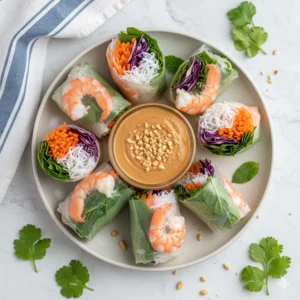
When placing your ingredients, think about the visual appeal. Since the wrapper is translucent, the first thing you place down (usually the shrimp or the bright herbs) will be what shows through the “skin” of the roll. For a professional look, place three or four shrimp in a row, then layer your greens and noodles behind them. This ensures the pink of the shrimp pops against the white noodles.
The rolling process requires a “tight but gentle” touch. If you roll too loosely, the ingredients will fall out the moment you take a bite. If you pull too hard, the thin rice membrane will snap. Think of it like rolling a cigar or a very small, delicate burrito. By the time you reach the end of the roll, the residual moisture on the rice paper will act as a natural adhesive, sealing the seam perfectly.
Deep-Dive FAQ for Kitchen Success
Why are my spring roll wrappers always tearing when I try to roll them?
The most common culprit for tearing is over-soaking. Many people wait until the wrapper is completely limp in the water, but it actually continues to absorb moisture from the wet surface it’s sitting on and from the damp vegetables inside. Aim for about 12 seconds in the water. Additionally, make sure your work surface is slightly damp; if you lay a wet wrapper on a bone-dry wooden board, it might stick and rip when you try to lift it.
Can I make these ahead of time for a party or meal prep?
Yes, but you must store them correctly to prevent them from turning into a sticky mess. If spring rolls touch each other, they will fuse together and tear when separated. The best method is to wrap each individual roll tightly in plastic wrap. This keeps the rice paper hydrated and provides a barrier so they can be stacked. They are best eaten within 24 hours but can last up to 2 or 3 days in the refrigerator.
What is the difference between these and egg rolls?
The primary difference is the wrapper and the cooking method. Egg rolls use a thick, flour-based dough that contains eggs and must be deep-fried to be edible. Spring rolls (specifically fresh Vietnamese summer rolls) use a thin rice paper wrapper that is hydrated and eaten raw. This makes fresh spring rolls significantly lower in calories and much lighter on the stomach.
How do I keep the noodles from sticking together after cooking?
Rice vermicelli is incredibly starchy. To keep the noodles manageable, you must rinse them under cold running water for at least 30 seconds after draining. For extra insurance, some chefs toss the noodles in a tiny drop of sesame oil or vegetable oil, which prevents them from forming a solid block while you assemble the rest of the ingredients.
Achieving Perfection: Unique Culinary Insights
To elevate your spring rolls from “good” to “extraordinary,” pay close attention to the herbs. In Western cooking, herbs are often a garnish, but in Vietnamese cuisine, they are treated as a primary vegetable. Don’t be shy with the mint and cilantro; the aromatic profile they provide is what creates that signature “fresh” taste. Using a mix of Thai basil and spearmint offers a complex peppery and cooling sensation that pairs beautifully with the heat of the peanut sauce.
Temperature control is another insider secret. While the ingredients are often prepped ahead and chilled, the rice paper itself behaves best at room temperature. If your water bath is too hot, the wrapper will turn to mush instantly. Lukewarm water is the “Goldilocks” zone—just enough to activate the starch without dissolving the structure. Also, ensure your shrimp or chicken is completely chilled before rolling; adding hot meat to a cold roll can create unappealing condensation inside the wrapper.
Customizations, Modifications, and Substitutions
This recipe is famously adaptable, making it a favorite for those with specific dietary needs.
- Protein Swaps: If you aren’t a fan of shrimp, sliced grilled chicken breast is a fantastic alternative. For a vegan version, use extra-firm tofu that has been pressed and sliced into batons. You can even pan-sear the tofu with a little soy sauce for extra flavor.
- Vegetable Variations: While carrots and cucumbers are classic, feel free to add red bell pepper strips for color, bean sprouts for extra crunch, or even thinly sliced purple cabbage.
- Fruit Twists: If mangos aren’t in season, try using thin slices of green apple or even pineapple. The goal is to provide a sweet, acidic contrast to the savory elements.
- Nut-Free Sauce: If you have a peanut allergy, you can substitute the peanut butter in the sauce with sunflower seed butter or almond butter. The flavor profile will shift slightly, but the sweet chili and hoisin will still provide that familiar kick.
Accompaniments and Serving Suggestions
Fresh spring rolls are incredibly versatile. For a light lunch, serve three or four rolls on a bed of romaine lettuce. If you’re hosting a dinner party, they serve as an excellent precursor to a steaming bowl of Pho or a plate of Pad Thai.
To present them beautifully, cut each roll in half on a sharp diagonal. This reveals the vibrant internal layers and makes them easier to handle as finger food. Serve the peanut sauce in individual small ramekins to encourage “double-dipping” without the social faux pas. If you want to add a bit of flair, garnish the dipping sauce with crushed roasted peanuts and a few rings of fresh red chili.
Nutritional Information and Daily Values
These rolls are a nutritional powerhouse, offering lean protein and a wide array of vitamins from the raw vegetables.
| Nutrient | Amount Per Serving |
| Calories | 80 calories |
| Total Carbohydrates | 18 grams |
| Protein | 1 gram |
| Sodium | 36 milligrams |
| Potassium | 146 milligrams |
| Dietary Fiber | 1 gram |
| Sugars | 4 grams |
| Vitamin A | 1905 IU |
| Vitamin C | 11.7 milligrams |
| Calcium | 15 milligrams |
| Iron | 0.4 milligrams |
Nutritional Disclaimer
The nutritional values provided are calculated based on standard ingredient measurements and should be considered an approximation. Individual results may vary based on the specific brands of rice paper and peanut butter used.
Final Thoughts on Handcrafted Spring Rolls
Mastering the fresh spring roll is a rewarding culinary milestone that brings a sense of lightness and vibrancy to your table. While the first few rolls might look a little lumpy or uneven, don’t be discouraged—the “perfect roll” comes with practice and a bit of patience. The combination of crisp garden vegetables, succulent protein, and that addictive peanut sauce creates a meal that is as nutritious as it is delicious. Whether you are prepping a healthy weeknight dinner or looking for a stunning appetizer to impress guests, these rolls are a timeless choice that never goes out of style.
Fresh Spring Rolls with Spicy Peanut Sauce
Ingredients
- 1 package spring roll rice wrappers
- 1 package vermicelli rice noodles
- 2 mangos, peeled and sliced into thin strips
- 1 large carrot, peeled and shredded or julienned
- 1 large English cucumber, peeled and thinly sliced
- 1 pound small cooked shrimp, deveined and tails removed
- 1 bunch fresh mint leaves
- 1 bunch fresh basil leaves
- 1 bunch fresh cilantro
- 0.75 cup sweet chili sauce
- 0.33 cup peanut butter (smooth or crunchy)
- 0.5 tsp low-sodium soy sauce
- 0.5 tsp hoisin sauce
Instructions
- Cook vermicelli noodles in boiling water according to package instructions. Drain and rinse thoroughly with cold water to stop the cooking and remove starch.
- Prepare all fillings: chop vegetables into long thin slices, shred the carrots, and have herbs and shrimp ready at your station.
- Fill a shallow dish with 1 inch of water. Submerge one rice wrapper for 10 to 15 seconds until pliable but still slightly firm. Lay flat on a clean surface.
- On the bottom third of the wrapper, layer 1-2 slices of mango, carrot, and cucumber. Add a few shrimp, a pinch of herbs, and a small bundle of noodles.
- Fold the sides of the wrapper inward over the filling. Fold the bottom edge up and over, then roll tightly away from you like a burrito.
- In a food processor or blender, combine sweet chili sauce, peanut butter, soy sauce, and hoisin sauce. Pulse until smooth.
- Repeat the process for remaining wrappers. Serve immediately with the prepared dipping sauce.
Notes
Equipment
- Large shallow dish or pie plate For hydrating rice paper
- Food processor or blender For the sauce
- Pot To boil noodles
- colander To drain noodles
- cutting board For vegetable prep