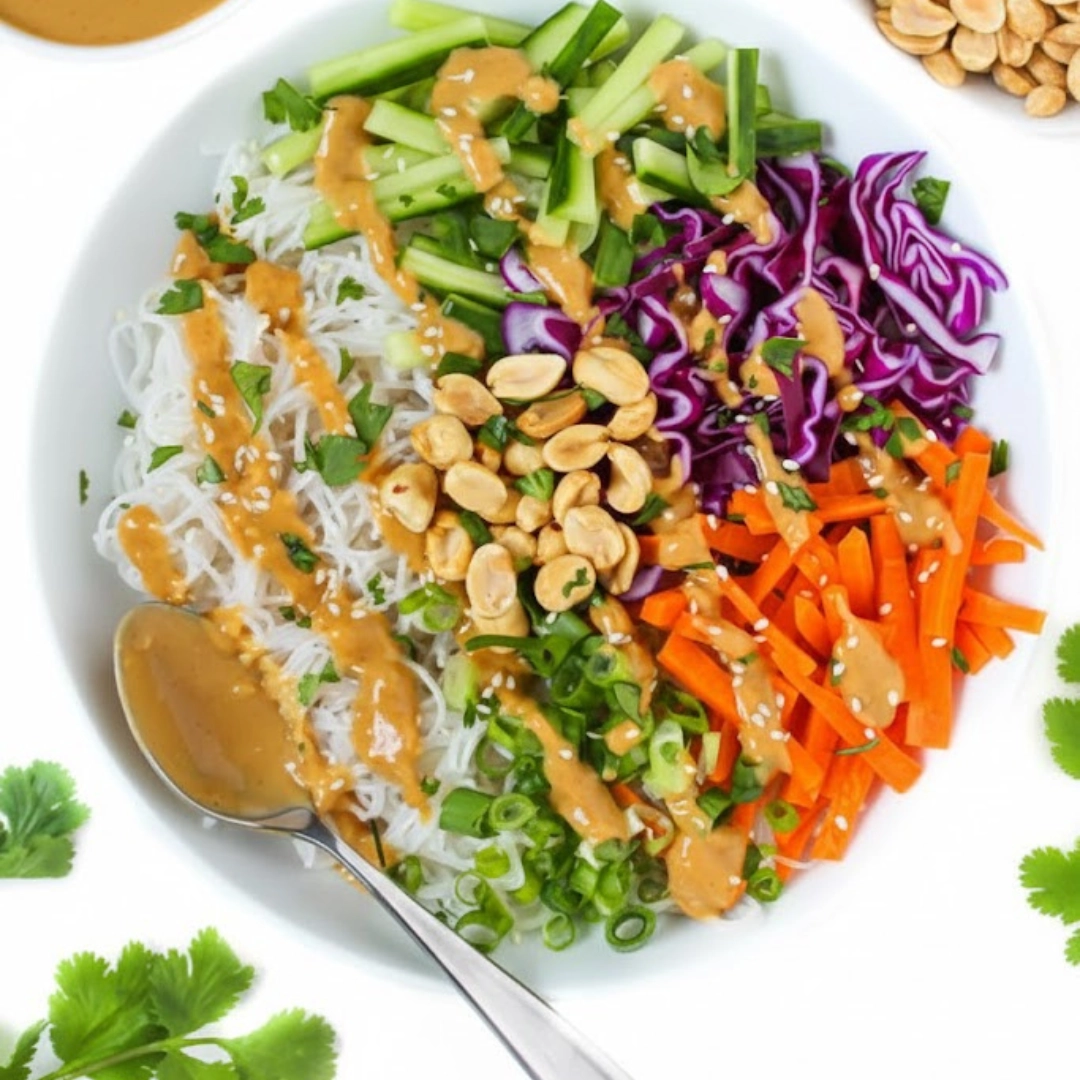
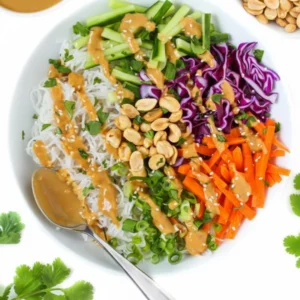
The concept of a spring roll is beloved worldwide for its crisp textures and vibrant flavors, but the process of soaking rice paper and meticulously rolling each individual bundle can be time-consuming for a busy weeknight. This Spring Roll Bowl offers a brilliant solution, delivering all the deconstructed elements of a classic fresh roll in a convenient, customizable format. By combining tender rice noodles, a rainbow of raw vegetables, and a luxurious peanut dressing, you create a meal that is as visually stunning as it is nutritionally dense. Whether you are looking for a light lunch or a satisfying oil-free dinner, this recipe bridges the gap between gourmet Asian-inspired cuisine and practical home cooking.
Table of Contents
Ingredients for the Noodle and Vegetable Base
To create a successful bowl, the foundation relies on a balance of soft textures and crunchy elements. Each component is chosen for its ability to hold up against the creamy sauce while providing a fresh contrast.
- 8 ounces thin rice noodles: For the most authentic texture, look for vermicelli-style noodles. Brands like Thai Kitchen offer gluten-free options that provide the perfect light base for the dish.
- 1 large carrot: This provides a natural sweetness and a necessary crunch. You can hand-slice these into thin sticks or use a peeler to create ribbons.
- 1 small cucumber: An English or hothouse cucumber is ideal here because the skin is thin and the seeds are minimal, preventing the bowl from becoming too watery.
- 2 cups red cabbage: Also frequently referred to as purple cabbage, this vegetable is a powerhouse of antioxidants and adds a striking visual pop to the meal.
- 3 green onions: Also known as scallions, these provide a mild, sharp bite that cuts through the richness of the peanut butter.
- 1/3 cup fresh cilantro: This herb is essential for that signature “spring roll” aroma. If you are a fan of complex herbal notes, you can also mix in fresh basil.
- Optional toppings: To finish the dish, consider having chopped peanuts, sesame seeds, mung bean sprouts, fresh mint, or a drizzle of sriracha on hand for those who enjoy a bit of heat.
Components for the Creamy Peanut Sauce
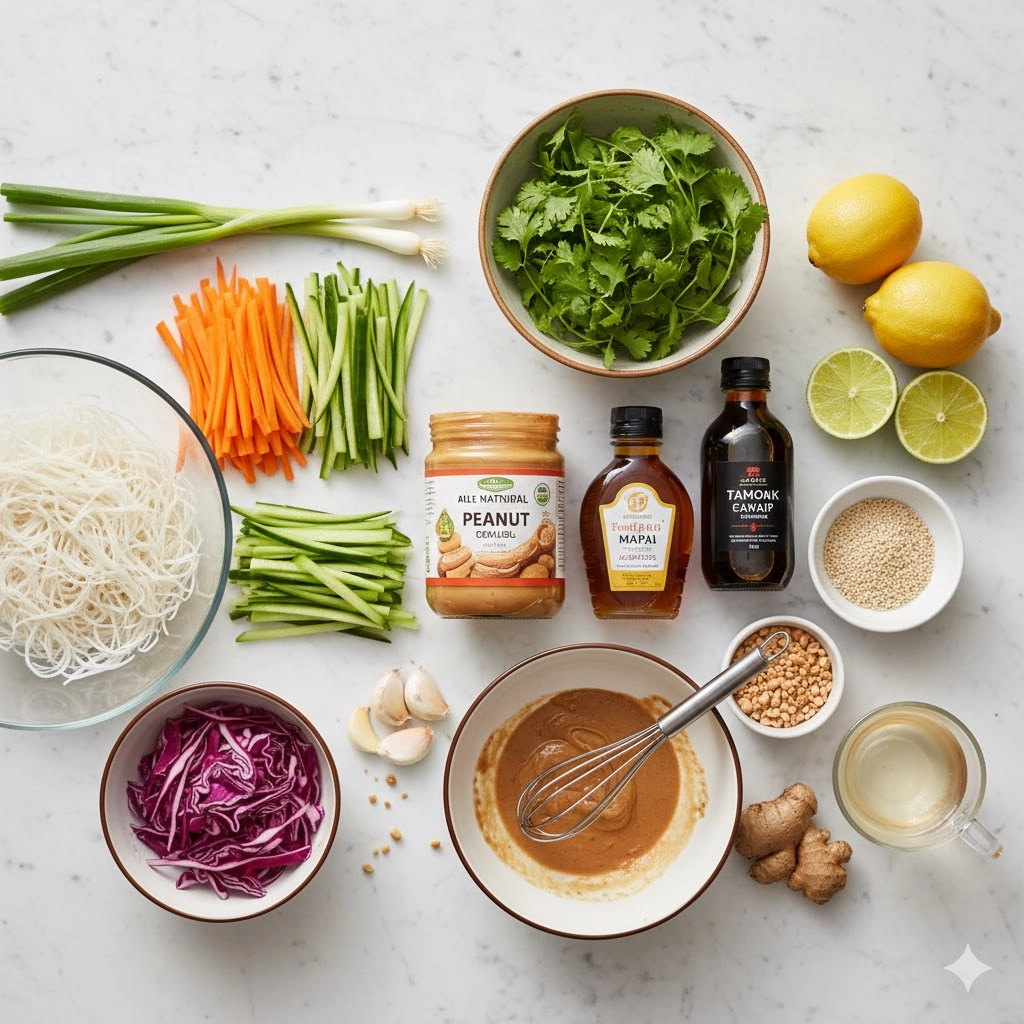
The sauce is arguably the star of the show, acting as the savory glue that binds the noodles and vegetables together.
- 1/2 cup peanut butter: For the smoothest results, use a creamy, natural variety where the only ingredients are peanuts and salt.
- 2 tablespoons maple syrup or brown sugar: This provides the necessary sweetness to balance the salty tamari and acidic citrus.
- 1 1/2 tablespoons tamari: This is a gluten-free alternative to soy sauce that offers a deep, umami-rich flavor profile.
- 2 tablespoons fresh lemon or lime juice: The acidity is crucial for brightening the heavier fats in the peanut butter.
- 1 to 2 cloves garlic: Freshly minced garlic adds a pungent depth that develops as the sauce sits.
- 1 teaspoon fresh grated ginger: Ginger adds a warm, spicy undertone that is characteristic of traditional Southeast Asian dressings.
- Hot water: This is used as a thinning agent to reach your preferred drizzling consistency.
Primary Instructions for Assembly
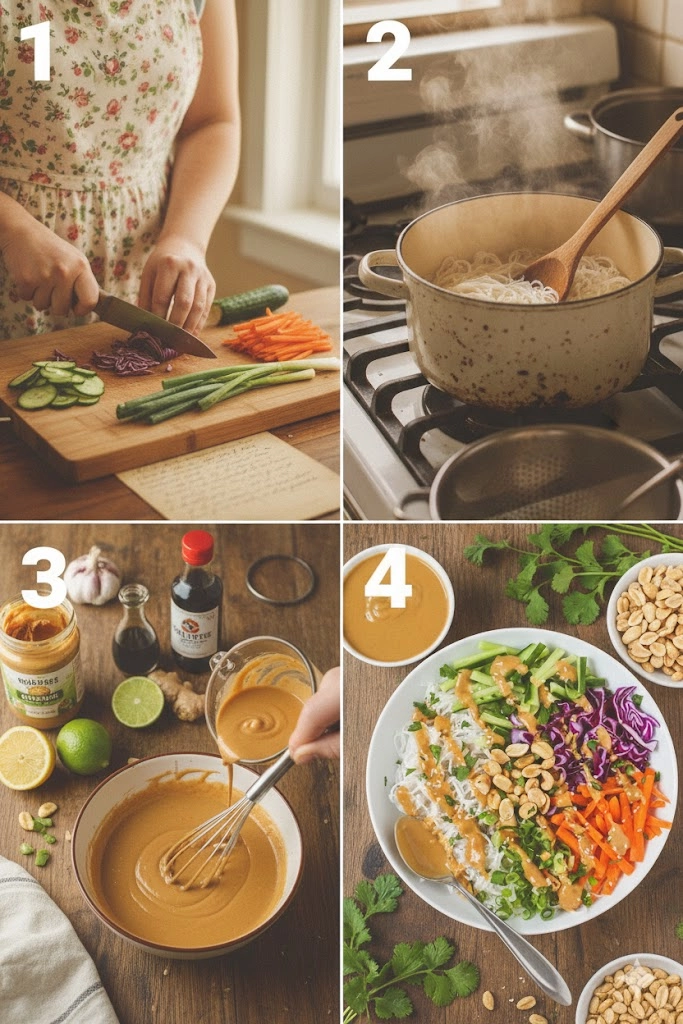
- Prepare the vegetables: Begin by washing all produce thoroughly. Very thinly slice the carrot, cucumber, cabbage, and green onions. You want these to be “matchstick” size so they integrate well with the thin noodles. Roughly chop the cilantro, ensuring any large, woody stems are removed. Set these prepared vegetables aside in separate piles or a large mixing bowl.
- Cook the noodles: Bring a pot of water to a boil and cook your rice noodles according to the specific package directions. It is vital to leave them al dente, meaning they should be slightly firm to the bite and not mushy. Once they reach this stage, drain them immediately and rinse with cool water to stop the cooking process.
- Make the peanut sauce: While the noodles are boiling, prepare the dressing. In a medium-sized mixing bowl, combine the peanut butter, maple syrup, tamari, citrus juice, minced garlic, and grated ginger. Heat about 3/4 cup of water to just under boiling. Add the hot water to the bowl a couple of tablespoons at a time, whisking constantly. Continue adding water and whisking until the sauce is smooth and reaches your desired thickness. Most find that 1/2 cup of water is the “sweet spot.”
- Assemble your bowl: Place a generous portion of cooked noodles into a bowl. Top with a variety of the sliced vegetables. Drizzle the warm peanut sauce over the top and finish with your choice of garnishes, such as crushed peanuts or sesame seeds.
Massive Expansion of the Step-by-Step Details
Mastering the Spring Roll Bowl requires more than just following a list; it involves understanding the textures and temperatures that make this dish a success. When you prepare the rice noodles, remember that they are far more delicate than traditional wheat pasta. Most thin rice noodles only require a few minutes of soaking or boiling. Overcooking them leads to a gummy texture that will clump together once the peanut sauce is added. By keeping them al dente, you ensure they provide a clean, slippery mouthfeel that carries the sauce beautifully.
The vegetable preparation is equally important. In a traditional spring roll, the vegetables are sliced so thin that they flex and bend inside the rice paper. In a bowl format, you want to mimic this. Using a mandoline or a very sharp chef’s knife to create julienned strips of carrot and cucumber ensures that every forkful or chopstick-load has a bit of everything. The red cabbage should be shredded almost like a fine slaw. This maximizes the surface area, allowing the peanut sauce to coat every crevice of the vegetables.
When whisking the sauce, the use of hot water is a specific technique used to emulsify the natural oils in the peanut butter. If you use cold water, the fat in the peanut butter may seize, resulting in a chunky or broken sauce. The hot water softens the nut butter instantly, allowing the maple syrup and tamari to dissolve and integrate into a glossy, professional-grade dressing. As you whisk, you will notice the sauce change from a dark, thick paste to a pale, creamy tan color. This aeration makes the sauce lighter and more palatable.
Unique Culinary Insights for Success
One of the most important tips for this dish is the management of the rice noodles. If you are not serving the bowl immediately, rice noodles have a tendency to stick together as they cool and the surface starches dry out. To prevent this, you can toss the drained noodles in a tiny amount of water or a splash of the lime juice. If you are following a strict oil-free diet, avoiding oil is easy here, but the moisture is key to keeping them pliable.
Another insight involves the “bloom” of the aromatics. Garlic and ginger are potent, and when mixed into a warm sauce with hot water, their flavors begin to soften and meld. If you find raw garlic too sharp, you can let the sauce sit for ten minutes before serving. This allows the residual heat from the water to take the raw “edge” off the garlic, resulting in a more harmonious flavor that won’t overpower the delicate cilantro and mint.
Finally, consider the temperature of the dish. While many enjoy this as a cold noodle salad, it is equally delicious when the noodles are still warm from the pot. The contrast between the warm, soft noodles and the cold, crisp cabbage creates a sensory experience that is very satisfying. If you prefer a completely cold dish, you can rinse the noodles in ice water and chill the sauce in the refrigerator for thirty minutes prior to assembly.
Modifications and Substitutions
This recipe is incredibly flexible, making it a “pantry staple” meal that can be adjusted based on what is in your crisper drawer.
- Noodle Variations: While thin rice noodles are the standard, you can easily swap them for brown rice ramen, which offers a slightly earthier flavor and more chew. For those not avoiding gluten, angel hair pasta or vermicelli wheat noodles work perfectly well.
- Nut-Free Alternatives: If peanuts are an allergy concern, sunflower seed butter or almond butter can be used in the sauce. The flavor profile will shift slightly, but the creamy, savory essence will remain.
- Alternative Sweeteners: If you do not have maple syrup, agave nectar or even a touch of coconut sugar can be used. If using a granulated sugar like brown sugar, ensure the water used to thin the sauce is hot enough to dissolve the crystals completely.
- Vegetable Swaps: Don’t feel limited to the listed greens. Red bell peppers, sugar snap peas, or shredded kale are excellent additions. If you have a bag of pre-mixed broccoli slaw, that can serve as a fantastic time-saving base for the crunch factor.
Accompaniments and Serving Suggestions
To turn this Spring Roll Bowl into a more substantial feast, you can pair it with various side dishes or add-ins. For a boost of plant-based protein, edamame is a natural fit. You can buy shelled edamame frozen, steam them quickly, and toss them right into the bowl. Crispy baked tofu or marinated tempeh also provides a hearty texture that stands up well to the peanut sauce.
If you are serving this for a gathering, consider a “build-your-own-bowl” station. Place the noodles in a large central platter and surround them with small bowls containing the sliced carrots, cucumbers, cabbage, and herbs. This allows guests to customize their ratios and choose their own toppings. Serving the peanut sauce in a separate pitcher ensures that the vegetables stay crisp and don’t get soggy if the food sits out for a while. For a complete meal, serve alongside a light miso soup or a plate of steamed gyoza.
Deep-Dive FAQ
How do I prevent my rice noodles from becoming a giant clump?
Rice noodles are notorious for sticking due to their high starch content. The best way to manage this is to rinse them under cold running water immediately after draining. This washes away the excess surface starch. If they do clump up before you are ready to serve, simply run them under warm water again for a few seconds and use your fingers to gently loosen the strands.
Can I make the peanut sauce in advance for meal prep?
Yes, the peanut sauce actually tastes better after the flavors have had time to meld. However, keep in mind that the sauce will thicken significantly as it cools in the refrigerator. When you are ready to use it, you may need to add a teaspoon or two of warm water and give it a vigorous whisk to restore that perfect drizzling consistency.
Is there a way to make this dish spicy without changing the base flavor?
The best way to add heat is through garnishes rather than altering the main sauce. Adding thinly sliced jalapeños or a squeeze of sriracha on top allows each individual diner to control their heat level. You can also whisk a pinch of red pepper flakes into the peanut sauce if you want a subtle, building warmth throughout the entire dish.
How long will the leftovers stay fresh in the fridge?
This dish is best enjoyed fresh, but leftovers can be kept for up to two days. For the best results, store the components separately. Keep the noodles in one container, the chopped vegetables in another, and the sauce in a jar. This prevents the vegetables from losing their crunch and stops the noodles from absorbing all the moisture from the sauce.
A Final Thought on This Vibrant Dish
This Spring Roll Bowl represents the perfect marriage of health and flavor. By stripping away the oil and focus on raw, whole-food ingredients, you are left with a meal that leaves you feeling energized rather than weighed down. The combination of the zesty ginger, the creamy peanut butter, and the crunch of the purple cabbage creates a complex profile that rivals any restaurant takeout. It is a testament to the fact that simple, plant-based cooking can be deeply satisfying and incredibly easy to execute in a modern kitchen.
Nutrition Table
| Nutrient | Amount per Serving | Percent Daily Value |
| Calories | 364 | — |
| Total Fat | 13g | 20 percent |
| Saturated Fat | 3g | 19 percent |
| Polyunsaturated Fat | 4g | — |
| Monounsaturated Fat | 6g | — |
| Potassium | 449mg | 13 percent |
| Carbohydrates | 53g | 18 percent |
| Fiber | 4g | 17 percent |
| Sugar | 9g | 10 percent |
| Protein | 10g | 20 percent |
| Vitamin A | 2623 IU | 52 percent |
| Vitamin C | 27mg | 33 percent |
| Calcium | 63mg | 6 percent |
| Iron | 2mg | 11 percent |
Nutritional Disclaimer
The nutritional values provided are estimates based on standard ingredients. Actual values may vary depending on the specific brands used and any modifications made to the recipe. For those monitoring sodium intake, please note that sodium content is omitted here; it is recommended to calculate this based on the specific tamari or soy sauce brand selected, as these can vary significantly.
Spring Roll Bowl with Peanut Sauce
Ingredients
- 8 oz thin rice noodles (like Thai Kitchen brand)
- 1 large carrot, thinly sliced or matchsticks
- 1 small cucumber, thinly sliced
- 2 cups red cabbage, thinly sliced
- 3 green onions, sliced
- 0.33 cup fresh cilantro (and/or fresh basil), chopped
- 0.5 cup creamy natural peanut butter
- 2 tbsp maple syrup or brown sugar
- 1.5 tbsp tamari (or soy sauce)
- 2 tbsp fresh lemon or lime juice
- 2 cloves garlic, minced
- 1 tsp fresh grated ginger
- 0.5 cup hot water (to thin the sauce)
- Optional: Chopped peanuts, sesame seeds, mung bean sprouts, sriracha
Instructions
- Very thinly slice carrot, cucumber, cabbage, and green onions. Roughly chop cilantro, large stems removed. Set aside.
- Cook your rice noodles according to package directions, leaving them al dente (slightly firm, not mushy). Drain when finished.
- In a medium bowl, add all sauce ingredients (except water). Heat water to just under boiling. Add water to the bowl a few tablespoons at a time, whisking until the sauce reaches your desired consistency.
- Add cooked noodles and sliced veggies to bowls. Drizzle with the prepared peanut sauce. Garnish with chopped peanuts and sesame seeds if desired.
Notes
Equipment
- medium mixing bowl For whisking sauce
- large pot For boiling noodles
- whisk
- chef’s knife For thin vegetable slicing