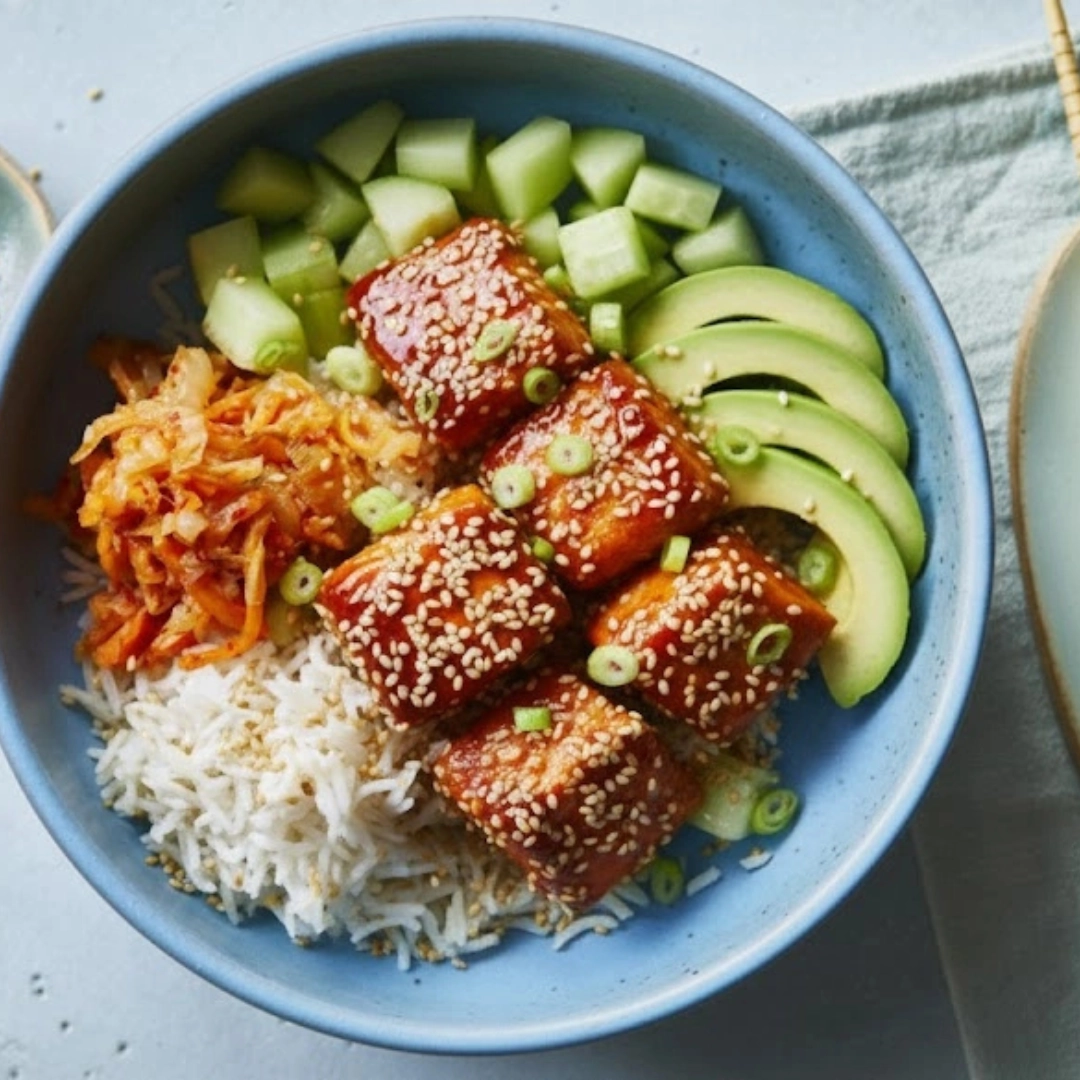
The secret to a truly great rice bowl is texture—the foundation of warm, sticky rice against something crisp, topped with a rich, savory protein. These Spicy Salmon Rice Bowls deliver on all fronts, providing a satisfying, full-flavored meal that comes together with incredible speed. It’s a versatile dish that offers the delicate, flaky texture of baked salmon coated in a tangy-spicy glaze, contrasting beautifully with cool cucumber and creamy avocado. Whether you are seeking a light, nutrient-dense lunch or an easily customized dinner, this bowl is designed for maximum flavor impact with minimal fuss in the kitchen.
It draws inspiration from Japanese and Korean flavors but is adapted for the home cook looking for a vibrant, healthy meal without compromising on taste. The glaze is balanced—sweetened just enough to temper the heat, allowing the fresh notes of ginger and garlic to shine through the richness of the fish. Think of this not just as a recipe, but as a blueprint for layering flavor and texture in your next favorite go-to dish.
Table of Contents
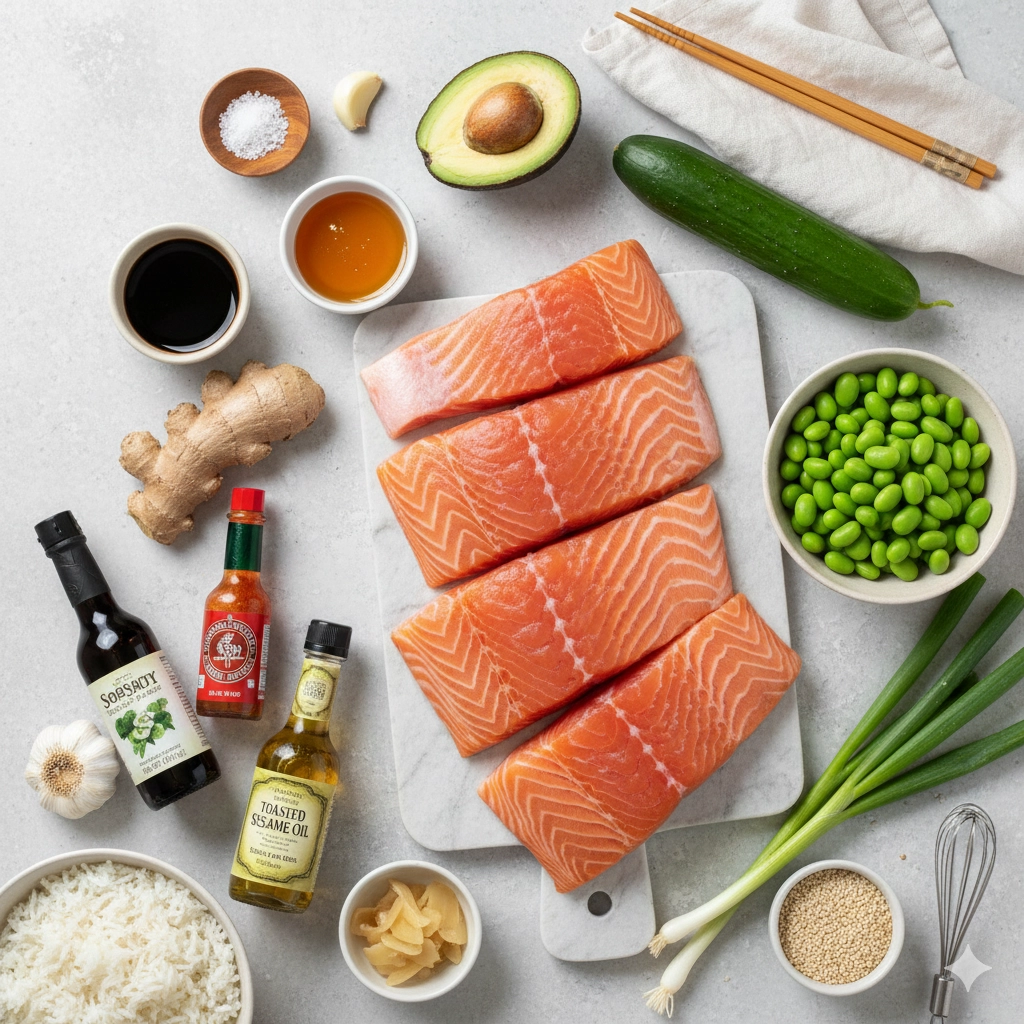
The Essential Components
This assembly focuses on simple, high-quality ingredients that build a complex flavor profile.
For the Salmon:
- Four six-ounce salmon fillets (skin on or off)
- Two tablespoons soy sauce or tamari
- One tablespoon rice vinegar
- One tablespoon honey or maple syrup
- One tablespoon toasted sesame oil
- One teaspoon freshly grated ginger
- Two cloves garlic, minced
- One teaspoon sriracha or gochujang, plus more for garnish
- One quarter teaspoon fine sea salt
For the Bowls:
- Two cups cooked short-grain white rice (such as sushi or Calrose)
- One medium cucumber, thinly sliced or cut into matchsticks
- One ripe avocado, sliced
- One cup shelled, cooked edamame
- One quarter cup pickled ginger (optional)
- Four scallions, thinly sliced
- One tablespoon toasted sesame seeds
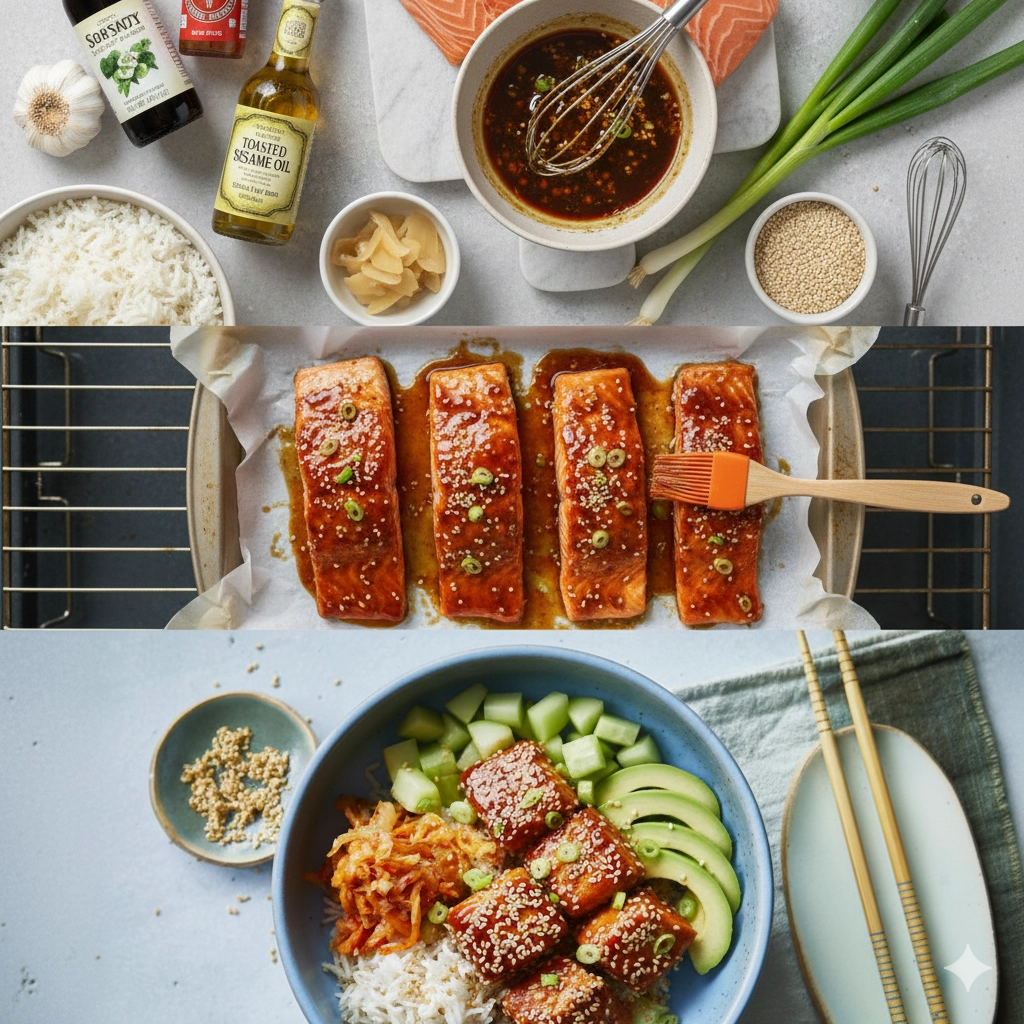
Preparing the Meal: A High-Level Overview
This simple structure allows for maximum efficiency, completing all components roughly at the same time.
- Prepare the Glaze: Whisk together all ingredients for the glaze in a small bowl.
- Marinate the Salmon: Coat the salmon fillets generously in half of the prepared glaze and let rest briefly.
- Cook the Salmon: Bake the fish until flaky and brush with the remaining glaze near the end of the cooking time.
- Assemble the Bowls: Divide the prepared rice among four bowls, adding the fresh vegetables and toppings.
- Finish and Serve: Top the bowls with the finished salmon, garnish, and serve immediately.
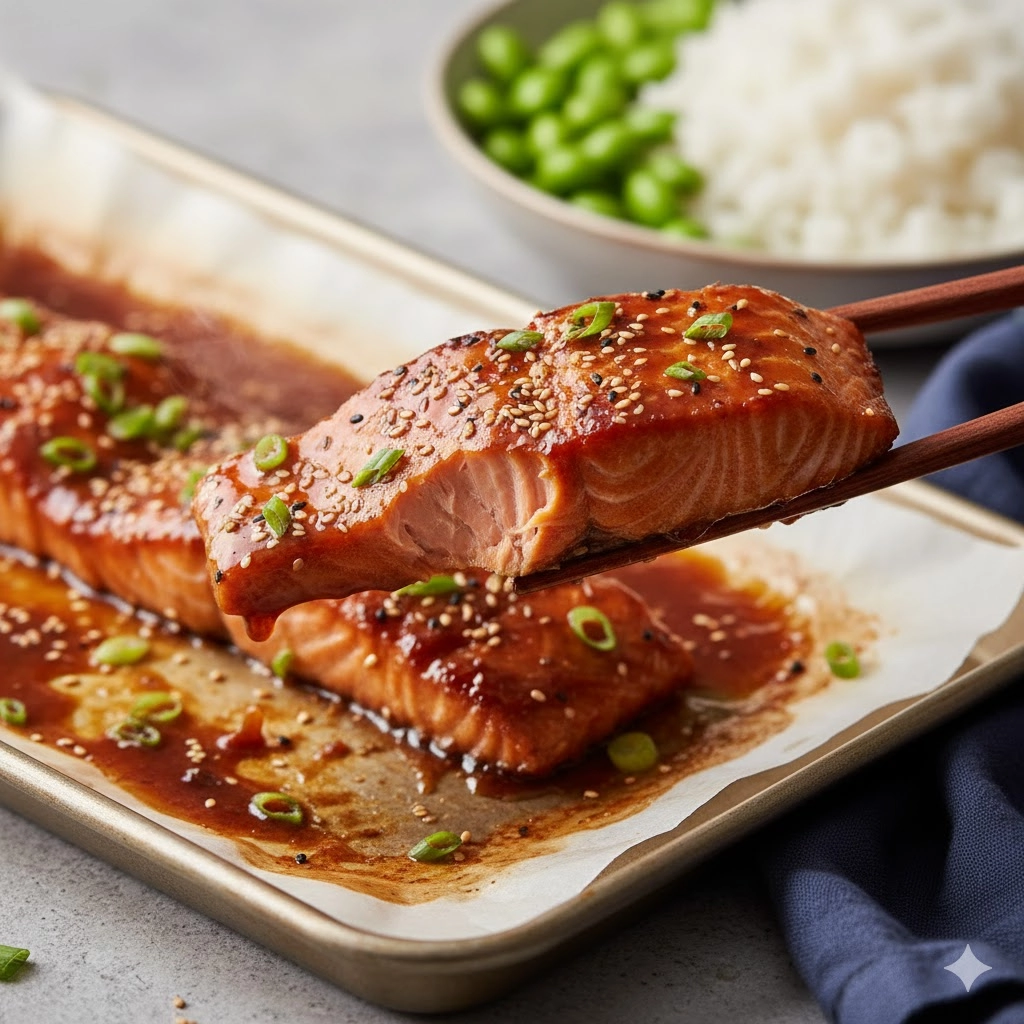
Achieving Perfectly Glazed Salmon
The texture of the salmon is critical here; we want a tender, flaky interior and a beautifully caramelized, slightly sticky exterior from the glaze. Baking is the ideal method for consistency and ease.
Marinating and Coating
Begin by preheating your oven to four hundred Fahrenheit. While the oven heats, combine the soy sauce, rice vinegar, honey, sesame oil, ginger, garlic, sriracha, and salt in a small bowl. Whisk until fully emulsified. This forms your glaze base. Take half of this mixture and pour it over the four salmon fillets, ensuring both the top and sides are coated. Let this rest for about ten minutes at room temperature; this short rest helps the flavors penetrate slightly without needing a full, long marination.
The Baking Process
Line a baking sheet with parchment paper to prevent sticking and transfer the seasoned salmon fillets to it. Place the tray into the preheated oven. For a six-ounce fillet, the cooking time will generally be twelve to fifteen minutes. The flesh should be cooked through, turning from translucent to opaque, and easily flake when pressed gently with a fork.
The Finishing Glaze
Crucially, you must reserve the remaining half of the glaze to apply after the initial cooking. Around the ten-minute mark, remove the baking sheet from the oven and brush the reserved glaze generously over the top of each piece of salmon. Return the tray to the oven for the final three to five minutes. This late application allows the honey in the glaze to caramelize beautifully without burning, yielding a glossy, deeply flavorful crust that truly defines the dish.
Sensory Cues and Doneness
The salmon is done when its internal temperature reaches one hundred forty-five Fahrenheit. Visually, look for firm, opaque flesh. When you remove it from the oven, you should detect the strong, aromatic scent of toasted sesame and caramelized ginger. A perfectly cooked fillet will be moist inside, contrasted by the sticky, slightly tacky exterior of the glaze.
Maximizing Flavor and Efficiency
The beauty of a bowl meal is that it relies on simple, fresh ingredients that shine when paired correctly. These specialized tips will elevate your preparation and assembly.
The Rice is the Foundation
Always use freshly cooked, warm rice. If you are using leftover rice, gently warm it in the microwave or steam it in a saucepan with a tablespoon of water until it is soft and sticky again. The warmth of the rice helps release the aromas of the other ingredients layered on top, creating a more cohesive, comforting bite. Short-grain rice, like sushi rice, is ideal for its stickiness, which helps anchor the bowl components.
Toasting the Sesame Seeds
Do not skip toasting the sesame seeds. Dry-toasting them in a small, nonstick pan over medium heat for just two minutes until fragrant dramatically enhances their nutty flavor. Sprinkle them over the finished bowls for a final pop of aroma and a subtle crunch.
Balancing the Heat
The recipe calls for a teaspoon of sriracha or gochujang. Taste the glaze mixture before coating the fish. If you prefer a milder bowl, cut the quantity in half. For more significant heat, add an extra half-teaspoon. Remember that the fresh cucumber and avocado will help cool down the finished dish, so don’t be afraid to lean into the spice a little.
Perfect Avocado Slices
For the neatest slices, wait until you are ready to assemble the bowls. Use a ripe, but not overly soft, avocado. Halve it, remove the pit, and score the flesh lengthwise into even slices while it is still in the skin. Use a large spoon to scoop out the entire sliced half, and arrange it directly onto the rice bowl.
The Fresh Scallion Cut
Slice the scallions very thinly on a sharp diagonal. This not only makes them visually more appealing but also exposes more of the white and green parts, releasing their pungent, onion-like aroma as a fresh contrast to the rich salmon.
Prep Ahead Components
The components for the bowl (except the salmon) can be prepared ahead of time. Cook the rice, chop the cucumber, and cook the edamame. Store them separately and chill. This makes the final assembly take under twenty minutes, perfect for a fast weeknight dinner.
Exploring Flavor Variations
This recipe is flexible. Once you have the core technique down, feel free to adapt the bowl components to suit your preferences or what you have available.
Alternate Proteins
While the baked salmon is key, this exact glaze works beautifully with other proteins. Try it on firm tofu cubes, chicken breast strips, or even shrimp. Tofu should be pressed and pan-fried until crisp before glazing. Chicken breasts should be thinly sliced and cooked quickly in a skillet.
Adding Crunch
If you like a more substantial, crunchy texture, consider adding a handful of thinly shredded red cabbage or carrots to the bowl. You could also include some crushed, dry-roasted peanuts on top for a richer, saltier crunch.
Vegetable Swaps
The cucumber, edamame, and avocado are classic pairings, but you can swap them out for blanched, thinly sliced asparagus, shredded daikon radish, or even some baby spinach for a greener base. If you enjoy fermented flavors, a tablespoon of good quality kimchi would be a powerful addition.
Glaze Adjustments
For a brighter, zestier glaze, add the zest and juice of half a lime. If you prefer an earthier, darker flavor, swap the soy sauce for oyster sauce (if not strictly vegetarian) or add a tiny dash of black vinegar. A quarter teaspoon of smoked paprika adds an unexpected, deep note.
Presentation: Constructing the Perfect Bowl
Serving a rice bowl is all about arrangement. The components should be separated, creating distinct piles of color and texture that remain visually appealing until mixed by the diner.
Building the Base
Place the warm, cooked rice in the center of the bowl, ensuring it forms a slight mound. This helps the other components rest easily.
Segmenting the Vegetables
Artfully arrange the sliced cucumber, edamame, and avocado in separate, distinct quadrants around the perimeter of the rice. They should contrast in color (green, yellow-green, white/light green) and texture (crunchy, firm, creamy).
The Centerpiece
Gently place the entire glazed salmon fillet, or pieces of flaked salmon, directly on top of the rice mound.
The Final Touches
Drizzle any excess glaze from the baking tray over the salmon. Garnish with the fresh scallions and the toasted sesame seeds. A small dollop of extra sriracha or a few slices of pickled ginger can be placed near the edge for visual interest and an optional flavor boost. Serve with chopsticks and a small spoon for maximum enjoyment.
Common Questions Answered
Can I make the salmon glaze ahead of time?
Yes, the glaze can be fully prepared up to two days in advance. Store it in an airtight container in the refrigerator. Before using, simply allow it to come to room temperature and whisk it vigorously to ensure the ingredients are re-emulsified.
What is the best way to store leftovers?
It is best to store the cooked salmon and the bowl components separately. Place the salmon in an airtight container and refrigerate for up to three days. The cooked rice and vegetables should also be stored in their own sealed containers.
How should I reheat the salmon?
Reheating the salmon in a conventional oven or a toaster oven is highly recommended. Place the salmon on a lined tray and reheat at three hundred Fahrenheit for about five to seven minutes, or until just warmed through. This prevents the flaky fish from becoming dry or rubbery, which often happens in a microwave.
Is it okay to use frozen salmon fillets?
Absolutely, using frozen salmon fillets is completely fine. Ensure the salmon is fully thawed overnight in the refrigerator before proceeding with the recipe. Pat the fish very dry with paper towels before marinating, as excess moisture will thin out the glaze and prevent proper caramelization.
What kind of rice is ideal for this bowl?
While short-grain rice is preferred for its stickiness, you can easily substitute it with brown rice for added fiber, or even quinoa for a gluten-free alternative. Just ensure whatever you choose is freshly cooked and slightly warm when assembling the Spicy Salmon Rice Bowls.
Estimated Nutritional Breakdown
| Nutrient | Amount per Serving |
| Calories | 580 kcal |
| Protein | 45 g |
| Carbs | 52 g |
| Fat | 22 g |
| Fiber | 7 g |
| Sugar | 9 g |
| Sodium | 590 mg |
Nutrition Information Disclaimer
Nutrition information is an estimate and may vary based on preparation and ingredients used.
Spicy Salmon Rice Bowls
Ingredients
- 4 6-ounce salmon fillets (skin on or off)
- 2 tbsp soy sauce or tamari
- 1 tbsp rice vinegar
- 1 tbsp honey or maple syrup
- 1 tbsp toasted sesame oil
- 1 tsp freshly grated ginger
- 2 cloves garlic, minced
- 1 tsp sriracha or gochujang (plus more for garnish)
- 1/4 tsp fine sea salt
- 2 cups cooked short-grain white rice
- 1 medium cucumber, thinly sliced or matchsticked
- 1 ripe avocado, sliced
- 1 cup shelled, cooked edamame
- 1/4 cup pickled ginger (optional)
- 4 scallions, thinly sliced
- 1 tbsp toasted sesame seeds
Instructions
- Preheat oven to 400°F. In a small bowl, whisk soy sauce, rice vinegar, honey, sesame oil, ginger, garlic, sriracha, and salt to form the glaze.
- Place salmon fillets on a tray and coat evenly with half the glaze. Let rest for 10 minutes at room temperature.
- Line a baking sheet with parchment. Bake salmon for 12–15 minutes until flaky and opaque.
- At the 10-minute mark, remove salmon, brush with remaining glaze, and return to oven for 3–5 more minutes.
- While salmon bakes, warm the cooked rice. Toast sesame seeds in a dry pan until fragrant.
- Divide rice into 4 bowls. Arrange cucumber, avocado, edamame, and pickled ginger around the rice.
- Place baked salmon fillets on top. Drizzle with pan glaze. Garnish with scallions and sesame seeds. Serve immediately.
Notes
Equipment
- small mixing bowl
- baking sheet lined with parchment paper
- whisk
- oven
- rice cooker or saucepan
- knife and cutting board
- nonstick pan for toasting sesame seeds