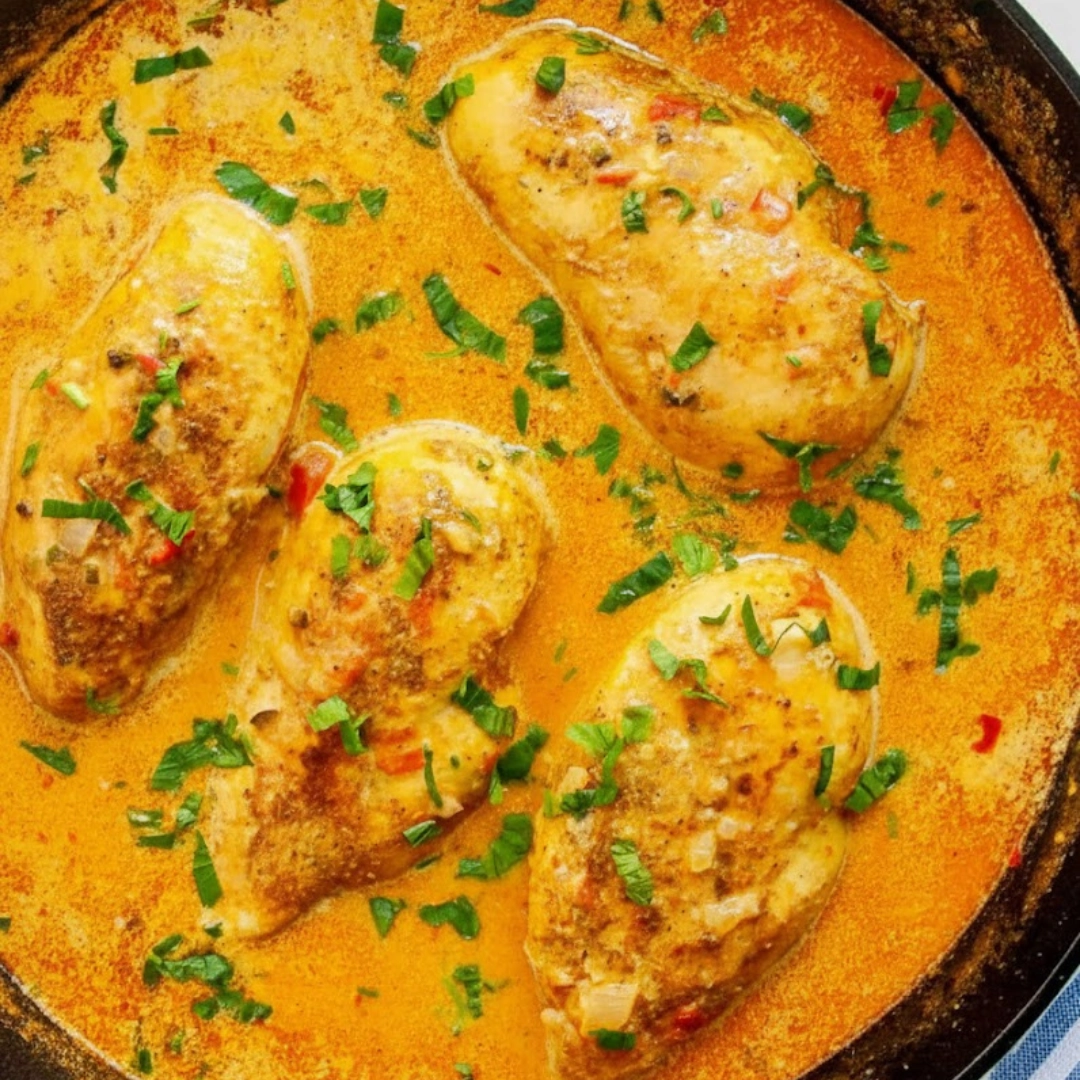
This dish is a vibrant, deeply satisfying exploration of Bahian cuisine, capturing the heart of Brazil’s coastal cooking traditions. It leans heavily on the foundational elements of Moqueca, the beloved Brazilian seafood stew, but simplifies the process and centers the preparation around tender chicken thighs. The resulting sauce is luxurious, built on a base of sweet, creamy coconut milk and colored by fresh bell peppers, onions, and the irreplaceable dendê (palm oil). Crucially, the heat—the “spicy” element—is provided by red chilies, balanced perfectly by the acidity of lime and the freshness of cilantro, ensuring that the flavor profile remains complex and exciting without being overwhelming. It is a hearty main course, perfect for an intimate gathering or a weekend meal when you crave something truly transportive. This spicy Brazilian coconut chicken offers a warmth and complexity that distinguishes it immediately from more familiar chicken curries.
The balance of sweet, savory, and spicy notes is what defines this experience. We’re not aiming for a one-note heat; instead, we are building layered flavors that bloom as the chicken simmers slowly in the fragrant broth. While the technique is straightforward—mostly sautéing and simmering—the resulting depth of flavor tastes like it took hours of careful attention. It’s a culinary journey to the tropics accomplished right in your own kitchen.
Table of Contents
The Pantry Essentials for Moqueca-Inspired Flavor
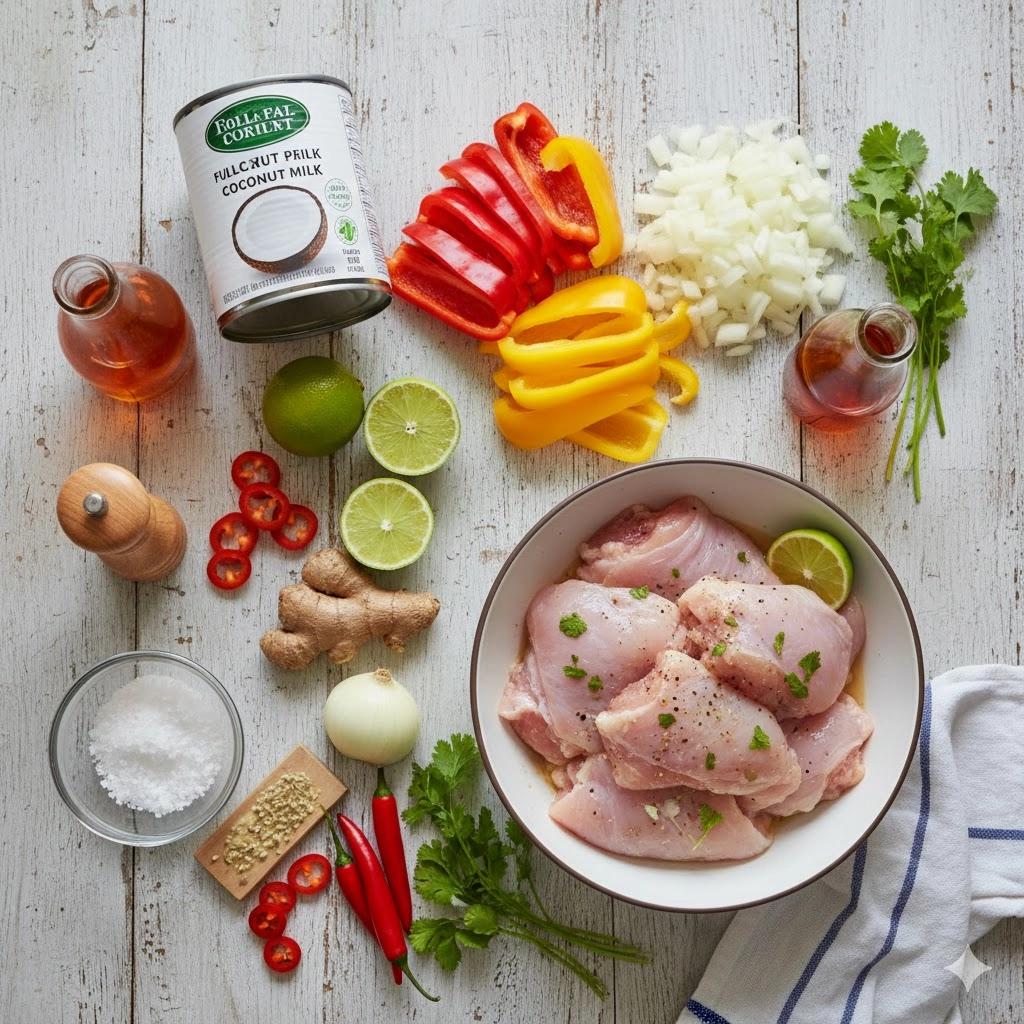
Achieving the authentic depth of this dish requires good quality ingredients, especially when it comes to the coconut milk and the heat sources.
For the Chicken
- Two pounds (about 900 grams) boneless, skinless chicken thighs
- One teaspoon salt
- Half a teaspoon freshly cracked black pepper
- Two tablespoons fresh lime juice
- Two tablespoons olive oil
For the Aromatic Base and Sauce
- One large yellow onion, finely diced
- Two large cloves garlic, minced
- One red bell pepper, sliced thin
- One yellow bell pepper, sliced thin
- One tablespoon grated fresh ginger
- One to three small red chili peppers (such as Thai bird or serrano), finely sliced (adjust to preferred heat level)
- One fourteen-ounce (400 milliliters) can full-fat coconut milk
- Half a cup (120 milliliters) chicken stock (low sodium)
- Two tablespoons dendê oil (red palm oil), optional but highly recommended for color and flavor
- One half-cup finely chopped cilantro
- Additional lime wedges for serving
Crafting the Sauce: A Quick Method
This section outlines the core sequence of events. Detailed explanations and sensory cues follow in the next section.
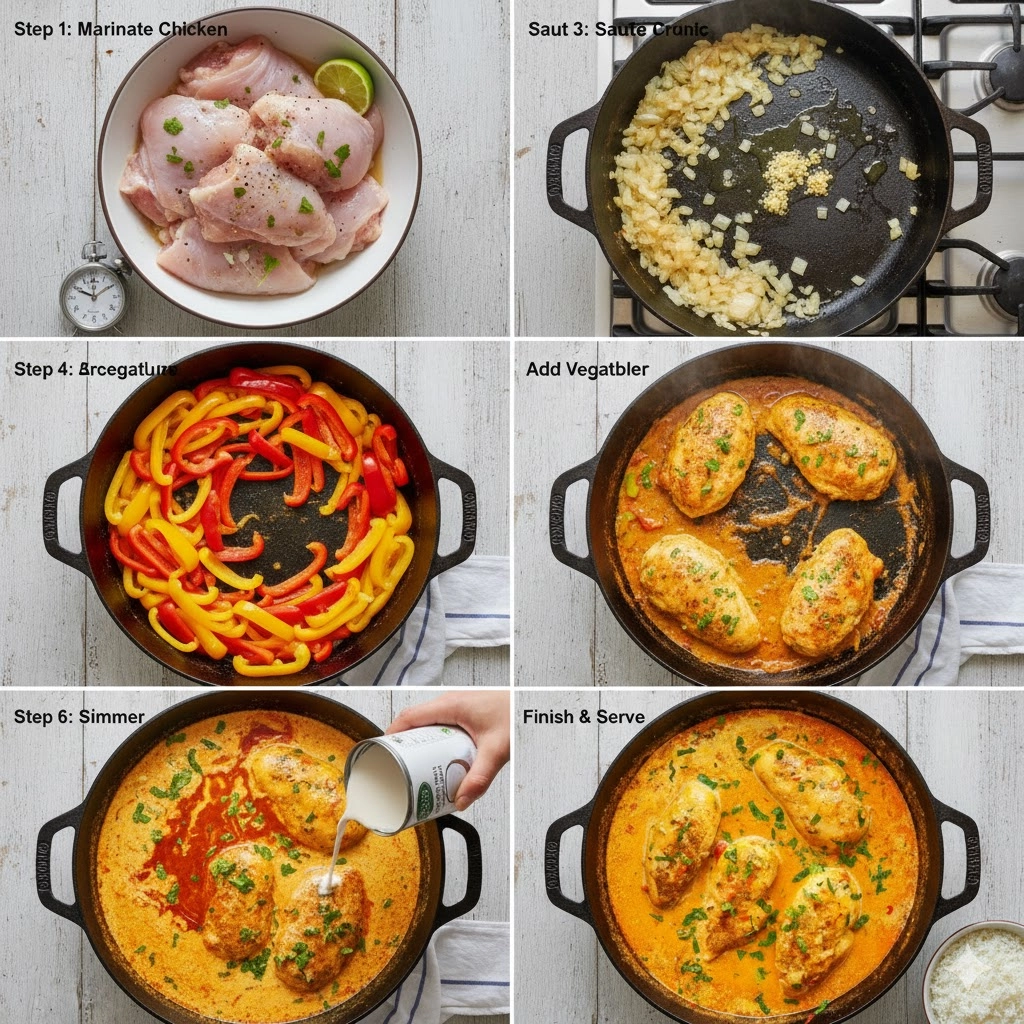
- Marinate the Chicken: Cut the chicken thighs into roughly one-inch pieces. Toss them in a bowl with salt, pepper, and lime juice. Set aside for fifteen minutes.
- Sauté Aromatics: Heat the olive oil in a large pot or Dutch oven over medium heat. Add the diced onion and cook until softened, about five minutes.
- Build the Spice Foundation: Add the minced garlic, sliced ginger, and chili peppers. Cook for one minute until fragrant, being careful not to let the garlic brown.
- Add Vegetables: Introduce the sliced bell peppers. Sauté for another five to seven minutes until they begin to soften.
- Sear the Chicken: Push the vegetables to one side of the pot. Add the marinated chicken pieces and sear quickly for about two minutes per side until they develop a light golden color.
- Simmer the Stew: Pour in the coconut milk, chicken stock, and dendê oil (if using). Stir everything gently to combine, ensuring the chicken is mostly submerged.
- Finish and Season: Bring the mixture to a gentle simmer. Reduce the heat and cook, uncovered, for twenty to twenty-five minutes until the sauce has thickened slightly and the chicken is cooked through. Stir in half of the cilantro and check seasoning, adjusting the salt and pepper as needed.
- Serve: Garnish liberally with the remaining fresh cilantro and serve immediately with lime wedges.
Mastering the Brazilian Pot: Sensory Guide to Perfect Execution
The true success of this recipe lies not in the speed of its execution, but in paying close attention to the sensory indicators at each stage. This attention ensures a deep, cohesive flavor profile that defines great stews and curries.
Preparing and Tendering the Chicken
While you can skip the marinade, taking fifteen minutes to coat the chicken in lime juice, salt, and pepper is non-negotiable for maximizing flavor and texture. The acid in the lime juice begins a very gentle tenderizing process, allowing the seasonings to penetrate beyond the surface. When you cut the chicken, aim for pieces of roughly uniform size. This consistency guarantees that every piece finishes cooking at the exact same moment, preventing some from becoming dry while others remain undercooked. Before searing, the surface of the chicken should look glossy and slightly pink from the marinade.
The Foundation of Fragrance
The initial sauté of the onions is critical. You are not trying to brown them; you are aiming for translucence—the point where the cellular structure breaks down and the onion releases its sweet, earthy flavor into the fat. This takes patience, typically five minutes on a medium flame.
Once the onions are soft, the aromatics enter the stage: garlic, ginger, and chili. This minute of sautéing is the most fragrant part of the process. You will smell a sudden, sharp, sweet, and spicy cloud rising from the pot. This is the moment when the fat-soluble flavor compounds are activated. The signal to stop cooking here is the intense aroma of the garlic, not a color change. Garlic burns quickly, turning bitter and ruining the entire batch. If you see even the slightest golden-brown edge on the garlic, pull the pot off the heat immediately. The intensity of this fragrant base is key to the overall impact of the spicy Brazilian coconut chicken dish.
Softening the Peppers
Adding the bell peppers introduces texture and a subtle vegetal sweetness. Sautéing them for five to seven minutes accomplishes two things: it softens their structure so they integrate smoothly into the final stew, and it allows them to absorb the flavors built up by the onion, garlic, and chili. They should look slightly wilted and brightly colored before you move on, retaining just a slight bit of firmness so they aren’t mushy when the dish is finished.
The Sear and the Simmer
When searing the chicken, the goal is not to cook it fully, but to caramelize the exterior and create a richer, deeper flavor that locks the seasoning onto the meat. Use medium-high heat for this brief two-minute sear. The chicken should develop a light golden hue, signaling the Maillard reaction has occurred, which adds complexity.
The shift from searing to simmering is where the magic happens. The addition of coconut milk and stock should immediately lower the temperature. Bring the liquid back up to a gentle, rolling simmer—a temperature just below a full boil. This is the ideal environment for the chicken to finish cooking, remaining tender and juicy, and for the sauce to slowly concentrate. The dendê oil, if used, will infuse the stew with a beautiful, earthy, slightly nutty flavor and a deep, orange-red color that is characteristic of traditional Bahian cooking.
During the twenty to twenty-five minutes of simmering, do not cover the pot. Leaving it uncovered allows moisture to escape, concentrating the sauce naturally. The final check for doneness is texture: the chicken should flake easily when pressed, and the sauce should coat the back of a spoon lightly.
Deepening the Experience: Expert Secrets for Aroma and Texture
Achieving true depth in this preparation goes beyond the simple steps—it requires a few specific, focused techniques. These tips elevate the dish from a simple coconut curry to an authentic, layered Brazilian experience.
- Harnessing the Power of Dendê: While olive oil is acceptable for the initial sauté, incorporating dendê (red palm oil) is highly recommended. Not only does it impart the signature sunset-orange color of Moqueca, but its distinct, slightly vegetal and nutty flavor profile is essential to the dish’s authenticity. If you cannot find it, substitute it with two tablespoons of another neutral oil, but the final flavor will differ significantly. If using dendê, add it directly into the simmering sauce.
- Toasting the Spices (Optional Addition): For maximum intensity, consider adding one teaspoon of ground cumin and half a teaspoon of smoked paprika during the garlic and ginger sauté step. Briefly dry-toasting these powdered spices in the hot oil for thirty seconds before adding the liquid “blooms” them, releasing volatile oils that deepen the aromatic base and provide a smoky undercurrent.
- The Cilantro Finish: Do not add all the cilantro during the simmering process. Cilantro is delicate; cooking it for twenty minutes destroys its bright, fresh flavor. Stir in about half of the required amount in the last minute of cooking to infuse a base level of herbaceousness, but reserve the other half for a garnish. Sprinkling fresh, roughly chopped cilantro immediately before serving provides a necessary, vibrant counterpoint to the richness of the coconut milk.
- A Touch of Acidity at the End: The addition of lime juice to the chicken marinade provides a necessary lift, but the final taste test should always include a squeeze of fresh lime juice right before serving. This bright acidity cuts through the heaviness of the coconut and the richness of the chicken, balancing the savory, sweet, and spicy notes perfectly. A teaspoon of juice stirred into the finished sauce often makes a significant difference in brightness.
- Achieving Sauce Thickness: If, after the full simmering time, the sauce is too thin, create a small slurry. Mix one teaspoon of cornstarch with two teaspoons of cold water. Remove the pot from the heat, stir in the slurry, and return the pot to a simmer for one minute. The sauce will thicken instantly. Conversely, if the sauce is too thick, simply stir in an extra quarter cup of chicken stock or water until the desired consistency is reached. The ideal consistency should be thick enough to cling to the rice and the chicken pieces.
Adapting the Recipe: Ingredient Swaps and Dietary Adjustments
This classic preparation offers a great foundation for realistic substitutions, allowing you to tailor the recipe to dietary needs or what you have on hand.
Protein Alternatives
While chicken thighs are recommended for their high fat content and ability to stay moist during the long simmer, you have several excellent alternatives:
- Shrimp or Other Seafood: This dish is directly related to Moqueca, a seafood stew. Use one pound (450 grams) of large shrimp (peeled and deveined). Add the shrimp only in the last five minutes of simmering, as they cook very quickly. You’ll know they’re done when they turn opaque and pink, often requiring less than five minutes total cook time. You could also use firm white fish like cod or snapper, cubed, and added for the final ten minutes.
- Tofu or Firm Plant-Based Protein: For a vegetarian take, use fifteen ounces (425 grams) of extra-firm tofu, pressed and cubed. Instead of searing, toss the cubed tofu in a tablespoon of cornstarch and fry briefly in the pot until golden on all sides before proceeding to the simmering step.
Coconut Milk Adjustments
For those monitoring fat intake, light coconut milk can be used, but be aware that it will result in a thinner, less rich sauce. To counteract this thinness, you may need to add an extra minute or two to the cornstarch slurry trick mentioned above, or simply extend the simmering time by five to ten minutes to allow for more natural reduction. For a dairy-free dish that is also coconut-free, substitute unsweetened cashew milk or heavy cream (if dairy is acceptable), noting that the flavor profile will lose the essential tropical sweetness and richness.
Managing the Heat
The spiciness is completely adjustable. If you prefer a milder flavor, use only half of a single small red chili pepper, or replace it entirely with a quarter teaspoon of dried chili flakes. For extreme heat, consider adding a pinch of a highly pungent powder, like cayenne, during the initial aromatic sauté, which will intensify the heat throughout the entire sauce.
Presentation and Pairing: Completing the Meal
The rich, saucy nature of this dish makes it perfect for serving alongside elements that can absorb the vibrant flavors while adding contrast in texture and color.
- Perfect White Rice: The traditional accompaniment is simple, fluffy white rice, specifically long-grain white rice or jasmine rice. Its neutral flavor provides the ideal canvas for the complex, savory sauce. It’s essential to serve a generous portion of rice as it is the primary vehicle for enjoying the thick, flavorful gravy.
- Brazilian Farofa: For a textural contrast that elevates the meal, serve a small bowl of farofa—toasted cassava flour (or occasionally cornmeal) mixed with butter, bacon, and sometimes egg. Sprinkling a spoonful of this smoky, crunchy topping over your portion adds a depth of flavor and a delightful textural crunch that contrasts beautifully with the tender chicken and smooth sauce.
- Simple Greens: Because the main dish is so rich, a clean, refreshing side salad is ideal. Keep the dressing simple: a little lime juice, olive oil, salt, and pepper. Avoid heavy or creamy dressings. The acidity and freshness of the greens serve as a palate cleanser between bites of the decadent chicken.
- Grilled Plantains: For an authentic, sweet counterpoint, serving a few slices of perfectly caramelized, grilled, or pan-fried sweet plantain balances the chili heat exquisitely. The tropical sweetness of the plantain harmonizes beautifully with the coconut and bell peppers in the sauce.
Your Questions Answered: The Spicy Brazilian Coconut Chicken Deep Dive
Can I prepare this stew ahead of time?
Absolutely. This dish, like many stews, benefits greatly from being made a day in advance. The flavors have time to fully meld together overnight, resulting in a deeper, more cohesive taste. Store the fully cooked chicken and sauce in an airtight container in the refrigerator for up to three days, and gently reheat it on the stovetop over low heat, adding a splash of stock if needed.
Why do you recommend bone-in, skin-off chicken thighs?
While the main recipe calls for boneless, skinless thighs for ease and quick preparation, bone-in thighs can be used, and in fact, they add more depth of flavor due to the marrow and connective tissue in the bone. If using bone-in, increase the simmer time by approximately ten to fifteen minutes and ensure the internal temperature reaches one hundred sixty-five Fahrenheit.
Can I freeze the leftovers?
Yes, this coconut chicken freezes exceptionally well. Allow the dish to cool completely, then transfer it to a freezer-safe, airtight container, ensuring there is minimal headspace. It can be kept frozen for up to three months. To reheat, thaw overnight in the refrigerator and then warm slowly on the stovetop. The texture of the coconut sauce may be slightly grainier after freezing, but the flavor will remain excellent.
Is dendê oil truly essential for this dish?
Dendê oil, or red palm oil, is not mandatory but is a signature element of traditional Bahian cooking, imparting a distinctive color, aroma, and flavor that is difficult to replicate. If you omit it, the dish will still be delicious but will lack the specific nutty, earthy undertones and the classic orange hue associated with a true Moqueca-style preparation.
How do I correct the flavor if the sauce is too sweet?
If the coconut milk is sweeter than anticipated or if you feel the sugar overpowers the savory notes, the best correction is acidity. Stir in a small amount of extra fresh lime juice, one teaspoon at a time, until the flavor brightens and the sweetness is properly balanced. A touch of extra salt can also help to temper the perceived sweetness.
Estimated Nutritional Breakdown
| Nutrient | Amount per Serving |
| Calories | 480 kcal |
| Protein | 38 g |
| Carbs | 12 g |
| Fat | 30 g |
| Fiber | 4 g |
| Sugar | 6 g |
| Sodium | 380 mg |
Nutrition information is an estimate and may vary based on preparation and ingredients used.
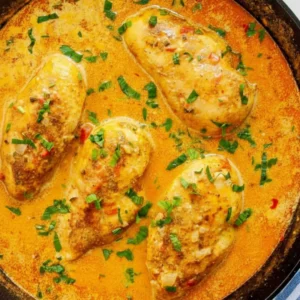
Spicy Brazilian Coconut Chicken
Ingredients
- 2 pounds boneless, skinless chicken thighs
- 1 tsp salt
- 0.5 tsp freshly cracked black pepper
- 2 tbsp fresh lime juice
- 2 tbsp olive oil
- 1 large yellow onion, finely diced
- 2 large garlic cloves, minced
- 1 red bell pepper, thinly sliced
- 1 yellow bell pepper, thinly sliced
- 1 tbsp grated fresh ginger
- 1–3 small red chili peppers (Thai bird or serrano), finely sliced
- 1 can (14 oz) full-fat coconut milk
- 0.5 cup chicken stock (low sodium)
- 2 tbsp dendê oil (red palm oil), optional
- 0.5 cup finely chopped cilantro
- Additional lime wedges for serving
Instructions
- Cut chicken into 1-inch pieces. Toss with salt, pepper, and lime juice. Let marinate for 15 minutes.
- Heat olive oil in a large pot over medium heat. Sauté onion until softened, about 5 minutes.
- Add garlic, ginger, and chili peppers. Cook for 1 minute until fragrant. Do not brown garlic.
- Add red and yellow bell peppers. Sauté for 5–7 minutes until slightly softened.
- Push vegetables to one side. Add chicken and sear 2 minutes per side until lightly golden.
- Pour in coconut milk, chicken stock, and dendê oil. Stir to combine.
- Bring to a simmer. Cook uncovered for 20–25 minutes until sauce thickens and chicken is fully cooked.
- Stir in half the cilantro. Adjust salt and pepper if needed.
- Serve hot, garnished with remaining cilantro and lime wedges.
Notes
Equipment
- large Dutch oven or pot
- cutting board
- chef’s knife
- wooden spoon or spatula
- measuring spoons
- measuring cup