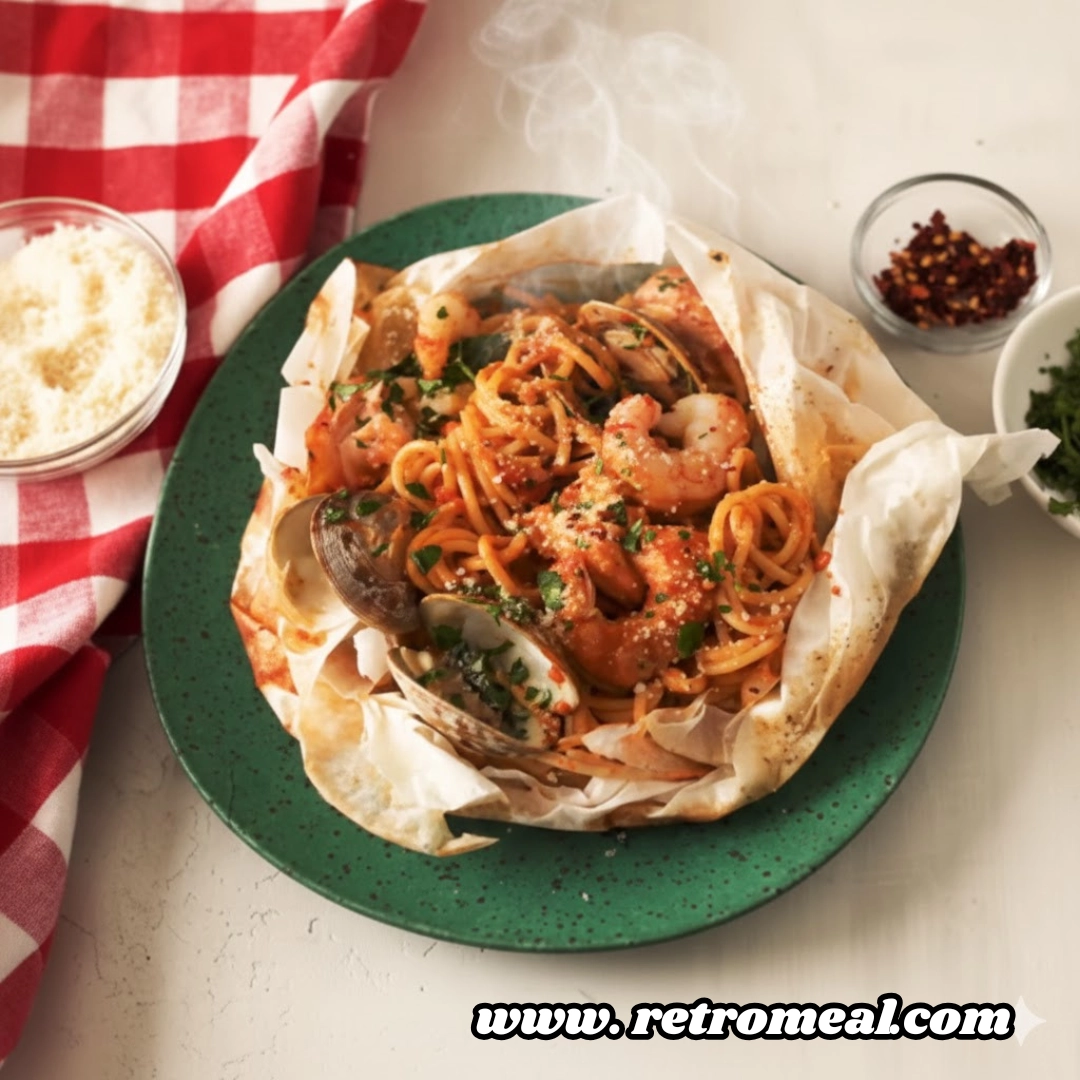
The culinary technique of steaming food within a parchment paper envelope—traditionally known as “en papillote”—is most frequently associated with delicate fillets of white fish or seasonal spring vegetables. However, applying this French method to pasta creates an entirely different sensory experience. By sealing par-cooked noodles inside a pressurized pouch with briny seafood and a rich tomato base, the pasta acts as a sponge, absorbing the volatile aromatics that would otherwise escape into the kitchen air. This Spaghetti en Papillote recipe transforms a standard seafood pasta into a dramatic, restaurant-quality presentation where each guest receives their own steaming parcel to unfurl at the table.
This preparation excels because it bridges the gap between stovetop tossing and oven braising. Unlike a traditional pasta bake that relies on melted cheese and a crispy crust, the parchment method focuses on moisture retention and flavor concentration. When the heat of the oven hits the liquid inside the pouch—in this case, a blend of marinara, dry white wine, and heavy cream—it creates a micro-environment of flavored steam. The clams open, releasing their natural juices directly into the spaghetti strands, while the shrimp and salmon remain remarkably tender. It is a sophisticated yet approachable way to serve a crowd without the last-minute stress of managing multiple pans on the burner.
Table of Contents
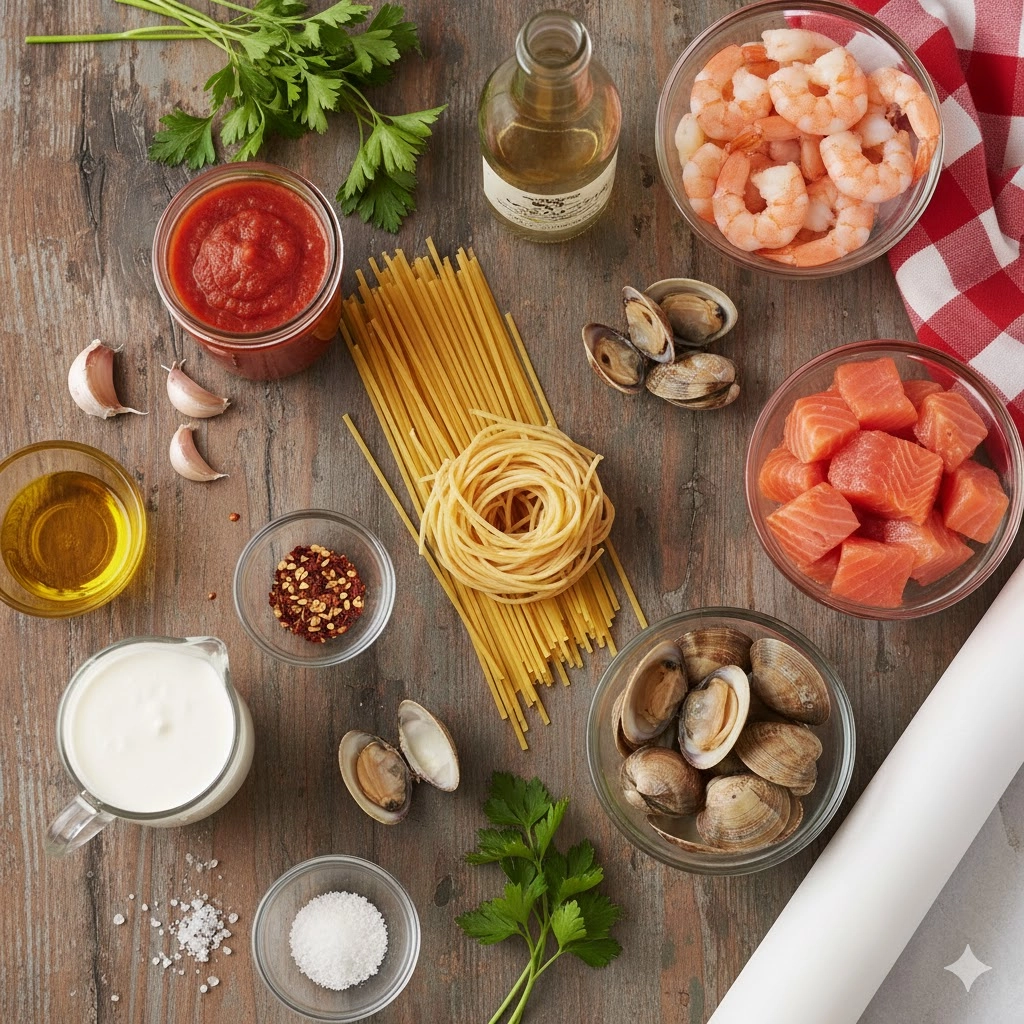
Ingredients
The Pasta Base
- Three quarters pound dry spaghetti
- One tablespoon extra virgin olive oil
- Two cloves garlic, thinly sliced
- Two and one half cups high-quality marinara sauce
- Two tablespoons heavy cream
- Two tablespoons dry white wine (Sauvignon Blanc or Pinot Grigio)
- Kosher salt for pasta water
The Seafood Medley
- Sixteen large shrimp, peeled and deveined
- One half pound skinless salmon fillet, cut into one inch cubes
- Sixteen small littleneck clams, scrubbed clean
For Garnish and Service
- Fresh flat-leaf parsley, finely chopped
- Red pepper flakes
- Grated Parmesan cheese
- Parchment paper sheets (four large rectangles)
Instructions
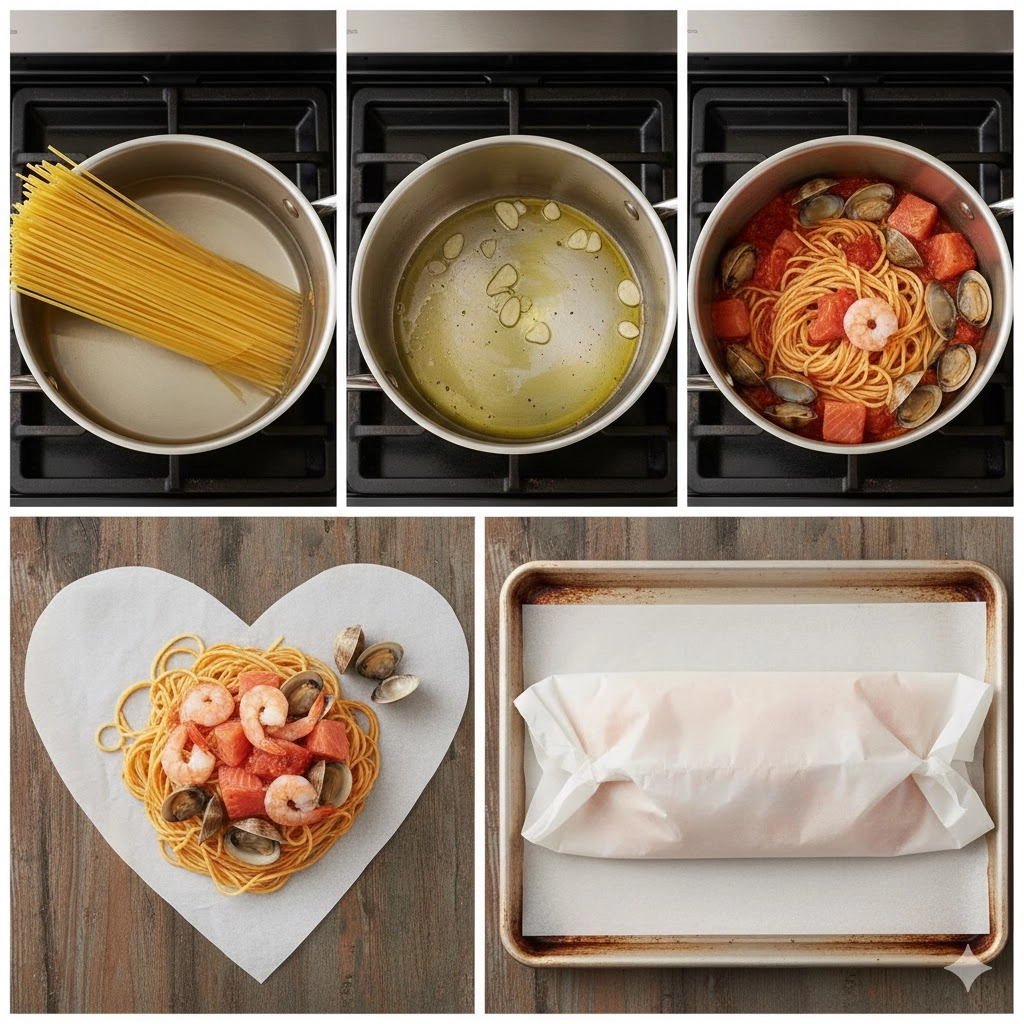
- Preparation: Heat your oven to four hundred twenty five Fahrenheit. Prepare a large pot of water with a generous amount of salt and bring to a rolling boil.
- Par-boil the Pasta: Cook the spaghetti for approximately eight minutes. It should be firmer than usual al dente, as it will continue cooking in the parchment. Drain and set aside.
- Build the Sauce: In the same pot over medium heat, lightly sauté the garlic in olive oil until fragrant. Stir in the marinara, cream, and wine. Bring to a low simmer.
- Incorporate the Spaghetti: Toss the undercooked pasta into the sauce until thoroughly coated, then remove from the heat immediately.
- Assemble the Parcels: Lay out four large sheets of parchment paper. Place one quarter of the sauced spaghetti in the center of each sheet.
- Add Seafood: Divide the shrimp, salmon chunks, and clams evenly among the four mounds of pasta.
- Seal the Pouch: Fold the parchment over the food and crimp the edges tightly to create a sealed half-moon or rectangular packet.
- Bake: Arrange the packets on a large rimmed baking sheet. Bake for twenty minutes.
- Serve: Place each individual packet on a plate. Carefully slit the paper open at the table to release the aromatic steam.
Technical Details and Sensory Cues
The success of this dish relies on the “doneness” of the pasta before it ever enters the oven. When boiling the spaghetti, you are looking for a texture that still has a white, starchy core when bitten. This is essential because the pasta will sit in liquid for an additional twenty minutes at four hundred twenty five Fahrenheit. If the pasta is fully cooked on the stove, it will emerge from the parchment mushy and over-saturated.
When sautéing the garlic, aim for a pale golden hue. If the garlic turns dark brown, it will impart a bitter note to the delicate seafood. The addition of heavy cream to the marinara isn’t meant to make a heavy “pink sauce,” but rather to provide a fat-based carrier for the wine and seafood flavors, ensuring the sauce clings to the noodles rather than pooling at the bottom of the parchment.
As the packets bake, you may notice the parchment paper puffing up like a pillow. This is the “papillote” effect—the internal pressure from the simmering wine and clam liquor. After twenty minutes, the clams should have popped wide open. If a clam remains tightly shut after baking, discard it, as this indicates it was likely dead before cooking. The salmon should be opaque and flake easily with a fork, while the shrimp should have curled into a tight “C” shape and turned a vibrant pinkish-orange.
Professional Tips for Success
- Scrub the Shells: Littleneck clams often carry fine sand. Soak them in cold, salted water for twenty minutes before cooking to encourage them to “purge” any grit, then scrub the outer shells with a stiff brush.
- The Parchment Fold: To ensure a tight seal, you can use a “heart shape” cut. Fold the paper in half, cut a large heart, place the food on one side, and fold the edges over in small, overlapping pleats. If you find the paper won’t stay closed, a few staples at the very edge of the folds can help, though traditional crimping is preferred.
- Salmon Sizing: Ensure the salmon chunks are uniform in size, roughly one inch. If they are too small, they will overcook before the clams open; if they are too large, the centers may remain raw.
- Wine Selection: Use a wine you would actually drink. Avoid “cooking wines” which often contain high levels of sodium. A crisp, acidic white wine helps cut through the richness of the salmon and cream.
- Avoid Overcrowding: If your baking sheet is too small, the packets will overlap, preventing even heat distribution. Use two sheets if necessary to give each Spaghetti en Papillote parcel plenty of space for air circulation.
- High Heat is Key: Do not be tempted to lower the oven temperature. The high heat is necessary to generate the steam required to open the clams and cook the seafood quickly without turning the pasta to mush.
Variations and Substitutions
- The Shellfish Swap: If clams are unavailable, you can substitute mussels. Mussels generally cook faster and provide a deeper, more oceanic flavor to the sauce.
- Vegetarian Adjustment: For a meat-free version, replace the seafood with a mix of sliced cremini mushrooms, artichoke hearts, and sun-dried tomatoes. Increase the wine by one tablespoon to compensate for the lost moisture from the clams.
- Spicy Kick: Increase the red pepper flakes in the sauce base and add a teaspoon of bottled calabrian chili paste for a more aggressive, southern Italian flavor profile.
- Grain Alternatives: While spaghetti is traditional, linguine or fettuccine work equally well. Avoid thin pastas like angel hair, as they cannot withstand the secondary baking process without losing their structure.
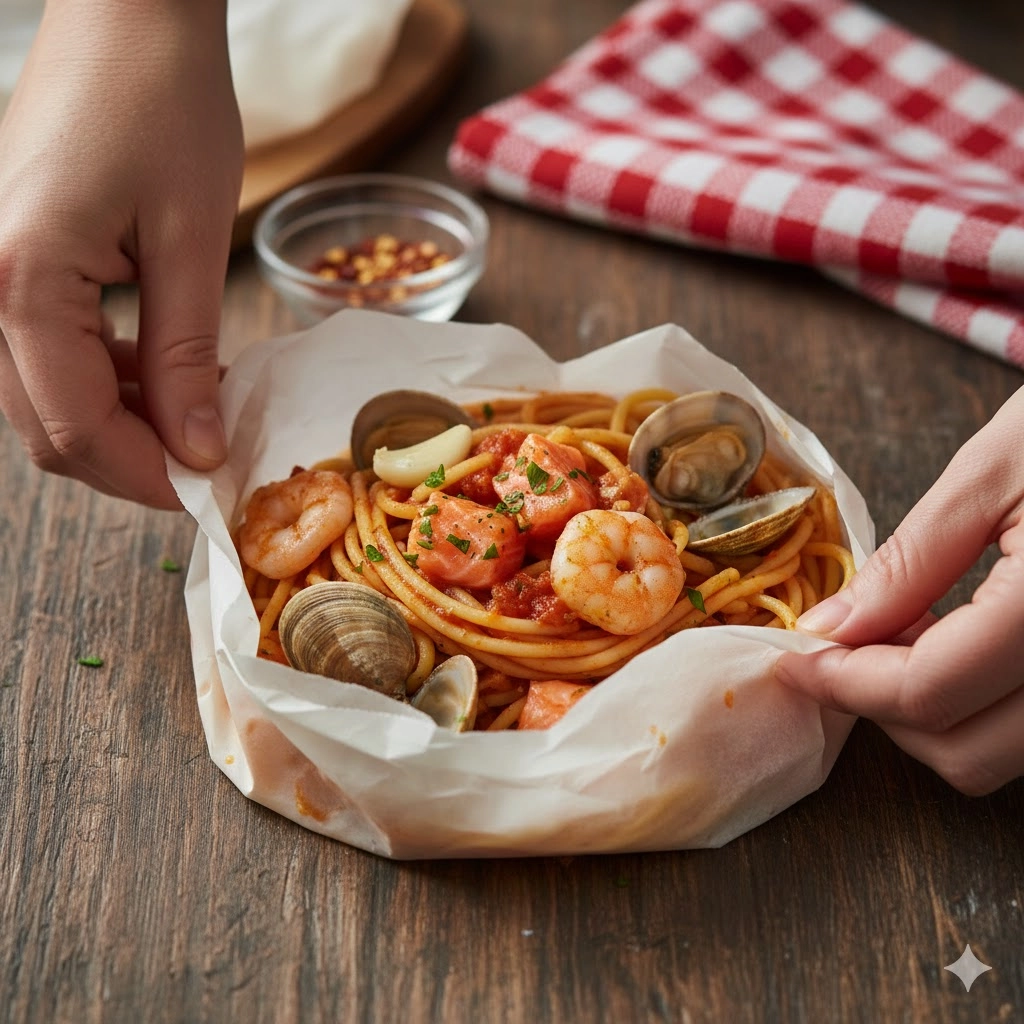
Serving Suggestions
Presentation is the primary draw of this meal. Rather than plating the food, place the entire parchment packet directly onto a wide, shallow pasta bowl. Provide each guest with a sharp knife or a pair of kitchen shears to cut the paper themselves.
To round out the meal, serve with a side of charred crusty bread to soak up the leftover “pot liquor” at the bottom of the parchment. A simple arugula salad with a sharp lemon vinaigrette provides a necessary acidic contrast to the rich, steamed seafood. For wine pairings, continue with the same dry white used in the recipe to create a cohesive flavor bridge.
FAQs
Can I prepare the packets in advance?
It is best to prepare the sauce and par-boil the pasta ahead of time, but do not assemble the packets more than thirty minutes before baking. If the dry pasta sits in the sauce for too long before hitting the oven, it will absorb too much liquid and become soft.
What if my clams don’t open?
A clam that stays shut after twenty minutes in a four hundred twenty five Fahrenheit oven is likely unsafe to eat. Do not force it open; simply discard it. This usually happens with one or two clams per batch and is perfectly normal.
Do I have to use parchment paper?
While aluminum foil can be used in a pinch, it does not breathe the same way parchment does, and it lacks the elegant aesthetic of the paper. Parchment is also non-reactive, ensuring the acidity of the tomatoes doesn’t pick up a metallic taste.
Is this recipe safe for children?
The alcohol in the white wine mostly evaporates during the high-heat baking process, leaving only the flavor behind. However, if you prefer to avoid it entirely, you can substitute the wine with an equal amount of clam juice or seafood stock.
Nutrition Information
| Nutrient | Amount per Serving |
| Calories | 540 kcal |
| Protein | 38 g |
| Carbs | 62 g |
| Fat | 14 g |
| Fiber | 4 g |
| Sugar | 6 g |
| Sodium | 880 mg |
Disclaimer
Nutrition information is an estimate and may vary based on preparation and ingredients used.
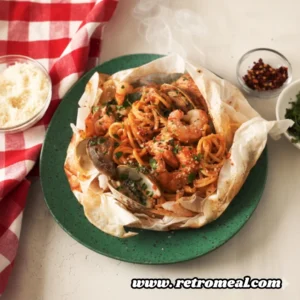
Seafood Spaghetti en Papillote
Ingredients
- 0.75 lb spaghetti
- 1 tbsp extra-virgin olive oil
- 2 cloves garlic, thinly sliced
- 2.5 cups marinara sauce
- 2 tbsp heavy cream
- 2 tbsp dry white wine (such as Sauvignon Blanc)
- 16 large shrimp, peeled and deveined
- 0.5 lb salmon fillet, skin removed and cut into 1-inch chunks
- 16 littleneck clams, scrubbed clean
- 1 tsp kosher salt (for pasta water)
- 1 tsp red pepper flakes (for serving)
- 2 tbsp fresh parsley, chopped
- 2 tbsp grated Parmesan cheese
Instructions
- Preheat your oven to four hundred twenty five Fahrenheit. Bring a large pot of salted water to a rolling boil.
- Cook the spaghetti until it is slightly chewy and underdone, approximately eight minutes. Drain the pasta and set aside.
- In the same pot over medium heat, add olive oil and garlic. Sauté until the garlic is fragrant and just beginning to turn golden.
- Stir in the marinara sauce, heavy cream, and white wine. Bring the mixture to a gentle simmer, then toss in the cooked spaghetti to coat.
- Lay out four large sheets of parchment paper. Place a quarter of the spaghetti mixture in the center of each sheet.
- Top the pasta mounds evenly with the shrimp, salmon chunks, and clams.
- Fold the parchment paper over the food and crimp the edges tightly to create a sealed pouch. Place packets on a rimmed baking sheet.
- Bake for twenty minutes until the seafood is fully cooked and the clams have opened. Serve immediately in the paper, garnished with parsley, cheese, and pepper flakes.
Notes
Equipment
- Large stock pot
- parchment paper
- Rimmed baking sheet
- Kitchen Shears For opening the packets at the table