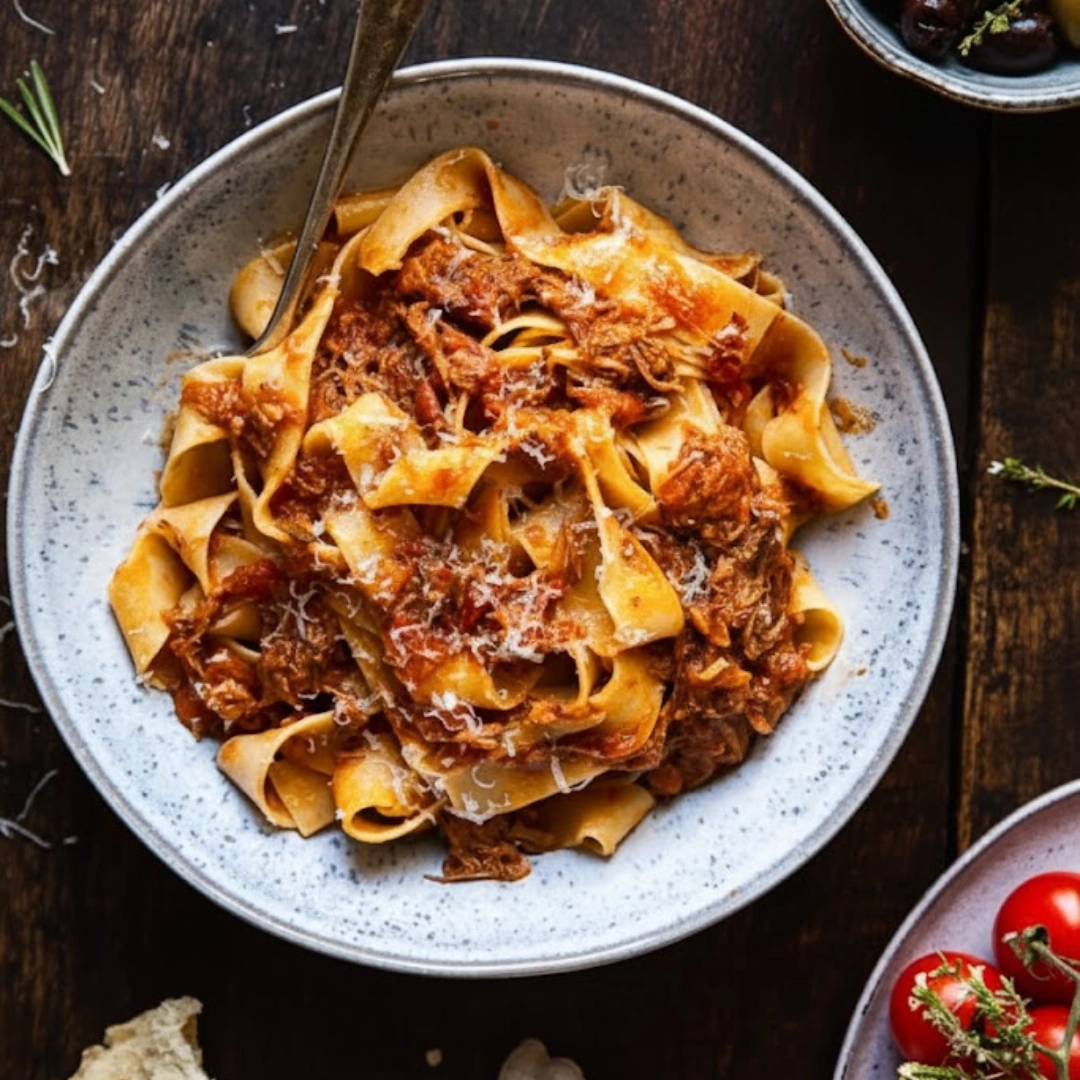
The rich, deep flavor of an authentic Slow Cooker Italian Beef Ragu is more than just a sauce; it’s a culinary embrace. This recipe takes the foundational techniques of traditional Italian cooking and adapts them perfectly for the modern kitchen, yielding a fall-apart tender beef dish with a complex, concentrated tomato sauce that is genuinely transformative.
I first learned the profound patience required for a truly great ragu from my Nonna. I was a child, and Sunday was the day for sauce. Her kitchen wasn’t fancy, but it smelled like pure comfort. I still remember the rhythmic thud of her knife chopping the soffritto vegetables and the sizzle as she seared the beef. For hours, that pot would simmer, filling the entire house with an aroma that signaled warmth, family, and good food. The trick, she’d always tell me, was time. Time allows the collagen in the beef to break down into gelatin, making the meat incredibly succulent, while the flavors of the tomatoes and herbs meld into one cohesive, beautiful whole.
As someone who has cooked this dish for years, I’ve adapted her stovetop method to the ease of a slow cooker, proving that even a treasured, traditional Slow Cooker Italian Beef Ragu can fit into a busy schedule without sacrificing any of its soul.
Defining Authentic Ragu: A Culinary Look
In simple terms, ragu (or ragout) is a meat-based sauce that is simmered for a long period. Many home cooks mistake it for simple spaghetti sauce, but the distinction is crucial.
- Ragu is characterized by the use of large, typically tough, cuts of meat that are slowly cooked in a liquid base, usually containing tomatoes, broth, and herbs. The meat is the star of the dish.
- Marinara is a simple, quick tomato sauce, meatless, and often cooked in less than an hour.
Our Slow Cooker Italian Beef Ragu recipe adheres to this definition, focusing on creating a deeply flavored sauce where the beef shreds beautifully and becomes an integral part of the final texture.
Table of Contents
Ingredients and Expert Preparation Tips
The success of a slow-cooked dish relies on the quality of its foundation. Here is what you’ll need, along with key preparation advice.
| Ingredient Category | Quantity | Notes |
| Beef | 3 lbs | Boneless beef chuck roast, cut into 2-inch chunks. |
| Soffritto | 1 medium | Yellow onion, finely diced. |
| 2 medium | Carrots, finely diced. | |
| 2 stalks | Celery, finely diced. | |
| Sauce Base | 1 (28 oz) can | Crushed tomatoes (high quality recommended). |
| 1 cup | Beef broth (low sodium). | |
| 2 Tbsp | Tomato paste. | |
| Seasoning | 4 cloves | Garlic, minced. |
| 1 tsp | Dried oregano. | |
| 1 tsp | Dried basil. | |
| 1/2 tsp | Red pepper flakes (optional). | |
| 1 Bay leaf | Fresh or dried. | |
| Finishing | To taste | Salt and freshly ground black pepper. |
| 2 Tbsp | Olive oil (for searing). |
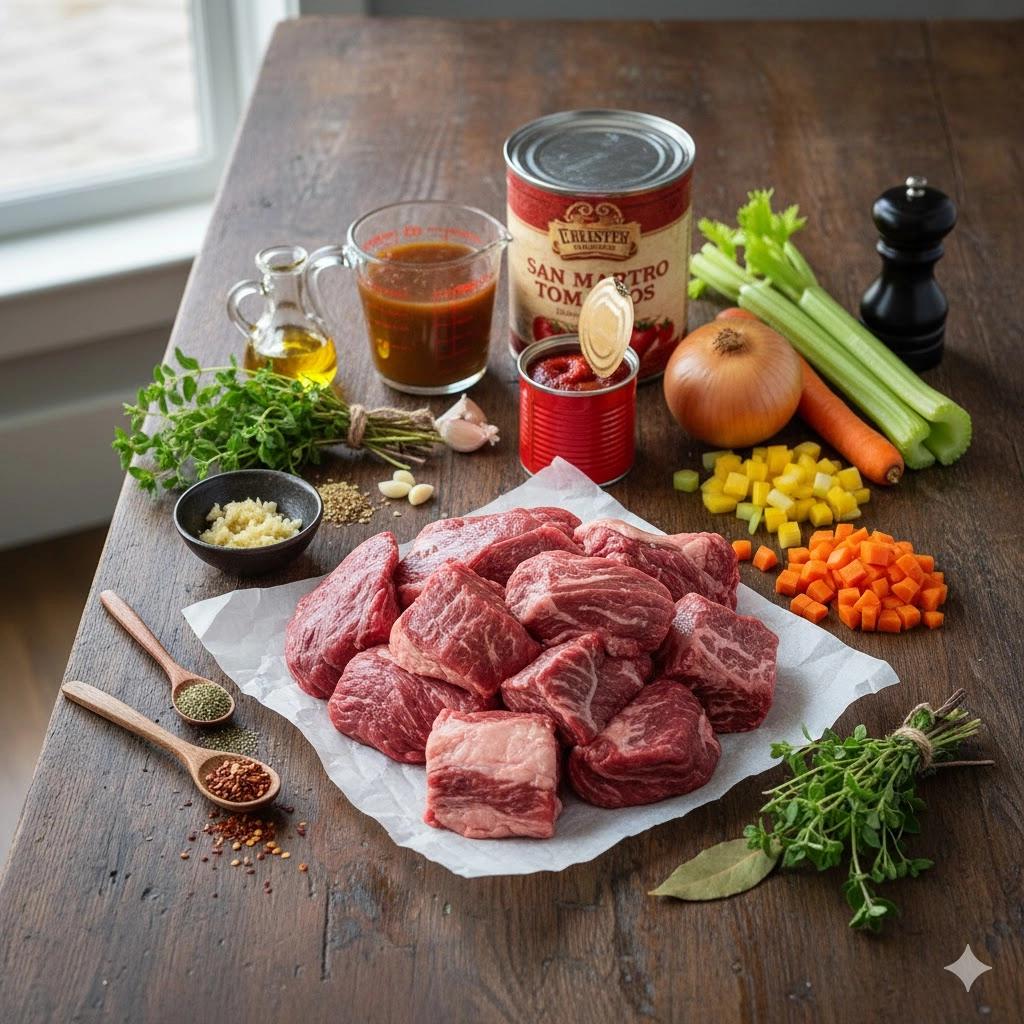
The Essential Soffritto Foundation
The soffritto—the finely diced mix of onion, carrot, and celery—is the aromatic heart of this and many classic Italian dishes. Take your time dicing these vegetables; smaller, uniform pieces dissolve into the sauce during the long cooking time, thickening it and adding an unparalleled sweetness and depth. This slow sauté is what separates a good ragu from a great one.
Selecting the Best Beef Cut for Tenderness (Chuck vs. Short Rib)
After testing this recipe multiple times, I recommend boneless beef chuck roast. Chuck has the perfect balance of meat and connective tissue (collagen) necessary for a ragu.
- Beef Chuck: The collagen breaks down over long, moist heat cooking, transforming into gelatin, which makes the sauce rich and the meat tender.
- Alternative: Beef Short Ribs: These offer an even richer flavor, but they can be pricier and require slightly more trimming. Avoid lean cuts like sirloin, as they will dry out and become tough under these cooking conditions.
Step-by-Step: Mastering the Slow Cooker Italian Beef Ragu
The process is simple, but each step contributes immensely to the final flavor.
The Secret to Deep Flavor: Searing the Beef (The Maillard Reaction)
This is the most crucial stovetop step before you transfer everything to the slow cooker. Pat the beef chunks dry with paper towels and season generously with salt and pepper.
- Heat the olive oil in a large pot or Dutch oven over medium-high heat until shimmering.
- Sear the beef in batches. Do not crowd the pan. Crowding the pan drops the temperature and steams the meat instead of searing it.
- Sear each side for 2–3 minutes until a deep brown crust forms. This crust, achieved through the Maillard Reaction, creates hundreds of complex flavor compounds that cannot be replicated in the slow cooker alone.
- Remove the seared beef and set aside.
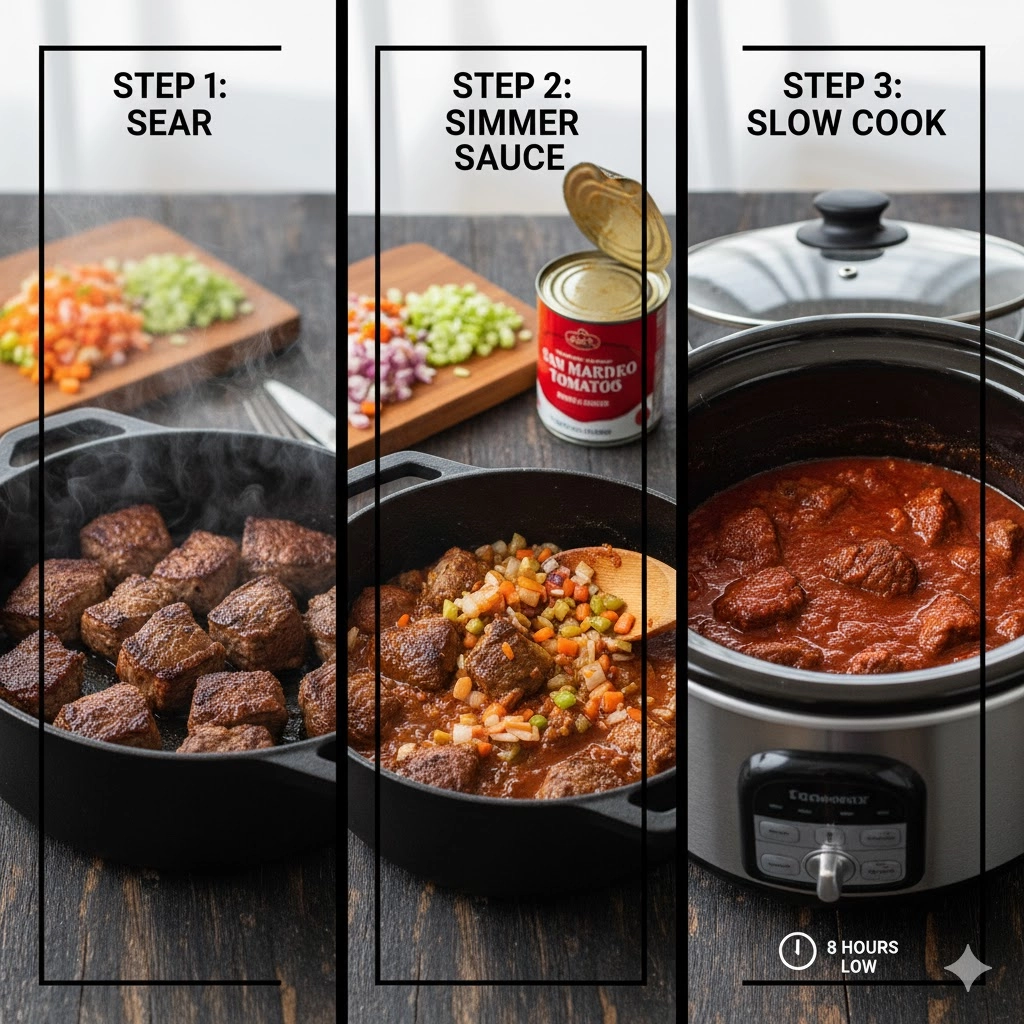
Building the Sauce: Layering the Flavor Base
Use the same pot to capitalize on the flavorful browned bits (fond) left by the beef.
- Add the diced onion, carrot, and celery (soffritto) to the pot. Cook over medium heat for 8–10 minutes, stirring occasionally until the vegetables are very soft and the onions are translucent. This is vital for depth of flavor.
- Add the minced garlic and tomato paste. Cook for 1 minute, stirring constantly until the tomato paste darkens slightly. This step caramelizes the tomato paste, intensifying its flavor.
- Add the beef broth and scrape up any browned bits on the bottom of the pot. This is known as deglazing and captures maximum flavor.
- Stir in the crushed tomatoes, oregano, basil, red pepper flakes (if using), and the bay leaf. Season with a pinch of salt and pepper.
Set-and-Forget: Slow Cooker Timings
Now, combine the seared beef chunks with the built sauce in the slow cooker.
| Slow Cooker Setting | Total Time | Beef Doneness |
| Low | 8 to 10 hours | Most tender and flavorful. |
| High | 4 to 5 hours | Faster cook, requires checking mid-way. |
Once cooked, remove the beef chunks from the slow cooker and shred them using two forks. Return the shredded beef to the sauce, stir well, and let it stand for 15–20 minutes to allow the meat to fully absorb the rich sauce.
Tested Variations and Smart Ingredient Swaps
Based on my experience adjusting flavors for different palates, a few simple tweaks can customize this dish perfectly.
Beyond Beef: Alternative Meats and Vegetarian Options
While the classic uses beef, you can easily substitute the main protein:
- Lamb Shoulder: Provides a distinctly rich, gamey flavor. Follow the same searing and cooking instructions.
- Chicken Thighs (Boneless, Skinless): Significantly reduces the cook time (aim for 3–4 hours on Low). The flavor is lighter, but still excellent.
- Vegetarian: Use a hearty combination of brown lentils, finely chopped mushrooms (like cremini or portobello), and eggplant pieces. Skip the searing and just sauté the vegetable mix until browned before adding the sauce.
Flavor Adjustments: Broth and Herbs
For a slightly richer flavor profile, you can swap out half a cup of the beef broth with half a cup of full-fat milk or heavy cream added in the last 30 minutes of cooking. The dairy adds a velvety texture and mellows the acidity of the tomatoes.
If you have them, swap dried herbs for fresh for maximum impact: use 1 tablespoon of fresh chopped rosemary and 2 tablespoons of fresh chopped basil and parsley, added near the end of the cooking process.
What to Serve with Your Rich Ragu
The pairing is just as important as the preparation. A thick, rich ragu requires a robust partner.
Pairing Perfection: Choosing the Right Pasta Shape
When considering what to serve with your rich Slow Cooker Italian Beef Ragu, the general rule is to match the heaviness of the sauce with a pasta shape that can handle it.
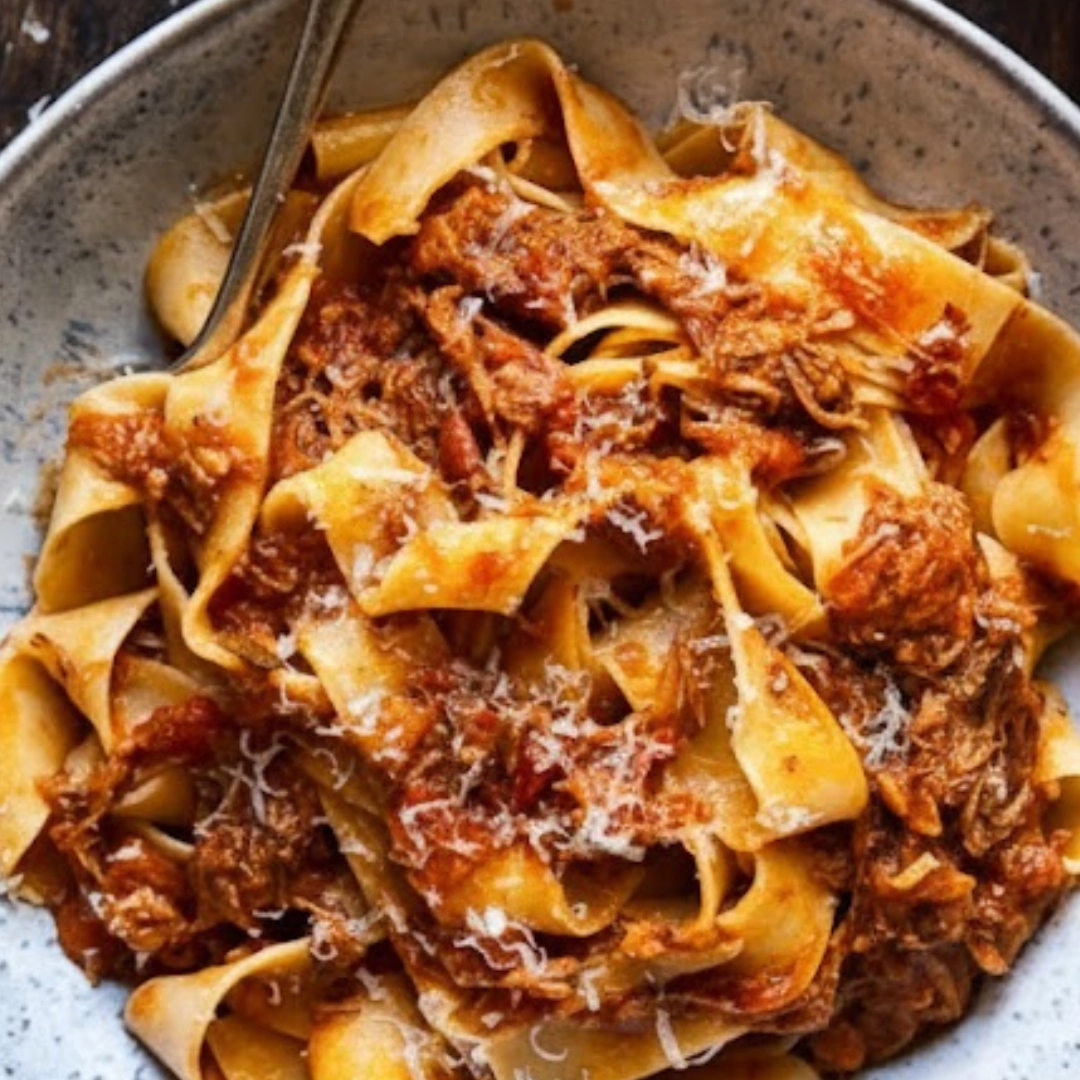
- Pappardelle: My personal favorite. These wide, flat egg noodles are perfect for catching the meaty sauce.
- Rigatoni or Paccheri: Tubular shapes that trap the shredded meat and sauce inside.
- Gnocchi or Polenta: For an alternative to traditional pasta, serving the ragu over soft, creamy polenta or potato gnocchi offers fantastic textural contrast. You can find excellent recipes for this, such as one for a Cowboy Butter Chicken Linguine, which is a great contrast to this heavy dish.with Anchor: Cowboy Butter Chicken Linguine)
Creative Serving Ideas (Beyond Pasta)
While pasta is traditional, this rich sauce elevates many other dishes:
- Toast Points or Bruschetta: Use the ragu as a savory topping for toasted crusty bread (like a savory spread).
- Layered Bakes: Use it as the base sauce for a rich, comforting lasagna or Baked Ziti.
- Cheesecake Dessert: After a heavy main course like this, your guests might appreciate something lighter for dessert, like a no-bake option.with Anchor: no-bake chocolate cheesecake)
Storage, Freezing, and Nutritional Snapshot
Proper handling ensures you can enjoy the fruits of your labor for days or weeks to come.
Safely Storing Leftovers
- Refrigeration: Store cooled ragu in an airtight container in the refrigerator for up to 4 days. The flavor often improves on the second day as the spices continue to meld.
- Freezing: Slow Cooker Italian Beef Ragu freezes exceptionally well. Cool completely, then transfer to freezer-safe bags or containers. It can be kept frozen for up to 3 months. Thaw overnight in the refrigerator before reheating gently on the stovetop. This is a great way to batch-cook for busy weeks! For a delicious make-ahead dessert idea, check out this chocolate rice cakes recipe.with Anchor: chocolate rice cakes recipe)
A Quick Look at the Nutritional Value
This content is for educational purposes only and does not replace professional dietary or medical advice.
While nutritional values vary based on the exact cut of beef and broth used, a typical serving of this hearty sauce (before adding pasta) is a good source of protein, iron, and fiber (from the vegetables). Using a leaner cut of beef will result in a lower fat count, but remember that fat carries flavor. This is a dish best enjoyed in moderation as part of a balanced diet.
Follow us in Pinterest.
Frequently Asked Questions (FAQs) About Slow Cooker Italian Beef Ragu
Can I use frozen beef in a slow cooker ragu?
While you can technically use frozen beef in a slow cooker, it is not recommended for food safety. The slow cooker will keep the meat in the “danger zone” (between 40°F and 140°F) for too long. Always thaw your beef completely in the refrigerator before adding it to the slow cooker to ensure the best results and safest cooking.
Why is my ragu too thin, and how do I fix it?
Ragu can sometimes be too thin if the tomatoes or broth had high water content. To fix a thin ragu, you have two options: 1) Remove the slow cooker lid for the last hour of cooking to allow some liquid to evaporate and thicken the sauce naturally. 2) Stir in a slurry of 1 tablespoon of cornstarch mixed with 2 tablespoons of cold water during the last 30 minutes of cooking.
What is the difference between Ragu and Bolognese?
Bolognese (Ragù alla Bolognese) is a specific type of ragu originating from Bologna. It traditionally uses a mix of beef and veal (or often just beef), less tomato, and often includes milk or cream, resulting in a lighter-colored, finer-textured sauce. General Italian ragu, like this recipe, is usually chunkier, richer, and tomato-forward, often featuring a single, large cut of beef.
Slow Cooker Italian Beef Ragu
Ingredients
- 3 lbs boneless beef chuck roast, cut into 2-inch chunks
- 1 medium yellow onion, finely diced
- 2 medium carrots, finely diced
- 2 stalks celery, finely diced
- 28 oz can crushed tomatoes
- 1 cup low-sodium beef broth
- 2 tbsp tomato paste
- 4 cloves garlic, minced
- 1 tsp dried oregano
- 1 tsp dried basil
- 0.5 tsp red pepper flakes (optional)
- 1 bay leaf
- to taste salt and freshly ground black pepper
- 2 tbsp olive oil (for searing)
Instructions
- Pat beef chunks dry and season with salt and pepper. In a large pot, heat olive oil over medium-high heat and sear beef in batches for 2–3 minutes per side until browned. Set aside.
- In the same pot, add diced onion, carrot, and celery. Sauté over medium heat for 8–10 minutes until softened and translucent.
- Add minced garlic and tomato paste. Cook for 1 minute, stirring constantly until the paste darkens slightly.
- Pour in beef broth and deglaze the pot by scraping up browned bits. Stir in crushed tomatoes, oregano, basil, red pepper flakes, and bay leaf. Season with salt and pepper.
- Transfer seared beef and sauce to the slow cooker. Cover and cook on Low for 8–10 hours or on High for 4–5 hours until beef is tender and shreddable.
- Remove cooked beef, shred with two forks, then return to the sauce. Stir and let it rest for 15–20 minutes before serving.
Notes
Equipment
- slow cooker
- large Dutch oven or pot
- wooden spoon
- cutting board and knife
- measuring cups and spoons