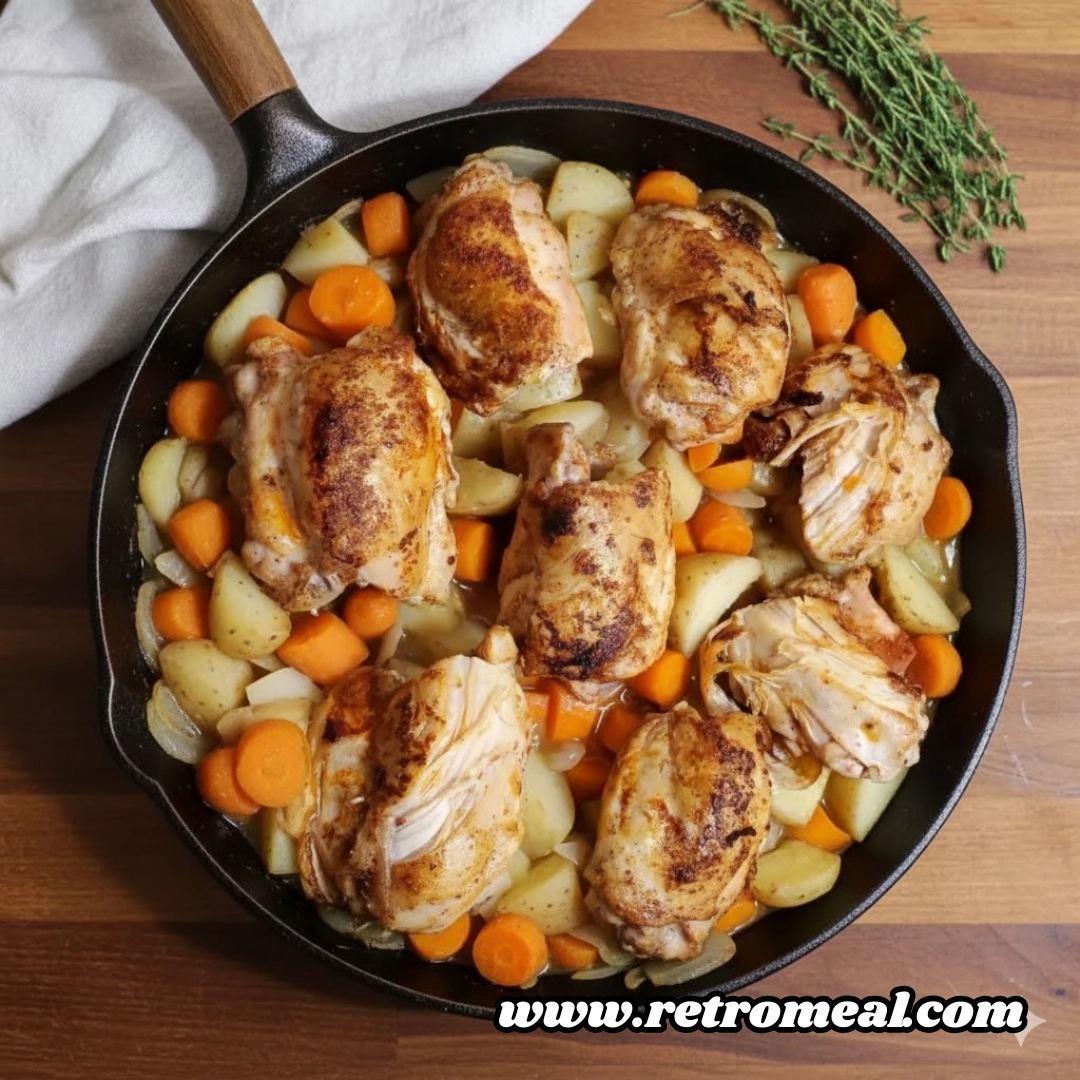
There is something inherently comforting about a meal that comes together in a single heavy skillet. It evokes images of farmhouse kitchens and slow Sunday afternoons, yet it is practical enough for the busiest Tuesday night. This Skillet Chicken Thighs with Carrots and Potatoes recipe is the epitome of efficient, flavor-first cooking. By utilizing the natural fats rendered from the chicken to sear the vegetables, we create a depth of flavor that a standard baking sheet simply cannot achieve. In this comprehensive guide, we will explore the nuances of achieving the perfect sear, the science of the cornstarch slurry, and the reason why bone-in thighs remain the undisputed champion of the skillet dinner.
Table of Contents
The Essential Ingredients List
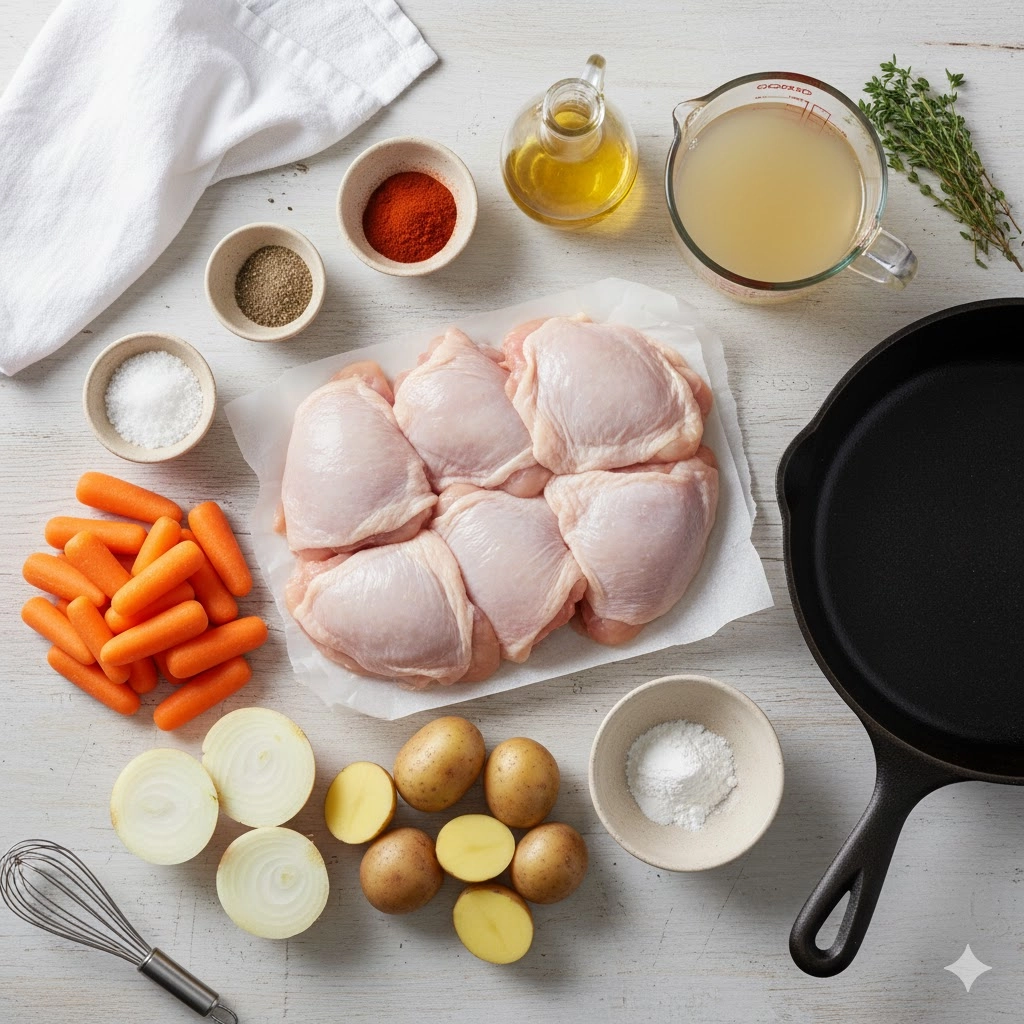
To ensure success, gather these specific components. The beauty of this dish lies in its simplicity, so the quality of your poultry and the freshness of your root vegetables will shine through.
- 1 pound bone-in chicken thighs
- 1 1/2 teaspoons paprika
- 1 1/2 teaspoons salt, or more to taste
- 1 teaspoon ground black pepper, or more to taste
- 2 tablespoons vegetable oil
- 3/4 pound baby carrots
- 1/2 pound baby potatoes, halved
- 1/2 onion, sliced
- 1 cup chicken broth, divided
- 1 tablespoon cornstarch
Detailed Preparation Instructions
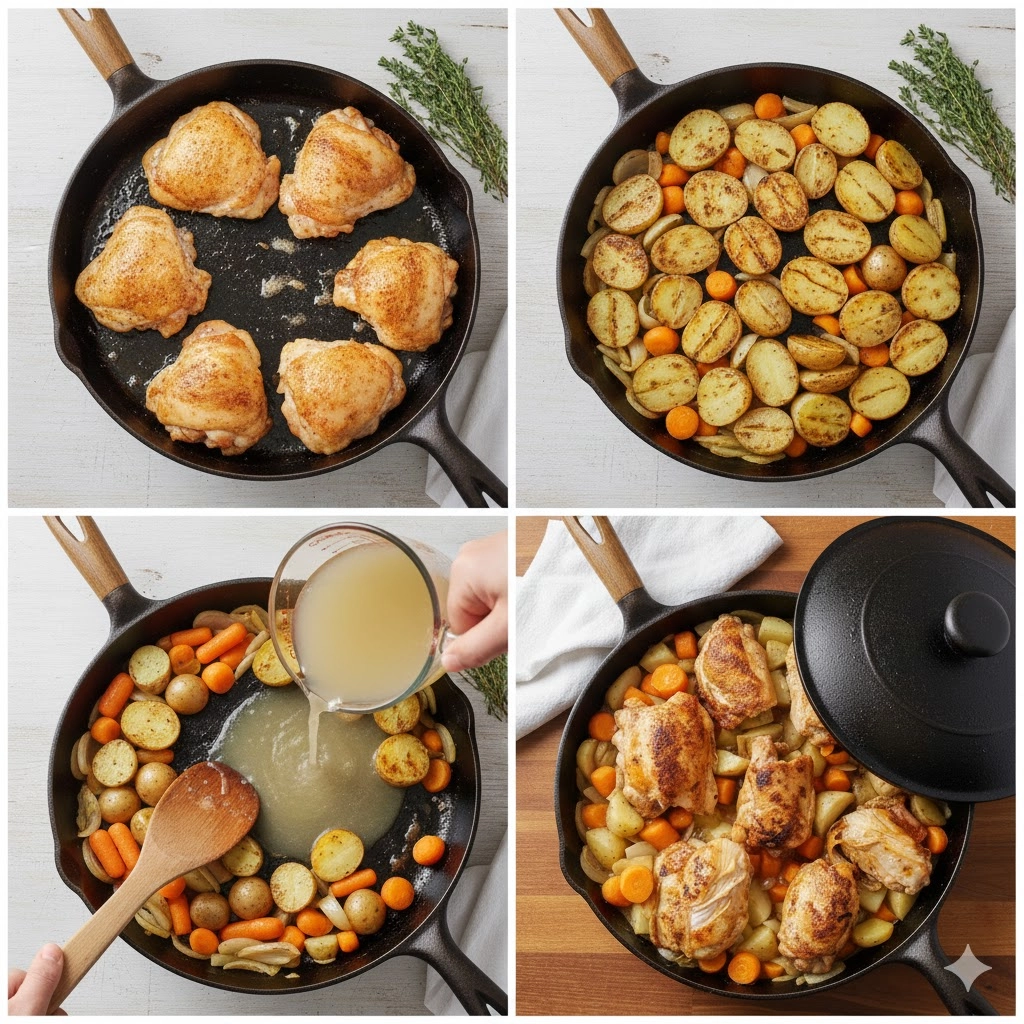
- Begin by preparing your protein. Season the chicken thighs thoroughly on all sides with the paprika, salt, and black pepper. Ensure the seasoning is rubbed into the skin for maximum flavor penetration.
- In a large skillet, heat the vegetable oil over medium-high heat. Once the oil is shimmering, place the chicken thighs into the pan skin-side down. It is vital to let them cook without moving them for 7 to 9 minutes to develop a deep, golden-brown crust. Flip the thighs and cook the other side for an additional 3 to 5 minutes. Remove the chicken from the skillet and set it aside on a plate.
- Using the remaining fat in the skillet, add the halved potatoes, cut side down. Cook over medium-high heat for 3 to 5 minutes until the surfaces are beautifully browned. Introduce the baby carrots and sliced onions to the pan. Sauté these together for 8 to 10 minutes, or until the onions have become soft and translucent.
- Pour 3/4 cup of the chicken broth into the skillet. Use a wooden spoon to scrape the bottom of the pan, loosening all the browned bits (the fond) which contain immense flavor.
- In a small bowl, whisk together the remaining 1/4 cup of chicken broth and the tablespoon of cornstarch until smooth. Pour this slurry into the skillet and stir constantly until the liquid begins to thicken and combine with the vegetable juices.
- Return the chicken thighs to the skillet, nesting them on top of the bed of vegetables. Cover the pan with a tight-fitting lid. Lower the heat slightly and cook for 25 to 30 minutes. The dish is ready when the carrots are tender, the chicken is no longer pink at the bone, and an instant-read thermometer registers 165 degrees Fahrenheit. Season with extra salt and pepper if desired before serving.
Comprehensive Step-by-Step Details and Culinary Science
The journey to a perfect skillet meal begins with the “Maillard reaction.” When you place those paprika-rubbed chicken thighs skin-side down into the hot vegetable oil, you aren’t just cooking meat; you are creating a complex profile of flavors. The 7 to 9 minutes of undisturbed searing time allows the proteins and sugars to transform into a savory, crispy crust. If you move the chicken too early, it will tear and steam rather than fry. This patience is what separates a mediocre home cook from a culinary enthusiast.
Once the chicken is removed, the skillet is a goldmine of rendered chicken fat and toasted spices. We capitalize on this by searing the potatoes “cut side down.” This creates a starchy, crispy seal on the potato that prevents it from becoming mushy during the later braising stage. As the baby carrots and onions join the mix, the onions act as a natural deglazer, releasing moisture that begins to lift the flavorful “fond” from the bottom of the pan.
The introduction of the chicken broth and cornstarch slurry is the final technical hurdle. By dividing the broth, we ensure the cornstarch is dissolved in a cool liquid first; adding cornstarch directly to a boiling skillet would result in unsightly lumps. This slurry transforms the thin broth into a silky, velvet-like gravy that coats the carrots and potatoes, ensuring every bite is moist and seasoned. The final 25 to 30 minutes of covered cooking is a gentle braise, where the steam trapped under the lid finishes the chicken perfectly while the carrots absorb the essence of the poultry and paprika.
Achieving the Ultimate Savory Consistency
To truly elevate this dish, focus on the texture of your vegetables. Baby potatoes are ideal because their skins are thin enough to remain tender without peeling, yet they hold their shape under heat. If you find your sauce is thickening too quickly before the chicken reaches 165 degrees Fahrenheit, you can add a splash of water or extra broth to maintain the consistency.
Another tip for success is the size of your chicken. Smaller bone-in thighs are preferable as they cook through at a rate that matches the softening of the carrots. If you use exceptionally large thighs, you may need to slice your potatoes into quarters instead of halves to ensure everything finishes at the same moment. The goal is a harmonious finish where the chicken is succulent and the vegetables are “fork-tender”—meaning a fork slides in with zero resistance but the vegetable doesn’t fall apart.
Necessary Modifications and Substitutions
While the original recipe is a masterpiece of balance, kitchen reality often requires flexibility. If you do not have baby carrots, you can use large whole carrots; simply peel them and slice them into thick rounds or batons roughly the size of a finger to ensure even cooking. For the potatoes, Yukon Gold or Red Bliss varieties are the best substitutes for baby potatoes due to their waxy texture and ability to withstand braising.
If you are looking to adjust the flavor profile without changing the technique, consider the broth. While chicken broth is standard, a vegetable broth can work in a pinch, though it will lack the deep richness of the poultry base. For those who prefer a bit more heat, a pinch of cayenne pepper added to the paprika rub can provide a subtle glow to the dish. If you find yourself without cornstarch, a teaspoon of all-purpose flour can be whisked into the oil before adding the broth, though the resulting sauce will be more opaque and less glossy than the cornstarch version.
Ideal Accompaniments and Serving Suggestions
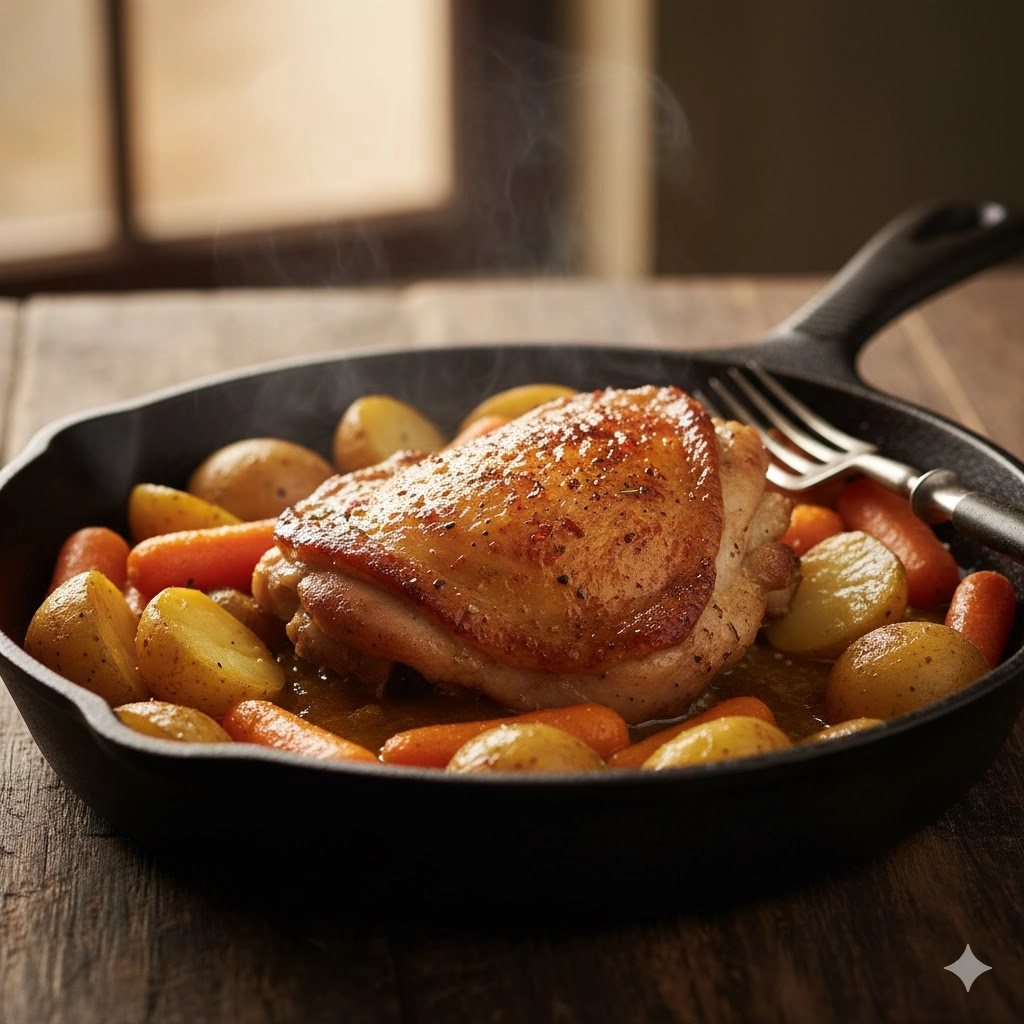
This skillet meal is designed to be a “complete” dinner, but the right sides can turn it into a feast. A crisp side salad featuring bitter greens like arugula or radicchio provides a necessary acidic contrast to the rich, savory chicken fat and starch of the potatoes. A simple lemon vinaigrette is the perfect dressing to cut through the heartiness of the dish.
Crusty bread is almost mandatory here. The cornstarch-thickened sauce in the bottom of the skillet is essentially a pan-gravy that begs to be mopped up. A warm baguette or a slice of sourdough can ensure that not a single drop of the paprika-infused broth goes to waste. When serving, ensure you spoon a generous portion of the carrots, onions, and sauce over the chicken thighs to keep the meat moist as it hits the plate.
Deep-Dive Culinary FAQ
Why is it important to use bone-in chicken thighs instead of boneless?
Bone-in thighs are essential for this specific cooking method because the bone acts as a heat conductor, helping the meat cook more evenly from the inside out while also contributing flavor to the surrounding sauce. Additionally, the presence of the bone and skin protects the meat from drying out during the 30-minute simmering process, resulting in a much juicier final product than boneless-skinless alternatives.
What should I do if my chicken skin isn’t crispy after the initial sear?
If the skin is pale after 7 minutes, your heat may be too low, or there may be too much moisture in the pan. Always pat your chicken thighs bone-dry with paper towels before applying the seasoning rub. Moisture is the enemy of a good sear; if the skin is wet, it will steam rather than fry. Ensure the oil is shimmering and almost at the smoking point before adding the meat.
Can I use frozen carrots or potatoes for this recipe?
It is highly recommended to use fresh vegetables for this skillet preparation. Frozen vegetables release a significant amount of water as they thaw, which would thin out your sauce excessively and prevent the potatoes from achieving that vital golden-brown sear. Fresh baby carrots and potatoes provide a structural integrity and natural sweetness that frozen versions simply cannot replicate in a braise.
How do I know when the onions are perfectly “translucent”?
Translucent onions have lost their opaque white color and sharp bite, becoming slightly see-through and sweet. In this recipe, this usually takes about 8 to 10 minutes over medium heat. You are looking for a soft texture and a slight golden hue from the chicken drippings, which indicates the natural sugars have begun to caramelize, providing a flavor base for the sauce.
A Final Note on This Skillet Masterpiece
This Skillet Chicken Thighs with Carrots and Potatoes represents the heart of home cooking—simple ingredients transformed through technique into something extraordinary. By mastering the sear and the simmer, you create a meal that is both nourishing and deeply satisfying. Whether you are cooking for a small family or simply looking for a reliable meal-prep option that tastes even better the next day, this recipe is a cornerstone of the modern kitchen. Enjoy the process of browning the chicken and the aroma of the simmering broth; after all, the joy of cooking is found as much in the skillet as it is at the table.
Nutritional Information and Disclaimer
| Nutrient | Amount Per Serving |
| Calories | 350 |
| Total Fat | 19 grams |
| Carbohydrates | 22 grams |
| Protein | 22 grams |
| Cholesterol | 95 milligrams |
| Sodium | 980 milligrams |
Nutritional Disclaimer
The nutritional values provided are estimates based on standard ingredient measurements. Actual nutritional content may vary depending on the specific brands of chicken broth used, the size of the chicken thighs, and any additional seasonings added to taste. Always consult with a healthcare professional for specific dietary needs or restrictions.
Skillet Chicken Thighs with Carrots and Potatoes
Ingredients
- 1 pound bone-in chicken thighs
- 1.5 teaspoons paprika
- 1.5 teaspoons salt, or more to taste
- 1 teaspoon ground black pepper, or more to taste
- 2 tablespoons vegetable oil
- 0.75 pound baby carrots
- 0.5 pound baby potatoes, halved
- 0.5 unit onion, sliced
- 1 cup chicken broth, divided
- 1 tablespoon cornstarch
Instructions
- Season chicken thighs thoroughly with paprika, salt, and pepper on all sides.
- Heat oil in a skillet over medium-high heat. Place chicken thighs skin-side down and cook undisturbed until golden brown, about 7 to 9 minutes. Flip and cook for 3 to 5 minutes more. Remove and set aside.
- Add potatoes to the skillet, cut-side down, and cook over medium-high heat until golden brown, 3 to 5 minutes.
- Add carrots and onions to the pan. Cook until the onions are soft and translucent, roughly 8 to 10 minutes.
- Stir in 3/4 cup of the chicken broth, making sure to scrape up the browned bits from the bottom of the skillet.
- Whisk the cornstarch into the remaining 1/4 cup chicken broth to create a slurry. Pour into the skillet and stir until well combined.
- Place the chicken thighs back over the vegetables. Cover with a lid and cook until carrots are tender and chicken reaches an internal temperature of 165 degrees Fahrenheit (74 degrees Celsius), about 25 to 30 minutes.
- Adjust seasoning with additional salt and pepper if needed and serve warm.
Notes
Equipment
- large skillet with lid
- Instant-read thermometer
- whisk
- wooden spoon
- tongs