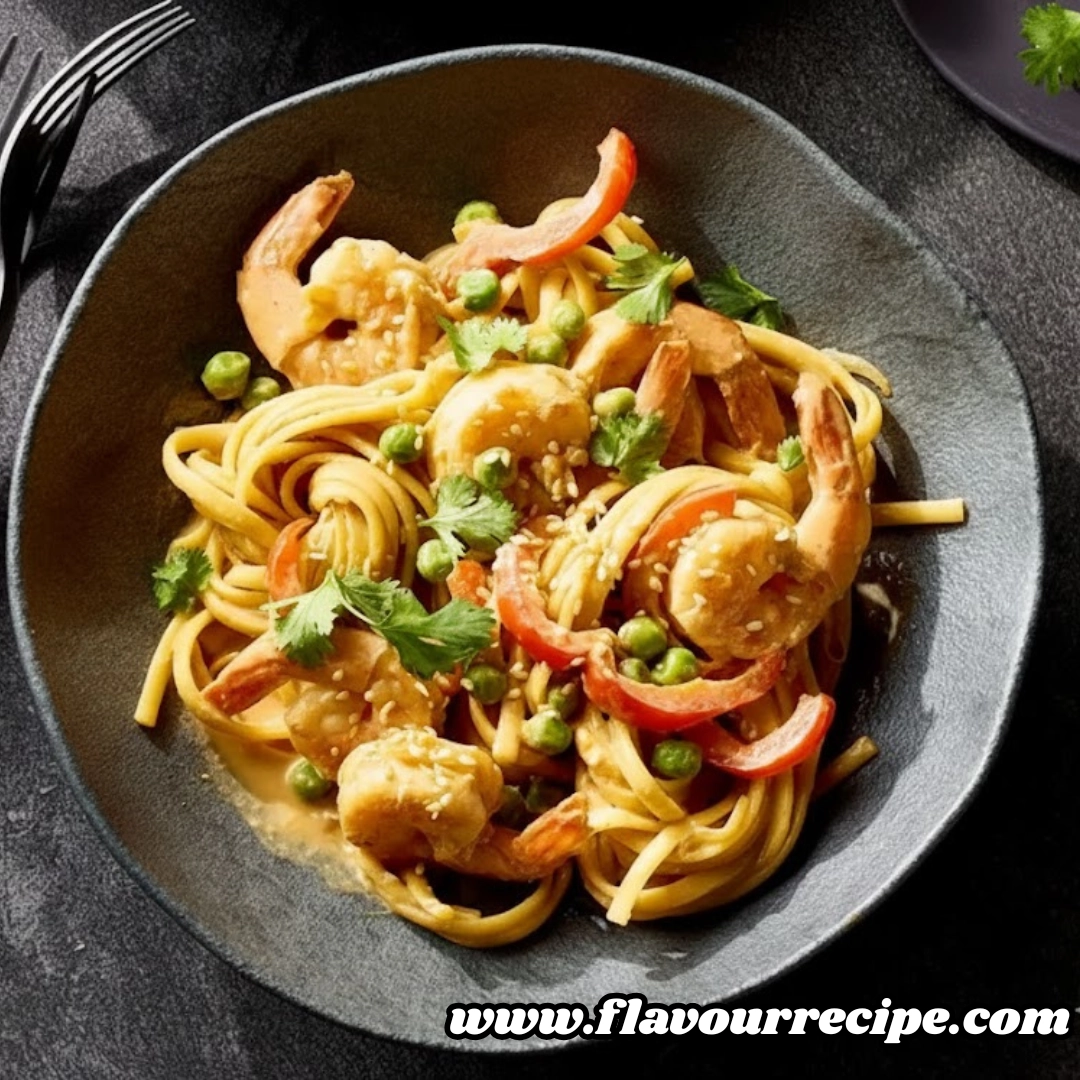
Achieving a restaurant-quality meal at home often comes down to the balance of acidity, heat, and fat. This Shrimp Stir-Fry Noodles with Peanut Sauce delivers that equilibrium by pairing succulent seafood with a velvety, nutty dressing that clings to every strand of pasta. While traditional stir-fry often relies on specialized pantry staples, this version utilizes accessible ingredients to create a complex profile of ginger and citrus. It serves as an excellent solution for those evenings when you require a high-protein, vegetable-forward dinner that transitions from the cutting board to the table in under thirty minutes.
Table of Contents
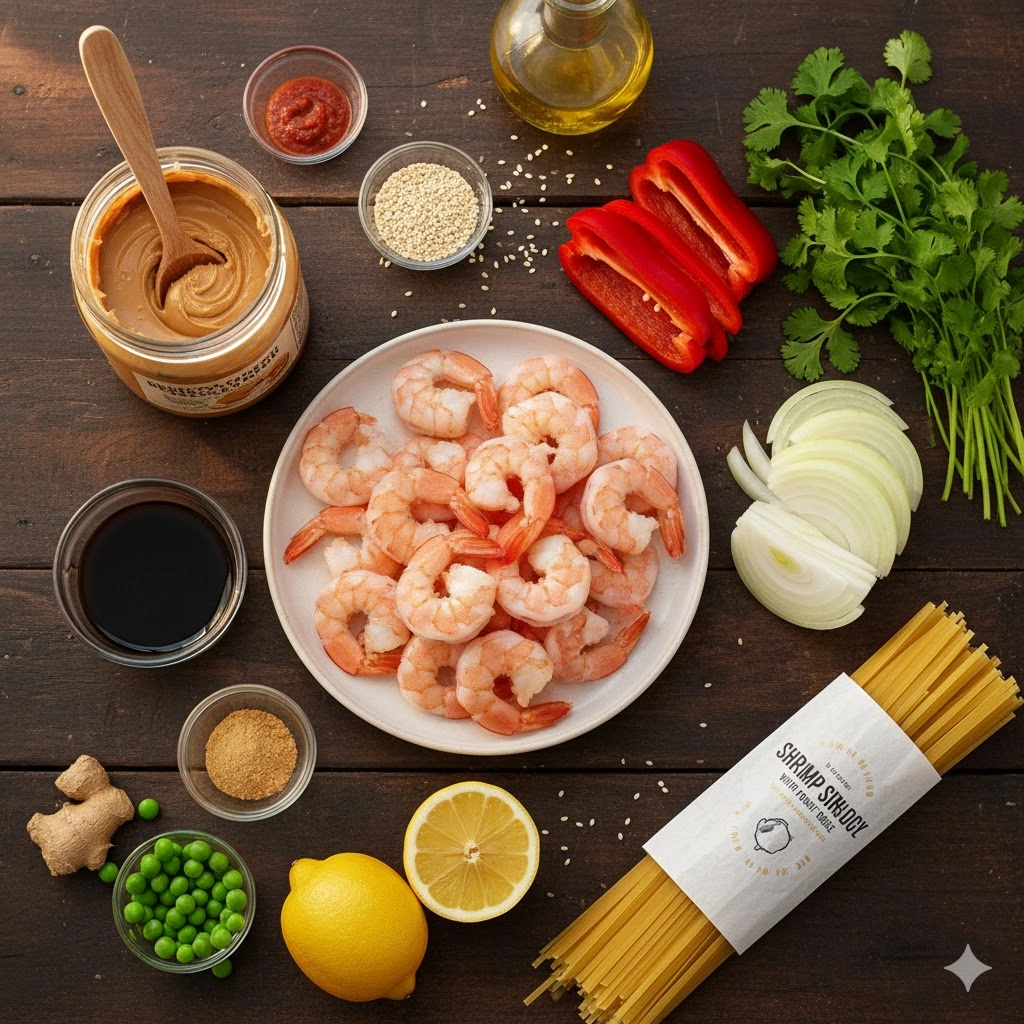
Ingredients
For the Peanut Base
- one half cup creamy peanut butter
- two tablespoons less-sodium soy sauce
- two tablespoons pure maple syrup
- two tablespoons fresh lemon juice
- two teaspoons Sriracha sauce
- one teaspoon ground ginger
For the Stir-Fry
- eight ounces linguine pasta (or thick rice noodles)
- one tablespoon vegetable oil (or grapeseed oil)
- one large yellow onion, sliced into thin wedges
- one large red bell pepper, cut into bite-sized strips
- one pound large shrimp, peeled and deveined (thawed if frozen)
- one cup frozen sweet peas
- one half cup reserved pasta cooking water
For Garnish
- Fresh cilantro leaves, chopped
- Toasted sesame seeds
- Additional lemon wedges
Instructions
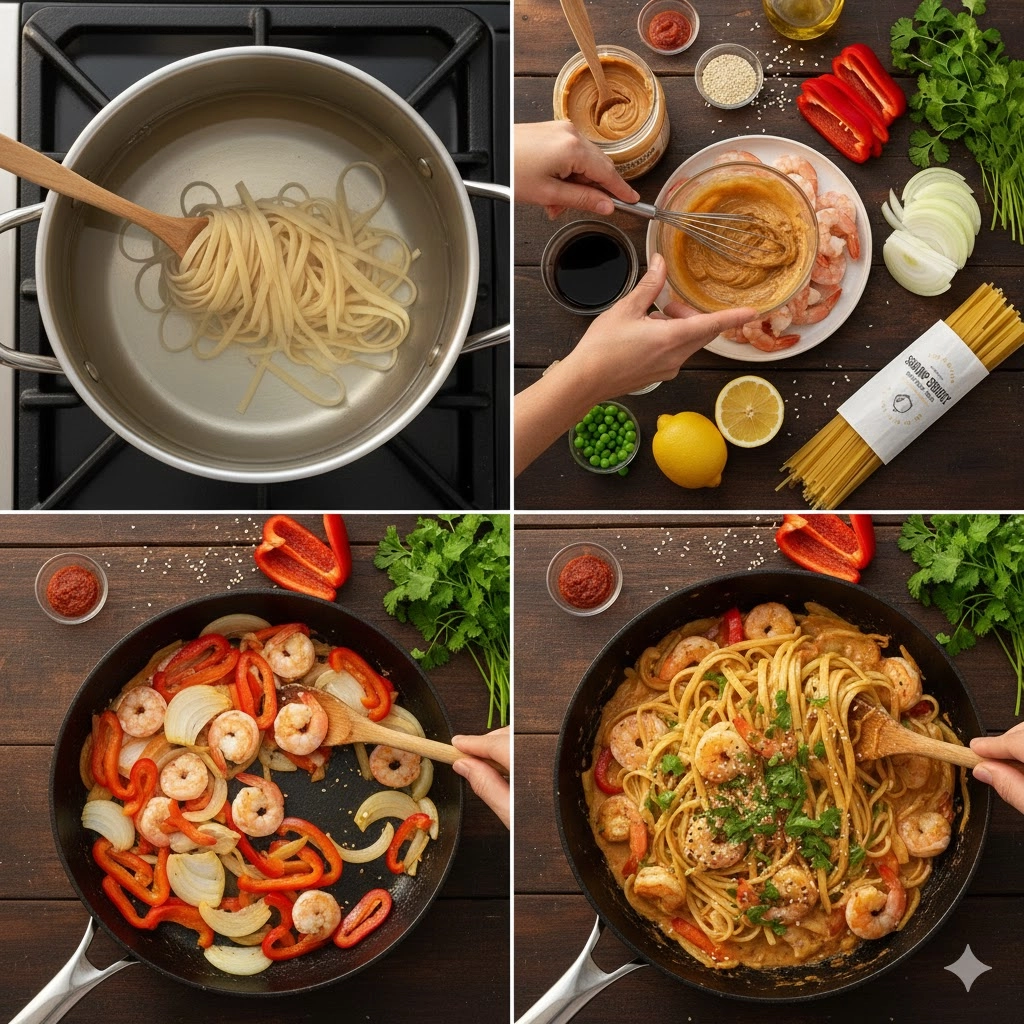
- Bring a large pot of salted water to a rolling boil and cook the linguine for nine to eleven minutes until al dente.
- Reserve exactly one half cup of the starchy pasta water before draining the noodles into a colander.
- In a small mixing bowl, whisk together the peanut butter, soy sauce, maple syrup, lemon juice, Sriracha, ginger, and two tablespoons of the reserved water.
- Place a large skillet or wok over medium-high heat and add the vegetable oil, swirling to coat the surface.
- Sauté the onion wedges and red bell pepper strips for four minutes until the edges are slightly charred but the vegetables remain crisp.
- Incorporate the shrimp and frozen peas into the skillet, tossing frequently for three to four minutes until the shrimp turns opaque and pink.
- Lower the heat to medium and add the cooked pasta along with the prepared peanut sauce.
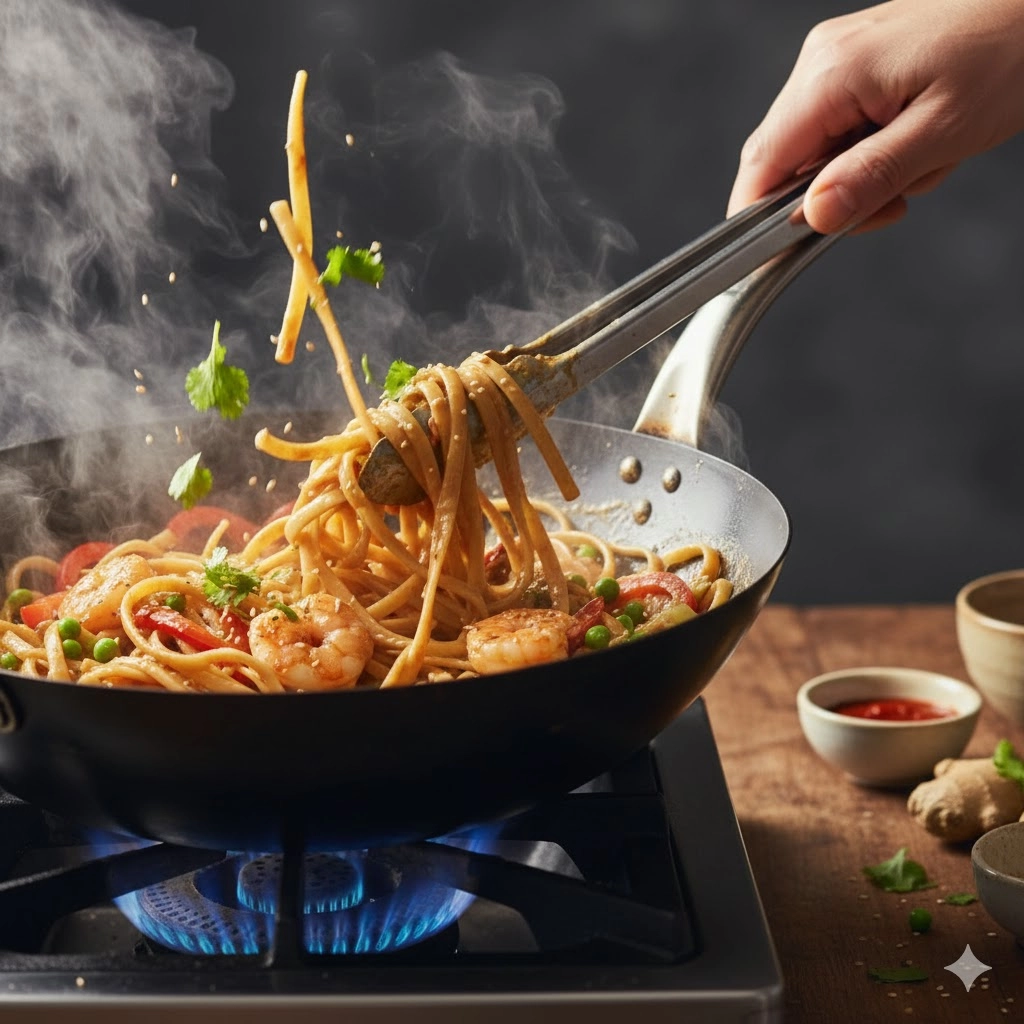
- Toss the mixture thoroughly using tongs, adding the remaining pasta water one tablespoon at a time until the sauce is glossy.
- Remove from heat once the noodles are fully coated and steaming.
- Plate immediately and finish with cilantro, sesame seeds, and an extra squeeze of lemon.
Technical Execution and Sensory Cues
Understanding the nuances of high-heat cooking is essential for this Shrimp Stir-Fry Noodles with Peanut Sauce. When you begin with the aromatics, the onion should provide a sharp, pungent scent that gradually sweetens as it hits the hot oil. You are looking for a “blistered” appearance on the bell peppers; this indicates the natural sugars are caramelizing without the vegetable losing its structural integrity.
When adding the shrimp, observe the color transition carefully. They will move from a translucent grey to a matte, pearly white with pink accents. Avoid overcooking, as shrimp can become rubbery in a matter of seconds once they reach an internal temperature of one hundred forty five Fahrenheit. The “C” shape is your visual cue for perfect doneness; if they tightly curl into an “O,” they have likely been on the heat too long.
The emulsion of the sauce is the final critical step. Peanut butter contains a high amount of fat which can “seize” or become grainy if it hits a dry pan. This is why the reserved starchy water is vital. The starch acts as a bridge between the oil in the peanut butter and the moisture in the vegetables, creating a silk-like coating rather than a thick paste.
Pro Tips for Success
- Temperature of Ingredients: Ensure your shrimp are patted completely dry with paper towels before hitting the pan. Excess moisture causes the shrimp to steam rather than sear, preventing that desirable golden crust.
- The “Pasta Water” Secret: Do not skip reserving the cooking water. The salinity and starch in that liquid are the primary tools used to adjust the viscosity of your sauce without diluting the flavor.
- Peanut Butter Choice: While natural peanut butters (the kind you stir) offer great flavor, standard creamy commercial brands provide a smoother, more stable emulsion for this specific sauce.
- Knife Skills: Slice your onions and peppers into uniform sizes. This ensures that every piece of vegetable reaches the same level of tenderness at the same time.
- Acid Adjustment: If the sauce feels too heavy or “flat” after mixing, add a teaspoon of rice vinegar or extra lemon juice. Acidity cuts through the density of the peanut fats.
- Wok Management: If using a standard stovetop, do not overcrowd the pan. If your skillet isn’t large enough, cook the shrimp in two batches to maintain a high searing temperature.
Variations and Substitutions
- Protein Swaps: This recipe works exceptionally well with thinly sliced chicken breast or firm tofu cubes. If using tofu, press it for twenty minutes prior to cooking to ensure it crisps up in the oil.
- Nut-Free Alternative: For those with allergies, sunflower seed butter or tahini can be substituted for peanut butter at a one-to-one ratio, though the flavor profile will shift toward a more earthy, toasted note.
- Grain Options: While linguine is a fantastic pantry-friendly substitute, wide rice noodles (Pad See Ew style) or even whole wheat spaghetti provide excellent surface area for the sauce to cling to.
- Vegetable Variations: Snap peas, broccoli florets, or shredded carrots are excellent additions. Ensure any “hard” vegetables like broccoli are added at the same time as the onions to allow for enough softening.
Serving Suggestions
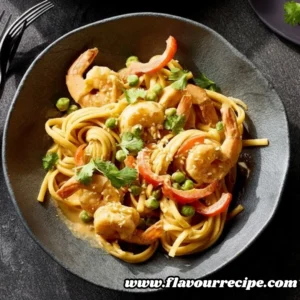
For a formal presentation, serve the noodles in wide, shallow bowls to allow the steam to escape, preventing the noodles from becoming mushy. A side of smashed cucumber salad with rice vinegar and chili flakes provides a cooling contrast to the richness of the peanut sauce.
If you prefer more heat, provide a small dish of chili crunch or extra Sriracha on the side. For a beverage pairing, a crisp Riesling or a citrus-heavy pale ale complements the ginger and lemon notes beautifully. This dish also keeps remarkably well for lunch the following day; simply add a splash of water before reheating to loosen the sauce.
FAQs
Can I use crunchy peanut butter instead of creamy?
Yes, crunchy peanut butter adds a pleasant texture to the dish. You may find you need an extra tablespoon of pasta water to help the thicker pieces distribute evenly across the noodles.
How do I store and reheat leftovers?
Store leftovers in an airtight container for up to three days. When reheating, use a microwave or stovetop and add a small amount of liquid—water or chicken broth—to restore the creamy consistency of the sauce.
Is there a gluten-free version of this recipe?
To make this gluten-free, substitute the linguine for rice noodles and ensure you use tamari or coconut aminos in place of the soy sauce. Always verify that your Sriracha brand is certified gluten-free.
Can I make the sauce ahead of time?
Absolutely. You can whisk the peanut sauce components together up to forty-eight hours in advance. Keep it refrigerated and bring it to room temperature before adding it to the skillet to ensure it integrates smoothly.
Nutrition Information
| Nutrient | Amount per Serving |
| Calories | 535 kcal |
| Protein | 40 g |
| Carbs | 46 g |
| Fat | 22 g |
| Fiber | 6 g |
| Sugar | 13 g |
| Sodium | 1875 mg |
Nutrition Information Disclaimer
Nutrition information is an estimate and may vary based on preparation and ingredients used.
Shrimp Stir-Fry Noodles with Peanut Sauce
Ingredients
- 8 ounces linguine pasta
- 0.5 cup creamy peanut butter
- 2 tbsp less-sodium soy sauce
- 2 tbsp pure maple syrup
- 2 tbsp lemon juice
- 2 tsp Sriracha
- 1 tsp ground ginger
- 1 tbsp vegetable oil
- 1 yellow onion, cut into thin wedges
- 1 red bell pepper, cut into bite-sized strips
- 1 pound large shrimp, peeled and deveined
- 1 cup frozen sweet peas
- 2 tbsp fresh cilantro, chopped for garnish
- 1 tsp toasted sesame seeds for garnish
Instructions
- Bring a large pot of salted water to a boil. Cook linguine for 9 to 11 minutes until al dente. Reserve 1/2 cup of the pasta water, then drain the noodles.
- In a small bowl, whisk together the peanut butter, soy sauce, maple syrup, lemon juice, Sriracha, ginger, and 2 tablespoons of the reserved pasta water until smooth.
- Heat oil in a large skillet or wok over medium-high heat. Add the onion wedges and bell pepper strips. Sauté for 4 minutes until slightly softened and blistered.
- Add the shrimp and frozen peas to the skillet. Cook, tossing frequently, for 3 to 4 minutes until the shrimp is opaque and pink.
- Add the drained pasta and the peanut sauce to the skillet. Toss thoroughly with tongs to coat.
- Gradually add the remaining reserved pasta water, one tablespoon at a time, until the sauce reaches a glossy, creamy consistency. Heat through for 1 minute.
- Garnish with fresh cilantro and toasted sesame seeds. Serve immediately with extra lemon wedges on the side.
Notes
Equipment
- large pot For boiling pasta
- large skillet or wok
- whisk
- tongs Best for tossing noodles in sauce
- colander