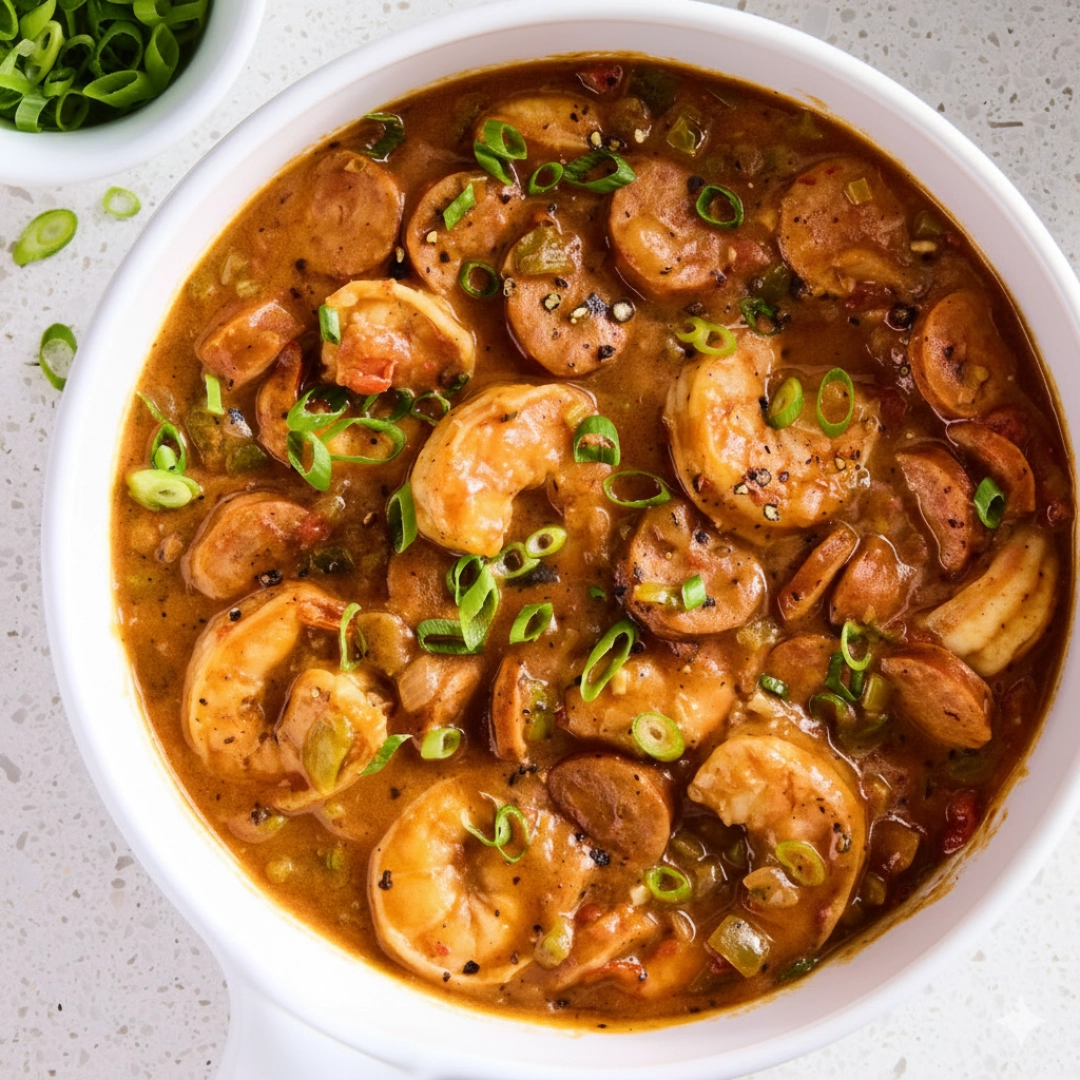
This recipe for Shrimp and Sausage Gumbo is an invitation to explore the heart of Louisiana cuisine. Gumbo, at its core, is a deeply satisfying, slow-cooked stew that showcases a rich, almost smoky foundation—the roux—built upon by layers of flavor from the “holy trinity” of celery, bell pepper, and onion. This particular version, featuring succulent shrimp and smoky andouille sausage, balances the sweetness of the seafood with the spicy, savory punch of the pork. It’s a celebratory dish, perfect for a gathering, or as a warming, substantial meal on a chilly evening, yet straightforward enough for an ambitious weekend cook.
The beauty of a truly authentic gumbo lies in the depth and complexity of its broth, achieved through patience and attention to detail, particularly during the critical roux-making stage. Served traditionally over a bed of fluffy white rice, this stew is much more than a meal—it’s a comforting, soulful experience that connects you directly to the vibrant culinary heritage of the South.
Table of Contents
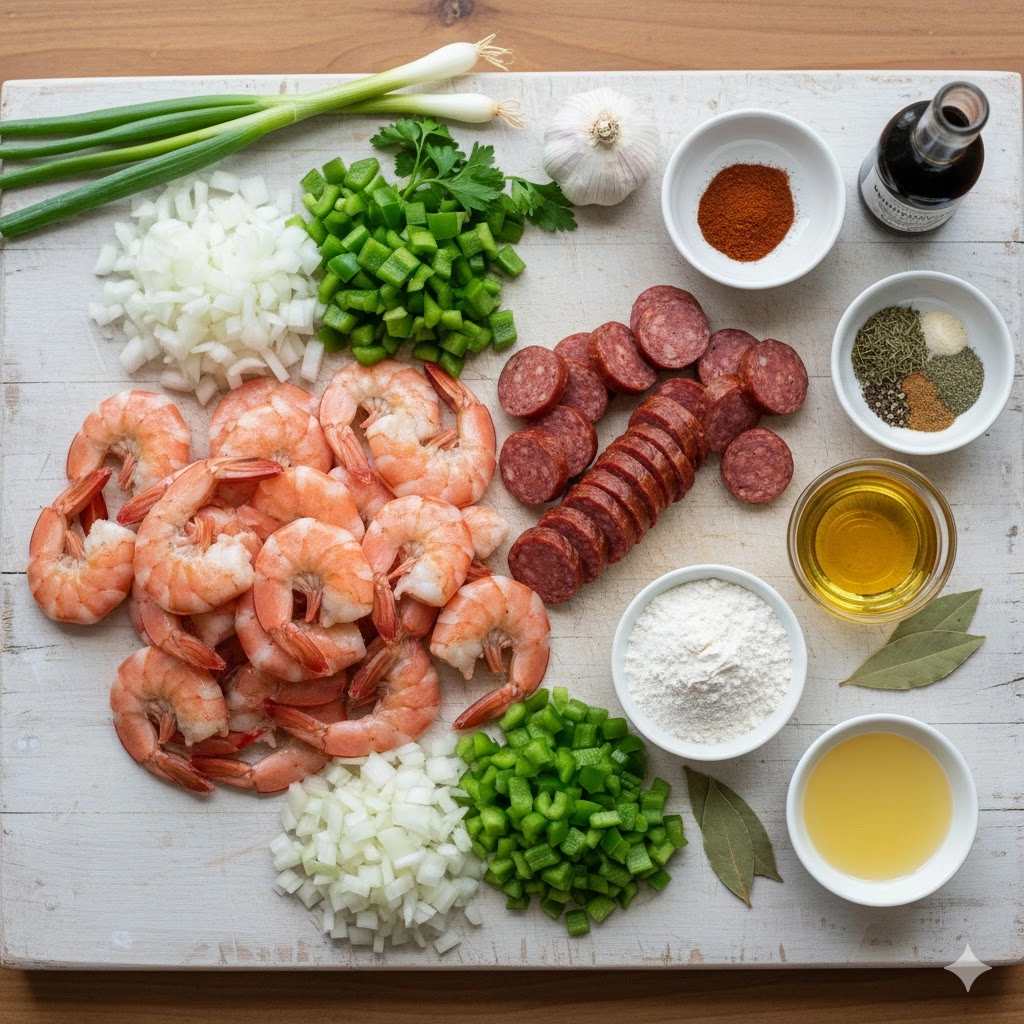
The Essential Components and Measurements
Achieving the proper balance in this classic dish requires precision in the foundational ingredients. The amounts listed below are designed to build the flavor base, texture, and heat that defines a great gumbo.
For the Roux and Base:
- One cup all-purpose flour
- Three-quarters cup vegetable oil or bacon drippings
- One large yellow onion, finely diced
- One large green bell pepper, finely diced
- Three stalks celery, finely diced
- Four cloves garlic, minced
- One teaspoon dried thyme
- One teaspoon dried oregano
- One teaspoon black pepper
- Half teaspoon cayenne pepper
- Two bay leaves
For the Broth and Proteins:
- Six cups chicken or seafood stock, low-sodium
- Two cups water (or remaining stock if you prefer a richer liquid)
- Fourteen ounces andouille sausage, sliced into half-inch rounds
- One and a half pounds raw shrimp, peeled and deveined (size 26/30 or larger)
- Two tablespoons Worcestershire sauce
- One tablespoon apple cider vinegar or lemon juice
- Salt to taste
For Serving:
- Cooked white rice
- Chopped fresh parsley or green onions (scallions)
A Foundational Outline for Preparation
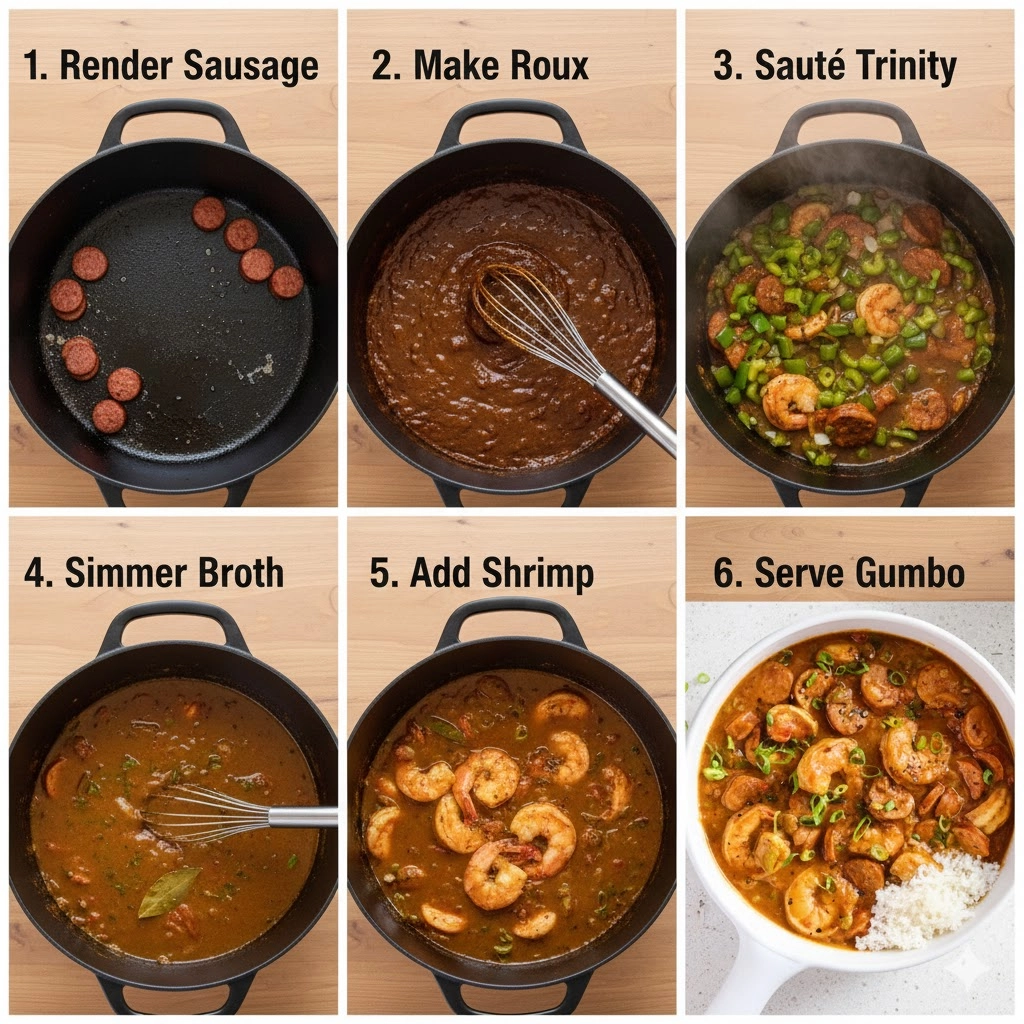
This recipe is best approached in stages, with the roux being the most important initial commitment. Do not rush this process.
- Prepare the Meats and Vegetables: Slice the sausage and dice the “holy trinity” (onion, pepper, celery). Set the shrimp aside for later.
- Render the Sausage and Reserve: Gently brown the andouille slices in a large Dutch oven or pot to release their fat and flavor. Remove the sausage, leaving the rendered fat in the pot.
- Construct the Roux: Whisk the flour into the hot fat until smooth. Cook over medium-low heat, stirring constantly, until the roux reaches a deep, mahogany brown, the color of milk chocolate.
- Sauté the Trinity: Add the diced onion, bell pepper, and celery to the roux, scraping the bottom of the pot. Cook until the vegetables soften and the onions become translucent.
- Build the Broth: Stir in the minced garlic, dried herbs, and black pepper. Cook for one minute. Slowly whisk in the stock and water until the mixture is smooth, then add the bay leaves, Worcestershire, and vinegar/lemon juice.
- Simmer and Thicken: Bring the liquid to a low boil, then reduce the heat immediately. Simmer, uncovered, for a minimum of one hour, or up to ninety minutes, stirring occasionally.
- Finish the Gumbo: Stir in the reserved sausage. Just before serving, add the shrimp and cook for three to five minutes, or until they curl and turn opaque pink.
- Season and Serve: Taste and adjust the salt and cayenne pepper as needed. Serve piping hot over white rice, garnished with fresh herbs.
Achieving Depth: Detailed Cooking Methodology
The magic of gumbo is in the slow, deliberate layering of flavors. Here is a closer look at the critical phases of cooking.
The Art of the Dark Roux
The roux is the soul of your gumbo. Use a heavy-bottomed pot, ideally cast iron or a sturdy Dutch oven. Combine the oil (or rendered fat) and flour and place it over medium-low heat. You must stir this constantly—every thirty to sixty seconds—to prevent scorching. If the roux burns, even slightly, it will taste bitter, and you must start over. The process takes anywhere from thirty to forty-five minutes. You are looking for a deep, nutty aroma and a color that is well past peanut butter and closer to a dark penny or milk chocolate. The darker the roux, the less thickening power it has, but the deeper the flavor it imparts. Once it hits that perfect color, proceed immediately to the next step.
Integrating the Trinity
Once the roux is dark, the temperature of the pot must be cooled slightly to prevent the roux from continuing to cook and potentially burning. Add the diced onion, celery, and bell pepper immediately. The moisture from the vegetables will stop the cooking process of the roux and release a fragrant steam. Stir and scrape the bottom of the pot to ensure all the flavorful roux is incorporated. Cook this mixture until the vegetables are tender, which usually takes about eight to ten minutes. The aroma here should be rich, savory, and intensely earthy.
The Long, Slow Simmer
When incorporating the liquid, pour in the stock and water slowly while constantly whisking. This prevents the roux from clumping. Bring the mixture to a low simmer, where you will see only a few gentle bubbles breaking the surface. This is the crucial stage where the gumbo develops its flavor and body. Simmering for at least one hour allows the starches in the roux to fully hydrate, the flavors of the spices and vegetables to meld, and the gumbo to thicken naturally. Do not cover the pot; allowing some steam to escape will aid in the concentration of flavor.
The Final Moments with Shrimp
The key to perfectly cooked shrimp is adding them at the very last minute. Shrimp cook extremely quickly, and overcooked shrimp become tough and rubbery. Increase the heat slightly to ensure the gumbo is actively simmering, then stir in the peeled and deveined shrimp. Watch them closely; as soon as they curl into a C-shape and turn uniformly opaque and pink, the dish is ready. This is usually three to five minutes, depending on the size of the shrimp.
Expert Recommendations for Flawless Results
These tips are gathered from years of mastering the subtleties of authentic Louisiana cookery and ensuring your Shrimp and Sausage Gumbo is truly memorable.
- Patience is Key to the Roux: Never try to rush the roux by raising the heat past medium-low. A slow and steady cook is the only way to achieve the deep color and rich, nutty flavor without scorching the flour. If you feel the roux is darkening too quickly, remove the pot from the heat briefly while continuing to stir.
- Use the Right Fat: While vegetable oil works fine, using rendered bacon fat or, ideally, lard or duck fat, will drastically enhance the overall depth and authenticity of the gumbo’s flavor profile.
- The Stock Quality: Use a high-quality, flavorful stock. Homemade seafood stock made from shrimp shells and fish bones is the gold standard, but a robust store-bought chicken stock will also provide an excellent foundation. Avoid thin, watery broth.
- Don’t Forget the Acid: The addition of a small amount of vinegar or lemon juice brightens the stew and balances the richness of the roux and the smokiness of the sausage. This small amount of acidity is a subtle but essential detail.
- Okra for Texture: If you prefer a slightly thicker, more traditional texture, you can add two cups of fresh or frozen (not thawed) sliced okra during the last thirty minutes of the long simmer. Okra acts as a natural thickener, known as a “binder.”
Realistic Substitutions and Flavor Enhancements
Gumbo is an adaptable stew, and many home cooks adjust it to their preference or what they have on hand. Feel free to explore these options for your version of Shrimp and Sausage Gumbo.
- Protein Swap: If andouille sausage is unavailable, use any high-quality smoked sausage, such as Kielbasa or linguica, but ensure it is smoky and sufficiently spicy to stand up to the rich roux. For the seafood component, large sea scallops or diced firm white fish (like cod or snapper) can be used alongside, or instead of, the shrimp.
- Vegetable Add-ins: Diced zucchini, mushrooms, or even a cup of canned, drained fire-roasted tomatoes can be added for extra vegetable content. Add the tomatoes in during the long simmer, and the heartier vegetables thirty minutes before the end.
- Spice Level Adjustment: For those who desire more heat, use one and a half or two teaspoons of cayenne pepper, or incorporate a minced jalapeño or serrano pepper when sautéing the trinity. Conversely, for a milder dish, reduce the cayenne to a quarter teaspoon or omit it completely.
- Gluten-Free Roux: A non-traditional but effective alternative for a gluten-free roux is to use a measure of cornstarch or potato starch mixed with water to make a slurry, adding it near the end of the cooking process to thicken the gumbo to your desired consistency.
Presentation and Practical Serving Suggestions
Gumbo is traditionally a one-bowl meal, but a few simple additions can elevate the experience and turn it into a memorable centerpiece for any gathering.
- Fluffy White Rice: The essential accompaniment is a generous scoop of hot, cooked long-grain white rice in the bottom of the bowl. The rice absorbs the flavorful broth and provides a textural contrast to the thick stew.
- A Crusty French Loaf: Serve slices of French bread or baguette alongside. The crusty bread is perfect for soaking up any remaining sauce, a practice that is almost mandatory when eating a great gumbo.
- A Simple Side Salad: A light, crisp green salad dressed with a simple vinaigrette offers a refreshing, acidic counterpoint to the deep, smoky richness of the gumbo.
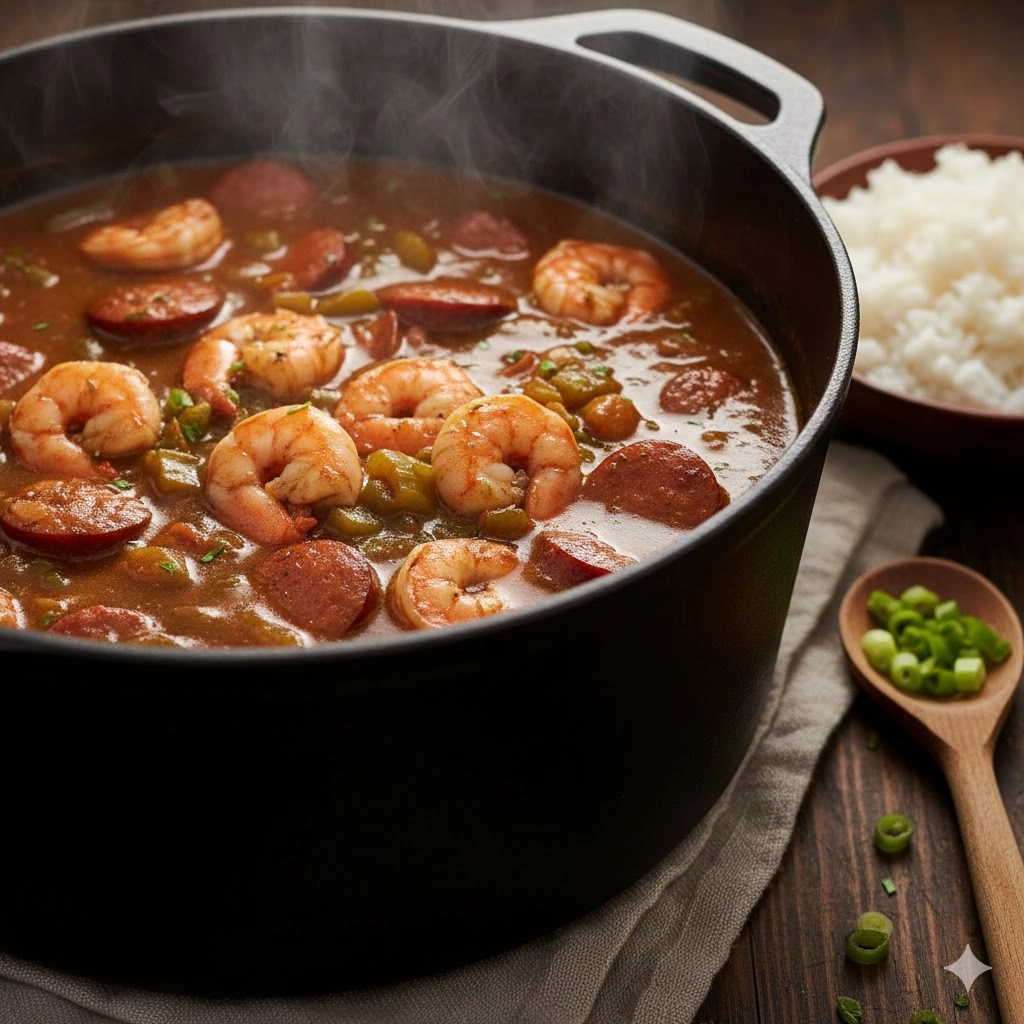
- Traditional Garnishes: Always finish the dish with a sprinkle of fresh, chopped green onion tops or parsley. This final burst of freshness adds color and a vibrant, herbaceous aroma that brightens the entire bowl.
Common Questions About Gumbo Preparation
A dish with as much history and technique as gumbo often inspires a few questions from first-time cooks and seasoned chefs alike.
Why is my gumbo too thin?
If your gumbo is too thin after the initial hour of simmering, it likely means your roux was not cooked dark enough (dark roux has less thickening power) or you added too much liquid relative to the roux. The easiest fix is to let the gumbo simmer uncovered for an additional thirty minutes, allowing more liquid to evaporate. Alternatively, you can use a small amount of file powder (ground sassafras leaves) stirred in at the very end to thicken it.
Can I make gumbo ahead of time?
Absolutely. Gumbo is one of those stews that improves the day after it is made, allowing the flavors to truly marry. Prepare the entire dish, leaving out the shrimp. Store the cooled gumbo in the refrigerator for up to three days. When ready to serve, bring the gumbo back to a simmer on the stovetop and then add and cook the shrimp right before serving.
What is the difference between gumbo and jambalaya?
Gumbo is a thick, soupy stew, similar to a bisque or hearty soup, served over rice. Jambalaya is a rice dish where the rice is cooked in the pot with the broth, vegetables, and meat, resulting in a drier, cohesive pilaf-like meal. Gumbo requires a roux; jambalaya does not.
How do I store leftovers?
Leftover gumbo, without the shrimp, can be stored in an airtight container in the refrigerator for three to four days or frozen for up to three months. If freezing, make sure the container is freezer-safe and leave a small amount of headspace to account for expansion.
Nutrition Information
| Nutrient | Amount per Serving |
| Calories | 580 kcal |
| Protein | 45 g |
| Carbs | 48 g |
| Fat | 25 g |
| Fiber | 5 g |
| Sugar | 6 g |
| Sodium | 680 mg |
Disclaimer
Nutrition information is an estimate and may vary based on preparation and ingredients used.
Shrimp and Sausage Gumbo
Ingredients
- 1 cup all-purpose flour
- 0.75 cup vegetable oil or bacon drippings
- 1 large yellow onion, finely diced
- 1 large green bell pepper, finely diced
- 3 stalks celery, finely diced
- 4 cloves garlic, minced
- 1 tsp dried thyme
- 1 tsp dried oregano
- 1 tsp black pepper
- 0.5 tsp cayenne pepper
- 2 bay leaves
- 6 cups low-sodium chicken or seafood stock
- 2 cups water or additional stock
- 14 oz andouille sausage, sliced into 1/2-inch rounds
- 1.5 lb raw shrimp, peeled and deveined (size 26/30 or larger)
- 2 tbsp Worcestershire sauce
- 1 tbsp apple cider vinegar or lemon juice
- Salt, to taste
- Cooked white rice, for serving
- Chopped fresh parsley or green onions, for garnish
Instructions
- Slice the sausage and dice the onion, bell pepper, and celery. Set the shrimp aside for later.
- Brown the andouille sausage slices in a Dutch oven to release their fat. Remove the sausage and leave the rendered fat in the pot.
- Whisk the flour into the hot fat and cook over medium-low heat, stirring constantly, until it becomes a dark, mahogany brown roux (30–45 minutes).
- Add the diced onion, bell pepper, and celery to the roux. Stir and cook until the vegetables soften and onions turn translucent.
- Add garlic, thyme, oregano, black pepper. Cook 1 minute. Slowly whisk in stock and water. Add bay leaves, Worcestershire sauce, and vinegar.
- Bring gumbo to a low boil, then reduce heat and simmer uncovered for 1 to 1.5 hours, stirring occasionally.
- Stir in the reserved sausage. Add shrimp just before serving and cook 3–5 minutes until pink and opaque.
- Adjust seasoning with salt and cayenne. Serve over hot rice and garnish with chopped parsley or green onions.
Notes
Equipment
- Dutch oven or large pot
- whisk
- cutting board
- chef’s knife
- wooden spoon or spatula
- ladle
- rice cooker or pot for rice