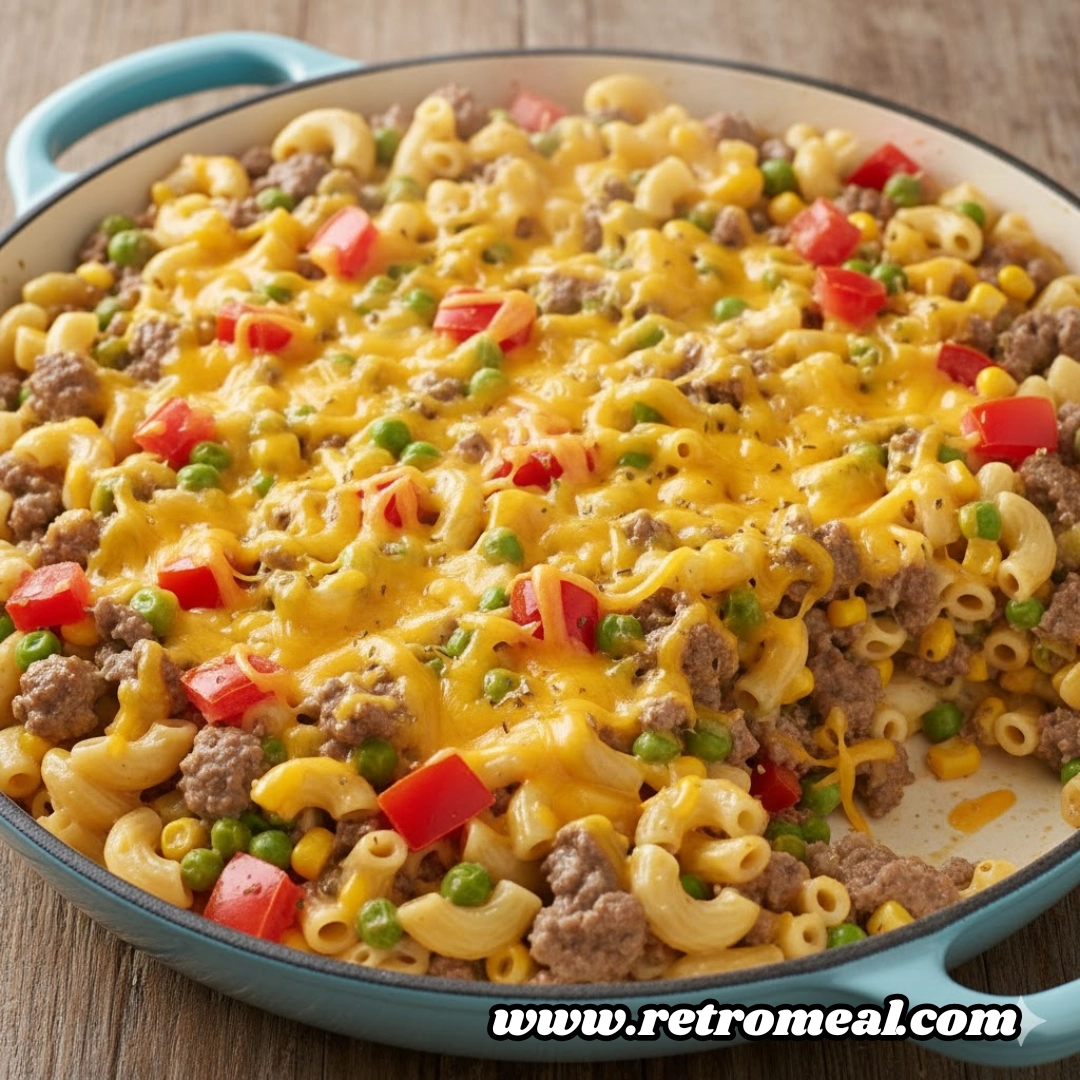
Efficiency in the kitchen often yields the most satisfying results, especially when balancing a demanding schedule with the desire for a wholesome, home-cooked meal. This Shipwreck Casserole is a testament to the beauty of pantry-staple cooking, combining hearty proteins with shelf-stable favorites to create a unified, one-pan wonder. By utilizing a boxed pasta base alongside fresh-frozen vegetables and savory ground beef, you achieve a complex flavor profile without the labor-intensive prep of traditional baked pasta dishes. It is a reliable solution for a Tuesday night dinner or a casual weekend gathering where comfort is the primary objective.
Table of Contents
Components for Success
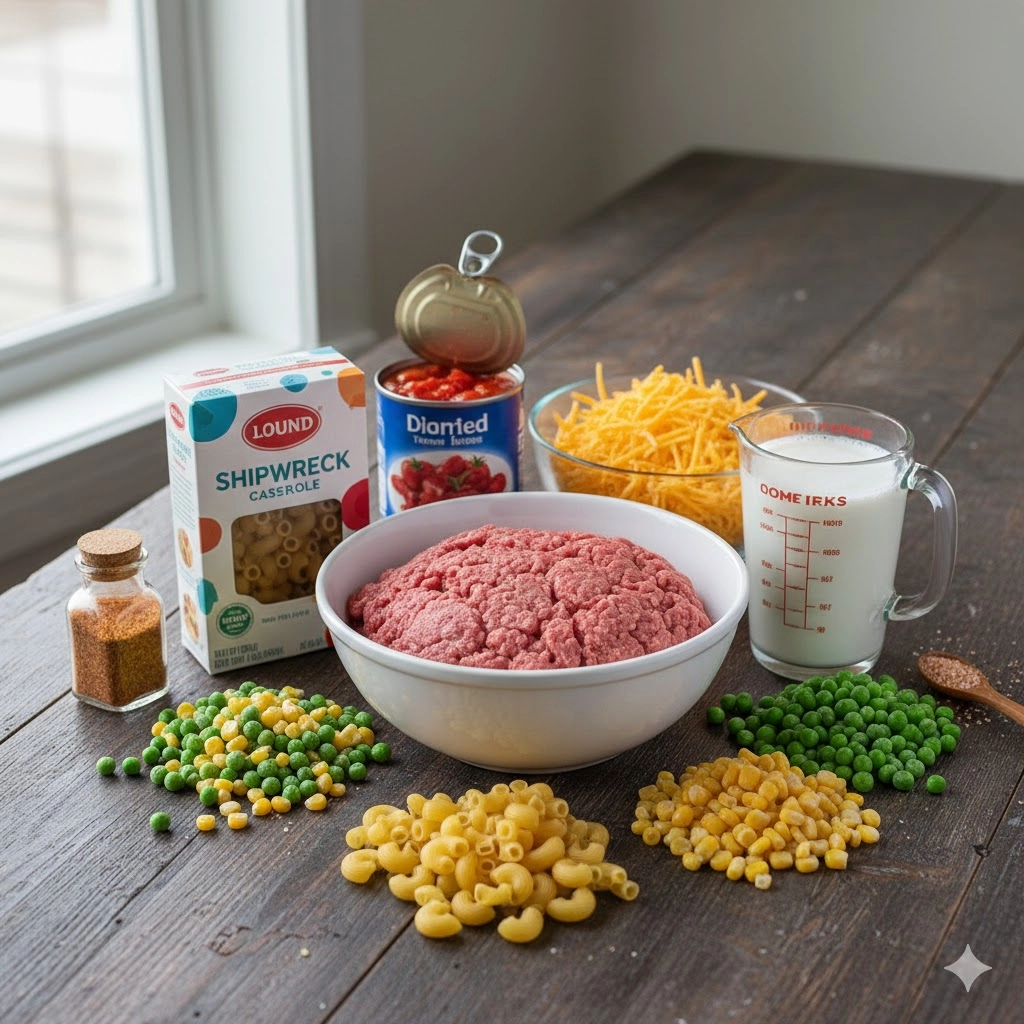
To ensure a balanced flavor and the proper sauce consistency, gather the following ingredients. Using lean meat helps manage the fat content without sacrificing the savory depth of the dish.
- Lean Ground Beef: One pound (approximately four hundred fifty grams).
- Macaroni and Cheese Mix: One standard seven and a quarter ounce box, including the dry cheese sauce packet.
- Diced Tomatoes: One fourteen and a half ounce can, undrained.
- Whole Milk: One cup (two hundred forty milliliters).
- Frozen Green Peas: One cup.
- Frozen Sweet Corn: One cup.
- Seasoned Salt: One teaspoon, adjusted to your preference.
- Shredded Sharp Cheddar Cheese: One cup total, divided into two equal portions.
Primary Cooking Sequence
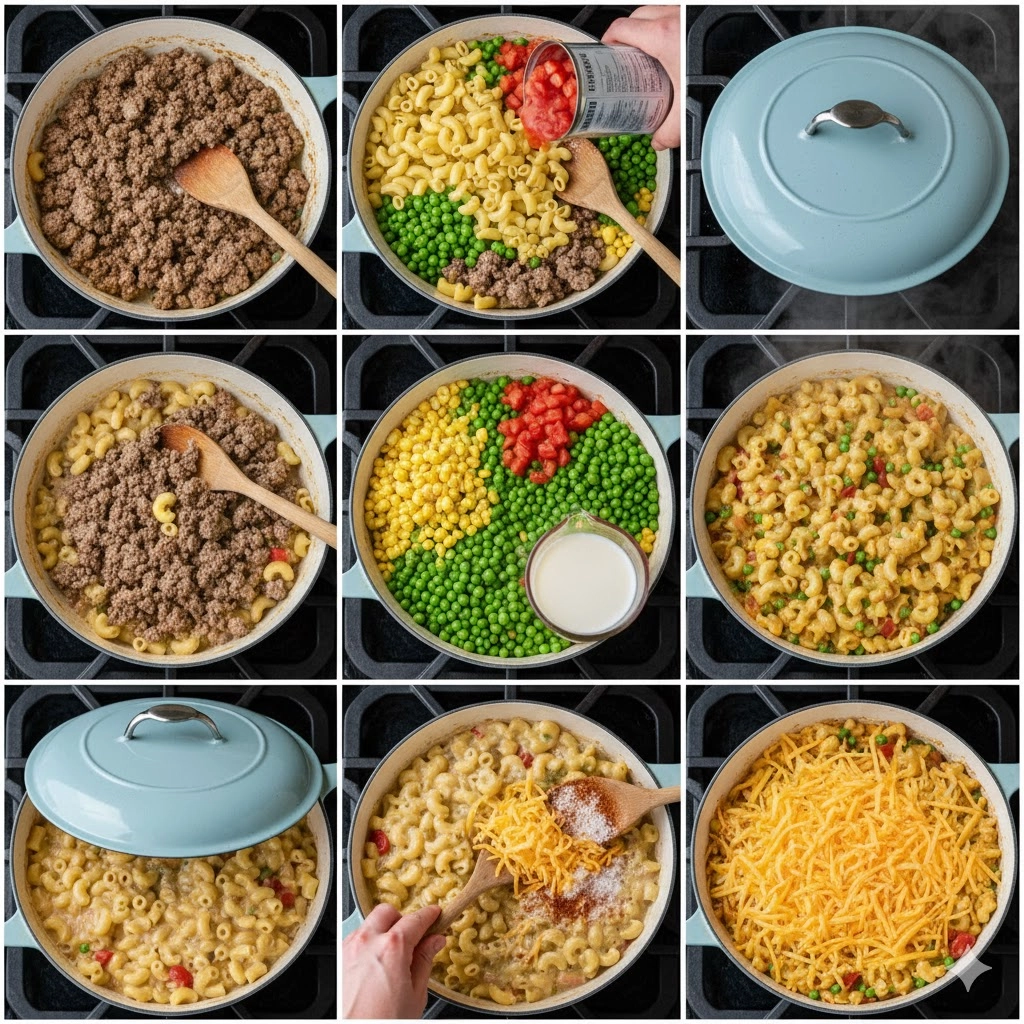
- Place a heavy-bottomed skillet over medium-high heat and brown the ground beef until no pink remains.
- Incorporate the dry macaroni, the enclosed cheese powder, the canned tomatoes with their juices, milk, peas, and corn.
- Elevate the heat to achieve a rolling boil, then immediately drop the temperature to a gentle simmer.
- Cover the skillet tightly and cook for twelve minutes or until the pasta reaches an al dente texture.
- Remove the lid, incorporate the seasoned salt, and fold in half of the shredded cheese until melted.
- Distribute the remaining cheese over the surface and allow it to melt from the residual heat before serving.
Detailed Culinary Execution
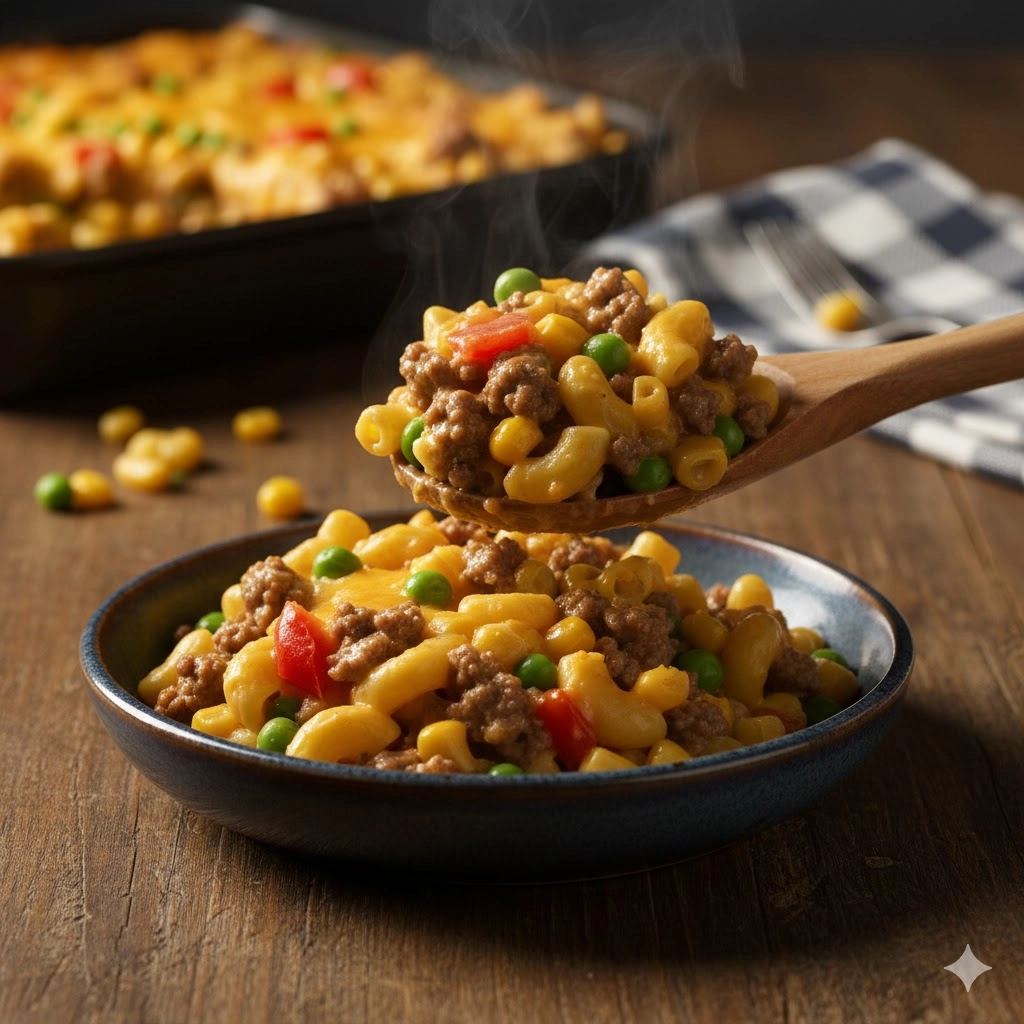
Achieving the ideal texture in a Shipwreck Casserole requires attention to the moisture levels within the pan. Begin by thoroughly browning the beef. You want to see small, caramelized bits on the meat, as this Maillard reaction provides the foundational “umami” that carries the dish. If your beef produces excess fat, drain it carefully before moving forward; leaving too much oil can prevent the milk and cheese powder from emulsifying into a smooth, velvety sauce.
When adding the macaroni and liquids, ensure the pasta is mostly submerged. The acidity from the diced tomatoes works in tandem with the calcium in the milk to create a sauce that clings to the noodles rather than pooling at the bottom. As the mixture simmers, the starch from the macaroni is released, naturally thickening the liquid. You will know it is ready when the noodles are tender to the bite but still retain a slight firmness.
The final integration of cheese is a two-part process. Stirring in the first half-cup creates a cohesive, creamy interior. The final topping provides a visual appeal and a concentrated burst of sharp cheddar flavor. If the sauce appears too thick after the simmering stage, a small splash of additional milk can be stirred in right before the final cheese topping is applied to loosen the texture.
Expert Refinements
- Deglaze the Pan: After browning the beef, if there are dark bits stuck to the skillet, use the liquid from the canned tomatoes to scrape them up. This integrates that flavor back into the sauce.
- Cold Start Veggies: There is no need to thaw the peas or corn. Adding them frozen actually helps regulate the temperature of the liquid as it comes to a boil, preventing the milk from scorching.
- Pasta Check: Because different brands of boxed macaroni have varying noodle thicknesses, start checking for doneness at the ten-minute mark to avoid mushy pasta.
- Resting Period: Allow the pan to sit off the heat for three to five minutes before serving. This allows the sauce to set and the flavors to meld.
- The Tomato Choice: For a bit more heat, use canned tomatoes with green chilies instead of standard diced tomatoes.
- Consistency Control: If you prefer a “saucier” result, keep the lid on for the entire simmering duration. For a thicker, more “casserole-like” feel, simmer uncovered for the last two minutes.
Adaptations and Substitutes
While the classic version relies on beef, ground turkey or even ground chicken are excellent leaner alternatives. If you choose poultry, consider adding a teaspoon of Worcestershire sauce to mimic the richness of beef. For those who prefer a different vegetable profile, chopped green beans or diced bell peppers can replace the peas or corn effectively.
If you find yourself without seasoned salt, a blend of garlic powder, onion powder, and paprika works beautifully. To change the flavor profile entirely, swap the sharp cheddar for a pepper jack or a smoked gouda to add a layer of complexity and warmth to the finished dish.
Presentation Styles
This dish is best served directly from the skillet to maintain its temperature. To brighten the visual presentation, garnish with freshly chopped parsley or sliced scallions. It pairs exceptionally well with a crisp green salad tossed in a light vinaigrette, which cuts through the richness of the cheese. For a heartier meal, serve it alongside a slice of toasted sourdough or garlic bread to soak up any remaining cheese sauce.
Frequently Asked Questions
Can I make this ahead of time?
While this dish is best served fresh to maintain the texture of the macaroni, it can be assembled and cooked up to twenty-four hours in advance. If reheating, add a tablespoon of milk per serving to restore the creaminess of the sauce.
Is it possible to bake this in the oven instead of the stovetop?
Yes, though it requires slightly more liquid. After browning the meat and stirring in the ingredients, transfer everything to a greased baking dish, cover with foil, and bake at three hundred seventy-five Fahrenheit for twenty-five to thirty minutes.
What is the best way to store leftovers?
Place any remaining portions in an airtight container and refrigerate for up to four days. This recipe also freezes well; ensure it is completely cool before sealing it in a freezer-safe bag for up to three months.
Nutrition Information
| Nutrient | Amount per Serving |
| Calories | 636 kcal |
| Protein | 43 g |
| Carbs | 55 g |
| Fat | 27 g |
| Fiber | 5 g |
| Sugar | 8 g |
| Sodium | 1150 mg |
Disclaimer
Nutrition information is an estimate and may vary based on preparation and ingredients used.
Savory Skillet Shipwreck Casserole
Ingredients
- 1 pound lean ground beef
- 7.25 ounces macaroni and cheese mix (one box including cheese powder)
- 14.5 ounces diced tomatoes (one can, undrained)
- 1 cup whole milk
- 1 cup frozen peas
- 1 cup frozen sweet corn
- 1 tsp seasoned salt (or to taste)
- 1 cup shredded sharp cheddar cheese, divided
Instructions
- Heat a large heavy-bottomed skillet over medium-high heat. Add the ground beef and cook until browned and crumbly, ensuring no pink remains.
- Stir in the dry macaroni noodles, the dry cheese sauce packet from the box, the undrained diced tomatoes, milk, frozen peas, and frozen corn.
- Bring the mixture to a rolling boil. Once boiling, immediately reduce the heat to medium-low to maintain a gentle simmer.
- Cover the skillet tightly with a lid and cook for 12 minutes, or until the macaroni is tender and has absorbed most of the liquid.
- Remove the lid and stir in the seasoned salt along with half a cup of the shredded cheddar cheese until fully melted into the sauce.
- Sprinkle the remaining half cup of cheese over the top. Turn off the heat and cover for 1-2 minutes until the topping is melted.
Notes
Equipment
- large skillet with lid Heavy-bottomed preferred
- wooden spoon or spatula
- measuring cups and spoons