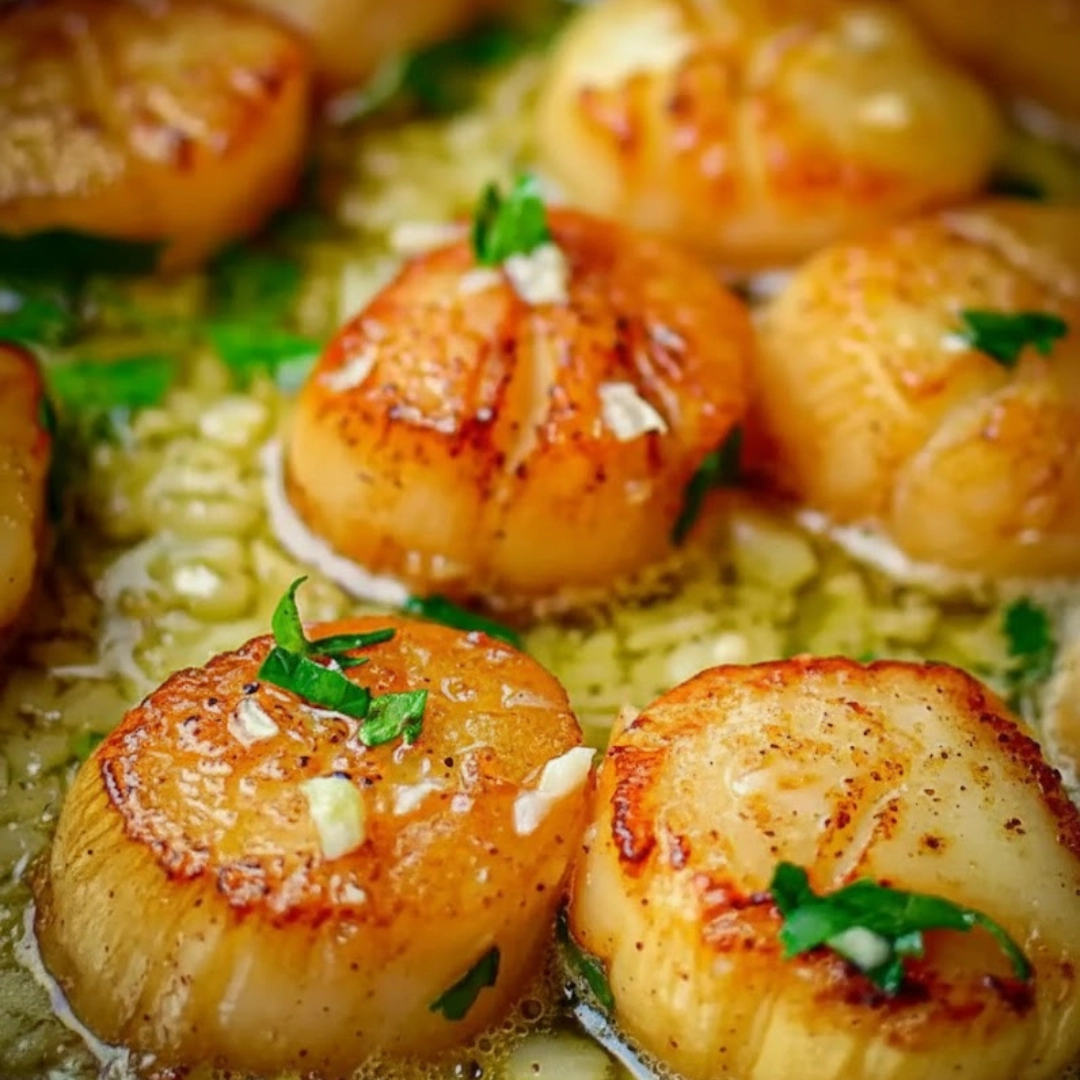
If there is one dish that exemplifies approachable elegance, it is perfectly cooked scallops. The natural sweetness of sea scallops, combined with a quick, intense heat application, yields a crust that gives way to a tender, almost custardy interior. When these jewels of the sea are finished in a rich, vivacious pan sauce—specifically, Seared Scallops with Garlic Lemon Butter—the result is nothing short of spectacular. This recipe is an affirmation that the finest dining experiences can often be created with minimal effort and the freshest ingredients right in your own kitchen. It serves beautifully as a sophisticated appetizer, a light main course alongside a crisp salad, or as the centerpiece of a special meal.
Table of Contents
Primary Components Breakdown
Before we dive into the precise steps of execution, understanding the three core pillars of this recipe—the scallops, the sear, and the sauce—is paramount. Mastery of this dish comes from appreciating how each component must be prepared independently to achieve harmony on the plate.
The Scallop Selection and Preparation
The success of this dish hinges almost entirely on the quality and preparation of the scallops. Look for large sea scallops, often labeled as “dry-packed.” This distinction is critical; “wet-packed” scallops are treated with a phosphate solution that causes them to retain excess water. This extra moisture is the enemy of a proper sear, preventing the Maillard reaction and resulting in steamed, rubbery texture instead of that coveted golden crust. Once you have your dry-packed scallops, the only preparation required is to gently rinse them and, most importantly, pat them bone-dry. We are talking about drying them with paper towels until there is absolutely no surface moisture remaining. This is not a suggestion; it is a foundational rule for searing.
The Art of the Sear
Searing is a high-heat, quick-cooking method designed to create a deeply flavored crust. The key parameters are a hot pan—ideally cast iron or stainless steel—a high smoke point oil, and enough space between the scallops to prevent temperature drop. The aim is to create a rich, golden-brown crust on one side only. This allows the internal temperature to rise just enough to cook the scallop through, leaving the center translucent and succulent. A proper sear is what separates a great dish from a merely good one.
The Finishing Sauce
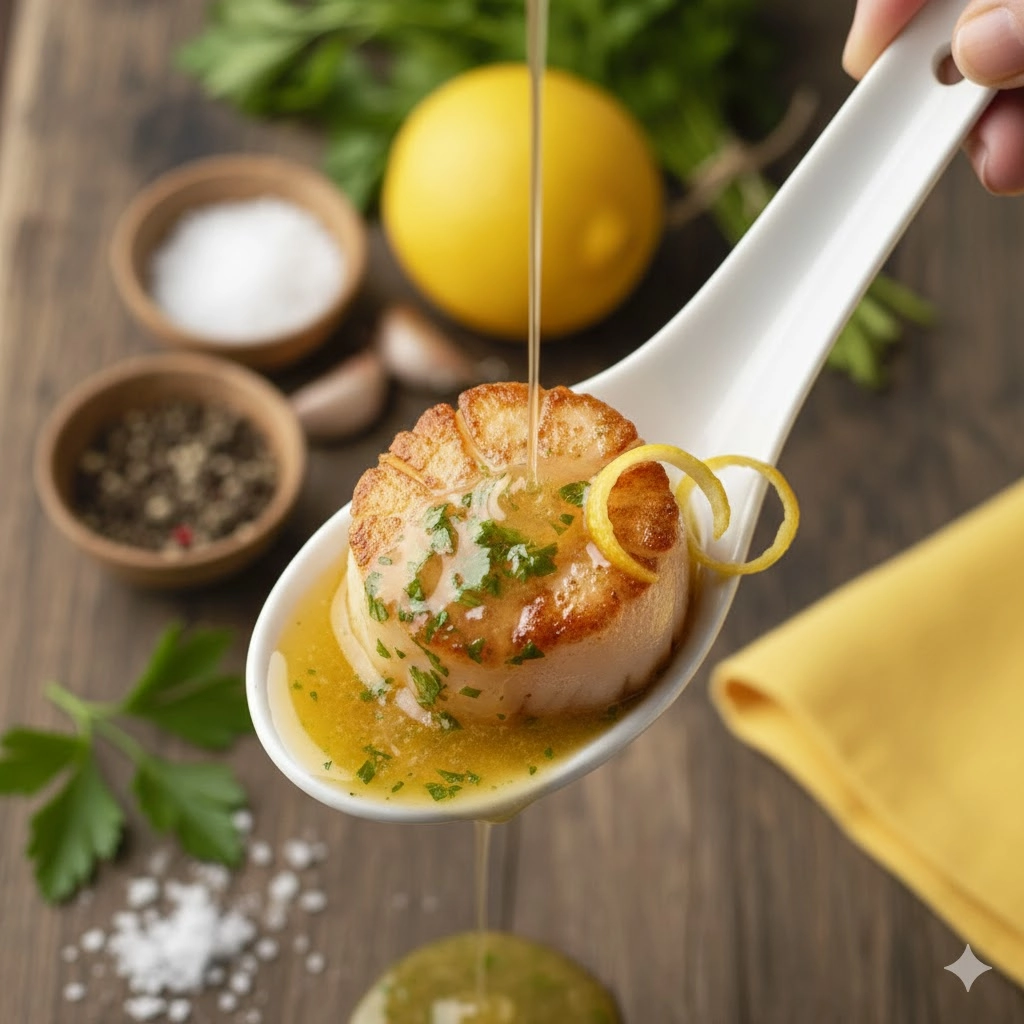
The sauce in this recipe is not a heavy concoction; it is a simple, emulsified, pan-scraping finish that elevates the natural flavor of the seafood. It is built in the same pan used for searing, leveraging the browned bits—the fond—left behind by the scallops. The magic happens when the butter is whisked off the heat, allowing it to emulsify slightly with the lemon juice and residual cooking liquid, creating a velvety, light, and intensely flavored coating. The final dish is defined by the clean, bright acidity of the lemon cutting through the richness of the butter and the savory depth of the garlic.
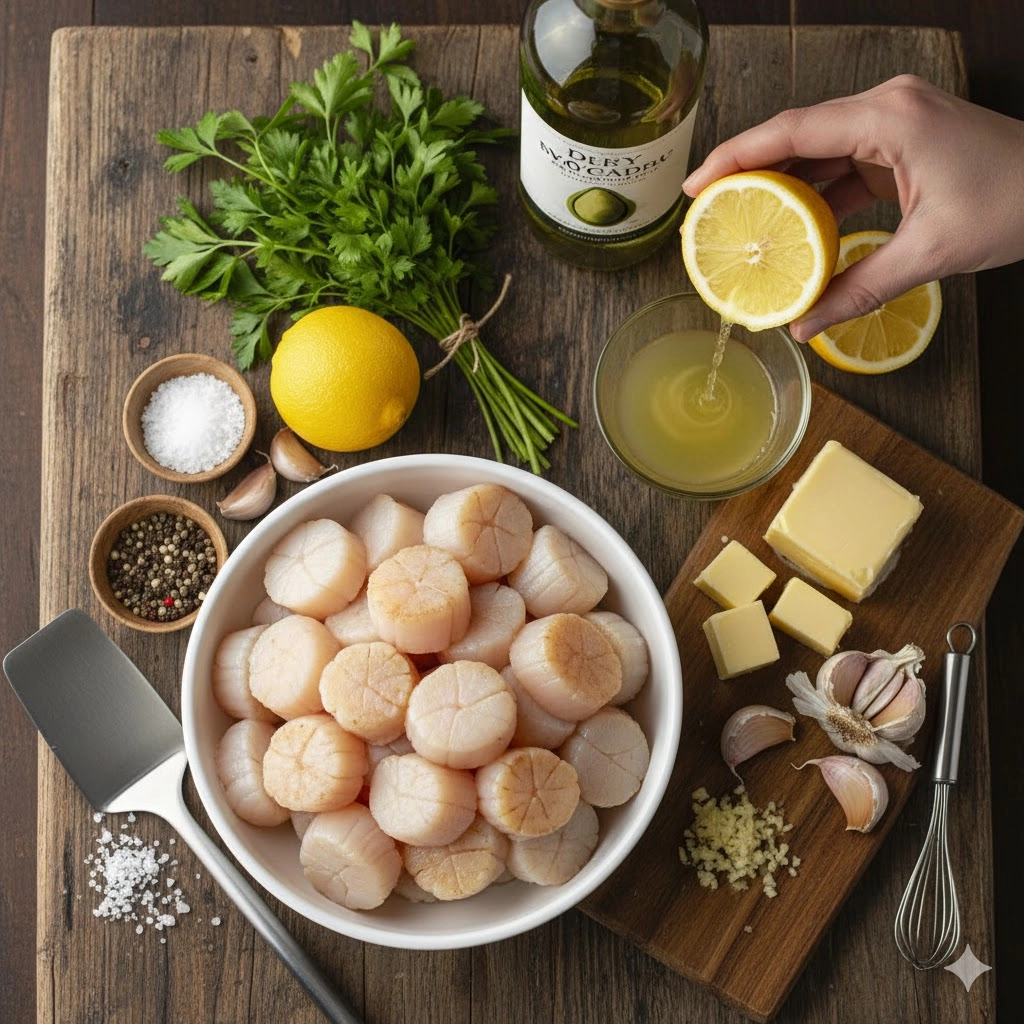
The Necessary Provisions
- For the Scallops:
- 1 pound large sea scallops, dry-packed
- 1 tablespoon high-heat oil (such as grapeseed or avocado)
- 1/2 teaspoon fine sea salt
- 1/4 teaspoon freshly cracked black pepper
- For the Garlic Lemon Butter Sauce:
- 4 tablespoons unsalted butter, cut into four equal pieces
- 3 cloves garlic, finely minced
- 2 tablespoons fresh lemon juice (about half a lemon)
- 1/4 cup dry white wine or chicken stock (optional, for deglazing)
- 2 tablespoons fresh parsley, finely chopped
Guiding the Cook
This process is remarkably fast once you begin. Ensure all your ingredients are measured and ready before the heat is applied.
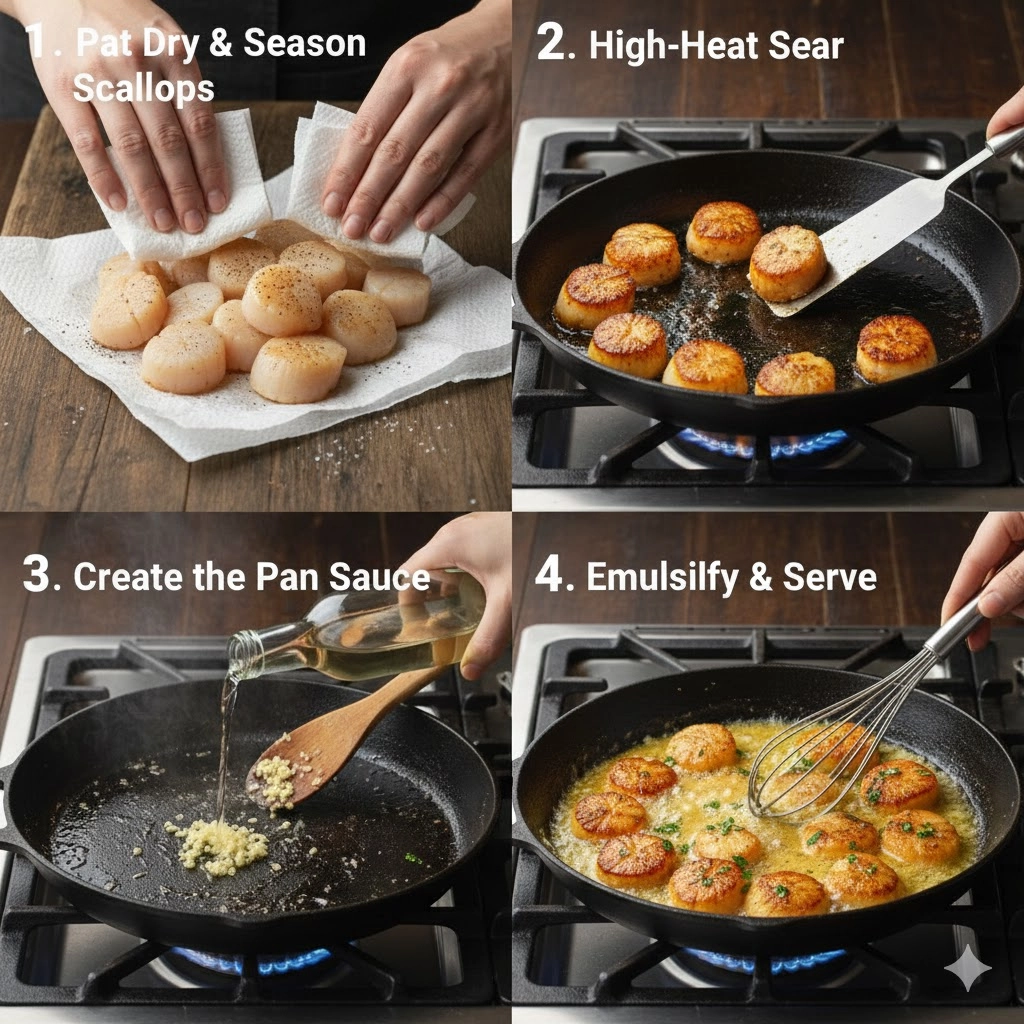
- Prepare the Scallops: Pat the scallops completely dry using paper towels. Season liberally with salt and pepper on both sides.
- Heat the Pan: Place a heavy-bottomed pan, preferably cast iron or stainless steel, over high heat and add the oil. Heat until the oil is shimmering and just beginning to smoke.
- Sear the Scallops: Carefully place the scallops into the pan, leaving space between them. Sear for ninety seconds to two minutes without moving them.
- Flip and Finish: Turn the scallops and cook for an additional forty-five seconds to one minute on the second side. Remove them immediately to a clean plate.
- Build the Sauce: Reduce the heat to medium-low. Add the garlic and cook until fragrant, about thirty seconds. Deglaze the pan with the wine or stock if using.
- Emulsify the Butter: Remove the pan from the heat and swirl in the cold butter pieces, one at a time, until the sauce is creamy. Stir in the lemon juice and parsley.
- Serve: Return the seared scallops to the pan just long enough to coat them thoroughly in the sauce, then plate immediately and spoon the remaining sauce over the top.
The Finer Points of the Sear
While the instructions above are straightforward, achieving the perfect execution requires attention to detail, particularly during the brief, high-stakes searing phase.
Achieving the Ideal Surface Texture
The single most common error in cooking scallops is not using enough heat or not drying them properly. A heavy pan over high heat is crucial because it retains temperature when the cold scallops are introduced. Preheat the pan for a full two to three minutes after you think it’s hot enough. Add the oil, wait for the first wisp of smoke, and then gently lay the scallops down. You should hear a pronounced sizzle instantly. If you do not hear that sound, the pan is too cool, and you will not get the sear you desire.
Once the scallops are in, do not touch them. Resist the urge to peek or move them for the full ninety seconds to two minutes. During this time, the Maillard reaction is developing that deep, savory crust. The perfect time to flip is when you can slide a thin metal spatula underneath without resistance, revealing a crust that is a deep, burnished gold, verging on amber.
Doneness Checks and Internal Structure
Scallops cook rapidly. After flipping, the cook time for the second side is significantly shorter—between forty-five seconds and one minute. At this point, the scallops should be firm but still yield slightly to gentle pressure. The telltale sign of perfect doneness is that the sides of the scallop are opaque, while the very center is still slightly translucent, often described as barely al dente. Overcooked scallops are entirely opaque and rubbery. Because the pan sauce process is so quick, they will continue to cook slightly off-heat, so it is better to slightly undercook them before removing them from the pan. The residual heat will carry them over the finish line.
Achieving the Perfect Sauce (H3)
After removing the scallops, the pan will look browned and slightly messy. These browned bits are pure flavor, and they form the base of our garlic lemon butter. Immediately reduce the heat, add the minced garlic, and stir constantly for about thirty seconds. Garlic burns quickly and becomes bitter, so watch it closely; it should be fragrant, not brown.
If you are using wine or stock, pour it in while scraping the bottom of the pan with a wooden spoon or spatula. This process, called deglazing, lifts all those flavorful fond particles. Let this liquid bubble and reduce by half.
The final, essential step is the montage au beurre—the incorporation of butter off the heat. By removing the pan from the burner and swirling in cold pieces of butter one by one, you prevent the butter from separating into oil and milk solids. Instead, the small pieces of cold butter melt slowly into the reduced liquid, thickening it into a luxurious, emulsified sauce that has the consistency of cream and the vibrant flavor of lemon and garlic. Stir in the lemon juice and parsley last to preserve their freshness and brightness.
Chef’s Wisdom: Essential Techniques
Achieving exceptional flavor and texture consistently involves adhering to simple, non-negotiable kitchen wisdom.
- Temperature Management is Key: Ensure your scallops are at room temperature (not fridge-cold) for fifteen minutes before searing. Cold seafood will drastically lower the pan temperature, hindering the formation of a crust.
- Use Clarified Butter for Flavor: While high-heat oil is best for the initial sear, if you are looking to layer a richer flavor, you can use a fifty-fifty blend of clarified butter and high-heat oil. The clarified butter’s high smoke point provides that buttery taste without the risk of the milk solids burning.
- Don’t Crowd the Pan: Sear in batches if necessary. A crowded pan is a guaranteed way to steam your scallops instead of searing them, as the moisture released will lower the pan temperature below the searing point. This is often the difference between a great home cook and a novice.
- Finish with Zest: For an extra layer of aromatic complexity, grate a tiny amount of fresh lemon zest over the finished dish just before serving. The volatile oils in the zest provide a lift that the juice alone cannot match.
- Seasoning Progression: Do not season the scallops until they are completely dry, right before they hit the pan. Salt draws out moisture, and pre-salting too early can re-introduce the moisture you just worked so hard to eliminate.
- The White Wine Choice: If you choose to deglaze with wine, select a dry, unoaked varietal such as Pinot Grigio or Sauvignon Blanc. Avoid anything sweet or heavily oaked, as the flavor will concentrate into the sauce and can overpower the delicate flavor of the scallop.
- Resting Time is Zero: Scallops, unlike steaks, should not rest. They are small and cook extremely fast. They go from the pan to the sauce and then immediately to the plate to ensure maximum tenderness and heat.
Culinary Diversions and Amendments
While the classic preparation is perfect, this recipe is flexible enough to accommodate thoughtful changes and additions based on preference or pantry availability.
- Spice Infusion: Add a pinch of red pepper flakes to the pan with the garlic. The heat from the pan will toast the flakes slightly, deepening their flavor and giving the final dish a subtle, warming kick.
- Herbaceous Alternatives: Swap out the fresh parsley for other finely chopped herbs. Tarragon provides a subtle anise note that pairs beautifully with seafood, while chives offer a mild oniony sharpness. Use these sparingly, adding them at the very end.
- Dairy Substitutions: If you cannot use butter, a high-quality vegan butter substitute works reasonably well, though the richness profile will shift. For a lower-fat option, you can thicken the sauce using a half teaspoon of cornstarch mixed into the cold stock before deglazing, finishing with just a splash of olive oil instead of butter.
- A Touch of Sweetness: A tiny splash—perhaps a half teaspoon—of maple syrup or honey can be added to the sauce right after the lemon juice. This counterbalances the acidity and enhances the natural sweetness of the scallops, but use extreme caution not to overdo it.
- Aromatic Oil Finish: For a luxurious, nutty layer, drizzle a few drops of toasted sesame oil or high-quality pumpkin seed oil over the plated dish. This provides a completely different dimension of flavor that contrasts the bright lemon butter.
Thoughtful Pairings
The richness of the butter and the brightness of the lemon demand sides that provide either a light, refreshing counterpoint or a gentle, absorbent foundation.
- Creamy Polenta or Risotto: A classic pairing. The soft, rich texture of polenta or a lemon-infused risotto soaks up the garlic lemon butter sauce perfectly. The starch provides necessary balance to the delicate protein.
- Asparagus or Green Beans: These green vegetables offer a crisp, slightly bitter note that cleanses the palate. They should be blanched and then quickly sautéed with a touch of the same butter sauce, ensuring they remain vibrant green and al dente.
- Simple Arugula Salad: A very light and refreshing choice. Tossed simply with a high-quality extra virgin olive oil and a whisper of salt, the peppery bite of the arugula is a perfect contrast to the sweet scallops.
- French Baguette: Never underestimate the simple pleasure of using a thick slice of crusty bread to sop up every last drop of the glorious pan sauce. It transforms the final moments of the meal.
Queries for the Kitchen
These common questions address essential details that ensure a flawless cooking experience.
What is the best way to safely thaw frozen scallops?
The best method is to thaw them overnight in the refrigerator. Place them in a bowl, cover them, and let them gently defrost. If time is short, seal them in a zip-top bag and submerge the bag in a bowl of cold water, changing the water every half hour until fully thawed. Never use hot water, as this will begin to cook the edges.
How do I store and reheat leftover scallops?
Leftovers should be stored in an airtight container in the refrigerator and consumed within two days. Reheating is tricky because it risks overcooking. The best method is to warm them very gently in a dry skillet over low heat for just one minute per side, or to slice them cold and add them to a salad to preserve their texture.
Can I use bay scallops instead of sea scallops?
You can, but the cooking time will be drastically different. Bay scallops are much smaller and sweeter and will cook in thirty to forty-five seconds per side. They also lack the surface area to achieve the same dramatic crust as their sea scallop counterparts, so they are better used in chowders or quick pan-tossed pasta applications.
What if my sauce breaks and becomes oily?
A broken or separated sauce usually happens if the pan is too hot when the butter is added, or if the butter is added too quickly. To attempt a fix, remove the pan from the heat entirely. Whisk a few drops of cold water or stock into the sauce aggressively. If it begins to come back together, gradually whisk in a small, cold piece of butter to re-emulsify it.
How can I make this dish more substantial?
A classic way to turn this into a full meal is to serve the Seared Scallops with Garlic Lemon Butter over a bed of pasta, such as linguine or fettuccine. Toss the pasta directly in the pan with the sauce and scallops, perhaps adding a touch more pasta water to bind it all together into a cohesive and satisfying dish.
Nutritional Summary
| Nutrient | Amount per Serving |
| Calories | 315 kcal |
| Protein | 35 g |
| Carbs | 5 g |
| Fat | 17 g |
| Fiber | 0 g |
| Sugar | 0 g |
| Sodium | 550 mg |
Disclaimer
Nutrition information is an estimate and may vary based on preparation and ingredients used.
Seared Scallops with Garlic Lemon Butter
Ingredients
- 1 pound large sea scallops, dry-packed
- 1 tbsp high-heat oil (such as grapeseed or avocado)
- 0.5 tsp fine sea salt
- 0.25 tsp freshly cracked black pepper
- 4 tbsp unsalted butter, cut into four equal pieces
- 3 cloves garlic, finely minced
- 2 tbsp fresh lemon juice
- 0.25 cup dry white wine or chicken stock (optional)
- 2 tbsp fresh parsley, finely chopped
Instructions
- Pat the scallops completely dry using paper towels. Season liberally with salt and pepper on both sides. Ensure they are at room temperature for optimal searing.
- Place a heavy-bottomed pan, preferably cast iron or stainless steel, over high heat and add the oil. Heat until the oil is shimmering and just beginning to smoke.
- Carefully place the scallops into the pan, leaving space between them. Sear for ninety seconds to two minutes without moving them until a deep, golden-brown crust forms.
- Turn the scallops and cook for an additional forty-five seconds to one minute on the second side. The center should still be slightly translucent. Remove them immediately to a clean plate.
- Reduce the heat to medium-low. Add the garlic and cook until fragrant, about thirty seconds. Deglaze the pan with the wine or stock if using, scraping up the browned bits.
- Remove the pan from the heat and swirl in the cold butter pieces, one at a time, until the sauce is creamy and emulsified. Stir in the lemon juice and parsley.
- Return the seared scallops to the pan just long enough to coat them thoroughly in the sauce, then plate immediately and spoon the remaining sauce over the top.
Notes
Equipment
- Heavy-bottomed skillet (cast iron or stainless steel)
- paper towels Crucial for drying the scallops
- tongs