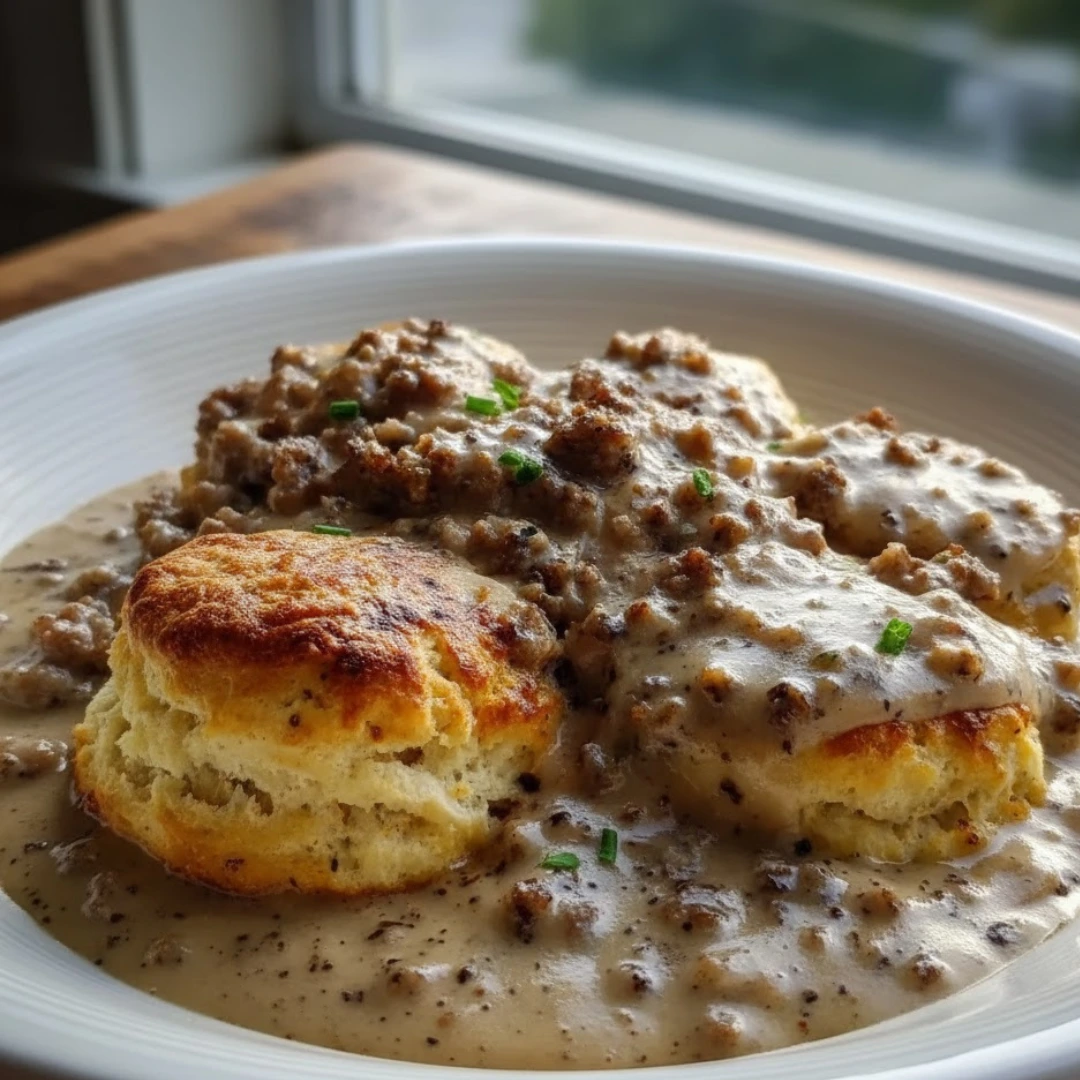
There is a specific kind of magic that happens in a kitchen on a Sunday morning when the scent of browning pork sausage begins to mingle with the aroma of buttery dough rising in the oven. For many of us, sausage gravy and biscuits isn’t just a meal; it’s a culinary hug, a weekend tradition, and a definitive marker of comfort. However, the tragedy of many modern versions is either a lack of texture—resulting in a “pasty” gravy—or biscuits that resemble hockey pucks more than clouds.
This recipe is designed to bridge the gap between high-end culinary technique and the frantic pace of a hungry household. By focusing on the science of temperature—specifically the use of frozen, grated butter—we can achieve those elusive, shatter-crisp layers in a fraction of the time it takes to perform traditional pastry folding. We are aiming for a velvet-smooth, pepper-flecked gravy that clings to every nook and cranny of a fluffy buttermilk biscuit. In just thirty minutes, you can transform humble pantry staples like flour, milk, and pork into a breakfast masterpiece that rivals any high-end Southern diner.
Table of Contents
Essential Ingredients for the Ultimate Comfort Breakfast
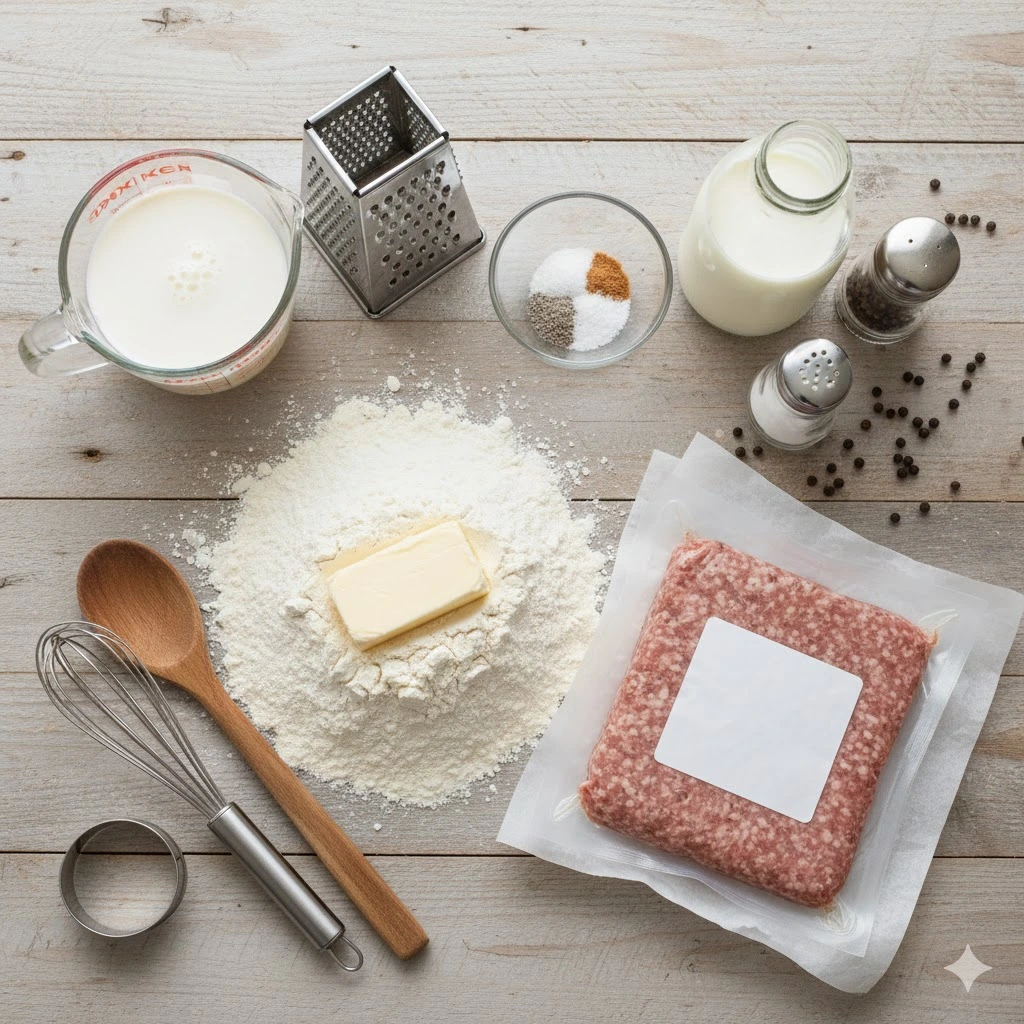
To achieve the perfect balance of a flaky base and a creamy topping, you will need the following components. Precision in your measurements ensures the chemistry of the bake and the emulsion of the gravy work in harmony.
For the Flaky Buttermilk Biscuits
- 2 1/2 cups (312 grams) All-purpose flour
- 1 tablespoon Baking powder
- 1/2 teaspoon Baking soda
- 1 teaspoon Salt
- 1/2 cup (113 grams) Unsalted butter, frozen and grated
- 1 cup (240 milliliters) Cold buttermilk
- 1 tablespoon Melted butter (for brushing the tops)
For the Velvety Sausage Gravy
- 1 pound (450 grams) ground pork breakfast sausage
- 1/3 cup (42 grams) All-purpose flour
- 3.5 cups (840 milliliters) Whole milk
- 1/2 teaspoon Heavy black pepper
- 1/4 teaspoon Salt (adjust based on the saltiness of your specific sausage brand)
Step-by-Step Instructions for Success
Preparing the Biscuits
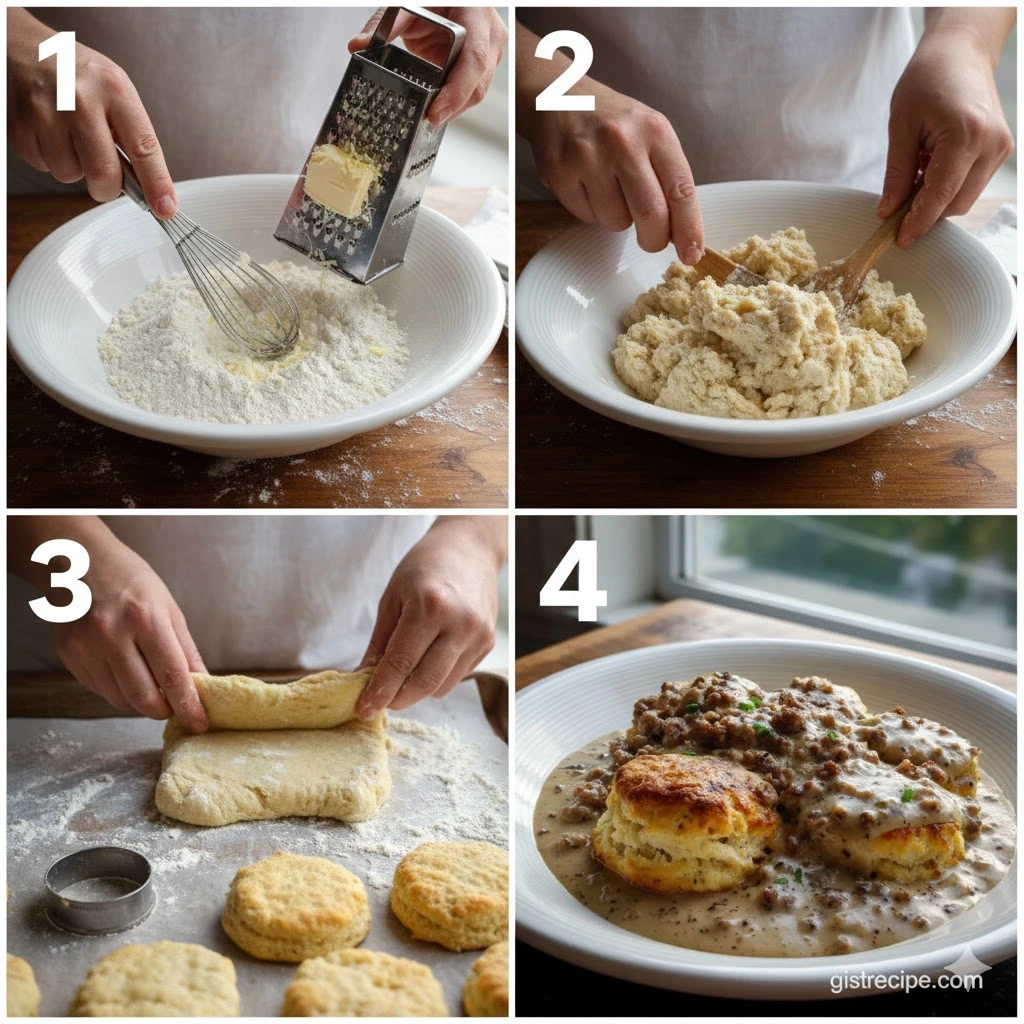
- Begin by preheating your oven to 425 degrees Fahrenheit. In a large mixing bowl, whisk together the 2 1/2 cups of all-purpose flour, baking powder, baking soda, and salt until thoroughly combined.
- Take your frozen stick of unsalted butter and, using the large holes of a box grater, grate the butter directly into the flour mixture. It is vital to work quickly during this stage to prevent the heat from your hands from softening the fat. Use a fork to gently toss the butter shreds until every piece is coated in flour.
- Pour in the ice-cold buttermilk. Use a spatula to fold the liquid into the dry ingredients until just combined. The dough should appear shaggy and slightly messy; avoid over-mixing at all costs, as this develops gluten and leads to tough biscuits.
- Turn the dough out onto a lightly floured surface. Gently pat it into a rectangular shape. Fold the dough over itself like a letter—three to four times total. This physical layering is what creates the “lift” in the oven. Pat the final stack down to approximately one inch of thickness.
- Use a three-inch biscuit cutter to stamp out six to eight rounds. Press straight down without twisting the cutter. Place the biscuits on a parchment-lined baking sheet so they are slightly touching; this encourages them to rise upward rather than spreading outward.
- Brush the tops with one tablespoon of melted butter and bake for 12 to 15 minutes. You are looking for a deep golden-brown top and edges that feel crisp to the touch.
Crafting the Gravy
- While the biscuits are in the oven, set a large skillet over medium-high heat. Add the one pound of ground pork sausage. Use a wooden spoon to break the meat into small crumbles as it cooks. Sauté for 5 to 7 minutes until the meat is fully browned and sizzling.
- Crucial Step: Do not drain the fat from the pan. This rendered pork fat is the flavor engine and the base of your roux.
- Sprinkle the 1/3 cup of flour evenly over the cooked sausage. Stir constantly for about two minutes. This “toasts” the flour, removing the raw starch taste and allowing it to absorb the fats, turning a light golden hue.
- Begin slowly whisking in the 3.5 cups of whole milk. Start with just a small splash, whisking until a thick paste forms, then gradually add the remaining milk in stages. This prevents lumping and ensures a silky consistency.
- Season the mixture with the heavy black pepper and salt. Lower the heat to medium-low and let the gravy simmer for 5 to 8 minutes. The gravy is ready when it is thick enough to coat the back of a spoon. Remember, it will continue to thicken as it sits, so pull it off the heat while it is still slightly more fluid than your desired final result.
Deep-Dive into the Culinary Process
The transition from a “good” breakfast to a “legendary” one lies in the details of the execution. When you grate frozen butter into flour, you are creating thousands of tiny, cold fat deposits. When these hit the intense 425-degree Fahrenheit heat of the oven, the water inside the butter evaporates instantly. This creates a “steam explosion” that forces the dough apart, resulting in those characteristic flaky layers. If the butter is even slightly warm, it simply soaks into the flour, leaving you with a dense, greasy biscuit.
In the gravy phase, we are essentially building a country-style Bechamel sauce, but using pork fat as our lipid instead of plain butter. The two-minute window where you cook the flour with the sausage is called “cooking the roux.” If you skip this, your gravy will have a chalky, floury aftertaste. By adding the milk slowly, you allow the starch granules in the flour to hydrate evenly. If you dump all the milk in at once, the starch can clump, creating those dreaded white lumps that are nearly impossible to whisk out later.
Furthermore, the choice of whole milk is non-negotiable for the best mouthfeel. The fat content in whole milk acts as a stabilizer for the emulsion. If you use skim or low-fat milk, the gravy is more likely to “break” or separate, leaving a thin, watery liquid at the bottom of the plate and a film of oil on top. The heavy black pepper isn’t just for heat; it provides a necessary floral, earthy contrast to the rich creaminess of the dairy and the saltiness of the pork.
Unique Culinary Insights for Perfect Results
Achieving the “shatter-crisp” exterior on a biscuit is a point of pride for Southern cooks. One professional secret is the “touching” method. By placing the biscuits on the baking tray so they just barely graze one another, they are forced to grow vertically. They use each other as a support system to climb higher. If they are spaced too far apart, the heat hits the sides too quickly, setting the crust before the center has a chance to fully expand.
Another insight involves the handling of the sausage. Many home cooks make the mistake of draining the grease to make the dish “healthier.” In the world of sausage gravy, the grease is the gold. It contains the sage, thyme, and smoky notes from the meat. If you find your sausage is particularly lean and hasn’t rendered much fat, you may need to add a tablespoon of butter before adding the flour to ensure there is enough fat to saturate the starch.
Finally, consider the “carry-over” thickening of the gravy. Starch continues to swell and absorb liquid even after it is removed from the heat source. If your gravy looks exactly how you want it while it’s still bubbling on the stove, it will likely be too thick by the time it reaches the table. Aim for a consistency that is slightly “runny” but opaque; by the time you split your biscuits and pour it over, it will have reached that perfect, velvety state.
Dynamic Modifications and Substitutions
While the classic pork and buttermilk combination is the gold standard, there are ways to adapt this recipe based on your pantry or dietary needs.
- The Buttermilk Hack: If you don’t have buttermilk on hand, you can create a quick substitute by adding one tablespoon of lemon juice or white vinegar to a cup of whole milk. Let it sit for five minutes until it curdles slightly. This provides the necessary acid to react with the baking soda.
- Protein Alternatives: For those who don’t eat pork, ground turkey sausage works well. However, because turkey is much leaner, you must add two tablespoons of butter or oil to the pan when you add the flour to create a proper roux. For a spicy kick, use “Hot” breakfast sausage or add half a teaspoon of crushed red pepper flakes during the browning stage.
- Dairy Swaps: While whole milk is preferred, evaporated milk (diluted with a bit of water) can be used for an even richer, more shelf-stable alternative. If you must use two percent milk, be prepared for a slightly thinner consistency and perhaps simmer it for an extra two minutes.
- Gluten-Free Adjustments: A high-quality 1:1 gluten-free flour blend can be used. Note that gluten-free biscuits often require a bit more moisture, so you may need an extra tablespoon of buttermilk, and the layers may be less pronounced.
Accompaniments and Serving Suggestions
Sausage gravy and biscuits is a heavy, “stick-to-your-ribs” meal, so it benefits greatly from contrasting sides. To cut through the richness, serve this with something bright or acidic. A side of fresh fruit—particularly berries or sliced grapefruit—works wonders to cleanse the palate between bites of savory gravy.
For a full “Grand Slam” style breakfast, pair this dish with over-easy eggs. The runny yolk mixes beautifully with the peppered gravy. If you are hosting a brunch, a cast-iron skillet of crispy home fries or shredded hash browns provides a textural contrast to the soft biscuits.
In terms of presentation, don’t be afraid of the “messy” look. Split the biscuits by hand rather than cutting them with a knife; the jagged edges of a hand-torn biscuit provide more surface area for the gravy to cling to. Finish the plate with a final, aggressive crack of fresh black pepper and perhaps a sprinkle of chopped chives or green onions for a pop of color and a mild onion bite that balances the heavy cream.
Solving Your Texture and Flavor Queries
Why does my gravy taste like flour even though I followed the measurements?
This usually happens when the flour hasn’t been “cooked out” long enough in the sausage fat. After you sprinkle the flour over the meat, you must stir it for at least two full minutes over medium heat. This toasts the starch and removes the raw, cereal-like taste. If the gravy is already finished and still tastes floury, you can try simmering it on very low heat for an additional five minutes, though it may require a splash more milk to keep it from becoming too thick.
How do I fix gravy that has become too thick or “gloopy”?
Sausage gravy is incredibly forgiving. If it sits too long and turns into a paste, simply place it back over low heat and whisk in a tablespoon of milk at a time until the desired consistency is restored. Conversely, if your gravy is too thin, continue to simmer it; the milk needs to reach a certain temperature for the flour’s starch granules to fully “burst” and thicken the liquid.
Can I make the biscuits or gravy in advance?
You can certainly prepare the biscuit dough, cut the rounds, and freeze them on a tray. Once frozen solid, transfer them to a bag. You can bake them directly from the freezer; just add about three to four minutes to the total baking time. The gravy can also be made a day ahead and stored in the refrigerator. Note that it will become very solid when cold. Reheat it slowly on the stovetop with an extra half-cup of milk to bring it back to life.
What if I don’t have a biscuit cutter?
A sharp-edged drinking glass or even a clean tuna can with both ends removed will work. The most important thing is that the edge is sharp. A dull edge will “pinch” the sides of the dough together, sealing the layers and preventing the biscuit from rising. Whatever tool you use, remember: press straight down, do not twist.
The Morning After: Storage and Reheating
If you find yourself with leftovers, it is best to store the biscuits and the gravy in separate airtight containers. Biscuits stored at room temperature will stay fresh for about two days, while the gravy must be refrigerated and used within four days.
When reheating the biscuits, avoid the microwave if possible, as it can make the dough rubbery. Instead, place them in a 350-degree Fahrenheit oven for five minutes until the exterior regains its crunch. For the gravy, the stovetop is your best friend. Use a small saucepan over low heat and add a splash of milk or water to loosen the texture. If you are in a rush, the microwave works for the gravy, but stop and stir every thirty seconds to ensure even heating and to prevent the milk from scorching at the edges.
Nutritional Profile and Standard Values
This dish is a traditional “working man’s breakfast,” designed to provide significant energy. The following values are estimates based on standard ingredients per serving.
| Nutrient | Amount Per Serving |
| Calories | 697 calories |
| Total Fat | 41.4 grams |
| Saturated Fat | 22.1 grams |
| Cholesterol | 112 milligrams |
| Sodium | 746 milligrams |
| Total Carbohydrates | 54.3 grams |
| Dietary Fiber | 1.8 grams |
| Sugars | 7.5 grams |
| Protein | 22.0 grams |
Nutritional Disclaimer
The nutritional information provided is an estimate based on common ingredient data. Actual values may vary depending on the specific brands of sausage, milk, and butter used. If you have specific dietary restrictions or medical needs, please consult with a certified nutritionist or healthcare provider.
Final Thoughts on This Morning Classic
Mastering homemade sausage gravy and biscuits is a milestone for any home cook. It is a recipe that relies less on expensive equipment and more on the fundamental understanding of heat and fat. Once you see those biscuits climbing high in the oven and watch the gravy transform from a simple roux into a velvety sauce, you’ll likely never go back to the canned or powdered versions again. Whether it’s a snowy Tuesday or a bright Easter brunch, this dish remains the undisputed champion of the breakfast table. Serve it while the steam is still rising, and enjoy the quiet that follows the first bite.
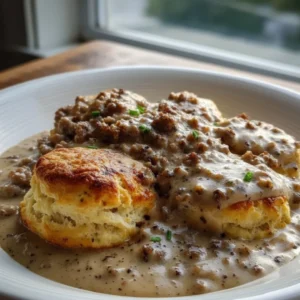
Homemade Sausage Gravy and Biscuits
Ingredients
- 2.5 cups all-purpose flour
- 1 tbsp baking powder
- 0.5 tsp baking soda
- 1 tsp salt
- 0.5 cup unsalted butter, frozen and grated
- 1 cup cold buttermilk
- 1 tbsp melted butter
- 1 lb ground pork breakfast sausage
- 0.33 cup all-purpose flour
- 3.5 cups whole milk
- 0.5 tsp heavy black pepper
- 0.25 tsp salt
Instructions
- Preheat oven to 425 degrees Fahrenheit. In a large bowl, whisk flour, baking powder, baking soda, and salt. Grate the frozen butter into the flour and toss with a fork to coat.
- Pour in cold buttermilk. Use a spatula to fold until just combined and shaggy. Do not overmix.
- Turn dough onto a floured surface. Pat into a rectangle and fold over itself 3-4 times to create layers. Pat down to 1-inch thickness.
- Cut out 6-8 biscuits using a 3-inch cutter. Place on a parchment-lined sheet so they touch slightly. Brush with melted butter and bake for 12-15 minutes.
- In a large skillet over medium-high heat, brown the sausage for 5-7 minutes. Do not drain the fat.
- Sprinkle 1/3 cup flour over the sausage. Stir constantly for 2 minutes to cook out the raw flour taste.
- Slowly whisk in the milk, starting with a splash and adding the rest gradually. Whisk until smooth.
- Add heavy black pepper and salt. Simmer over medium-low heat for 5-8 minutes until thickened. Serve over split biscuits.
Notes
Equipment
- Box grater For the frozen butter
- Large skillet (Cast iron preferred)
- biscuit cutter (3-inch)
- baking sheet
- parchment paper
- whisk