
There is a profound, almost restorative quality to a bowl of soup made from vegetables that have been kissed by the high heat of an oven. Roasting coaxes an incredible depth of flavor from even the most humble root vegetables, caramelizing their natural sugars and creating nuances that boiling alone simply cannot achieve. This Roasted Vegetable Soup is a true culinary showcase of that transformation, offering a velvety texture and an intense savory sweetness that is surprisingly complex. It’s the perfect, warming meal for a chilly evening or a satisfying, wholesome lunch that feels both rich and light all at once.
The beauty of this particular soup lies in its simplicity—it requires minimal fuss for maximum flavor impact. By starting with a pan of beautifully browned vegetables, you establish a foundational taste that permeates every spoonful, making it a reliable recipe for both seasoned cooks and kitchen newcomers seeking a nourishing, straightforward meal.
Table of Contents
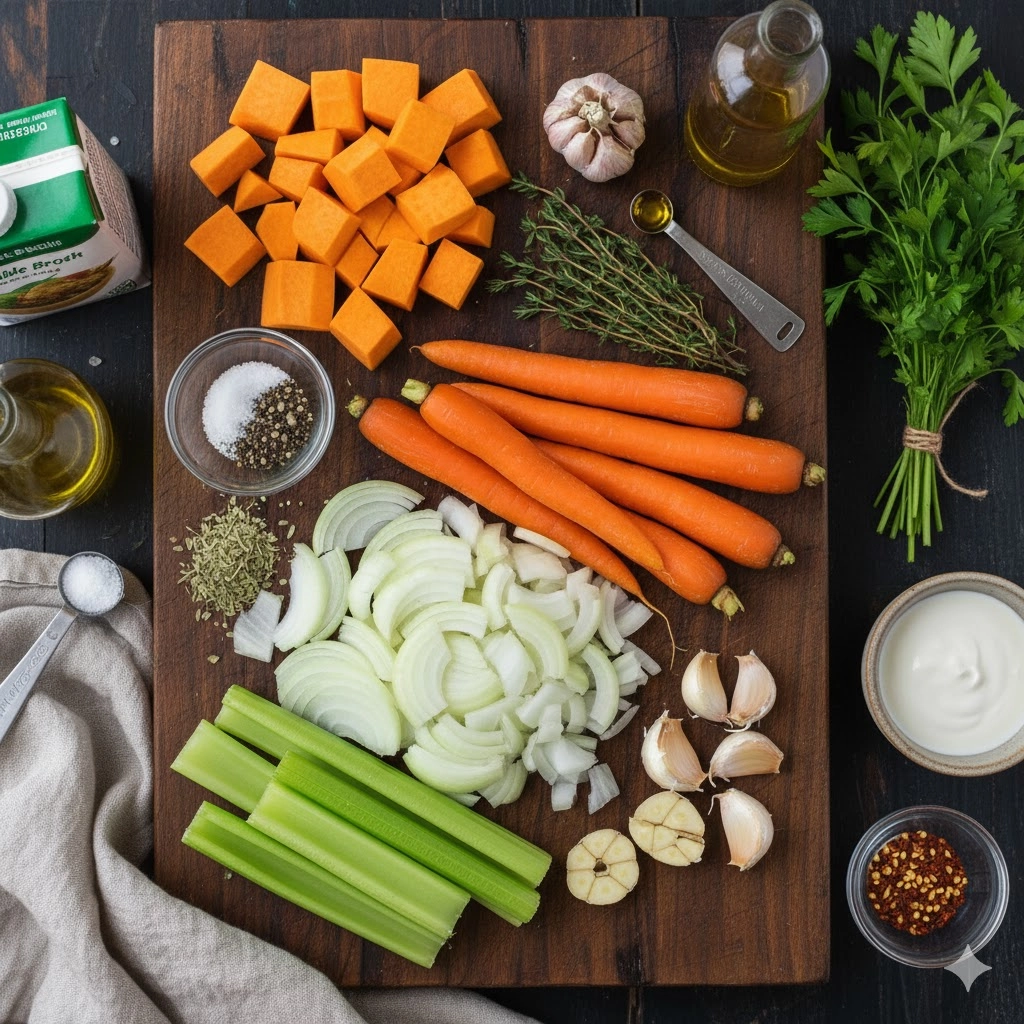
The Essential Components: Gathering the Ingredients
A great soup is built upon the quality of its foundational elements. For this recipe, we focus on a classic medley of root and aromatic vegetables that benefit most from high-heat roasting.
The Produce
- 1 large yellow onion, roughly chopped
- 2 carrots, peeled and roughly chopped
- 2 celery stalks, roughly chopped
- 1 large sweet potato (about 12 ounces), peeled and cubed
- 1 cup (130 grams) butternut squash, peeled and cubed
- 4 cloves garlic, smashed but kept whole
- 1 tablespoon fresh thyme leaves
- 1 teaspoon dried oregano
- 1 teaspoon fine sea salt
- $1/2$ teaspoon freshly cracked black pepper
- 3 tablespoons olive oil
The Liquid Base and Finishers
- 6 cups (1.4 liters) low-sodium vegetable broth (or chicken broth for a non-vegetarian option)
- $1/2$ cup (120 milliliters) heavy cream (or full-fat coconut milk for dairy-free)
- 2 tablespoons fresh parsley, finely chopped, for garnish
- Optional: Pinch of red pepper flakes for heat
The Process: Step-by-Step Overview
This recipe moves seamlessly from oven to pot, ensuring that the development of deep flavor is prioritized at every stage.
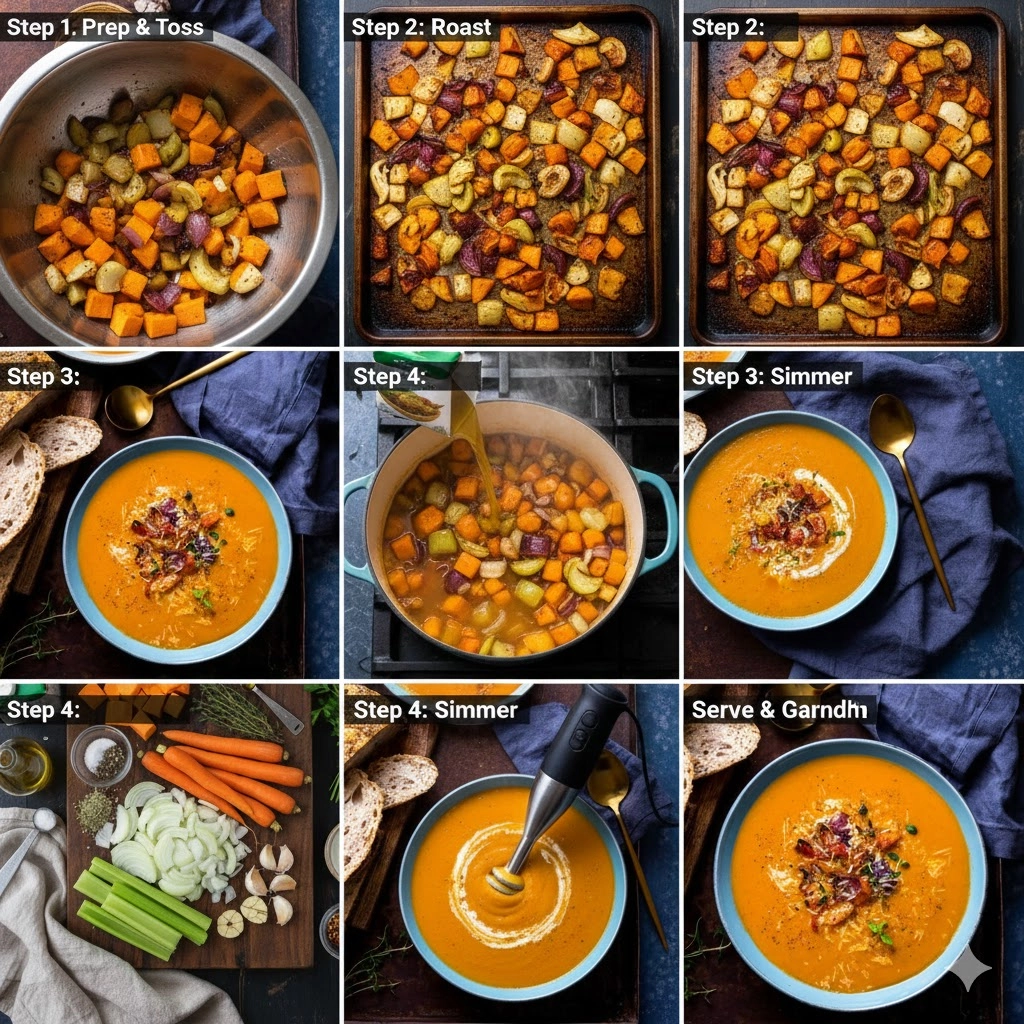
- Prepare the Vegetables for Roasting: Preheat your oven to four hundred twenty-five Fahrenheit. Toss all the chopped vegetables, whole garlic cloves, olive oil, dried herbs, salt, and pepper in a large bowl until evenly coated.
- Achieve Deep Caramelization: Spread the seasoned vegetables in a single layer on a large, rimmed baking sheet. Roast for thirty to forty minutes, stirring once halfway through, until the vegetables are tender and deeply browned around the edges.
- Transfer and Deglaze: Carefully transfer the roasted vegetables and all the accumulated pan drippings into a large, heavy-bottomed pot or Dutch oven. Pour in about one cup of the vegetable broth into the baking sheet and scrape up any browned bits stuck to the bottom, then pour this flavorful liquid into the pot.
- Simmer and Soften: Add the remaining five cups of vegetable broth to the pot. Bring the mixture to a gentle boil, then reduce the heat to a simmer, covering the pot loosely. Cook for fifteen minutes to allow all the flavors to marry.
- Blend to Velvety Smoothness: Remove the pot from the heat. Carefully blend the soup using an immersion blender until it reaches a perfectly smooth, creamy consistency. Alternatively, transfer the soup in batches to a standard blender.
- Enrich and Adjust Seasoning: Return the blended soup to the pot over low heat. Stir in the heavy cream and let it warm through for two to three minutes without allowing it to boil. Taste the soup and add more salt or pepper as needed.
- Serve: Ladle the hot soup into bowls and garnish with a drizzle of olive oil, a swirl of cream, and a generous sprinkle of fresh parsley.
Mastering the Roast: Unlocking Maximum Flavor
The roasting phase is the true secret weapon behind an intensely flavorful roasted vegetable soup, and getting it right means paying close attention to sensory detail.
Pre-Roast Preparation: The Power of Surface Area
Before the vegetables even hit the oven, ensure they are cut into pieces of relatively equal size—about one inch cubes for the hard vegetables like sweet potato and squash. This uniformity guarantees they cook at the same rate. Crucially, dry the surface of your vegetables before tossing them in oil. Excess moisture will steam the vegetables instead of letting them roast, which prevents the desirable browning and surface caramelization that builds flavor. The oil should be enough to lightly coat, not soak, the pieces, promoting a crisp exterior.
The High-Heat Transformation
When the pan goes into the oven at four hundred twenty-five Fahrenheit, the magic begins. The high temperature rapidly draws out the moisture, allowing the natural sugars in the root vegetables (carrots, sweet potatoes, squash) to concentrate and caramelize. After twenty minutes, when you stir the pan, look for vegetables that have a deep golden-brown, almost burnished hue on the sides touching the pan. You should smell a rich, savory sweetness filling your kitchen—a clear sign the vegetables are properly browning. The smashed garlic cloves will have softened and become sweet, losing their sharp pungency entirely.
Building the Broth Base: The Scrape Down
Never let those flavorful brown bits, known as fond, go to waste. When you transfer the vegetables, add a cup of warm broth to the empty roasting pan while it is still hot. Using a wooden spoon or spatula, vigorously scrape up all the caramelized pieces stuck to the metal. This quick deglazing step introduces concentrated flavor directly into your soup base. The liquid should be a murky, deeply flavored brown before you add it to the main pot—it is the essence of the Roasted Vegetable Soup’s complexity.
The Blending Technique for Velvety Texture
Once the soup has simmered, the vegetables will be extremely tender. When using an immersion blender, tilt the pot and keep the head of the blender fully submerged to prevent splashing. Blend until there are no discernible chunks, aiming for a texture that is liquid but has significant body. If using a standard blender, work in small batches, filling the blender only halfway, and always remember to remove the center cap of the lid and cover the opening with a folded towel to allow steam to escape safely, preventing pressure buildup. The goal is a uniform, velvety smoothness that coats the back of a spoon.
Culinary Expertise: Pro Tips for Excellence
Achieving an exceptional soup relies on attention to a few key details that elevate the final dish from good to unforgettable.
- Do Not Crowd the Pan: If your baking sheet is too full, the vegetables will steam, not roast, ruining the caramelization process. Use two sheets if necessary, ensuring a one-inch space between most pieces.
- The Power of Acid: After blending and adding cream, finish the soup with a small, surprising squeeze of fresh lemon juice—about one teaspoon. This little dash of acid cuts through the richness and brightens all the savory-sweet flavors.
- Layer Your Herbs: Use dried herbs (like oregano) for the roasting process where they can infuse under high heat, but reserve fresh, tender herbs (like thyme and parsley) for simmering and garnishing. The fresh herbs retain their brighter, more volatile aromatic oils.
- Toast Your Broth: Before adding the broth, quickly sauté the roasted vegetables in the pot for one minute with a tiny bit more olive oil. This subtle step adds another layer of depth, ensuring the flavors are fully awake before the liquid is introduced.
- Pre-Season, Then Re-Season: Season the vegetables heavily before roasting—this salt helps draw out moisture and promote browning. However, always taste and adjust the salt after blending and adding the cream, as the concentration of flavor changes dramatically.
- Temperature Matters: Ensure your oven is fully preheated to four hundred twenty-five Fahrenheit. A low oven temperature will result in soft, pale vegetables rather than deeply browned ones.
Creative Kitchen Adjustments: Substitutions and Variations
The robust nature of this soup makes it highly adaptable to dietary needs and seasonal availability.
Vegetable Swaps
Feel free to replace the butternut squash and sweet potato with other hard winter squashes or root vegetables. Parsnips, celeriac, or even bell peppers work exceptionally well when roasted. Avoid high-water content vegetables like zucchini, which will not caramelize well.
For a Spicy Kick
Add a seeded and chopped jalapeño to the roasting pan alongside the other vegetables. Alternatively, stir in a pinch of cayenne pepper with the broth, or garnish individual bowls with chili oil.
Making it Creamier
For an ultra-rich texture, replace the heavy cream with half a cup of plain full-fat Greek yogurt or sour cream, stirring it in off the heat at the end. Note that yogurt or sour cream can curdle if boiled, so ensure the soup is only gently warm.
Adding Protein
To transform this into a heartier main course, stir in shredded chicken (if using chicken broth) or one can of drained and rinsed chickpeas or cannellini beans after blending. Simmer for five minutes to allow the beans to warm through.
Pairing Perfection: Serving Suggestions
The intense, concentrated flavor of this soup means it pairs beautifully with simple, classic accompaniments that provide texture and contrast.
- The Classic Grilled Cheese: A simple sandwich on sourdough bread, made with sharp cheddar or Gruyère, is the quintessential partner for a creamy vegetable soup. The salty, crisp contrast is superb.
- Toasted Bread and Toppings: Serve alongside slices of crusty baguette that have been brushed with garlic butter and toasted. Offer topping bowls of crumbled feta cheese, crunchy croutons, and a high-quality balsamic glaze for guests to customize their bowls.
- Simple Green Salad: A side salad with a bright, vinaigrette-based dressing provides a fresh, acidic counterpoint to the rich, earthy flavors of the soup. Use tender greens like butter lettuce or mixed spring greens.
- Savory Swirl: For an elegant finish, mix a teaspoon of pesto (basil or sun-dried tomato) with a swirl of cream and drizzle this over the soup just before serving.

Common Questions About Roasting Soup Vegetables
The process of roasting can sometimes bring up questions about preparation and storage.
Can I prepare the vegetables ahead of time?
Yes, you can prep the vegetables a day in advance. Chop and cube all the root vegetables and store them in an airtight container in the refrigerator. Just before you are ready to roast, toss them with the olive oil and seasoning.
How do I store leftover Roasted Vegetable Soup?
Once cooled completely, store the leftover soup in an airtight container in the refrigerator for up to four days. The flavors actually deepen overnight, making it excellent for meal prep.
Is it necessary to peel all the vegetables?
You should definitely peel the sweet potato and butternut squash, as their skins are tough. However, the skin on carrots is thin and full of nutrients, so giving them a good scrub instead of peeling is perfectly fine and saves prep time.
Can I freeze this soup?
Absolutely. Because the heavy cream is added at the end and is only warming through, it freezes very well. Allow the soup to cool completely, then transfer it to freezer-safe containers, leaving about one inch of headspace. It will keep well for up to three months. Thaw overnight in the refrigerator and reheat gently.
Why did my soup turn out gritty?
Grittiness can occur if you under-blend the soup, especially if using a less powerful blender. Ensure you blend the mixture for a full two to three minutes after it looks smooth. Another common cause is a high ratio of fiber-heavy root vegetables; adding a little extra broth or a splash more cream can help thin it out and mask the texture.
Estimated Nutrition Information
This table provides a generalized estimate for one serving of the finished soup.
| Nutrient | Amount per Serving |
| Calories | 320 kcal |
| Protein | 8 g |
| Carbs | 35 g |
| Fat | 17 g |
| Fiber | 7 g |
| Sugar | 10 g |
| Sodium | 450 mg |
Nutrition Information Disclaimer
Nutrition information is an estimate and may vary based on preparation and ingredients used.

Hearty and Comforting Roasted Vegetable Soup
Ingredients
- 1 large yellow onion, roughly chopped
- 2 carrots, peeled and roughly chopped
- 2 celery stalks, roughly chopped
- 1 large sweet potato (about 12 ounces), peeled and cubed
- 1 cup butternut squash, peeled and cubed
- 4 cloves garlic, smashed but kept whole
- 1 tbsp fresh thyme leaves
- 1 tsp dried oregano
- 1 tsp fine sea salt
- 1/2 tsp freshly cracked black pepper
- 3 tbsp olive oil
- 6 cups low-sodium vegetable broth
- 1/2 cup heavy cream (or full-fat coconut milk)
- 2 tbsp fresh parsley, finely chopped (for garnish)
- pinch of red pepper flakes (optional)
Instructions
- Preheat oven to 425°F. Toss all chopped vegetables, garlic, olive oil, thyme, oregano, salt, and pepper in a large bowl until evenly coated.
- Spread vegetables in a single layer on a baking sheet. Roast for 30–40 minutes, stirring once, until tender and caramelized.
- Transfer roasted vegetables and drippings to a large pot. Deglaze baking sheet with 1 cup broth, scraping up browned bits, and add to the pot.
- Add remaining 5 cups of broth. Bring to a boil, then simmer covered for 15 minutes.
- Blend soup with immersion blender (or in batches in a blender) until smooth and creamy.
- Return soup to low heat. Stir in heavy cream and warm gently for 2–3 minutes. Adjust seasoning.
- Serve hot, garnished with parsley, a swirl of cream or olive oil, and optional red pepper flakes.
Notes
Equipment
- oven
- baking sheet rimmed, large
- large bowl
- Dutch oven or large pot
- immersion blender or standard blender
- wooden spoon or spatula
- ladle