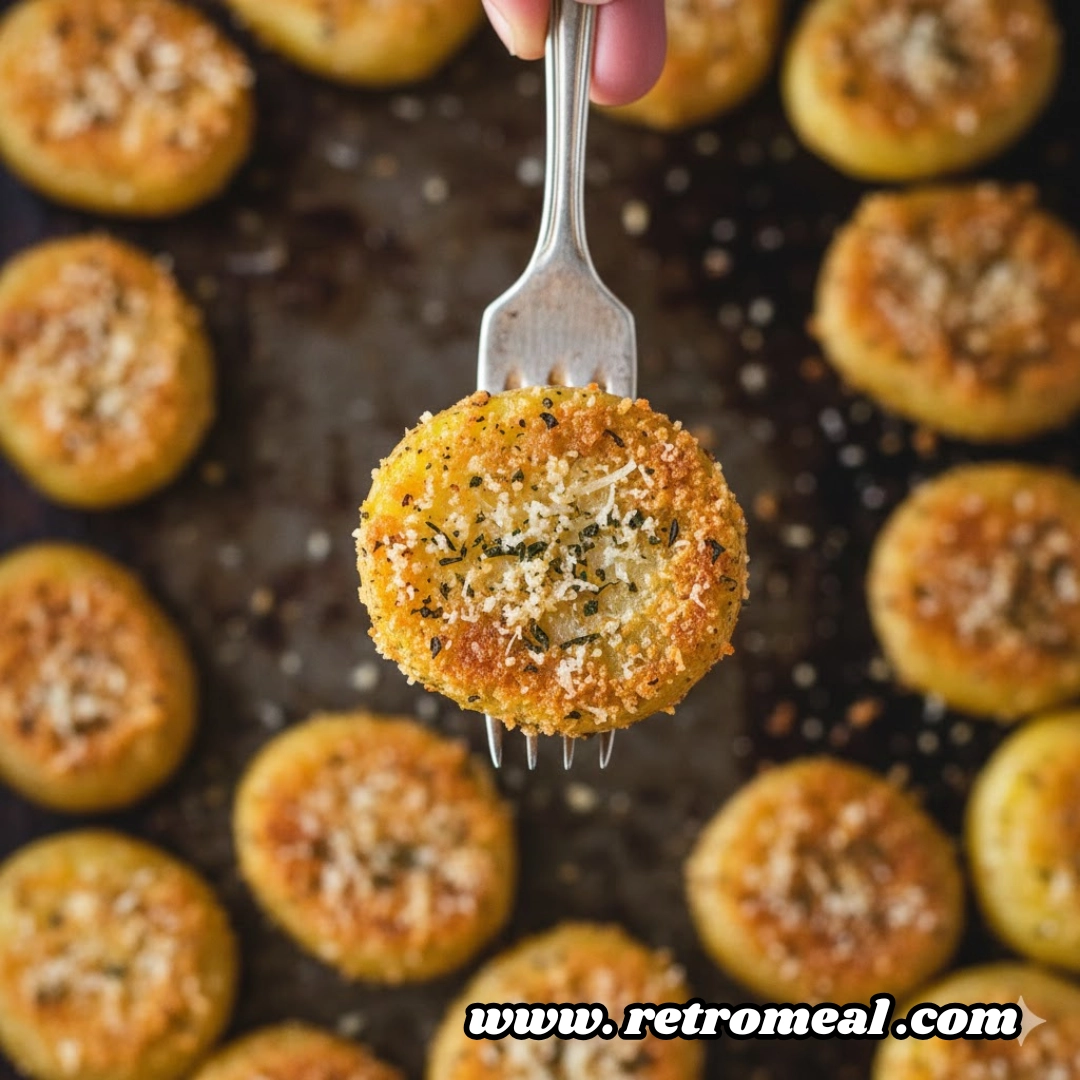
Achieving the perfect contrast between a velvety interior and a shatteringly crisp exterior is the ultimate goal when preparing any potato side dish. While many methods involve tossing vegetables in a bowl before spreading them onto a tray, this specific technique focuses on creating a seasoned crust directly on the baking surface. By placing the vegetables face-down into a layer of oil, cheese, and herbs, you ensure that the heat of the metal pan fries the flat surface of the potato. This results in a concentrated flavor profile and a texture that standard roasting methods often struggle to replicate.
These Roasted Baby Potatoes rely on a clever “reverse-seasoning” method that transforms a simple starch into the highlight of the meal. Using small, waxy varieties like Yukon Gold or red bliss allows for a quick cook time without the need for peeling.1 The addition of finely grated hard cheese provides a savory lamination that adheres to the potato skin and flesh, creating a golden-brown seal. Whether you are preparing a formal Sunday roast or a quick weeknight dinner, this approach yields consistent results with minimal cleanup, as the entire process occurs on a single sheet pan.
Table of Contents
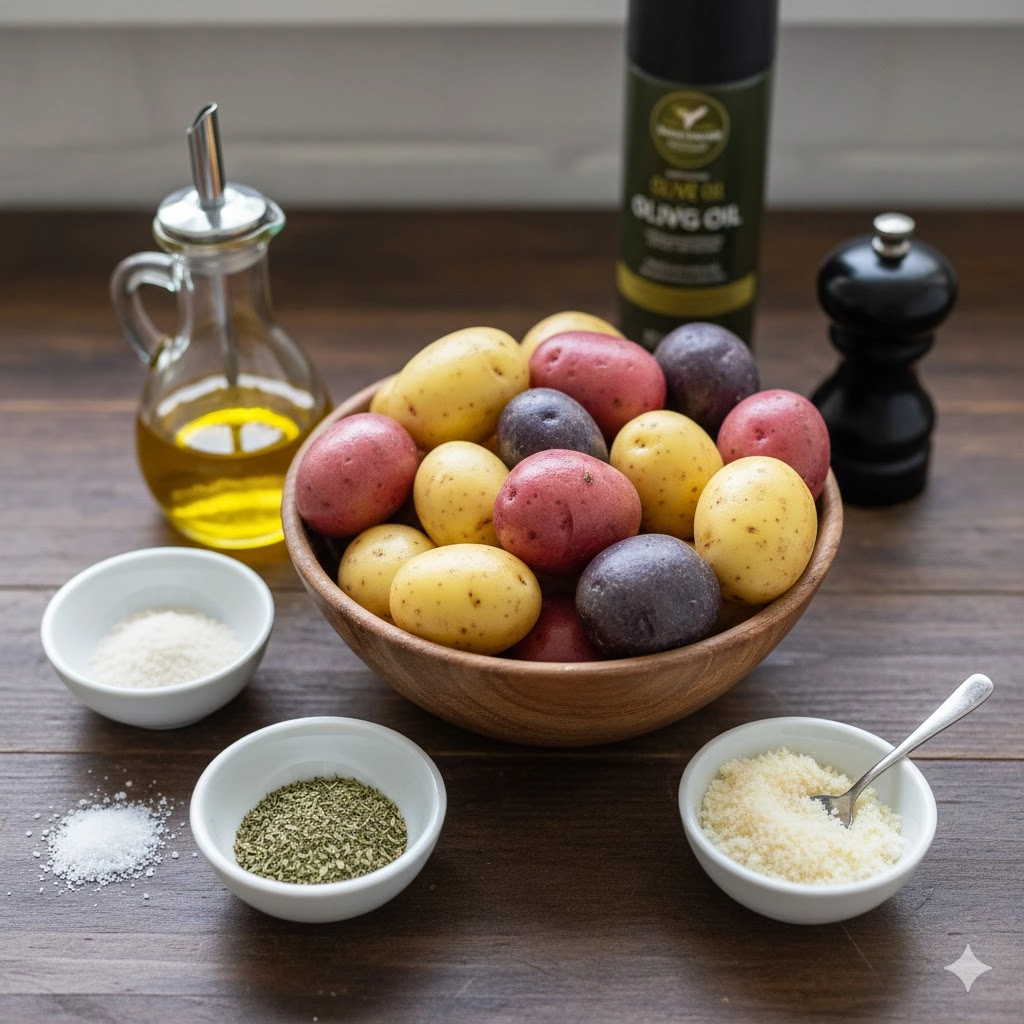
Ingredients
To achieve the best results, ensure your produce is dry after washing, as excess moisture can interfere with the crisping process.
- 1 1/2 pounds small baby potatoes (red, Yukon gold, or multi-color)
- 3 tablespoons extra virgin olive oil
- 1 teaspoon garlic powder
- 1 1/4 teaspoons dried Italian seasoning
- 1 1/2 tablespoons grated Pecorino Romano or Parmesan cheese
- 1/2 teaspoon kosher salt (plus additional for topping)
- Ground black pepper
- Olive oil spray
Instructions
- Begin by preheating your oven to four hundred Fahrenheit. Position the oven rack in the center to ensure even air circulation around the baking sheet.
- Wash and thoroughly dry the baby potatoes, then slice each one in half.
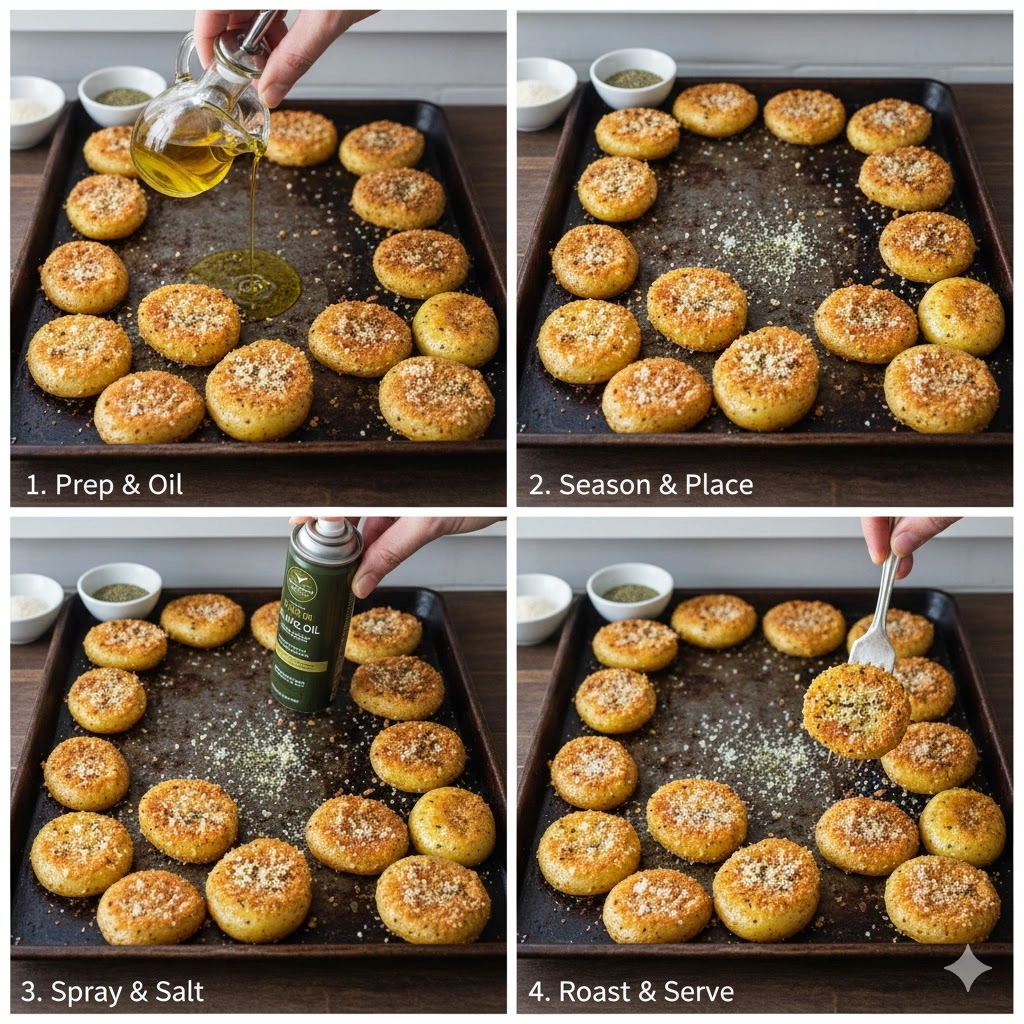
- Take your large sheet pan and drizzle the three tablespoons of extra virgin olive oil across the surface, tilting the pan to ensure the bottom is fully coated.
- Evenly distribute the garlic powder, dried Italian seasoning, grated Pecorino Romano or Parmesan, salt, and black pepper directly onto the oiled surface.
- Arrange the potatoes in a single layer, placing them cut-side down into the seasoned oil mixture.
- Lightly mist the rounded tops of the potatoes with olive oil spray and finish with a small pinch of extra kosher salt.
- Roast in the oven for thirty to forty minutes. The exact timing will depend on the size of the potatoes; they are finished when the bottoms are deeply golden and the centers are tender when pierced with a knife.
Step-By-Step Details and Sensory Cues
Preparing the Foundation
Setting the oven to four hundred Fahrenheit is essential for rendering the fat and activating the Maillard reaction. If the temperature is too low, the potatoes will soften and steam before they have a chance to brown. When preparing the pan, do not be tempted to stir the oil and spices into a paste. Instead, allow the oil to act as a fluid bed for the seasonings. This ensures that when the potato is placed down, the spices are trapped between the potato flesh and the hot metal, effectively “gluing” the crust to the vegetable.
The Placement Technique
The “cut-side down” instruction is the most critical part of this process. The flat surface of the potato has the most surface area in contact with the heat. As the potatoes roast, the starches and the proteins in the cheese will fuse together. You should hear a very faint sizzle almost immediately if your kitchen is quiet. Ensure there is at least a small gap between each potato half; overcrowding the pan leads to trapped steam, which results in a mushy texture rather than a crisp one.
Monitoring Doneness
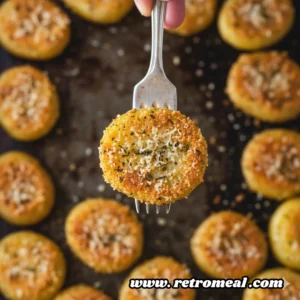
Around the twenty-five minute mark, your kitchen should begin to smell strongly of toasted garlic and herbs. To check for doneness, use a thin paring knife or a metal skewer. It should slide into the thickest part of the potato with zero resistance. The most visual indicator of success is the “halo” of browned cheese appearing around the base of each potato. When you lift one with a spatula, the bottom should be a uniform, dark golden brown, resembling the crust of a well-seared steak.
Pro Tips for Culinary Success
- Dryness is Key: After washing your potatoes, pat them completely dry with a lint-free kitchen towel. Any water left on the skin will turn to steam in the oven, preventing the oil from crisping the exterior.
- Uniform Sizing: If you have a mix of very small and slightly larger baby potatoes, cut the larger ones into quarters instead of halves so that everything finishes cooking at exactly the same time.
- The Spatula Flip: Do not try to move or flip the potatoes halfway through the cooking process. They need the full thirty to forty minutes of undisturbed contact with the pan to develop that signature crust.
- Cheese Quality: Use finely grated cheese (the texture of sand) rather than shredded cheese. Finely grated Pecorino or Parmesan integrates better with the oil and spices to form a cohesive coating.
- Cold Pan Start: Starting with a room-temperature pan and cold oil allows the spices to infuse into the oil gradually as the oven heats, preventing the garlic powder from burning too quickly.
- Preheating Accuracy: Use an oven thermometer to ensure your appliance is actually reaching four hundred Fahrenheit. Many home ovens run twenty to thirty degrees cool, which can drastically change the texture of a roasted vegetable.
Variations and Substitutions
While the Italian-inspired seasoning is a classic choice, this method is highly adaptable to different flavor profiles.
- Herbal Refresh: Replace the Italian seasoning with an equal amount of dried thyme or finely chopped fresh rosemary for a more earthy, pine-like aroma.
- Spice Kick: Add a half-teaspoon of smoked paprika or a pinch of crushed red pepper flakes to the oil base for a hint of heat and a deeper red color.
- Lemon-Garlic: Zest a fresh lemon over the finished potatoes immediately after they come out of the oven to add a bright, acidic lift that cuts through the richness of the oil.
- Alternative Fat: For a different flavor profile, you can use melted duck fat or beef tallow in place of olive oil, though these will provide a much heavier, meatier finish.
Serving Suggestions
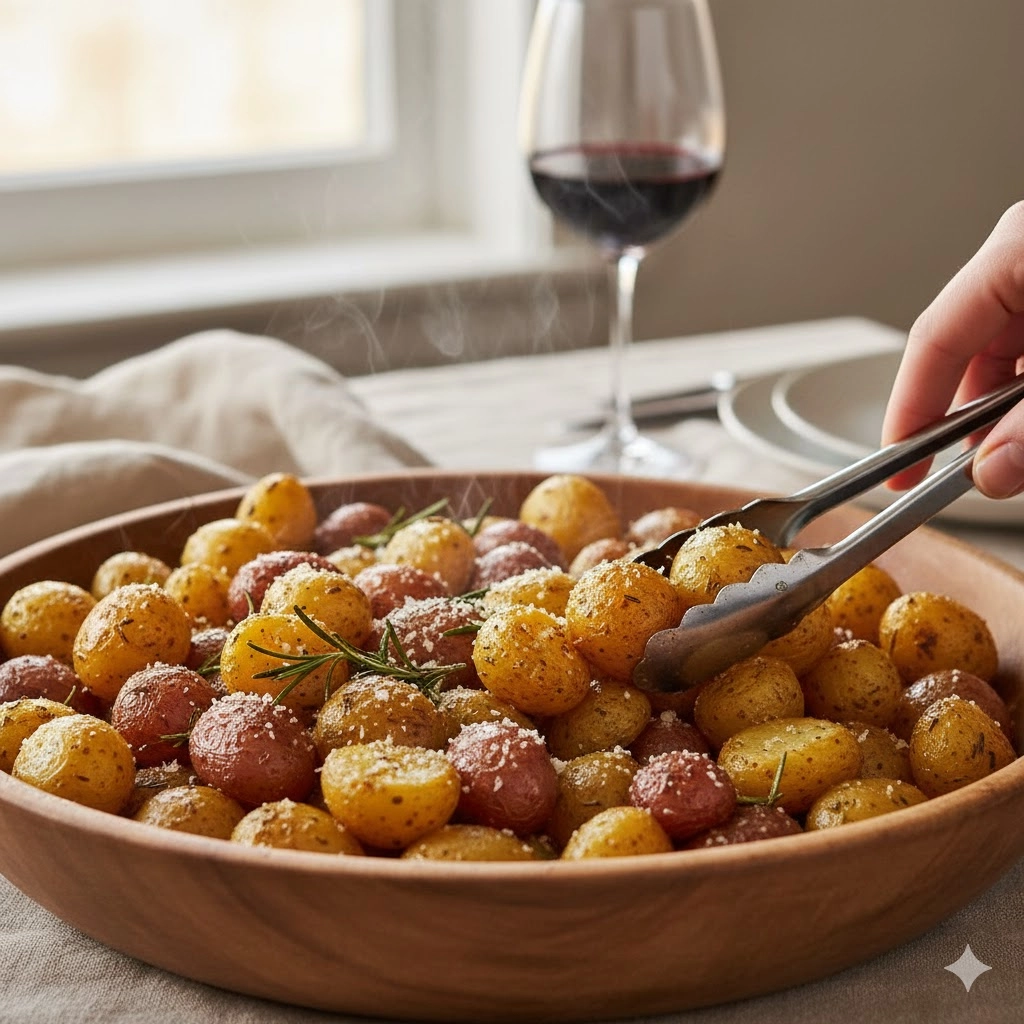
These potatoes are best served piping hot, straight from the baking sheet, to preserve the crunch of the base.
- The Classic Roast: Pair these with a garlic-rubbed roast beef or a roasted chicken. The saltiness of the potatoes complements the savory juices of the meat.
- Breakfast Hash Style: Serve any leftovers alongside over-easy eggs and avocado. The crispy bottoms hold up well even when topped with a runny yolk.
- Steakhouse Side: These make an excellent alternative to a traditional baked potato when served with a seared ribeye and a side of garlicky string beans.
- Dipping Experience: Arrange them on a platter with a small bowl of garlic aioli or a cool Greek yogurt dip seasoned with fresh chives.
FAQs
Why are my potatoes sticking to the pan?
If the potatoes are difficult to remove, they may need another five minutes of cooking. As the crust fully develops and the starches caramelize, they will naturally “release” from the metal. Using a thin metal spatula can also help you lift them without breaking the crust.
Can I use large Russet potatoes for this?
While you can use the same seasoning method, larger potatoes have a higher starch content and thicker skins. You would need to cut them into much smaller, uniform chunks to ensure the interior cooks through at the same rate the exterior crisps.
How do I store and reheat leftovers?
Store any remaining potatoes in an airtight container in the refrigerator for up to four days. To regain the original texture, avoid the microwave. Instead, place them back on a baking sheet at three hundred fifty Fahrenheit for ten minutes, or use an air fryer for three to five minutes.
Nutrition Information
| Nutrient | Amount Per Serving |
| Calories | 150 kcal |
| Total Fat | 7.5 g |
| Saturated Fat | 1 g |
| Cholesterol | 1.5 mg |
| Sodium | 166.5 mg |
| Total Carbohydrates | 18 g |
| Dietary Fiber | 2 g |
| Sugars | 1 g |
| Protein | 3 g |
Disclaimer
Nutrition information is an estimate and may vary based on preparation and ingredients used.
Crispy Oven Roasted Baby Potatoes
Ingredients
- 1.5 pounds small baby potatoes (red, Yukon gold, or multi-color)
- 3 tbsp extra virgin olive oil
- 1 tsp garlic powder
- 1.25 tsp dried Italian seasoning
- 1.5 tbsp grated Pecorino Romano or Parmesan cheese
- 0.5 tsp kosher salt, plus more for topping
- 1 pinch ground black pepper
- 1 spray olive oil spray
Instructions
- Preheat the oven to four hundred Fahrenheit and set the rack for the center of the oven. Cut the potatoes in half.
- Drizzle the olive oil on the bottom of the sheet pan, spreading out to evenly cover the bottom.
- Evenly sprinkle the oil with the garlic powder, Italian seasoning, grated cheese, salt, and pepper.
- Place the potatoes over the seasoning, cut side down in an even layer. Spritz the tops of the potatoes with olive oil spray and season the tops with a pinch more salt.
- Bake in the center of the oven, thirty to forty minutes, depending on the size of the potatoes, until the bottoms are golden and the potatoes are tender when pierced with a knife.
Notes
Equipment
- Large rimmed sheet pan
- Sharp chef’s knife
- cutting board
- Metal spatula Helpful for releasing the crispy crust from the pan.