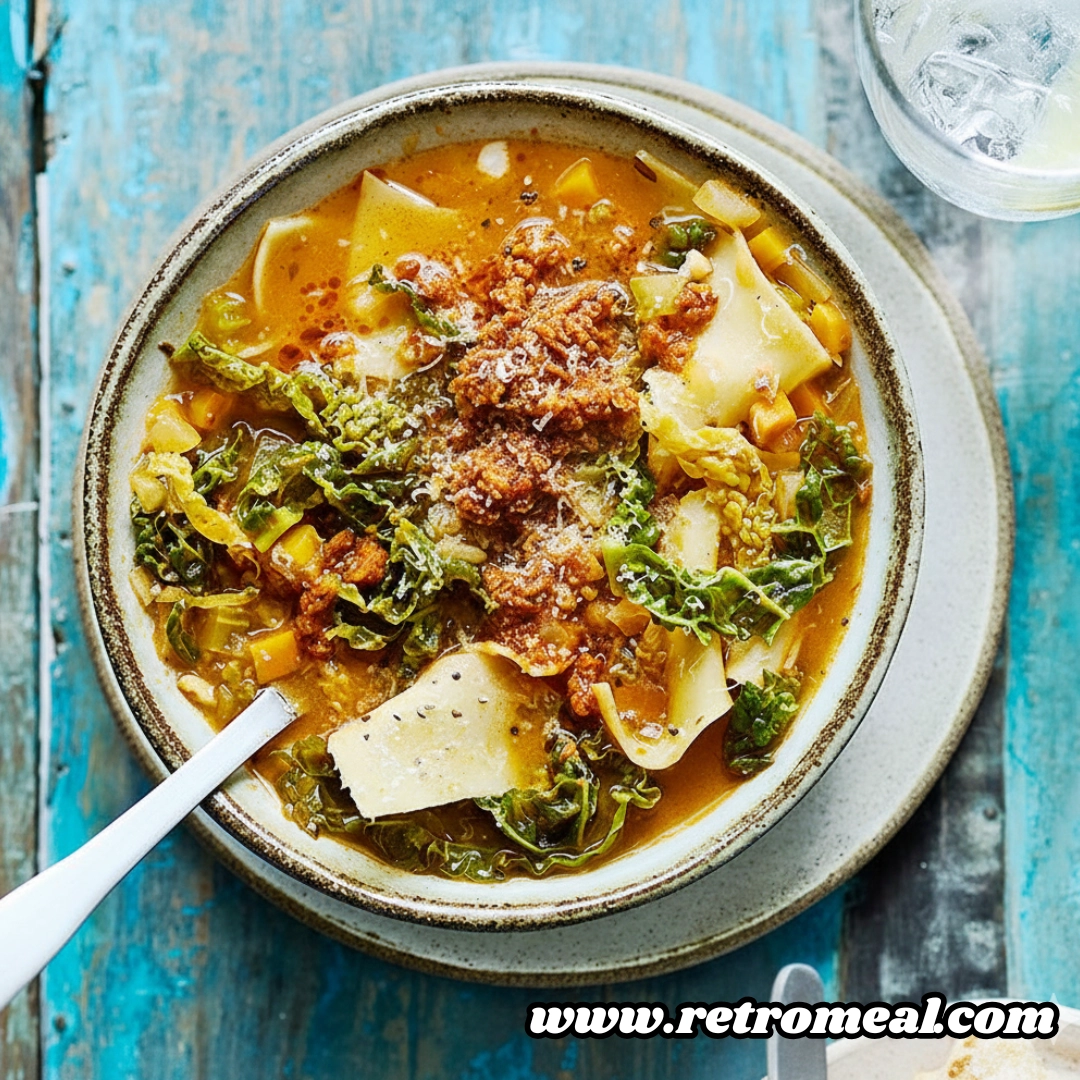
Minestrone has long been celebrated as the ultimate “kitchen sink” soup, a versatile and hearty Italian staple that adapts to the seasons and the contents of your pantry. However, this Red Pesto Minestrone Soup elevates the traditional vegetable-heavy broth by introducing the concentrated, sun-dried sweetness of red pesto. By incorporating savory cabbage, snapped lasagne sheets, and a rich tomato base, this dish transforms from a simple starter into a robust main course. It is a comforting, soul-warming bowl that balances the brightness of garden vegetables with the deep, umami-rich notes of Mediterranean herbs and parmesan cheese.
Table of Contents
The Essential Ingredients for Your Soup
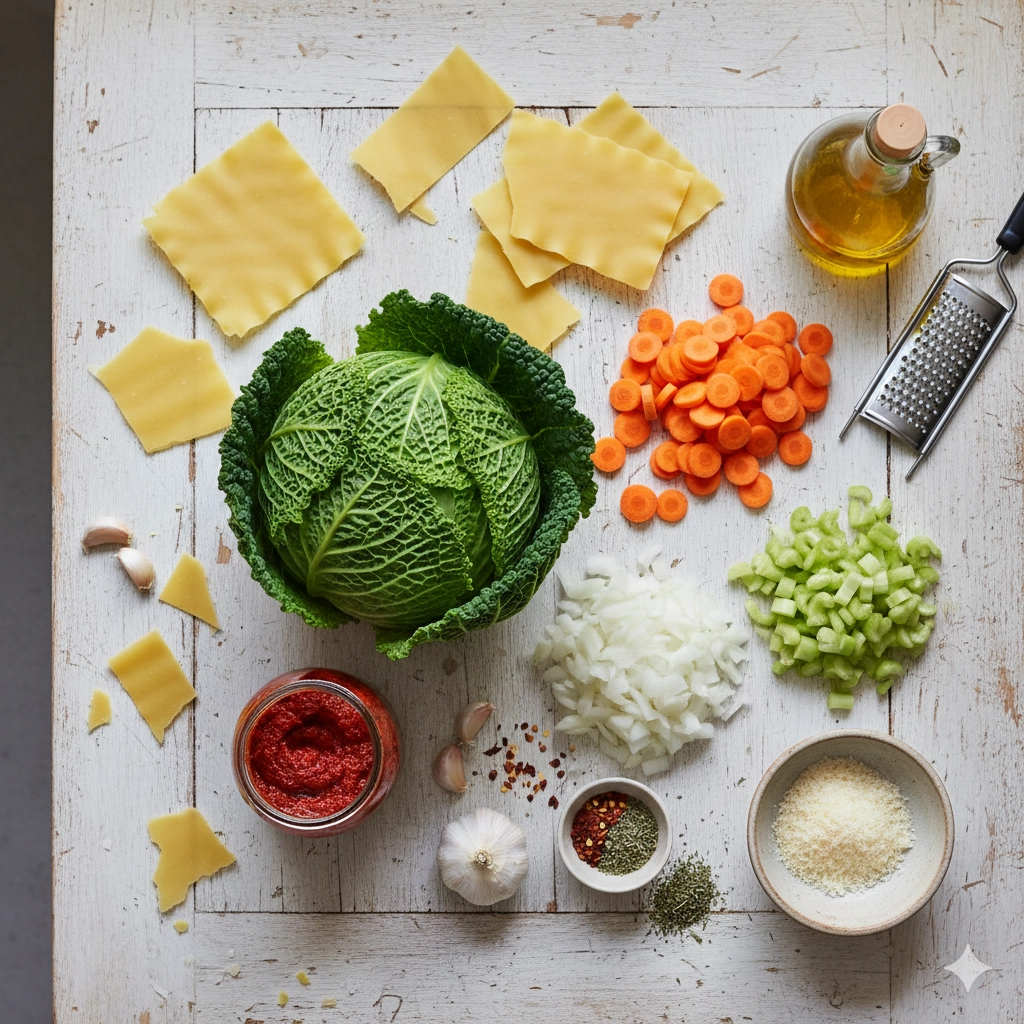
To create this flavorful masterpiece, gather the following high-quality components. Ensure your vegetables are fresh to maximize the natural sweetness they release during the slow softening process.
- 2 tablespoons olive oil
- 1 onion, finely chopped
- 1 carrot, finely chopped
- 1 celery stick, finely chopped
- One half Savoy cabbage, leaves shredded and the core finely chopped
- 3 garlic cloves, finely chopped
- One half teaspoon chilli flakes (optional for a hint of warmth)
- 1 teaspoon dried mixed herbs
- 1 tablespoon tomato purée
- 1.5 litres low-salt vegetable stock
- 4 tablespoons red pesto (ensure it is a vegetarian-certified brand if following a meat-free diet)
- 100 grams dried lasagne sheets, roughly snapped into bite-sized pieces
- 20 grams parmesan or a vegetarian-style hard cheese alternative, finely grated for serving
Master Instructions for the Perfect Bowl
Follow these specific steps to ensure the layers of flavor develop correctly, resulting in a cohesive and rich broth.
- Begin by heating the olive oil in a large, heavy-bottomed flameproof casserole dish over a medium heat setting. Once the oil is shimmering, scatter in the chopped onion, carrot, celery, and the finely chopped cabbage core. Add a generous pinch of salt and cook the mixture for 15 minutes. This long, slow cook is vital for softening the aromatics and drawing out their natural sugars.
- Next, sprinkle in the chopped garlic cloves, the optional chilli flakes, and the dried mixed herbs. Allow these to toast for approximately 2 minutes until fragrant.
- Squeeze the tomato purée into the center of the pot. Stir it into the vegetables and cook for 3 to 4 minutes. You are looking for the paste to darken in color, which indicates the sugars are caramelizing and the raw metallic taste is disappearing.
- Carefully pour in the 1.5 litres of vegetable stock. Increase the heat to bring the liquid to a rolling boil, then immediately reduce the heat and let it simmer gently for 5 minutes.
- Stir in 3 tablespoons of the red pesto, followed by the shredded cabbage leaves and the snapped lasagne pieces. It is important to stir well at this stage to prevent the pasta sheets from sticking together in clumps.
- Cook the soup for an additional 6 to 8 minutes. Continue to stir frequently. The soup is ready when the pasta is tender and the cabbage has softened but still retains a slight bite (al dente).
- Ladle the hot soup into deep bowls. Finish each portion with a small dollop of the remaining red pesto and a light dusting of grated parmesan cheese.

Deep-Dive Analysis of the Cooking Process
The beauty of this Red Pesto Minestrone Soup lies in the “soffritto”—the foundational mixture of onion, carrot, and celery. In this version, we also include the chopped core of the Savoy cabbage. While many home cooks discard the core, it actually contains a concentrated cabbage flavor and provides a wonderful structural element when finely diced and softened in olive oil. Spending the full 15 minutes on this initial stage is not just a suggestion; it is the secret to a professional-tasting soup. This slow sweat allows the vegetables to lose their raw edge and form a sweet, savory base that carries the rest of the ingredients.
The transition from the vegetables to the broth is handled with the addition of tomato purée. By “frying” the purée for a few minutes before adding the stock, you initiate a process called the Maillard reaction. This turns the bright red paste into a deep, rust-colored essence that adds a complex, meaty depth to the vegetable broth. When you finally add the vegetable stock, you are pouring it over a highly concentrated base of flavor.
The use of snapped lasagne sheets is a rustic, “cucina povera” technique. Instead of buying small soup pasta, using broken lasagne creates varied textures and larger “silks” of pasta that catch the pesto and cabbage leaves. The starch released from the pasta as it simmers directly in the broth helps thicken the soup slightly, giving it a more luxurious mouthfeel than a clear broth.
Enhancing Your Culinary Technique
When preparing this dish, the texture of the Savoy cabbage is paramount. Savoy cabbage is distinct from standard green cabbage due to its crinkled, lace-like leaves and more delicate flavor. When you shred the leaves, try to keep them in ribbons of roughly the same width as your snapped pasta pieces. This ensures that every spoonful contains a harmonious mix of ingredients.
If you find that your soup is becoming too thick as the pasta absorbs the liquid, do not hesitate to add a splash more of hot vegetable stock or water. Pasta continues to hydrate even after the heat is turned off, so if you aren’t serving the soup immediately, you may need to adjust the consistency right before it hits the table.
For the red pesto, quality matters. A high-quality red pesto typically uses sun-dried tomatoes, peppers, and pine nuts. This brings a concentrated acidity and sweetness that standard green basil pesto lacks. By swirling a fresh teaspoon of pesto onto the top of the bowl just before serving, you provide a “bright” flavor hit that contrasts beautifully with the mellow, simmered flavors of the broth.
Optimal Accompaniments and Presentation
A soup this robust deserves a side dish that can handle the weight of the broth. A thick slice of toasted sourdough or a piece of crusty Italian ciabatta is the traditional choice. Rubbing the toasted bread with a raw clove of garlic before drizzling it with extra virgin olive oil can mirror the garlic notes within the soup.
For a more modern presentation, consider serving the soup in wide, shallow bowls. This allows the vibrant red swirls of the pesto and the bright green of the Savoy cabbage to be fully visible. You can also garnish with a few fresh basil leaves or a crack of black pepper to add a final aromatic touch. If you want to lean into the Mediterranean theme, a side salad of bitter greens like arugula or radicchio with a sharp lemon vinaigrette provides a refreshing palate cleanser between bites of the rich, pesto-infused soup.
Modifications and Flavor Variations
While the red pesto provides a unique sun-dried tomato profile, this recipe is incredibly adaptable. If you prefer a more herbaceous and bright green profile, you can substitute the red pesto for a classic Pesto alla Genovese. For those who enjoy a bit of heat, using a spicy Calabrian chili pesto will transform the dish into a “Minestrone Arrabbiata.”
If Savoy cabbage isn’t available, dinosaur kale (lacinato kale) or Swiss chard make excellent substitutes. These greens have a similar sturdiness that holds up well during the final simmer. For a gluten-free version, simply swap the lasagne sheets for your favorite gluten-free pasta shape or even diced potatoes, though you should add potatoes earlier in the cooking process to ensure they are fully tender.
Frequently Asked Questions
Can I make this soup in advance for meal prep?
Yes, this soup stores remarkably well in the refrigerator for up to three days. However, be aware that the pasta will continue to absorb the broth as it sits, which can lead to the pasta becoming very soft and the soup becoming quite thick. When reheating, it is best to add a small amount of water or vegetable stock to the pot to bring it back to your desired consistency.
What is the best way to snap lasagne sheets without making a mess?
To get clean, bite-sized pieces without shards flying across the kitchen, wrap the dry lasagne sheets in a clean kitchen towel before snapping them with your hands. This contains the pieces and allows you to break them into roughly two-inch sections, which are ideal for the spoon.
Is there a way to make this recipe vegan?
The soup itself is nearly vegan, provided you check the label on your red pesto. Many commercial pestos contain cheese (Parmesan or Pecorino). To make it fully vegan, select a pesto brand that uses nutritional yeast or extra nuts instead of cheese, and omit the final parmesan garnish or replace it with a vegan-friendly hard cheese alternative.
Why do I need to cook the cabbage core separately from the leaves?
The core of a Savoy cabbage is much denser and tougher than the delicate, crinkled leaves. By finely chopping the core and sautéing it with the onions and carrots at the beginning, you give it the necessary time to soften and become sweet. If you added the core at the same time as the leaves, the core would remain crunchy and unpleasant while the leaves would be perfectly cooked.
A Final Note on This Comforting Dish
Bringing this Red Pesto Minestrone Soup to your table is about more than just a quick meal; it is about embracing the slow, methodical building of flavors that defines great Italian home cooking. The combination of caramelized tomato purée, the earthy sweetness of Savoy cabbage, and the punchy brightness of red pesto creates a multi-dimensional experience. Whether you are serving it on a cold winter evening or as a nutritious weekday lunch, this soup stands as a testament to how simple ingredients, when treated with care, can result in something truly extraordinary.
Nutritional Profile
The following values are estimated per serving based on the recipe providing four portions.
| Nutrient | Amount Per Serving |
| Calories | 291 kcal |
| Total Fat | 14 grams |
| Saturated Fat | 3 grams |
| Carbohydrates | 30 grams |
| Sugars | 0 grams |
| Fiber | 7 grams |
| Protein | 7 grams |
| Salt | 0.7 grams |
Disclaimer
Nutritional information provided is an estimate based on standard ingredient measurements. Actual nutritional content may vary depending on the specific brands of pesto, stock, and pasta utilized. For those with specific dietary requirements or medical conditions, please consult with a professional nutritionist.
Red Pesto Minestrone Soup
Ingredients
- 2 tbsp olive oil
- 1 onion, finely chopped
- 1 carrot, finely chopped
- 1 celery stick, finely chopped
- 0.5 Savoy cabbage, leaves shredded and the core finely chopped
- 3 cloves garlic, finely chopped
- 0.5 tsp chilli flakes (optional)
- 1 tsp dried mixed herbs
- 1 tbsp tomato purée
- 1.5 litres low-salt vegetable stock
- 4 tbsp red pesto
- 100 grams dried lasagne sheets, roughly snapped
- 20 grams parmesan or vegetarian alternative, grated, to serve
Instructions
- Heat the olive oil in a large flameproof casserole dish over medium heat. Add the onion, carrot, celery, and finely chopped cabbage core with a pinch of salt. Cook for 15 minutes until softened.
- Stir in the garlic, chilli flakes, and dried mixed herbs. Cook for 2 minutes, then add the tomato purée and cook for another 3 to 4 minutes until the paste darkens.
- Pour in the vegetable stock and bring the mixture to a boil. Reduce the heat and simmer gently for 5 minutes.
- Stir in 3 tablespoons of the red pesto, the shredded cabbage leaves, and the snapped lasagne pieces. Stir well to prevent the pasta from clumping.
- Cook for 6 to 8 minutes, stirring often, until the pasta and cabbage are tender but still have a slight bite. Serve topped with the remaining pesto and parmesan.
Notes
Equipment
- Large flameproof casserole dish or Dutch oven
- wooden spoon or spatula
- chef’s knife
- cutting board
- ladle