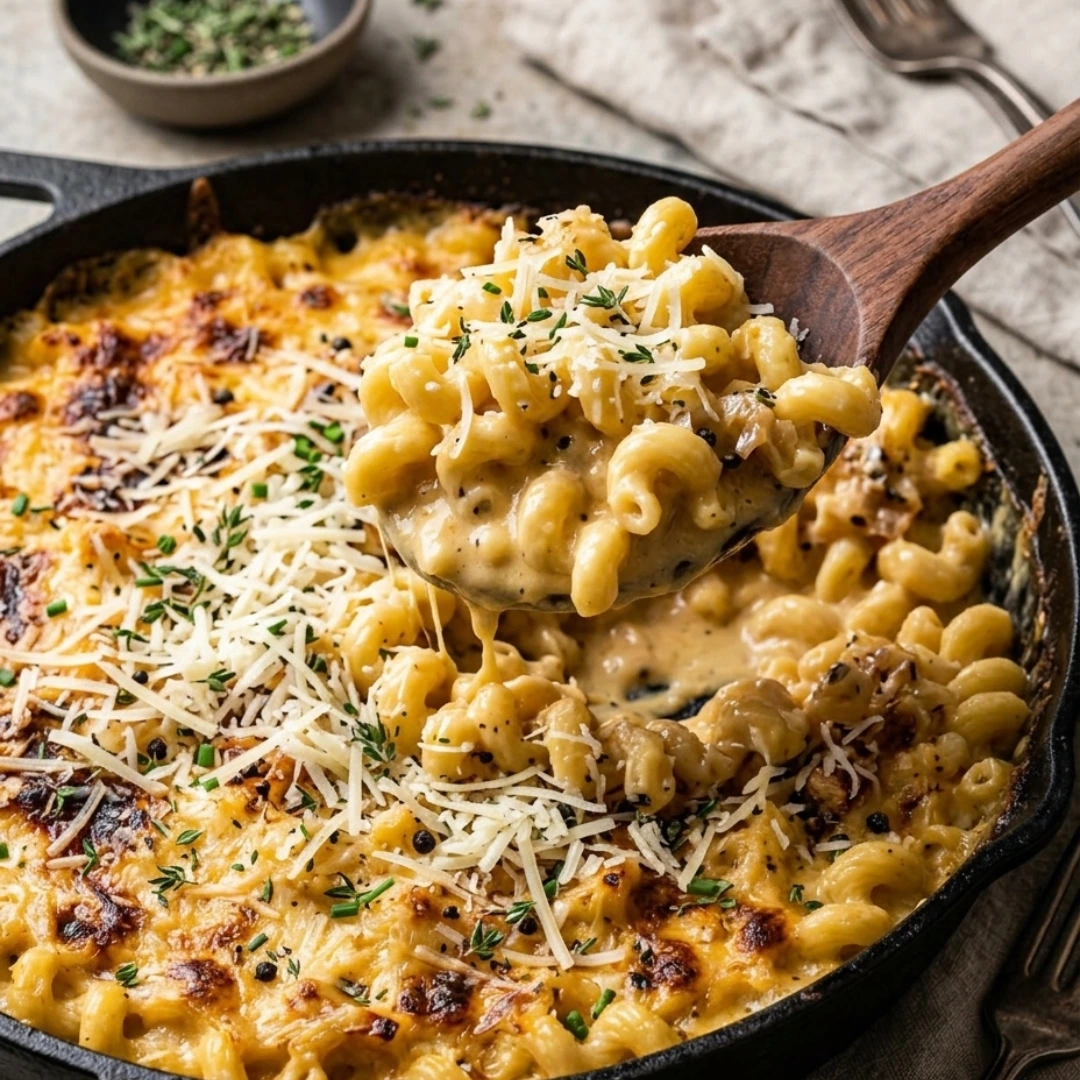
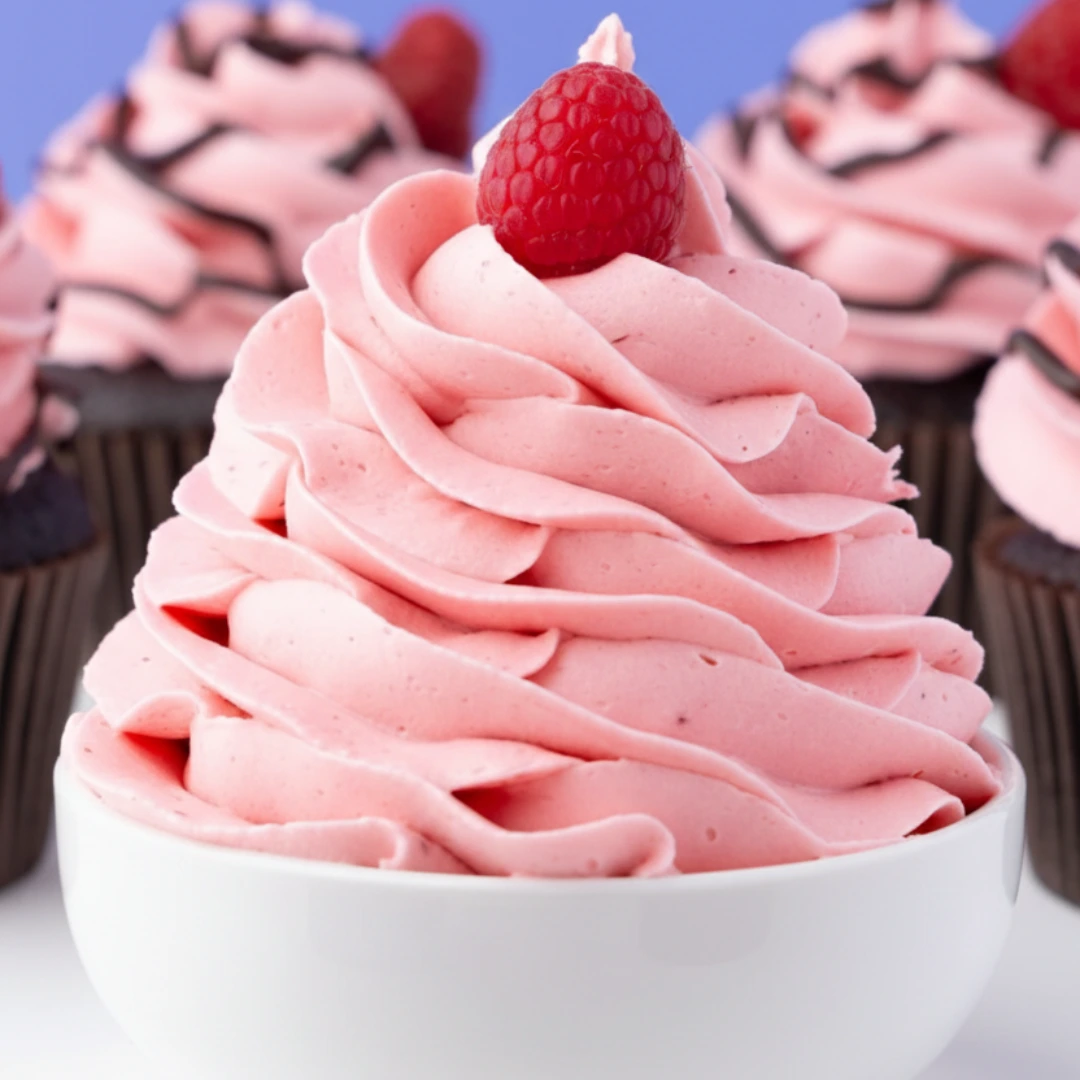
There is something undeniably magical about the pairing of fresh, tart berries and rich, velvety butter. When you combine them into a single topping, you get more than just a garnish; you get the star of the show. This Raspberry Buttercream Frosting is the crown jewel of cake toppings, offering a sophisticated balance of sweetness and acidity that cuts through even the richest chocolate sponge or complements the delicate crumb of a classic vanilla bean cupcake.
Unlike many fruit-flavored frostings that rely on artificial extracts or messy jams, this version utilizes a concentrated fruit reduction. This method ensures you get a punch of authentic berry flavor and a stunning, naturally pink hue without compromising the structural integrity of your buttercream. Whether you are prepping for a summer garden party or a cozy winter celebration, this frosting brings a bright, fresh energy to your kitchen.
Table of Contents
Ingredients
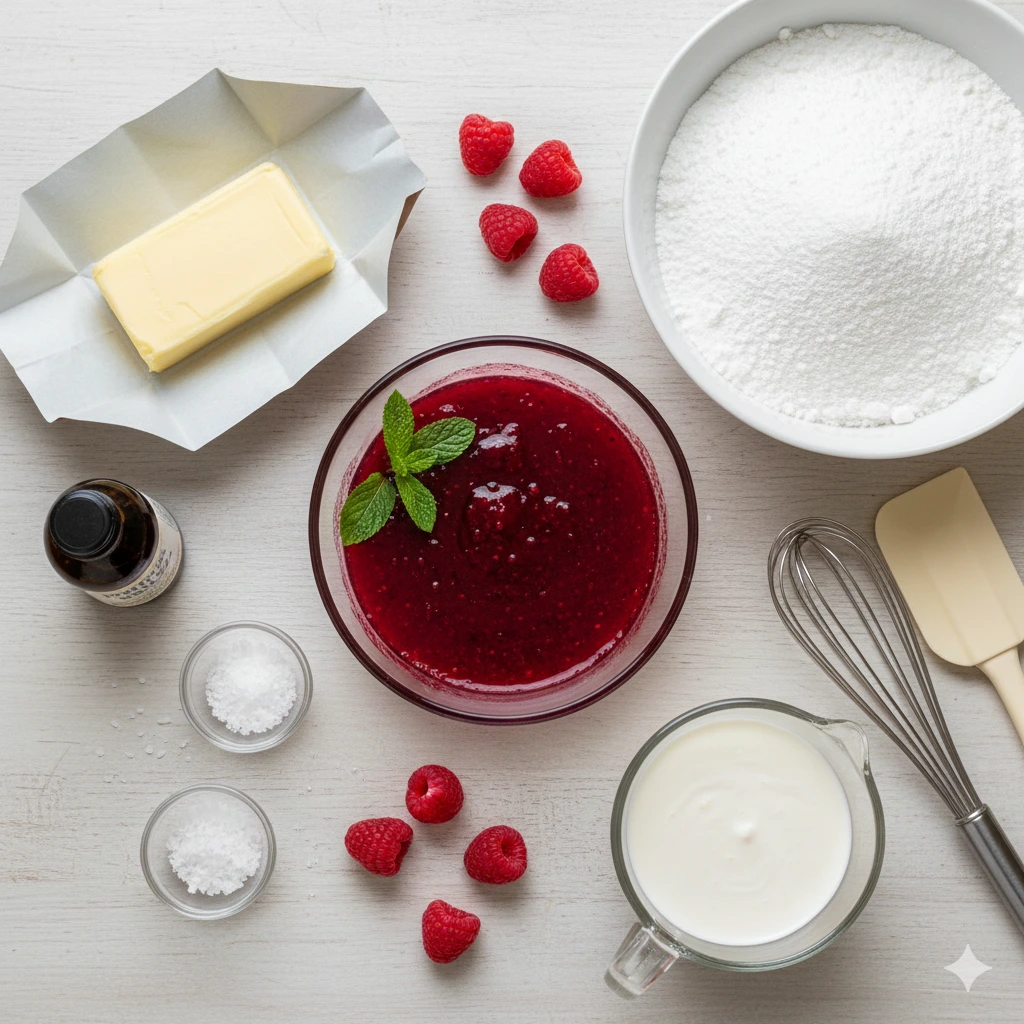
- 2 cups unsalted butter (ensure it is at room temperature)
- 5 cups powdered sugar
- 1/2 cup raspberry reduction (cooled to room temperature)
- 1/4 cup heavy cream (room temperature)
- 2 tsp vanilla extract
- 1/2 tsp salt
Instructions
- Prepare your raspberry reduction well in advance. It must be completely cooled to room temperature before it touches the butter. You can even make this a week ahead and keep it chilled, just ensure it sits out on the counter to lose its chill before starting the frosting.
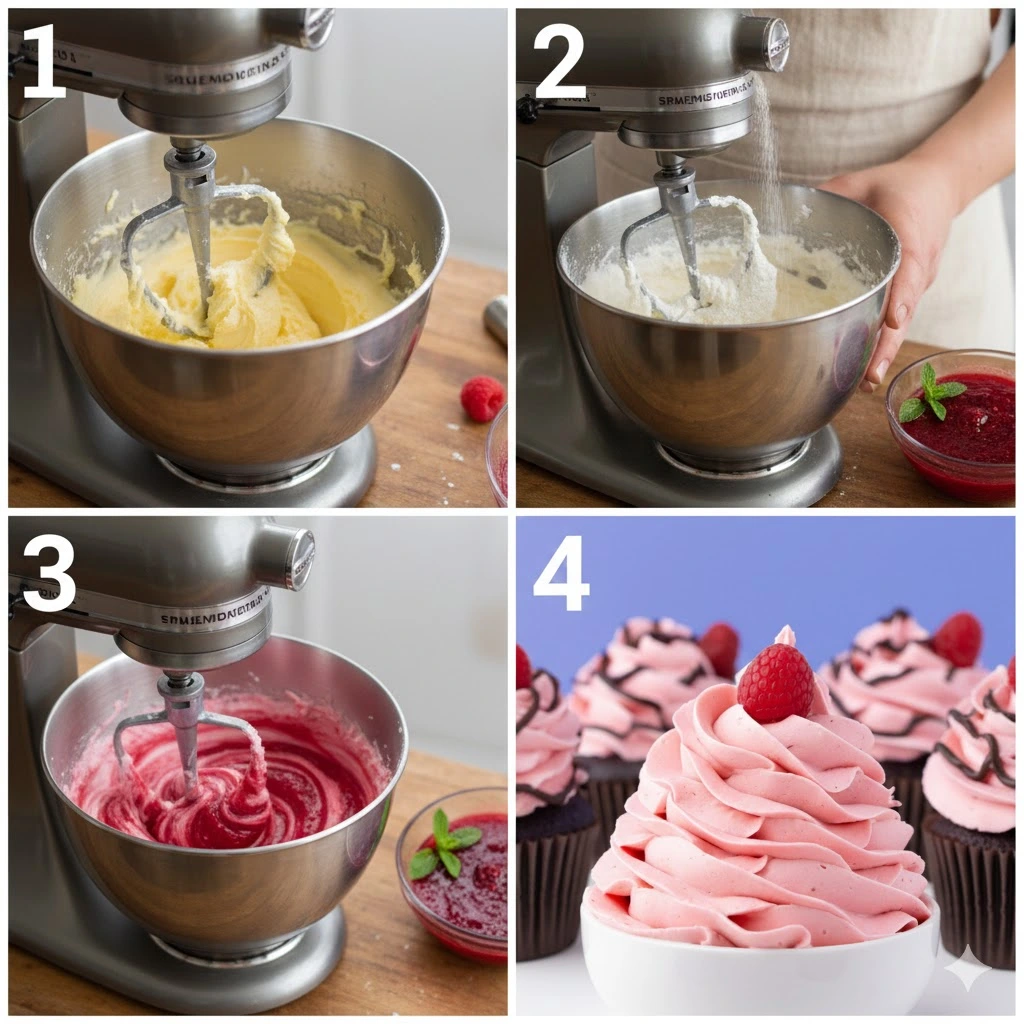
- In the bowl of a stand mixer equipped with the paddle attachment, or using a large bowl and an electric hand mixer, begin by whipping the room temperature unsalted butter. Process on medium-high speed for a full 5 minutes. The butter should transform from a yellow state to a very pale, almost white, voluminous fluff.
- Turn the mixer to its lowest setting. Introduce half of the powdered sugar. Mix until the sugar is mostly absorbed to avoid a “sugar cloud” in your kitchen. Add the remaining half of the powdered sugar and continue mixing on low until the sugar and butter are fully incorporated.
- Keep the mixer on low and pour in the raspberry reduction. Mix until the color is uniform.
- Add the heavy cream, vanilla extract, and salt. Continue mixing on a low speed until the liquid is absorbed and the mixture looks smooth. Be sure to stop the mixer and use a rubber spatula to scrape the very bottom and the sides of the bowl to ensure no streaks of butter remain.
- Turn the speed up to medium and whip the frosting for 3 to 5 minutes. It will become incredibly light and airy. If it looks like it is curdling at first, do not panic; just keep whipping until it emulsifies. Once smooth, turn the mixer back to low for two minutes to knock out any large air pockets.
- For an extra-silky finish, take 1 cup of the finished frosting and place it in a microwave-safe bowl. Heat for 15 seconds until melted. Pour this liquid frosting back into the main batch and mix on low speed. This “tempering” step creates a professional, glossy finish.
Step-by-Step Details and the Science of Berry Buttercream
Creating a fruit-based buttercream is a lesson in the science of emulsion. When we talk about “wiping the butter for five minutes,” we aren’t just being dramatic. This process, known as creaming, forces air into the solid fat. These tiny air bubbles are what give buttercream its lift and “melt-in-your-mouth” quality. If you skip this step, your frosting will feel heavy and greasy on the tongue. By the end of those five minutes, the butter should look like a soft cloud.
The introduction of the raspberry reduction is where the chemistry gets interesting. Traditional American buttercream is a mixture of fat (butter) and sugar. When you add a fruit reduction, you are introducing water and acid into that fat. Usually, oil and water don’t mix, which is why your frosting might look “split” or “curdled” the moment the berries hit the bowl.
The secret to overcoming this is mechanical force and temperature. By whipping the mixture at medium speed, you are forcing those microscopic water droplets from the raspberry juice to stay suspended within the butter’s fat network. This is also why room temperature ingredients are non-negotiable. If the reduction is cold, it will seize the butter into tiny hard chunks. If the butter is too warm, it won’t hold the air. Patience during the final 3 to 5 minutes of whipping is what transforms a grainy, separated mess into a cohesive, silky masterpiece.
Unique Culinary Insights for Success
To achieve a bakery-quality finish, you must master the art of the “tempered” buttercream. Many home bakers struggle with “air bubbles” or a “spongy” texture that makes piping difficult. The optional step of melting a small portion of the frosting and re-incorporating it is a professional trick. This slight change in temperature breaks down the largest air bubbles, resulting in a frosting that glides off the spatula like silk. It makes your piped swirls look significantly smoother and more reflective.
Furthermore, let’s talk about the salt. While 1/2 teaspoon might seem negligible in a sea of sugar, it is the most important balancing agent in the recipe. Raspberry is naturally acidic and tart. The salt doesn’t make the frosting “salty”; rather, it suppresses the bitterness of the seeds (if any remain) and enhances the perception of the berry’s sweetness. It prevents the frosting from being “cloyingly sweet,” a common complaint with American buttercreams.
Lastly, consider the paddle vs. the whisk. While a whisk attachment incorporates more air, it can often create too many bubbles for a smooth finish on a layer cake. The paddle attachment is generally preferred for this specific recipe because it provides enough power to emulsify the fruit reduction without turning the frosting into a foam.
Variations and Recipe Modifications
While this recipe is designed to be the gold standard of raspberry frosting, there are ways to tweak it to fit your specific dietary needs or flavor preferences.
- Dairy-Free Adaptation: You can substitute the unsalted butter with a high-quality plant-based butter stick. Avoid tub-style margarines, as they have a higher water content and will cause the frosting to collapse. For the heavy cream, a full-fat coconut cream or a heavy oat cream works beautifully.
- The Cream Cheese Twist: If you prefer a tangier profile, some bakers enjoy replacing 8 ounces of the butter with 8 ounces of full-fat brick cream cheese. Note that this will make the frosting softer, so you may need to add an extra half cup of powdered sugar to maintain its pipeable structure.
- Salted Butter Swap: If you only have salted butter on hand, simply omit the 1/2 teaspoon of salt called for in the recipe.
- Flavor Boosters: To lean into a “Raspberry Lemonade” vibe, add 1 tablespoon of fresh lemon zest during the final whipping stage. The citrus oils in the zest will pop against the raspberry reduction.
Perfect Accompaniments and Serving Suggestions
This raspberry buttercream is incredibly versatile, but it truly shines when paired with specific flavor profiles.
- The Dark Chocolate Contrast: The classic pairing. Use this frosting to top a deep, dark Dutch-processed chocolate cake. The tartness of the berries cuts through the richness of the cocoa perfectly.
- Lemon and Citrus: For a bright, spring-themed dessert, pair this with a lemon zest sponge. The acidity in both the frosting and the cake creates a refreshing, palate-cleansing effect.
- Almond Elegance: Raspberry and almond is a timeless duo. Use this buttercream on an almond-scented white cake for a wedding-style dessert.
- Cookie Sandwiches: Don’t limit yourself to cakes. This frosting is stiff enough to be used as a filling for French macarons or sandwiched between two dark chocolate shortbread cookies.
When serving, remember that butter-based frostings are best enjoyed at a cool room temperature. If the cake has been refrigerated, let it sit out for at least 30 to 60 minutes before serving. This allows the butter to soften, ensuring the texture is creamy rather than waxy.
Deep-Dive FAQ
What exactly is a raspberry reduction and why can’t I just use jam?
A raspberry reduction is made by simmering fresh or frozen raspberries (and usually straining the seeds) until the water evaporates and only the concentrated flavor and color remain. Jam contains high amounts of pectin and added sugar, which can change the texture of your buttercream and make it excessively sticky or gummy. A reduction provides a cleaner, more intense “true fruit” flavor without the gelatinous texture of preserves.
My frosting looks like it has curdled or separated. Is it ruined?
Not at all. This is the most common hurdle when making fruit-based buttercreams. It happens because the water in the reduction is struggling to bond with the fat in the butter. The solution is simple: keep whipping. It may take several minutes of high-speed mixing for the emulsion to finally “snap” into place. If your kitchen is very cold, you might need to slightly warm the bowl with a warm towel or a hair dryer for 10 seconds to help the fats soften and bond.
Can I use an electric hand mixer instead of a stand mixer?
Yes, you certainly can. However, be prepared for a bit of a workout. Since the recipe requires a full 5 minutes of initial whipping for the butter and another 5 minutes after adding the reduction, a hand mixer requires more physical effort. Just ensure you are using a large enough bowl to prevent the powdered sugar from flying out, and be diligent about moving the mixer around to reach all the ingredients.
How many cupcakes will this batch cover?
This recipe yields approximately 5 cups of frosting. This is typically enough to generously frost 24 cupcakes with a high “bakery-style” swirl. If you are frosting a standard 8-inch or 9-inch two-layer cake, this amount provides plenty for a thick filling, a crumb coat, and a final decorative layer.
A Final Note on This Berry Masterpiece
Mastering this Raspberry Buttercream Frosting is a rite of passage for any serious home baker. It moves beyond the basic “sugar and butter” formula and introduces the vibrant, complex world of fruit reductions. While it requires a bit of patience—especially during those long whipping stages—the result is a sophisticated, naturally beautiful topping that requires no artificial dyes or flavors. It is a testament to the fact that the best ingredients and a little bit of kitchen science can produce something truly spectacular.
Nutrition Information
| Category | Amount Per Serving |
| Serving Size | 1 cup |
| Calories | 1249 calories |
| Total Fat | 78 grams |
| Saturated Fat | 49 grams |
| Cholesterol | 209 milligrams |
| Sodium | 255 milligrams |
| Total Carbohydrates | 143 grams |
| Sugars | 127 grams |
| Protein | 1 gram |
| Vitamin A | 2450 IU |
| Vitamin C | 5 milligrams |
Disclaimer
The nutritional values provided are estimates based on standard ingredient data. Actual nutritional content may vary depending on specific brands used and exact measurements. This information should not be used for medical or dietary planning without professional consultation.
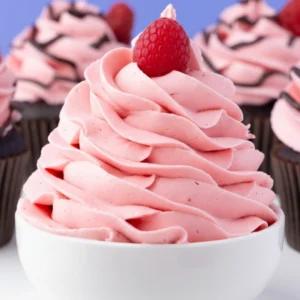
Raspberry Buttercream Frosting
Ingredients
- 2 cups unsalted butter (room temperature)
- 5 cups powdered sugar
- 0.5 cup raspberry reduction (room temperature)
- 0.25 cup heavy cream (room temperature)
- 2 tsp vanilla extract
- 0.5 tsp salt
Instructions
- In the bowl of a stand mixer fitted with a paddle attachment, whip the room temperature unsalted butter for 5 minutes until it is light, pale, and fluffy.
- Add in the powdered sugar in two batches, mixing on low speed until fully combined with the butter.
- Add in the raspberry reduction and mix on low speed until well incorporated.
- Pour in the heavy cream, vanilla extract, and salt, and mix on low speed until smooth.
- Increase mixer speed to medium and whip the frosting for 3 to 5 minutes until light and airy. If it looks split, keep whipping.
- Optional: Melt 1 cup of frosting in the microwave for 15 seconds, add it back to the bowl, and mix on low speed for a silky smooth finish.
Notes
Equipment
- Stand mixer or electric hand mixer
- Paddle attachment
- rubber spatula
- microwave-safe bowl