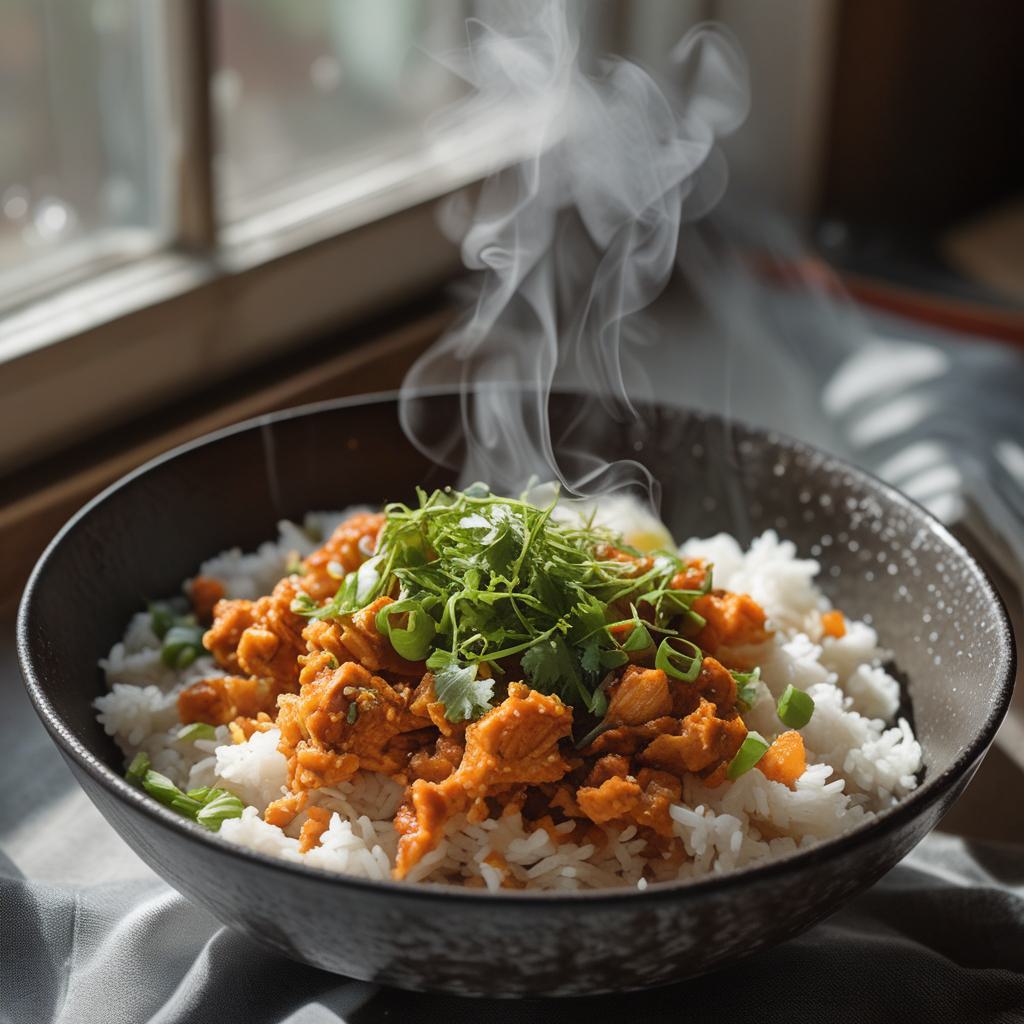
The scent hits you first—an intoxicating fusion of seared chicken skin blooming with paprika’s smoky kiss, ginger’s peppery zing dancing through steam, and the unmistakably primal allure of toasted sesame oil. This isn’t mere sustenance; the Spicy Chicken Rice Bowl is culinary theater. Imagine tender thigh meat, lacquered in a glossy, crimson-hued glaze that clings like liquid silk, resting atop pearly short-grain rice. Each grain, steamed to plump perfection, becomes a canvas for flavors both ancient and audacious: the umami depth of fermented chili paste, the bright acidity of rice vinegar cutting through richness, the subtle sweetness of caramelized scallions. It’s a dish that balances fire and finesse—a crackling chorus of Szechuan peppercorns humming beneath a melody of savory soy. To eat it is to understand how restraint magnifies intensity; how a few masterful ingredients, treated with precision, can erupt into something profoundly satisfying.
Table of Contents
Ingredient Deep Dive
| Ingredient | Quantity | Purpose |
|---|---|---|
| Boneless chicken thighs | 1.5 lbs | Higher fat content resists drying under high heat |
| Gochujang paste | 3 tbsp | Fermented complexity + controlled heat backbone |
| Black vinegar | 2 tbsp | Acidity balances fat; molasses-like depth |
| Szechuan peppercorns | 1 tsp (crushed) | Creates tingling “ma-la” sensation |
| Toasted sesame oil | 1 tbsp | Fragrant finish (heat destroys flavor; add last) |
Protein chemistry dictates thigh over breast: collagen breaks into gelatin during cooking, self-basting the meat. Gochujang’s magic lies in its trio of fermentation (soybean, rice, chili), delivering glutamate-rich umami and capsaicin’s slow burn. Szechuan peppercorns contain hydroxy-alpha sanshool, binding to nerve receptors to create that signature numbness—a neurological counterpoint to capsaicin’s fire.
Black vinegar, often overlooked, is non-negotiable. Its 2-year oak-barrel aging develops acetic and tartaric acids that cut richness without harshness. Toasted sesame oil’s antioxidants (sesamol, sesamin) degrade rapidly when heated; adding it post-cook preserves its lignan compounds and nutty aroma.
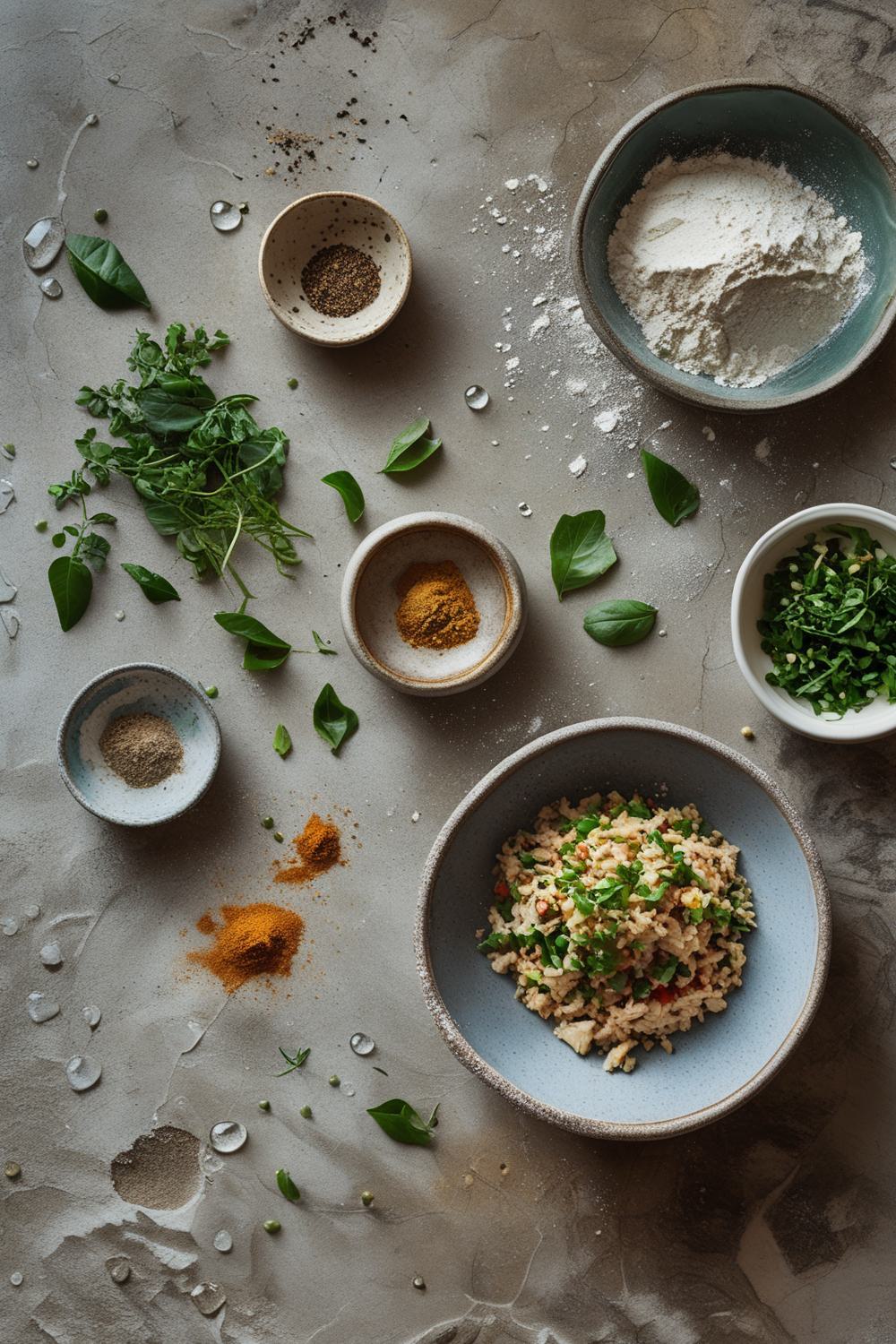
Substitutions & Swaps
For gluten sensitivity, swap soy sauce with tamari or coconut aminos. Veganize by using extra-firm tofu: freeze-thaw twice to create a spongy texture that absorbs marinade aggressively. Replace fish sauce with minced kombu (kelp) steeped in warm water for 10 minutes—its glutamic acid mimics seafood’s salinity.
No gochujang? Combine 2 tbsp tomato paste, 1 tbsp paprika, 1 tsp fish sauce, and 1/2 tsp cayenne. While lacking fermentation complexity, this mimics color and savoriness. Rice alternatives: forbidden black rice adds anthocyanin antioxidants, or riced cauliflower for low-carb needs.
Equipment Guide
Carbon steel woks are ideal—their thin walls heat rapidly, essential for the “wok hei” sear on chicken. No wok? Cast iron retains even heat for crispy skin, while non-stick risks burning glaze sugars. Use a mortar and pestle for Szechuan peppercorns; blades crush rather than split husks, releasing max hydroxy-alpha sanshool.
Digital probe thermometers prevent overcooking; chicken is safe at 165°F (74°C), but pull at 160°F (71°C)—carryover cooking avoids dryness. Rice cookers with fuzzy logic pressure settings yield optimal texture, but a heavy Dutch oven with tight lid works manually.
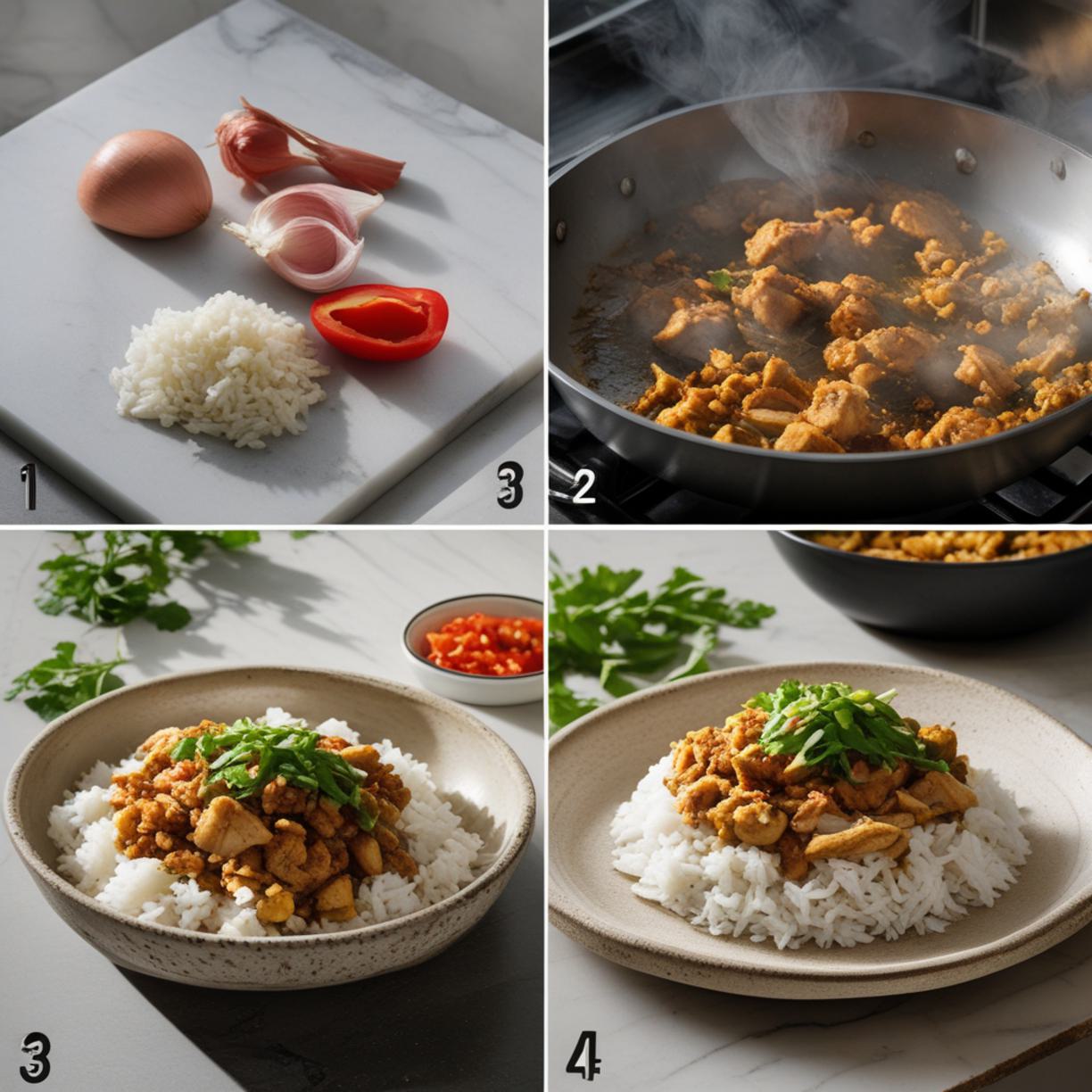
Step-by-Step Walkthrough
1. Rice First: Rinse 1 cup sushi rice until water runs clear. Soak 30 mins, then steam—this removes excess starch for separated grains.
2. Marinate Smart: Score chicken thighs deeply, 80% through. Marinate 20 mins (no longer—acid starts “cooking” proteins).
3. Sear Dry: Pat thighs bone-dry. Sear skin-side down 8 mins untouched; proteins must unstick naturally.
4. Glaze Late: Add sauce only in last 3 mins—sugars scorch at 350°F (177°C).
High-heat searing triggers the Maillard reaction—amino acids and sugars create 600+ flavor compounds. But moisture prevents browning; hence marinate only for surface flavor, not tenderizing.
Monitor glaze viscosity: simmer until it coats the back of a spoon (nappé stage), roughly 225°F (107°C). If too thin, mix 1 tsp cornstarch with 1 tbsp cold water, then stir in.
Rest chicken 5 minutes before slicing—juices redistribute as myofibrillar proteins relax.
Expert Tips & Troubleshooting
Crisp Skin Secret: Salt chicken 6 hours ahead—osmosis draws out moisture, drying the surface. Use baking powder (1/2 tsp) in rub; it alkalizes skin, accelerating browning.
Bland Sauce? Boost umami with 1 tsp MSG or ground shiitake powder. Too spicy? Stir in honey or coconut milk to bind capsaicin oils.
Soggy Rice Fix: Spread cooked rice on a sheet pan to cool swiftly—prevents overcooking from residual heat. Reheat with damp towel over bowl; microwaves dehydrate.
Fire Control: Capsaicin is oil-soluble. If too spicy, eat yogurt (casein protein binds capsaicin) rather than water, which spreads heat.
Flavor Variations
Kid-Friendly: Swap gochujang for sweet miso and honey. Add roasted sweet potatoes—their beta-carotene balances heat.
Regional Twists:
– Thai: Lime zest, fish sauce, and basil
– Korean: Extra gochugaru (chili flakes), pear puree marinade
– Nashville Hot: Add cayenne-laced lard and pickle brine
Storage & Reheating
Store components separately: chicken (3 days fridge), rice (2 days), sauce (2 weeks). For rice, add ice cube before microwaving—steam revives texture. Chicken reheats best in air fryer (320°F/160°C; 4 mins).
FAQ Section
Q: Can I use chicken breasts?
A: Yes, but brine 1 hour in saltwater (1 tbsp salt:1 cup water) to prevent dryness.
Q: Is this dish VERY spicy?
A: Adjustable! Gochujang’s heat builds slowly. Halve it for mildness.
Q: Best rice substitute?
A: Barley—its beta-glucans become creamy, contrasting crispy chicken.
Q: Can I prep ahead?
A: Sauce keeps 2 weeks. Marinate chicken 24 hours max.
The Recipe Card
Succulent chicken thighs glazed in fermented chili paste, balanced by black vinegar’s tang, rest on steamed rice. Served with quick-pickled veggies and sesame seeds. Ready in 40 mins. Serves 4.
Nutrition Information
| Nutrient | Per Serving |
|---|---|
| Calories | 620 |
| Protein | 38g |
| Carbs | 45g |
| Sodium | 840mg |
Disclaimer: Values are estimates. Actual nutrition varies based on ingredient brands and portion sizes.