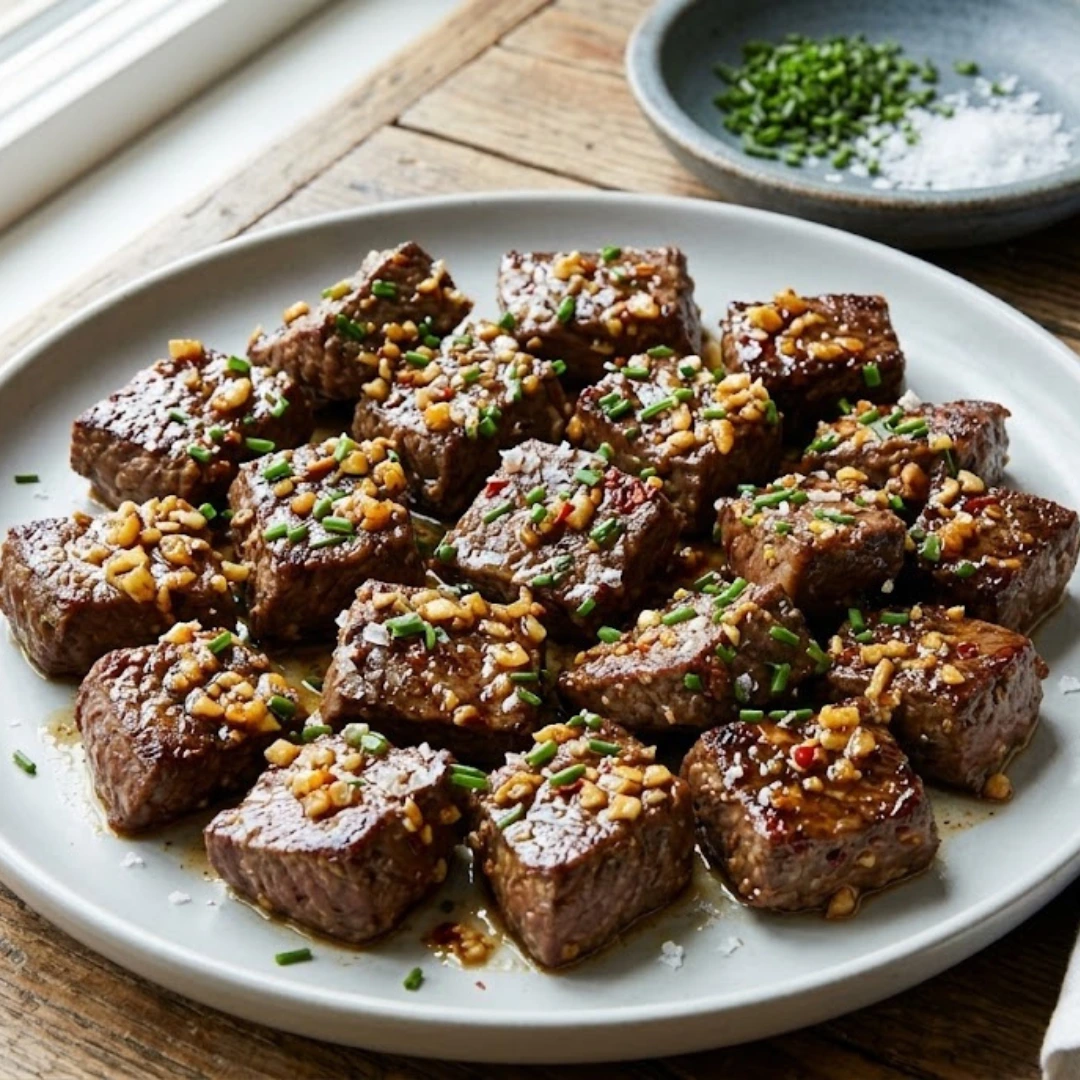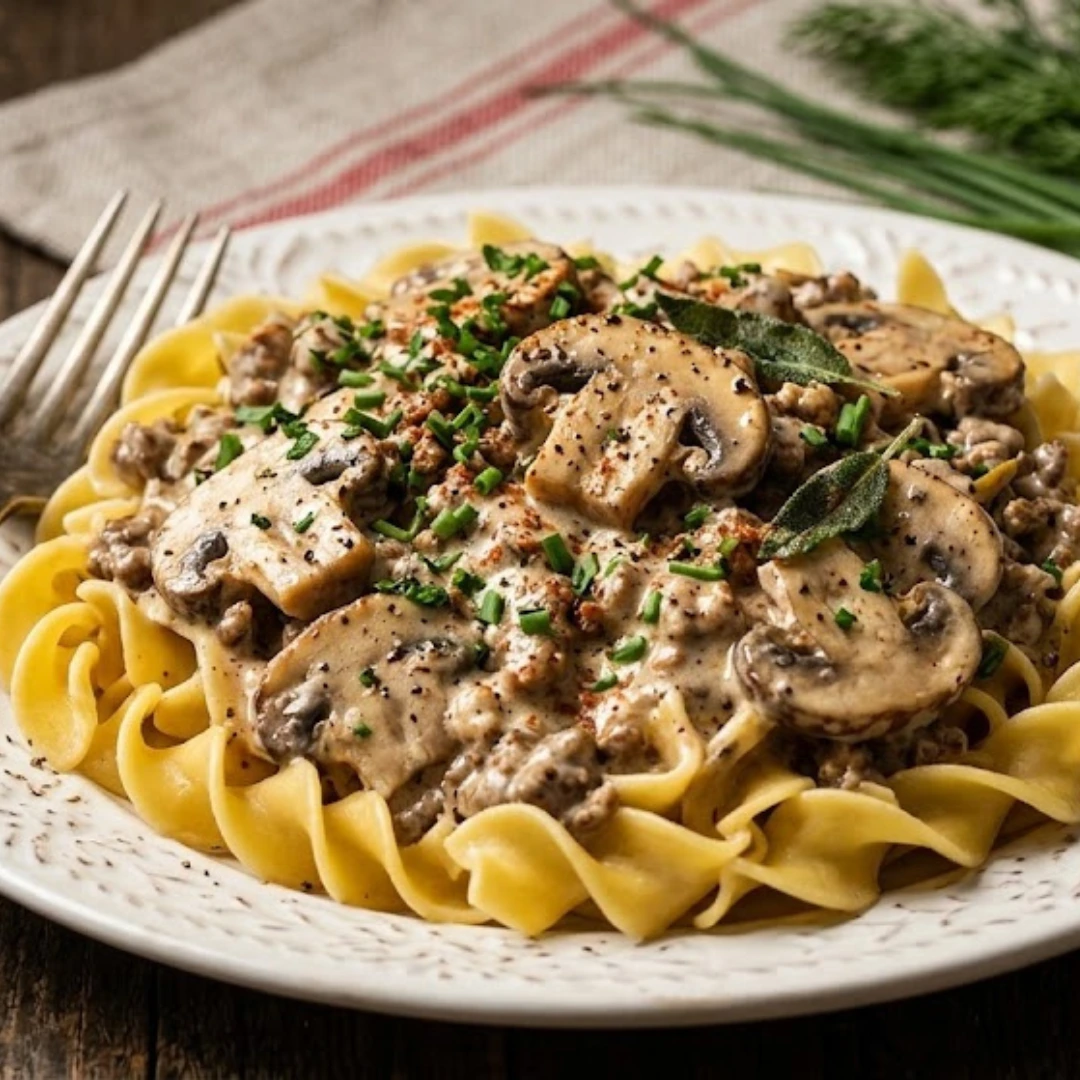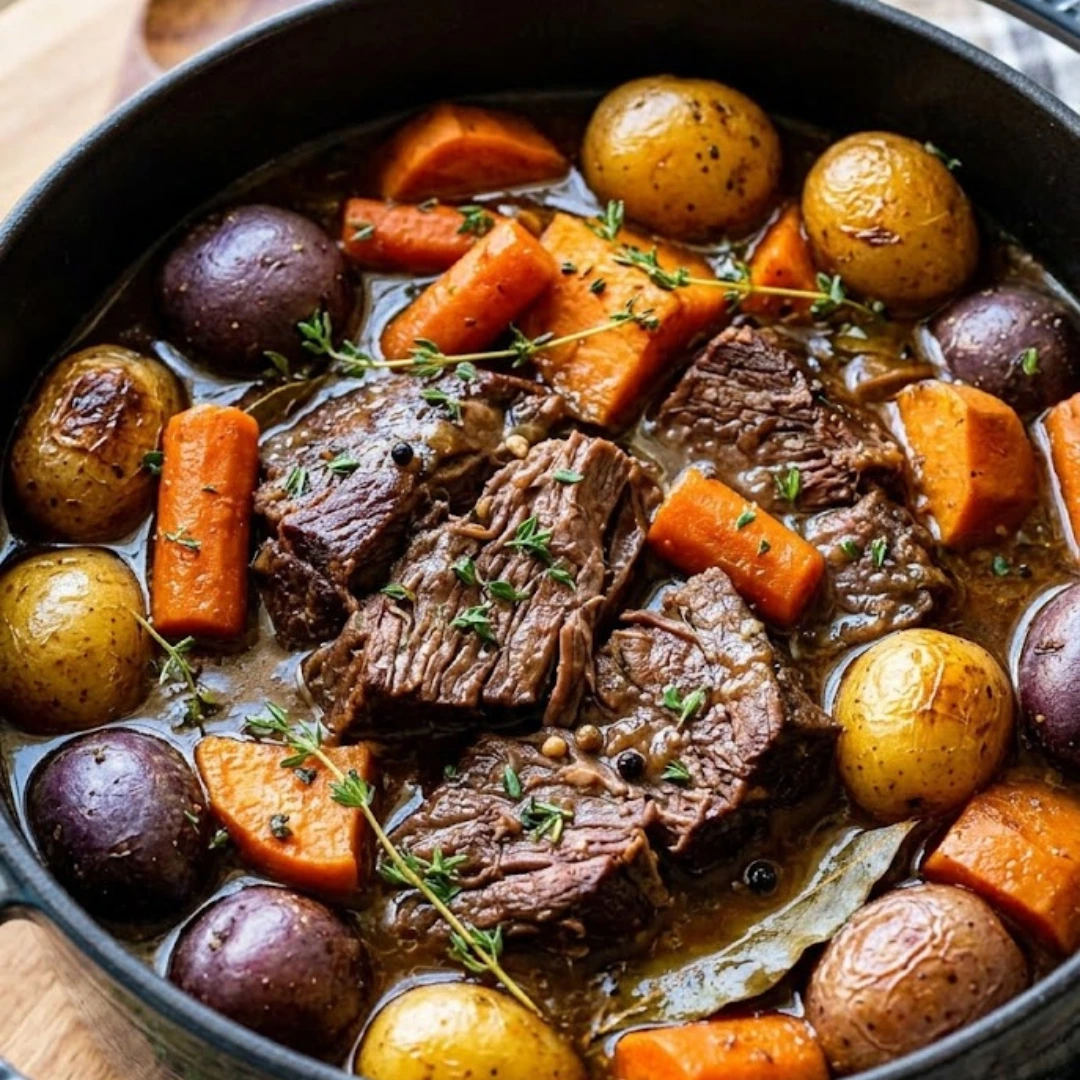
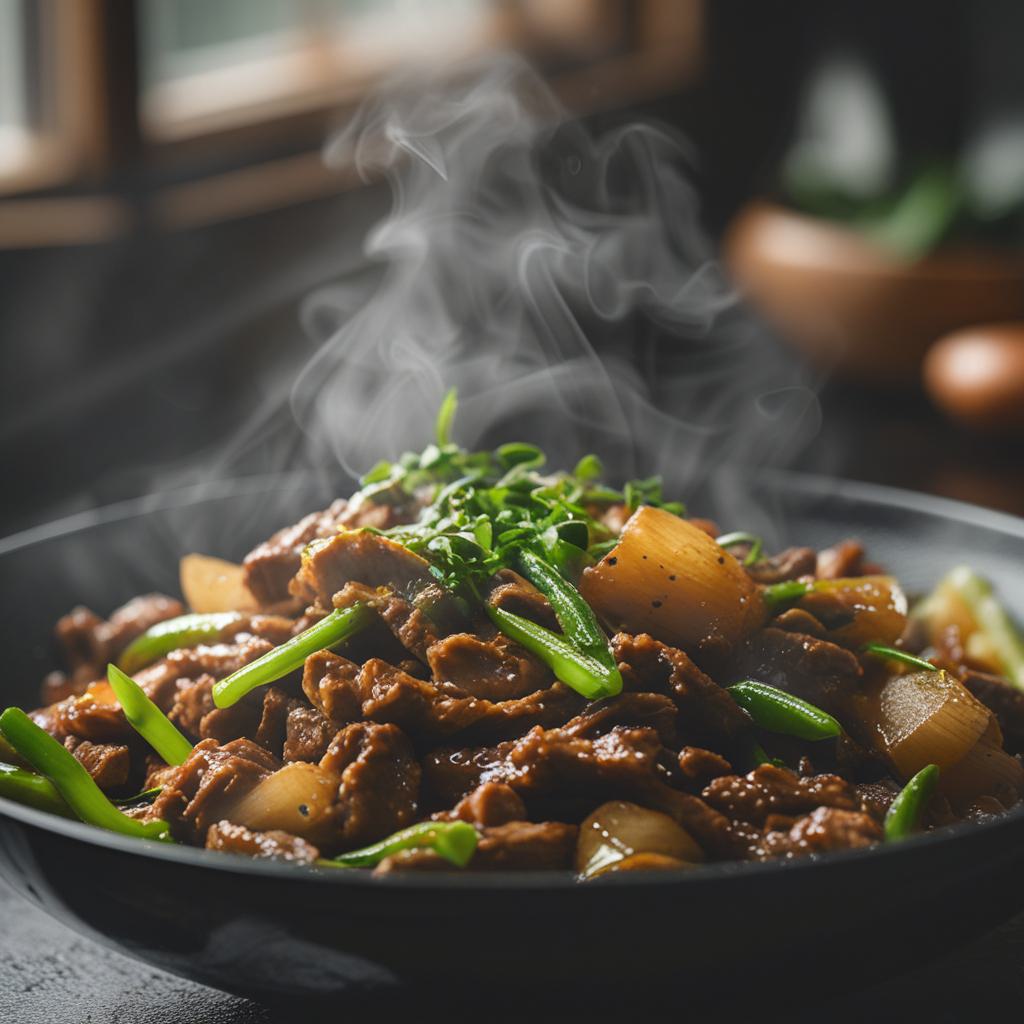
The unmistakable sizzle of thinly sliced beef hitting a searing-hot wok sends aromatic tendrils curling through the kitchen – caramelized edges of soy-marinated flank steak meeting blistering heat, garlic and ginger transforming into golden perfume, crisp vegetables offering bright counterpoints. This is no ordinary weeknight scramble, but a symphony of textures and efficiencies, where gourmet sensibilities meet pragmatic time management. The magic lies in technique: high heat that locks in juices while creating delicate char, a sauce that clings without gloppiness, vegetables retaining snap and vibrancy. Imagine tender beef strips glazed in glossy, umami-rich sauce nestling against emerald bok choy and electric orange bell peppers – a dish that reaches your table faster than takeout menus can load, yet tastes like it stepped out of a high-end Asian fusion bistro. This is weeknight cooking reimagined – proof that depth of flavor and culinary refinement need not surrender to the clock.
Table of Contents
Ingredient Deep Dive
| Ingredient | Quantity | Purpose |
|---|---|---|
| Flank steak | 1 lb | High-protein cut with open grain for sauce absorption |
| Cornstarch | 1 tbsp | Creatures velveting effect by sealing in moisture |
| Rice wine vinegar | 2 tbsp | Acid tenderizes proteins and brightens sauce |
| Fresh ginger | 1 inch | Zingiberene enzymes break down meat fibers |
| Soy sauce (dark) | 3 tbsp | Fermented depth and color via Maillard reaction |
| Toasted sesame oil | 1 tsp | Fat-soluble flavor carrier with nutty finish |
The flank steak’s longitudinal muscle fibers provide optimal sauce adherence when sliced perpendicular to the grain. Cornstarch interacts with meat proteins at molecular level, forming a protective gelatinous coating during velveting – this prevents overcooking while creating that sought-after restaurant texture. Dark soy sauce contributes melanoidins from extended fermentation, delivering richer color and complex umami compared to light soy.
Chemical leavening occurs as rice wine vinegar’s acetic acid reacts with baking soda in the marinade, creating micro-bubbles that lift sauce components for better cling. Toasted sesame oil contains sesamol compounds with high smoke points, allowing their nutty aromas to survive high-heat cooking. Ginger’s protease enzymes (zingibain) naturally tenderize beef by breaking down collagen networks.
Substitutions & Swaps
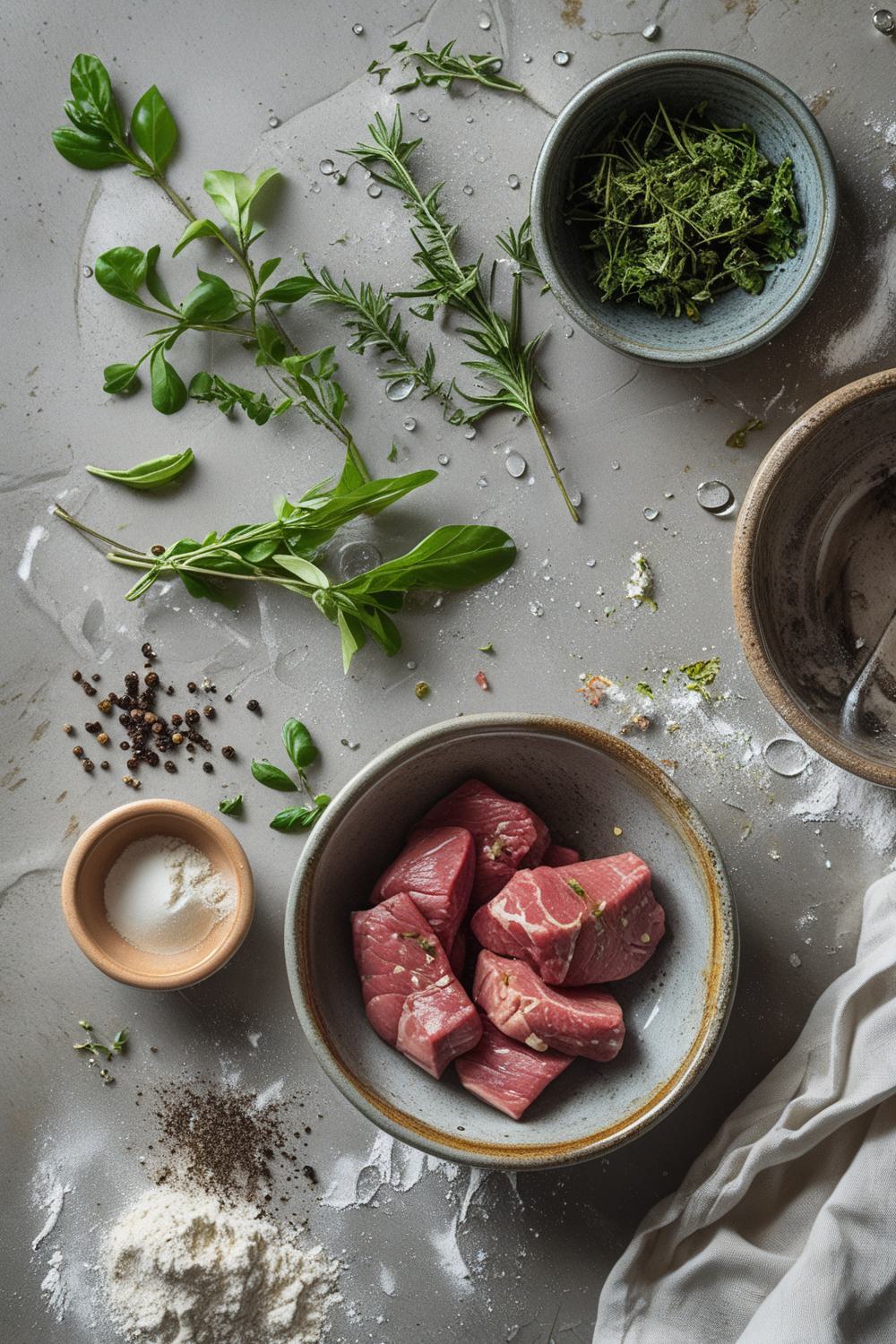
For gluten-free needs, substitute tamari or coconut aminos for soy sauce – both provide glutamate-rich umami without wheat proteins. Vegan adaptations thrive with king oyster mushrooms or pressed extra-firm tofu (freeze-thaw method for meaty texture) replacing beef. Use liquid aminos and mushroom powder to replicate depth.
When pantry constraints strike, frozen stir-fry vegetables work if patted dry thoroughly. Substitute sherry vinegar or apple cider vinegar mixed with 1/4 tsp sugar for rice wine vinegar. No fresh ginger? Use 1/4 tsp ground ginger + 1 minced garlic clove. For nut allergies, replace sesame oil with peanut or avocado oil plus 1/8 tsp smoked paprika for complexity.
Equipment Guide
A 14-inch carbon steel wok remains the gold standard – its concave shape creates distinct heat zones for searing (center) and gentle cooking (sides). Cast iron skillets work if preheated 5 minutes; avoid non-stick as it prevents proper fond development. Use a splatter screen to contain oils when stir-frying at maximum heat.
Essential tools: razor-sharp 8-inch chef’s knife for precision slicing, instant-read thermometer to check doneness without piercing meat, spider strainer for quick vegetable removal. Prefer stainless steel bowls for marinading – reactive metals can impart flavors during acid contact. A mortar and pestle unlocks fuller flavor from whole peppercorns than pre-ground.
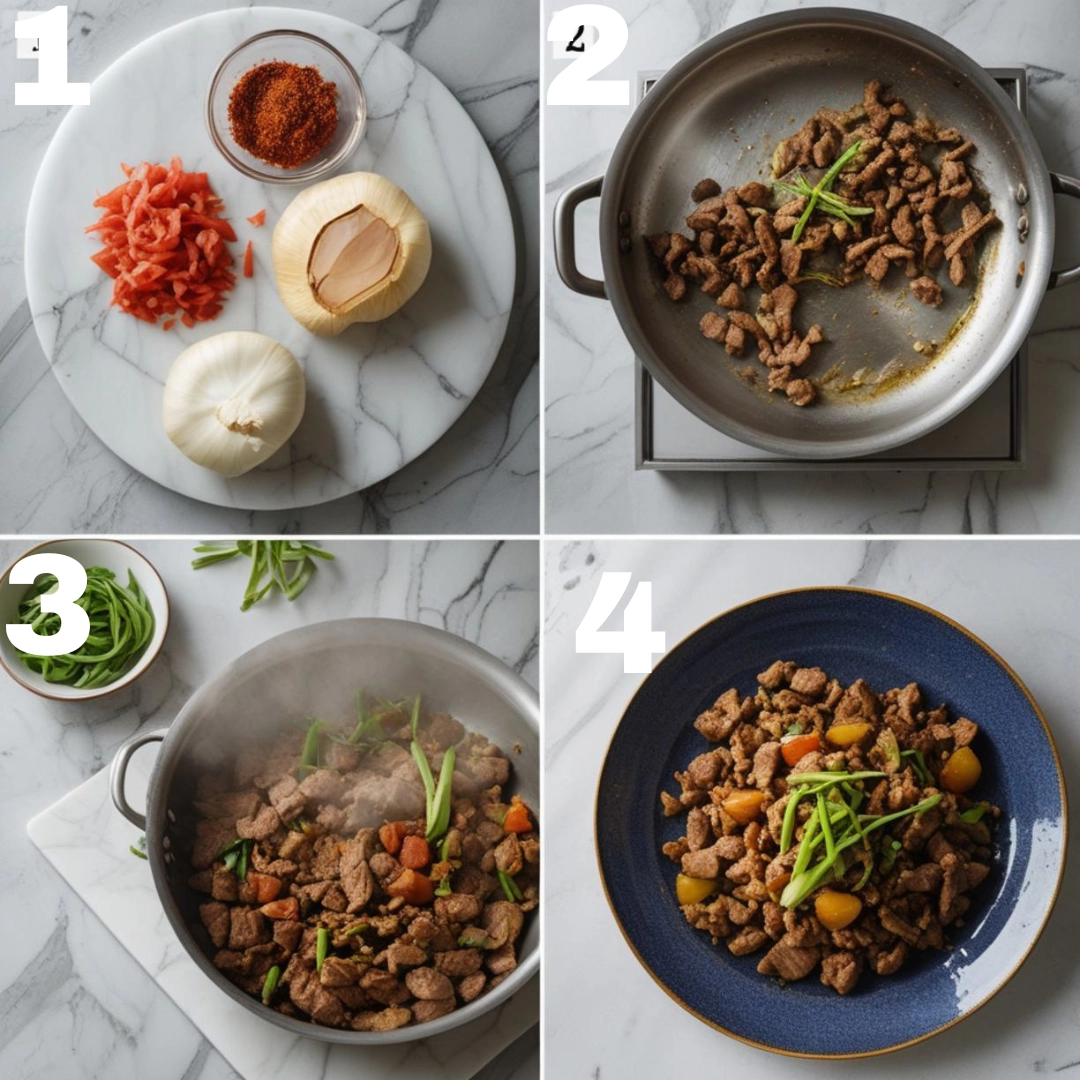
Step-by-Step Walkthrough
- Slice chilled flank steak 1/4″ thick against grain
- Whisk marinade (soy, vinegar, cornstarch, 1 tsp oil)
- Toss beef in marinade; fridge 15 min (not longer!)
- Prep vegetables: uniform 2″ pieces for even cooking
- Heat wok until water droplets dance violently
- Add 1 tbsp oil; sear beef in single layer 90 seconds/side
- Remove beef; wipe wok
- Stir-fry aromatics (ginger, garlic) 20 seconds
- Add hard vegetables (carrots, peppers); cook 2 min
- Toss in leafy greens; splash of water to steam
- Return beef; pour sauce down wok sides
- Toss 60 seconds until glossy
Professional technique: Arrange ingredients in mise en place bowls for rapid execution. Wok sequencing matters – protein first, then aromatics, followed by vegetables by density. Never add sauce directly to center where it can burn; instead pour along hot metal sides to deglaze and thicken instantly via thermal shock.
The critical window between 375°F and 420°F creates wok hei (breath of the wok) – that elusive smoky essence. Achieve this by letting the pan recover heat between batches. When searing beef, listen for intense sizzling that only occurs above 350°F. If noise diminishes, pause to reheat the pan.
Expert Tips & Troubleshooting
Velveting secret: Add 1/4 tsp baking soda to beef marinade for alkaline tenderization. If vegetables release water, increase heat and spread contents up wok walls where evaporation occurs fastest. Sauce too thin? Make a slurry with 1 tsp cornstarch + 1 tbsp cold water; add during final 20 seconds.
If beef becomes tough, you’ve either cut with the grain or overcrowded the pan (steams instead of sears). Fix bland stir-fries by balancing: add acid (lime) if flat, umami (fish sauce) if shallow, sweetness (honey) if harsh. For sticking issues, season wok properly: heat until smoking, swirl oil, discard, then re-oil before cooking.
Flavor Variations
Spicy Szechuan: Add 1 tbsp chili bean paste + 1 tsp Sichuan peppercorns with aromatics. Finish with chili oil. Kid-Friendly: Substitute beef for chicken; swap bok choy with snap peas. Sauce: 2 tbsp oyster sauce + 1 tbsp honey + 1/4 cup pineapple juice thickened with cornstarch.
Thai Basil Twist: Replace soy sauce with 3 tbsp fish sauce + 1 tbsp palm sugar. Stir in 1 cup holy basil last 30 seconds. Korean BBQ: Use gochujang in marinade + add julienned Asian pear. Garnish with toasted sesame seeds.
Storage & Reheating
Refrigerate in airtight container up to 3 days. Freezing not recommended – vegetables lose texture. To reheat: Spread in single layer on preheated skillet over medium. Sprinkle 1 tsp water, cover 2 minutes, then uncover to restore crispness. Microwave reheating creates rubbery beef – avoid.
FAQ Section
Can I use frozen beef?
Yes – partially thaw then slice. Frozen beef cuts cleaner but requires patting dry thoroughly to prevent steaming.
Why is my stir-fry soggy?
Overcrowded pan reduces temperature. Cook in batches. Vegetables should crackle upon contact.
Best rice pairing?
Jasmine rice’s floral notes complement umami. For nuttiness, use brown jasmine rice; rinse until water runs clear before cooking.
Can I meal prep this?
Prep vegetables and sauce 2 days ahead. Store separately. Marinate beef only 15 minutes before cooking.
The Recipe Card
Easy Weeknight Beef Stir-Fry: Tender flank steak velveted in soy-ginger marinade, wok-seared with crisp vegetables in glossy umami sauce. 25 minutes start to finish. Serves 4. Key techniques: high-heat searing, ingredient sequencing, sauce deglazing. Serve over steamed rice with chili crisp.
Nutrition Information
| Nutrient | Per Serving |
|---|---|
| Calories | 327 |
| Protein | 28g |
| Carbohydrates | 14g |
| Fiber | 3g |
| Sugars | 5g |
| Sodium | 782mg |
Disclaimer: Nutritional values are estimates based on standard ingredients. Actual results may vary due to product variability and preparation methods.