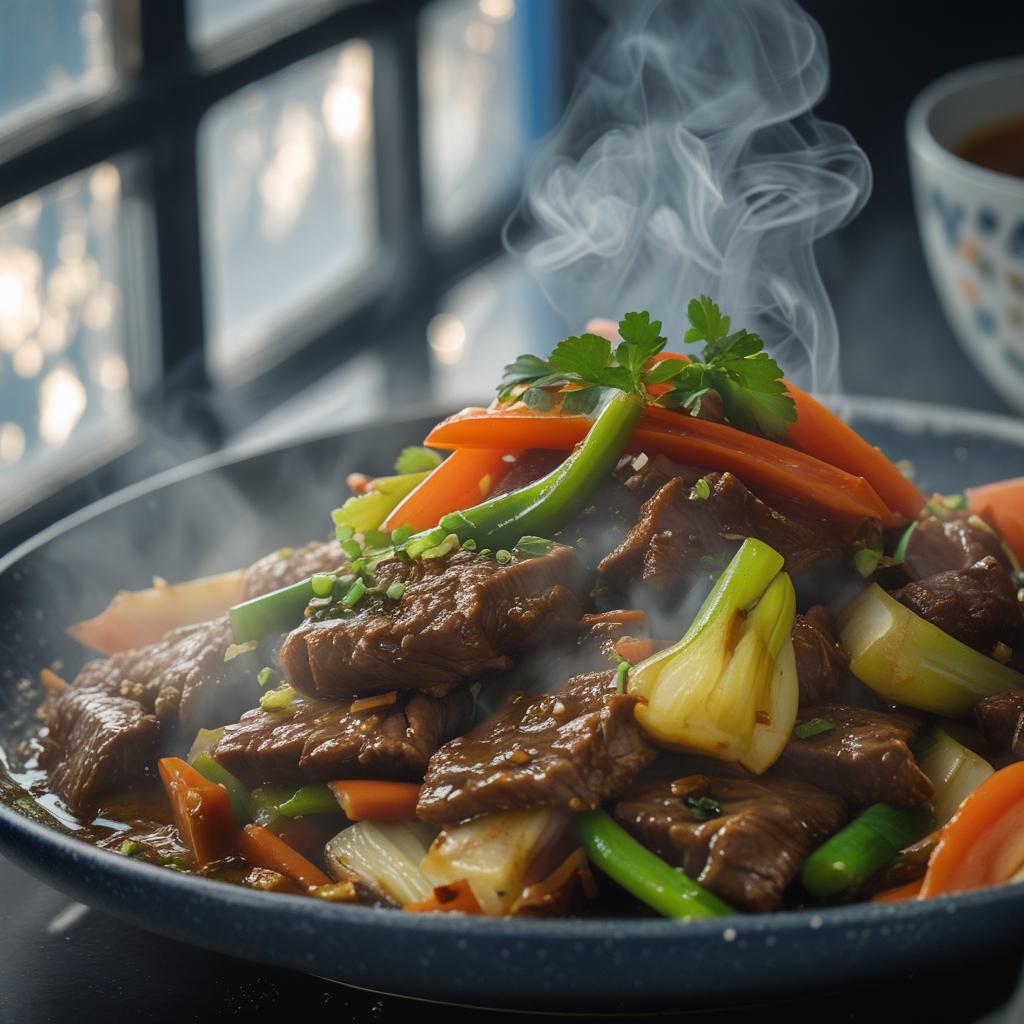
The sizzle of marbled beef hitting a scorching wok releases an intoxicating aroma that floods the kitchen within seconds—caramelized meat oils mingling with garlic’s pungency, gingers sharp spice, and the subtle sweetness of Shaoxing wine rising in fragrant clouds. This is stir-fry alchemy at its most primal, where high heat transforms humble ingredients into a complete culinary experience in under thirty minutes.
Beef stir-fry represents the perfect intersection of gastronomic technique and weekday practicality. Selecting the right cut—flank steak with its bold grain or ribeye for superior marbling—creates contrasting textures that dance between tender and toothsome. The vegetables aren’t mere accompaniments but textural counterpoints: snap peas erupting with vegetal freshness, red peppers lending candy-like sweetness, and shiitake mushrooms providing umami depth that parallels the beef’s richness.
Timing is everything in this dish. As the wok breathes fire, ingredients must be added in a precise sequence called “the drop.” First, the beef develops its crust in small batches to avoid steaming, then cruciferous vegetables hit the pan for quick blistering, followed by tender aromatics like garlic that would burn if introduced too early. The sauce, reduced to glossy perfection in the final moments, acts as both seasoning and binding agent—soy sauce’s saltiness balanced against honey’s golden viscosity, oyster sauce’s oceanic complexity, and a whisper of toasted sesame oil for fragrance.
While street food vendors across Asia might wield carbon steel woks over jet-engine burners, home chefs can achieve comparable results through meticulous preparation (French “mise en place”) and understanding that stir-fries reward boldness—underseasoned beef or timid heat application leads to mediocrity. In thirty minutes, we transform raw components into a symphony of textures and layered flavors far exceeding well-executed.”
Table of Contents
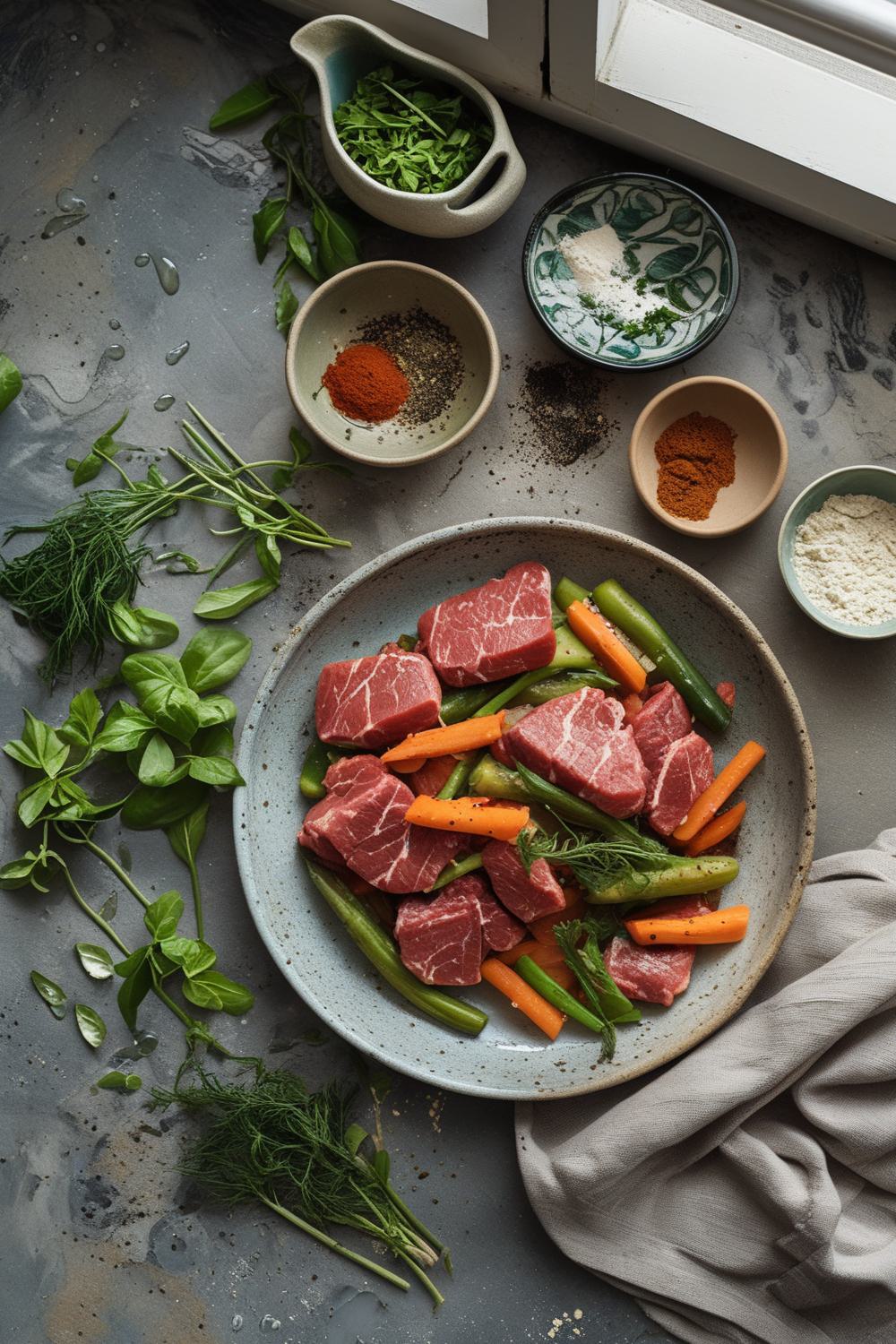
Ingredient Deep Dive
| Ingredient | Quantity | Purpose |
|---|---|---|
| Flank steak | 12 oz | High muscle fiber content absorbs marinade while staying tender during quick cooking |
| Tamari (gluten-free) | 3 tbsp | Fermented soybean depth without wheat proteins muddying flavors |
| Shaoxing wine | 2 tbsp | Chinese rice wine tenderizes proteins and adds subtle nutty sweetness |
| Arrowroot starch | 1 tbsp | Creates superior velveting effect compared to cornstarch (higher amylose content) |
| Red bell pepper | 1 large | Retains crispness while caramelized edges enhance natural sugars |
| Shiitake mushrooms | 6-8 caps | Lentinan compounds boost umami perception when seared at high heat |
Selecting beef with longitudinal muscle fibers (flank, hanger, skirt) allows the marinade’s enzymes and acids to penetrate deeper, while the grain provides satisfying chew when sliced against the fibers. Tamari replaces traditional soy sauce for cleaner fermentation notes—its thicker viscosity also clings better to ingredients during tossing.
Arrowroot starch deserves particular attention. Unlike cornstarch, it forms stable hydrogen bonds with proteins during velveting, preventing sauce separation even at extreme temperatures. Combined with the alcohol in Shaoxing wine, it creates a protective gel around the beef that seals in juices during the initial sear.
Substitutions & Swaps
For vegan adaptation, substitute beef with pressed extra-firm tofu (frozen then thawed for meatier texture) or king oyster mushroom stems sliced into “scallops.” Replace oyster sauce with fermented bean paste and use maple syrup instead of honey. Wheat-free cooks should verify Shaoxing wine labels (some contain wheat) or substitute dry sherry.
Short on specialty ingredients? Chicken broth works instead of Shaoxing wine in a pinch. Baby corn or bok choy replace snap peas seasonally. Canola oil stands in for peanut oil, though high smoke point oils like safflower are better for high-heat searing. Blanched almonds add crunch if sesame seeds are unavailable.
Equipment Guide
A 14-inch carbon steel wok is ideal—its concave shape creates temperature zones (searing hot center, cooler edges) essential for staged cooking. Cast iron retains heat well but lacks the quick thermal response needed when adjusting burner intensity. Non-stick surfaces prevent proper fond development and limit temperatures to unsafe PTFE vaporization points.
Commercially available wok burners output 100,000+ BTUs impractical for home kitchens. Gas stoves offer superior control over electric coils. When using standard burners, a ring stand stabilizes the wok. Pre-heat until wisps of smoke appear—around 500°F (260°C) as measured by infrared thermometer. Long metal spatulas (“chuan”) allow quick tossing without scratching surfaces.
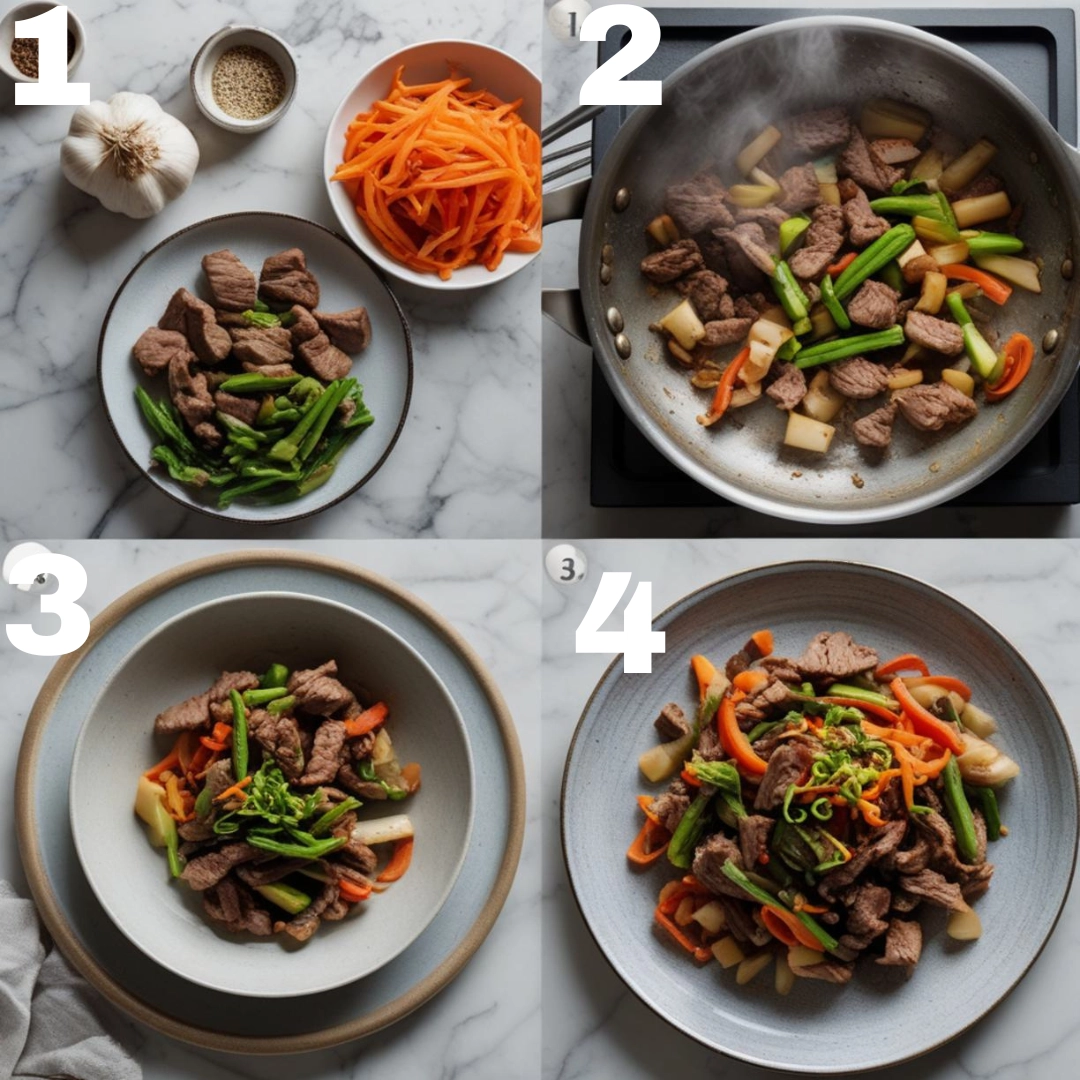
Step-by-Step Walkthrough
- Slice beef against grain into 1⁄4-inch thick strips; velvet with Shaoxing wine, 1 tbsp tamari, and arrowroot for 15 minutes.
- Prep vegetables into uniform bite sizes (peppers 1-inch squares, snow peas trimmed, mushrooms quartered).
- Mix sauce: remaining tamari, rice vinegar, oyster sauce, honey, toasted sesame oil, white pepper.
- Heat wok over hight heat 2 minutes until smoking. Add 1 tbsp peanut oil, swirling to coat.
- Sear beef in two batches (Do not crowd). 90 seconds per batch. Transfer to bowl.
- Add peppers and snow peas. Stir-fry 90 seconds untouched, then toss 30 seconds.
- Clear center; add garlic, ginger, chili flakes. Bloom 15 seconds until fragrant.
- Return beef and juices; pour sauce down sides to vaporize alcohol quickly.
- Toss until sauce thickens into glaze (30-45 seconds). Kill heat instantly.
- Finish with sesame seeds and scallion rings.
Professional cooks employ two key techniques during stir-frying: “bao” (explosive stir-frying) executed by flipping ingredients upward in quick succession, and “wok hei”—that elusive breath of the wok where proteins acquire smoky notes from vaporized volatile oils. Home chefs approximate this with extreme pre-heating and finishing with 1 teaspoon of hot oil sizzled over ingredients.
Marinating beyond 20 minutes causes enzymatic breakdown turning beef mushy. Cornstarch slurry should be added to the sauce, never tossed directly onto proteins—it creates uneven coating. Seafood replacements like shrimp cook in half the time (add with vegetables). Deglazing the pan with boiling stock prevents thermal shock that warps woks.
Expert Tips & Troubleshooting
Non-negotiable rule: Ingredients must be cut uniformly and completely dry—any moisture triggers steaming instead of searing. Velveting via alkaline marinades (adding ½ tsp baking soda per lb of meat) tenderizes cheap cuts but alters texture significantly. True silkiness comes from careful slicing technique. For restaurant-style plating, serve stir-fries on preheated plates or rice bowls—cold surfaces prematurely drop the temperature.
Common disasters rectified: If vegetables turn soggy, heat was too low—anticipate further carryover cooking after removing from wok. Sauce not thickening? Mix 1 tsp arrowroot + 2 tsp water into slurry; drizzle while tossing fast. Burnt garlic results from adding aromatics too early—oil shouldn’t smoke until proteins hit the pan. Stir-fries cannot be salvaged if overcooked—better to serve components separately.
Flavor Variations
For Sichuan firecracker intensity, add 2 tsp doubanjiang (chili bean paste) when searing meat and finish with 1 tsp ground Sichuan pepper (ma la). Japanese-inspired teriyaki versions substitute tamari with mirin and add pineapple juice to the marinade. Kid-friendly profiles reduce spice, adding orange zest to the sauce and using beef in smaller “popcorn” bites. Korean gochujang adds fermented complexity (1 tbsp replaces oyster sauce) with pear puree sweetness.
Storage & Reheating
Leftovers keep refrigerated (airtight glass container) 3-4 days but lose textural integrity. Refresh by reheating in foil packet under broiler (450°F/230°C) for 3 minutes—microwaving ensures rubbery beef. Freezing not recommended due to high-vegetable water content causing mushiness upon thawing.
FAQ Section
Can I use frozen vegetables?
Avoid frozen peppers/snap peas which release excessive water—only frozen peas/corn work well without pre-thawing and blotting dry.
Why does my beef turn gray?
Overcrowding the pan drops temperature below caramelization threshold (“boiled” versus seared). Cook in small batches.
Can I substitute fish sauce for tamari?
Not directly—fish sauce contains ammonia compounds needing cooking time to mellow. Use sparingly (1 tsp maximum) with reduced salt elsewhere.
Is this authentic Chinese cooking?
This draws from multiple Asian techniques—Western adaptations prioritize convenience without sacrificing layered flavor principles.
The Recipe Card
A 30-minute beef stir-fry showcasing caramelized flank steak with crisp-tender vegetables in a glossy umami sauce. Velveting technique ensures maximum tenderness while high-heat searing creates complex flavors. Balanced for weeknight dinners yet impressive enough for guests. Serves 3-4.
Nutrition Information
| Nutrient | Per Serving (350g) |
|---|---|
| Calories | 420 kcal |
| Protein | 38g |
| Carbohydrates | 18g |
| Sugars | 9g |
Disclaimer: Nutritional data calculated using USDA databases and assumes all sauce absorbed. Values vary based on ingredient brands and portion sizes. Always consult certified nutritionist for dietary needs.