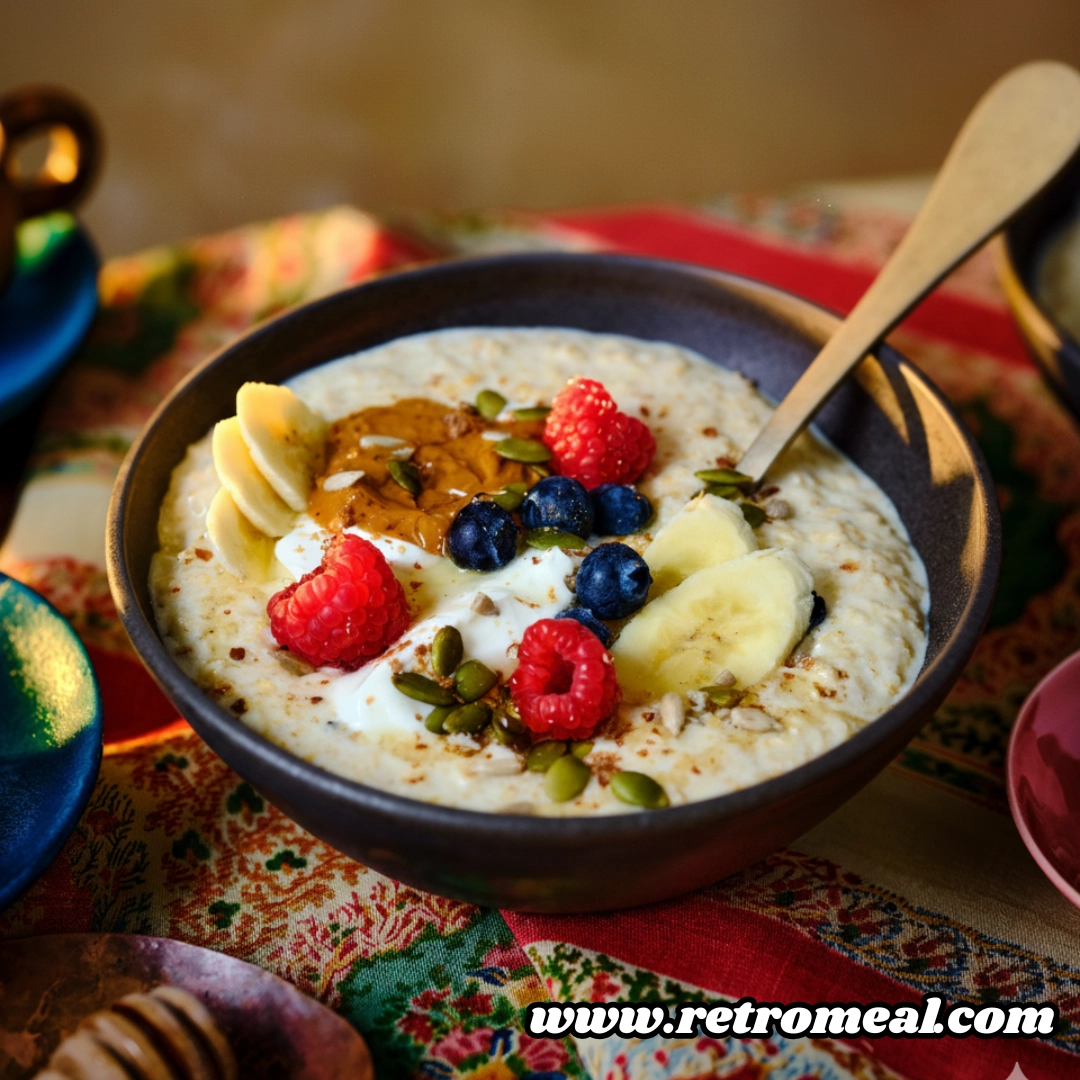
Starting your morning with a meal that fuels both your muscles and your mind is the secret to a productive day. This protein porridge recipe is designed specifically for those who need more than just a quick sugar rush to get through their morning meetings or intense gym sessions. By combining the slow-release carbohydrates found in traditional oats with a powerful boost of high-quality protein, this breakfast becomes a nutritional powerhouse. Whether you are an athlete looking for the perfect post-workout recovery meal or someone simply trying to stay full until lunchtime, this creamy, satisfying bowl offers the perfect balance of texture and taste.
Table of Contents
Necessary Ingredients for Your Power Breakfast
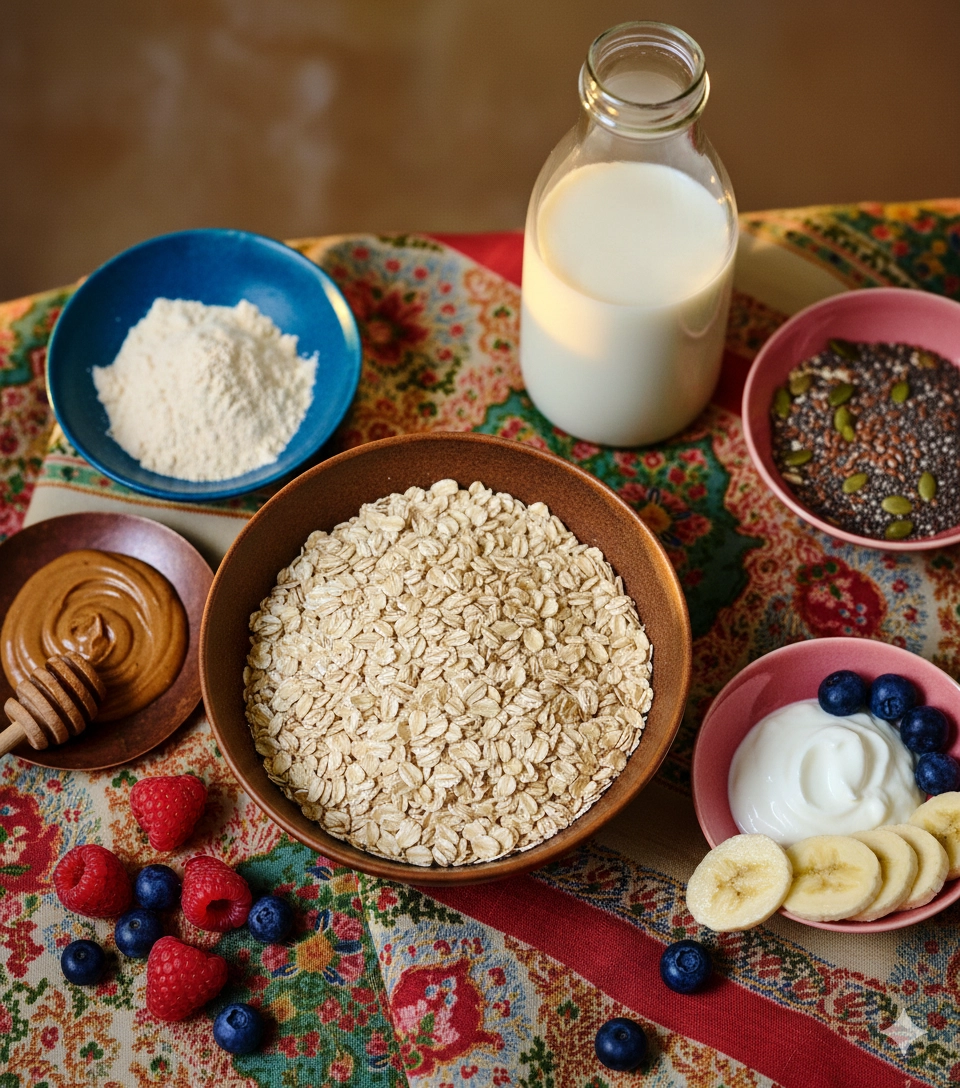
To create this muscle-supporting meal, you will need to gather a few pantry staples and some nutrient-dense additions. The beauty of this recipe lies in its simplicity and the quality of the components used.
- 80 grams porridge oats
- 500 milliliters milk of any kind
- 30 grams protein powder in vanilla, chocolate, or berry flavors
- 4 tablespoons Greek style yogurt
- 2 tablespoons pumpkin, chia, flax, or sunflower seeds
- 2 tablespoons nut or seed butter
- 100 grams frozen or fresh fruit such as berries, bananas, or sliced apples
- Honey or other syrup to serve
Primary Cooking Method
Following these steps ensures a smooth, non-clumpy result every single time you head to the stove.
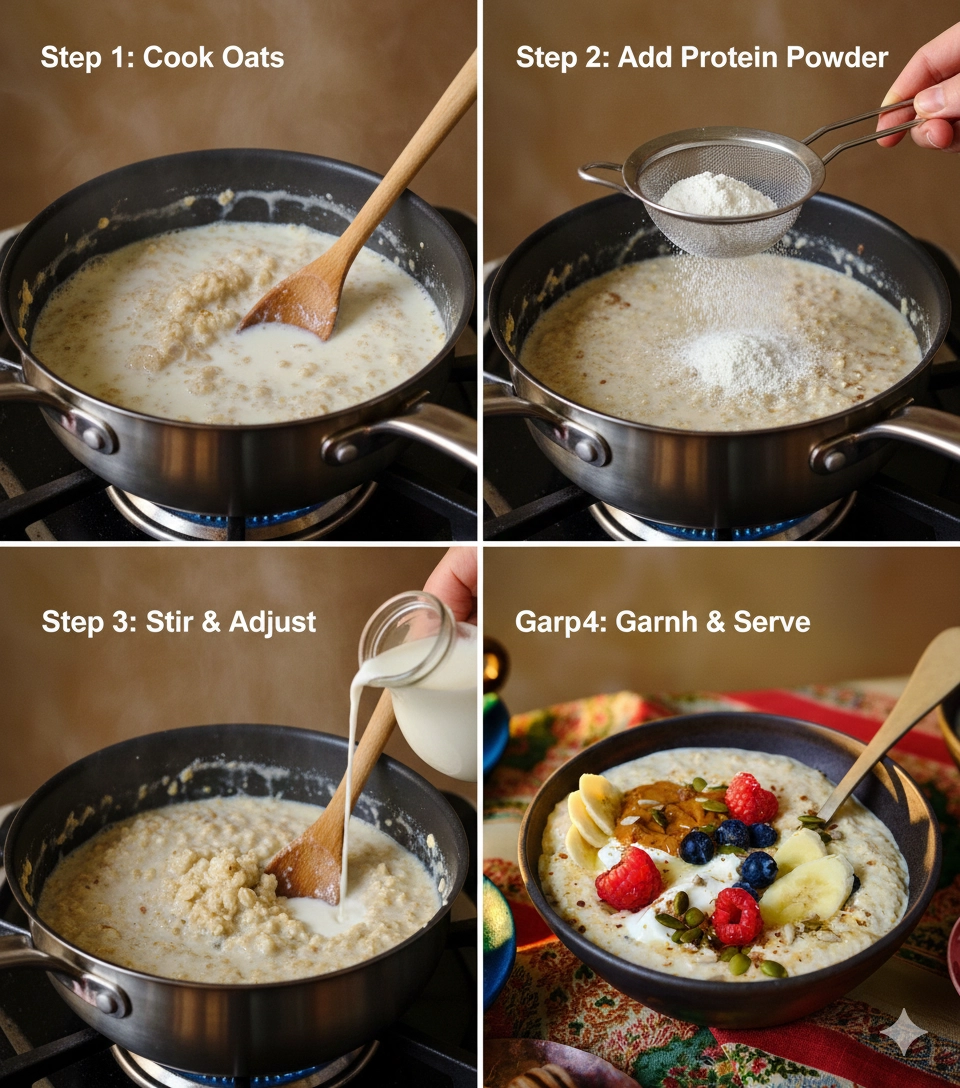
- Combine the porridge oats and your chosen milk in a medium sized saucepan. Set the burner to a medium low heat and cook for approximately 4 to 6 minutes. It is vital to stir the mixture continuously during this window. This constant movement prevents the bottom from scorching and encourages the oats to release their natural starches, resulting in a thickened and creamy consistency.
- Once the desired thickness is achieved, remove the saucepan from the heat source. Sift the protein powder into the oats. Using a sieve or sifter helps avoid lumps. If the mixture feels too dense after adding the powder, feel free to stir in an extra splash of milk or water to loosen the texture to your liking.
- Transfer the warm base into two separate bowls. Top each serving with the yogurt, seeds, nut butter, and fruit before drizzling with a touch of syrup or honey.
Mastery of the Morning Porridge Process
The journey to the perfect bowl of protein porridge begins with the oats themselves. When you combine 80 grams of oats with 500 milliliters of milk, you are creating a ratio that allows for maximum hydration of the grain. As the liquid reaches a gentle simmer over medium low heat, the oats undergo a physical transformation. The heat breaks down the complex structures of the grain, allowing them to absorb the milk. Stirring is not just a suggestion; it is a mechanical process that ensures even heat distribution. Without it, the oats at the bottom of the pan would overcook while the top remains watery.
The most critical moment in this culinary process happens when you remove the pan from the heat. Many people make the mistake of boiling their protein powder. High heat can cause certain types of protein, especially whey, to denature and become grainy or rubbery. By sifting the 30 grams of powder into the slightly cooled oats, you maintain the integrity of the protein while achieving a velvet-like mouthfeel. If you are using a chocolate powder, the heat from the oats will gently melt the cocoa elements, turning your breakfast into something that tastes like a decadent treat rather than a health food.
The final stage involves the “loosening” of the porridge. Because protein powder is highly absorbent, it often acts as a thickening agent. Keeping a small amount of extra milk nearby allows you to customize the viscosity. Some prefer a porridge so thick a spoon can stand upright in it, while others enjoy a more fluid, soup-like consistency. Both are perfectly valid, but the addition of that extra liquid at the end is what bridges the gap between a dry bowl and a luxurious one.
Guidance for Achieving Best Results
Selecting the right protein powder is the first step toward success. If you are using a plant-based powder, such as pea or soy protein, you might find that it absorbs significantly more liquid than whey. In these instances, you may need to increase the initial milk volume or add more water during the sifting phase. Vanilla is a classic choice that pairs beautifully with berries and honey, while chocolate versions create a rich base that works exceptionally well with peanut or almond butter.
Temperature control is your best friend in the kitchen. If you see bubbles popping aggressively at the surface, your heat is too high. High heat leads to a “skin” forming on the surface of the milk and can cause the oats to stick to the pan. Slow and steady wins the race here. The 4 to 6 minute cook time is a window for the starches to gelatinize properly.
Furthermore, consider the “resting” phase. Allowing the porridge to sit for just sixty seconds after you have stirred in the powder but before you add the toppings allows the flavors to meld. This is also the ideal time to prepare your fresh fruit. If you are using frozen fruit, adding it to the bowl first and then pouring the hot porridge over it can help defrost the berries quickly while keeping the porridge at a palatable temperature.
Optimal Accompaniments and Creative Serving Ideas
While the recipe calls for specific toppings, the way you layer them can change the entire eating experience. Placing the 4 tablespoons of Greek style yogurt right in the center provides a cool, tangy contrast to the warm oats. The yogurt adds a probiotic boost and an extra layer of creaminess that balances the sweetness of the fruit.
For the seeds, a mixture of pumpkin and sunflower seeds adds a delightful crunch that contrasts with the soft texture of the oats. If you opt for chia or flax seeds, remember that these will continue to absorb moisture, so you might want your porridge a bit thinner to start with. The nut butter, whether it be almond, peanut, or cashew, should be dolloped on while the porridge is still steaming. This allows the oils in the butter to soften and run across the surface, making every spoonful rich and flavorful.
When it comes to fruit, the 100 grams can be a mix of whatever is in season. Sliced apples with a pinch of cinnamon can turn this into a festive autumnal meal, while fresh raspberries and blueberries keep it light and vibrant for summer. A final drizzle of honey or maple syrup provides that hit of natural sugar that rounds out the savory notes of the nut butter and the tartness of the yogurt.
Substitutions and Dietary Variations
This recipe is highly adaptable to various dietary needs without sacrificing the core nutritional profile. If you are avoiding dairy, the 500 milliliters of milk can easily be replaced with unsweetened almond milk, soy milk, or oat milk. Each will provide a slightly different flavor profile; soy milk offers a higher natural protein content, while oat milk adds an extra layer of natural sweetness.
For those who are vegan, the Greek style yogurt can be swapped for a coconut or soy-based alternative. Ensure that your protein powder is also plant-derived. When it comes to the sweetener, maple syrup or agave nectar are excellent vegan-friendly substitutes for honey.
If you do not have nut butter on hand, tahini (sesame seed butter) offers a sophisticated, slightly bitter flavor that pairs wonderfully with honey and bananas. For those with nut allergies, sunflower seed butter is a safe and delicious alternative that provides a similar creamy texture and healthy fat content.
Common Inquiries Regarding Protein Porridge
Can I make this recipe ahead of time as overnight oats?
While this specific method focuses on a cooked, warm porridge, you can certainly adapt the ingredients for a cold version. Simply mix the oats, milk, and protein powder in a jar and leave it in the refrigerator overnight. However, the texture will be much denser, and you may find you need more liquid in the morning to reach a stirrable consistency. The cooking process described here is what creates that specific creamy, comforting warmth.
Does it matter what type of oats I use for this recipe?
The 4 to 6 minute cook time is tailored for standard rolled oats or “porridge oats.” If you choose to use steel-cut oats, the cooking time will increase to approximately 20 to 30 minutes, and you will likely need more milk to account for the longer evaporation time. Instant oats will cook much faster, often in under 2 minutes, but they generally lack the satisfying chew and structural integrity of traditional rolled oats.
Why should I sift the protein powder instead of just dumping it in?
Protein powder is notorious for clumping when it hits warm liquid. These clumps are dry in the middle and create an unpleasant texture in an otherwise smooth porridge. Sifting breaks up any pre-existing lumps in the powder and allows the particles to distribute evenly across the surface of the oats, making them much easier to whisk or stir in for a seamless finish.
Essential Nutrition Facts Table
The following values are calculated per serving, based on the ingredients and measurements provided in the recipe.
| Nutrient | Amount Per Serving |
| Calories | 376 calories |
| Total Fat | 13 grams |
| Saturated Fat | 6 grams |
| Carbohydrates | 39 grams |
| Sugars | 0 grams |
| Dietary Fiber | 4 grams |
| Protein | 25 grams |
| Salt | 0.33 grams |
Nutritional Disclaimer
The nutritional information provided is an estimate based on standard ingredient data. Actual values may vary depending on the specific brands of protein powder, milk, and oats used, as well as any additional toppings or substitutions made during the preparation process For more on the benefits of protein in a balanced diet, visit the World Health Organization .
A Final Note on This Nutritious Breakfast Choice
Embracing a high-protein start to your day is one of the simplest ways to improve your overall dietary habits. This porridge is more than just a meal; it is a versatile canvas that allows you to experiment with flavors while ensuring your body gets the macronutrients it craves. By following the precise steps of cooking the oats thoroughly and integrating the protein powder with care, you elevate a humble bowl of cereal into a gourmet, fitness-focused experience. Enjoy the warmth, the crunch of the seeds, and the sustained energy that follows this perfect morning ritual.
High Performance Protein Porridge
Ingredients
- 80 grams porridge oats
- 500 milliliters milk (any kind)
- 30 grams protein powder (vanilla, chocolate, or berry)
- 4 tbsp Greek-style yogurt
- 2 tbsp seeds (pumpkin, chia, flax, or sunflower)
- 2 tbsp nut or seed butter
- 100 grams frozen or fresh fruit (berries, bananas, or sliced apples)
- 1 drizzle honey or other syrup, to serve
Instructions
- Combine the 80 grams of oats and 500 milliliters of milk in a saucepan. Place over medium-low heat.
- Cook for 4 to 6 minutes, stirring continuously, until the mixture becomes thick and creamy.
- Remove the pan from the heat. Sift in the 30 grams of protein powder and stir well. Add a splash of extra milk or water if you prefer a thinner consistency.
- Divide the porridge into two bowls. Top with yogurt, seeds, nut butter, and fruit. Drizzle with honey and serve immediately.
Notes
Equipment
- medium saucepan
- wooden spoon or spatula
- Fine mesh sifter/sieve Crucial for lump-free protein powder
- Measuring scale/jug