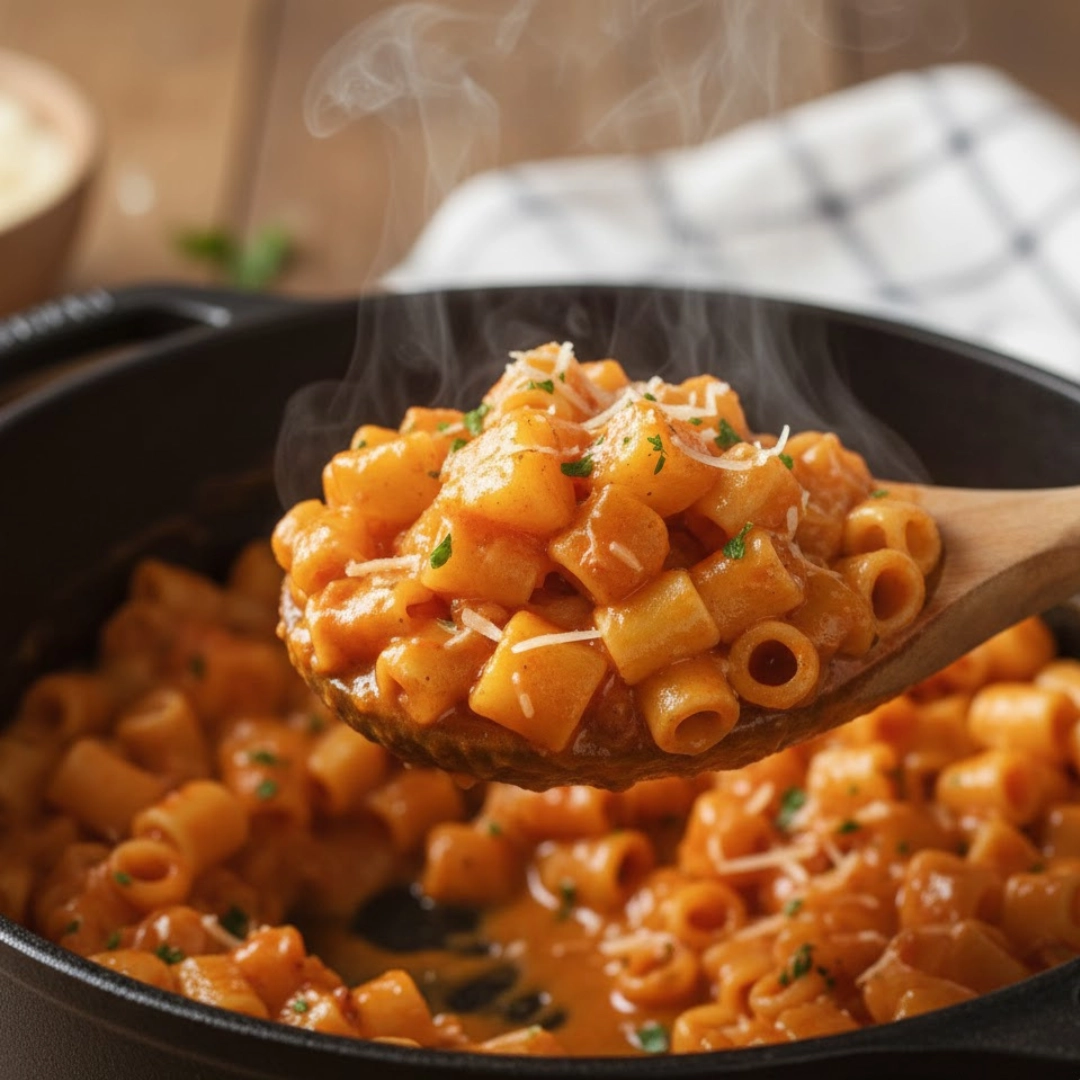
The essence of Italian regional cooking often lies in a principle known as cucina povera, or “poor cooking,” where humble ingredients are transformed by time and technique into something profoundly satisfying. This heritage is perfectly embodied by Potato Pasta (pasta e patate), a beloved dish hailing primarily from the Campania region, notably Naples. More than just combining two staple carbohydrates, this creation is a masterclass in starch cookery, relying on the slow breakdown of potatoes to naturally thicken and emulsify the sauce. The result is a velvety, almost risotto-like consistency that clings to the small, mismatched pasta shapes. It is a hearty, deeply flavorful meal that showcases the resourcefulness and culinary wisdom of Southern Italy, ideal for a substantial family lunch or a nourishing dinner.
Table of Contents
The Necessary Components: Ingredients and Preparation
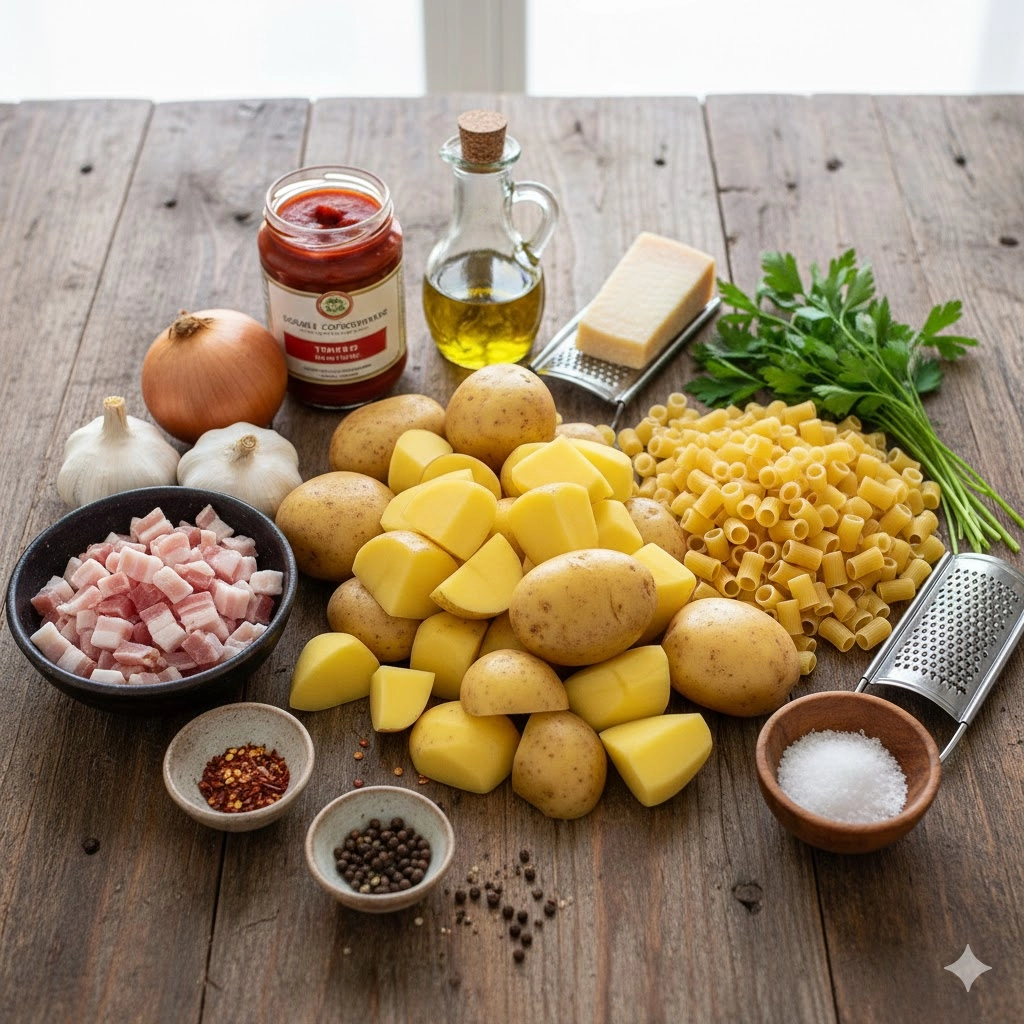
Achieving the characteristic creamy, toothsome quality of this dish starts with selecting and preparing the core ingredients thoughtfully. Use the freshest produce you can find, and remember that the quality of your cured pork product, if you choose to include it, will shine through.
For the Aromatics and Base:
- 1/4 pound high-quality pancetta, diced finely (optional, for flavor depth)
- 4 tablespoons extra virgin olive oil (divided use)
- 1 medium yellow onion, finely diced
- 4 large cloves garlic, thinly sliced
- 1/2 teaspoon crushed red pepper flakes (adjust to taste)
- 3 ounces double-concentrated tomato paste
For the Starch and Liquid:
- 2 pounds Yukon Gold potatoes (approximately 5 medium), peeled and cut into half-inch cubes
- 4 cups low-sodium chicken or vegetable broth (or water)
- Kosher salt and freshly cracked black pepper
For the Pasta and Finishing:
- 1 pound small, tubular pasta shapes (such as ditalini, tubetti, or conchigliette)
- 1/2 cup finely grated Pecorino Romano or Parmesan cheese, plus more for serving
- 1 tablespoon fresh parsley, finely chopped, for garnish
The Basic Movement: Instructions
This recipe involves sequential cooking steps designed to build flavor depth and achieve the perfect texture. Precision in timing and temperature control is crucial.
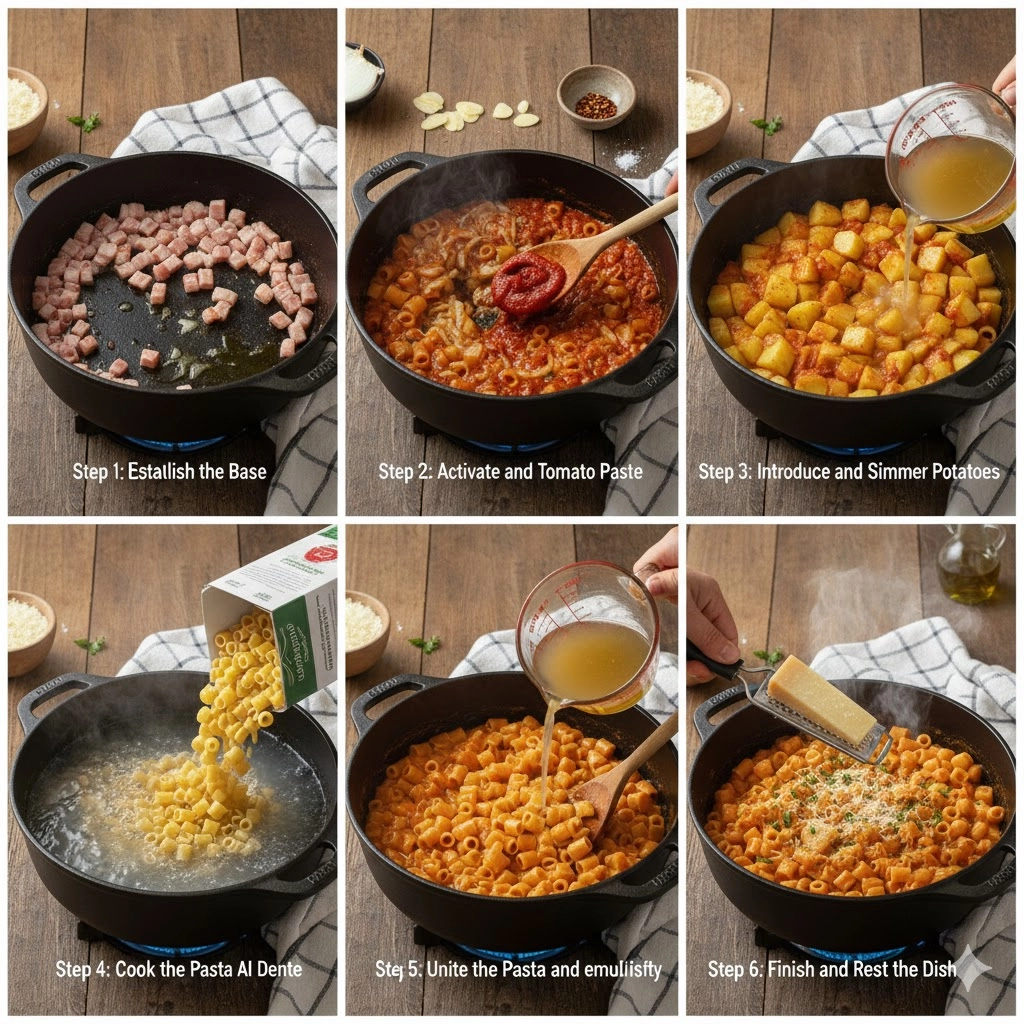
- Establish the Base: Render the pancetta (if using) in olive oil over moderate heat in a heavy-bottomed pot until crisp, then soften the onion and garlic.
- Activate the Tomato: Stir in the tomato paste and red pepper flakes, frying gently for several minutes to deepen the tomato flavor.
- Introduce the Starch: Add the cubed potatoes, tossing them well to coat in the aromatic mixture and fat. Season lightly with salt.
- Simmer and Hydrate: Pour in the broth or water, bring the liquid to a simmer, and cover the pot partially. Cook until the potatoes are tender but not completely dissolved.
- Cook and Combine the Pasta: Separately cook the pasta in salted boiling water until it is very firm (about three quarters of the way done). Drain, reserving at least four cups of the starchy pasta water.
- Unite and Emulsify: Add the undercooked pasta directly to the potato mixture. Cook together for three to five minutes, stirring frequently, adding reserved pasta water as needed to create a creamy, thick sauce.
- Rest and Finish: Remove the pot from the heat, stir in the grated cheese, and let the dish rest for five minutes before adjusting final seasonings and serving.
Detailed Procedure: The Mastery of Texture and Flavor
Setting the Stage with Fat and Aromatics
The initial step—the soffritto—is the foundation of flavor for pasta e patate. If you opt for pancetta, start with a cold pan and gradually raise the heat to moderate. This slow rendering process allows the fat to melt out slowly, ensuring the pancetta becomes beautifully crisp without burning the meat. Once the pancetta is translucent and the fat is released, remove the pieces to a separate dish, leaving the flavorful fat behind. If omitting the pork, simply use the olive oil.
Drop the diced onion into the residual fat (or oil). You are aiming for sweetness and complete tenderness, not browning. Reduce the heat to moderate-low and sweat the onion for a generous five to seven minutes, stirring often, until it is completely translucent. Add the sliced garlic and red pepper flakes, cooking only until the garlic is fragrant—about one minute. Garlic burns quickly and becomes bitter, so watch this phase closely.
Frying the Paste and Coating the Potatoes
The tomato paste step is vital. Stir the thick paste directly into the pot, integrating it fully with the oil and aromatics. Cook this mixture, stirring constantly, for three to five minutes. This process, often called caramelization or frying the paste, is essential. It cooks out the raw, metallic edge of the tomato and concentrates its deep, savory sweetness, leading to a much richer final sauce color and flavor.
Next, introduce the cubed potatoes. Toss them vigorously for several minutes, coating every surface with the rich tomato-and-fat base. This step helps the starches on the potato exterior absorb flavor before the liquid is added. Add a modest amount of salt here. It is easier to adjust seasoning later, and since you will be reducing liquid and adding reserved pasta water (which is salted), a light hand is best now.
The Critical Simmer
Pour in the broth or water and bring the pot to a steady, gentle simmer. The cooking of the potatoes is a two-part process. You want them to soften completely—some cubes should even begin to break down—but still retain enough structural integrity that the dish doesn’t become pure mash. It takes approximately twenty to twenty-five minutes. As they cook, the potatoes release their valuable starch, which will become the natural thickening agent for the final sauce. This is what provides the dish with its signature body. Keep the pot partially covered to prevent excessive liquid evaporation while still allowing steam to escape and concentrate the flavors.
The Marriage of Pasta and Starch
This is the point of no return for texture. The pasta must be cooked separately only to the point of being very firm, or molto al dente. It will finish cooking directly in the potato sauce. The reason for reserving four cups of pasta water is simple: it is gold. That water is thick with leached starch, which, when added to the potato starch, creates a superior, glossy emulsion that holds the sauce together beautifully.
Transfer the undercooked, drained pasta into the simmering potato pot. Stir continuously. The pasta will absorb the flavorful sauce and continue releasing its starch. This phase should last around three to five minutes. Do not be afraid to ladle in the reserved pasta water incrementally. You are aiming for a thick, flowing consistency that can settle slightly but is definitely not runny. The key is agitation; constant stirring encourages the potato starch and pasta starch to bind with the fat and moisture, creating that luxurious, creamy mouthfeel.
The Final Emulsion and Rest
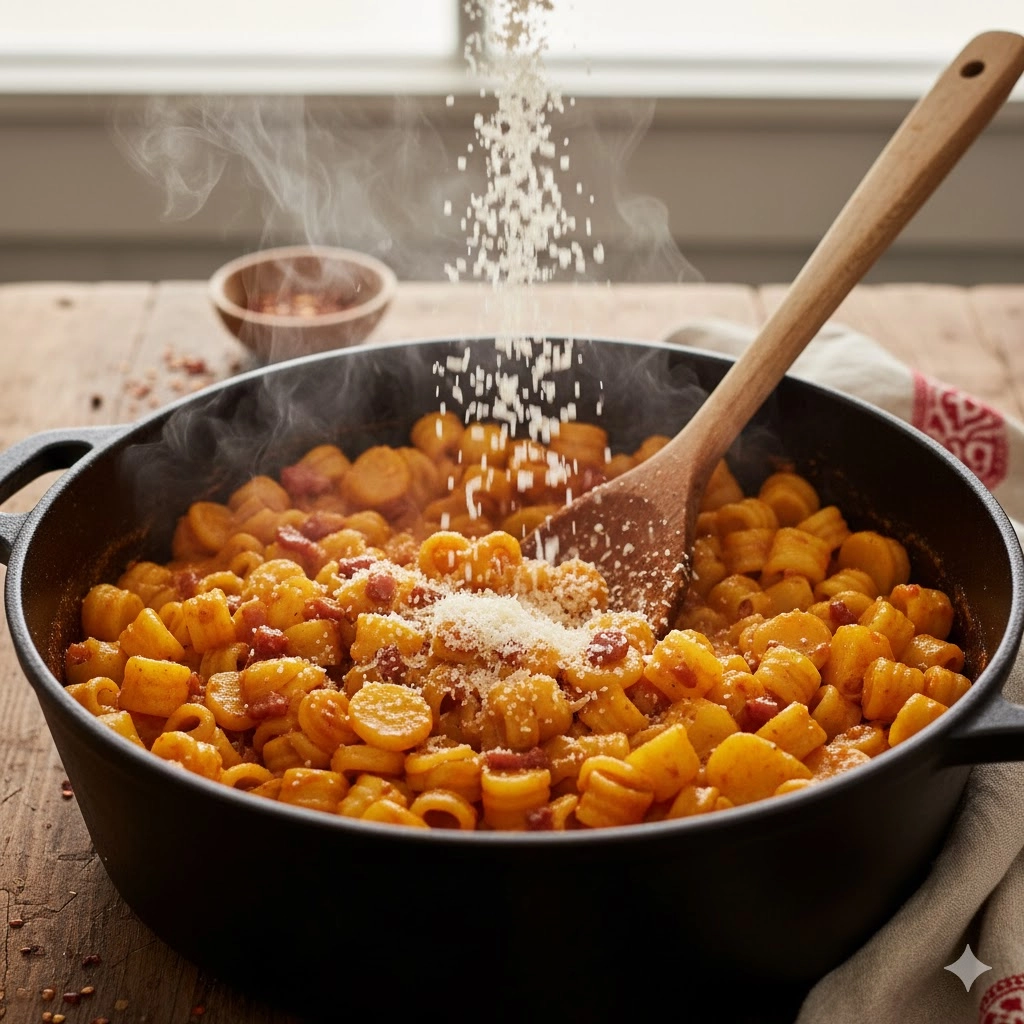
Once the dish has reached your preferred level of wetness—some prefer it “soupy,” others drier and stickier—remove it from the heat source immediately. This is the moment for the final emulsification. Stir in the grated cheese vigorously. The resting period is mandatory: five minutes off the heat allows the starches to fully gelatinize and the sauce to thicken slightly further, cementing the emulsion and ensuring the sauce truly coats the pasta and potatoes. Taste and adjust the seasoning one last time. Only now should you add the crisp pancetta pieces back in, along with a final drizzle of quality olive oil and the parsley garnish before serving.
Achieving the Velvety Texture: Advanced Pro Tips
- The Starch Strategy: Use Yukon Gold potatoes exclusively. Their relatively high starch content and waxy texture allow them to break down and release starch without turning into mush immediately. Russets break down too fast, and new potatoes lack the necessary starch.
- Cube Size Consistency: Cut the potatoes into half-inch cubes as evenly as possible. Consistency ensures they cook at the same rate, preventing some pieces from dissolving entirely before others have even softened.
- Low and Slow Soffritto: Do not rush the aromatics. Cooking the onion and garlic slowly over moderate-low heat is essential for extracting maximum flavor and sweetness without introducing harsh, burned notes.
- The Reserve Water Rule: Always save more pasta water than you think you need. It is easier to have too much starchy water sitting by than to frantically boil more water later. The ideal consistency is often dictated entirely by this final liquid adjustment.
- Cheese Off the Heat: Never add the grated hard cheese while the pot is actively boiling or simmering rapidly. High heat can cause the cheese proteins to seize or separate the fat, resulting in a stringy, oily sauce rather than a smooth emulsion. Always add it off the heat during the final rest.
- Serving Temperature: While delicious hot, this dish benefits from sitting for about five minutes after finishing. The slight drop in temperature allows the starches to set up, resulting in a more cohesive and thicker dish.
Regional Inspirations and Alternatives
This dish has many localized variations across Southern Italy, and embracing substitution is part of its cucina povera spirit.
- A Neapolitan Green Hue: In the traditional Neapolitan style, a handful of fresh basil leaves or chopped celery is often added along with the potatoes for a fresh, herbaceous background note.
- Smoked Depth (Prosciutto or Bacon): While pancetta is traditional, diced prosciutto crudo or even high-quality, unsmoked slab bacon can replace it. If using bacon, render it fully and drain off most of the excess fat before proceeding with the onion.
- Dairy Enrichment (Provolone): For an even richer, cheesier final result, stir in cubes of aged Provolone cheese (provolone piccante) along with the Pecorino or Parmesan at the end. The Provolone melts beautifully and imparts a sharper, more complex flavor.
- Vegan Adaptation: To make this completely plant-based, omit the pancetta and use an extra six tablespoons of olive oil for the soffritto. For the final step, replace the grated cheese with three tablespoons of nutritional yeast or a high-quality vegan Parmesan substitute.
- Lentil or Bean Addition: For added protein and bulk, particularly common in Basilicata, introduce a cup of cooked chickpeas (ceci) or lentils along with the potatoes. This substitution makes the final potato pasta even heartier.
Finishing Touches: Serving Suggestions and Pairing
Because of its rustic, deeply savory character, this dish is traditionally served as a substantial single course, not necessarily followed by a main protein course.
- The Cheese and Pepper Ensemble: The single best accompaniment is a generous grating of salty, sharp Pecorino Romano cheese and an extra swirl of high-quality, peppery olive oil over the top of each bowl. If you like heat, finish with a pinch of fresh, fine-ground black pepper or a dash of Calabrian chili oil.
- Simple Greens: The richness of the dish is beautifully cut by the acidity and freshness of a very simple green salad dressed only with lemon juice, salt, and olive oil.
- Wine Pairing: Pair this rich dish with a bright, crisp Italian white wine from the same region, such as a Falanghina or a Greco di Tufo. Alternatively, a light-bodied red like an Aglianico, served slightly chilled, offers enough acidity to cleanse the palate without overpowering the potato and tomato base.
Culinary Queries: Frequently Asked Questions
Why did my pasta e patate turn out watery instead of creamy?
The primary reason for a watery sauce is not enough starch release. This can happen if you used the wrong type of potato (like low-starch new potatoes) or didn’t cook the pasta long enough in the potato mixture to allow it to leach its own starch. Ensure you are using high-starch potatoes like Yukon Gold, and reserve and use plenty of the starchy pasta cooking water to achieve the necessary emulsification.
Can I make this dish ahead of time?
While this dish is best served immediately after its five-minute rest, you can prepare the potato base (the soffritto and cooked potatoes) one day in advance and store it in the refrigerator. When ready to serve, reheat the base, bring it to a simmer, and then cook and integrate the fresh pasta into it. Note that leftovers will thicken significantly as they cool due to the high starch content.
What’s the best way to reheat leftovers?
Leftover potato pasta will be very thick and firm. To reheat, place the portion in a saucepan over moderate-low heat. Add one quarter to one half-cup of water or broth per serving to loosen the starch. Stir constantly until the dish is heated through and has returned to a creamy consistency. Avoid microwaving, as it can cause the potatoes and starches to separate unevenly.
Is it necessary to use tomato paste?
Tomato paste provides a crucial layer of sweetness, acid, and umami that balances the richness of the potatoes and pancetta (if used). While some regional versions of pasta e patate are entirely in bianco (white, or without tomato), the touch of paste is essential for the classic Neapolitan profile. If omitting, you might need to add a small splash of white wine vinegar or lemon juice at the end for necessary brightness.
What kind of pasta shapes work best?
Small, short, tubular, or oddly shaped cuts work best. Ditalini, tubetti, small shells (conchigliette), or even elbow macaroni are traditional choices. They have a good surface area for the thick sauce to cling to and, crucially, their size mimics the size of the potato cubes, ensuring a cohesive texture in every spoonful.
Nutritional Snapshot
| Nutrient | Amount per Serving |
| Calories | 650 kcal |
| Protein | 24 g |
| Carbs | 105 g |
| Fat | 15 g |
| Fiber | 9 g |
| Sugar | 6 g |
| Sodium | 550 mg |
Estimated Nutritional Information
Nutrition information is an estimate and may vary based on preparation and ingredients used.
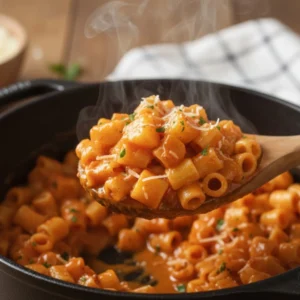
Classic Southern Italian Potato Pasta (Pasta e Patate)
Ingredients
- 0.25 pound high-quality pancetta, diced finely (optional, for flavor depth)
- 4 tbsp extra virgin olive oil (divided use)
- 1 medium yellow onion, finely diced
- 4 large cloves garlic, thinly sliced
- 0.5 tsp crushed red pepper flakes (adjust to taste)
- 3 ounces double-concentrated tomato paste
- 2 pounds Yukon Gold potatoes, peeled and cut into half-inch cubes
- 4 cups low-sodium chicken or vegetable broth (or water)
- Kosher salt and freshly cracked black pepper
- 1 pound small, tubular pasta shapes (such as ditalini, tubetti, or conchigliette)
- 0.5 cup finely grated Pecorino Romano or Parmesan cheese, plus more for serving
- 1 tbsp fresh parsley, finely chopped, for garnish
Instructions
- In a heavy-bottomed pot over moderate heat, render the pancetta in olive oil until crisp (if using). Remove pancetta. Add the diced onion and soften for five to seven minutes over moderate-low heat until translucent. Add the sliced garlic and red pepper flakes, cooking for one minute until fragrant.
- Stir in the tomato paste, integrating it fully with the oil and aromatics. Cook and stir constantly for three minutes to fry the paste and deepen its flavor.
- Add the cubed potatoes, tossing well to coat. Season lightly with salt. Pour in the broth, bring to a gentle simmer, and cover partially. Cook for twenty to twenty-five minutes, or until the potatoes are tender and starting to break down, releasing their starch.
- In a separate pot of salted water, cook the pasta only until very firm (molto al dente). Drain the pasta, reserving at least four cups of the starchy cooking water.
- Add the undercooked pasta directly to the potato mixture. Cook together for three to five minutes, stirring frequently. Add reserved pasta water incrementally until the sauce reaches a thick, velvety, and creamy consistency.
- Remove the pot from the heat source. Stir in the grated Pecorino Romano cheese and the remaining olive oil. Let the dish rest, uncovered, for five minutes to allow the starches to set. Adjust final salt and pepper seasonings, garnish with fresh parsley, and serve immediately.
Notes
Equipment
- Heavy-bottomed pot or Dutch oven Essential for even cooking and heat retention.
- Large stockpot For cooking the pasta.
- Slotted spoon or colander