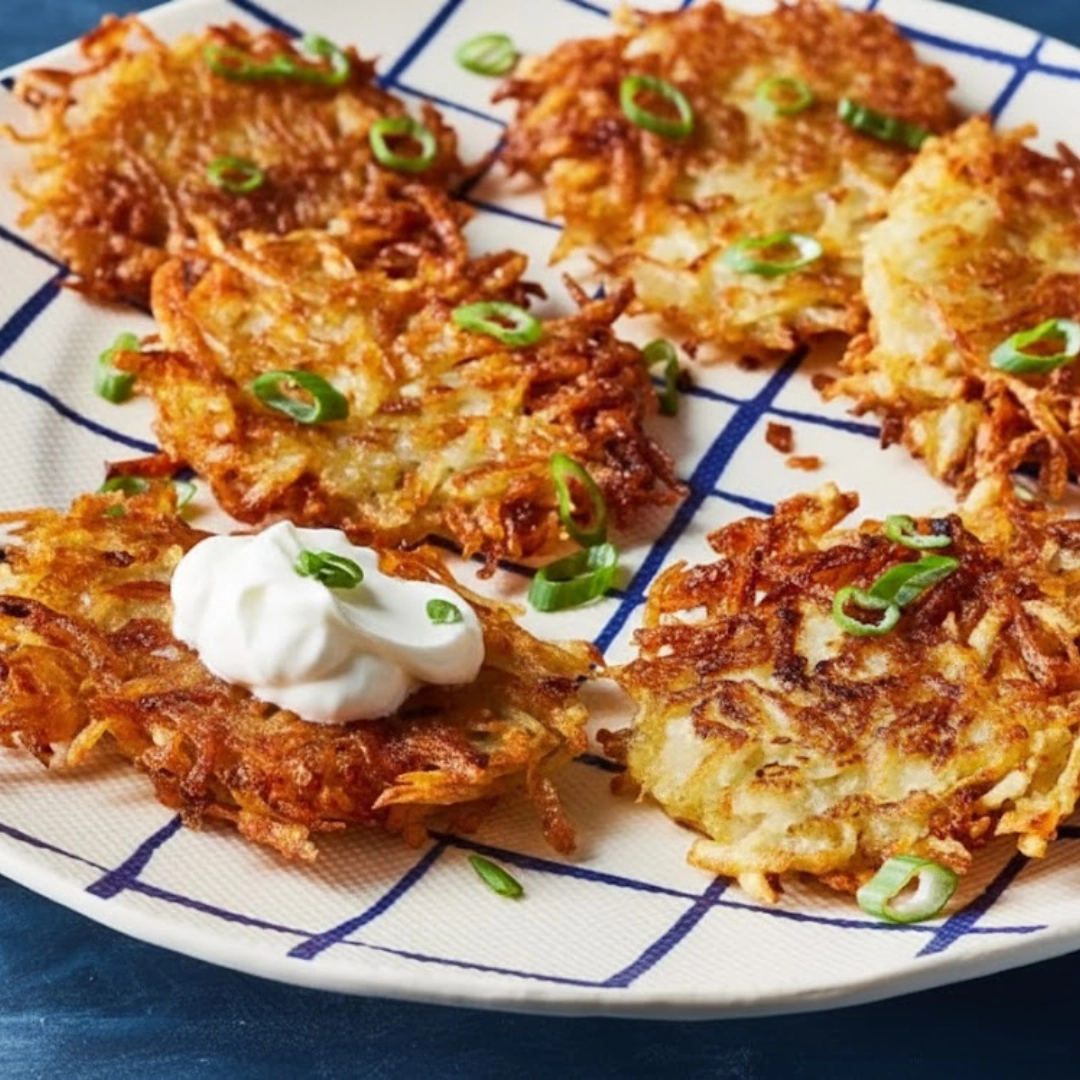
Traditional potato pancakes represent a culinary bridge between humble root vegetables and a gourmet dining experience. These savory rounds offer a contrast in textures that few other dishes can match, featuring a lacy, shattered-glass exterior that gives way to a creamy, onion-scented center. Whether you refer to them as latkes, boxty, or simply Potato Pancakes, the secret to success lies in the balance of starch and moisture. While they are often associated with holiday traditions or European heritage, their universal appeal makes them a sophisticated side dish for a weekend brunch or a substantial accompaniment to a roasted meat dinner.
Table of Contents
Essential Ingredients for Crispy Results
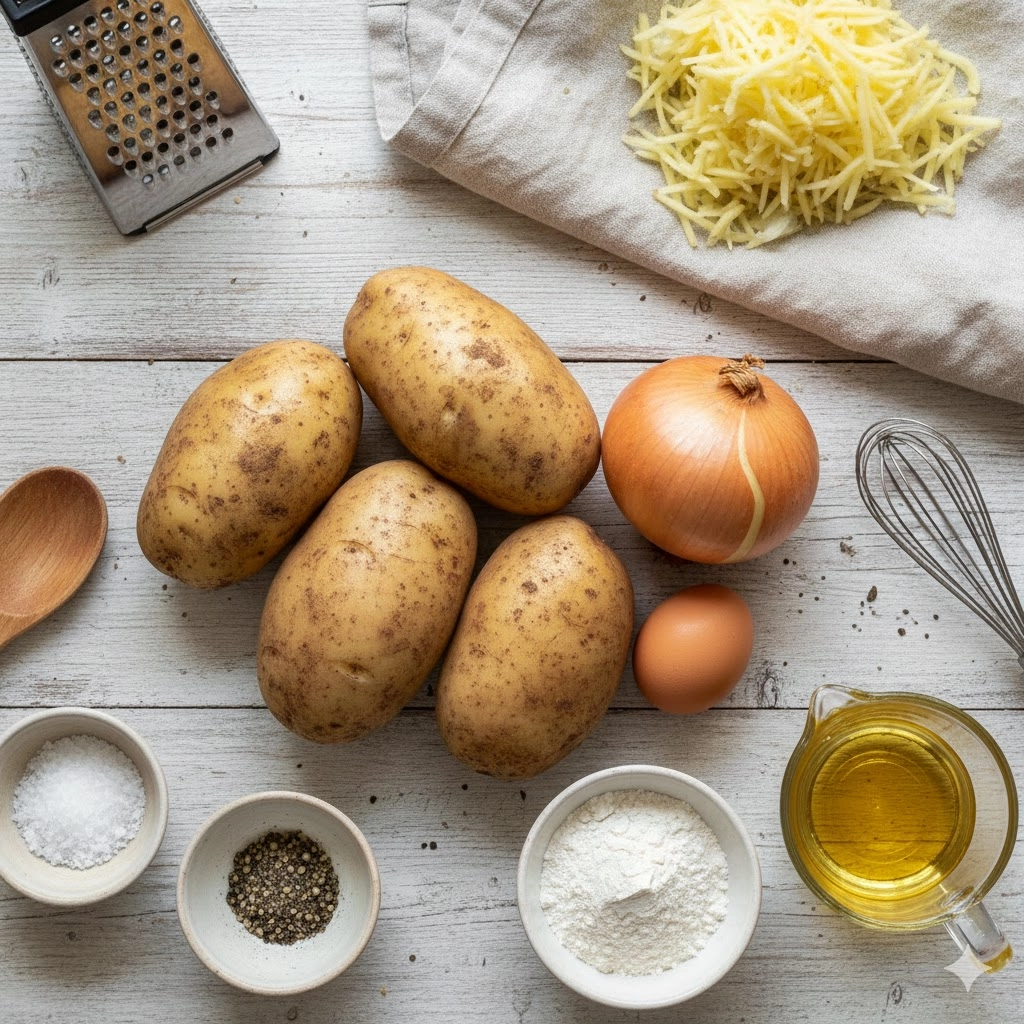
To achieve the best flavor and structural integrity, gather these high-quality staples. The quantities below are designed to serve approximately six people.
- Four large russet potatoes: Approximately two and a half pounds, peeled.
- One large yellow onion: Finely grated for maximum flavor distribution.
- One large egg: Beaten thoroughly to act as a primary binder.
- One teaspoon sea salt: Essential for drawing out moisture and seasoning.
- One half teaspoon freshly cracked black pepper: Adjust to your personal taste.
- Three tablespoons all-purpose flour: This provides the necessary body to hold the pancakes together.
- One cup high-smoke point oil: Canola, grapeseed, or vegetable oil work best for shallow frying.
Primary Cooking Instructions
Follow these streamlined steps to transform raw tubers into golden discs of perfection.
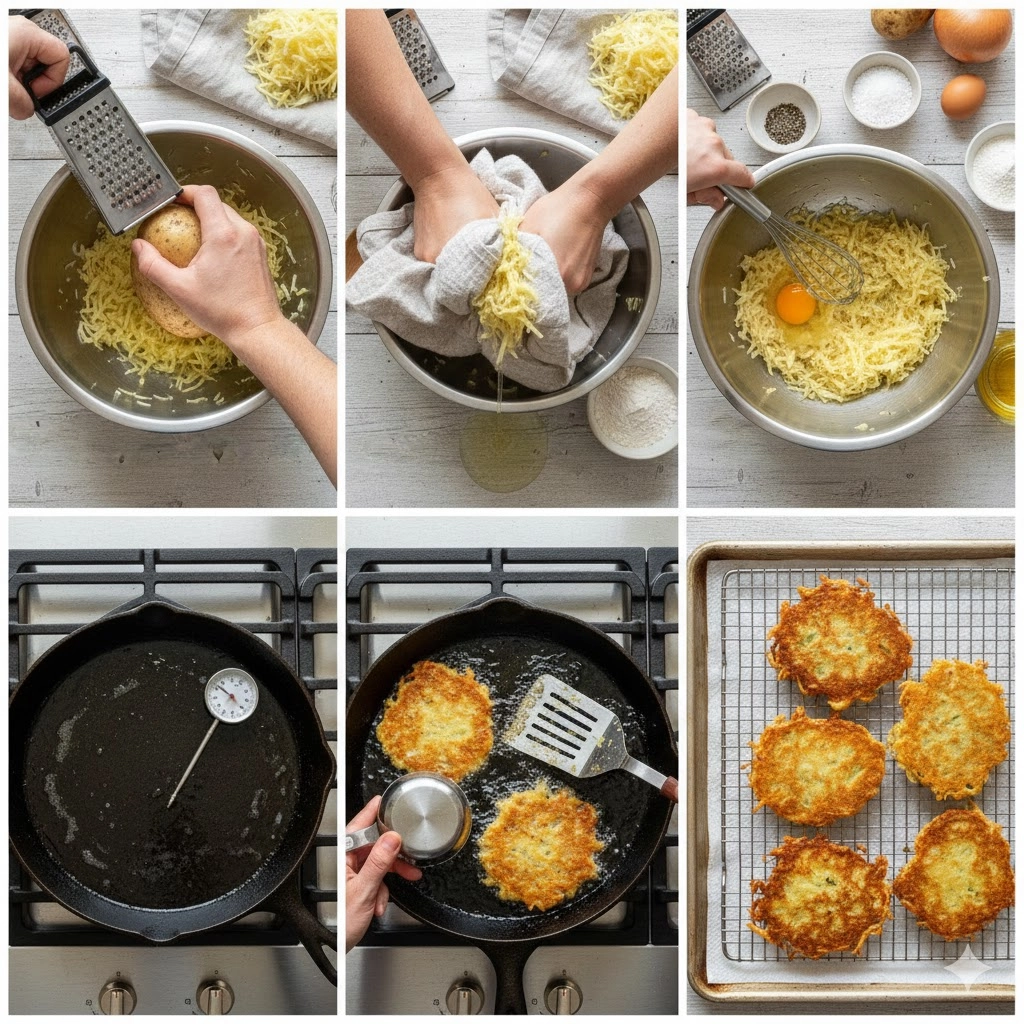
- Prep the Base: Finely grate the peeled potatoes and the onion into a large mixing bowl.
- Expel Moisture: Transfer the mixture to a clean kitchen towel and squeeze forcefully to remove as much liquid as possible.
- Incorporate Binders: Return the dry potato mixture to the bowl and stir in the beaten egg, salt, pepper, and flour.
- Heat the Skillet: Pour oil into a heavy-bottomed skillet until it reaches one quarter inch depth and heat over medium-high.
- Form and Fry: Drop portions of the batter into the shimmering oil and flatten them gently with a spatula.
- Develop Color: Fry for approximately three to four minutes per side until deeply golden and crisp.
- Drain and Hold: Transfer finished pancakes to a wire rack or paper towels and keep warm in an oven at two hundred Fahrenheit.
Masterclass: Detailed Steps and Sensory Cues
Success with this Potato Pancakes recipe depends on your attention to the physical state of the ingredients at every stage.
Grating and Straining Technique
When you grate the potatoes, use the fine holes of a box grater rather than the large shredding side. This creates a pulp-like consistency that results in a more cohesive pancake. As soon as the potatoes are grated, they will begin to oxidize and turn pink or grey; do not worry, as this color disappears during frying. The most critical failure point is moisture. You must squeeze the potato-onion mixture until no more water drips out. If the batter is too wet, the pancakes will steam instead of fry, resulting in a mushy interior and a soggy exterior.
Achieving the Perfect Batter Consistency
Once you add the egg and flour, the mixture should look like a thick, heavy paste. If you notice a pool of liquid forming at the bottom of the bowl as the batter sits, give it a quick stir before scooping. The flour acts as a secondary binder to the egg, but using too much will make the pancakes “cakey” or bread-like. You want just enough to coat the potato strands.
The Art of Frying
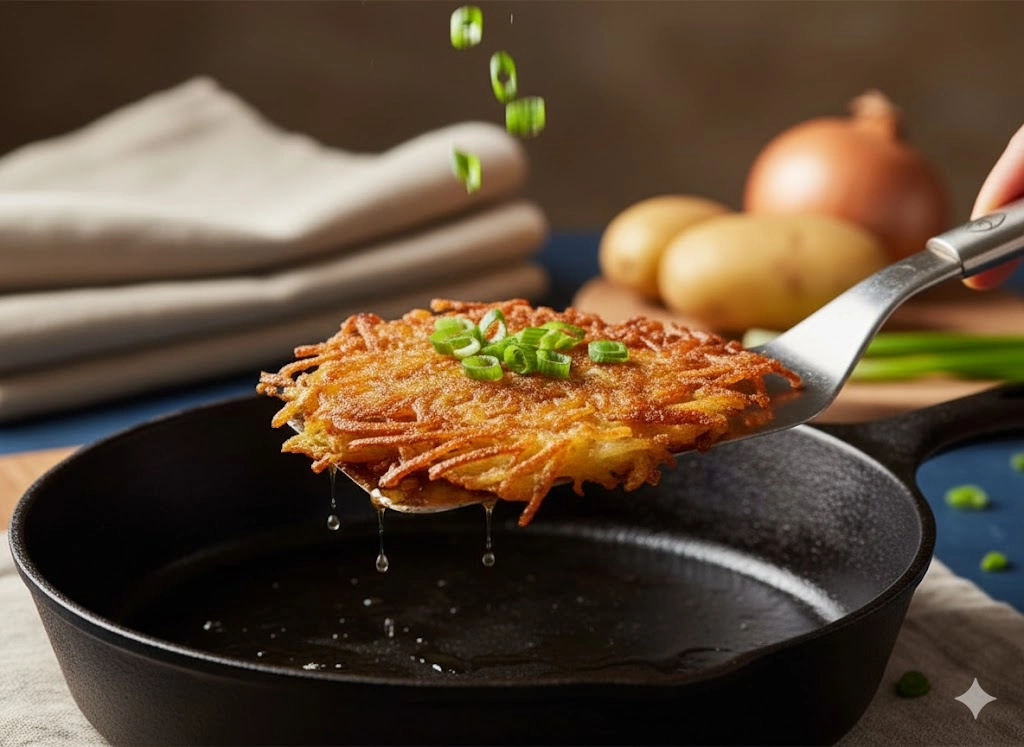
The oil must be hot enough that the batter sizzles immediately upon contact. If the oil is too cold, the potato will absorb the fat and become greasy. Aim for a temperature around three hundred fifty Fahrenheit if using a thermometer. When you drop the batter, use a quarter-cup measure for uniform sizes. Do not overcrowd the pan; frying more than three or four at a time will drop the oil temperature significantly. Look for the edges to turn dark brown and look “lacy” before you attempt the first flip.
Professional Tips for Excellence
- The Potato Choice: Always use Russets. Their high starch content is what creates the “glue” that holds the pancake together. Waxy potatoes like Red Bliss or Yukon Gold contain too much moisture and not enough starch.
- Ice Water Bath: If you grate the potatoes ahead of time, submerge them in ice-cold water to prevent browning, but ensure you dry them exceptionally well before mixing with the other ingredients.
- Salt Timing: Do not salt the potatoes until you are ready to fry. Salt draws out moisture, and the longer the salted batter sits, the wetter it will become.
- The Starch Secret: When you squeeze the liquid out of the potatoes into a bowl, let that liquid sit for two minutes. A layer of white potato starch will settle at the bottom. Pour off the water and add that concentrated starch back into your batter for extra crispiness.
- Cast Iron Advantage: Use a cast-iron skillet if available. Its superior heat retention ensures the oil temperature stays consistent even when you add cold batter.
- Oil Maintenance: Between batches, use a fine-mesh skimmer to remove any loose bits of potato that might be burning in the oil. This prevents a bitter flavor from developing.
Creative Variations and Substitutions
While the classic version is iconic, these adaptations offer a fresh perspective on the traditional dish.
- The Garlic and Herb Twist: Incorporate two cloves of minced garlic and a tablespoon of fresh chopped parsley or chives into the batter for a savory, aromatic lift.
- Root Vegetable Medley: Replace one of the four potatoes with a large grated parsnip or a cup of shredded carrots. This adds a subtle sweetness and a complex earthy note.
- Gluten-Free Alternative: Substitute the all-purpose flour with an equal amount of potato starch or a high-quality gluten-free flour blend to accommodate dietary needs without sacrificing texture.
- Spiced Latkes: Add a teaspoon of smoked paprika or a pinch of cayenne pepper to the batter for a smoky heat that pairs beautifully with cool toppings.
Practical Serving Suggestions
Potato Pancakes are incredibly versatile and can transition from a casual snack to an elegant centerpiece.
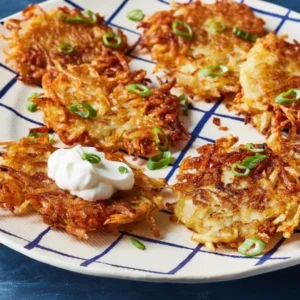
- The Traditional Duo: Serve hot with a side of cold, unsweetened applesauce and a generous dollop of full-fat sour cream. The contrast of hot and cold, sweet and savory, is the classic standard.
- Smoked Salmon Platter: Top each pancake with a swirl of crème fraîche, a slice of smoked salmon, and a few capers. This transforms the dish into a sophisticated appetizer for a cocktail party.
- Savory Breakfast: Place a soft-poached egg on top of two pancakes and garnish with crumbled bacon and sliced scallions. The runny yolk acts as a natural sauce for the crispy potatoes.
- Dinner Side: Pair these with a rich beef stew or roasted pork loin. The pancakes are excellent for soaking up savory gravies and juices.
Frequently Asked Questions
Can I make the batter in a food processor?
Yes, you can use the metal blade to pulse the potatoes and onions into a fine pulp. However, be careful not to over-process them into a liquid smoothie; you still want some identifiable texture in the final pancake.
How do I prevent the pancakes from becoming greasy?
Ensure your oil is at least three hundred twenty-five to three hundred fifty Fahrenheit before frying. Additionally, always drain the fried pancakes on a wire rack over a baking sheet rather than directly on a flat plate, which allows air to circulate and prevents sogginess.
Can these be made ahead of time and reheated?
Absolutely. They reheat beautifully in a four hundred Fahrenheit oven for about five to eight minutes. Avoid the microwave, as it will make the crust soft and rubbery.
Why are my pancakes falling apart in the pan?
This usually happens if the potatoes were not squeezed dry enough or if there isn’t enough binder. Try adding another tablespoon of flour or ensure you are allowing the bottom to fully crust over before attempting to flip them.
Nutrition Information
| Nutrient | Amount per Serving |
| Calories | 283 kcal |
| Protein | 7 g |
| Carbs | 47 g |
| Fat | 8 g |
| Fiber | 6 g |
| Sugar | 3 g |
| Sodium | 415 mg |
Disclaimer
Nutrition information is an estimate and may vary based on preparation and ingredients used.
Traditional Crispy Potato Pancakes
Ingredients
- 4 large russet potatoes, peeled
- 1 large yellow onion, finely grated
- 1 large egg, thoroughly beaten
- 1 tsp sea salt
- 0.5 tsp freshly ground black pepper
- 3 tbsp all-purpose flour
- 1 cup high-smoke point vegetable oil, for frying
Instructions
- Finely grate the peeled potatoes and the yellow onion into a large mixing bowl.
- Transfer the grated mixture to a clean kitchen towel and squeeze forcefully to remove all excess liquid.
- In a large bowl, mix the dried potato and onion with the beaten egg, salt, pepper, and flour.
- Heat oil in a heavy-bottomed skillet until it reaches one quarter inch depth over medium-high heat.
- Drop quarter-cup mounds of batter into the hot oil and flatten them gently with a spatula.
- Fry for 3 to 4 minutes per side until the edges are lacy and the surface is deeply golden brown.
- Transfer finished pancakes to a wire rack or paper towels to drain excess oil.
Notes
Equipment
- Box grater Use the fine holes for a traditional texture.
- Clean Kitchen Towel Used for squeezing out potato starch liquid.
- Heavy-bottomed Skillet Cast iron is preferred for heat retention.
- spatula
- wire cooling rack Keeps the bottoms from getting soggy.