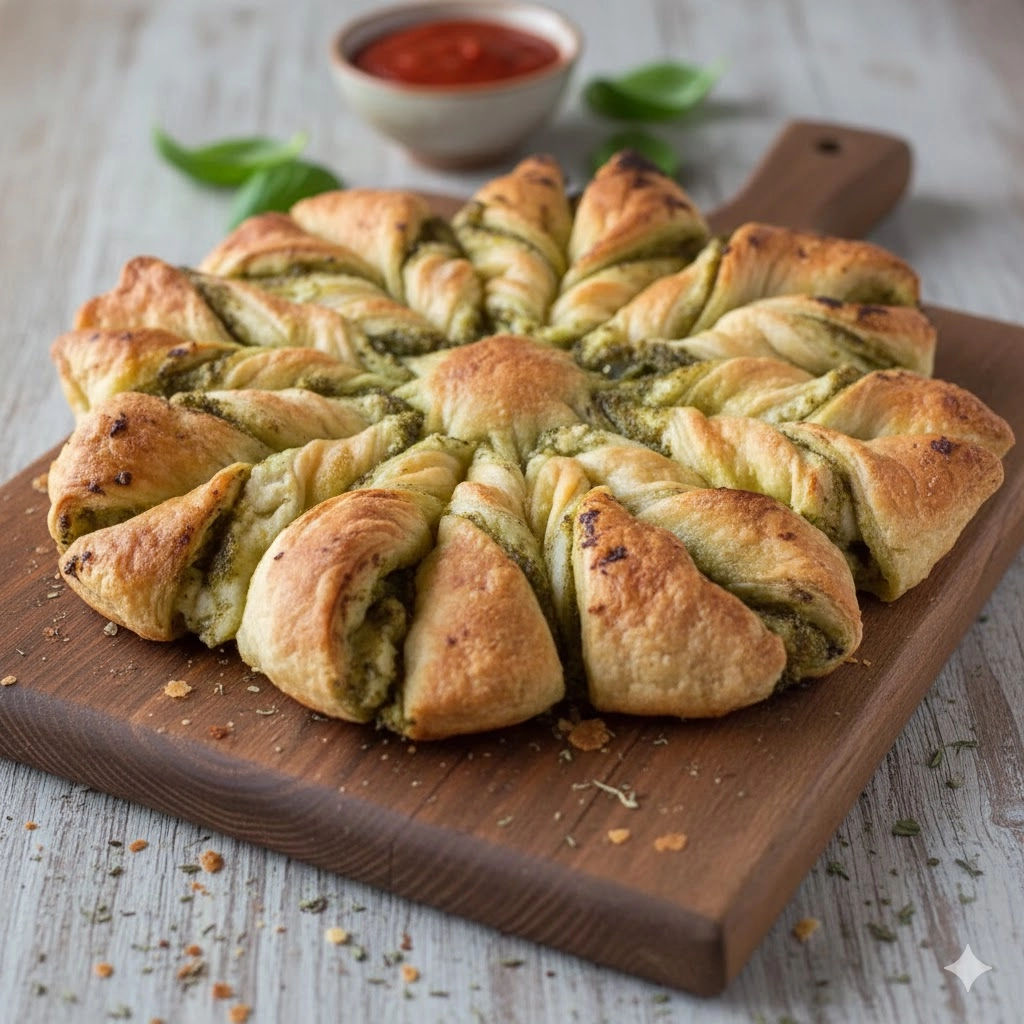
Few appetizers possess the immediate, irresistible draw of the Pesto Puff Pastry Pinwheel. This is a dish that effortlessly bridges the gap between simple home cooking and elegant entertaining. It is a striking centerpiece, designed to be visually dynamic yet requiring only a handful of staple ingredients. Whether you are hosting a casual wine-and-cheese night or seeking a stunning starter for a holiday meal, the combination of flaky, buttery pastry embracing the bold, verdant punch of basil pesto and creamy ricotta cheese is guaranteed to be a hit. This guide will walk you through transforming basic components into a spiraled masterpiece that invites guests to pull apart and enjoy.
Table of Contents
Foundational Elements: Securing the Best Ingredients
The success of any three-ingredient dish rests entirely on the quality of those ingredients. Because we rely on the pre-made convenience of puff pastry, our focus shifts to ensuring the pesto and ricotta are exceptional. Aim for a full-fat ricotta for richness and a vibrant, fresh pesto—homemade is always preferred, but if using store-bought, look for one that is bright green and less oily.
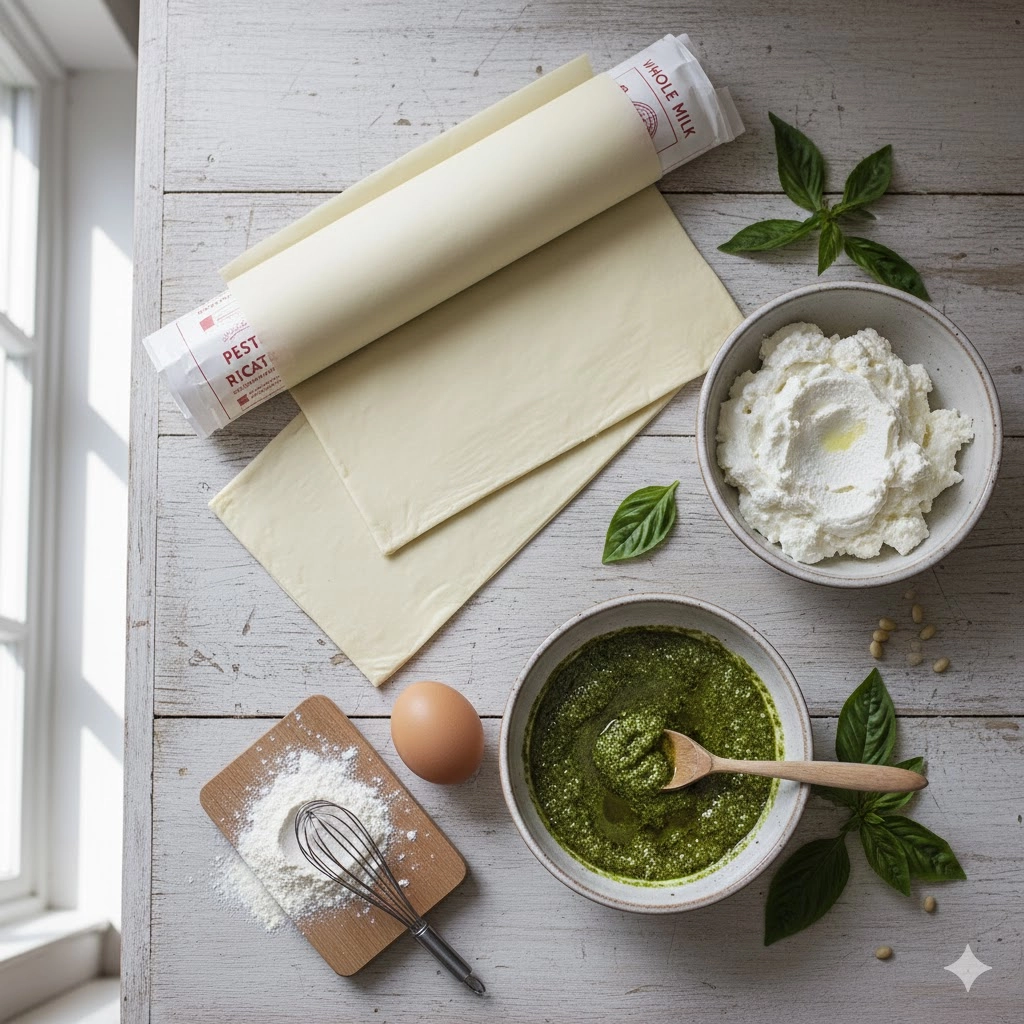
What You Need for the Perfect Assembly
- Puff Pastry: Two sheets (approximately 17.3 ounces total), thawed according to package directions.
- All-Purpose Flour: 2 teaspoons, for dusting the work surface.
- Whole Milk Ricotta Cheese: 8.5 ounces (about one cup), preferably strained.
- Basil Pesto: 8.5 ounces (about one cup), preferably with excess oil drained.
- Egg (optional): 1 large, beaten (for egg wash).
Preparation Strategy: Unlocking the Flaky Potential
The structural integrity of the pinwheel depends on disciplined temperature management and careful handling of the pastry. Follow these high-level steps to create the foundation for a perfectly baked, light, and flaky appetizer.
- Ready the Oven and Pan: Adjust an oven rack to the middle position and preheat the oven to four hundred Fahrenheit. Prepare a large baking sheet by lining it with parchment paper, then dust the paper lightly with flour.
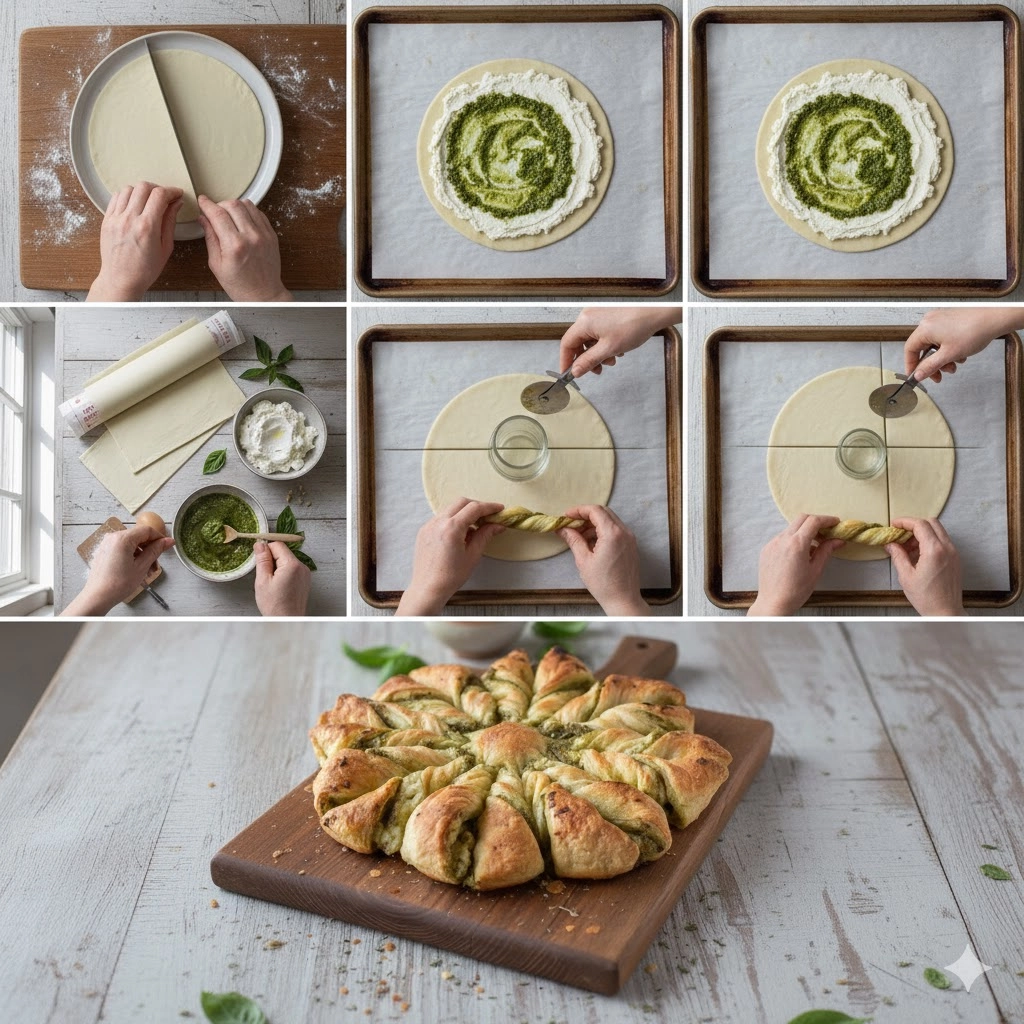
- Prepare the Pastry Disks: On a lightly floured surface, carefully unfold the puff pastry sheets. Use a plate or a twelve-inch cake pan as a guide to cut a smooth, twelve-inch diameter circle from each sheet.
- Establish the Base Layer: Transfer one of the pastry circles to the prepared baking sheet. This immediate transfer prevents the need to move a heavily layered, assembled pinwheel later, reducing the risk of tearing.
- Spread the First Filling: Evenly distribute the ricotta cheese over the pastry base, leaving a half-inch border around the edge completely bare.
- Apply the Top Layer: Gently spoon the pesto over the ricotta layer, spreading it uniformly across the cheese. Place the second pastry circle directly on top of the pesto layer.
- Determine the Center Point: Lightly press a small drinking glass (about two inches wide) upside down directly in the precise center of the layered circle.
- Cut the Spokes: Using a sharp knife or a pizza cutter, slice the layered dough outward from the base of the glass to the pastry’s edge, creating sixteen equal, radial strips (or spokes). Remove the glass.
- Execute the Twist: Take two adjacent strips of dough and twist them twice, gently turning them away from each other (in opposite directions). Pinch the ends firmly together to seal them. Repeat this twisting process around the entire circle.
- Finish and Bake: Brush the surface with egg wash, if using. Transfer the assembled pinwheel immediately to the preheated oven. Bake for twenty-five to thirty minutes, or until deeply golden brown.
The Craft of Assembly: Layering and Shaping Techniques
While the basic steps are straightforward, achieving the perfect texture and visual appeal requires attention to the pastry’s temperature and the filling’s consistency. These detailed instructions ensure maximum lift and flavor.
Tempering the Pastry
Puff pastry performs its job—puffing—best when it enters the hot oven while still cold. If your pastry sheets have become overly soft, warm, or tacky during the layering process, the butter inside will leak out prematurely, resulting in a flat, dense texture instead of airy flakiness. The key is to work quickly. If the dough starts resisting or feels warm to the touch, pause and slide the baking sheet into the refrigerator or freezer for fifteen minutes before continuing. This brief chilling period is critical for resetting the layers and ensuring a spectacular rise.
The Filling Formula
The combined texture of the ricotta and pesto is crucial for both ease of spreading and the final baked quality.
- Ricotta Management: Full-fat ricotta can sometimes carry excess moisture, which can make the pastry base soggy. To mitigate this, consider lightly draining the ricotta. Place it in a fine-mesh sieve lined with cheesecloth for thirty minutes prior to use. This simple step concentrates the flavor and reduces water content.
- Pesto Oil Control: Store-bought pesto is often excessively oily, which, like water, will impede the pastry’s ability to crisp. Before applying the pesto, scoop it onto a paper towel or into a sieve to allow the surface oil to drain off. Alternatively, you may choose to combine the drained ricotta and pesto in a bowl first. Mixing them creates a more stable, cream-like filling that is easier to spread uniformly and is less likely to seep out during baking.
Executing the Pinwheel Twist
The most crucial moment for presentation is the twisting. Once the dough is cut into sixteen equal strips, the manipulation must be gentle but purposeful.
- Isolation: Work with two adjacent strips at a time.
- The Counter-Twist: Lift the two strips slightly and use both hands to twist one strip clockwise and the other counter-clockwise. A double twist is usually sufficient to create a defined, aesthetically pleasing spiral. Over-twisting can rip the dough, but under-twisting may result in the strips straightening out during the bake.
- Sealing the Ends: The ends must be firmly pinched together and pressed against the parchment paper. This closure prevents the filling from spilling out and maintains the shape of the pinwheel. Repeat this rhythmic process—twist, pinch, seal—around the entire perimeter until the circular design is complete.
Oven Management and Doneness Checks
Proper baking technique is essential for transforming raw, pale dough into a richly colored, flaky creation.
The aggressive heat of four hundred Fahrenheit is necessary to achieve the initial, rapid expansion of the water vapor within the puff pastry layers, known as “steam leavening.” If the temperature is too low, the butter may melt before the pastry has time to set, resulting in a dense, sad product.
Keep a close eye on the pinwheel beginning at the twenty-minute mark. Doneness is signaled by several sensory cues:
- Color: The surface should be deeply golden brown, almost bordering on dark amber in the highest ridges. Pale pastry is undercooked pastry.
- Texture: The pastry should look visibly layered and airy. You should see obvious separation between the sheets of dough.
- Sound: If you lightly tap the center or the thicker twisted sections, it should feel firm and sound hollow, not soft or mushy.
If the top begins to brown too quickly but the interior sections still feel soft, loosely tent the pinwheel with a piece of aluminum foil for the remaining minutes of baking. Once done, remove it from the oven and allow it to rest on the baking sheet for five to ten minutes before transferring to a wire rack. This initial resting time allows the residual heat to finish cooking the thicker base layer and ensures the delicate structure doesn’t collapse when moved.
Troubleshooting Common Puff Pastry Pitfalls
The following expert insights address specific challenges encountered when working with frozen puff pastry and rich fillings, helping you navigate the process flawlessly.
- Handling Sticky Dough: If the pastry sheet adheres to your work surface or begins to tear, immediately stop manipulating it. Dust the area lightly with more flour, using only enough to prevent sticking. If the butter is melting, wrap the dough loosely and chill it for twenty minutes. Cold dough is cooperative dough.
- Preventing a Soggy Bottom: The most common failure point is a wet filling soaking the base layer. Ensure your ricotta is strained and your pesto oil is drained. Furthermore, if you suspect your filling is wet, brush the bottom pastry layer with a thin, almost invisible layer of egg white before applying the filling. This creates a minor barrier, protecting the pastry from moisture migration.
- Achieving Maximum Rise: The number one rule for maximizing puff is to ensure the oven is fully preheated before the pastry goes in. Do not rely solely on the oven light turning off; use an oven thermometer to verify it has reached the target temperature of four hundred Fahrenheit. The rapid, high heat is what creates the steam that forces the hundreds of layers apart.
- Scaling and Size: The instructions call for a twelve-inch circle, which is the maximum size achievable with most standard store-bought sheets without rolling them thinner. Resist the urge to aggressively roll the pastry, as this destroys the delicate butter layers necessary for the ‘puff.’ If your pastry sheets are smaller (e.g., ten-inch squares), simply make a slightly smaller pinwheel and reduce the filling amounts by approximately twenty percent.
- Baking in Advance: While the pinwheel is best served within an hour of baking, you can assemble the entire structure—up to the point of the egg wash—and freeze it on the baking sheet until firm. Once solid, wrap it tightly and store in the freezer for up to one month. When ready to bake, place the frozen pinwheel (no need to thaw) on a prepared sheet, add ten to fifteen minutes to the total bake time, and watch for that deep golden color.
Flavor Matrix: Savory and Sweet Variations
The versatility of this puff pastry technique allows for endless customization beyond the classic basil and cheese. Here are several realistic and high-impact flavor pairings.
- Sun-Dried Tomato & Feta: Substitute the ricotta for crumbled, high-quality feta cheese and the pesto for a smooth, oil-packed sun-dried tomato paste or tapenade. The sharp, briny feta pairs exceptionally well with the sweet acidity of the tomato.
- A Savory Prosciutto Twist: Use a creamy base like Boursin cheese (Garlic and Herb flavor) instead of ricotta. Layer thin slices of prosciutto or high-quality deli ham over the cheese before topping with a drizzle of balsamic glaze instead of pesto.
- Mushroom & Gruyère: Sauté finely minced mushrooms (cremini or shiitake) with thyme until all their moisture evaporates. Mix the mushroom duxelles with softened cream cheese or mascarpone and spread this mixture over the pastry base, then top with shredded Gruyère cheese before twisting.
- The Sweet Cinnamon Swirl: For a dessert variation, omit the savory fillings entirely. Spread a thick layer of softened cream cheese mixed with powdered sugar and vanilla over the base. Dust heavily with a mixture of granulated sugar and cinnamon before twisting and baking. Serve with a simple vanilla glaze drizzled over the top.
Presentation and Pairing: Elevated Serving Suggestions
This appetizer is designed for sharing and pulling apart. Elevate the serving experience with complementary textures and temperatures.
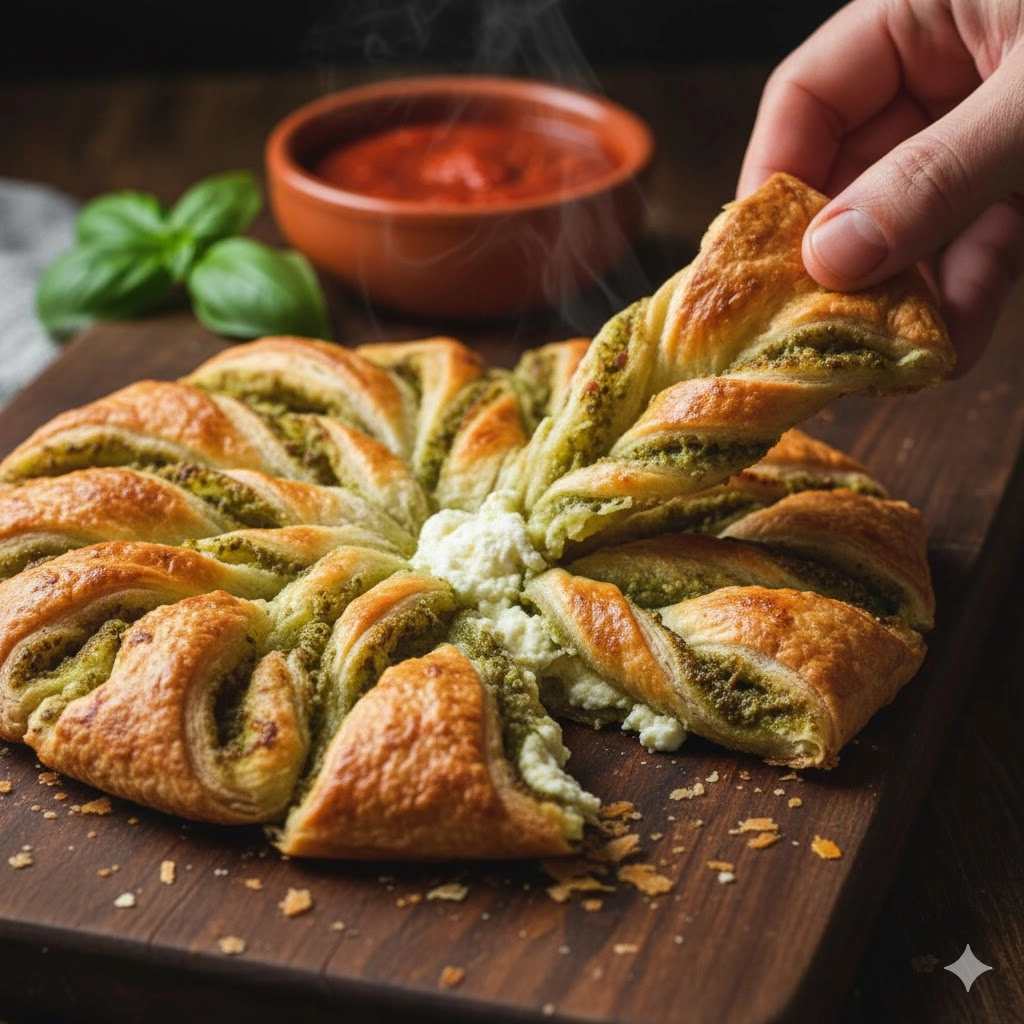
- Immediate Pull-Apart Service: Serve the pinwheel straight from the oven on a wooden board or a beautiful platter. Arrange a small bowl of high-quality marinara sauce or a balsamic reduction dipping sauce immediately adjacent to the pinwheel. The warm, flaky pastry dipped into a cool, bright sauce is a wonderful textural contrast.
- Accompaniment to Soup: Pair individual wedges of the pinwheel with a creamy soup, such as a chilled gazpacho or a warm roasted red pepper soup. The rich pastry serves as an ideal savory counterpoint to the smooth liquid, offering substance to the meal.
- Part of a Sprawling Appetizer Board: Integrate the pinwheel into a larger charcuterie or grazing board. Place it alongside other Italian-inspired elements such as marinated olives, small bowls of marinated artichoke hearts, thin slices of sopressata, and a selection of aged cheeses like Parmesan or Pecorino Romano.
Essential Questions from the Kitchen
Recipe writers often face the same questions regarding technique and logistics. Here are detailed answers to the most common queries about preparing this savory Pesto Puff Pastry Pinwheel.
Can I make the filling ahead of time?
Yes, the pesto and ricotta mixture can be prepared and stored in an airtight container in the refrigerator for up to three days. Having the filling ready is a great way to streamline the assembly process on the day of your event, ensuring the puff pastry stays as cold as possible.
What is the best way to reheat leftovers?
The pinwheel is best reheated in a conventional oven, not a microwave, which will turn the pastry soggy. Place the leftovers on a baking sheet and heat in an oven set to three hundred fifty Fahrenheit for about five to seven minutes. This method ensures the pastry re-crisps without drying out the filling.
My pastry circle tore slightly during the twist—will it ruin the dish?
Minor tears are not a problem. Puff pastry is surprisingly forgiving. If a small tear occurs, simply pinch the dough back together. If the tear is large and the filling is spilling out, try pressing the dough down onto the parchment paper near the tear to seal it. The structural integrity of the overall pinwheel shape should still hold during baking.
Is it necessary to use the egg wash?
The egg wash is not structurally necessary, but it provides that beautiful, deep golden, glossy shine that makes the final dish look professional and appealing. If you omit it, the pastry will still be delicious and flaky, but the color will be paler and more matte.
How do I adjust for convection baking?
If you are using a convection oven, you should generally reduce the temperature by twenty-five Fahrenheit, setting it to three hundred seventy-five Fahrenheit, and monitor the baking time closely. Convection ovens circulate air, which typically results in faster, more even browning, so start checking for doneness around the twenty-minute mark.
Estimated Nutritional Overview
| Nutrient | Amount per Serving |
| Calories | 525 kcal |
| Protein | 15 g |
| Carbs | 30 g |
| Fat | 40 g |
| Fiber | 2 g |
| Sugar | 2 g |
| Sodium | 450 mg |
Disclaimer
Nutrition information is an estimate and may vary based on preparation and ingredients used.
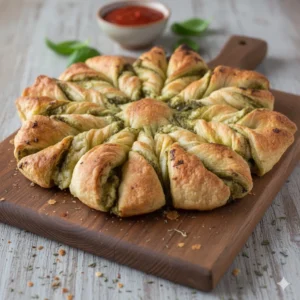
The Iconic Pesto Puff Pastry Pinwheel
Ingredients
- 2 sheets puff pastry, thawed
- 2 tsp all-purpose flour
- 8.5 ounces whole milk ricotta cheese, preferably strained
- 8.5 ounces basil pesto, excess oil drained
- 1 large egg, beaten (optional, for egg wash)
Instructions
- Preheat the oven to four hundred Fahrenheit. Line a large baking sheet with parchment paper and dust lightly with flour.
- Unfold the puff pastry sheets. Use a twelve-inch guide (like a cake pan) to cut a twelve-inch circle from each sheet. Transfer one circle to the prepared baking sheet.
- Evenly spread the drained ricotta cheese over the pastry base, leaving a half-inch border. Follow with an even layer of the drained basil pesto.
- Lay the second pastry circle directly on top. Place a small two-inch glass upside down precisely in the middle to mark the center.
- Using a sharp knife or pizza cutter, cut the layered circle into sixteen equal radial strips, cutting outward from the base of the glass to the pastry’s edge. Remove the glass.
- Take two adjacent strips and twist them twice in opposite directions. Firmly pinch and press the ends together to seal. Repeat this process around the entire circle.
- Brush the surface with the optional egg wash for shine. Bake in the preheated four hundred Fahrenheit oven for twenty-five to thirty minutes, or until deeply golden brown and flaky.
- Allow the pinwheel to cool on the baking sheet for five to ten minutes before transferring to a serving platter. Serve warm for best results.
Notes
Equipment
- Large baking sheet
- parchment paper
- Sharp knife or pizza cutter
- Small drinking glass (approx 2-inch diameter) Used as a center guide