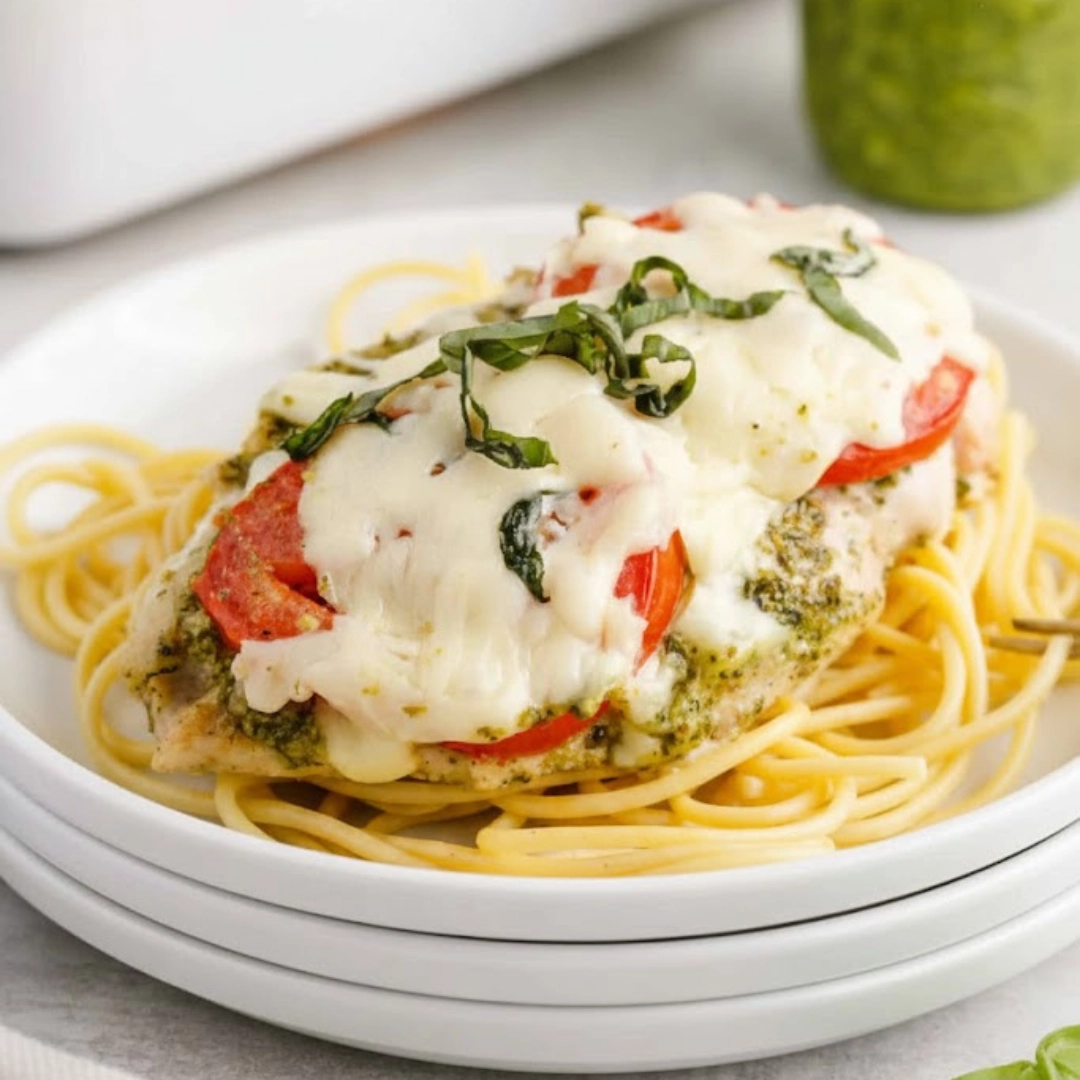
There is a sublime simplicity to combining just a few stellar ingredients, letting the oven do the heavy lifting, and ending up with a dinner that feels both celebratory and completely effortless. This Pesto Caprese Chicken Bake is exactly that kind of meal. It takes the classic Italian flavors of fresh basil, mozzarella, and juicy tomatoes and pairs them with tender chicken breasts, all brightened by a fragrant, rich pesto. It’s an ideal choice for a weeknight when you crave maximum flavor with minimal fuss, delivering a beautiful presentation without requiring hours in the kitchen. The dish is savory, sweet, and tangy, ensuring it becomes a quick favorite in your rotation.
Table of Contents
The Components: What You’ll Need to Assemble This Dish
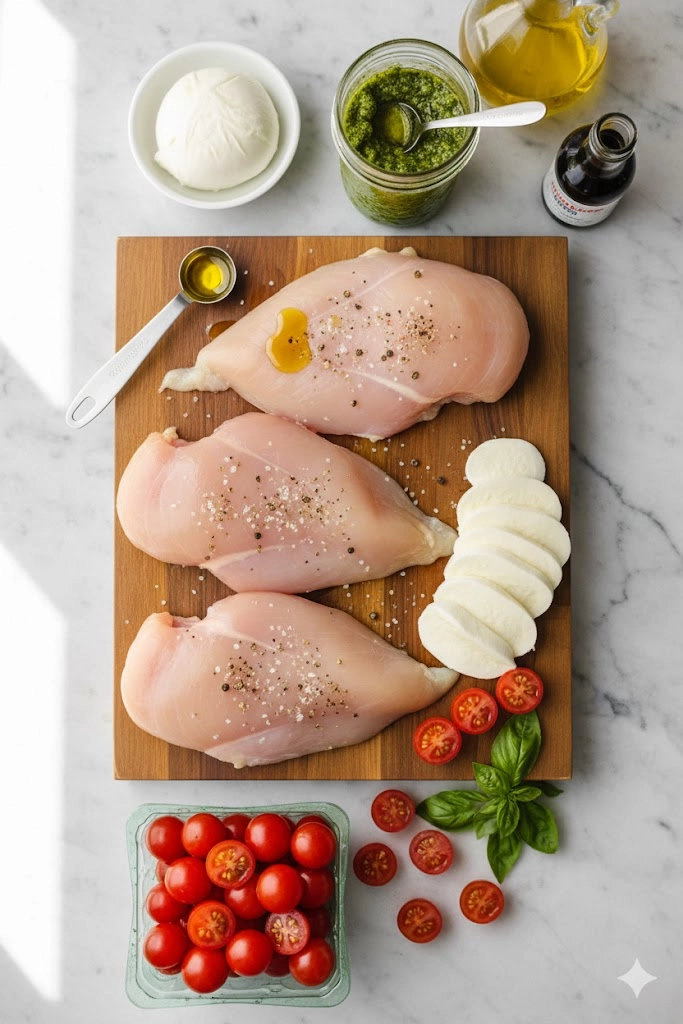
The beauty of this chicken bake lies in its reliance on quality ingredients. Choose the freshest mozzarella and vine-ripened tomatoes you can find, as they will define the final flavor profile.
For the Chicken and Seasoning
- Four boneless, skinless chicken breasts (about six to eight ounces each)
- One teaspoon kosher salt
- Half teaspoon freshly cracked black pepper
- Half teaspoon garlic powder
- Two tablespoons olive oil
The Caprese and Pesto Topping
- One half cup good quality basil pesto (homemade is excellent, but jarred works)
- One pint cherry or grape tomatoes, halved
- Eight ounces fresh mozzarella cheese, sliced into half-inch thick rounds, or use small mozzarella balls (bocconcini)
- Two tablespoons balsamic glaze, for drizzling after baking
- One quarter cup fresh basil leaves, roughly chopped, for garnish
Putting It All Together: The Method
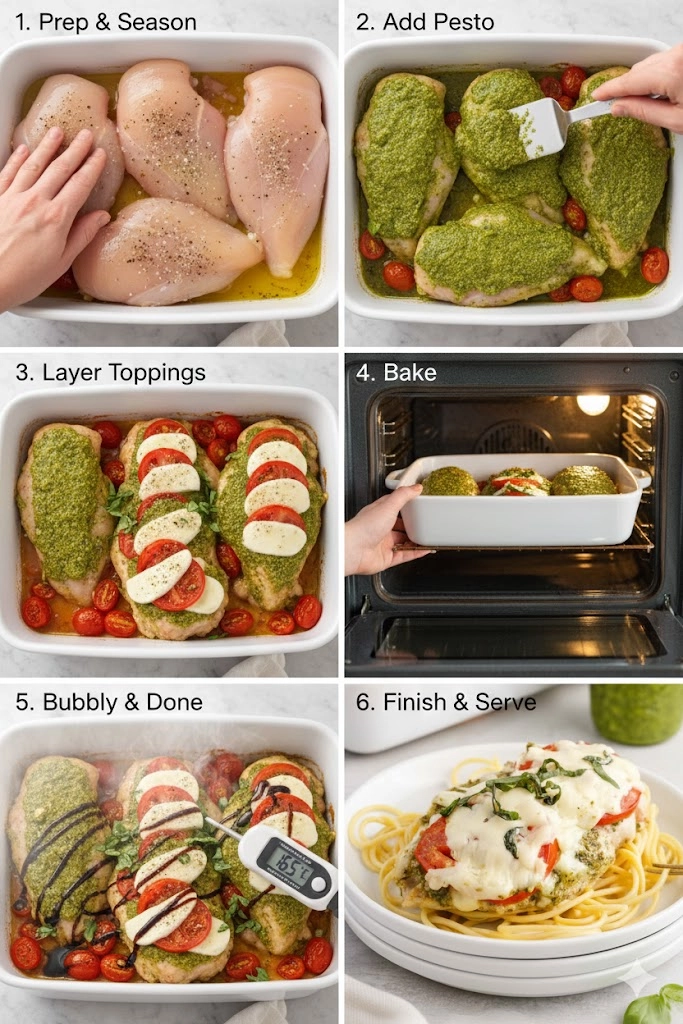
This process is designed for a seamless transition from prep to table, ensuring moist chicken and a beautifully melted topping. Preheat your oven to four hundred twenty-five Fahrenheit.
- Prep the Chicken: Pat the chicken breasts dry and place them in a nine by thirteen inch baking dish. Drizzle with olive oil and season evenly with salt, pepper, and garlic powder.
- Coat and Cover: Spread the basil pesto evenly over the top of each chicken breast.
- Arrange the Topping: Layer the sliced mozzarella or bocconcini evenly over the pesto. Scatter the halved tomatoes around and over the chicken in the dish.
- The Bake: Place the dish in the preheated oven and bake for twenty to twenty-five minutes.
- Check for Doneness: The chicken is done when the internal temperature, measured with a thermometer, reaches one hundred sixty-five Fahrenheit and the juices run clear. The cheese should be bubbly and lightly golden in spots.
- Rest and Finish: Remove the dish from the oven and allow the chicken to rest for five minutes. Drizzle the entire bake with balsamic glaze, then sprinkle generously with fresh basil leaves before serving.
Achieving Tender Chicken: A Deeper Look at the Process
While the instructions above cover the basics, paying attention to a few key sensory steps ensures a meal worthy of a culinary expert. The goal is perfectly cooked, juicy chicken with a vibrant, flavorful crust.
Selecting and Prepping the Cut
If your chicken breasts vary widely in thickness, consider lightly pounding the thicker parts of the meat to achieve a uniform thickness, about three quarters of an inch. This ensures all pieces finish cooking at the same time, preventing some from drying out while others are still catching up. After seasoning with salt, pepper, and garlic powder, rub the olive oil directly onto the meat—this acts as a barrier to moisture loss and helps the seasonings adhere.
The Art of the Layering
When spreading the pesto, don’t be shy; a generous layer seals in moisture and provides the primary flavor base. When placing the mozzarella, avoid crowding the pieces too tightly. This allows the tomatoes and any exposed pesto to caramelize slightly, creating pockets of intense, complex flavor rather than one solid blanket of cheese. Scattering the tomatoes around the pan, not just on the chicken, ensures they burst and release their sweet, tangy juices into the pan drippings, which then baste the chicken from below.
Visual and Aromatic Cues During the Cook
Around the fifteen-minute mark, you should be able to smell the fragrant basil and a developing dairy aroma from the melting cheese. Visually, the cheese will begin to soften and bubble, potentially achieving a slight golden-brown hue on the edges. Crucially, the tomatoes will start to wrinkle and collapse slightly, indicating they are releasing their moisture. The true test, however, is the internal thermometer reading of one hundred sixty-five Fahrenheit, inserted into the thickest part of the largest piece of chicken. Do not rely solely on the appearance of the cheese—you must confirm the internal temperature to prevent dry meat.
The Importance of the Post-Bake Rest
Upon removing the dish from the oven, the chicken is still actively cooking and its muscle fibers are tense. The five-minute rest period is non-negotiable. This time allows the internal juices to redistribute throughout the meat, guaranteeing maximum succulence. Skipping this step means the juices will immediately run out when the chicken is cut, leading to a much drier result. The final drizzle of balsamic glaze and the scattering of fresh, sweet basil leaves provides a refreshing contrast to the richness of the baked dish.
Culinary Wisdom: Expert Tips and Tricks
Elevate this simple assembly into a truly memorable dish with these focused pieces of advice.
- Pesto Quality Matters: Since pesto is a core flavor, use a high-quality product. If you have time, making a quick, fresh batch with pine nuts, Parmesan, and excellent olive oil will exponentially improve the taste compared to most shelf-stable varieties.
- The Tomato Factor: Use halved cherry or grape tomatoes for their lower water content and intense sweetness when baked. Slicing larger tomatoes can introduce too much water, making the dish watery.
- Moisture Control: If you notice your baking dish accumulating too much liquid—a rare occurrence but possible with very watery mozzarella—you can use a large spoon to carefully baste the top of the chicken halfway through the bake or simply drain off a small amount of liquid before the rest.
- Cheese Choice for Texture: For the best melt and classic look, use fresh mozzarella packed in water (bocconcini are perfect). Avoid pre-shredded mozzarella, which contains anti-caking agents that hinder a smooth, creamy melt.
- Aromatics Under the Chicken: For an extra layer of flavor, thinly slice one shallot or a quarter of a small yellow onion and scatter it on the bottom of the pan before adding the chicken. It will soften and sweeten as it bakes.
- Acid for Balance: The final touch of balsamic glaze is critical for cutting through the richness of the cheese and pesto. A good quality, thick glaze is worth the investment.
- Serving Temperature: While it’s tempting to serve immediately, allowing the dish to rest slightly also makes the topping less molten and easier to handle and eat.
Adapting the Dish: Realistic Variations
This adaptable recipe is easy to tweak based on what you have on hand or what flavors you prefer.
- Protein Swap: Replace the chicken breasts with boneless pork chops or thick cod fillets. Adjust the baking time; fish will likely cook in fifteen minutes, while pork chops may take twenty-five to thirty minutes.
- Sun-Dried Tomato Pesto: For a deeper, earthier flavor, use sun-dried tomato pesto (red pesto) instead of the traditional basil variety. This offers a delightful savory-sweet profile.
- Vegetable Inclusion: Add a base layer of thinly sliced zucchini or eggplant under the chicken. These vegetables will absorb the pan juices and add fiber and bulk to the meal.
- Spicy Kick: Stir a pinch of red pepper flakes directly into the basil pesto before spreading it onto the chicken for a subtle, welcomed heat.
- Garnish Substitution: If fresh basil isn’t available, substitute with a sprinkle of fresh oregano or a blend of dried Italian herbs applied before baking.
Serving the Pesto Caprese Chicken Bake
This flavorful chicken is robust enough to stand on its own but also pairs wonderfully with simple sides that complement the Mediterranean flavors.
- A Simple Grain: Serve the chicken slices over a bed of fluffy white rice, creamy polenta, or an earthy farro. The grain will absorb the flavorful pan juices.
- Crisp Green Salad: A side of lightly dressed Arugula with a simple lemon and olive oil vinaigrette provides a peppery, fresh contrast to the richness of the bake.
- Crusty Bread: Keep it classic and serve with slices of warm, crusty sourdough or ciabatta, perfect for soaking up every drop of the pesto-tomato-cheese sauce remaining in the baking dish.
Common Questions About the Recipe
Can I prepare this dish ahead of time?
You can assemble the entire dish, minus the balsamic glaze and fresh basil garnish, up to twenty-four hours in advance. Cover the baking dish tightly with plastic wrap and refrigerate. Add about five to ten minutes to the baking time to account for the chill of the ingredients.
What is the best way to store leftovers?
Store any leftover chicken bake in an airtight container in the refrigerator for up to three days. To reheat, place the chicken in an oven-safe dish, cover loosely with foil, and warm it in an oven set to three hundred twenty-five Fahrenheit until heated through, which usually takes about fifteen minutes.
Can I use frozen chicken breasts?
You should thaw frozen chicken breasts completely before seasoning and baking. Baking from frozen will result in uneven cooking and a substantial increase in cooking time, making it difficult to achieve the desired juicy texture and one hundred sixty-five Fahrenheit internal temperature.
Is it necessary to use fresh mozzarella?
While dry mozzarella will melt, fresh mozzarella is highly recommended for its superior flavor, creamy texture, and the authenticity it lends to the “Caprese” element of the dish. The moisture content of fresh mozzarella also contributes positively to the overall texture of the final dish.
What can I use instead of balsamic glaze?
If you do not have a pre-made glaze, you can quickly make a simple balsamic reduction. Simmer a quarter cup of good quality balsamic vinegar in a small saucepan over medium heat until it has reduced by about one third and coats the back of a spoon. Be careful not to burn it; this is a highly concentrated flavor element.
Nutritional Information
| Nutrient | Amount per Serving |
| Calories | 480 kcal |
| Protein | 45 g |
| Carbs | 12 g |
| Fat | 27 g |
| Fiber | 3 g |
| Sugar | 6 g |
| Sodium | 650 mg |
Important Note
Nutrition information is an estimate and may vary based on preparation and ingredients used.
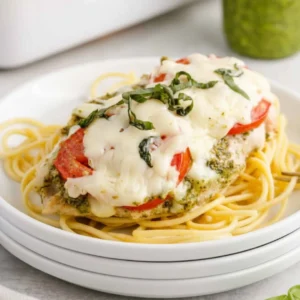
Pesto Caprese Chicken Bake
Ingredients
- 4 boneless, skinless chicken breasts (about 6-8 ounces each)
- 1 tsp kosher salt
- 0.5 tsp freshly cracked black pepper
- 0.5 tsp garlic powder
- 2 tbsp olive oil
- 0.5 cup good quality basil pesto
- 1 pint cherry or grape tomatoes, halved
- 8 ounces fresh mozzarella cheese, sliced into half-inch thick rounds
- 2 tbsp balsamic glaze, for drizzling
- 0.25 cup fresh basil leaves, roughly chopped, for garnish
Instructions
- Preheat your oven to four hundred twenty-five Fahrenheit. Pat the chicken breasts dry and place them in a nine by thirteen inch baking dish. Drizzle with olive oil and season evenly with salt, pepper, and garlic powder.
- Spread the basil pesto evenly over the top of each seasoned chicken breast.
- Layer the sliced mozzarella evenly over the pesto. Scatter the halved tomatoes around and over the chicken in the dish.
- Place the dish in the preheated oven and bake for twenty to twenty-five minutes.
- The chicken is done when the internal temperature, measured with a thermometer, reaches one hundred sixty-five Fahrenheit. Remove the dish from the oven and allow the chicken to rest for five minutes.
- Drizzle the entire bake with balsamic glaze, then sprinkle generously with fresh basil leaves before serving.
Notes
Equipment
- 9×13-inch baking dish
- meat thermometer For accurate internal temperature checking.