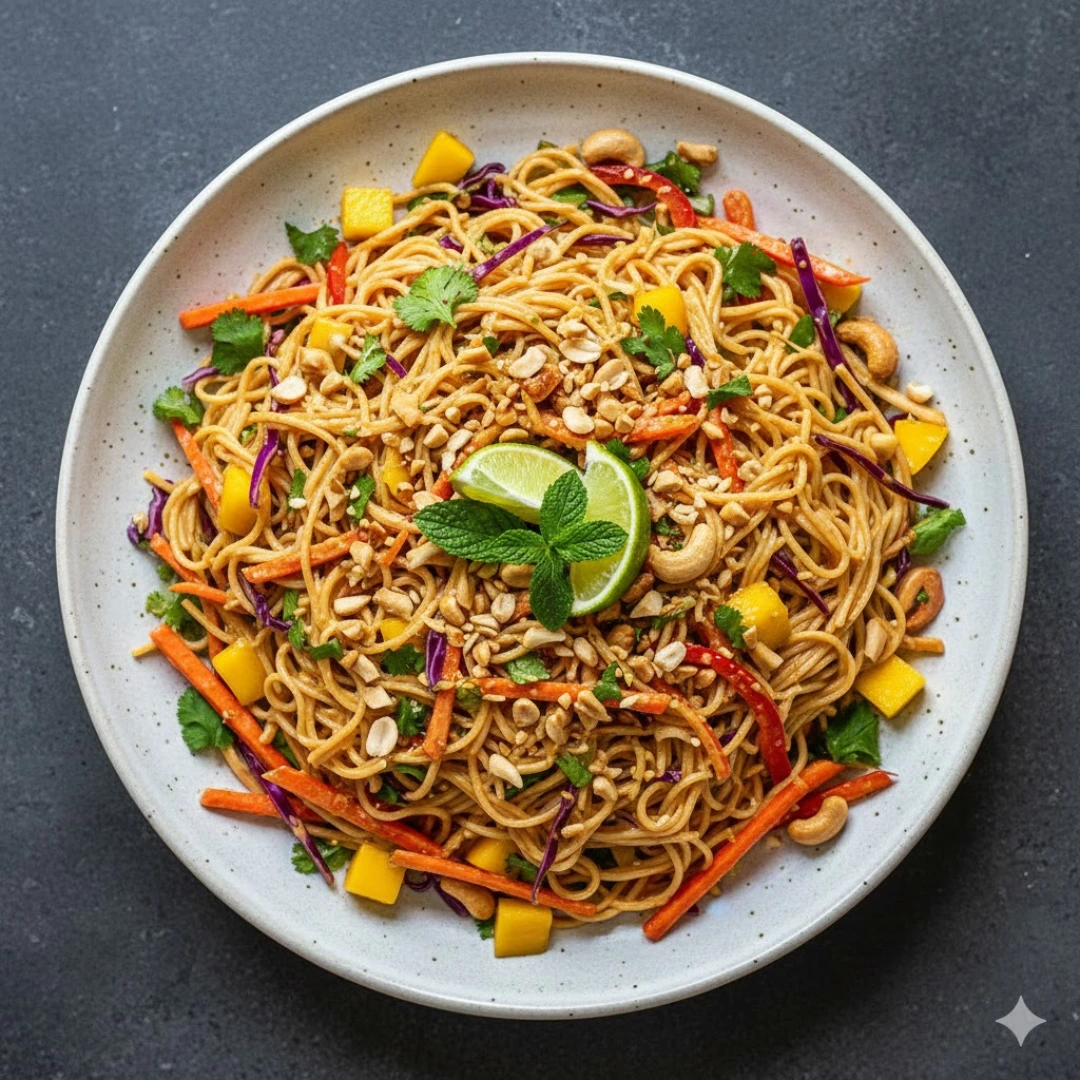
Craving the bright, zingy flavors of a traditional spring roll but lacking the patience for meticulous rolling? This Thai Noodle Salad with Peanut Sauce is the definitive answer for anyone seeking a refreshing, nutrient-dense meal that comes together in just twenty minutes. By combining tender rice noodles with crunchy cabbage, sweet mango, and a velvety homemade dressing, we create a dish that is as beautiful to look at as it is delicious to eat. Whether you are prepping for a busy week or hosting a backyard gathering, this salad delivers a perfect balance of sweet, savory, and spicy notes.
Table of Contents
Essential Components for Success
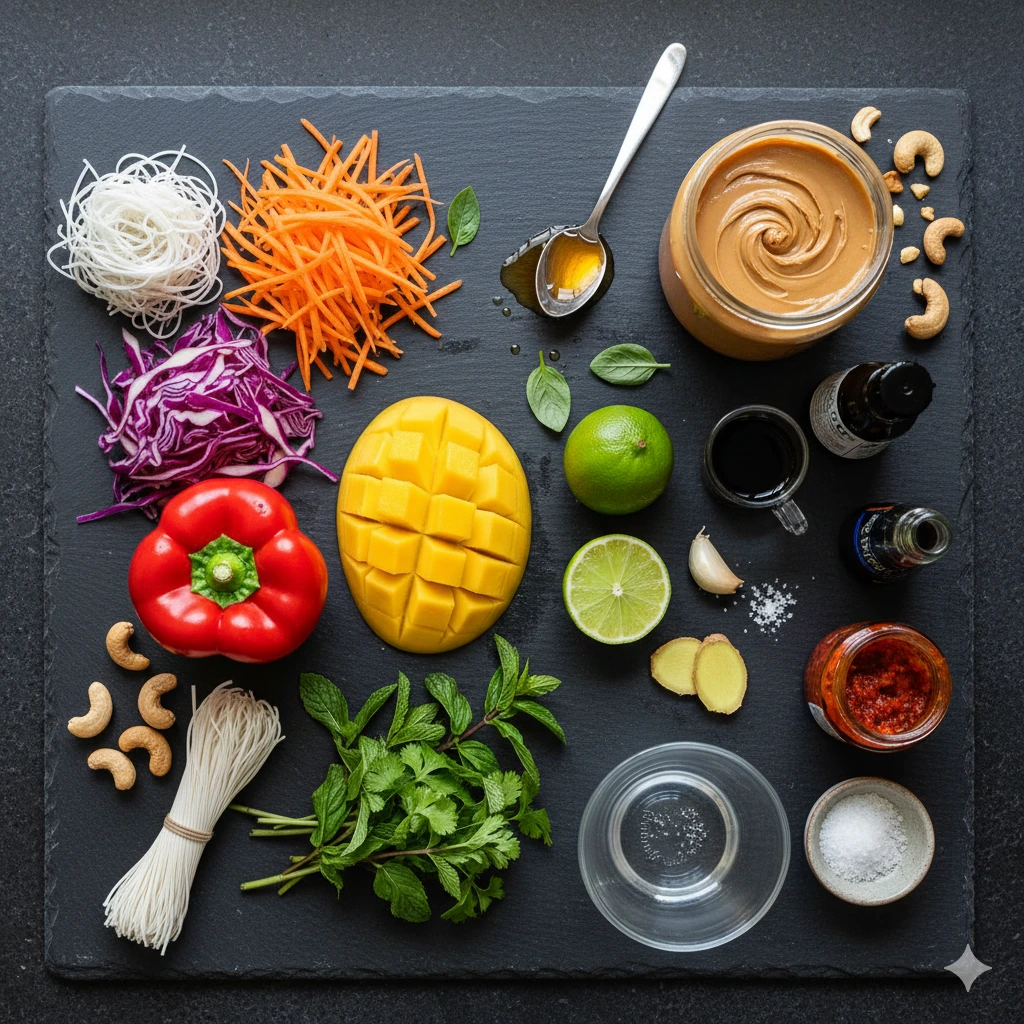
To achieve the best results with this recipe, gathering high-quality, fresh ingredients is paramount. The textures in this salad rely on the contrast between the soft noodles and the crispness of the raw vegetables.
For the Salad Base
- 12 ounces stir fry rice noodles (though soba or linguini work exceptionally well as alternatives)
- 3 cups mixed cabbage and carrots, shredded
- 1 orange or red bell pepper, finely sliced into matchsticks
- 8 fresh mint leaves, finely diced
- 8 fresh basil leaves, finely diced
- 3/4 cup fresh cilantro leaves, diced
- 1 whole mango, peeled, pitted, and diced into small cubes
For the Signature Creamy Peanut Sauce
- 1/2 cup creamy peanut butter
- 3 teaspoons agave nectar
- 2 whole limes, juiced (yielding approximately 4 tablespoons)
- 1 fat garlic clove, peeled
- 4 teaspoons soy sauce
- 4 teaspoons toasted sesame oil
- 1 thin slice of fresh ginger, roughly the size of a quarter
- 2 teaspoons sambal oelek (adjust according to your spice preference)
- 6 tablespoons water, or more as needed to reach desired thickness
- Salt to taste
Primary Preparation Steps
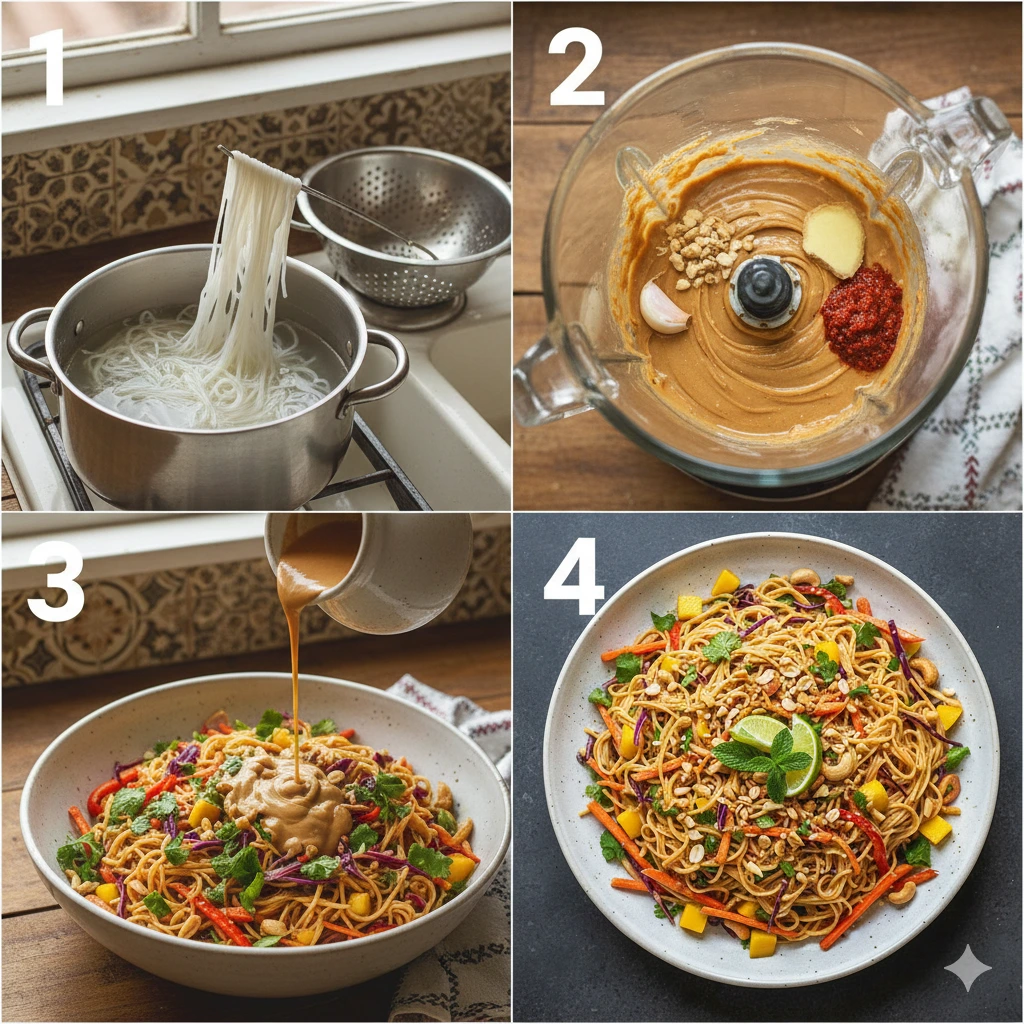
- Begin by cooking your chosen pasta according to the specific directions on the package. It is vital to monitor the texture; you want the noodles tender but still holding their shape. Once finished, drain the noodles immediately and rinse them under cold running water to stop the cooking process and remove excess starch.
- While the noodles are boiling, focus on the sauce. Place the peanut butter, agave, lime juice, garlic, soy sauce, sesame oil, ginger, sambal oelek, and water into a high-speed blender. Process the mixture until it reaches a perfectly smooth and pourable consistency.
- In a large mixing bowl, combine the chilled noodles with the shredded cabbage and carrots, sliced bell peppers, mint, basil, cilantro, and the diced mango.
- Pour the prepared peanut sauce over the noodle and vegetable mixture. Toss thoroughly with tongs or large spoons until every strand of noodle and every piece of fruit is evenly coated.
- Taste the salad and add a pinch of salt if necessary. Place the bowl in the refrigerator for at least 20 minutes before serving. This allows the flavors to meld and the noodles to absorb the aromatics. Serve topped with toasted cashews or peanuts for a final crunch.
Deep Dive Into the Preparation Process
The beauty of this Thai Noodle Salad lies in its simplicity, but there is a true science to getting the textures exactly right. When you are working with rice noodles, timing is everything. Unlike wheat-based pasta, rice noodles can go from perfectly al dente to mushy in a matter of seconds. By rinsing them under cold water immediately after draining, you lock in that chewy texture that defines great Asian fusion cuisine. This step also prevents the noodles from sticking together in a giant clump, ensuring that the peanut sauce can coat each individual strand.
Preparing the vegetables is an exercise in knife skills. For the bell peppers, aim for a julienne cut—thin, elegant strips that mirror the shape of the noodles. This makes the salad much easier to eat and ensures a bit of everything in every bite. When it comes to the cabbage and carrots, using a pre-shredded mix can save time, but slicing your own allows you to control the thickness. A mandoline slicer is a fantastic tool here for achieving that paper-thin cabbage crunch that carries the sauce so well.
The sauce itself is the soul of the dish. Using a blender rather than whisking by hand is a game-changer. The high-speed blades emulsify the oils from the peanut butter and the toasted sesame oil with the lime juice and water, creating a dressing that is thick, glossy, and won’t separate. The inclusion of fresh ginger and a whole garlic clove provides a sharp, pungent backbone that cuts through the richness of the peanut butter. If you find the sauce is too thick after blending, don’t be afraid to add water one tablespoon at a time. It should be the consistency of heavy cream—thick enough to cling but thin enough to toss.
Finally, the addition of mango provides a burst of juicy sweetness that contrasts the salty soy sauce and the heat from the sambal oelek. When dicing the mango, look for fruit that is ripe but still slightly firm to the touch. If the mango is too soft, it will turn into a puree when tossed, whereas a firm-ripe mango will hold its shape and provide beautiful orange jewels throughout the bowl.
Achieving the Perfect Flavor Balance
One of the most important aspects of Thai-inspired cooking is the harmony between four key elements: salty, sweet, sour, and spicy. In this recipe, the soy sauce provides the salt, the agave and mango provide the sweet, the lime juice offers the sour acidity, and the sambal oelek brings the heat.
If you find the salad tastes a bit flat, it usually needs more acidity. A final squeeze of lime juice right before serving can wake up all the other flavors. Conversely, if the heat from the sambal oelek is too intense, adding a tiny bit more peanut butter or agave can help mellow out the fire on your palate.
The herbs also play a massive role. Mint, basil, and cilantro are not just garnishes; they are foundational ingredients. The mint provides a cooling sensation, the basil adds a peppery anise note, and the cilantro brings a bright, citrusy finish. Using fresh herbs is non-negotiable here; dried herbs simply cannot replicate the aromatic profile required for a cold noodle salad.
Variations and Ingredient Swaps
While the recipe as written is balanced and delicious, the kitchen is a place for experimentation. This dish is naturally vegetarian and can easily be made vegan by ensuring your noodles and peanut butter meet those dietary standards.
If you cannot find rice noodles, soba noodles—made from buckwheat—offer a nutty, earthy flavor that pairs beautifully with peanuts. For those who prefer a more traditional pasta feel, linguini is a sturdy substitute that holds the heavy sauce well.
If you have a peanut allergy but still want that creamy texture, almond butter or sunflower seed butter are excellent alternatives. Keep in mind that sunflower seed butter can be slightly more bitter, so you might need to increase the agave by a half teaspoon to compensate. For the protein-focused eater, this salad serves as an incredible base for grilled shrimp, sliced chicken breast, or even crispy baked tofu. Adding a protein makes this a heavy-hitting meal perfect for athletes or those with high caloric needs.
Sophisticated Serving Suggestions
Presentation is half the battle when serving a cold salad. To make this look like it came from a high-end bistro, serve it in wide, shallow bowls rather than deep ones. This allows the colors of the mango and bell peppers to shine.
For the final touch, don’t just dump the crushed nuts on top. Toast your cashews or peanuts in a dry pan over medium heat for about three minutes until they are fragrant and golden brown. The heat releases the natural oils in the nuts, significantly amping up the flavor. Sprinkle them over the salad along with a few extra whole cilantro leaves and perhaps some toasted sesame seeds. If you want an extra hit of color and mild onion flavor, finely sliced scallions (green parts only) make a wonderful addition to the top.
Storage and Longevity Guidelines
This is a premier “make-ahead” meal. Unlike leafy green salads that wilt the moment dressing touches them, the cabbage and carrots in this recipe actually benefit from sitting in the sauce. As the salad rests in the refrigerator, the fibers in the cabbage soften slightly, and the noodles soak up the aromatics from the ginger and garlic.
You can safely store this Thai Noodle Salad in an airtight container in the refrigerator for up to four days. If you find that the noodles have absorbed too much of the sauce by day two and the dish seems a bit dry, simply splash in a teaspoon of water or a quick squeeze of lime juice and toss it again to loosen everything up. It is best served chilled or at room temperature; avoid reheating it, as the fresh mango and herbs are best enjoyed cold.
Exploring Culinary Questions
Can I make this recipe gluten-free?
Absolutely. To make this dish entirely gluten-free, ensure that you are using 100 percent rice noodles and, most importantly, swap the soy sauce for tamari or liquid aminos. Most standard soy sauces contain wheat, so tamari is the go-to substitute for maintaining that savory umami flavor without the gluten content.
How do I prevent the rice noodles from becoming a sticky mess?
The secret lies in the rinse. As soon as the noodles reach your desired tenderness, get them into a colander and blast them with cold water. Move them around with your hands to ensure the cold water reaches the center of the pile. This washes away the surface starch that causes sticking and immediately drops the temperature so they don’t overcook from residual heat.
What if I can’t find sambal oelek in my local grocery store?
Sambal oelek is a ground chili paste that provides a clean heat. If it is unavailable, you can substitute it with Sriracha, though Sriracha has a bit more vinegar and garlic flavor. Alternatively, a half teaspoon of crushed red pepper flakes can work, though they won’t integrate into the sauce quite as smoothly as a paste.
Is it possible to use frozen mango for this salad?
While fresh mango is preferred for its texture, you can use frozen mango in a pinch. However, you must let the mango thaw completely and drain away any excess liquid before adding it to the salad. Be aware that thawed frozen mango is much softer than fresh, so fold it in gently at the very end to avoid breaking the pieces apart.
A Final Note on This Nutritious Dish
This Thai Noodle Salad with Peanut Sauce is more than just a quick lunch; it is a vibrant celebration of fresh produce and bold flavors. By bringing together the crunch of garden vegetables with the tropical sweetness of mango and the rich, satisfying depth of a homemade peanut dressing, you create a meal that feels indulgent while remaining incredibly healthy. It proves that “clean eating” never has to be boring or time-consuming. Take these twenty minutes to treat your senses to a rainbow of colors and a symphony of Thai-inspired tastes.
Nutritional Information
| Nutrient | Amount Per Serving |
| Calories | 345 |
| Total Fat | 14 grams |
| Saturated Fat | 2.5 grams |
| Cholesterol | 0 milligrams |
| Sodium | 480 milligrams |
| Total Carbohydrates | 48 grams |
| Dietary Fiber | 4 grams |
| Sugars | 12 grams |
| Protein | 9 grams |
Disclaimer
The nutritional information provided is an estimate based on the ingredients and should be used for informational purposes only. Actual nutritional content may vary depending on specific brands used and portion sizes.
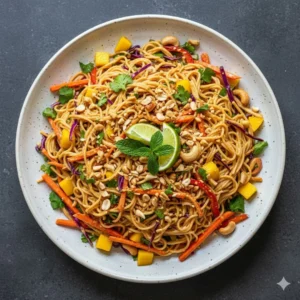
Thai Noodle Salad with Peanut Sauce
Ingredients
- 12 ounces stir fry rice noodles (soba or linguini also work)
- 3 cups mix of shredded cabbage and carrots
- 1 orange or red bell pepper, finely sliced
- 8 leaves fresh mint, finely diced
- 8 leaves fresh basil, finely diced
- 0.75 cup fresh cilantro leaves, diced
- 1 mango, peeled, pitted, and diced
- 0.5 cup creamy peanut butter
- 3 tsp agave nectar
- 2 limes limes, juiced (about 4 tbsp)
- 1 clove fat garlic clove
- 4 tsp soy sauce
- 4 tsp toasted sesame oil
- 1 slice fresh ginger, size of a quarter
- 2 tsp sambal oelek (adjust for heat preference)
- 6 tbsp water (more as needed for consistency)
- salt to taste
- toasted cashews or peanuts for garnish
Instructions
- Cook the rice noodles according to the package instructions. Be careful not to overcook; they should be tender but firm.
- Immediately drain the noodles and rinse them under cold running water to stop the cooking and remove excess starch. Set aside.
- While the noodles are draining, place all peanut sauce ingredients (peanut butter, agave, lime juice, garlic, soy sauce, sesame oil, ginger, sambal oelek, and water) into a blender.
- Blend the sauce ingredients on high until the texture is completely smooth and creamy.
- In a large mixing bowl, combine the chilled noodles with the cabbage/carrot mix, sliced bell peppers, mint, basil, cilantro, and diced mango.
- Pour the peanut sauce over the salad and toss thoroughly until all components are evenly coated.
- Taste and add salt if needed. Refrigerate for at least 20 minutes to allow the flavors to develop.
- Garnish with a generous handful of toasted crushed cashews or peanuts before serving.
Notes
Equipment
- Large pot for boiling
- colander
- High-speed blender
- large mixing bowl
- Tongs for tossing