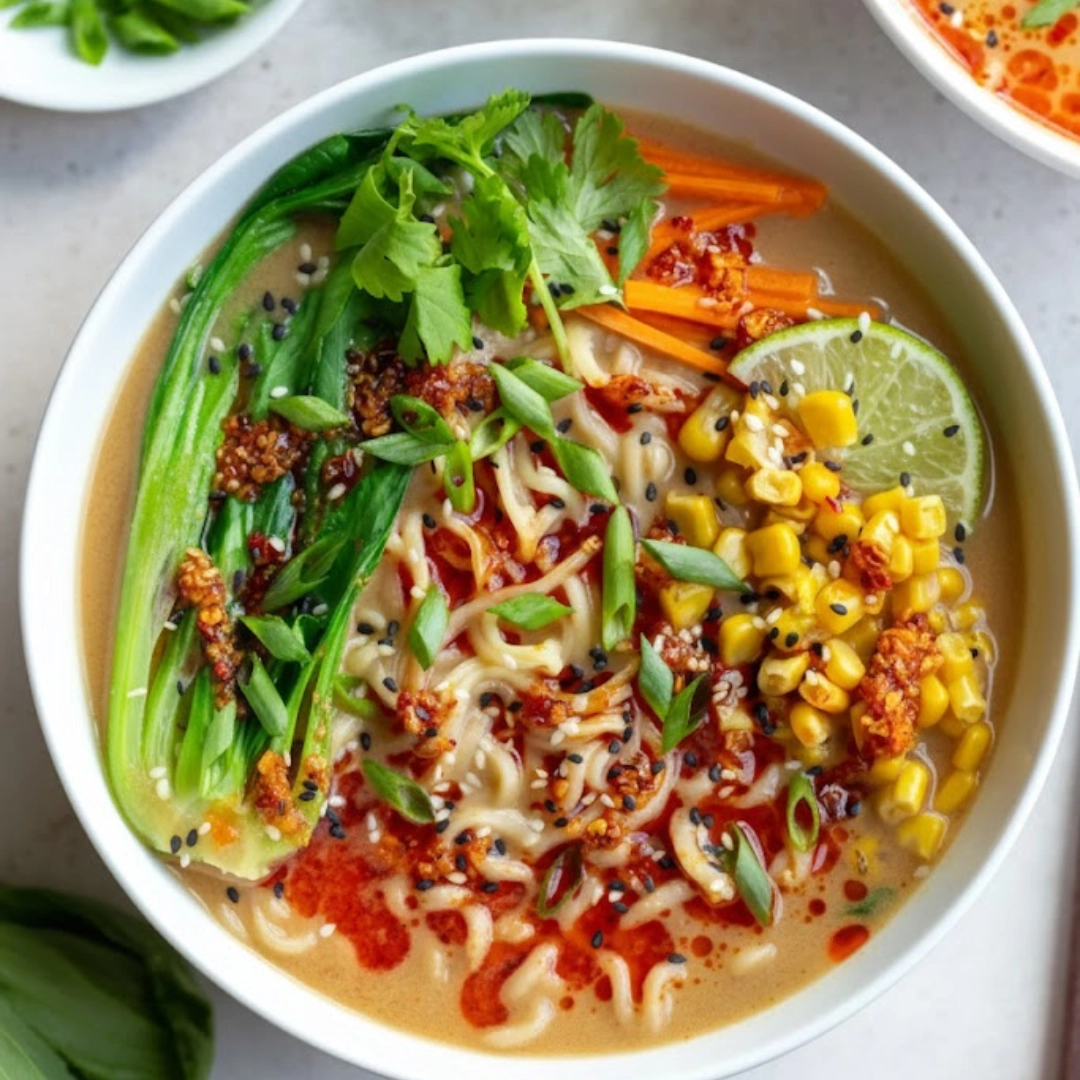
The marriage of peanut butter and miso in a bowl of ramen is a testament to the powerful, globally-inspired flavors that can be created in a home kitchen. This dish is far from the thin, salty broth of instant packages. Instead, it offers a rich, deeply savory, and velvety-smooth soup base that clings beautifully to the noodles and vegetables. It’s a satisfying, multi-layered meal—umami from the miso, nuttiness from the peanut butter, and a pleasant, subtle warmth from chili and ginger—making it an ideal, globally-inspired supper when you crave something deeply flavorful yet surprisingly quick to prepare. This Peanut Butter Miso Ramen is a weeknight favorite that truly delivers on taste and texture.
Table of Contents
The Foundation: Essential Components for the Broth and Build
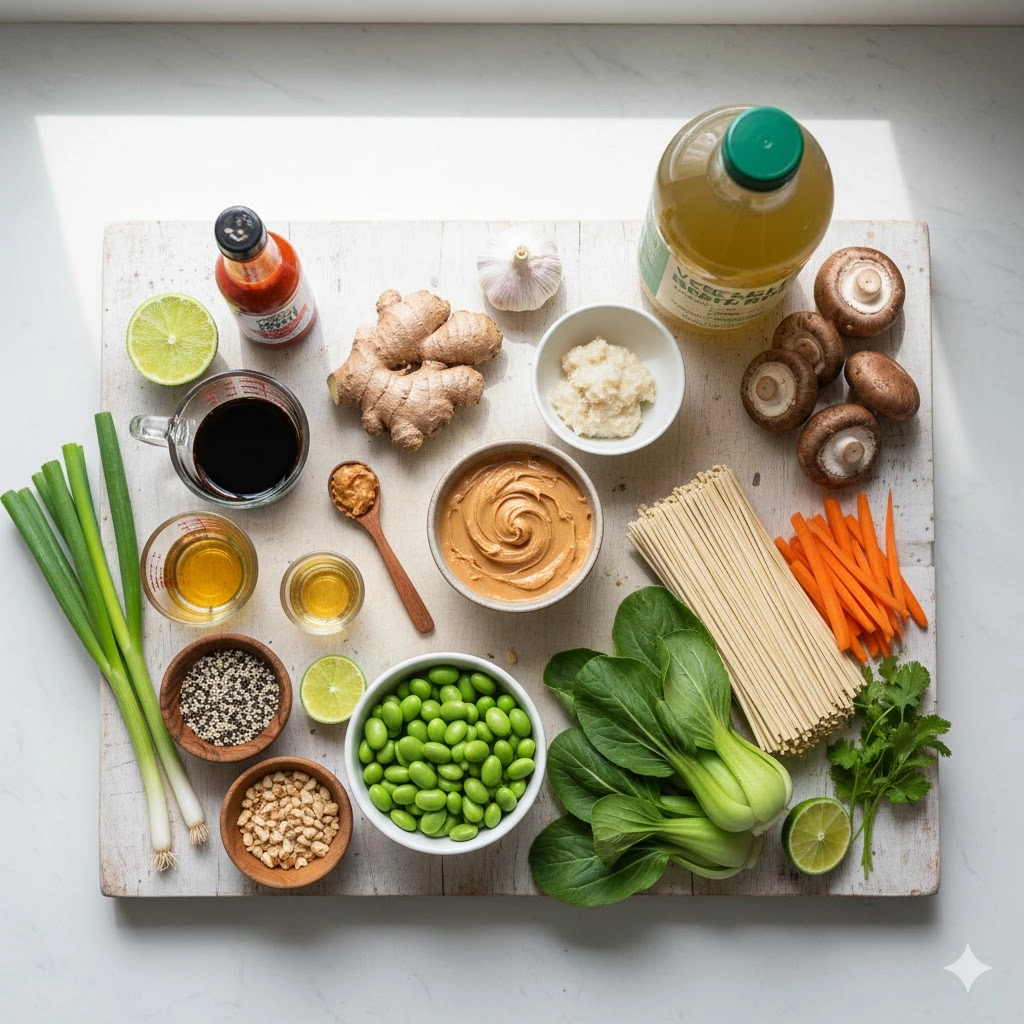
The quality of this ramen hinges entirely on the balance of its core components. While the noodles and toppings are important, the rich, flavorful liquid is what defines the dish. Here is what you’ll need to create the perfect harmony of sweet, salty, savory, and spicy notes.
Wet and Savory Elements
- 1 tablespoon sesame oil, divided
- 4 cloves garlic, minced
- 1 inch fresh ginger, grated (about 1 tablespoon)
- 3 tablespoons white or yellow miso paste (not dark, red miso)
- 1/4 cup smooth, natural peanut butter
- 2 tablespoons soy sauce or tamari
- 1 tablespoon rice vinegar
- 1 teaspoon chili garlic sauce (adjust to taste)
- 4 cups vegetable broth (low sodium is best)
Noodles and Textural Additions
- 8 ounces dried ramen noodles (use fresh if available)
- 1 cup sliced shiitake mushrooms
- 1 cup chopped bok choy or spinach
- 1 small carrot, julienned
- 1/2 cup shelled edamame or snow peas
Garnishes for Finish
- Roasted peanuts, chopped
- Fresh scallions, thinly sliced
- A drizzle of sriracha or extra chili oil, optional
The Process: Assembling Your Ramen Bowl
Bringing this ramen together is a matter of layering flavors. Follow these high-level steps for a flawless result.
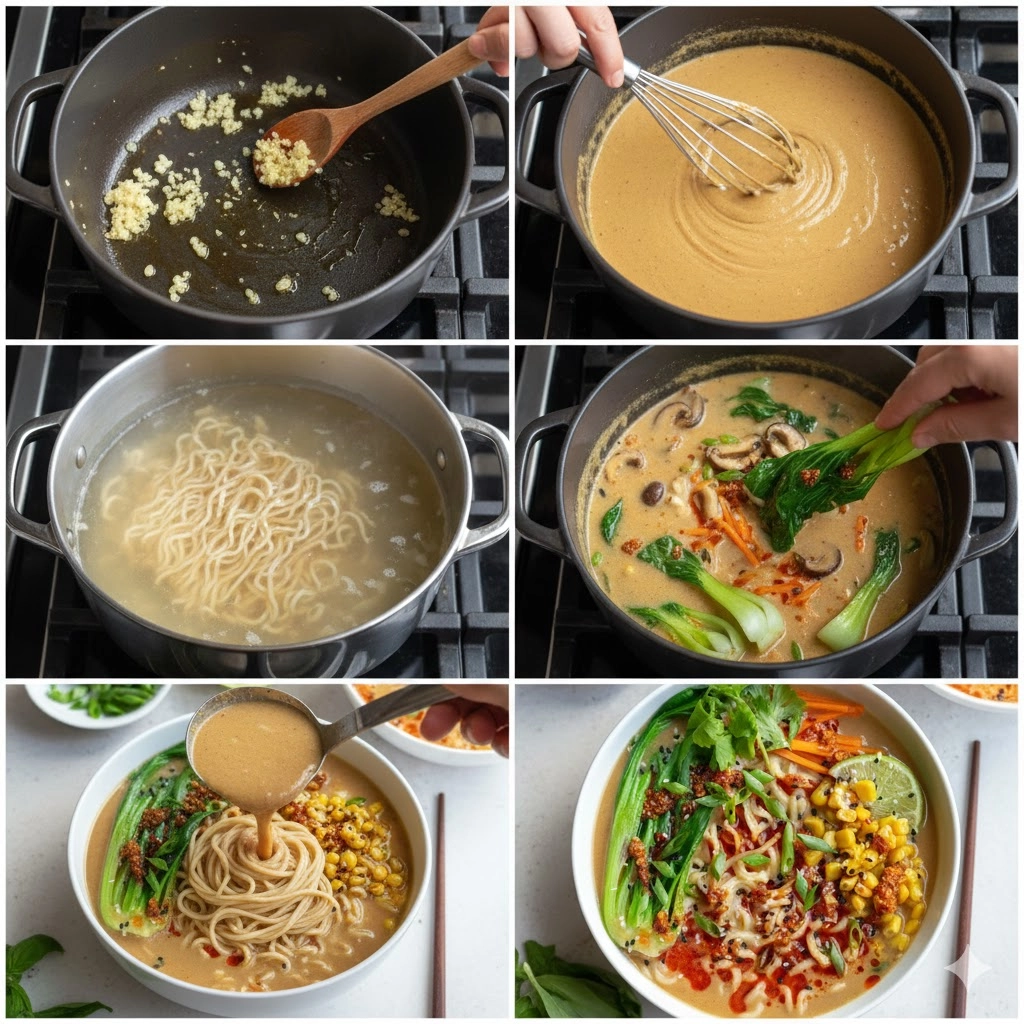
- Sauté Aromatics: Heat half of the sesame oil and cook the garlic and ginger until fragrant.
- Build the Paste: Whisk in the miso paste, peanut butter, soy sauce, rice vinegar, and chili sauce with the remaining sesame oil.
- Create the Broth: Slowly whisk the vegetable broth into the paste until smooth and bring the mixture to a simmer.
- Cook Noodles and Vegetables: Cook the ramen noodles according to package directions, adding the hardier vegetables like carrots and mushrooms toward the end of the broth’s simmer time.
- Finish the Broth: Stir in the softer greens (like bok choy or spinach) until they wilt slightly.
- Combine and Serve: Divide the cooked noodles among serving bowls, ladle the hot broth and vegetables over them, and finish with the prepared garnishes.
Deep Dive into Preparation: Achieving Velvety Richness
The magic of this Peanut Butter Miso Ramen lies in the detailed execution of the broth, specifically how the key ingredients are integrated.
The Foundation of Flavor
Start by heating a large pot or Dutch oven over medium heat. Add your first portion of sesame oil, then the minced garlic and grated ginger. Cook these aromatics for no more than one minute, stirring constantly. The goal is to release their perfume, not to brown or burn them. Burnt garlic will introduce an acrid note that is difficult to mask. The moment you catch that sweet, pungent scent of ginger and garlic melding is your cue to move to the next stage.
Tempering the Richness
Turn the heat down to low. Add the miso paste and the natural peanut butter directly to the aromatics. Miso paste needs to be treated gently; high heat can diminish the beneficial cultures and dull its complex flavor. Stir the miso and peanut butter until they form a thick, cohesive mass. Next, introduce the soy sauce, rice vinegar, and chili garlic sauce. This step allows the oil-soluble and water-soluble flavors to start combining before the large volume of liquid is added, ensuring a more uniform dispersion of taste.
Constructing the Velvety Broth
The most important technique here is gradual hydration. Begin by pouring in just about one half-cup of the vegetable broth. Vigorously whisk the thick paste until all the lumps of peanut butter and miso have dissolved completely into this small amount of liquid, forming a concentrated, smooth slurry. Once this is achieved, slowly pour in the remaining broth while continuously whisking. This method prevents the peanut butter from seizing or separating into oily clumps when it hits the heat. Bring the broth to a gentle simmer (just tiny bubbles breaking the surface), then reduce the heat to maintain warmth while you prepare the rest of the bowl.
Noodle and Vegetable Integration
Ramen noodles are typically cooked separately to avoid releasing excess starch into the already balanced broth, which would thicken it undesirably. Cook your dried or fresh noodles in a separate pot of boiling water, timing them to be ready just as the broth is finished. Simultaneously, if you are using hardy vegetables like shiitake mushrooms, thinly sliced carrots, or edamame, these should be added to the simmering broth about two to three minutes before serving. This brief cook time ensures they retain a pleasant, slightly crisp texture—you don’t want mushy vegetables in your ramen. The delicate greens, such as bok choy or spinach, should only be added off the heat, right before ladling the broth, allowing the residual heat to perfectly wilt them.
Mastering the Details: Expert Pointers
Elevating a simple dish to an exceptional one often comes down to a few critical adjustments. These specialized tips will help you achieve the best possible texture and depth of flavor.
- Mind the Miso: Never boil the broth aggressively once the miso is added. Excessive heat degrades the miso’s flavor profile. A gentle simmer is all that is required to heat the liquid through.
- The Power of Natural Peanut Butter: Use natural, unsweetened peanut butter that requires stirring. The separated oil in natural varieties emulsifies much more smoothly into the broth, lending a richer, less pasty finish than highly processed, stabilized brands.
- Taste and Adjust the Heat: The chili garlic sauce provides foundational heat. Once the broth is fully assembled, taste it. If you want more spice, add a bit more chili sauce directly to the individual serving bowls rather than the whole pot. This accommodates different heat tolerances.
- Separate the Noodles: The biggest mistake in ramen preparation is overcooking the noodles in the broth. Cook them al dente in plain water, drain them well, and place them in the serving bowl. Ladle the hot broth over them just before eating. This prevents them from bloating and soaking up all your delicious liquid.
- Roast Your Garnishes: Tossing the raw peanuts in a dry skillet for a minute or two until they release their aroma greatly intensifies their nuttiness, adding another layer of flavor that complements the broth beautifully.
Swapping and Changing: Recipe Flexibility
This recipe is inherently flexible and adapts well to various dietary needs and flavor preferences.
- Protein Pivot: For a non-vegetarian version, add thin slices of pan-seared or grilled chicken breast, pork belly, or firm tofu cubes. Tofu should be pressed, cubed, and quickly pan-fried until golden for the best texture before adding it as a topping.
- Noodle Alternatives: Substitute the ramen with whole wheat spaghetti, soba noodles, or even rice vermicelli. Each swap will alter the texture and absorption rate slightly, but the flavor profile remains consistent.
- Gluten-Free Choice: Ensure your soy sauce is replaced with tamari and that the miso paste you use is certified gluten-free, as some less common varieties may contain barley. The rest of the ingredients are generally safe.
- Vegetable Variety: Almost any firm vegetable works well here. Try thinly sliced bell peppers, bamboo shoots, or water chestnuts for crunch. Avoid vegetables that leach too much color, such as beets.
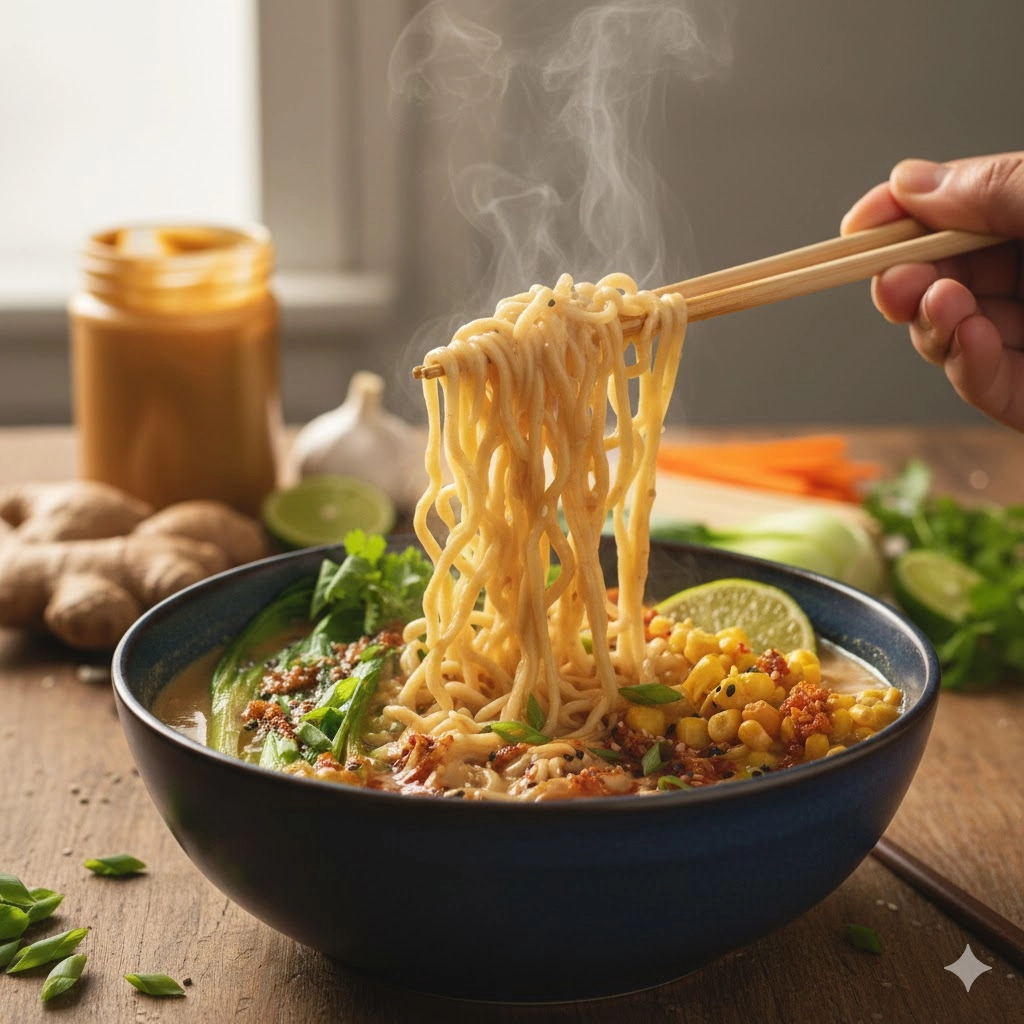
Serving and Pairing Suggestions
While this ramen is substantial enough to be a complete meal, a few simple additions can round out the experience perfectly, particularly when serving guests.
- Quick Cucumber Salad: A simple side of thinly sliced cucumbers dressed with a splash of rice vinegar, a pinch of sugar, and a dash of sesame oil provides a cool, acidic counterpoint to the ramen’s richness.
- Perfect Poached Egg: A soft-poached or marinated jammy egg (Ajitsuke Tamago) is a classic ramen topping that adds an incredible richness. The yolk, when broken, mixes beautifully into the peanut butter miso broth, creating an even creamier consistency.
- Savory Dumplings: Serve a small side of steamed or pan-fried vegetable or pork dumplings (potstickers). The light dough and savory filling offer an excellent texture variation.
- Aromatic Tea: A cup of light, grassy Sencha or a subtly smoky Lapsang Souchong tea cleanses the palate and complements the umami richness of the soup.
Questions & Answers on Preparation
Can I use dark red miso instead of white or yellow?
While you technically can, dark red miso (like Aka Miso) has a much stronger, saltier, and more intense umami flavor that can easily overpower the delicate nuttiness of the peanut butter and ginger. For this specific creamy, balanced broth, white (Shiro) or yellow (Shinshu) miso is strongly recommended.
How do I store leftovers and reheat the ramen?
It is best practice to store the noodles and the broth separately. Cooked noodles will continue to absorb the broth and become bloated and mushy overnight. Store the broth in an airtight container in the refrigerator for up to four days. When reheating, gently warm the broth on the stovetop and cook a fresh batch of noodles or reheat the pre-cooked, separated noodles with a little hot water before combining.
Why does my peanut butter broth look separated or grainy?
This usually happens if the peanut butter was not fully emulsified (whisked until smooth) with a small amount of liquid before adding the bulk of the broth, or if the broth was brought to a rolling boil after the peanut butter was added. Always dissolve the peanut butter in the aromatics, thin it with a small amount of liquid first, and then only simmer gently.
Can I make a large batch of the broth ahead of time?
Absolutely. The broth base freezes and stores exceptionally well. Prepare the broth through the simmering stage (Step 3), let it cool completely, and then store it in sealed containers. Thaw and reheat gently when ready to use, then add freshly cooked noodles and vegetables.
Nutritional Information
This is an approximation based on the primary ingredients used.
| Nutrient | Amount per Serving |
| Calories | 420 kcal |
| Protein | 18 g |
| Carbs | 45 g |
| Fat | 20 g |
| Fiber | 6 g |
| Sugar | 4 g |
| Sodium | 850 mg |
Estimated Nutritional Disclaimer
Nutrition information is an estimate and may vary based on preparation and ingredients used.
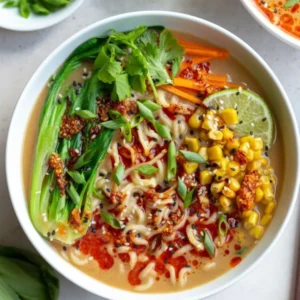
Homemade Creamy Peanut Butter Miso Ramen
Ingredients
- 1 tbsp sesame oil, divided
- 4 cloves garlic, minced
- 1 tbsp fresh ginger, grated (about 1 inch)
- 3 tbsp white or yellow miso paste
- 1/4 cup natural peanut butter, smooth
- 2 tbsp soy sauce or tamari
- 1 tbsp rice vinegar
- 1 tsp chili garlic sauce (adjust to taste)
- 4 cups vegetable broth (low sodium)
- 8 oz dried ramen noodles
- 1 cup sliced shiitake mushrooms
- 1 cup chopped bok choy or spinach
- 1 small carrot, julienned
- 1/2 cup shelled edamame or snow peas
- roasted peanuts, chopped (for garnish)
- fresh scallions, thinly sliced (for garnish)
- sriracha or chili oil, optional (for garnish)
Instructions
- Heat half the sesame oil in a large pot over medium heat. Add garlic and ginger and sauté until fragrant, about 1 minute.
- Lower the heat and add the miso paste and peanut butter. Stir until a thick paste forms, then add soy sauce, rice vinegar, and chili garlic sauce.
- Gradually whisk in the vegetable broth. Start with a small amount to create a smooth slurry, then add the rest while whisking. Bring to a gentle simmer.
- In a separate pot, cook the ramen noodles according to package directions. Drain and set aside.
- Add carrots, mushrooms, and edamame to the simmering broth. Cook for 2–3 minutes until just tender.
- Turn off the heat and stir in bok choy or spinach until just wilted.
- Divide cooked noodles into bowls. Ladle the hot broth and vegetables over the noodles.
- Garnish with roasted peanuts, scallions, and optional sriracha or chili oil. Serve hot.
Notes
Equipment
- large pot
- whisk
- knife
- cutting board
- noodle pot
- serving bowls