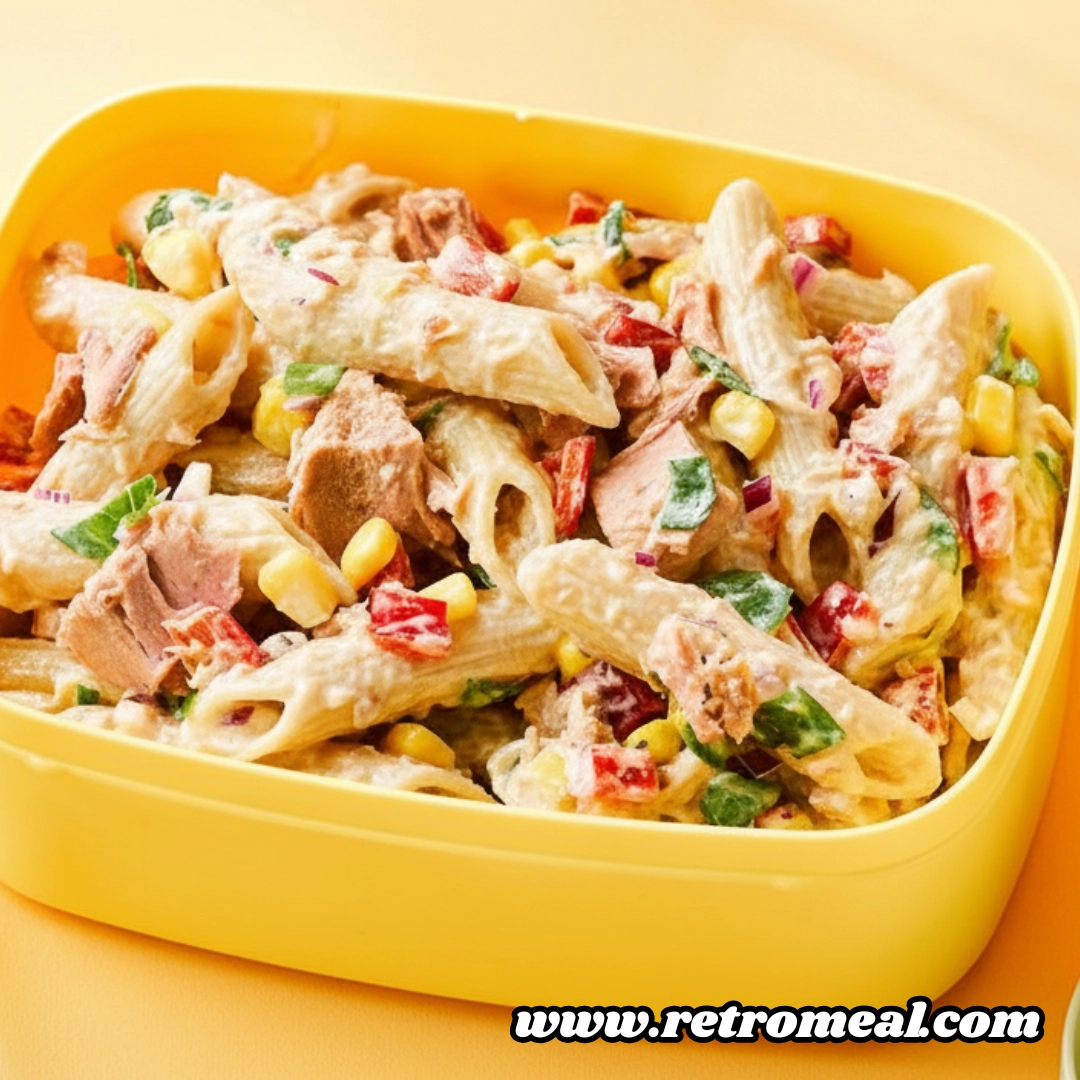
This vibrant and protein-packed pasta salad with tuna mayo is the ultimate solution for anyone seeking a lunch that is as wholesome as it is flavorful. Unlike heavy, deli-style salads that rely on massive amounts of oil-heavy mayonnaise, this version utilizes a clever blend of bio yogurt and sharp English mustard to create a creamy coating that feels indulgent without the weighed-down sensation. It is the perfect meal-prep companion, designed to hold up beautifully in a lunchbox for a desk-side feast or a sunny outdoor picnic. With a focus on wholemeal grains and crisp, colorful vegetables, this dish provides a satisfying crunch and a steady release of energy to power you through your afternoon.
Table of Contents
Essential Ingredients for the Perfect Batch
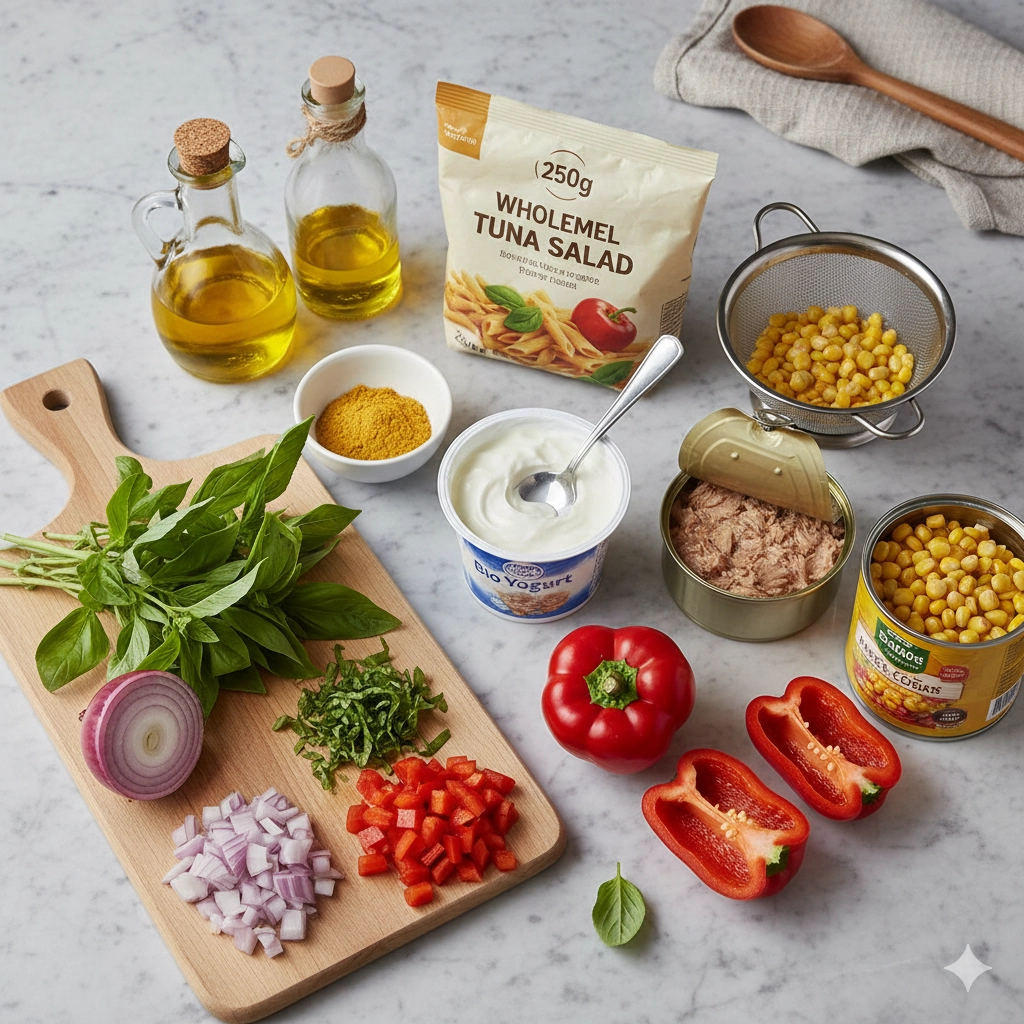
To create this refreshing dish, you will need to gather the following pantry and produce staples. Each component has been selected to provide a balance of texture, sweetness, and savory depth.
- 250 grams wholemeal penne
- 240 grams bio yogurt
- 2 teaspoons English mustard powder
- 2 tablespoons extra virgin olive oil
- 4 teaspoons apple cider vinegar
- 1 red onion, finely chopped
- One handful of basil leaves, finely chopped
- 320 grams tuna in spring water
- 2 red peppers, deseeded and diced
- 340 gram can sweetcorn, drained
Primary Preparation Instructions
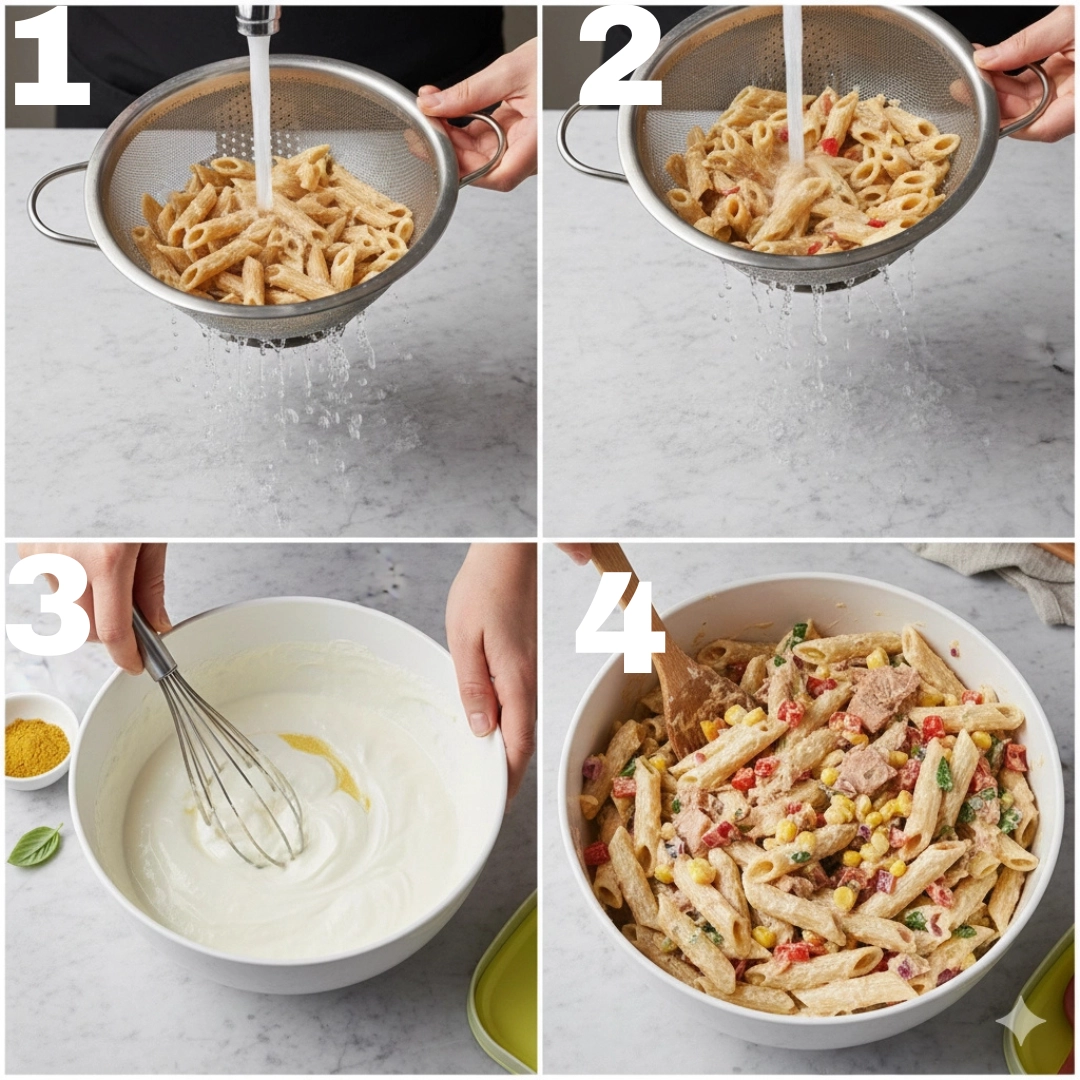
- Begin by bringing a large pot of salted water to a rolling boil. Add the wholemeal penne and cook for approximately 10 minutes, or until the pasta is al dente. This means the pasta should be tender but still retain a firm bite.
- Once cooked, drain the pasta into a colander and immediately rinse it under cold running water. This stops the cooking process instantly and removes excess starch to prevent the pasta from sticking together. Drain thoroughly a second time.
- While the pasta is cooling, prepare the dressing base. In a large mixing bowl, whisk together the bio yogurt, English mustard powder, extra virgin olive oil, and apple cider vinegar. Once smooth, fold in the finely chopped red onion and the chopped basil leaves.
- Gently flake the tuna and stir it into the yogurt mixture along with the diced red peppers and the drained sweetcorn.
- Add the cooled pasta to the bowl and toss everything together until every tube of penne is thoroughly coated in the creamy dressing.
- Serve immediately in bowls or portion the salad into airtight containers for later use. This salad remains delicious when stored in the refrigerator until the following day.
A Closer Look at the Step-by-Step Details
The process of making a high-quality pasta salad with tuna mayo involves more than just tossing items into a bowl; it is about the management of temperature and the emulsification of the dressing. When you boil the wholemeal penne, it is vital to keep an eye on the clock. Wholemeal pasta has a denser structure than white pasta and can become unpleasantly grainy if undercooked or mushy if over-boiled. The 10-minute mark is usually the sweet spot where the grain flavor shines without being distracting.
The cooling phase is perhaps the most important part of the recipe. If you add warm pasta to a yogurt-based dressing, the yogurt may thin out or even slightly curdle, losing that thick, velvety texture we want. By rinsing the penne under cold water, you not only cool it down for immediate assembly but also wash away the surface starches. This ensures that the dressing clings to the pasta rather than being absorbed by it, which keeps the salad moist even after a night in the fridge.
Creating the dressing requires a bit of attention to detail as well. By mixing the yogurt, oil, vinegar, and mustard powder first, you create a stable base. The English mustard powder provides a sharp, nasal heat that cuts through the richness of the yogurt, while the apple cider vinegar introduces a bright acidity that wakes up the palate. Adding the red onion and basil directly into this liquid allows their natural oils to infuse the dressing before the bulkier ingredients like tuna and peppers are added. When flaking the tuna, try to leave some larger chunks for texture, rather than mashing it into a fine paste. This creates a more sophisticated mouthfeel where you can distinguish the flaky fish from the snap of the red peppers and the pop of the sweetcorn kernels.
Enhancing Your Pasta Salad with Tuna Mayo
When working with this specific combination of ingredients, there are a few professional techniques you can use to elevate the final result. First, consider the quality of your tuna. Using tuna packed in spring water is essential for this recipe because it allows the dressing to provide the primary fat content and flavor. Tuna in oil would make the salad feel overly greasy when combined with the yogurt and olive oil.
Furthermore, the choice of bio yogurt is a functional one. Bio yogurt contains live cultures and tends to have a slightly tangier profile and a thicker consistency than standard plain yogurt. If your dressing feels a bit too thick, you can loosen it with a teaspoon of water or a tiny bit more vinegar, but usually, the moisture from the diced peppers and the corn provides enough liquid to achieve a perfect coating.
For the red onion, if you find the flavor of raw onion too pungent, you can soak the finely chopped pieces in a small bowl of cold water for five minutes before draining and adding them to the dressing. This “mutes” the sulfurous bite while keeping the crunch. For the basil, always use fresh leaves. Dried basil cannot replicate the peppery, floral aroma that fresh basil provides, which is the secret ingredient that makes this salad smell like a gourmet deli offering.
Selecting the Right Accompaniments and Serving Suggestions
This pasta salad with tuna mayo is a robust, all-in-one meal, but it can be part of a larger spread if you are hosting a gathering. Because the salad is creamy and savory, it pairs exceptionally well with something acidic or fermented. A side of spicy pickles or a small green salad with a sharp lemon vinaigrette provides a nice contrast.
If you are packing this for a picnic, consider serving it alongside some crunchy seed crackers or even a few slices of sourdough bread to scoop up any leftover dressing at the bottom of the bowl. For a beverage pairing, a chilled sparkling water with a squeeze of lime or a crisp iced green tea complements the lightness of the yogurt dressing perfectly. If you want to add even more texture at the moment of serving, a sprinkle of toasted sunflower seeds or cracked black pepper on top can provide a final touch of sophistication.
Adaptations and Ingredient Substitutions
While the recipe as written is nutritionally optimized and flavorful, there are times when you may need to swap ingredients based on what is in your pantry.
- The Grain: If you do not have penne, other short pasta shapes like fusilli or farfalle work just as well. The twists in fusilli are particularly good at trapping the tuna and sweetcorn within the spirals.
- The Protein: While tuna is the star here, you could technically use canned salmon or even shredded cooked chicken if someone in your household is not a fan of seafood. The dressing remains versatile enough to accommodate these changes.
- The Creaminess: If you are out of bio yogurt, Greek yogurt is a suitable substitute, though you may need to add a splash of milk or water to reach the desired consistency, as Greek yogurt is significantly thicker.
- The Veggies: If red peppers are unavailable, orange or yellow peppers offer a similar sweetness. If you want a bit of heat, you could finely mince a small jalapeno and add it into the mix along with the red onions.
Deep-Dive Kitchen Inquiries
Can I make this pasta salad more than twenty-four hours in advance?
While the salad is safe to eat for up to two days when kept in an airtight container in the refrigerator, it is at its absolute best within the first twenty-four hours. Over time, the wholemeal pasta will continue to absorb the moisture from the yogurt dressing, which can lead to a drier texture. If you do plan on eating it on the second day, you might want to stir in an extra tablespoon of yogurt or a tiny drizzle of olive oil just before serving to refresh the creaminess.
Is it possible to use prepared yellow mustard instead of English mustard powder?
You can certainly use prepared mustard if that is what you have on hand, but keep in mind that prepared mustards often contain added vinegar and salt. If you make this swap, start with one teaspoon and taste the dressing before adding more. English mustard powder is preferred because it provides a very clean, sharp heat without adding extra liquid, which helps maintain the thick integrity of the bio yogurt base.
Why is rinsing the pasta under cold water so important for this specific recipe?
Rinsing serves two vital purposes in a cold pasta salad. First, it drops the temperature of the pasta immediately, which is crucial because a warm pasta would cause the bio yogurt in the dressing to break down and become watery. Second, rinsing removes the surface starch. In a hot pasta dish, you want that starch to help the sauce stick, but in a cold salad, that starch can create a gummy, sticky texture as the salad sits. Rinsing ensures each piece of penne remains distinct and slippery.
What makes wholemeal penne a better choice for this salad than white pasta?
Wholemeal penne is utilized here because it offers a higher fiber content and a more complex, nutty flavor profile that stands up well to the bold flavors of tuna and red onion. From a structural standpoint, wholemeal pasta tends to be slightly sturdier, which means it is less likely to break apart when you are tossing it with the heavier ingredients like sweetcorn and diced peppers. It also helps keep you feeling full for a longer duration compared to refined white pasta.
Final Thoughts on This Nutritious Lunch Option
Mastering a reliable pasta salad is a fundamental skill for any home cook, and this version with tuna and yogurt dressing is a standout choice for those prioritizing health and flavor. It moves away from the traditional, heavy dressings of the past and embraces a brighter, more modern approach to lunchtime staples. By focusing on fresh herbs, crisp vegetables, and high-quality protein, you create a meal that feels like a treat rather than just another chore of meal prepping. Whether you are eating it at a park bench or your office desk, this dish brings a bit of culinary sunshine to your day.
Nutritional Information
The following values are estimated per serving based on the ingredients listed above.
| Nutrient | Amount Per Serving |
| Calories | 444 kcal |
| Total Fat | 12 grams |
| Saturated Fat | 3 grams |
| Carbohydrates | 54 grams |
| Sugars | 0 grams |
| Fiber | 10 grams |
| Protein | 25 grams |
| Sodium | 0.65 grams |
Disclaimer
The nutritional information provided is an estimate based on standard ingredient data. Actual values may vary depending on specific brands used and exact measurements. Consult with a healthcare professional or registered dietitian for personalized nutritional advice.
Pasta Salad with Tuna Mayo
Ingredients
- 250 grams wholemeal penne
- 240 grams bio yogurt
- 2 tsp English mustard powder
- 2 tbsp extra virgin olive oil
- 4 tsp apple cider vinegar
- 1 red onion, finely chopped
- 1 handful fresh basil leaves, finely chopped
- 320 grams tuna in spring water, drained
- 2 red peppers, deseeded and diced
- 340 gram can sweetcorn, drained
Instructions
- Boil the wholemeal penne in a large pot of salted water for 10 minutes until al dente.
- Drain the pasta and rinse immediately under cold running water to stop the cooking process and remove excess starch. Drain again thoroughly.
- In a large mixing bowl, combine the bio yogurt, English mustard powder, extra virgin olive oil, and apple cider vinegar. Whisk until smooth.
- Fold the finely chopped red onion and fresh basil leaves into the yogurt mixture.
- Stir in the drained tuna, diced red peppers, and sweetcorn until evenly distributed in the sauce.
- Add the cooled pasta to the bowl and stir thoroughly until every piece is coated. Serve or pack into containers.
Notes
Equipment
- Large cooking pot
- colander For rinsing pasta
- large mixing bowl
- whisk
- chef’s knife For dicing vegetables