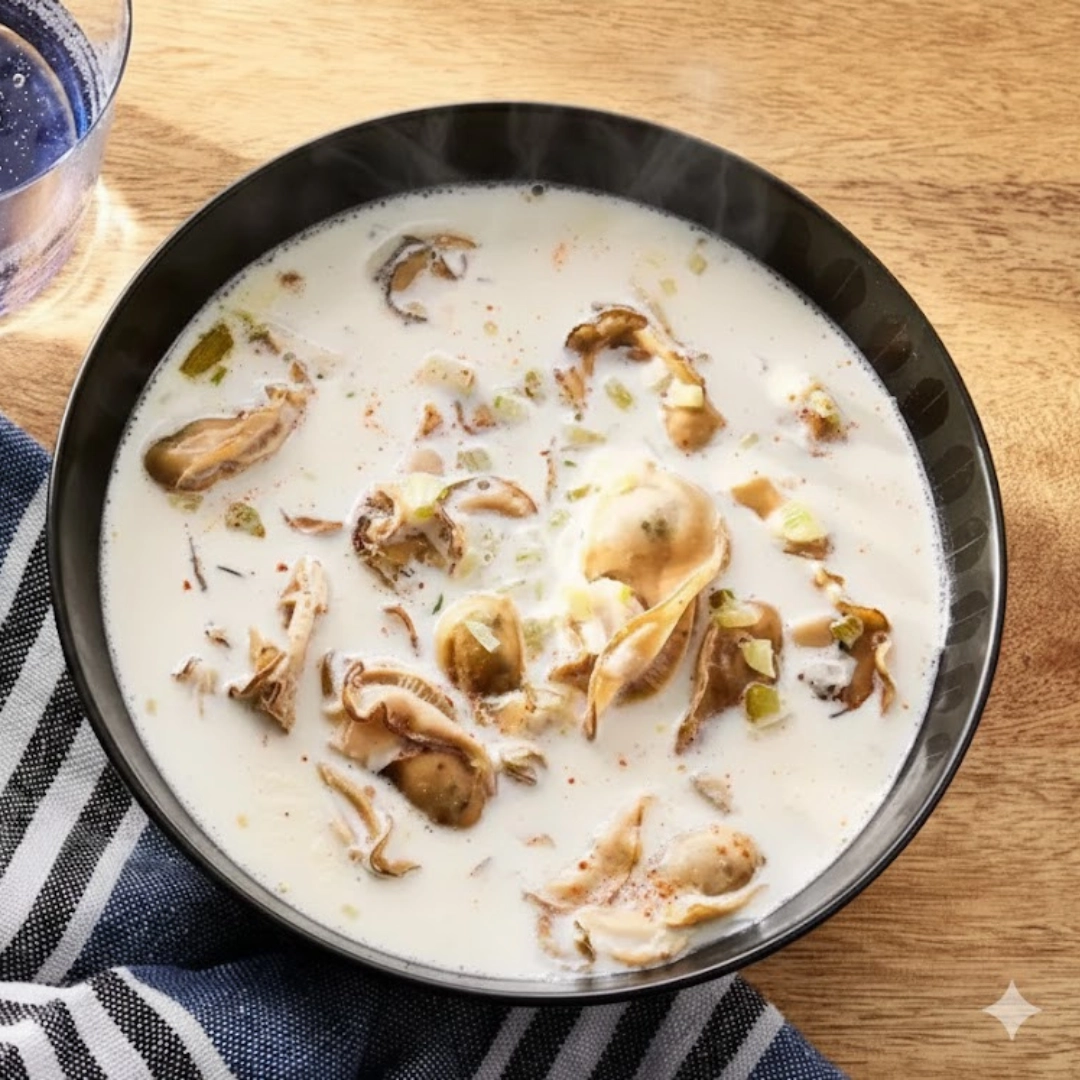
The arrival of colder months often calls for a dish that provides warmth without the heaviness of a traditional flour-based soup. This Oyster Stew is a celebration of purity, relying on the delicate interplay between the mineral saltiness of the sea and the sweet, velvety finish of high-quality dairy. It is a preparation that honors the ingredients, transforming a simple pint of oysters into an elegant experience that has graced coastal tables for generations. Whether served as a quiet midweek indulgence or the centerpiece of a festive holiday meal, this Oyster Stew offers a refined balance of textures and a sophisticated, clean finish.
Table of Contents
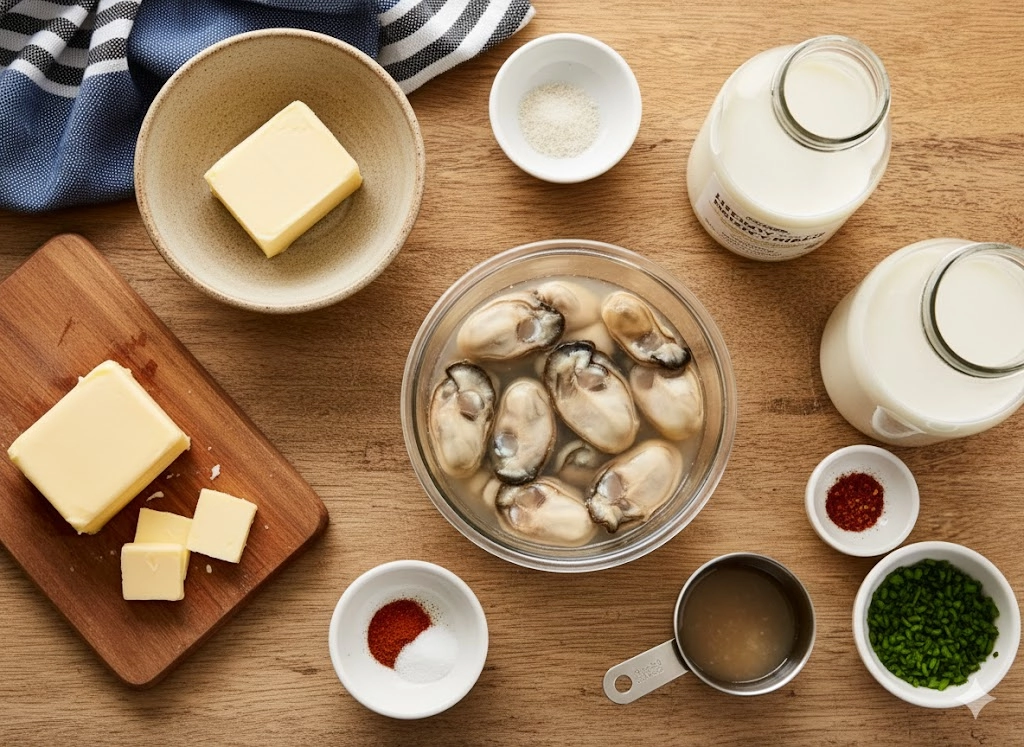
What You Will Need
Achieving the perfect consistency requires specific ratios of fat to liquid. The heavy cream is essential here; lower-fat alternatives will not provide the same luxurious mouthfeel or stability when combined with the briny oyster liquor.
The Sea
- One pint of fresh select oysters (ensure they are raw and chilled).
- One half cup of reserved oyster liquor (the natural juice found in the container).
The Pantry and Dairy
- Four tablespoons of high-quality unsalted butter.
- Two cups of heavy whipping cream.
- Two cups of whole milk.
- One half teaspoon of celery salt.
- One quarter teaspoon of ground white pepper.
- One pinch of cayenne pepper (optional, for a subtle back-of-the-throat warmth).
- Two tablespoons of fresh chives, finely snipped for garnish.
- Salt to taste (be cautious, as the oyster liquor is naturally saline).
From Kitchen to Table: The Instructions
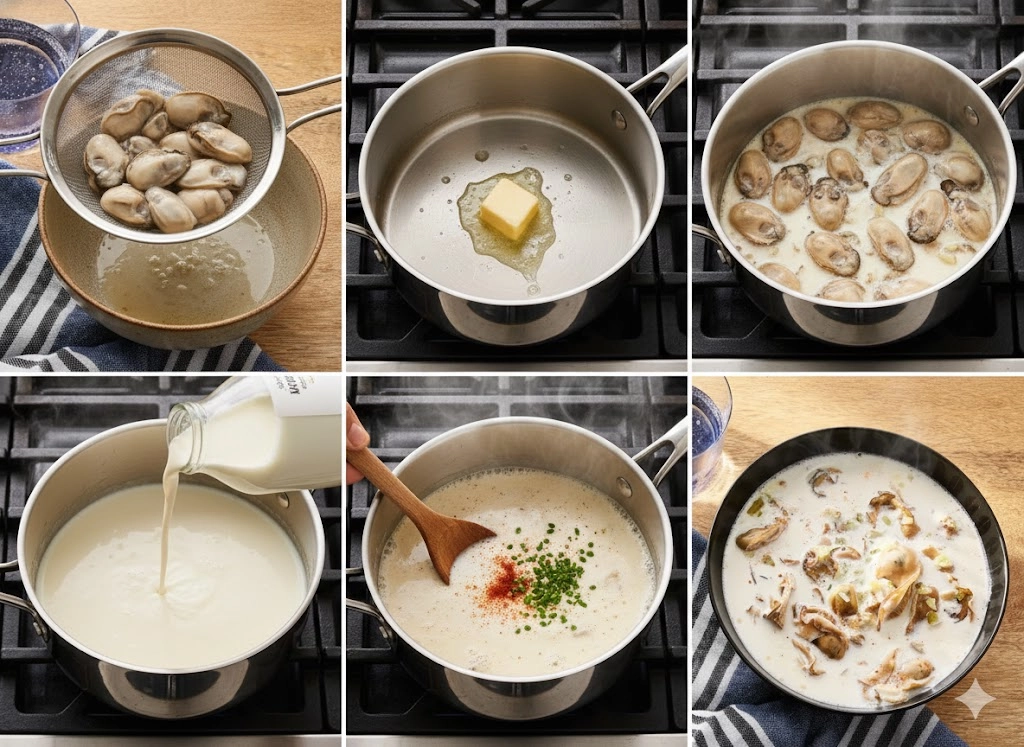
- Place a fine-mesh strainer over a clean bowl and pour the oysters through to separate the meat from the liquor.
- Carefully inspect each oyster for small bits of shell, then set them aside.
- In a large, heavy-bottomed pot, melt the butter over low heat until it begins to foam slightly.
- Increase the heat to medium-low and add the oysters along with their reserved liquor.
- Cook the oysters just until the ruffled edges begin to curl and tighten.
- Slowly pour in the heavy cream and the whole milk while stirring constantly.
- Season the mixture with celery salt, white pepper, and the optional cayenne.
- Maintain the heat just until small bubbles appear around the edges and steam rises from the surface.
- Remove from heat immediately and serve in warmed shallow bowls.
Sensory Guide to Perfection
The cooking of the oyster itself is the most critical phase of this recipe. As the oysters hit the warm butter and liquor, watch for the “bloom.” Raw oysters are often flat and translucent; as they poach, they will plump up and the edges—the mantle—will start to wave and ripple. This usually happens within three to five minutes. The moment you see this physical change, you must move to the next step. If the oysters begin to look like small, shriveled knots, they have been overcooked and will lose their characteristic tenderness.
When you introduce the dairy, you are looking for a specific olfactory transition. At first, you will smell the cold milk, but as it reaches the proper temperature (around one hundred seventy five Fahrenheit), the aroma will shift to a rich, nutty, and slightly sweet scent that blends with the brine. The texture of the liquid should be thick enough to coat the back of a spoon lightly.
The color of the finished stew should be a pristine, off-white ivory. If the broth looks yellow, the butter was likely browned too much at the start. If it looks grey, the oyster liquor was not properly strained of silt. A perfect bowl is visually clean, accented only by the vibrant green of the chives and perhaps a faint shimmer of golden butter on the surface.
Expert Advice from the Galley
- The Tempering Technique: To ensure the smoothest possible broth, take a cup of the cold milk and cream mixture and slowly whisk it into the warm oyster liquor before pouring the rest of the dairy into the pot. This helps stabilize the proteins.
- Filter the Liquor: Even if the oyster liquor looks clear, it often contains microscopic sand. Pouring it through a coffee filter or a very fine cheesecloth ensures a grit-free dining experience.
- White Pepper over Black: Always use ground white pepper. Black pepper provides a different flavor profile and creates “specks” that can make the stew look unrefined. White pepper offers a more integrated, floral heat.
- Avoid the Rolling Boil: A boil is the enemy of this stew. Boiling will cause the cream to “break” or separate, resulting in a grainy texture. If you see large bubbles breaking the surface, pull the pot off the burner immediately.
- Salt with Care: Do not add salt until the very end. Oyster liquor varies wildly in salinity depending on where the oysters were harvested. Taste the finished broth first; you may find the celery salt and liquor provided all the salt needed.
- Resting Period: Letting the stew sit for five minutes off the heat before serving allows the flavors to meld. The oysters will continue to gently steep in the warm cream, deepening the oceanic flavor of the broth.
Modern Twists on a Classic
While the traditional version is a masterpiece of minimalism, you can adapt the flavor profile to suit your guests. For a Smoky Oyster Stew, add two strips of finely minced, crispy bacon to the butter at the start, using the bacon fat to help poach the oysters.
For an Aromatic Variation, sauté a quarter cup of very finely minced fennel bulb in the butter until it is completely soft before adding the seafood. The subtle anise notes of the fennel pair exceptionally well with the sweetness of the cream.
If you prefer a Thicker Consistency, you can create a very light blond roux by whisking a tablespoon of flour into the melted butter before adding the oysters. This results in a texture closer to a traditional bisque while maintaining the clean flavor of the stew.
Perfect Pairings
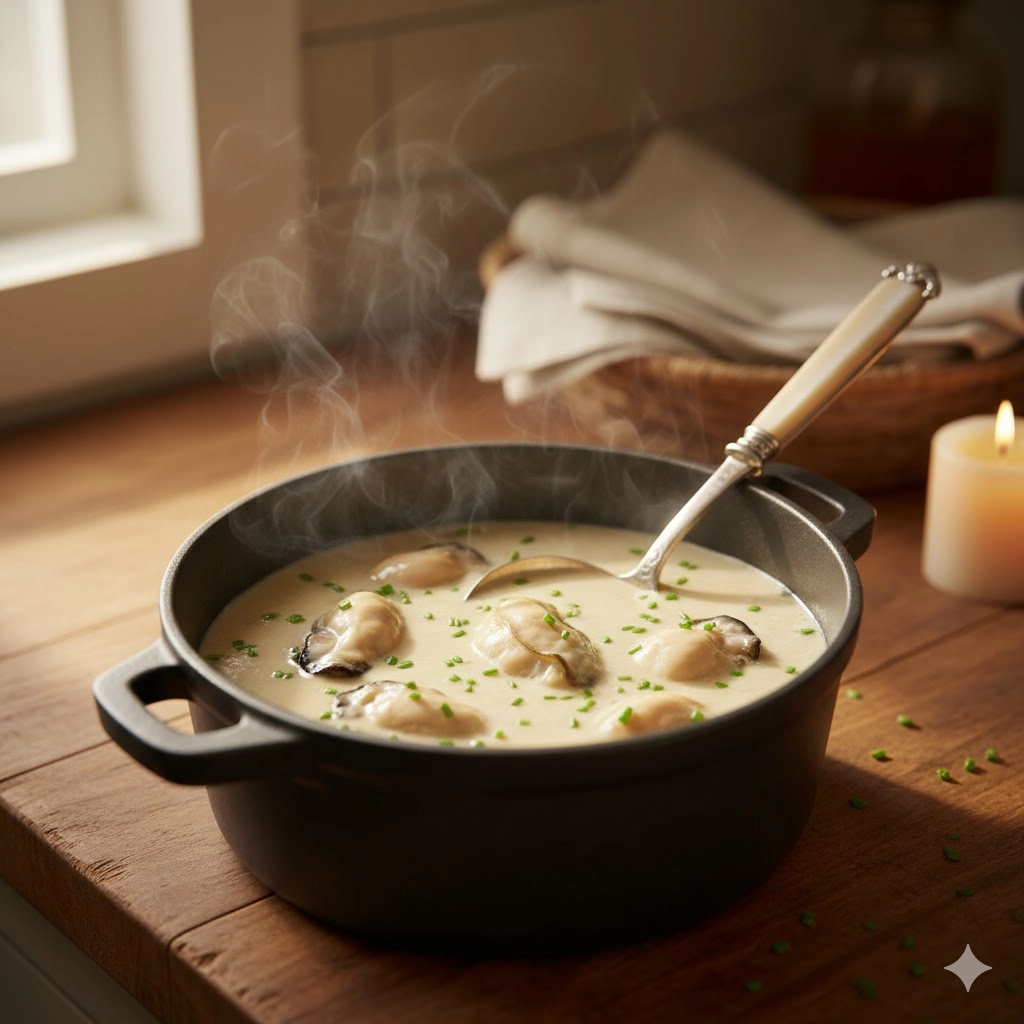
To maintain the elegance of the dish, serve it with simple, high-quality sides. Traditional Oyster Crackers or plain Saltines are the most common choice, providing a nostalgic crunch that doesn’t compete with the stew. For a more modern approach, serve with a side of toasted brioche soldiers brushed with sea salt and butter.
In terms of beverages, a very dry, cold Chablis or an Extra Brut Champagne provides a sharp acidity that cleanses the palate between spoonfuls of the rich cream. If you prefer a non-alcoholic pairing, a sparkling mineral water with a squeeze of fresh lemon offers a similar refreshing contrast.
Common Preparation Hurdles
Why did my stew turn out watery?
This usually happens if you use skim or one percent milk. The stew relies on the fat in the heavy cream and whole milk for its body. If you must use lower-fat dairy, you will need to add a small amount of cornstarch slurry to achieve the correct thickness.
How do I store and reheat leftovers?
Oyster stew is best eaten fresh. However, you can store leftovers in an airtight container in the refrigerator for up to twenty four hours. To reheat, place it in a small pot over the lowest possible heat setting. Do not microwave it, as this will turn the oysters into rubber.
Can I use frozen oysters?
Yes, but ensure they are fully thawed in the refrigerator before use. Frozen oysters often release more water than fresh ones, so you may need to simmer the liquor for a minute or two to concentrate the flavor before adding the dairy.
Nutrition Information
| Nutrient | Amount per Serving |
| Calories | 445 kcal |
| Protein | 15 g |
| Carbs | 14 g |
| Fat | 36 g |
| Fiber | 0 g |
| Sugar | 7 g |
| Sodium | 610 mg |
Disclaimer
Nutrition information is an estimate and may vary based on preparation and ingredients used.
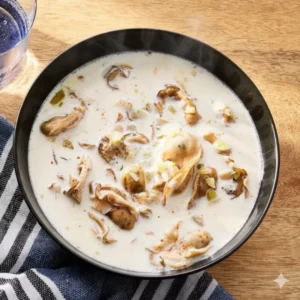
Traditional Coastal Oyster Stew
Ingredients
- 1 pint fresh select oysters, raw and chilled
- 0.5 cup reserved oyster liquor (natural juice)
- 4 tbsp unsalted butter
- 2 cups heavy whipping cream
- 2 cups whole milk
- 0.5 tsp celery salt
- 0.25 tsp ground white pepper
- 1 pinch cayenne pepper (optional)
- 2 tbsp fresh chives, finely snipped
- Salt to taste
Instructions
- Place a fine-mesh strainer over a bowl and drain the oysters, reserving at least one half cup of the liquor. Inspect oysters for shell fragments.
- In a large, heavy-bottomed pot, melt the butter over low heat until it begins to foam slightly.
- Add the oysters and their reserved liquor to the pot. Cook over medium-low heat until the edges of the oysters just begin to curl.
- Slowly pour in the heavy cream and whole milk while whisking gently to combine with the oyster liquor.
- Stir in the celery salt, white pepper, and cayenne. Continue heating until steam rises and tiny bubbles form at the edges.
- Remove from heat before it reaches a boil. Taste and add salt if needed. Garnish with fresh chives and serve immediately.
Notes
Equipment
- fine mesh sieve
- Heavy-bottomed saucepan or Dutch oven Prevents dairy from scorching
- whisk
- Shallow serving bowls Pre-warm these in the oven