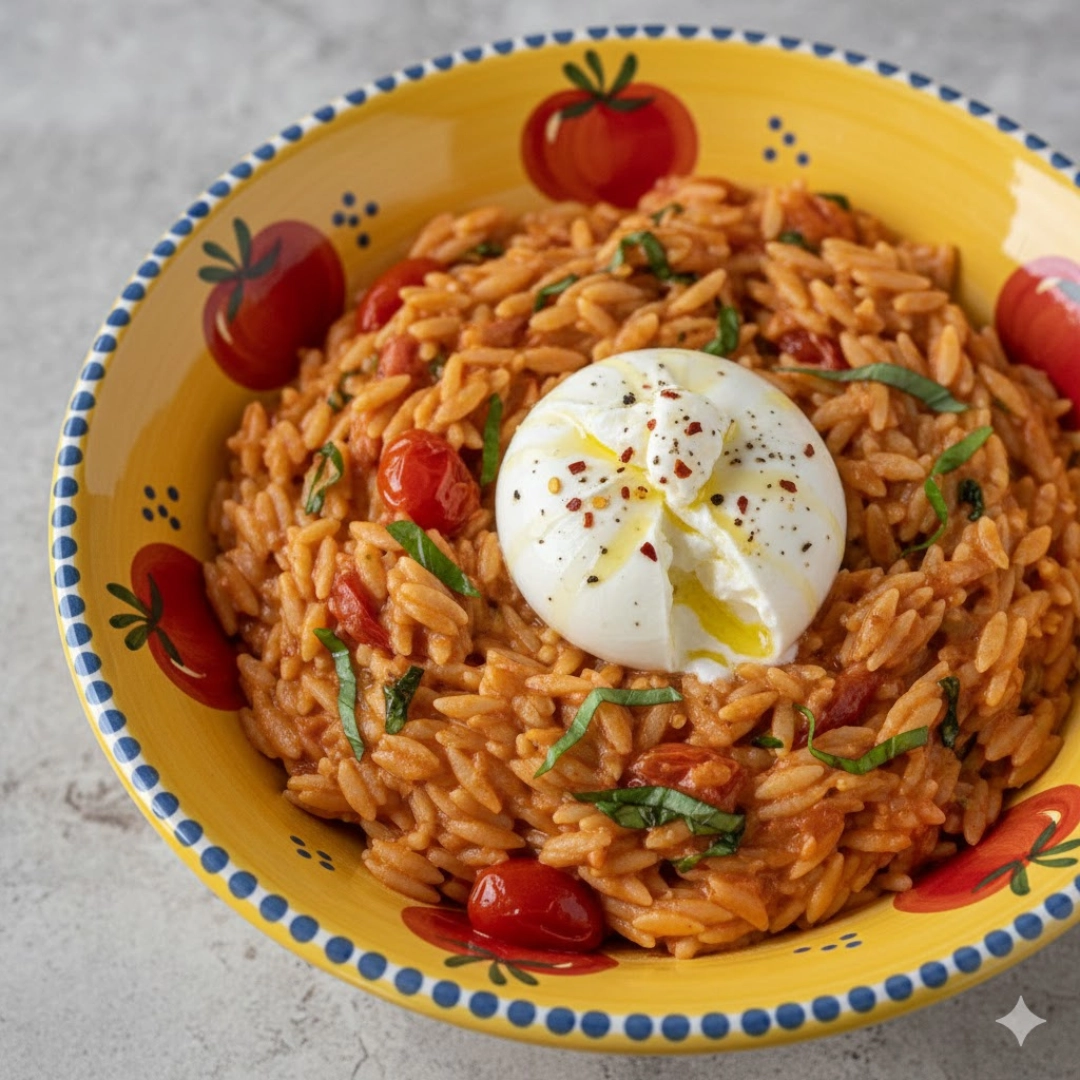
There are weeknight meals that are simply fast, and then there are weeknight meals that feel like an accomplishment. This recipe falls firmly into the latter category. It is a dish that marries the ease of single-pot preparation with the sophisticated, bright flavors of the Italian countryside. When finished, it presents a texture that defies its simple origin—a true hybrid, boasting the silky smoothness of a slow-stirred risotto combined with the comforting familiarity of pasta. Our goal here is to transform humble pantry staples into a dynamic, full-bodied meal where every kernel of orzo is deeply infused with savory broth, sweet blistered tomatoes, and rich cream. This One Pot Creamy Tomato Orzo is the perfect answer to the desire for deeply satisfying, fuss-free cooking.
Table of Contents
The Pantry Essentials: What You Need
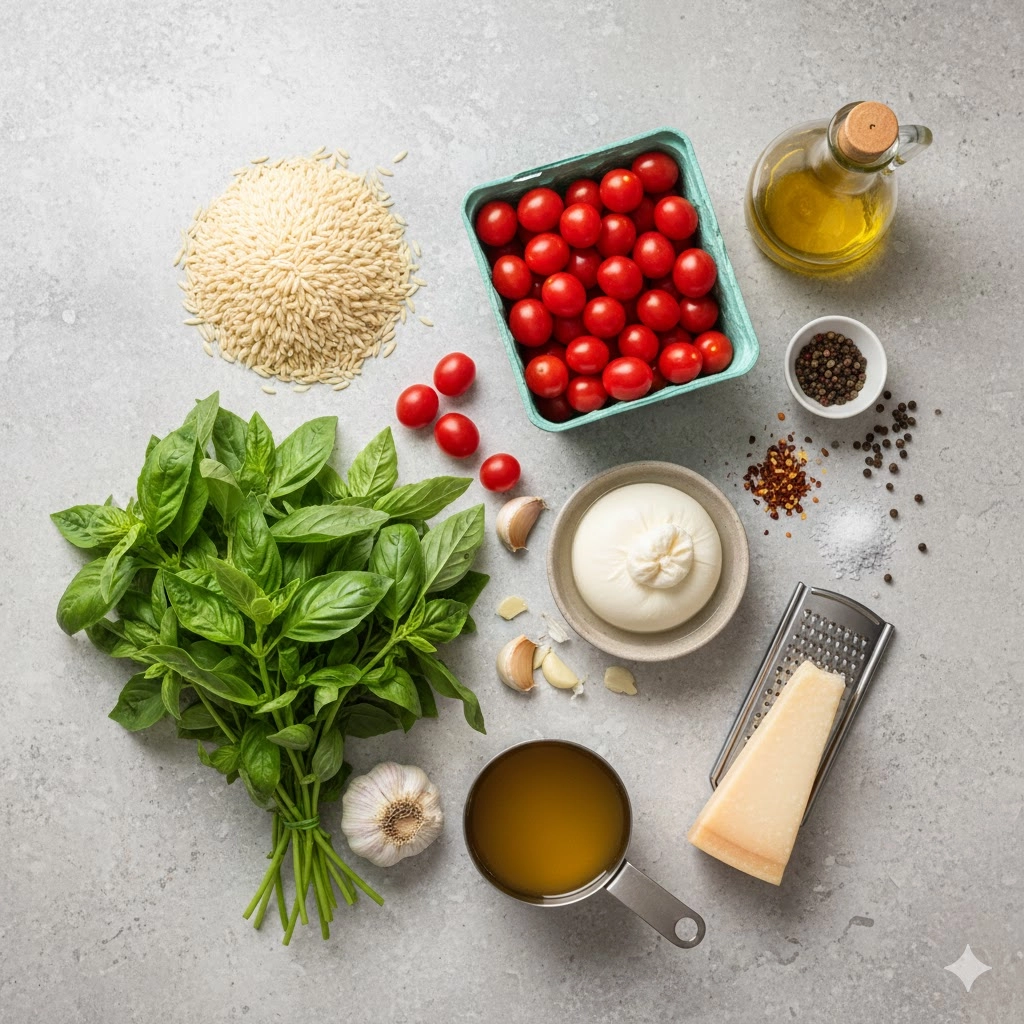
The magic of this recipe lies in the quality of a few core components and the precise timing of their introduction to the pot. When measuring, please use accurate US cup and spoon metrics to ensure the perfect liquid-to-pasta ratio that delivers that desirable, creamy finish.
The Base:
- 1 tablespoon quality olive oil, divided
- 4 cloves garlic, thinly sliced
- 1 pint cherry or grape tomatoes
- 1 cup orzo (risoni) pasta
- 3 and one half cups low-sodium chicken or vegetable broth
- Salt and freshly cracked black pepper
The Finish:
- 1/2 cup heavy cream
- 1/2 cup finely grated Parmesan cheese, plus extra for serving
- 1/4 cup fresh basil leaves, roughly chopped
- Optional Garnish: 1 ball (eight ounces) fresh burrata cheese
Simplicity in Execution: A Methodical Approach
The beauty of this method is its reliance on sequential cooking, where each ingredient prepares the pot for the next. This streamlines the process and builds layers of flavor simultaneously.
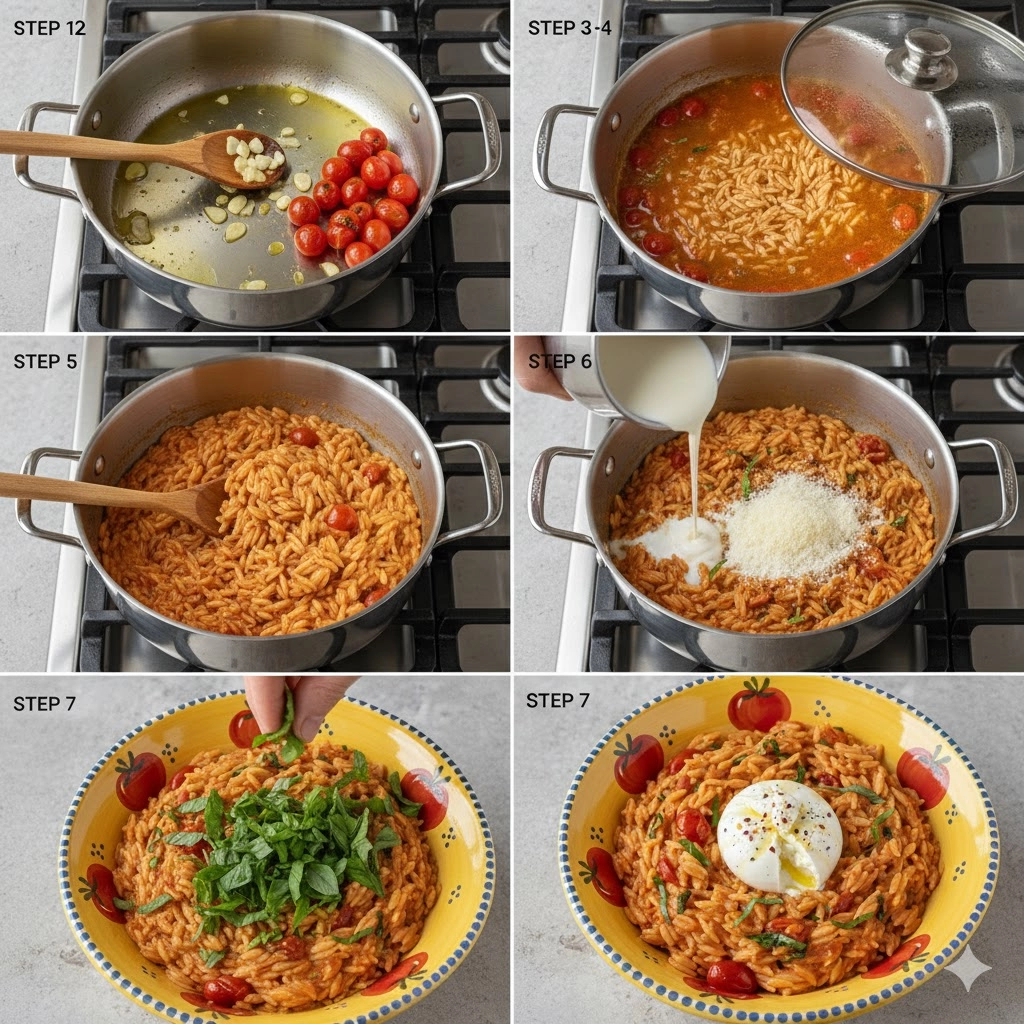
- Prepare the Aromatics: Heat a tablespoon of oil in a wide, heavy-bottomed pot or Dutch oven over medium heat. Add the sliced garlic and toast lightly until fragrant.
- Blister the Tomatoes: Introduce the cherry tomatoes to the pot and increase the heat slightly to medium-high. Cook, stirring occasionally, until they begin to burst and soften into a thick pulp.
- Introduce the Orzo and Broth: Add the dry orzo directly to the tomato mixture. Immediately pour in all of the measured broth, along with a pinch of salt and pepper.
- Simmer to Perfection: Bring the liquid to a rolling boil, then reduce the heat immediately to a gentle, steady simmer. Cover the pot and allow the orzo to absorb the liquid without interruption for ten minutes.
- Achieve Creaminess: Remove the lid, stir well, and continue to simmer uncovered for five to seven additional minutes, or until the pasta is fully cooked and the sauce has thickened significantly.
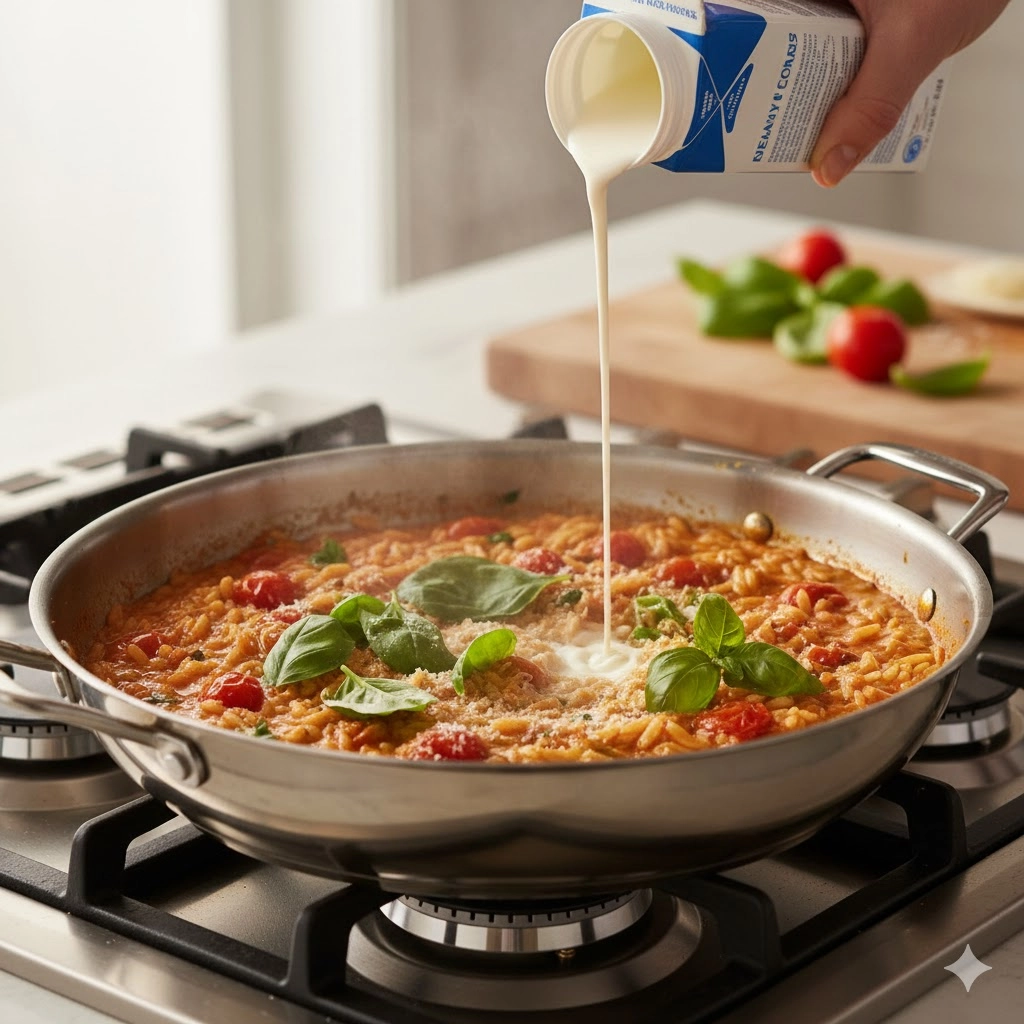
- Enrich the Sauce: Remove the pot completely from the heat. Stir in the heavy cream and grated Parmesan cheese until fully melted and incorporated.
- Final Touches and Serve: Fold in the fresh basil. Taste and adjust the seasoning with additional salt or pepper. Serve immediately, garnished with your choice of topping.
Mastering the Texture: Building a Luxurious Sauce Base
The difference between a quick soup and a truly creamy, risotto-like orzo is all in the technique used to combine the elements. This section breaks down the detailed sensory cues you should look for at each critical stage.
Phase One: The Blooming of Aromatics (Steps One and Two)
A common mistake is rushing the start. We are not just softening the garlic; we are blooming it. The residual olive oil should be warm enough to gently release the garlic’s fragrance immediately upon contact, but not so hot that the edges turn brown quickly. The ideal state is pale golden, aromatic, and slightly translucent. This usually takes between one and two minutes. If you see rapid darkening, your heat is too high, and the garlic will become bitter and ruin the final dish.
Next, the tomatoes are introduced. They carry a large amount of water, which will temper the heat and release natural sugars. The goal here is a concentrated, “jammy” consistency, not just soft, cooked fruit. As the tomatoes hit the medium-high heat, you should hear a lively sizzle. Continue to cook them, using the back of a wooden spoon or spatula to gently press on any whole tomatoes that resist bursting. Once they have collapsed, their thick liquid will mix with the garlic-infused oil, forming the initial, flavorful foundation of the sauce. This phase should take about eight to ten minutes, and the resulting mixture should cling thickly to the bottom of the pot.
Phase Two: The Absorption and Starch Release (Steps Three and Four)
After the tomatoes have broken down, we add the orzo and the full measurement of broth. Unlike true risotto, where broth is added in stages, the one-pot method requires a precise initial liquid measure to ensure even cooking and sufficient starch release. The orzo is tossed briefly in the tomato mixture—this is a light toast, not a full tostatura—just enough to coat the grains in the flavor base before the broth arrives.
The switch from high heat (boil) to low heat (gentle simmer) is vital. Once it reaches a boil, reduce the temperature immediately. The simmer should be visible but calm, with only small bubbles breaking the surface. The ten minutes of covered simmering are crucial for two reasons: hydration and initial starch release. The steam trapped under the lid allows the orzo to cook thoroughly and rapidly. Resist the urge to peek or stir during this time. Stirring too early releases too much starch at once, risking a gummy final texture.
Phase Three: The Reduction and Finishing (Steps Five and Six)
When you lift the lid after the initial ten minutes, the orzo will be plump, and much of the liquid will have been absorbed, but the texture may still appear slightly soupy. This is intentional. Now, we cook uncovered to rapidly reduce the remaining liquid and concentrate the starches.
For the next five to seven minutes, stir the orzo consistently, every thirty seconds or so. This action scrapes the starch from the pasta grains and encourages it to emulsify with the remaining liquid, which is the mechanism that creates the signature creaminess. You are looking for an al dente texture in the pasta itself—it should be soft, but still offer a slight resistance to the bite. The sauce should transition from thin to thick enough to coat the back of a spoon. When the spoon is drawn across the pot bottom, the orzo should take a moment to flow back together, like a luxurious, heavy sauce.
Removing the pot from the heat before adding the cream and cheese prevents the dairy from separating or curdling due to excessive heat. The residual heat of the orzo is more than enough to perfectly melt the Parmesan and allow the cream to blend seamlessly, creating a glossy, velvety finish that is the hallmark of a truly successful dish.
Insider Knowledge: Secrets to Flawless Creaminess
Achieving that coveted, silky texture in this recipe is more about physics and timing than specific ingredients. These tips focus on maximizing the dish’s creaminess while keeping the one-pot method simple.
- Use a Wide Vessel: Always choose a wide, shallow pot or a Dutch oven, rather than a deep saucepan. The greater surface area allows the liquid to evaporate more evenly and quickly, concentrating the flavors and starches across the entire batch of orzo.
- Avoid Cold Broth: Use warmed broth if possible. Adding cold broth to a hot pan of sautéed vegetables dramatically lowers the temperature, slowing down the cooking process and potentially toughening the pasta. Warm your broth gently in a separate saucepan before starting the recipe.
- The Dairy Decision: For maximum richness, use heavy cream, which contains at least thirty-six percent fat. For a slightly lighter, brighter flavor, use full-fat mascarpone instead; whisk it in vigorously at the end for an instant velvet finish.
- A Note on Cheese: Use only freshly grated hard Italian cheese, such as Parmesan, Pecorino Romano, or Grana Padano. Pre-grated cheeses contain anti-caking agents that can interfere with melting, leading to a gritty, rather than smooth, sauce.
- Adjusting for Altitude and Heat: If you live at a higher altitude or your stovetop runs exceptionally hot, you may need an extra quarter-cup of broth during the final simmering stage. If the liquid absorbs too quickly before the orzo is cooked through, simply add a splash of warm liquid until the pasta is al dente.
- Serve Promptly: Orzo, being a tiny pasta, continues to absorb liquid rapidly after it is taken off the heat. For the ultimate, spoonable creaminess, plate and serve the dish within five minutes of finishing the final stir. If leftovers are inevitable, stir in a quarter-cup of hot broth or water when reheating to loosen the sauce.
Flavor Evolution: Customizing This Orzo Dish
While the classic One Pot Creamy Tomato Orzo is spectacular as written, its straightforward flavor profile makes it an excellent candidate for personalized additions and variations based on what you have on hand or what seasonal ingredients are available.
- Add Smoky Depth: Incorporate a half-cup of sun-dried tomatoes, packed in oil, sliced thinly, and added alongside the fresh cherry tomatoes. Their intense, chewy texture and savory sweetness deepen the overall tomato profile, giving the dish a more robust, late-summer feel.
- Increase Protein Content: Stir in one cup of pre-cooked, shredded chicken (rotisserie is excellent) or six ounces of pre-cooked shrimp during the last two minutes of covered simmering. This allows the protein to warm through and absorb some of the surrounding moisture without overcooking.
- Use Garden Greens: Wilt in two large handfuls of fresh spinach, kale, or arugula during the final five minutes of uncovered simmering. These greens cook down quickly and add a slight bitterness that balances the sweetness of the tomatoes and the richness of the cream.
- Embrace Lemon Zest: A half teaspoon of freshly grated lemon zest, stirred in with the basil, will drastically brighten the final flavor. The acid cuts through the creaminess, offering a clean, zesty finish that is especially desirable in warmer months.
- Dairy-Free Creaminess: To maintain the rich texture without using heavy cream, substitute with one cup of full-fat coconut milk (the kind in a can, not the carton) or use cashew cream. Both options offer a smooth consistency, though coconut milk will lend a subtle, slightly sweet background note.
The Perfect Companions: What to Serve Alongside
Because this orzo dish provides a rich, complex, and full-bodied meal on its own, the best pairings are simple, textural, and often acidic, designed to cleanse the palate.
- A Simple Green Salad: A basic mix of crisp romaine, thinly sliced red onion, and cucumber, dressed minimally with a vinaigrette made from quality extra virgin olive oil and red wine vinegar. The acidity and crunch provide a refreshing counterpoint to the silky pasta.
- Garlic and Herb Focaccia: A piece of crusty, artisanal bread is essential for soaking up any remaining sauce on the plate. Focaccia, with its airy structure and olive-oil richness, complements the Mediterranean foundation of the orzo beautifully.
- Roasted Asparagus or Broccoli: Roast a bunch of asparagus or broccoli florets tossed simply with salt, pepper, and olive oil at four hundred Fahrenheit until tender-crisp. The slight char and earthy flavor add dimension and vegetable content without overwhelming the main dish.
Troubleshooting and Clarity: Common Questions
Why did my orzo come out mushy instead of creamy?
Mushiness usually stems from either using too much liquid initially, cooking the pasta at a heat that is too high, or stirring too frequently during the covered simmer phase. For best results, use the exact liquid amount specified, ensure the heat is reduced to a truly gentle simmer after the boil, and only stir consistently once the lid is off for the final reduction phase.
Can I use canned diced tomatoes instead of fresh cherry tomatoes?
You can certainly use canned tomatoes in a pinch, but the result will be different. Canned diced tomatoes have a higher water content and less concentrated natural sweetness. If substituting, use one fourteen-ounce can of crushed or diced tomatoes, but start with only three cups of broth, reserving the final half-cup to add later if the pasta seems too dry.
Is it possible to prepare this recipe ahead of time?
Orzo continues to absorb liquid rapidly as it cools, meaning the creamy sauce will thicken considerably, sometimes becoming almost solid, when refrigerated. It is best to cook and serve this dish fresh. If you must prepare it ahead, cook the dish until the orzo is just barely al dente (under-cooked), and reserve the cream and cheese. When ready to serve, reheat the orzo on the stovetop with the reserved dairy and an extra half-cup of warm broth.
What’s the ideal way to reheat leftovers?
Transfer the portion you wish to reheat to a small saucepan. Add a splash of broth or water—about two tablespoons per serving—to loosen the pasta. Reheat gently over low heat, stirring constantly until warmed through and the creamy consistency returns. Avoid the microwave, as it often results in uneven heating and can make the edges of the pasta gummy.
Can I add wine to the recipe for deeper flavor?
Yes, a half-cup of dry white wine (like Pinot Grigio or Sauvignon Blanc) can be added after the tomatoes have blistered and before the broth is introduced. Allow the wine to simmer for two minutes, reducing by about ten percent, before proceeding with the broth. This adds a lovely, acidic complexity to the sauce.
A Look at the Nutritional Breakdown
The following figures are provided for general informational purposes and are based on the core recipe serving four people.
| Nutrient | Amount per Serving |
| Calories | 550 kcal |
| Protein | 25 g |
| Carbs | 60 g |
| Fat | 23 g |
| Fiber | 7 g |
| Sugar | 9 g |
| Sodium | 650 mg |
Disclosure of Nutritional Estimates
Nutrition information is an estimate and may vary based on preparation and ingredients used.
One Pot Creamy Tomato Orzo
Ingredients
- 1 tbsp olive oil, divided
- 4 cloves garlic, thinly sliced
- 1 pint cherry or grape tomatoes
- 1 cup orzo (risoni) pasta
- 3.5 cups low-sodium chicken or vegetable broth
- Salt and freshly cracked black pepper
- 1/2 cup heavy cream
- 1/2 cup Parmesan cheese, finely grated
- 1/4 cup fresh basil leaves, roughly chopped
- 1 ball burrata cheese (optional, 8 oz)
Instructions
- Heat a tablespoon of oil in a wide, heavy-bottomed pot over medium heat. Add sliced garlic and toast until pale golden and fragrant.
- Add cherry tomatoes to the pot. Raise heat to medium-high and cook, stirring occasionally, until they blister and burst into a thick, jammy sauce.
- Stir in dry orzo. Immediately add broth, salt, and pepper. Bring to a rolling boil.
- Reduce heat to a gentle simmer. Cover and cook for 10 minutes without stirring.
- Uncover and stir continuously for 5–7 minutes until the orzo is al dente and sauce thickens.
- Remove from heat. Stir in heavy cream and Parmesan until melted and creamy.
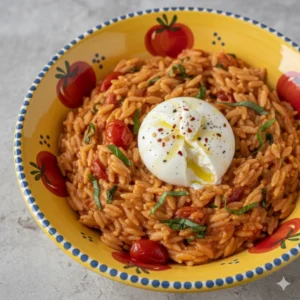
- Fold in chopped basil. Taste and adjust seasoning. Serve immediately, optionally topped with burrata.
Notes
Equipment
- wide heavy-bottomed pot or Dutch oven
- wooden spoon or spatula
- measuring cups and spoons
- knife and cutting board