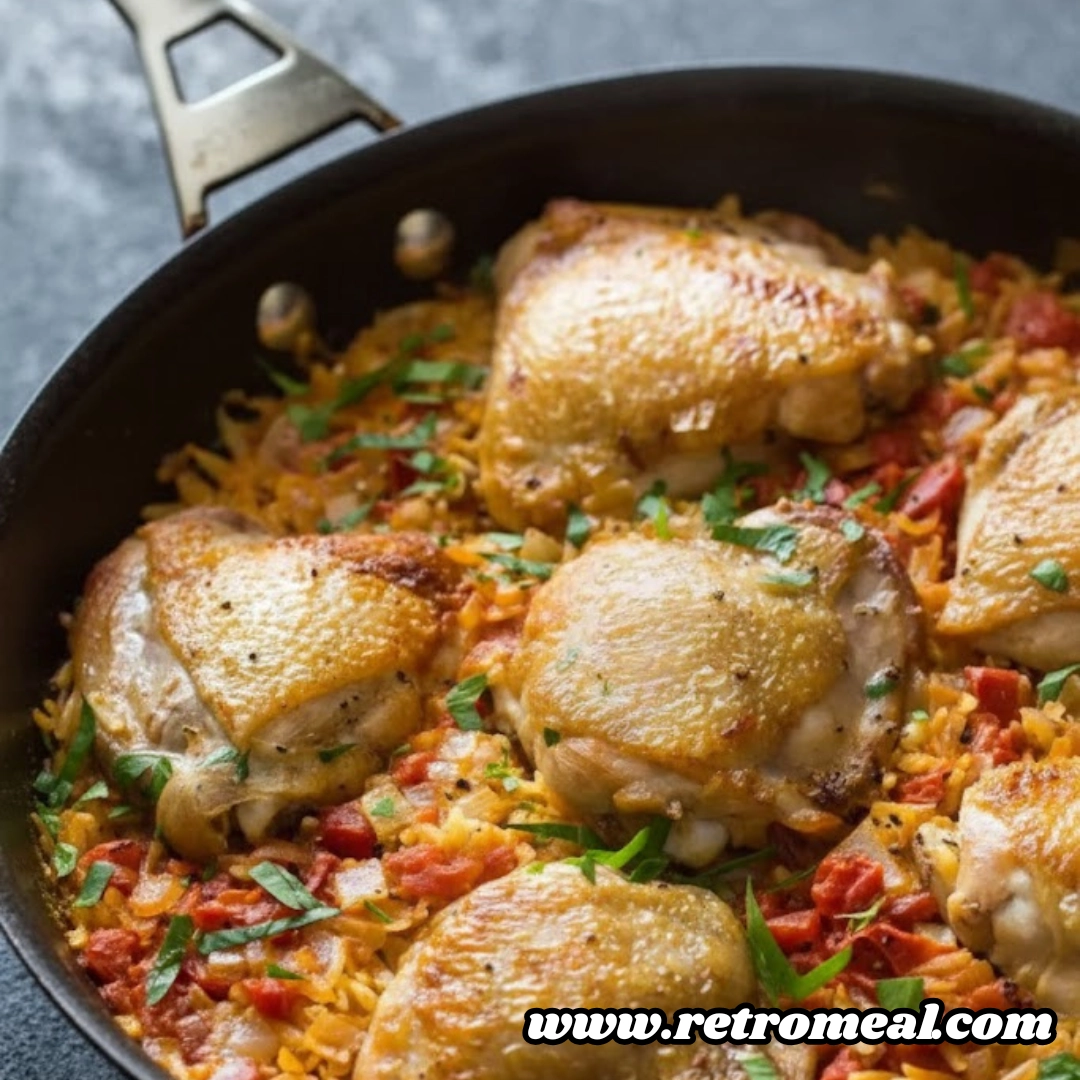
The pursuit of a perfect weeknight dinner often feels like a balancing act between flavor, nutrition, and the inevitable pile of dishes waiting in the sink. This One Pot Chicken and Orzo recipe is the definitive answer to that modern culinary dilemma. By marrying the succulent, juice-forward nature of bone-in chicken thighs with the toasted, nutty notes of orzo pasta, this dish creates a symphony of textures that feels far more sophisticated than its forty-five minute cook time suggests. It is a hearty, soulful meal that draws inspiration from traditional Mediterranean and Spanish techniques, yet remains accessible enough for even the most frantic Tuesday evening.
Table of Contents
Ingredients
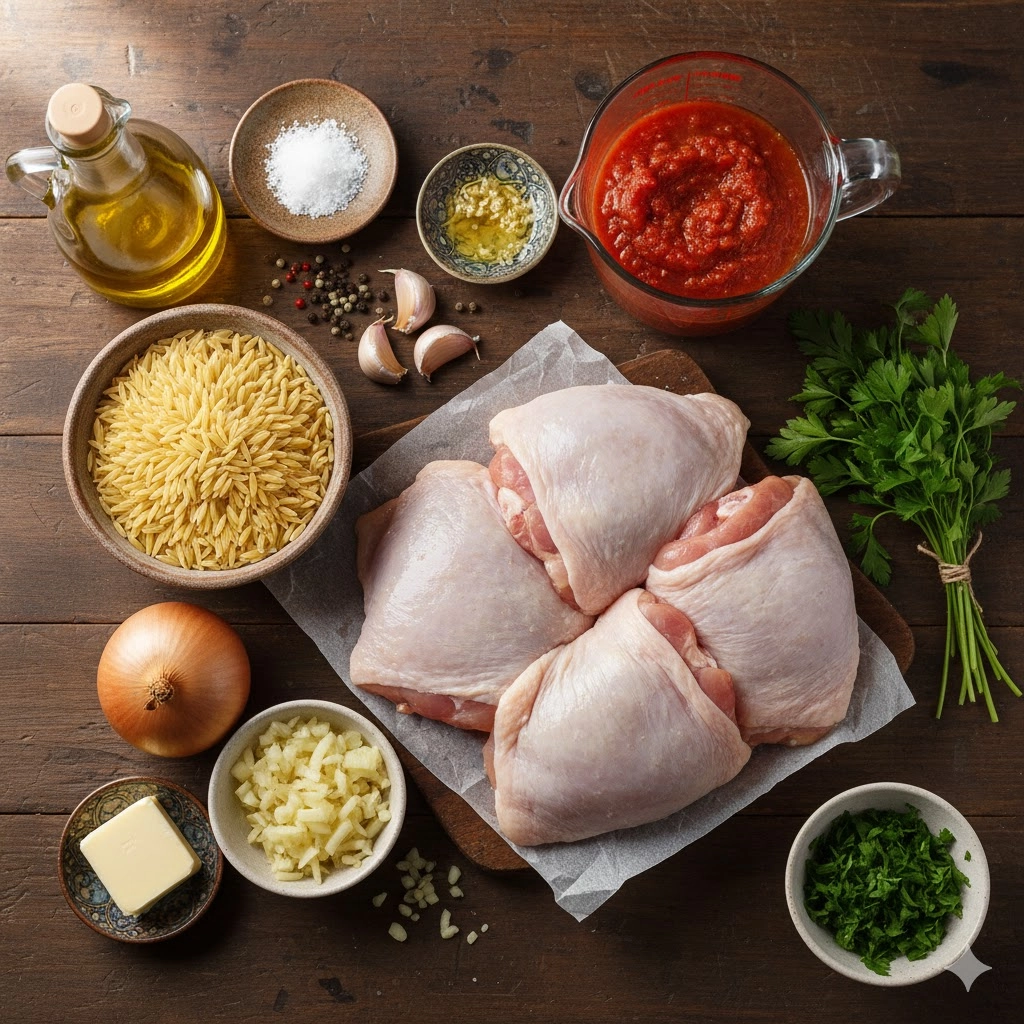
- 2 1/2 to 3 pounds bone-in, skin-on chicken thighs, trimmed of excess fat
- 1 teaspoon salt, plus additional for seasoning the chicken
- 2 teaspoons extra virgin olive oil
- 1 teaspoon butter
- 2 cups (12 ounces or 340g) orzo pasta
- 1 1/2 cups chopped onion (approximately 1 medium onion)
- 2 cloves garlic, minced
- 2 1/4 cups chicken stock
- 3/4 cup canned crushed tomatoes, including the juices
- 1/2 teaspoon freshly ground black pepper
- 2 tablespoons chopped fresh parsley
Instructions
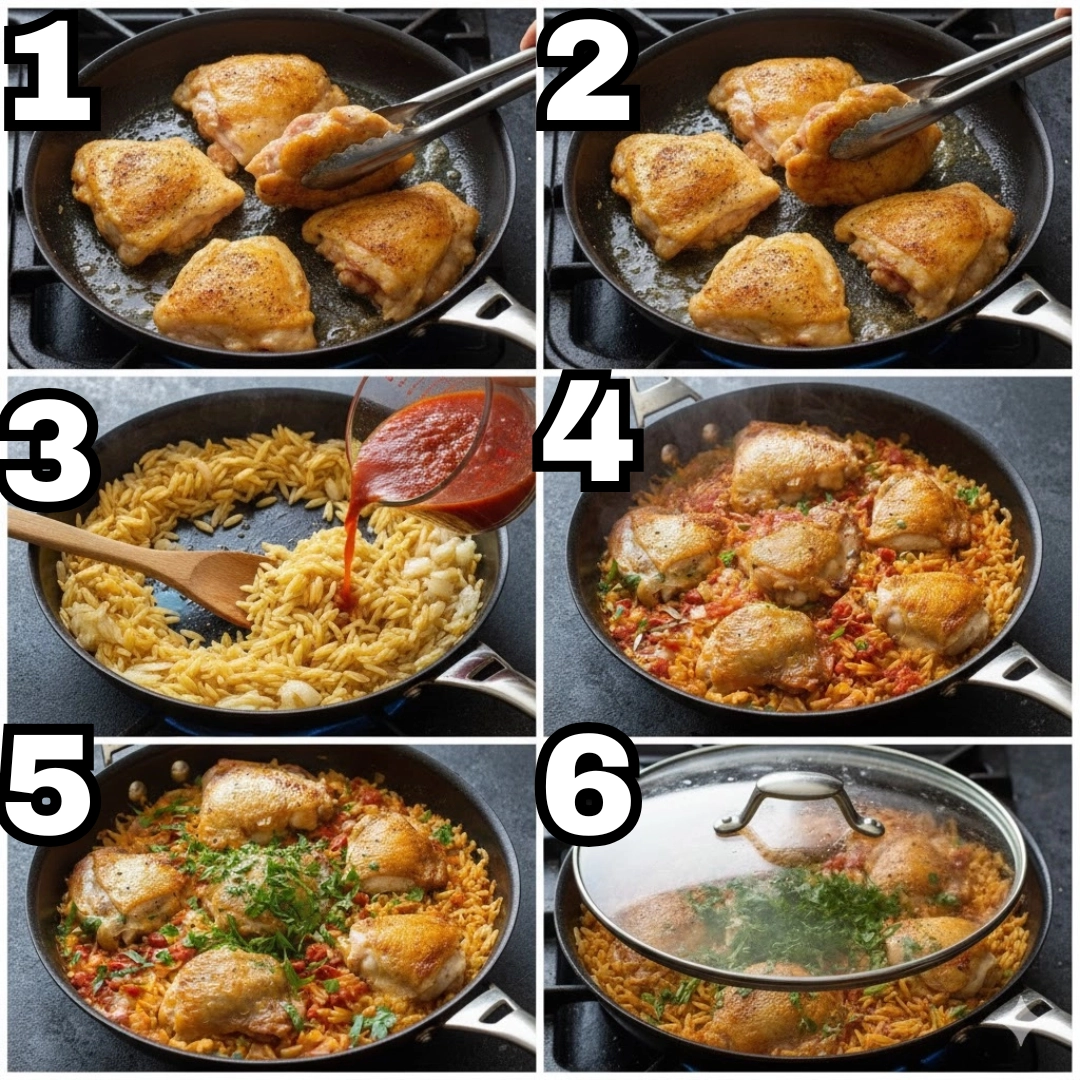
- Begin by prepping the chicken. Trim any excess skin or fat from the thighs. Season both sides of the chicken pieces liberally with a bit of salt.
- In a large skillet capable of holding all the chicken in a single layer, heat the extra virgin olive oil and melt the butter over medium high heat until the fat is shimmering and coats the bottom of the pan.
- Pat the chicken pieces dry on both sides with paper towels to ensure a proper sear. Place them skin-side down in the hot skillet. Cook without moving them for about 5 minutes, or until the skin is deeply browned and crispy.
- Flip the chicken pieces over and brown the second side for approximately 4 minutes. Remove the chicken from the skillet and set it aside on a plate.
- Add the dry orzo pasta directly into the remaining fat in the pan. Stir constantly to coat the grains in the chicken drippings and butter, allowing the pasta to toast.
- Once the orzo begins to take on a golden-brown hue, stir in the chopped onions. Lower the heat to medium and cook for 2 to 3 minutes, stirring frequently until the onions soften.
- Add the minced garlic and cook for an additional thirty seconds until fragrant.
- In a separate container or large measuring cup, whisk together the chicken stock, crushed tomatoes with their juices, 1/2 teaspoon black pepper, and 1 teaspoon salt.
- Return the chicken thighs to the skillet, placing them skin-side up on top of the toasted orzo and onion mixture.
- Pour the liquid tomato and stock mixture over the orzo. Turn the heat back up to medium high and bring the liquid to a full, rolling boil.
- Immediately reduce the heat to the lowest setting required to maintain a gentle simmer. Cover the pan with a tight-fitting lid.
- Cook for 10 to 12 minutes, or until the orzo has fully absorbed the liquid and the chicken has reached an internal temperature of 165 Fahrenheit.
- Remove the pan from the heat and let it rest, covered, for 5 minutes. Taste for seasoning, garnish with fresh parsley, and serve.
Comprehensive Step-by-Step Details
Achieving a restaurant-quality result with a one-pot meal requires attention to the physics of the pan. The first and perhaps most critical stage is the browning of the chicken. When you place skin-on thighs into a mixture of olive oil and butter, you are initiating the Maillard reaction. This chemical process transforms the proteins and sugars on the surface of the meat into a complex array of flavor compounds. To do this correctly, you must ensure the chicken is dry. Moisture is the enemy of a good sear; if the chicken is damp, it will steam rather than fry. Use paper towels to blot the skin until it is matte. When the skin hits the hot fat, leave it alone. Resisting the urge to peek or move the meat allows a crust to form that will naturally release from the pan when it is ready.
Once the chicken is removed, you are left with “liquid gold” in the pan—a combination of olive oil, melted butter, and rendered chicken fat. This is where the orzo comes in. Unlike boiling pasta in water, toasting the orzo in fat before adding liquid changes its molecular structure. It develops a popcorn-like nuttiness and a firm, al dente texture that resists becoming mushy even after simmering in stock. You want to see the color of the pasta shift from pale cream to a distinct toasted tan.
The transition to the aromatics is a quick but vital window. Onions and garlic should be softened just enough to release their sweetness without browning the garlic to the point of bitterness. When you add the liquid mixture, you are essentially deglazing the pan, scraping up any browned bits (the fond) from the bottom. These bits are concentrated flavor. The final simmer is a gentle process. By placing the chicken on top of the orzo, you are essentially steaming the meat while the pasta braises below. This dual-action cooking ensures the chicken stays incredibly moist while the orzo drinks up every drop of the tomato-infused chicken stock.
Unique Culinary Insights for Perfect Orzo
The beauty of orzo lies in its versatility, but its high starch content means it requires a watchful eye. One insight many home cooks overlook is the importance of the rest period. After the 10 to 12 minutes of active simmering, the orzo may still look slightly wet. Do not keep cooking it. Pulling the pan off the heat and letting it sit covered for 5 minutes allows the residual steam to finish the pasta and ensures that the starches set. This results in a silky, risotto-like finish rather than a soupy mess.
Furthermore, the quality of your stock makes a massive difference here. Since the orzo absorbs nearly all the liquid, the flavor of the stock becomes the flavor of the pasta. If you have homemade bone broth, this is the time to use it. If using store-bought, look for low-sodium options so you can control the salt levels yourself. Another tip for those who love a bit of texture: if you find your chicken skin has softened too much during the covered simmering phase, you can pop the skillet under the broiler for two minutes at the very end to re-crisp the skin before serving. Just ensure your skillet is broiler-safe.
Achieving the Best Texture through Modifications
While the base recipe is a classic, the culinary landscape allows for significant flexibility. For those who prefer white meat, bone-in, skin-on chicken breasts are a viable substitute. However, because breasts are leaner and often larger, you may need to slice them in half to ensure they cook at the same rate as the orzo. If you choose boneless, skinless options, reduce the initial browning time significantly to avoid drying out the meat.
Vegetable integration is another way to modify the texture. If you want to add a nutritional punch, consider stirring in a few handfuls of fresh baby spinach during the final 5-minute resting period; the residual heat will wilt the greens perfectly without turning them to slime. Alternatively, frozen peas or small broccoli florets can be tucked around the chicken during the last 5 minutes of the simmer. For a brighter, more acidic profile, a tablespoon of capers or a squeeze of fresh lemon juice stirred in at the end can cut through the richness of the rendered chicken fat.
Accompaniments and Serving Suggestions
To elevate this one-pot wonder into a full-scale feast, consider the balance of the plate. Because the chicken and orzo are rich and savory, they pair beautifully with a crisp, acidic side dish. A simple arugula salad tossed with a sharp lemon vinaigrette and shavings of Parmesan cheese provides a necessary contrast.
For bread lovers, a warm loaf of crusty sourdough or garlic herb focaccia is ideal for mopping up any stray tomato sauce. If you are serving this for a dinner party, consider a side of roasted asparagus or charred green beans with almonds. When plating, ensure each person gets a generous scoop of the orzo from the bottom of the pan, as that is where the most concentrated flavors reside. A final dusting of fresh parsley is not just for aesthetics; the herb provides a grassy freshness that awakens the heavier flavors of the dish.
Deep-Dive FAQ
Can I use a different type of pasta if I do not have orzo?
While orzo is preferred for its rice-like shape and specific cooking time, you could potentially use another small pasta shape like ditalini or even broken pieces of fideo or angel hair. However, you must be careful with the liquid-to-pasta ratio and the cooking time. Smaller pastas may absorb liquid faster, so you might need to check the pan a few minutes earlier to prevent scorching.
Is it possible to make this dish dairy-free?
Absolutely. The single teaspoon of butter is used primarily for flavor and to assist with the browning of the orzo. You can easily replace the butter with an equal amount of additional olive oil or a plant-based butter substitute. The creamy texture of the final orzo comes primarily from the starch in the pasta and the crushed tomatoes, so you won’t lose the “mouthfeel” by skipping the dairy.
How do I prevent the orzo from sticking to the bottom of the skillet?
Sticking usually happens if the heat is too high during the simmering phase or if there isn’t enough fat in the pan during the toasting phase. Make sure your heat is at the absolute lowest setting once you cover the pan. Using a heavy-bottomed skillet, such as cast iron or a heavy stainless steel pan, helps distribute the heat more evenly and reduces hot spots that cause sticking.
How should I store and reheat leftovers?
Leftover chicken and orzo can be stored in an airtight container in the refrigerator for up to three or four days. When reheating, the orzo will likely have absorbed even more moisture and may be a bit dry. Add a splash of water or chicken stock before microwaving or reheating on the stovetop to loosen the pasta and restore its silky consistency.
Nutritious Elements of the Meal
This dish provides a balanced profile of macronutrients, offering high protein from the chicken and complex carbohydrates from the pasta and vegetables.
| Nutrient | Amount Per Serving |
| Calories | 661 |
| Total Fat | 35 grams |
| Saturated Fat | 10 grams |
| Cholesterol | 145 milligrams |
| Sodium | 850 milligrams |
| Total Carbohydrates | 29 grams |
| Dietary Fiber | 3 grams |
| Sugars | 4 grams |
| Protein | 60 grams |
Nutritional Disclaimer
The values provided in this table are estimates based on standard ingredient databases. Actual nutritional content may vary depending on the specific brands used, the size of the chicken thighs, and any modifications made during the cooking process. For those with specific dietary requirements, please consult a professional nutritionist.

One Pot Chicken and Orzo
Ingredients
- 3 pounds bone-in, skin-on chicken thighs, trimmed of excess fat
- 1 teaspoon salt, plus more for seasoning
- 2 teaspoons extra virgin olive oil
- 1 teaspoon butter
- 2 cups orzo pasta (12 ounces)
- 1.5 cups chopped onion (1 medium)
- 2 cloves garlic, minced
- 2.25 cups chicken stock
- 0.75 cup canned crushed tomatoes with juices
- 0.5 teaspoon freshly ground black pepper
- 2 tablespoons chopped fresh parsley
Instructions
- Trim chicken thighs of excess skin and fat. Sprinkle both sides with salt.
- Heat oil and melt butter in a large skillet over medium high heat. Pat chicken dry and place skin-side down. Brown for 5 minutes, flip, and brown for 4 minutes more. Remove chicken and set aside.
- Add orzo to the pan fat and stir to coat. Once the orzo begins to brown, stir in the chopped onions. Cook for 2 to 3 minutes until softened, then add garlic for 30 seconds.
- In a separate container, stir together the chicken stock, crushed tomatoes, 1 teaspoon salt, and pepper.
- Return chicken to the pan on top of the orzo. Pour the stock mixture over everything and bring to a full boil.
- Lower heat to a bare simmer, cover, and cook for 10 to 12 minutes until liquid is absorbed and chicken reaches 165 Fahrenheit.
- Remove from heat and let rest covered for 5 minutes. Garnish with fresh parsley before serving.
Notes
Equipment
- Large deep skillet with lid
- meat thermometer
- tongs
- measuring cups