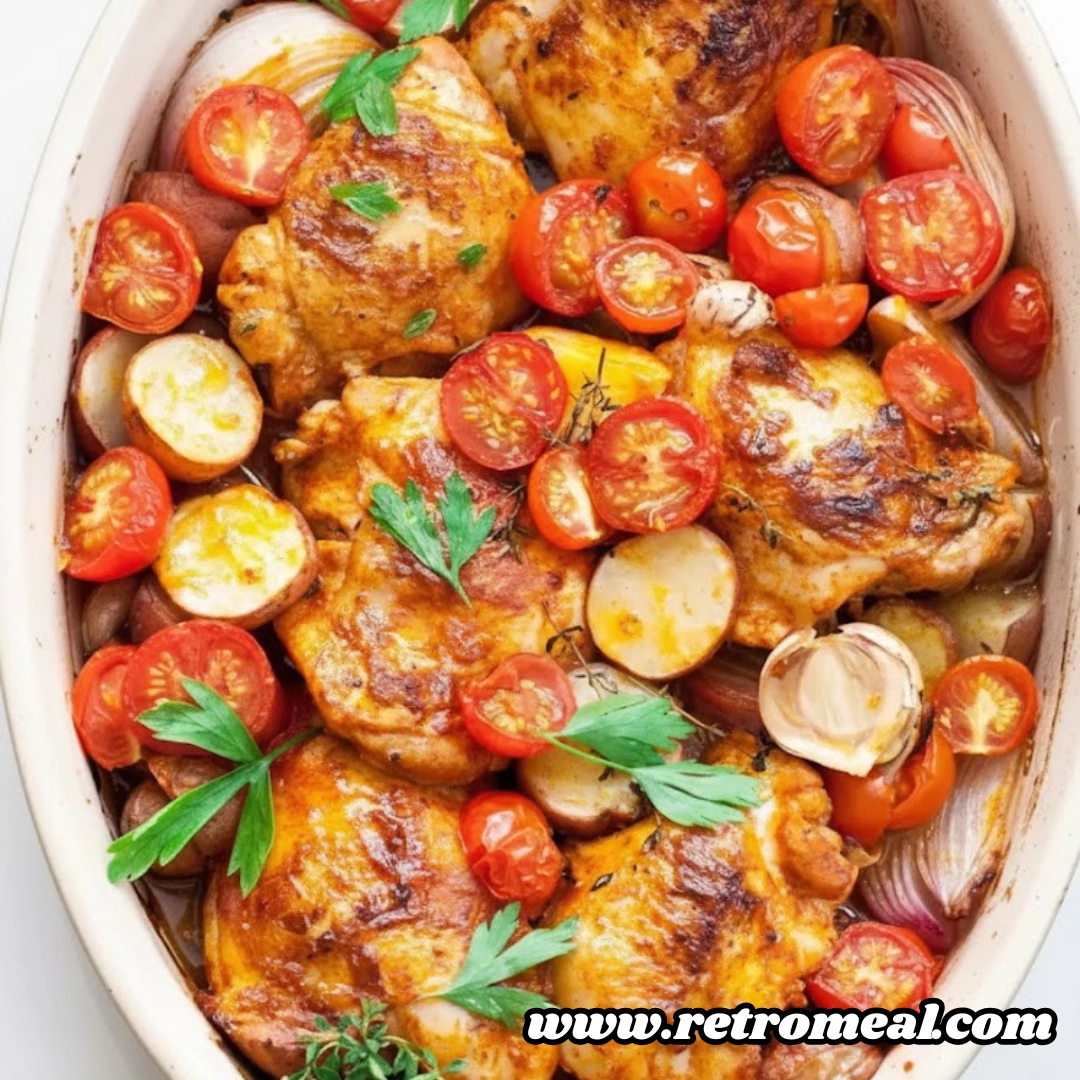
When the evening rush begins and the question of what to serve for dinner looms large, nothing provides more comfort than a reliable one-pan meal. This One-Pan Paprika Chicken with Potatoes and Tomatoes is the ultimate solution for a busy weeknight or a relaxed Sunday afternoon. By combining succulent, bone-in chicken thighs with earthy baby potatoes and the bright acidity of cherry tomatoes, you create a complete landscape of flavor in a single roasting dish. The magic lies in the smoky paprika marinade that penetrates the meat while creating a savory jus that coats the vegetables as they roast to perfection. It is a wholesome, gluten-free, and dairy-free masterpiece that requires minimal cleanup.
Table of Contents
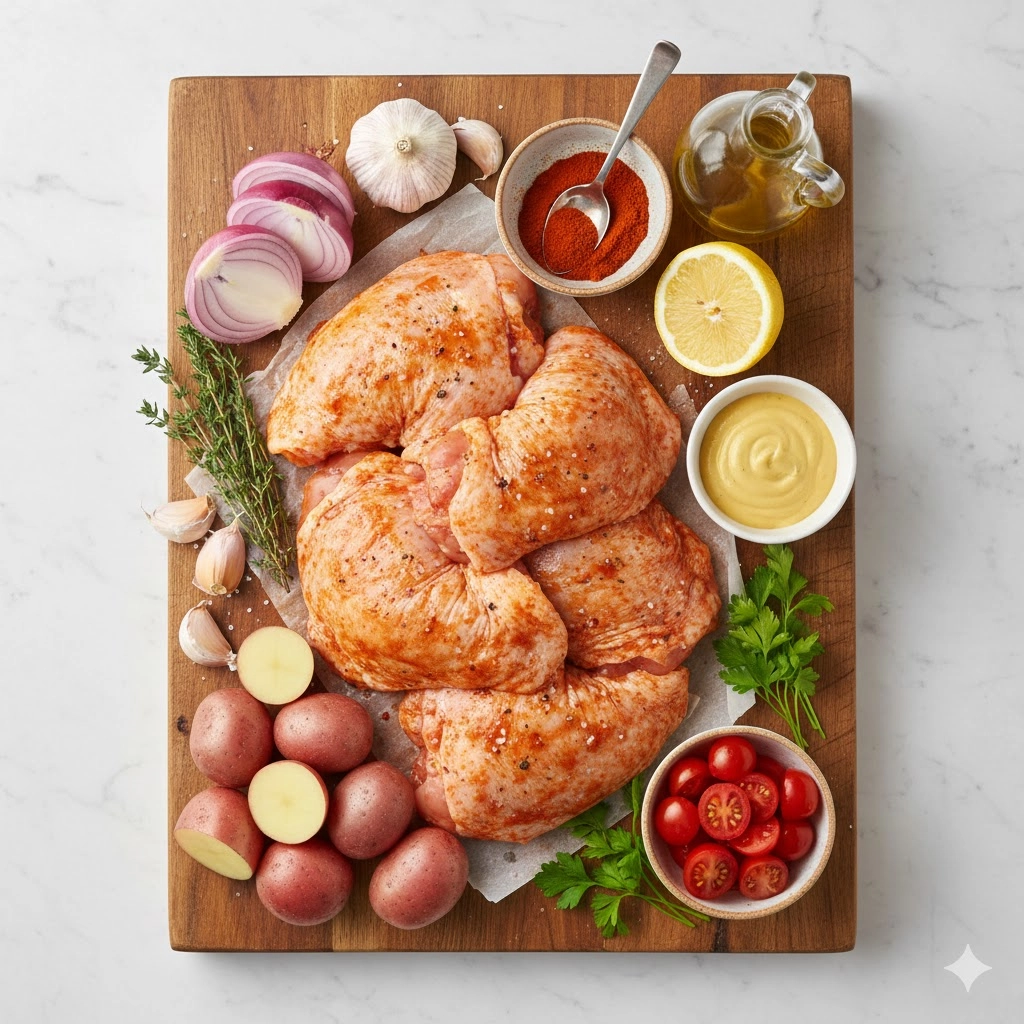
Ingredients
- 6 to 8 chicken thighs, approximately 3 pounds, bone-in and skin-on, with excess fat trimmed
- 2 tablespoons Dijon mustard
- Juice of 1 fresh lemon
- 2 teaspoons paprika
- 4 tablespoons olive oil, divided
- 1 1/2 pounds baby potatoes
- 1 red onion, peeled and cut into 8 uniform wedges
- 6 cloves garlic, smashed and peeled
- 1/2 pint cherry tomatoes
- Handful of fresh thyme sprigs
- Fresh leaves from 3 to 4 parsley sprigs, finely chopped for garnish
- Salt and black pepper to taste
Instructions
- Heat the Oven: Set your oven to 400 degrees Fahrenheit. Ensure the oven rack is positioned in the middle to allow for even heat distribution around the top and bottom of the baking dish.
- Prepare the Chicken: Using kitchen shears or a sharp chef’s knife, trim any sagging skin or large pockets of fat from the chicken thighs. Once trimmed, season each piece generously on both sides with salt and black pepper.
- Whisk the Marinade: In a large mixing bowl, combine the Dijon mustard, freshly squeezed lemon juice, paprika, and 2 tablespoons of the olive oil. Add a pinch of salt and pepper. Whisk until the mixture is emulsified and smooth.
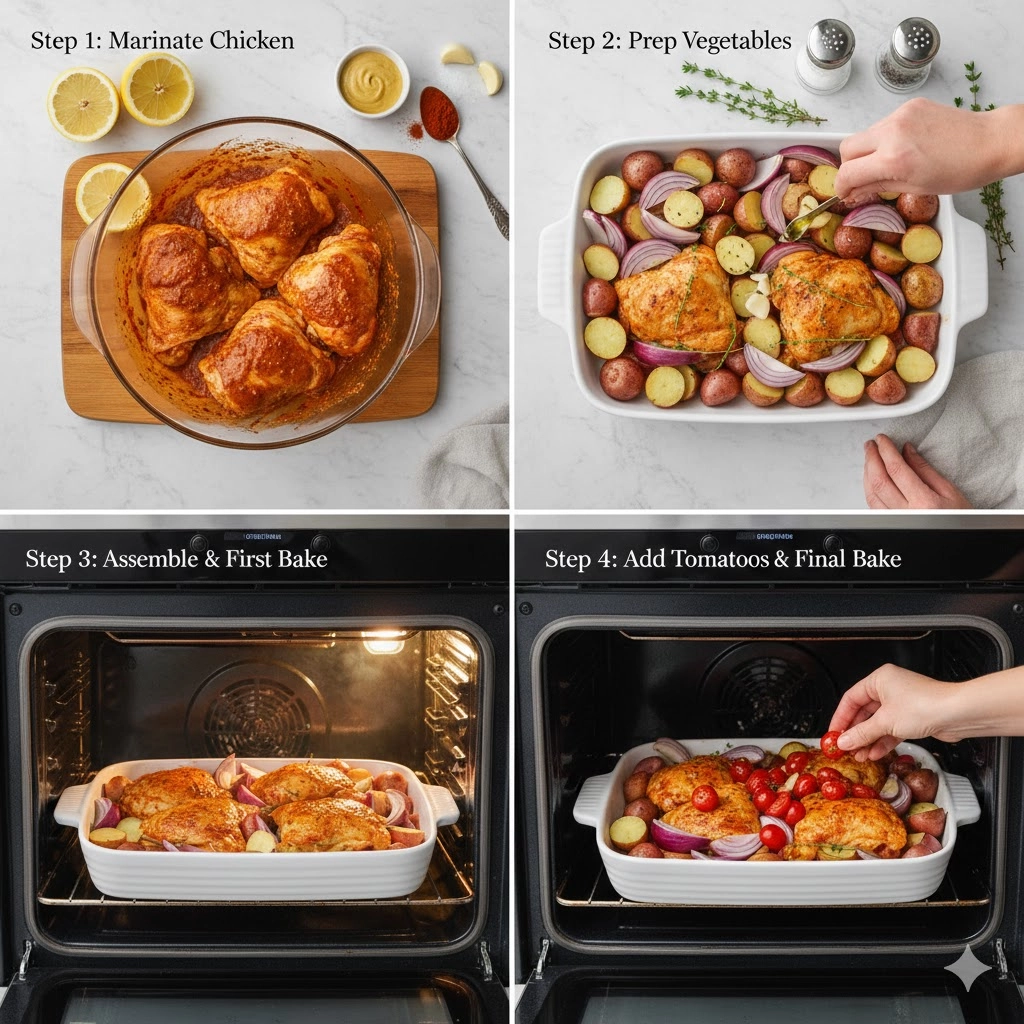
- Marinate: Place the seasoned chicken thighs into the bowl with the paprika mixture. Toss thoroughly to ensure every crevice of the chicken is coated. Let this sit at room temperature while you prepare the produce.
- Prep the Vegetables: Slice the baby potatoes in half. If some are larger than others, cut them into quarters to ensure they cook at the same rate. Cut the red onion into 8 wedges, keeping a bit of the root end intact so the layers don’t fully separate. Halve the cherry tomatoes and keep them in a separate small bowl for later use.
- Assemble the Base: In a large 9×13 inch baking dish or a 3-quart roasting pan, combine the potatoes, onion wedges, and smashed garlic cloves. Drizzle with the remaining 2 tablespoons of olive oil and season well with salt and pepper. Toss with your hands to coat, then spread them out into an even layer. Scatter the thyme sprigs over the vegetables.
- Nestle the Chicken: Place the marinated chicken thighs on top of the vegetables, nestling them down slightly so they are partially submerged but the skin is still exposed. Scrape any remaining marinade from the bowl over the top of the chicken.
- The First Roast: Slide the dish into the oven and bake uncovered at 400 degrees Fahrenheit for 30 minutes.
- Add the Tomatoes: Carefully remove the pan from the oven. Scatter the halved cherry tomatoes over the chicken and potatoes.
- Final Bake: Return the pan to the oven for another 25 to 30 minutes. The dish is finished when the potatoes are fork-tender and an instant-read thermometer inserted into the thickest part of the chicken thigh reaches 165 degrees Fahrenheit.
- Garnish and Serve: Remove from the oven, discard the woody thyme stems, and sprinkle with fresh parsley before serving.
Crafting the Perfect Roasted Texture
The secret to a successful roasted chicken and potato dish is managing moisture and heat. When you place chicken thighs on top of vegetables, you are essentially using two different cooking methods simultaneously. The bottom of the chicken and the vegetables are braising in the rendered chicken fat and lemon-paprika juice, while the top of the chicken skin is roasting in the dry heat of the oven. This creates a beautiful contrast: the potatoes become creamy and infused with savory schmaltz, while the chicken skin achieves a deep, golden hue and a slight crispness.
To maximize this, ensure your baking dish is large enough that the ingredients aren’t piled too high. If the pan is overcrowded, the vegetables will steam rather than roast, and you will lose that caramelized edge on the onions and potatoes. The 9×13 inch dimension suggested is ideal because it allows for just enough airflow between the chicken pieces. If you find your oven runs a bit cool, you can even move the rack up one notch during the final 10 minutes to give the skin an extra boost of heat, though 400 degrees Fahrenheit is generally the sweet spot for balancing tender meat with rendered skin.
Selecting and Prepping Your Produce
When it comes to the potatoes, baby potatoes—whether red-skinned, Yukon Gold, or a medley—are preferred because their skin is thin and delicate. This means you do not have to peel them, which saves time and adds a rustic texture to the finished plate. The waxy nature of these smaller potatoes helps them hold their shape during the hour-long roasting process, preventing them from turning into mush. When you halve them, you create a flat surface that can sit against the bottom of the pan, which often results in a lovely “crust” where the potato meets the heat and the oil.
The red onion is another critical component. Unlike yellow onions, which can sometimes become overly sweet and soft, red onions maintain a bit of their integrity and offer a gorgeous visual pop against the red of the paprika and tomatoes. Cutting them into wedges through the root end is a professional kitchen trick; it keeps the segments together so they don’t get lost in the sauce, allowing guests to enjoy whole petals of roasted onion. The garlic cloves should be smashed just enough to break the skin and release the oils, but kept whole so they mellow out into sweet, spreadable nuggets of flavor rather than burning.
Deep-Dive Frequently Asked Questions
Can I use chicken breasts instead of thighs for this recipe?
While bone-in, skin-on thighs provide the most moisture and flavor due to their higher fat content, you can certainly use chicken breasts. However, you must be vigilant about the timing. Bone-in breasts are quite large and may take a similar amount of time, but boneless breasts will cook much faster and can become dry if left in for the full hour. If using boneless breasts, consider adding them to the pan 15 minutes after the potatoes have started roasting to ensure everything finishes at the same time.
What should I do if the chicken skin isn’t getting crispy enough?
If you reach the end of the cooking time and the chicken is fully cooked but the skin looks pale, you can turn on the broiler for 2 to 3 minutes. Stay very close to the oven and watch it carefully, as the paprika in the marinade can burn quickly under intense direct heat. The goal is a deep mahogany color, not a charred surface. Also, making sure the chicken skin is patted dry with a paper towel before you apply the marinade can help the oil and heat do their work more effectively.
Is it possible to make this dish ahead of time or freeze it?
This meal is best enjoyed fresh out of the oven when the potatoes are at their peak texture. However, you can certainly prep ahead. You can marinate the chicken and keep it in the refrigerator for up to 24 hours. You can even freeze the chicken in the marinade for up to three months. On the day of cooking, simply thaw the chicken and proceed with chopping the fresh vegetables. I do not recommend freezing the raw potatoes in the dish, as the texture of a raw potato changes significantly once frozen and thawed.
How do I know when the baby potatoes are perfectly cooked?
The most reliable way to check the potatoes is the “tip of the knife” test. Insert a small paring knife into the center of the largest potato piece; if it slides in and out with absolutely no resistance, the starch has fully broken down and the potato will be creamy. Because they are roasting in the juices of the chicken and the acidity of the lemon, they take on a “confit” quality that is much more luxurious than a standard boiled potato.
Elevating the Flavor with Paprika and Mustard
The flavor profile of this dish is anchored by the combination of paprika and Dijon mustard. Paprika is a ground spice made from dried peppers, and depending on the variety you use, you can subtly shift the entire mood of the meal. A standard sweet Hungarian paprika will offer a mild, fruity warmth. If you prefer a more “outdoorsy” or campfire vibe, use a smoked Spanish pimenton. The smokiness pairs beautifully with the charred edges of the roasted onions.
The Dijon mustard serves a dual purpose. First, it acts as an emulsifier for the marinade, helping the oil and lemon juice cling to the chicken skin. Second, its sharp, vinegary bite cuts through the richness of the chicken fat. As it roasts, the “heat” of the mustard mellows out, leaving behind a complex, savory depth that you can’t quite put your finger on but would definitely miss if it were gone. When combined with the lemon juice, it creates a bright, acidic foundation that prevents the dish from feeling too heavy or greasy.
Adaptations for Dietary Needs and Preferences
This recipe is naturally quite inclusive, but there are several ways to tweak it based on what is in your pantry. If you are looking to increase the vegetable count, you can easily toss in some halved Brussels sprouts or thick coins of zucchini during the final 30 minutes when you add the tomatoes. For those who enjoy a bit of spice, adding a pinch of crushed red pepper flakes to the marinade or a teaspoon of hot smoked paprika will give the dish a pleasant kick that complements the sweetness of the cherry tomatoes.
If you don’t have baby potatoes, any starch can work as long as it is cut into bite-sized pieces. Sweet potatoes are a fantastic alternative and pair exceptionally well with the paprika and lemon. Just be aware that sweet potatoes cook slightly faster than waxy white potatoes, so you might want to cut them into larger chunks. For a lower-carb version, you could substitute the potatoes with cauliflower florets, though you should add them halfway through the cooking process so they don’t become overly mushy.
Expert Tips for Success
To ensure your One-Pan Paprika Chicken is a resounding success, keep these professional insights in mind. First, don’t skimp on the salt. Potatoes are notorious for absorbing salt, and chicken skin needs it to help the rendering process. Seasoning both the chicken and the vegetable base separately ensures that every bite is seasoned from the inside out. Second, the smashed garlic cloves are a treasure; make sure you don’t discard them! By the end of the hour, they will be soft and sweet, and can be smeared onto a piece of the chicken or a potato for an explosion of flavor.
Another tip involves the cherry tomatoes. We add them halfway through because tomatoes have a high water content. If they were in the oven for the full 60 minutes, they would completely disintegrate into a liquid. By adding them at the 30-minute mark, they have enough time to burst and release their juices—creating a light sauce—but they still maintain enough structure to provide a juicy, fresh contrast to the roasted meat. This creates a “built-in” sauce for the dish that requires no extra effort on your part.
Harmonious Sides and Serving Suggestions
While this is technically a one-pan meal, adding a few thoughtful accompaniments can turn it into a feast. A crisp green salad with a simple vinaigrette is the perfect partner, as the fresh greens provide a cool contrast to the warm, roasted flavors of the chicken. A side of crusty sourdough or a French baguette is also highly recommended; you will want something to soak up the incredible juices left at the bottom of the roasting pan.
When serving, try to get a bit of everything on the plate: a piece of chicken, a few golden potatoes, a couple of charred onion wedges, and a spoonful of the burst tomatoes. The parsley garnish is more than just a decoration—the hit of raw, herbaceous freshness at the end wakes up all the cooked flavors. If you are serving this for a dinner party, you can bring the entire baking dish to the table. There is something inherently communal and inviting about a rustic, colorful pan filled with steaming chicken and vegetables.
The Art of Roasting Chicken Thighs
The choice of bone-in, skin-on thighs is intentional. The bone acts as a conductor of heat, helping the meat cook from the inside out, while also providing flavor to the surrounding flesh. The skin acts as a natural basting tool; as the fat renders, it trickles down over the meat and onto the potatoes below. This is why this recipe is so forgiving. Unlike chicken breasts, which have a very narrow window of perfection, thighs remain juicy and tender even if they stay in the oven for an extra five or ten minutes.
If you are concerned about the fat content, trimming the excess skin as instructed in the steps is the best way to manage it. You want enough skin to cover the top of the thigh to keep it moist, but you don’t need the large flaps of skin that often hang off the sides. By removing that excess, you ensure the pan doesn’t become overly greasy, leaving you with just the right amount of flavorful oil to crisp up the potatoes.
Storage and Sustainable Leftovers
If you happen to have leftovers, they store remarkably well. Place the chicken and vegetables in an airtight container and keep them in the refrigerator for up to five days. When reheating, the oven is your best friend. While a microwave is fast, a low oven (about 300 degrees Fahrenheit) will help maintain the texture of the chicken skin and prevent the potatoes from becoming rubbery. Simply cover the dish with foil to prevent drying and heat until warmed through.
Leftover chicken can also be shredded and used in a variety of ways. It makes an excellent addition to a grain bowl the next day, or it can be tossed with some pasta and a little extra olive oil for a quick lunch. The roasted potatoes and onions also hold their flavor beautifully and can even be chopped up and fried in a skillet the next morning for a gourmet breakfast hash topped with a fried egg.
A Satisfying Culinary Conclusion
In the world of home cooking, few things are as satisfying as a meal that delivers maximum flavor with minimal stress. This One-Pan Paprika Chicken with Potatoes and Tomatoes is a testament to the power of simple, high-quality ingredients treated with care. The smoky warmth of the paprika, the tang of the lemon and mustard, and the natural sweetness of roasted vegetables come together to create a dish that feels far more sophisticated than the effort required to make it. Whether you are feeding a hungry family or meal-prepping for a busy week, this recipe is sure to become a frequent guest in your kitchen rotation.
Estimated Nutrition Table
| Nutrient | Amount Per Serving |
| Calories | 630 calories |
| Total Fat | 37 grams |
| Saturated Fat | 9 grams |
| Cholesterol | 165 milligrams |
| Sodium | 480 milligrams |
| Total Carbohydrates | 30 grams |
| Dietary Fiber | 5 grams |
| Sugars | 4 grams |
| Protein | 50 grams |
Nutritional Disclaimer
The nutritional values provided above are calculated based on a database of common ingredients and should be viewed as an estimate only. Actual nutritional content may vary depending on the specific brands used, the size of the produce, and the exact amount of fat trimmed from the chicken. For those with specific medical dietary requirements, please consult with a professional nutritionist.
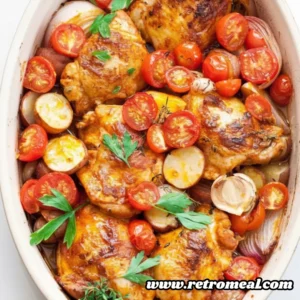
One-Pan Paprika Chicken with Potatoes and Tomatoes
Ingredients
- 3 pounds chicken thighs (6 to 8 pieces, bone-in, skin-on, trimmed)
- 2 tablespoons Dijon mustard
- 1 lemon, juiced
- 2 teaspoons paprika
- 4 tablespoons olive oil, divided
- 1.5 pounds baby potatoes, halved
- 1 red onion, cut into 8 wedges
- 6 cloves garlic, smashed
- 0.5 pint cherry tomatoes, halved
- 1 handful fresh thyme sprigs
- 4 sprigs fresh parsley, for garnish
- Salt and black pepper to taste
Instructions
- Preheat your oven to 400 degrees Fahrenheit with the rack in the middle position.
- Trim excess fat from the chicken thighs and season them generously with salt and pepper.
- In a large bowl, whisk together the mustard, lemon juice, paprika, and 2 tablespoons of olive oil. Add the chicken and toss to coat.
- Halve the potatoes and cut the red onion into wedges. Halve the cherry tomatoes and set them aside separately.
- In a 9×13 inch baking dish, toss potatoes, onion, and garlic with the remaining 2 tablespoons of olive oil, salt, and pepper. Top with thyme sprigs.
- Nestle the chicken into the vegetables and pour any remaining marinade over the top. Bake for 30 minutes uncovered.
- Scatter the halved cherry tomatoes over the pan and return to the oven.
- Bake for another 25 to 30 minutes until potatoes are tender and chicken internal temperature reaches 165 degrees Fahrenheit. Garnish with parsley.
Notes
Equipment
- 9×13-inch baking dish Or a 3-quart roasting pan
- large mixing bowl
- Instant-read thermometer
- Kitchen shears or sharp knife