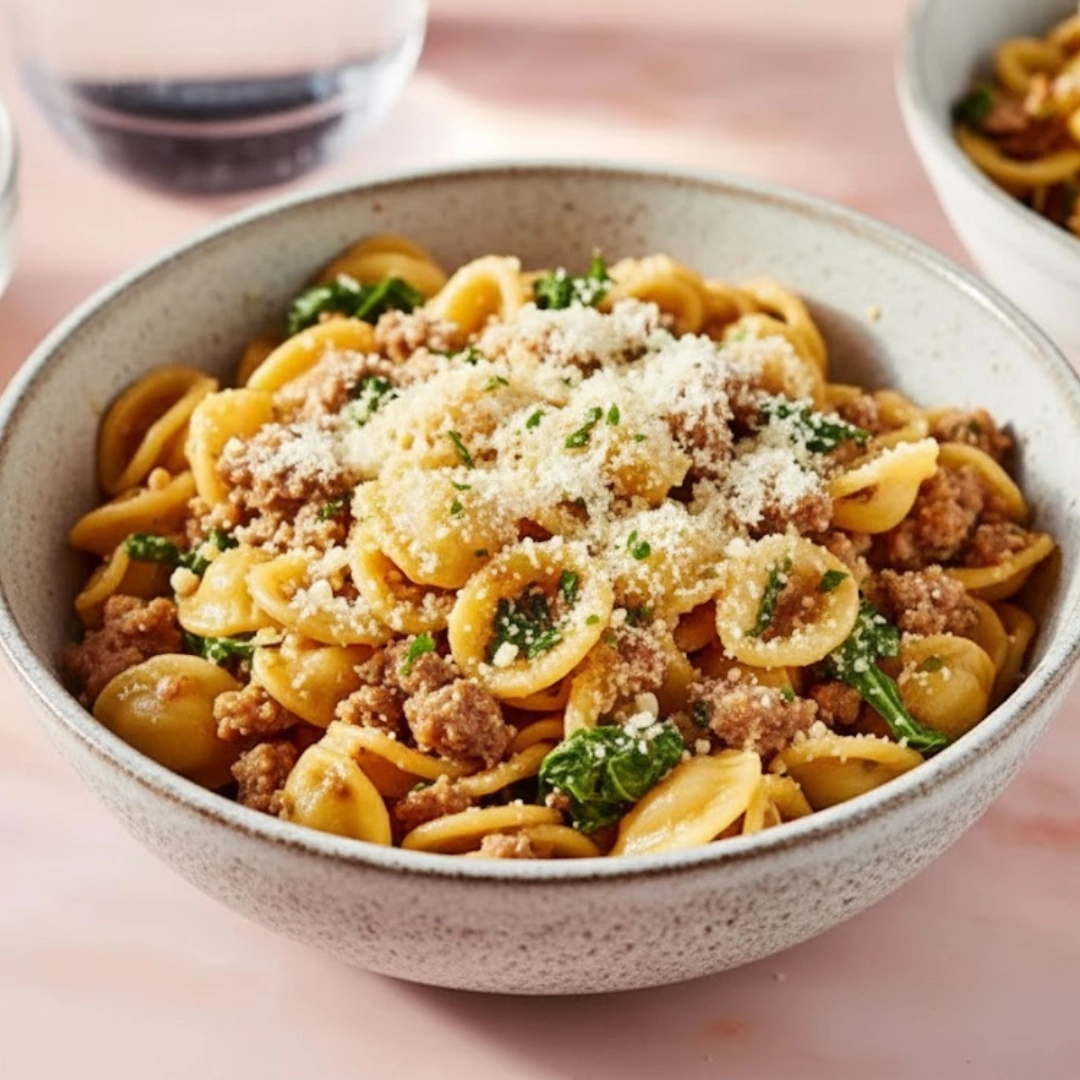
In the world of weeknight cooking, few things are as universally cherished as a meal that delivers maximum flavor with minimal cleanup. This One Pan Orecchiette Pasta is the personification of that philosophy. Combining the savory punch of spicy Italian sausage with the delicate “little ears” of orecchiette, this dish creates its own luscious sauce as it cooks. By simmering the pasta directly in chicken broth rather than boiling it in water, every single noodle becomes infused with a depth of flavor that traditional boiling simply cannot match. Whether you are a busy student looking for a budget-friendly meal or a seasoned home cook seeking a sophisticated yet simple dinner, this recipe is a masterclass in efficiency and taste.
Table of Contents
Ingredients for Your One Pan Masterpiece
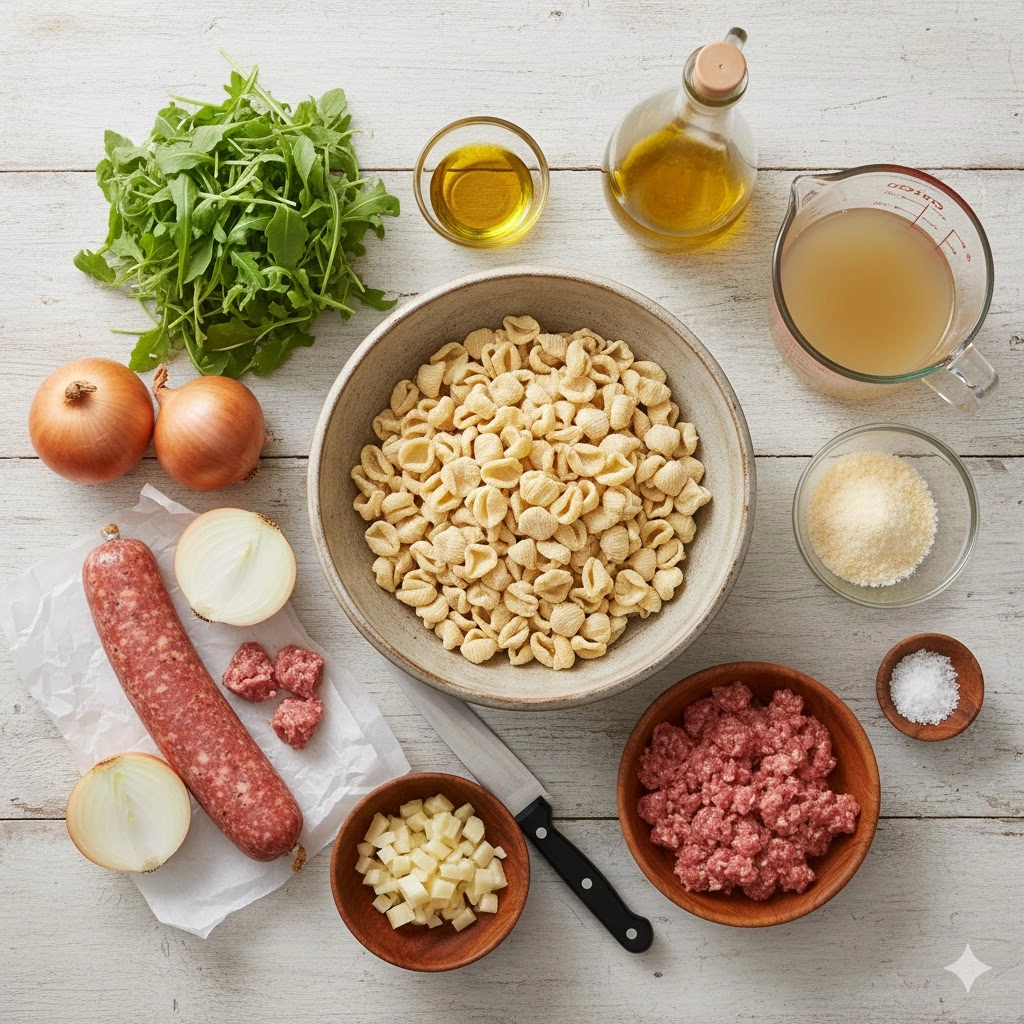
To create this rustic Italian-inspired dish, you will need the following components. These measurements are designed to yield two generous servings.
- 2 tablespoons olive oil
- half onion, diced
- salt to taste
- 8 ounces spicy Italian sausages, casings removed
- 3 and a half cups low-sodium chicken broth, divided (or as needed)
- 1 and a quarter cups orecchiette pasta
- half cup roughly chopped arugula
- quarter cup finely grated Parmigiano-Reggiano cheese
Instructions: Bringing the Dish Together
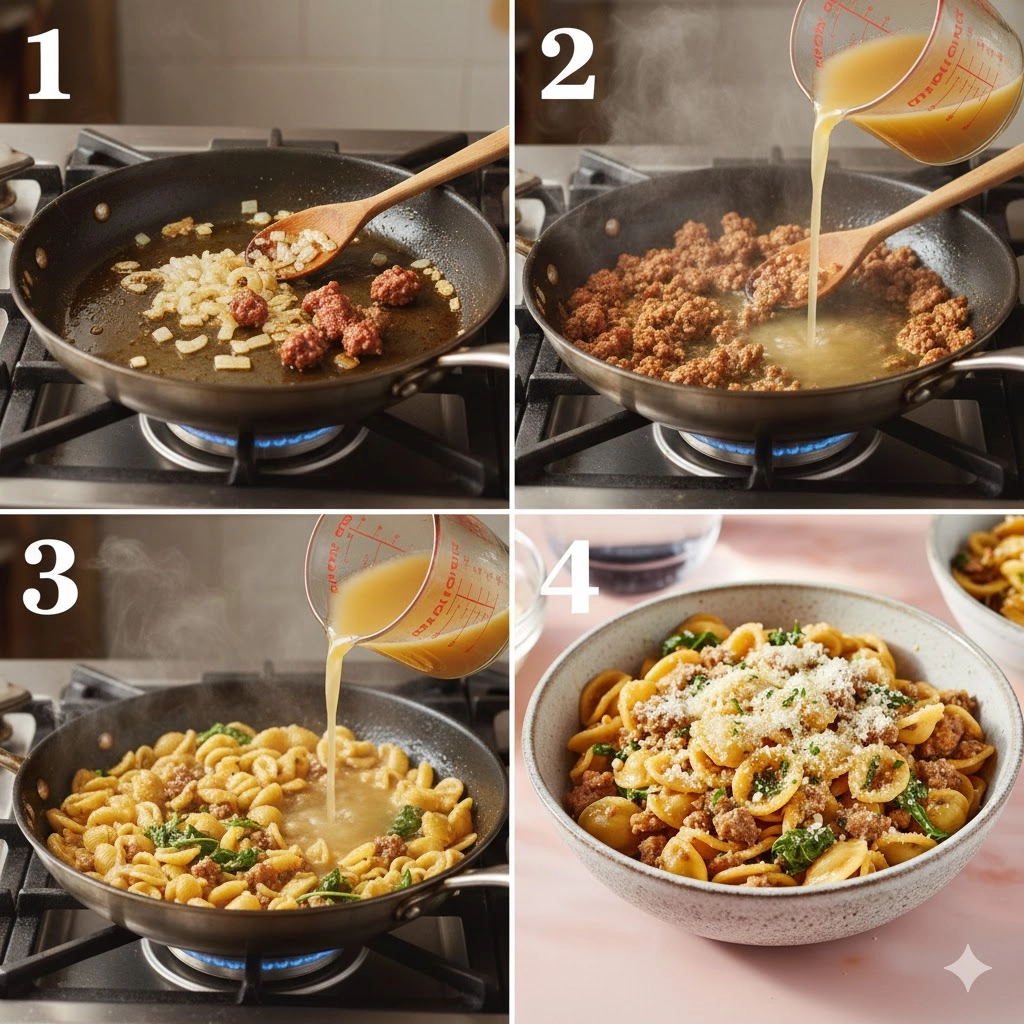
- Prepare the Aromatics: Begin by gathering all your ingredients to ensure a smooth cooking process. In a large, deep skillet, heat the olive oil over medium heat. Add your diced onion along with a pinch of salt. Sauté the onion, stirring frequently, until it has softened and turned translucent. This should take approximately 5 minutes.
- Brown the Protein: Add the spicy Italian sausage meat to the skillet, breaking it up with your spoon. Cook until the sausage is thoroughly browned and crumbly, which usually takes between 5 to 7 minutes.
- Deglaze the Pan: Pour 1 and a half cups of the chicken broth into the skillet with the sausage and onions. Use a wooden spoon to scrape up all those flavorful browned bits stuck to the bottom of the pan—this is where the “fond” lives, and it provides incredible depth to the sauce. Bring the mixture to a boil.
- Simmer the Pasta: Stir in the orecchiette pasta. Allow the pasta to cook in the bubbling broth, stirring occasionally. As the liquid is absorbed by the pasta, gradually add the remaining broth. Continue this process for about 15 minutes, or until the pasta is tender and most of the liquid has transformed into a light, silky sauce.
- Wilting the Greens: Once the pasta is cooked through, stir in the chopped arugula. The residual heat will wilt the greens almost instantly, adding a peppery brightness to the dish.
- Garnish and Serve: Ladle the hot pasta into bowls and finish with a generous sprinkle of finely grated Parmigiano-Reggiano cheese.
Deep-Dive FAQ for Pasta Perfection
Can I use a different type of pasta if I cannot find orecchiette at my local grocery store?
While orecchiette is the traditional choice because its “little ear” shape is perfect for cradling bits of sausage and sauce, you can certainly substitute it. Small shells or even campanelle are excellent alternatives because they have similar nooks and crannies. However, you should avoid thinner pastas like spaghetti or very large shapes like rigatoni, as they may not cook at the same rate or absorb the broth in the same manner as the thicker, denser orecchiette.
Why is it important to use low-sodium chicken broth instead of regular broth?
Using low-sodium broth gives you much greater control over the final seasoning of the dish. Since you are reducing the liquid significantly to create the sauce, the salt content becomes concentrated. If you start with a full-sodium broth, the dish might end up overly salty by the time the pasta is fully cooked. By choosing low-sodium, you can taste as you go and add salt only if it is truly necessary.
How do I know when the pasta is perfectly cooked in a one-pan method?
Cooking pasta in broth is slightly different than boiling it in a large pot of water. You are looking for a texture that is “al dente,” meaning it still has a slight firmness to the bite. Because the broth is thickening into a sauce, the pasta may look glossier than usual. Start tasting a piece of pasta around the 12-minute mark; if it is still crunchy in the center, add a splash more broth and continue cooking for another few minutes.
What should I do if the broth evaporates before the pasta is tender?
This is a common occurrence depending on the surface area of your skillet and the heat of your stove. If the pan looks dry but the orecchiette is still too firm, simply add another half cup of broth or even warm water. The goal is to keep enough liquid in the pan to facilitate the cooking process without turning the meal into a soup.
Achieving the Ultimate Creamy Consistency
The magic of this recipe lies in the starch. Normally, when you boil pasta, you drain away all that precious starch with the water. In this one-pan method, the starch from the orecchiette stays in the skillet. As the chicken broth reduces, it binds with the starch and the fats from the spicy sausage to create a creamy, emulsified sauce that coats every single piece of pasta. To maximize this, make sure you are stirring the pasta occasionally; this agitation helps release the starches into the liquid.
Furthermore, the choice of skillet matters. You want a pan that is deep enough to hold the liquid but wide enough to allow for even evaporation. A heavy-bottomed stainless steel or cast-iron skillet is ideal because it maintains a steady heat, preventing the broth from scorching. When you reach the final stage of cooking, don’t be afraid to leave a little bit of liquid in the pan. Once you stir in the Parmigiano-Reggiano, that remaining broth will thicken instantly into a luxurious glaze.
Comprehensive Step-by-Step Details
Building the Flavor Base
The first step is more than just softening onions; it is about building a foundation. By adding a pinch of salt to the onions as they sauté in olive oil, you draw out their moisture, allowing them to sweeten and soften without browning too quickly. This creates a savory, aromatic backdrop for the spicy sausage. When you add the sausage, don’t be in a rush to break it into tiny bits immediately. Let it sear for a minute to get some color, which develops the complex flavors known as the Maillard reaction.
The Deglazing Process
Deglazing is perhaps the most critical technical step in this recipe. As the sausage browns, it leaves behind caramelized proteins on the bottom of the pan. When the first pour of chicken broth hits that hot surface, it releases those flavors. Using your wooden spoon to scrape the pan ensures that every bit of that “meat candy” is incorporated into your sauce. This is why the dish tastes like it has been simmering for hours, even though it only takes twenty-five minutes.
The Art of the Slow Simmer
Adding the broth in stages, much like making a risotto, allows you to monitor the texture of the pasta closely. Orecchiette is a sturdy pasta; it can handle a longer simmer without becoming mushy. As the liquid bubbles, the pasta absorbs the savory notes of the chicken and the heat from the sausage. The arugula, added at the very end, provides a necessary structural contrast. Its sharp, peppery bite cuts through the richness of the sausage and cheese, balancing the entire palate.
Modifications and Creative Substitutions
While the spicy Italian sausage provides a fantastic kick, you can easily modify this dish to suit your personal preferences. If you prefer a milder flavor profile, simply substitute the spicy sausage with sweet Italian sausage or even a ground turkey sausage seasoned with fennel and garlic. For those who want more vegetables, consider adding diced bell peppers during the onion sauté phase or stirring in some sun-dried tomatoes along with the broth.
If you find yourself without arugula, baby spinach or chopped kale are excellent substitutes. Spinach will wilt much like the arugula, whereas kale will provide a bit more texture and heartiness. For a dairy-free version, you can omit the Parmigiano-Reggiano and instead finish the dish with a squeeze of fresh lemon juice and a sprinkle of nutritional yeast to maintain that savory, umami finish.
Accompaniments and Serving Suggestions
This One Pan Orecchiette Pasta is a complete meal on its own, but a few simple sides can elevate it into a full Italian feast. A crisp green salad with a light balsamic vinaigrette provides a refreshing contrast to the warm, savory pasta. Additionally, a loaf of crusty Italian bread is almost mandatory; you will want it to soak up any remaining sauce at the bottom of your bowl.
For wine pairings, look for something that can stand up to the spice of the sausage. A medium-bodied red like a Chianti or a Barbera works beautifully. If you prefer white wine, a crisp Pinot Grigio or a Vermentino offers a clean finish that cuts through the richness of the pork and cheese. When serving, consider a final drizzle of high-quality extra virgin olive oil and a few cracks of fresh black pepper to bring out the aromas.
Unique Culinary Insights
One of the most interesting aspects of this cooking technique is how it changes the physical structure of the pasta. In traditional boiling, the pasta expands as it absorbs water. In this “risotto-style” pasta method, the pasta absorbs a flavorful liquid, which results in a denser, more flavorful bite. Professional chefs often use this “pasta risottata” technique in high-end restaurants to ensure that the sauce and the noodle are perfectly married.
Another tip for success is the temperature of your broth. While the recipe calls for chicken broth, ensuring it isn’t ice-cold when you add the second and third installments will keep the pan’s temperature consistent. If you have the time, keeping the remaining broth in a small saucepan on low heat next to your skillet can shave a few minutes off the total cook time and ensure a more even simmer.
Nutritional Profile
Understanding the caloric and macronutrient breakdown of your meal helps in maintaining a balanced diet. Below is the estimated nutritional information per serving.
| Nutrient | Amount Per Serving |
| Calories | 662 |
| Total Fat | 39 grams |
| Saturated Fat | 14 grams |
| Cholesterol | 75 milligrams |
| Sodium | 1450 milligrams |
| Total Carbohydrates | 46 grams |
| Dietary Fiber | 3 grams |
| Sugars | 4 grams |
| Protein | 31 grams |
Nutritional Disclaimer
The nutritional information provided is an estimate based on standard ingredients. Actual values may vary depending on specific brands used and individual preparation methods. If you have specific dietary requirements, please consult with a healthcare professional or a registered dietitian.
A Final Thought on One-Pan Excellence
This One Pan Orecchiette Pasta proves that you do not need an array of expensive tools or hours of free time to produce a restaurant-quality meal. By respecting the process of browning the meat and carefully managing the absorption of the broth, you create a dish that is far greater than the sum of its parts. It is a comforting, spicy, and deeply satisfying dinner that honors the Italian tradition of “cucina povera”—making incredible food out of simple, humble ingredients. Once you master this one-pan technique, you may never go back to boiling pasta in plain water again.
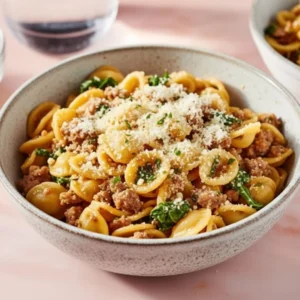
One Pan Orecchiette Pasta
Ingredients
- 2 tablespoons olive oil
- 0.5 onion, diced
- 1 pinch salt to taste
- 8 ounces spicy Italian sausages, casings removed
- 3.5 cups low-sodium chicken broth, divided
- 1.25 cups orecchiette pasta
- 0.5 cup roughly chopped arugula
- 0.25 cup finely grated Parmigiano-Reggiano cheese
Instructions
- Heat olive oil in a large, deep skillet over medium heat. Add onion with a pinch of salt; cook and stir until onion has softened and turned translucent, about 5 minutes.
- Stir in the spicy Italian sausage and cook, breaking it up with a spoon, until browned and cooked through, about 5 to 7 minutes.
- Pour 1.5 cups chicken broth into the sausage mixture. Bring to a boil while scraping the browned bits off the bottom of the pan with a wooden spoon.
- Add orecchiette pasta. Cook and stir in the hot broth, adding the remaining broth in stages as the liquid is absorbed, until the pasta is tender and a sauce forms, about 15 minutes.
- Stir the chopped arugula into the sausage-pasta mixture until the greens wilt from the residual heat.
- Ladle the pasta into bowls and sprinkle generously with finely grated Parmigiano-Reggiano cheese before serving.
Notes
Equipment
- Large deep skillet
- wooden spoon
- measuring cups
- chef’s knife