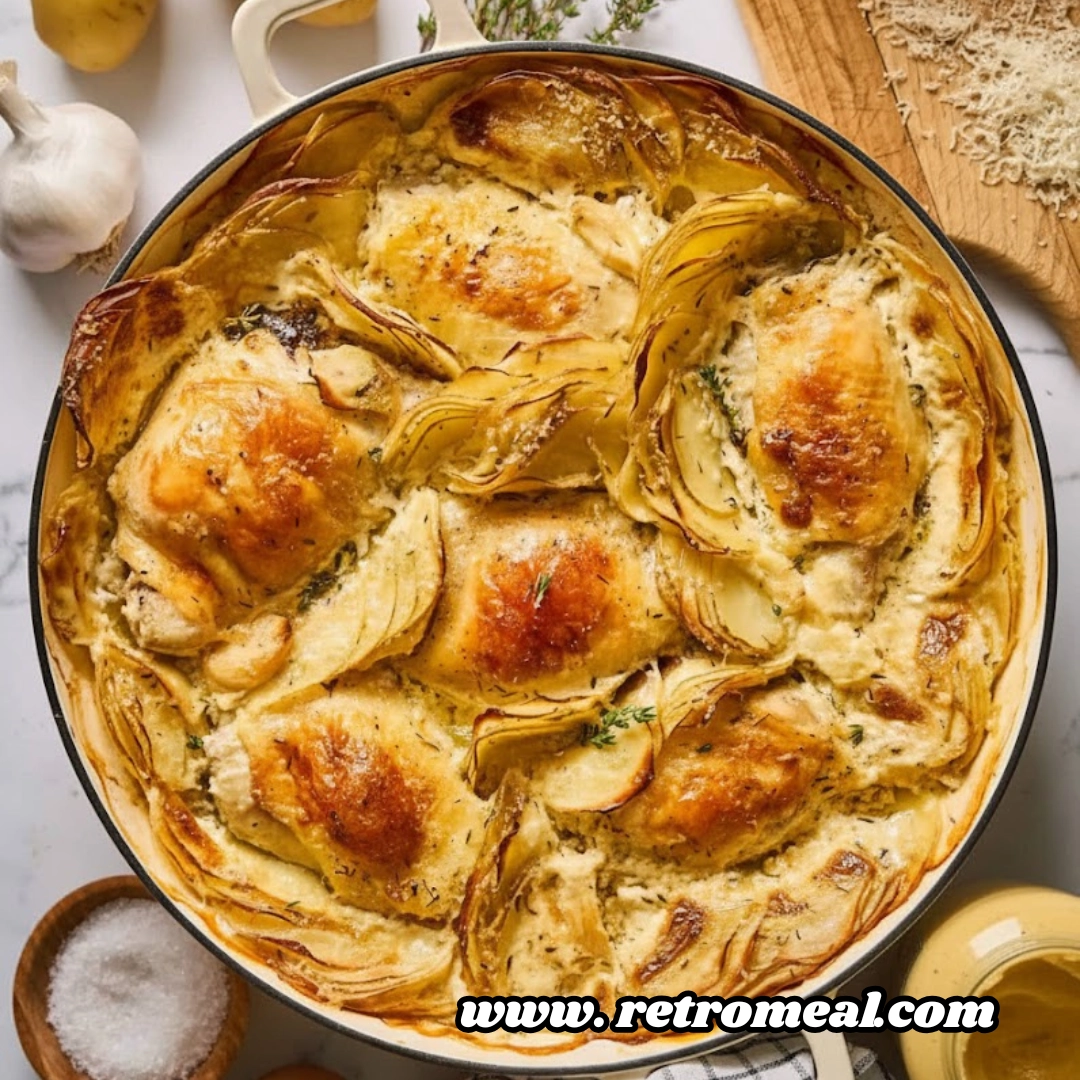
When the weather turns chilly and the evening calls for something that feels like a warm hug, there is nothing quite as satisfying as a French-inspired gratin. This One Pan Chicken and Potatoes Dauphinoise is the ultimate marriage of rustic comfort and sophisticated flavor. By nestling juicy, bone-in chicken thighs into a bed of thinly sliced potatoes and bathing them in a pungent, silky Dijon cream sauce, you create a complete meal that looks like it came from a high-end bistro but requires only one pan for cleanup. The magic happens in the oven, where the chicken juices mingle with the heavy cream and mustard, infusing every slice of potato with incredible depth. Whether you are hosting a small holiday gathering or simply want to elevate your Tuesday night dinner, this dish delivers a golden, bubbling masterpiece that will have everyone asking for seconds.
Table of Contents
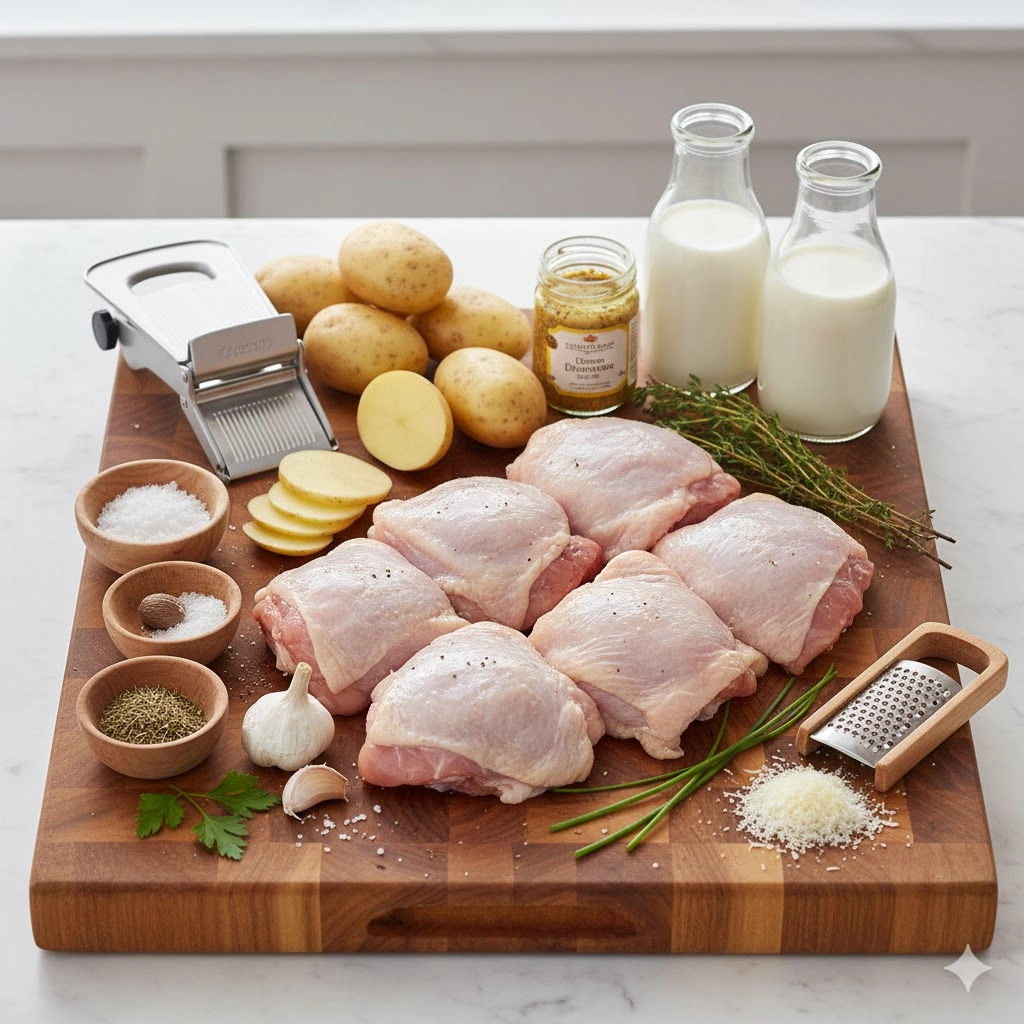
Ingredients
- 1¾ pounds Yukon gold potatoes
- 1 cup heavy cream
- ½ cup whole milk
- 2 tablespoons Dijon mustard
- 1½ teaspoons kosher salt
- ½ teaspoon ground black pepper
- ½ teaspoon dried thyme leaves
- 1 pinch freshly ground nutmeg
- 6 bone-in, skin-on chicken thighs
- 2 cloves garlic, crushed
- ¼ cup grated Parmesan cheese (plus extra for garnish)
- Fresh parsley, chives, or tarragon (optional for garnish)
Instructions
- Begin by preheating your oven to 350 Fahrenheit. Ensure the oven rack is positioned in the center to allow for even heat distribution.
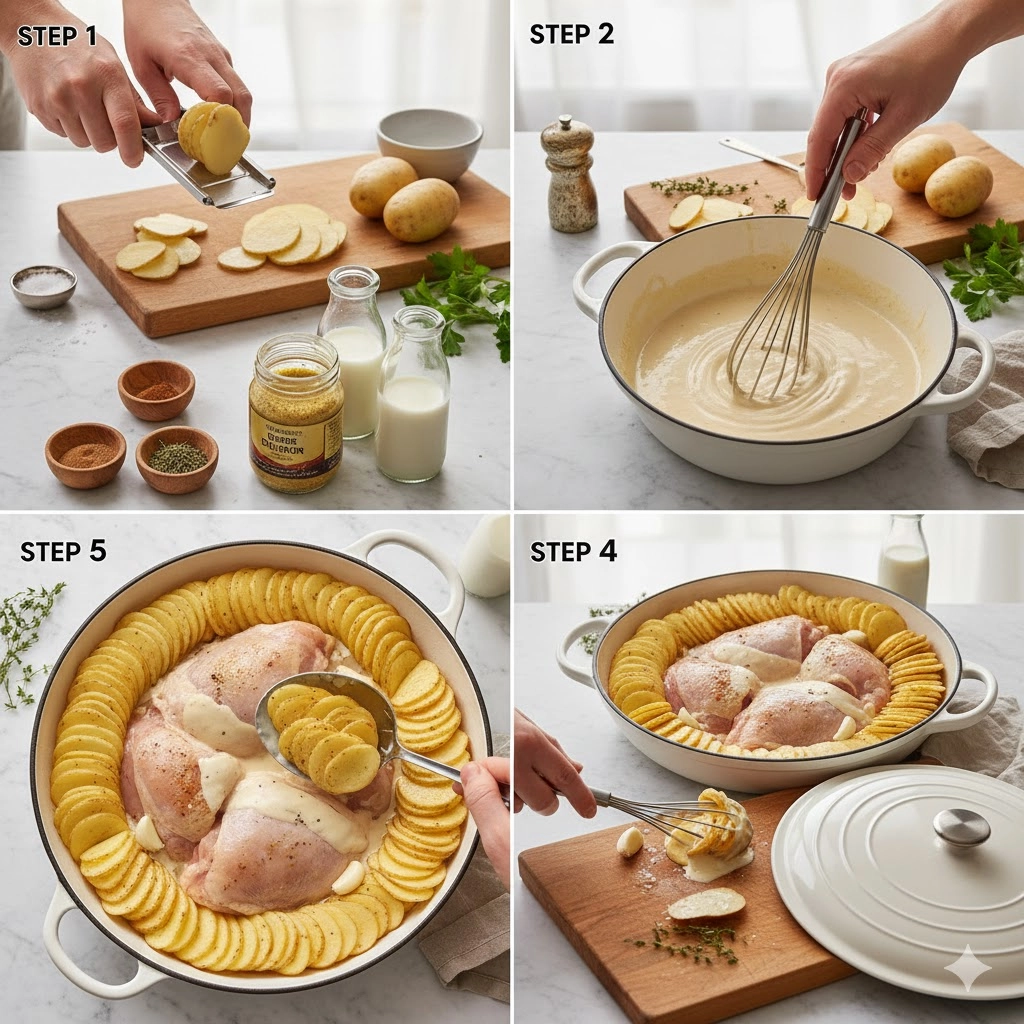
- Prepare the potatoes by slicing them into thin rounds, approximately 1/8 to 1/4 inch thick. Using a mandoline is recommended for uniformity.
- In a large mixing bowl, combine the heavy cream, whole milk, Dijon mustard, kosher salt, black pepper, dried thyme, and the pinch of nutmeg. Whisk these together vigorously until the mustard is fully incorporated into the dairy.
- Place the sliced potatoes into the bowl with the cream mixture. Stir them gently to ensure every individual slice is well-coated.
- Using a slotted spoon, lift the potatoes out of the bowl and transfer them to a 12-inch oven-safe sauté pan or a 4-quart baking dish. Set aside the remaining liquid in the bowl.
- Place the chicken thighs into the bowl with the leftover cream mixture. Turn them several times to coat the skin and underside.
- Arrange the chicken thighs in the pan, skin-side up, nestled among the potatoes. Fan the potato slices out around the chicken, ideally standing them slightly on their edges.
- Pour all the remaining cream mixture from the bowl over the chicken and potatoes. Tuck the two crushed garlic cloves into the liquid between the ingredients.
- Cover the pan tightly with a lid or a piece of aluminum foil. Slide it into the oven and bake for 20 minutes.
- Remove the pan briefly to spoon some of the hot cream sauce over the exposed tops of the potatoes. Recover the pan and bake for another 15 minutes.
- Remove the cover and sprinkle the grated Parmesan cheese evenly over the top.
- Return the pan to the oven, uncovered, for 25 to 30 minutes. The dish is finished when the potatoes are golden brown and the internal temperature of the chicken reaches 175 Fahrenheit.
- Garnish with fresh herbs and additional Parmesan if desired, and serve while hot.
Step-by-Step Details and Sensory Experience
The process of making One Pan Chicken and Potatoes Dauphinoise starts with the tactile satisfaction of preparing the vegetables. As you run the Yukon gold potatoes over a mandoline, you’ll notice their natural waxy texture. This specific variety is chosen because it retains its structural integrity even after an hour in the oven, whereas a starchier potato might dissolve into a mash. The sound of the rhythmic slicing leads into the aromatic preparation of the Dijon cream. When you whisk the sharp, vinegary mustard into the heavy cream and milk, the scent is immediately waking. The addition of dried thyme and a tiny grating of nutmeg adds a woody, slightly sweet undertone that defines classic French country cooking.
Once the potatoes are coated, they feel slippery and rich. Arranging them in the pan is where the artistry comes in. By fanning the slices so the edges point upward, you are creating more surface area. This is the secret to achieving those coveted crispy brown tips that contrast so beautifully with the submerged, velvety bottoms. When the chicken is added, you want to make sure the skin is clear of too much liquid so it can eventually crisp up.
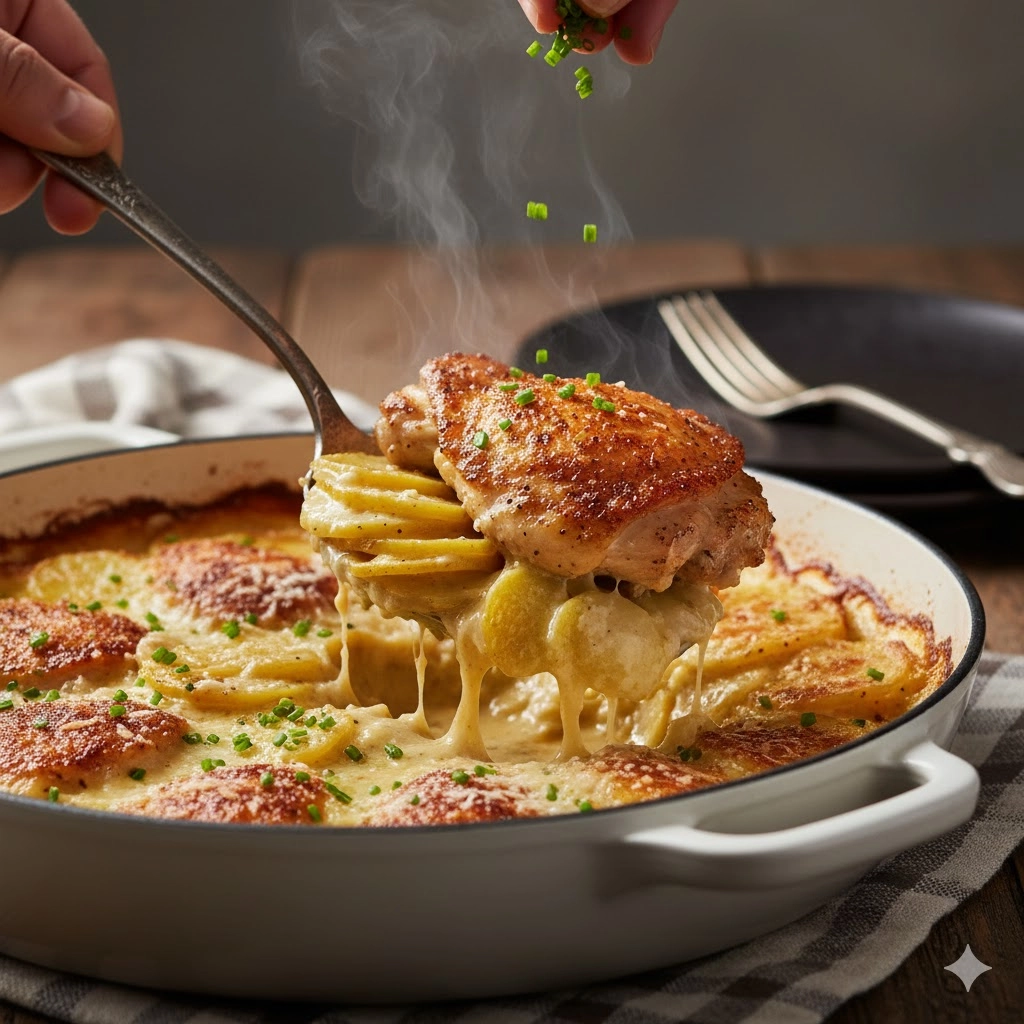
As the dish bakes under the foil, the steam builds up, essentially poaching the potatoes in a bath of garlic-infused cream. This stage is vital for tenderness. When you finally remove the foil for the last stage of cooking, the kitchen will fill with the scent of roasting poultry and bubbling cheese. The Parmesan cheese doesn’t just add saltiness; it creates a lacy, golden crust that binds the top layer of potatoes together. Watching the cream reduce and thicken into a sauce that coats the back of a spoon is one of the most rewarding parts of the process. By the time the chicken reaches 175 Fahrenheit, the skin should be shimmering and the sauce should be active and bubbling around the perimeter of the pan.
Deep-Dive Frequently Asked Questions
Why should I cook the chicken thighs to 175 Fahrenheit instead of 165 Fahrenheit?
While 165 Fahrenheit is the standard safety temperature for poultry, bone-in chicken thighs contain a significant amount of connective tissue. By letting them reach 175 Fahrenheit, those tissues break down more completely, resulting in a much more tender, “fall-off-the-bone” texture. Additionally, the higher temperature allows the skin to render its fat more effectively into the potato gratin below, enhancing the flavor of the entire dish.
Can I use chicken breasts instead of thighs for this recipe?
It is generally not recommended to swap in chicken breasts for this specific one-pan method. Potatoes dauphinoise require a long baking time (over an hour) to become tender and for the sauce to thicken. Chicken breasts are very lean and would become extremely dry and rubbery if left in the oven for that duration. If you must use breasts, you would need to add them much later in the cooking process, which defeats the simplicity of the one-pan assembly.
What is the best way to prevent the cream sauce from curdling?
Curdling usually happens when the heat is too high or the acid in the mustard reacts poorly with low-fat dairy. To ensure a silky smooth sauce, use full-fat heavy cream and whole milk as the recipe directs. Whisking the sauce thoroughly before adding the potatoes helps emulsify the fats and liquids. Also, avoid using “light” cream or skim milk, as they lack the stability needed for a long, high-heat bake.
Unique Culinary Insights for Success
To achieve the best results with this dish, pay close attention to the thickness of your potato slices. If they are too thick, they will remain crunchy even after an hour; if they are paper-thin, they may lose their shape. Aiming for that 1/8 to 1/4 inch sweet spot is essential. If you find your potatoes are taking longer to soften, it may be due to the age of the potatoes or the specific calibration of your oven. Don’t be afraid to keep the foil on for an extra five minutes if a fork doesn’t easily pierce the center of a potato slice during the basting stage.
Another professional touch involves the garlic. While the recipe calls for crushed cloves tucked into the sauce for a mellow, infused flavor, you can customize this based on your garlic tolerance. If you love a punchy flavor, you can mince the garlic and whisk it directly into the cream. However, the whole crushed cloves provide a sophisticated, aromatic backdrop that allows the Dijon and thyme to shine without the bitterness that can sometimes come from burnt minced garlic during a long roast.
Finally, consider the resting period. It is tempting to plate the dish the second it comes out of the oven because it looks so inviting. However, giving it five to ten minutes of rest allows the starches in the potatoes to settle and the cream sauce to thicken further. This ensures that when you scoop out a portion, the sauce clings to the chicken and potatoes rather than running all over the plate.
Modifications and Substitutions
If you find yourself missing certain ingredients, there are several ways to pivot without losing the essence of the dish. While Yukon golds are the gold standard here, Russet potatoes can be used if necessary. Keep in mind that Russets are starchier, so they will absorb more liquid and may become much softer, leading to a more “melted” texture rather than distinct layers.
For the herbs, if dried thyme isn’t in your pantry, dried rosemary or an Herbes de Provence blend works beautifully. If you prefer using fresh herbs, remember that you generally need to double the quantity compared to dried. Fresh thyme sprigs can be tucked into the pan along with the garlic and removed before serving. If you are sensitive to spice, you can reduce the Dijon mustard to one tablespoon, though the two tablespoons called for provide a balanced tang that cuts through the richness of the heavy cream.
Accompaniments and Serving Suggestions
Because this One Pan Chicken and Potatoes Dauphinoise is quite rich and decadent, it pairs best with side dishes that offer a bright, acidic contrast. A simple arugula or garden salad dressed with a sharp lemon vinaigrette is the perfect companion. The acidity of the lemon helps cleanse the palate between bites of the creamy potatoes.
For cooked vegetables, consider steamed green beans with a hint of garlic or roasted asparagus. These green vegetables provide a visual pop against the golden-brown tones of the chicken and gratin. If you are serving this for a special occasion, a dry white wine is the ideal pairing. A crisp Chardonnay with light oak notes or a bright Sauvignon Blanc will complement the cream sauce and the tang of the Dijon mustard beautifully.
Nutrition Table
| Nutrient | Amount Per Serving |
| Calories | 936 |
| Total Fat | 65g |
| Saturated Fat | 26g |
| Cholesterol | 312mg |
| Sodium | 837mg |
| Total Carbohydrates | 40g |
| Dietary Fiber | 5g |
| Sugars | 5g |
| Protein | 48g |
| Vitamin A | 1189IU |
| Vitamin C | 40mg |
Disclaimer
The nutritional information provided is an estimate based on the specific ingredients used. Individual results may vary depending on the brand of ingredients and the exact size of the chicken thighs and potatoes.
Perfecting Your French Country Dinner
This dish is more than just a meal; it is a celebration of simple ingredients handled with care. The way the chicken skin crisps up over the bed of velvety potatoes creates a texture profile that is hard to beat. By following the two-stage baking process—first steaming under cover and then browning in the open air—you ensure that every component is cooked to its absolute best version. This recipe proves that you don’t need a dozen pans to create a gourmet experience at home. As you pull this bubbling tray from the oven, garnished with fresh herbs and a final dusting of cheese, you’ll have a centerpiece that is as beautiful as it is delicious.
One Pan Chicken and Potatoes Dauphinoise
Ingredients
- 1.75 pounds Yukon gold potatoes, sliced 1/8 to 1/4 inch thick
- 1 cup heavy cream
- 0.5 cup whole milk
- 2 tablespoons Dijon mustard
- 1.5 teaspoons kosher salt
- 0.5 teaspoon ground black pepper
- 0.5 teaspoon dried thyme leaves
- 1 pinch freshly ground nutmeg
- 6 bone-in, skin-on chicken thighs
- 2 cloves garlic, crushed
- 0.25 cup grated Parmesan cheese
- fresh parsley, chives, or tarragon for garnish
Instructions
- Preheat your oven to 350 Fahrenheit with a rack positioned in the center. Use a mandoline or sharp knife to slice the potatoes into 1/8 to 1/4 inch rounds.
- In a large mixing bowl, whisk together the heavy cream, milk, Dijon mustard, salt, pepper, thyme, and nutmeg until well combined.
- Add the sliced potatoes to the bowl and stir gently to coat each slice in the cream mixture.
- Use a slotted spoon to transfer potatoes to a 12-inch oven-safe pan or 4-quart baking dish, reserving the excess cream in the bowl.
- Place chicken thighs in the remaining cream mixture to coat, then arrange them skin-side up in the pan among the potatoes.
- Fan out potato slices so edges stand slightly upright. Pour remaining cream over the dish and tuck in the crushed garlic. Cover tightly with a lid or foil and bake for 20 minutes.
- Spoon some of the cream mixture over the exposed potato edges, recover, and bake for another 15 minutes until potatoes are tender.
- Remove the cover, sprinkle with Parmesan cheese, and bake uncovered for 25-30 minutes until golden brown and chicken hits 175 Fahrenheit.
Notes
Equipment
- 12-inch oven-safe sauté pan or 4-quart baking dish
- Mandoline slicer Optional, for even potato slices
- large mixing bowl
- whisk
- meat thermometer