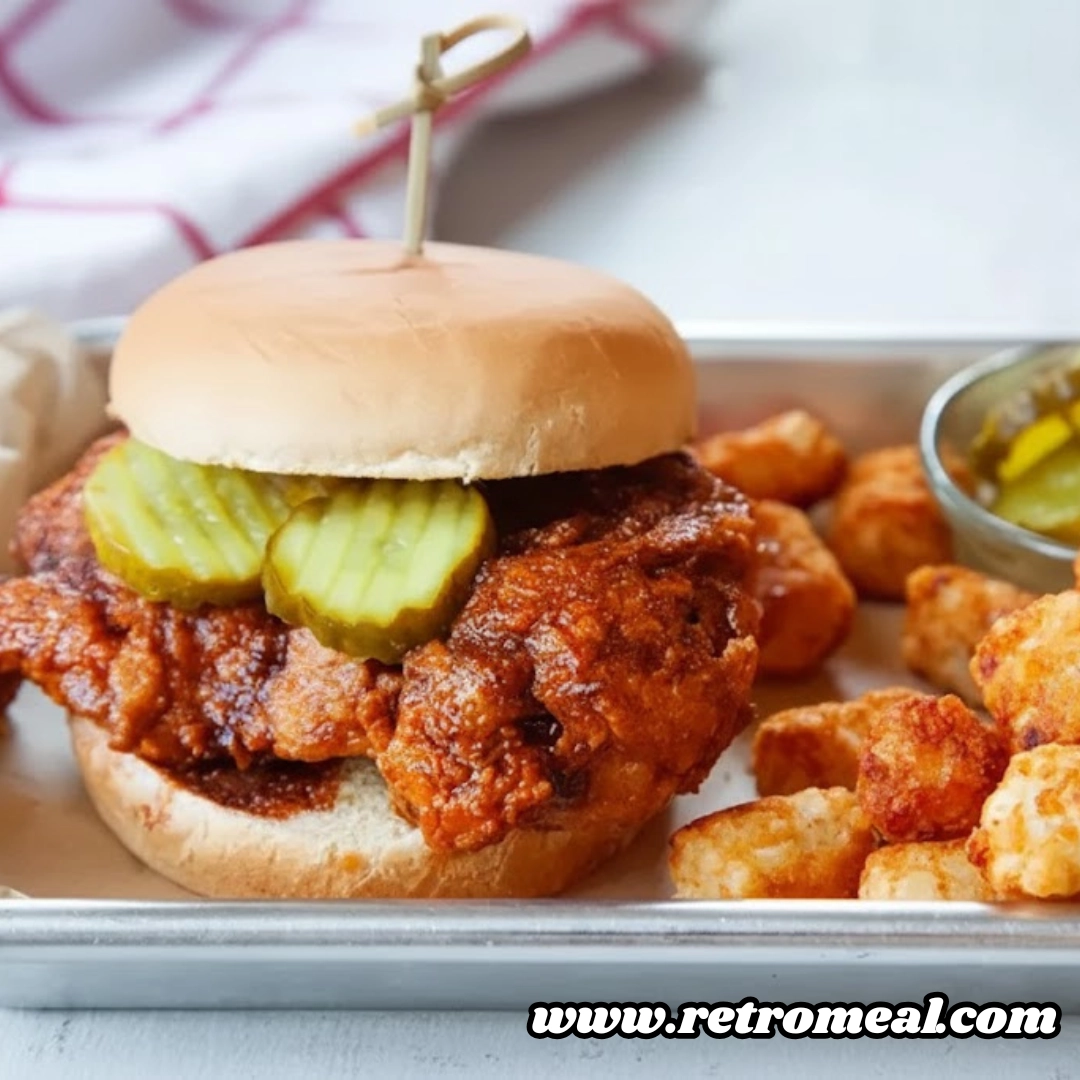
Nashville Hot Chicken is more than just a meal; it is a legendary culinary experience that strikes a delicate balance between intense heat and savory satisfaction. Originating from the heart of Tennessee, this iconic dish has captured the imagination of spicy food lovers across the globe. The secret lies in the contrast between the shattering crunch of the golden-fried crust and the fiery, oil-based spice paste that coats every nook and cranny. When made correctly, it provides a slow-burning heat that invites you back for bite after bite. While many restaurants claim to have the best version, there is something uniquely rewarding about mastering this fiery masterpiece in your own kitchen, where you can control the spice levels and ensure every piece of chicken is served at its absolute peak of crispiness.
Table of Contents
Ingredients for the Ultimate Hot Chicken
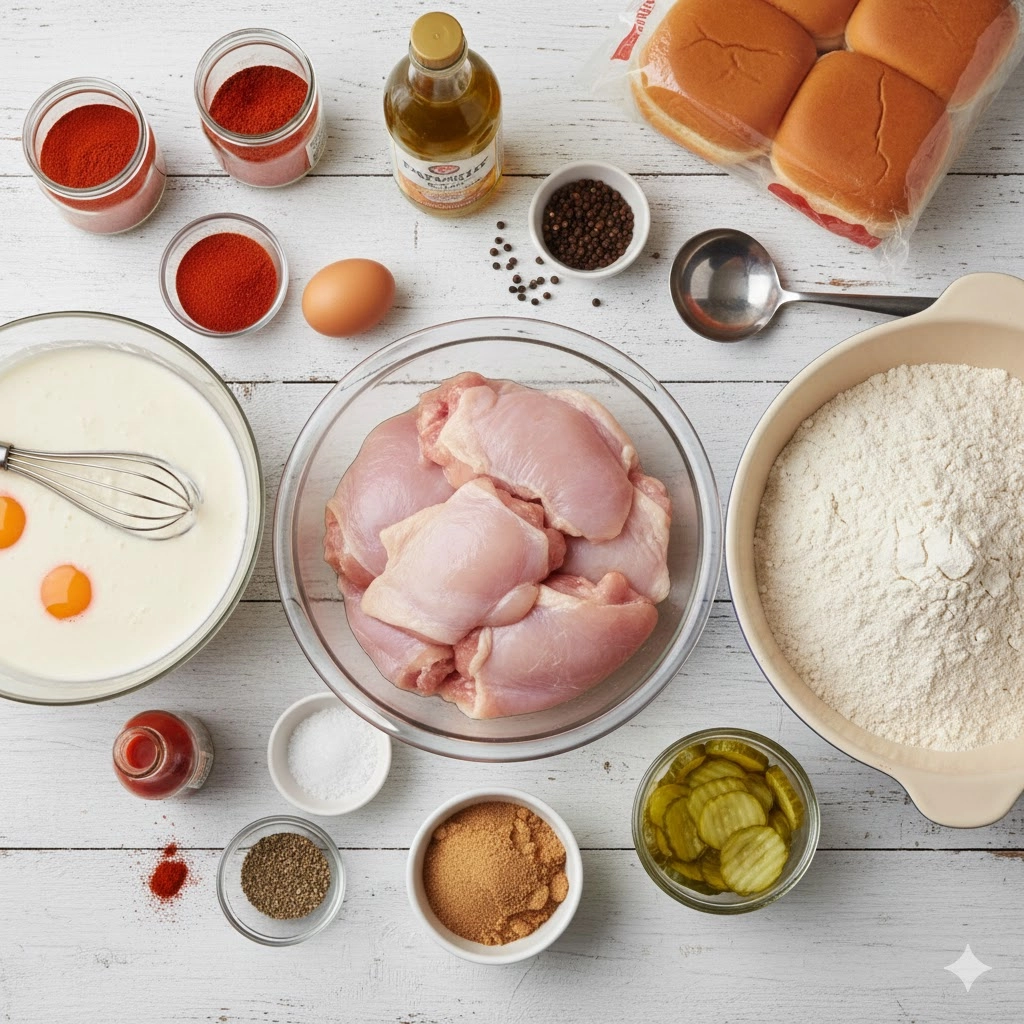
To achieve the authentic flavor and texture of a true Nashville classic, you will need a specific set of ingredients divided into the dredging components, the wet brine, the chicken itself, and the signature spicy oil paste.
The Dry Dredge
- 4 cups all-purpose flour
- 1 tablespoon cayenne pepper
- 1 tablespoon paprika
- 1 tablespoon kosher salt
- 1 tablespoon black pepper
The Wet Mixture
- 2 cups buttermilk
- 1/4 cup hot sauce, such as Tabasco or Franks
- 2 large eggs
- 1 tablespoon kosher salt
The Chicken and Frying Base
- 10 boneless skinless large chicken thighs or 3 large chicken breasts cut into 9 pieces
- Oil for frying, such as peanut oil or rice bran oil
The Signature Spicy Paste
- 1/2 cup used frying oil
- 1/4 cup butter
- 2 to 6 tablespoons cayenne pepper, adjusted for your heat preference1
- 1 to 2 tablespoons brown sugar, depending on your sweetness preference2
- 1 teaspoon chili powder blend3
- 1 teaspoon garlic powder4
- 1 teaspoon onion p5owder
- 1 teaspoon paprika
- 1 1/2 teaspoons kosher salt
- 1 teaspoon black pepper
For Serving
- 10 burger buns
- Dill pickle slices or bread and butter pickles
Instructions for Preparation and Frying
Preparing the Station
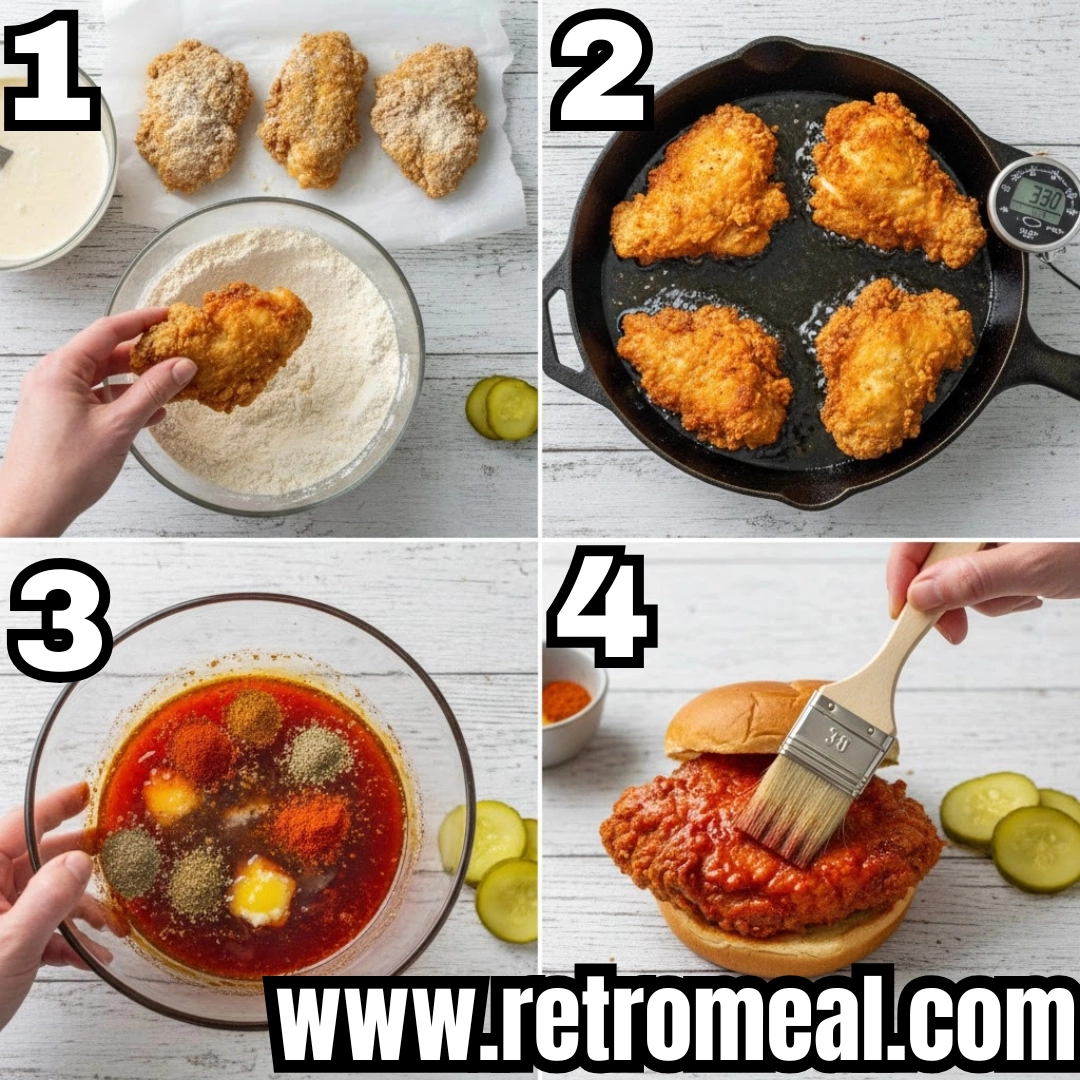
Begin by setting up your dredging station. You will need two large shallow dishes. In the first dish, whisk together the 4 cups of all-purpose flour with the cayenne, paprika, kosher salt, and black pepper. In the second dish, whisk the buttermilk, hot sauce, eggs, and kosher salt until well combined. Line a large baking sheet with parchment paper or wax paper. Arrange your station in an assembly line: dry flour, wet buttermilk, and then the baking sheet.
Dredging the Chicken
Take a piece of chicken and coat it thoroughly in the dry flour mixture. Shake off the excess and submerge it into the buttermilk mixture, ensuring every part is wet. Lift it out, let the excess liquid drain, and return it to the flour for a second coating. This double-dredge method is essential for a thick, craggy crust. Place the coated chicken on the prepared baking sheet and repeat with all pieces. Let the chicken rest on the sheet while you heat the oil; this resting period allows the breading to hydrate and stick firmly to the meat.
Heating the Oil
Pour your chosen frying oil into a large, heavy skillet or Dutch oven until it is at least 2 inches deep. Ensure your pan has sides at least 3 inches tall to prevent splashing. Heat the oil over high heat until it reaches 350 Fahrenheit. If you do not have a thermometer, you can test the heat by dropping a 1-inch cube of bread into the oil. If the bread turns golden brown in 45 seconds, the oil is ready.
The Frying Process
Carefully slide two or three pieces of chicken into the hot oil using tongs. Do not crowd the pan, as this will drop the oil temperature and lead to greasy chicken. Fry for 6 to 8 minutes, flipping the pieces halfway through. The chicken is finished when the crust is a deep golden brown and the internal temperature reaches 165 Fahrenheit for thighs or 160 Fahrenheit for breast meat. Transfer the cooked chicken to a wire rack set over a baking sheet to drain.
Creating the Spicy Paste
Once all the chicken is fried, let the frying oil cool for about 5 to 10 minutes. Place 1/4 cup of butter in a medium-sized microwave-safe bowl. Carefully measure 1/2 cup of the warm frying oil and pour it over the butter, stirring until melted. Add the cayenne, brown sugar, chili powder, garlic powder, onion powder, paprika, salt, and pepper. Whisk until it forms a smooth, brushable paste.
Assembly
Place a piece of fried chicken on the bottom half of a bun. Use a pastry brush to liberally coat the entire surface of the chicken with the spicy paste. Add several pickle slices on top, cover with the top bun, and serve immediately while the crust is still crunchy and the meat is juicy.
Achieving the Ultimate Creamy and Crispy Consistency
The magic of Nashville Hot Chicken lies in the architecture of its crust. When you use the double-dredge method—moving from dry to wet and back to dry—you are creating a multifaceted barrier that protects the meat while providing maximum surface area for the spicy oil to cling to. The buttermilk in the wet mixture acts as a tenderizer, thanks to its mild acidity, which breaks down the protein fibers in the chicken thighs or breasts. This ensures that while the outside is shattering and crisp, the inside remains incredibly succulent.
Allowing the chicken to rest after dredging is a step that many home cooks skip, but it is vital for success. During those few minutes of resting, the moisture from the buttermilk seeps into the flour, creating a “glue” that prevents the breading from falling off in the frying pan. If you find your breading often separates from your fried chicken, this resting period is the solution. Furthermore, the use of a wire rack for draining rather than paper towels prevents steam from building up under the chicken, which would otherwise soften that hard-earned crunch.
Deep Dive Into Heat and Flavor Science
The heat in Nashville Hot Chicken is unique because it is oil-based rather than water-based. Most standard hot wings use a vinegar-based sauce, which hits the tongue quickly and dissipates. However, the capsaicin in cayenne pepper is fat-soluble. By mixing the spices into a combination of butter and warm frying oil, you are creating a delivery system that coats the entire mouth and lingers. This is why the heat feels “round” and intense.
The inclusion of brown sugar in the paste is not meant to make the chicken sweet, but rather to provide a necessary counterpoint to the salt and spice. It rounds out the sharp edges of the cayenne. Similarly, the garlic and onion powders provide an aromatic base that prevents the dish from being “one-note” spicy. If you want a more complex flavor profile, ensure your chili powder blend is fresh, as the oils in the spices can dull over time.
Navigating the History of the Dish
To truly appreciate this recipe, one must understand its legendary roots at Prince’s Hot Chicken Shack. The story of Thornton Prince and the “revenge chicken” served by his girlfriend has become a staple of American food folklore. What started as a punishment for a late night out turned into a culinary phenomenon that defined a city’s food identity. This history is why the traditional presentation remains so humble. While we are using burger buns for convenience and modern taste, the soul of the dish is found in the simplicity of white bread and pickles. The bread is there to soak up the spicy oil that drips off the chicken, becoming a prized treat at the end of the meal, while the pickles provide a vinegary acidity that cuts through the richness of the fried coating and the intensity of the spice.
Expert Strategies for Home Frying Success
Frying at home can be a daunting task, but following a few scientific principles can make it seamless. First, the choice of oil is paramount. Peanut oil is often preferred because of its high smoke point and neutral flavor profile, which allows the spices to shine. If you have an allergy, rice bran oil or a high-quality vegetable oil works just as well.
Temperature management is the second pillar of frying. When you add cold meat to hot oil, the temperature will naturally dip. Using a heavy vessel like a cast iron skillet is beneficial because the dense metal retains heat better than thin stainless steel, helping the oil recover its temperature quickly. If the oil stays too cool, the flour coating will absorb the fat instead of crisping up, resulting in a heavy, oily mouthfeel. Conversely, if the oil is too hot, the exterior will burn before the interior is safe to eat. Always keep your thermometer handy and adjust your burner frequently.
Variations for Different Palates and Diets
While the traditional recipe calls for specific ingredients, there are ways to adapt this dish without losing its spirit. If you prefer white meat, using chicken breasts is a great option, though they require careful slicing as mentioned in the instructions to ensure they cook at the same rate as the rest of the batch.
For those who want to experiment with the fat base of the paste, some enthusiasts use lard instead of butter for an even more traditional, old-school flavor. If you find the heat of 6 tablespoons of cayenne to be too much, starting with 2 tablespoons will give you a “mild-medium” experience that still carries the signature Nashville flavor without the overwhelming burn. You can also play with the type of pickles used; while dill is standard, bread and butter pickles offer a sweetness that pairs beautifully with the spicier versions of the paste.
Perfect Accompaniments for a Spicy Feast
Since Nashville Hot Chicken is the star of the show, your side dishes should act as a “cool down” squad. Creamy elements are the best way to counteract the capsaicin burn. A traditional, vinegar-heavy coleslaw or a creamy potato salad provides both temperature contrast and acidity.
Other great options include:
- Macaroni and Cheese: The dairy helps neutralize the spice.
- Cornbread: The slight sweetness and crumbly texture complement the savory chicken.
- Tater Tots or French Fries: For a classic “shack” feel.
- Greens: Braised collard greens add a savory, earthy depth to the meal.
Common Questions About Nashville Hot Chicken
Can I make this chicken in an air fryer?
While you can cook breaded chicken in an air fryer, it will not yield the same result as traditional Nashville Hot Chicken. The signature of this dish is the way the spicy oil paste interacts with the deep-fried crust. An air-fried crust is often drier and won’t hold the paste in the same way. If you must use an air fryer, ensure you spray the chicken liberally with oil before cooking, but for the most authentic experience, the skillet is king.
How do I store and reheat leftovers?
Fried chicken is always best fresh, but if you have leftovers, store them in an airtight container in the refrigerator for up to three days. To reheat, avoid the microwave as it will make the crust soggy. Instead, place the chicken in a 350 Fahrenheit oven or toaster oven for about 10 to 12 minutes until the skin crisps back up and the interior is warm.
Why is my spicy paste grainy?
The paste can become grainy if the sugar and spices haven’t fully integrated with the oil and butter. Ensure your frying oil is still quite warm when you mix it with the spices. The heat helps dissolve the brown sugar and “blooms” the spices, which releases their essential oils and creates a smoother consistency. If it’s too thick, simply whisk in a tablespoon more of the warm frying oil.
Can I use bone-in chicken for this recipe?
Absolutely. Traditional Nashville Hot Chicken is often served as bone-in pieces (wings, breasts, legs, and thighs). If you choose to use bone-in meat, keep in mind that the cooking time will increase significantly, usually taking 12 to 15 minutes depending on the size of the piece. You must use a meat thermometer to ensure the meat near the bone reaches the safe temperature of 165 Fahrenheit.
Bringing the Heat Home
Mastering the art of Nashville Hot Chicken is a milestone for any home cook who loves bold flavors. It is a dish that requires patience, a bit of bravery regarding the spice cabinet, and attention to detail during the frying process. By following the double-dredging technique and carefully monitoring your oil temperature, you can create a sandwich that rivals the famous shacks of Tennessee. Whether you serve it at a backyard barbecue or a cozy weeknight dinner, this chicken is guaranteed to be a conversation starter. Just remember to have plenty of cold drinks and extra pickles on hand to help manage the delicious fire.
Nutrition Information
| Nutrient | Amount Per Serving |
| Calories | 712 |
| Total Fat | 44 grams |
| Saturated Fat | 11 grams |
| Cholesterol | 206 milligrams |
| Sodium | 954 milligrams |
| Total Carbohydrates | 40 grams |
| Dietary Fiber | 2 grams |
| Total Sugars | 6 grams |
| Protein | 41 grams |
| Vitamin C | 2 milligrams |
| Calcium | 142 milligrams |
| Iron | 4 milligrams |
| Potassium | 532 milligrams |
Disclaimer
The nutritional information provided here is an estimate based on an ingredient database. Actual nutritional values may vary depending on the specific brands used and the amount of oil absorbed during the frying process.
Nashville Hot Chicken
Ingredients
- 4 cups all-purpose flour
- 1 tbsp cayenne pepper
- 1 tbsp paprika
- 1 tbsp kosher salt
- 1 tbsp black pepper
- 2 cups buttermilk
- 0.25 cup hot sauce (Tabasco or Franks)
- 2 large eggs
- 1 tbsp kosher salt (for wet mixture)
- 10 boneless, skinless large chicken thighs or 3 large breasts cut into pieces
- Neutral oil for frying (peanut or rice bran oil)
- 0.5 cup used frying oil
- 0.25 cup butter
- 2-6 tbsp cayenne pepper (to taste)
- 1-2 tbsp brown sugar
- 1 tsp chili powder blend
- 1 tsp garlic powder
- 1 tsp onion powder
- 1 tsp paprika (for paste)
- 1.5 tsp kosher salt (for paste)
- 1 tsp black pepper (for paste)
- 10 burger buns
- dill pickle slices
Instructions
- Whisk flour, cayenne, paprika, salt, and pepper in one bowl. Whisk buttermilk, hot sauce, eggs, and salt in a second bowl.
- Dredge chicken in flour, dip in buttermilk, then dredge in flour again. Place on a parchment-lined sheet and let rest.
- Heat 2 inches of oil in a heavy skillet or Dutch oven to 350 degrees Fahrenheit.
- Fry chicken in batches for 6-8 minutes, flipping halfway, until golden brown and 165 degrees Fahrenheit internal temp.
- Drain chicken on a wire rack. Let the frying oil cool for 5-10 minutes.
- Combine 1/2 cup warm frying oil with butter, cayenne, sugar, and spices to create the spicy paste.
- Brush the hot chicken liberally with the spice paste, coating all sides.
- Assemble on buns with pickles and serve immediately.
Notes
Equipment
- Large deep skillet or Dutch oven (3-inches tall)
- Two shallow mixing dishes
- Instant-read thermometer
- wire cooling rack
- pastry brush
- tongs