
When the morning air bites with a crisp chill and the promise of the day requires substantial fuel, nothing performs quite like a breakfast casserole cooked low and slow. This is not the standard oven-baked fare that demands thirty minutes of precious morning attention. This hearty, hands-off approach delivers a rich, savory, and satisfying meal with nearly zero effort required at dawn. The beauty of the Mountain Man Crock Pot Breakfast lies in its layered complexity—crisp potatoes, savory sausage, pungent green onions, and a deeply eggy, cheesy custard—all unified over the course of an entire night or a long morning in the slow cooker. It is the definitive choice for feeding hungry guests, simplifying a holiday brunch, or ensuring your family is properly provisioned for a long weekend.
This dish is a testament to low-effort, high-reward cooking. The method guarantees a moist interior and a beautifully set custard without the dry edges often associated with large format baking. It’s an American brunch classic elevated by the gentle, even heat of the slow cooker, creating a perfectly balanced texture that is both sturdy enough for a fork and tender on the palate.
Essential Provisions: A Checklist of Ingredients
To achieve the deep, robust flavor and satisfying structure of this slow-cooked casserole, ingredient quality matters, as does proper proportioning. This recipe is designed for a standard six-quart capacity slow cooker.
For the Base and Structure:
- Thirty ounces (approximately eight hundred fifty grams) frozen shredded hash browns. Crucially, do not thaw these.
- One pound (four hundred fifty grams) bulk mild breakfast sausage.
- Eight ounces (two hundred twenty-five grams) shredded sharp cheddar cheese.
- Eight ounces (two hundred twenty-five grams) shredded low-moisture mozzarella cheese.
For the Custard and Seasoning:
- Twelve large eggs.
- One half cup milk (any fat percentage from skim to whole will work).
- One teaspoon fine kosher salt.
- One quarter teaspoon freshly cracked black pepper.
- Three medium green onions, thinly sliced (for layering and garnish).
Assembling the Layers: The Core Recipe Steps
Preparation is minimal, requiring only the browning of the meat and the whisking of the custard. Once these elements are ready, the slow cooker does the rest of the work.
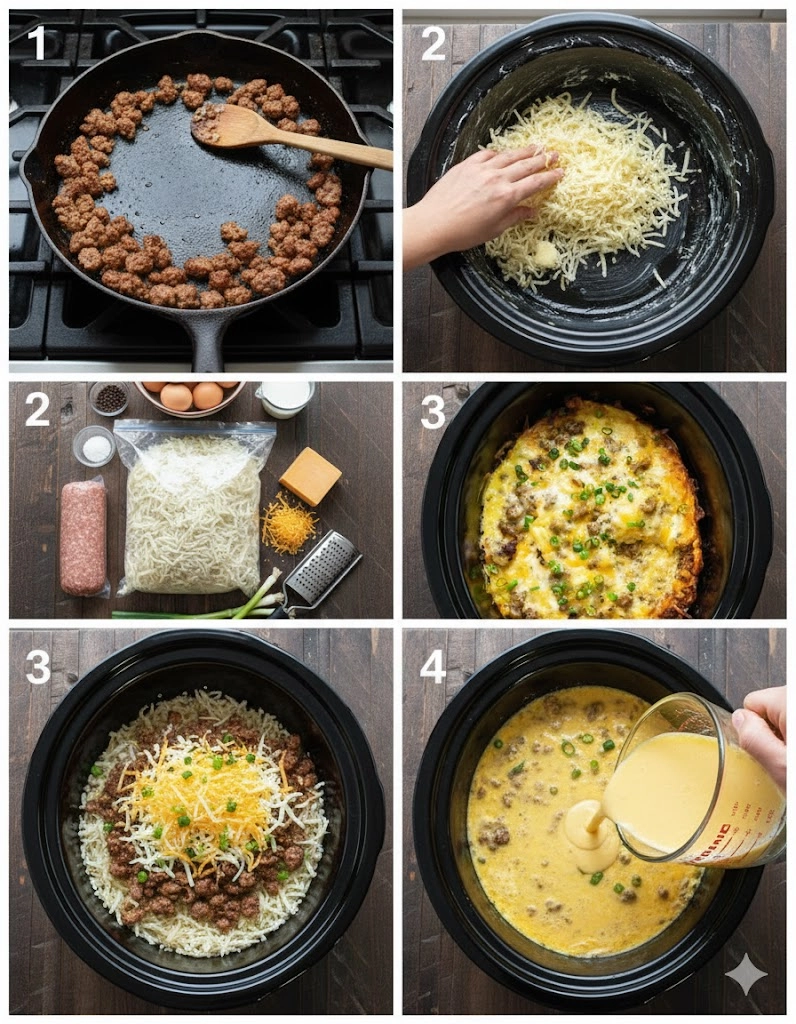
- Prepare the Sausage: Brown the breakfast sausage in a skillet over medium-high heat until fully cooked. Drain off all accumulated grease and set the sausage aside.
- Coat the Cooker: Liberally grease the inside of a six-quart slow cooker basin with nonstick cooking spray or softened butter to prevent the potato base from adhering.
- Build the First Layer: Spread half of the frozen hash browns evenly across the bottom of the prepared slow cooker. Press them down gently to create a solid base.
- Add the Flavor: Layer half of the browned sausage over the hash browns, followed by half of the shredded cheddar and half of the shredded mozzarella. Sprinkle the sliced green onions over this cheese layer.
- Repeat the Layers: Add the remaining half of the hash browns, followed by the remaining sausage, cheddar, and mozzarella. Do not press this top layer down heavily.
- Mix the Custard: In a large bowl, thoroughly whisk together the twelve eggs, the half cup of milk, salt, and pepper until the mixture is homogenous and slightly frothy.
- Pour and Seal: Slowly and evenly pour the egg mixture over the entire contents of the slow cooker, allowing the liquid to seep down through the layers.
- Cook to Perfection: Secure the lid and cook on the LOW setting for eight to nine hours, or on the HIGH setting for four hours.

Precision Cooking: Technique Breakdown and Doneness Cues
The difference between a perfectly cooked, tender casserole and a dense, rubbery one is a matter of technique and knowing how to read the visual and textural cues of a slow-cooked egg dish.
The Foundation: Why Frozen Potatoes Are Key
Unlike a traditional oven casserole where fresh, diced potatoes might be used, the frozen, shredded variety is essential here. They introduce necessary starch and moisture without requiring a lengthy pre-cook. Crucially, do not thaw them. Adding them frozen acts as a built-in temperature regulator for the initial phase of cooking and prevents the lower layers from becoming overly dense or scorched. The gentle pressure applied in step three ensures a stable platform for the subsequent layers.
Preparing the Protein Correctly
Draining the sausage is perhaps the most important pre-cooking step. Any excess grease left in the sausage will render out further during the long cooking time, leading to a greasy, separated final product. Use a slotted spoon to transfer the browned sausage to the slow cooker, and press the meat with a paper towel on a separate plate to absorb any residual fat before layering. This ensures the custard sets cleanly.
The Role of Layering and the Custard Pour
Layering is not just for visual appeal; it ensures even distribution of flavor and texture. By repeating the layers of potato, meat, and cheese, you avoid pockets of dry ingredients. When pouring the custard in step seven, aim for an even, slow distribution. The goal is to fully saturate the base layers without disrupting the top cheese layer. After pouring, resist the urge to stir. The structure must remain intact for the slow cooker to cook evenly from the bottom up.
Understanding Doneness: The Center is the Judge
A golden-brown top is deceptive in a slow cooker. The intense heat against the sides often cooks the edges faster. To confirm doneness, do not rely solely on the color of the top layer.
- The Jiggle Test: Gently shake the slow cooker. The casserole should look set, with only a very slight, centralized jiggle. If the entire middle ripples like liquid, it needs more time.
- The Probe Test: Insert a thin knife or wooden skewer one inch from the exact center. If it comes out clean, with no liquid egg clinging to it, the casserole is set. If any liquid remains, continue cooking in twenty-minute increments, checking after each period.
- Temperature: If you own a probe thermometer, the internal temperature should read one hundred sixty degrees Fahrenheit (160 Fahrenheit) for safety and a fully set custard.
Once cooked, remove the lid and allow the casserole to rest for at least fifteen minutes. This rest period stops residual cooking and allows the steam to escape, preventing the casserole from becoming waterlogged.
Culinary Commandments: Mastering the Overnight Casserole
Achieving expert-level results with a slow cooker breakfast requires a few key insights that transcend generic tips. These commandments address specific issues related to texture and timing.
The Foil Collar Technique: If your slow cooker runs hot, especially around the rim, the top edges of the casserole can dry out or even scorch before the center sets. To mitigate this, tear off two long strips of aluminum foil and fold them into two-inch wide bands. Place these bands across the top of the slow cooker insert, forming a cross shape, before putting the lid on. The foil acts as a thermal buffer, slowing down the cooking speed near the edge.
Pre-Cooked Vegetables Must Be Dry: If adding vegetables like diced bell peppers, onions, or mushrooms, they must be sautéed completely before layering. Raw vegetables contain a significant amount of water. If added raw, they will release this moisture into the egg custard during the long cooking time, making the final product watery and runny, preventing a proper set. Cook them until slightly caramelized and completely dry.
Overnight Safety Considerations: When cooking overnight (the full eight to nine hours on LOW), ensure your slow cooker model is reliable and that you begin the process close to bedtime. The extended LOW setting is ideal for the Mountain Man Crock Pot Breakfast because it allows the flavors to truly meld without overheating the eggs, which can become rubbery.
The Importance of Shredding Cheese Fresh: While pre-shredded cheese is convenient, it is typically coated in anti-caking agents like cellulose or potato starch. These powders can interfere with the way the cheese melts and the way the egg custard binds. For the absolute best texture, buy block cheese and shred it yourself. The fresh melt ensures a smoother, richer distribution of fat and flavor throughout the dish.
Salt Strategy: Resist the urge to add all the salt to the custard mixture. Salt also draws moisture out of the potatoes and meat during cooking. Season the browned sausage lightly, and then add the remaining salt only to the egg mixture. This dual-point seasoning strategy ensures that the dish is flavorful but not overly salty, and it helps manage moisture release.
Alternative Manifestations: Flavor Swaps and Substitutions
The foundational structure of potatoes, meat, cheese, and eggs is highly flexible, allowing for creative variation based on dietary needs or flavor preference.
Meat Swaps:
- Smoked Ham: Diced, fully cooked smoked ham or Canadian bacon can replace the sausage entirely. This provides a saltier, less herbaceous profile. You do not need to pre-cook the ham, but ensure it is diced into small, uniform pieces.
- Vegetarian Version: Use a plant-based sausage crumble or substitute the meat with two cups of sautéed, finely diced mushrooms and one half cup of sun-dried tomatoes (oil-packed, drained well). This adds an umami depth that replaces the richness of the pork.
Cheese Enhancements:
- Swap out the mozzarella for six ounces of pepper jack and ten ounces of sharp cheddar for a spicier casserole.
- For an intensely smoky flavor, substitute eight ounces of smoked Gouda for the cheddar. Gouda melts beautifully and adds a richness that complements the savory meats.
Potato Base Alternatives:
- If you cannot find shredded hash browns, use thirty ounces of cubed frozen potatoes (O’Brien style, without the onions and peppers, if possible). Cubes will require a slightly longer cooking time (add thirty minutes to the LOW setting) to ensure they are fully tender.
Dairy Substitutions:
- You can successfully swap regular milk for unsweetened plain almond milk or oat milk without compromising the structure of the custard. Avoid high-fat creams (like heavy cream) as they can separate during the long, slow cook.
Companions on the Plate: What to Serve Alongside
While the casserole itself is a complete meal, offering accompaniments provides textural contrast and bright, fresh flavors to cut through the richness.
The Acidic Contrast:
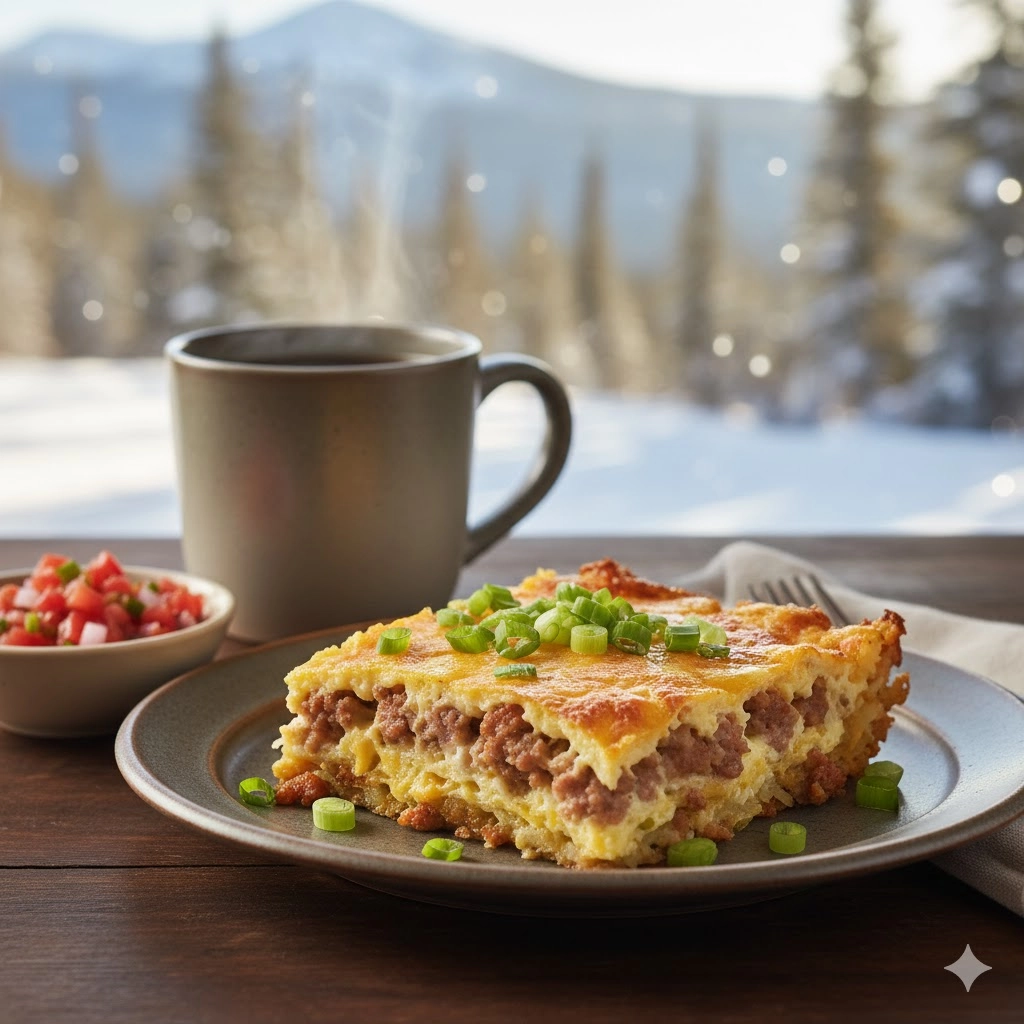
A hearty breakfast like this benefits immensely from a dose of acidity. Serve a high-quality, vibrant salsa or pico de gallo alongside the casserole. The freshness and tang of tomatoes, lime juice, and cilantro act as a necessary counterpoint to the heavy meat and cheese. A simple addition of a few shakes of hot sauce to each serving also provides a clean, immediate lift.
The Fresh and Clean:
Offer a large platter of fresh fruit—sliced melon, grapes, or mixed berries—to refresh the palate. Alternatively, a simple side salad of mixed greens dressed lightly with a bright lemon vinaigrette provides a necessary crunch and bitterness that balances the richness.
The Bread Service:
If the casserole is the main event, consider serving a simple, airy bread item for contrast. Homemade biscuits or a few slices of slightly toasted brioche offer a gentle, buttery texture that is different from the density of the casserole itself. Avoid heavy toast or additional hash browns, which make the entire meal feel too dense.
Common Questions from the Trail
These are frequent inquiries related to the preparation and storage of this dish, ensuring the perfect result every time.
Can I prepare this entirely the night before and refrigerate it?
Yes, but with a major caveat. You must assemble everything—potatoes, meat, cheese, and custard—in the slow cooker insert, cover it, and place the entire insert into the refrigerator. When you wake up, take the insert out, allow it to sit on the counter for twenty minutes to temper, and then place it in the slow cooker base and cook immediately on the LOW setting. Do not skip the tempering step, as placing a stone-cold insert into a hot base can sometimes lead to cracking.
How do I prevent the casserole from sticking to the stoneware?
The best defense is a heavy application of fat. Do not rely on light sprays. Use a solid, high-heat fat like butter or coconut oil and thoroughly coat the bottom and at least two inches up the sides of the slow cooker basin. Alternatively, utilizing a slow cooker liner is the easiest and most effective way to guarantee clean removal and zero stickage, saving considerable clean-up time later.
Can I make this recipe in an oval casserole dish in the oven instead?
You can, but the results will differ. The key difference is the moisture retention: the crock pot lid traps steam, keeping the casserole moist. To oven bake, use a nine by thirteen-inch baking dish. Preheat your oven to three hundred fifty Fahrenheit. Follow the exact layering steps, then bake for forty-five to fifty-five minutes, or until a knife inserted near the center comes out clean. This method provides a crispier top layer, but also risks slightly drier edges.
What is the ideal way to store and reheat leftovers?
Store individual servings in airtight containers. The Mountain Man Crock Pot Breakfast holds up well when refrigerated for up to four days. Reheating is best done in a skillet: slice a portion, place it in a lightly oiled skillet over medium-low heat, and cover with a lid. This steams the slice from the bottom up, retaining moisture better than a microwave, which can sometimes dry out the eggs and make them rubbery.
Does using whole milk or two percent milk change the texture?
The difference is minimal over the long cooking period. Whole milk offers slightly richer fat content, leading to a marginally more luxurious and tender custard. Using two percent milk or skim milk will yield a slightly firmer, but still delicious, result. The eggs provide the bulk of the necessary binding protein regardless of the milk fat chosen.
Nutritional Overview
| Nutrient | Amount per Serving |
| Calories | 425 kcal |
| Protein | 25 g |
| Carbs | 15 g |
| Fat | 28 g |
| Fiber | 1 g |
| Sugar | 3 g |
| Sodium | 650 mg |
Nutrition information is an estimate and may vary based on preparation and ingredients used.

The Hearty Mountain Man Crock Pot Breakfast for a Crowd
Ingredients
- 30 oz frozen shredded hash browns (do not thaw)
- 1 lb bulk mild breakfast sausage
- 8 oz shredded sharp cheddar cheese
- 8 oz shredded low-moisture mozzarella cheese
- 12 large eggs
- 1/2 cup milk (any fat percentage)
- 1 tsp fine kosher salt
- 1/4 tsp freshly cracked black pepper
- 3 medium green onions, thinly sliced
Instructions
- Brown the breakfast sausage in a skillet over medium-high heat until fully cooked. Drain off all accumulated grease and set the sausage aside.
- Liberally grease the inside of a six-quart slow cooker basin with nonstick spray or softened butter.
- Spread half of the frozen hash browns evenly across the bottom and press down gently to form a base.
- Layer half the browned sausage, half the shredded cheddar and mozzarella, and a portion of sliced green onions over the hash browns.
- Repeat the layers: remaining hash browns, sausage, cheddar, mozzarella, and green onions. Do not press down.
- Whisk the eggs, milk, salt, and pepper in a large bowl until frothy and combined.
- Slowly pour the egg mixture evenly over the layered ingredients in the slow cooker.
- Cover and cook on LOW for 8–9 hours or HIGH for 4 hours until custard is fully set.
- Let rest with the lid off for 15 minutes before serving.
Notes
Equipment
- 6-quart slow cooker
- skillet
- large mixing bowl
- whisk
- slotted spoon